
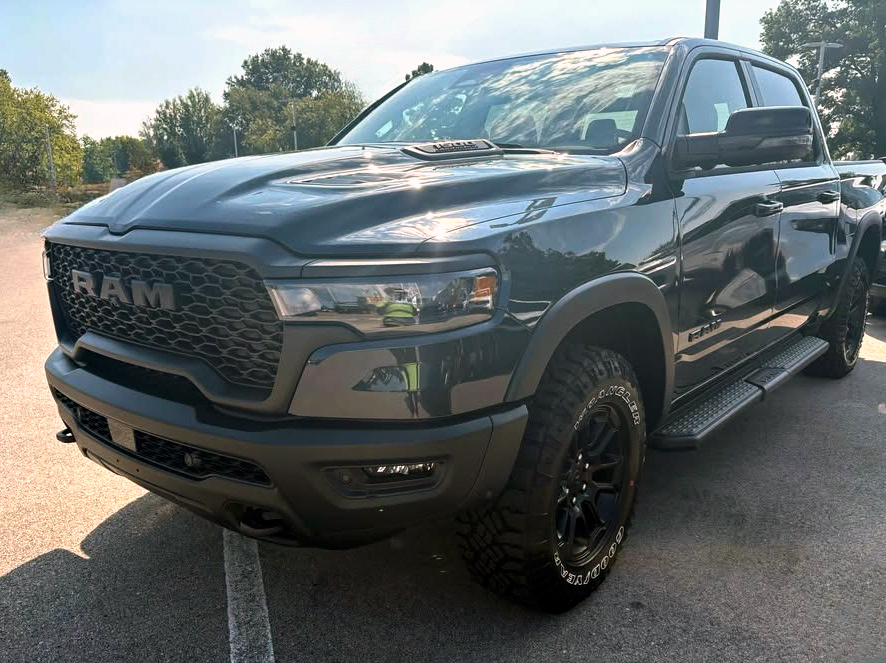
Punch the throttle. Turbos spool. Then the dash lights up; “See Oil and Fuel.” Power tanks, limp mode kicks in, and that $70,000 rig feels like a mistake.
Stellantis dropped the 5.7 and 6.4 Hemi for a 3.0L twin-turbo six built to hit emissions targets without sacrificing output. It delivers, but only if the electronics, sensors, and cooling system hold together. Many don’t.
This guide hits the real failures: thermostats, oil leaks, carbon buildup, software quirks. It shows how HO vs SO risk profiles split, what it takes to keep these engines healthy, and where dealer stories don’t match the teardown bills.
1. How the Hurricane’s design crams in power, and stress
Inline-six layout pushes balance, packaging, and heat to the limit
The Hurricane’s 3.0L inline-six runs forged internals, a deep-skirt aluminum block, and plasma-coated bores. Smooth, strong, and high-revving, but shoehorned tight.
Accessory drive sits low. Turbo drains, oil cooler, sensors, water pumps, all buried. One leak means hours of teardown. Add dual turbos and water-to-air intercoolers, and the bay cooks. Heat stacks under load, roasting seals, wiring, and gaskets that ran fine on the Hemi.
Hardware split between SO and HO changes how each engine breaks
The SO gets cast pistons, one HPFP, and 0W-20. The HO runs forged pistons, dual HPFPs, 0W-40, and hits 26 psi. Same block, different limits.
HO parts run hotter, spin faster, and load harder. Extra fuel gear means more failure points. Push 91-octane too soft, and the knock sensors pull power fast.
3.0 Hurricane SO vs HO: power, boost, and stress points
| Metric | Standard Output (SO) | High Output (HO) | Reliability implication |
|---|---|---|---|
| Rated hp / torque | 420 hp / 469 lb-ft | 540 hp / 521 lb-ft | HO runs closer to hardware limits |
| Peak boost | 22 psi | 26 psi | Higher cylinder pressures and temps |
| HPFP layout | Single pump | Dual chain-driven pumps | More parts, more potential failure modes |
| Oil spec | 0W-20 (MS-6395) | 0W-40 (MS-A0921) | HO needs thicker film under high boost |
Performance crushes the Hemi, but heavy-duty cooling and tow trade-offs stay real
SO beats the 5.7 Hemi to 60 by over a second. HO hits 4.2. But towing drops: 12,750 lbs down to 11,550 (SO) and 9,920 (HO).
This isn’t a low-RPM lugger. It needs revs, airflow, and cooldown time. Lug uphill in high gear or shut it down hot, and you’ll burn turbos or flood oil with fuel.
2. Thermostat defects that cook the Hurricane from the inside out
Ball-valve flow design becomes a weak point under heat and pressure
The Hurricane uses a low-restriction ball-style thermostat. It flows fast and keeps emissions tight, but it’s built around a plastic tab and a fragile drive pin.
That pin takes a beating from coolant pulses, debris, and startup stress. Failures spike in early builds. Plastic deforms or snaps. The valve jams open or slams shut. CSN 26B covers over 5,000 units with these exact faults. Most were built before mid-2023.
Fail-shut spikes temps in minutes, fail-open throws cold-start chaos
When the valve sticks shut, coolant stops flowing to the radiator. Temp surges fast. The dash might throw a warning, or not. One long red light, and you’re near detonation range.
When the valve sticks open or halfway, it’s sneakier. Cabin heat stays cold. Idle hunts. DTCs like P0128 stack for “thermostat rationality.” Fuel trims go off. Cold combustion worsens carbon buildup upstream.
Real-world repairs snowball fast, pumps, gaskets, and parts on backorder
Accessing the thermostat isn’t just tight, it’s punishing. You’re tearing down the coolant loop. Main pump, auxiliary pump, maybe even unbolting the A/C compressor without venting the system.
Shops quote 3.1 hours. Techs doing it for real call it a day-long job. Early failures often blew past the gasket stack too, especially the turbo oil return line. Miss that part, and you’ll chase leaks a week later. Some trucks sat 30–45 days waiting for updated housings and seals.
3. Oil system faults that stall the Hurricane without warning
Dipstick deleted, sensors take control, and sometimes take it down
There’s no dipstick. Oil level, temp, and quality are monitored through sensors feeding the PCM. It’s digital-only, displayed in-cluster, and tied into oil-life algorithms.
When it works, it’s precise. When it glitches, it trips reduced-power modes. If the oil temp signal drops out, the computer can’t track viscosity. Expect limp mode, “Oil and Fuel” alerts, or zero warning until things seize.
One $40 sensor. One $1,800 bill.
On some Hurricane layouts, the oil temp sensor hides near the bellhousing. In Grand Wagoneers and certain Ram builds, swapping it can mean pulling the transmission.
Codes like P0197 or P0198 show up, often alongside fuel trim or knock timing pull. The sensor itself costs next to nothing. Labor ends up expensive. And warranty claims get murky, some classify it as a “wear item,” not core powertrain.
Early leak points demand teardown-level labor from mile one
Fresh off the lot, some Hurricanes drip from the timing cover, pan, or turbo drain lines. These aren’t slow leaks, they pool fast and trigger oil-loss shutdowns.
Fixing them isn’t gasket-and-go. You’re pulling the front diff, steering rack, axles, accessory drive, maybe valve covers. Missing one gasket during reassembly risks repeat failure.
Common lubrication-related complaints and likely issues
| Symptom | Likely source | Typical fix severity |
|---|---|---|
| “Oil and Fuel” / limp mode | Oil temp sensor fault or octane issue | Sensor replacement / software flash |
| Fresh oil spots on driveway | Pan / timing cover / turbo drain line | Front-end teardown, gasket reseal |
| No dipstick, “check oil” message | Electronic level/quality sensor warning | Scan, top-off, possible sensor swap |
4. Direct injection loads the valves with carbon, and the driver with bills
Dry valves, dirty buildup, no backup wash
The Hurricane runs direct injection only, no port injection backup. Fuel sprays straight into the chamber, never over the intake valves. There’s no constant wash to clear oil mist or PCV blow-by.
Over time, that oil vapor bakes on. Valve stems cake with carbon. On short trips or low-speed runs, deposits build faster. Airflow drops. Mixture leans out. Spark timing gets clipped. Power fades, idle gets rough, and cold starts drag.
Carboned valves don’t trip sensors, but they choke the motor
Drivers report long crank times, rough idle, and midrange stumble. The ECU doesn’t always know what’s wrong. You might see a P0300, maybe nothing at all. Compression tests fine. Fuel trims look decent. But the valves are caked and choking flow.
Misfires aren’t random. They follow cold mornings or slow in-town cycles. Open the intake and it’s crusted, carbon scaling the ports and valve backs like charcoal buildup in a grill.
Walnut blasting becomes a new maintenance line item
By 30,000 to 60,000 miles, especially on HO trucks doing city miles, valve cleaning isn’t optional. Blasting with walnut shell media is the only clean shot. Chemical sprays won’t reach it. The head doesn’t have to come off, but the intake does.
Cost ranges from $400 to $800 per cleaning, sometimes more. Competing twin-turbo sixes from Toyota and Ford use dual injection to sidestep this. The Hurricane doesn’t. Every owner going past 100,000 miles will eat this bill at least once, some, twice.
5. Fuel system failures that cut power or flood the crankcase
HO dual-pump layout loads the risk from both ends
The SO runs one HPFP. The HO runs two, chain-driven, high-pressure, and heat-soaked. More output, more moving parts, more points of failure.
Failures come from seal wear, cam gear alignment issues, or bearing breakdown inside the pump body. Once the chain tension slips or pump timing drifts, fuel pressure drops off. Or worse, fuel pushes past the seals and dumps into the oil.
When fuel hits oil, bearings take the hit
Fuel in the crankcase thins the oil. Rod bearings and piston rings lose protection. On startup, you’ll hear ticking from the pump side of the bay, metal-to-metal lash that sounds like valvetrain clatter but creeps louder with each cycle.
Oil levels climb, but the dipstick’s gone. You smell gas in the cabin, maybe see a soft “Oil and Fuel” warning. Keep driving like that, and it’ll spin a bearing before the scanner even throws a code.
Octane matters, especially for the HO
The HO hates 87. Low octane trips knock sensors, pulls timing, and triggers “See Oil and Fuel” limp mode. Power fades. Throttle response softens. Boost slows down.
No misfire code, no broken part, just detonation control doing its job. The PCM cuts spark advance and holds back turbo speed to manage heat. Drivers often mistake it for a bad sensor or turbo issue. It’s fuel quality. This engine demands 91+ and runs rough when it doesn’t get it.
6. Cylinder wall coating that wins on paper, but loses when QC slips
PTWA liners shave weight, transfer heat, and demand perfection
The Hurricane uses PTWA (plasma transfer wire arc) cylinder liners. No cast sleeves. Instead, a micro-thin steel coating is sprayed onto the aluminum bores. It’s lighter, runs cooler, and cuts friction, when the process is dialed.
But that finish only holds if porosity, thickness, and post-spray honing are exact. Miss the spec, and the coating flakes under heat. The skirt scuffs. Blow-by starts. And there’s no overbore option; once PTWA fails, the block’s junk.
Early failures originate from poor finish and ring seat issues
Some engines eat oil by 1,000 miles. Bore scopes show uneven wear, bare alloy peeking through where coating should be. In others, piston skirts show hot spotting or vertical scoring. The finish wasn’t honed right, or the rings never seated clean.
These don’t all fail catastrophically. Some trucks run past 60,000 before burning a quart every 700 miles. But once consumption starts, there’s no fix short of engine swap.
Loose clamps, leaking turbos, and wiring faults fresh off the hauler
PTWA isn’t the only factory QC miss. Dealers have unwrapped Hurricanes with loose coolant hoses, untensioned clamps, and oil seeps at turbo drains. Some had harness pins half-seated, tripping misfire codes with under 10 miles on the clock.
The core build is solid. But last-mile assembly is sloppy. And when the first fault hits, owners blame the whole engine, rightfully so. Loose oil lines and connector faults shouldn’t show up on a $75,000 truck before it hits its first tank of fuel.
7. Electrical bugs and software faults that leave drivers stuck
Low voltage spins a warning storm across the dash
The Hurricane’s electrical system doesn’t like weakness. Drop the battery below spec, lose a ground, or spike current draw from cooling fans or HPFPs, and the dash turns into a casino.
Warnings stack fast, 4WD disabled, steering assist off, service engine, “See Oil and Fuel.” The powertrain’s fine. It’s the voltage drop that shorted logic. These systems rely on clean current and tight grounds. Old-school batteries or loose terminals won’t cut it.
PCM, ISCM, and TCM updates keep chasing ghosts
Stellantis pushed multiple TSBs in 2024–2025 targeting harsh restarts, misfire codes, idle lurches, and false catalyst flags. Most were patched with software, but only if the dealer actually flashed the truck.
No update, no fix. Owners bounce between shops. Codes vanish after restarts. Then they return with a stumble or rough cold idle. Flashing the PCM and ISCM often helps, but only when done on up-to-date firmware with verified calibrations.
Dash lights trigger limp mode, but fault resets leave no trail
The “Oil and Fuel” message is the most common limp-mode trigger. It flashes when oil temp goes high, octane drops low, or sensor logic fails. But after shutdown, it often clears, and dealers can’t replicate it.
No code. No freeze frame. No resolution. Owners get sent home, only to have it come back the next day. Without a record, service writers shrug. The loop repeats until a sensor finally throws a hard fault or the truck fails mid-drive.
Common Hurricane dash warnings and likely underlying issues
| Cluster message / symptom | Likely trigger | Typical dealer response |
|---|---|---|
| “See Owner’s Manual for Oil and Fuel” | HO on low octane, oil temp sensor | Fuel change, sensor diag, PCM update |
| Multiple ADAS/4WD warnings at once | Low battery, poor ground, noise | Battery/ground check, network scan |
| MIL with misfire/catalyst codes | Carbon load, coil/harness issue, logic | TSB flash, coil/plug/harness checks |
8. What keeps the Hurricane alive past 100,000, and what takes it out early
Oil, coolant, and driveline service gaps that wreck high-strung engines
Both SO and HO take 7.5 quarts, but only the HO runs 0W-40, a thicker synthetic to hold up under 26 psi boost and 1,500°F turbo temps. Go cheap or stretch intervals and the oil shears, bearings thin out, and turbos coke.
Forget the “10,000-mile” oil myth. In hot climates, tow cycles, or city miles, 4,000 to 6,000 miles is already pushing it. Same for transfer case fluid, HO and RHO variants need it dumped every 30,000 miles, not the SO’s 150,000 window.
Long-haul risks: turbos wear, sensors die, carbon stacks up
Past 100,000 miles, the twin turbos start showing play. Hot shutoffs cook the bearings, especially if the electric after-run pump stalls or goes ignored. Each side costs $2,400 to $3,000 to replace with labor.
Sensors fail from heat cycling. Wire looms get brittle. And without port injection, valve blasting becomes routine, not optional. Every 40,000 to 60,000 miles, expect carbon cleanings unless the truck runs long, hot highway cycles.
Who this engine fits, and who it punishes
The Hurricane works for drivers who stay ahead of it: clean oil, hot shutdowns, high-octane fuel, and dealer flashes done on time. It rewards that discipline with speed, torque, and mileage the Hemi couldn’t match.
But for low-speed, short-haul, set-it-and-forget-it drivers? It penalizes hard. One missed oil change or one cheap tank of gas can kick off a chain of limp modes, sensor faults, or turbo failure. What it gains in power, it trades in simplicity, permanently.
Sources & References
- Ram Hurricane vs Hemi Engine Specs: Power and Performance
- Hurricane Engine Review: Specs & Reliability
- Hurricane Twin Turbo I-6 Engine – Stellantis Fleet & Business Solutions
- New Fuel Efficient Hurricane Engine | Lone Star CDJR
- Common Problems With The 3.0 Hurricane Engine (According To …
- “I Traded My 2022 Ram For This 2025 Ram Laramie…” | Torque News
- What’s everyone’s thoughts and concerns surrounding the hurricane right now? : r/Dodge
- Ram’s Hurricane Six Embarrasses The Hemi V8 In Every Measurable Way | Carscoops
- Standard and High Outputs: Inside the Stellantis Hurricane Engines …
- Stellantis Debuts Hurricane Twin-Turbo I-6 Engine – PR Newswire
- How Often Should You Change the Oil on a 2025 Ram 1500?
- Ram’s Hurricane Turbo Six Storms Past the Hemi V-8 in Our Testing – Car and Driver
- Ram Hurricane Vs. Hemi V-8 Engine: What’s The Difference?
- RAM 1500 Hurricane vs HEMI Engine Comparison
- Are 3.0 twin-turbo Hurricane i6 engines better/more reliable than the Pentastar v6? – Reddit
- 2022-2023 Jeep Grand Wagoneer and Jeep Wagoneer Overheating Problem
- Customer Satisfaction Notification – NHTSA
- How to Take Care of Your Hurricane Engine – Providence Autos
- P0197 Code – Engine Oil Temperature (EOT) Sensor Circuit Low | KBB
- P0197 Code: Engine Oil Temperature Sensor Circuit Low – In The Garage with CarParts.com
- Understand & Fix P0198: Engine Oil Temperature Sensor Circuit High Input with iCarsoft CR Ultra P
- P0198 Code: Engine Oil Temperature Sensor Circuit High – In The Garage with CarParts.com
- 4 Hurricane Engine Problems & How to Fix Them – The Lemon Law Experts
- Questions about new 3.0 Standard Output Hurricane Engine …
- Hurricane 3.0 I6 In Action : r/ram_trucks
- How Often Should You Walnut Blast Your European Car? – Performance Auto Specialists
- Carbon Buildup in Volkswagen, Porsche, and Audi Engines – Dubwerx
- Why YOU Should Walnut Blast Your Car Every 50k miles – Engine CARBON Clean Symptoms And Reasons – YouTube
- The Importance of Walnut Blasting of the Intake Valves in Direct Injected Engines
- Bad High Pressure Fuel Pump Symptoms: HPFP Failure Signs – YouTube
- High pressure fuel pump smell. What is this line? : r/MechanicAdvice – Reddit
- Can the HPFP cause fuel to leak into my oil? – SpoolStreet Forums
- High Pressure Fuel Pump Symptoms | Diagnose HPFP Issues – Hot Shot’s Secret
- Power Cylinder Friction Reduction through Coatings, Surface Finish and Design – OSTI
- Hurricane leaks. : r/Justrolledintotheshop – Reddit
- 2025 issues : r/ram_trucks – Reddit
- Ram Hurricane issue : r/ram_trucks – Reddit
- 2025 Ram Issues and TSB Fixes : r/ram_trucks – Reddit
- My 2025 ram is an absolute piece of shit lemon : r/ram_trucks – Reddit
- How to Change the Oil in Your 2025 RAM 1500 – Weeks in Benton
- RAM 1500 Oil Type | Albany Chrysler Dodge Jeep RAM
- RAM 1500 Maintenance Schedule
- Ram Service Schedules & Maintenance Pricing | Kelley Blue Book
- Has stellantis fixed QC issues with 2025 1500s? – Reddit
- Turbocharger Replacement Cost – Synchrony Bank
- Turbocharger Assembly Replacement Cost Estimate – RepairPal
- Hemi or Hurricane Reliability : r/ram_trucks – Reddit
Was This Article Helpful?