
Tick, tick, stall. That’s how the 3.2 Pentastar shows up, rattling hot, oil weeping down the bellhousing, and a misfire nobody fixed with plugs.
Jeep dropped this engine into the KL Cherokee to haul 4,500 lb and run smooth with the 9-speed. But behind the power lies a tight valvetrain, plastic weak points, and heat that cooks gaskets, bearings, and sensors alike.
This guide pulls it apart, shared guts, known failures, and where the smart money stops spending.
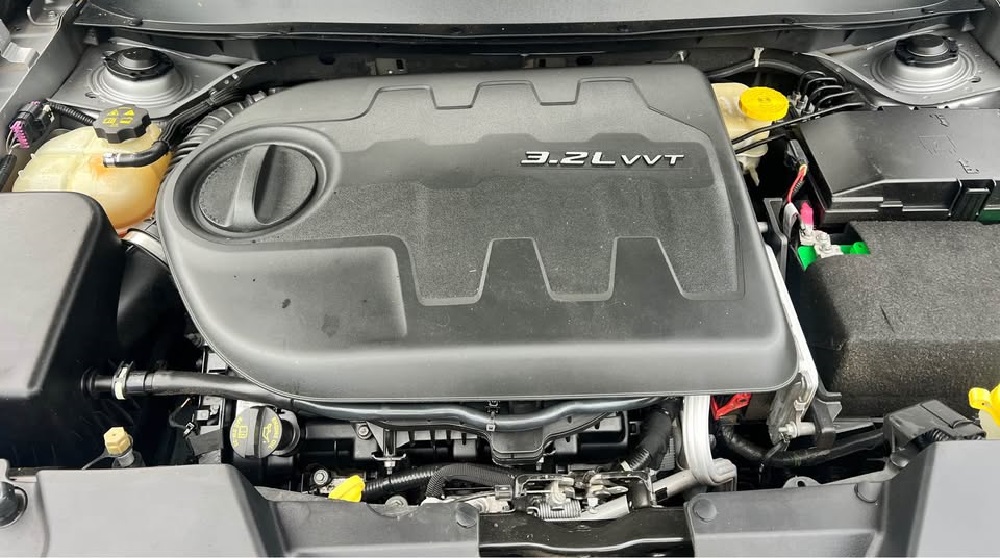
1. Where the 3.2 Pentastar came from and how it’s built
Downsized, not detuned: how Jeep carved the 3.2 out of the 3.6
Chrysler built the 3.2 off the same architecture as the 3.6 Pentastar, same 60° V-angle, same forged steel crank, same 83 mm stroke. But the bore shrinks from 96 mm to 91 mm, dropping displacement from 3,604 cc to 3,239 cc. That one cut changed more than the powerband.
The 3.2 had one job: make the 2014+ Jeep Cherokee (KL) feel like a real Jeep, not a car-based crossover. With a curb weight near 4,000 lb and towing targets up to 4,500 lb, Jeep needed midrange torque and heat efficiency, not peak horsepower.
So the 3.2 got tighter pistons, unique heads, and engine tuning built for the ZF 9-speed and trail-rated duty.
It still shares the same core timing drive, water pump, and plastic oil filter housing as the early 3.6s. But the pistons, rings, oil control strategy, and some valvetrain components are 3.2-only. And the tuning is built to hold revs under load while keeping cooling and oiling stable in tight underhood packaging.
3.2 vs 3.6 Pentastar: compression, heat, and how spec changes show up in failure
The 3.2 runs a higher compression ratio than the early 3.6s, about 10.7:1 versus 10.2:1, and keeps it there even as the larger engine moved toward VVL and direct-injection–ready designs.
Combined with its smaller bore and integrated exhaust manifold castings, the 3.2 concentrates more heat around the top end and cooling jackets.
Torque lands earlier, and that matters. The 3.2 makes peak torque at 4,400 rpm, versus 4,800 rpm in most 3.6s. But it revs just as high, 6,400 to 6,500 rpm, despite its smaller displacement and limited cooling headroom.
That high-rpm window, mixed with tighter casting clearances and the heavier ESS/dual-battery load, pushes the oil system and valvetrain harder over time.
3.2 vs. 3.6 Pentastar
| Feature | 3.2L Pentastar V6 | 3.6L Pentastar V6 |
|---|---|---|
| Displacement | 3,239 cc (197.7 cu in) | 3,604 cc (219.9 cu in) |
| Bore × stroke | 91 mm × 83 mm | 96 mm × 83 mm |
| Compression ratio | ~10.7:1 | ~10.2:1 early, up to ~11.3:1 “Upgraded” |
| Output (typical) | 271 hp / 239 lb-ft | 290–305 hp / 260–269 lb-ft |
| Valvetrain | DOHC, 24V, dual VVT | DOHC, 24V, dual VVT (VVL on later 3.6) |
| Primary applications | Jeep Cherokee (KL) | Wrangler, Grand Cherokee, Ram, minivans etc. |
| Oil spec | 5W-20, MS-6395 | 5W-20 or 0W-20 (MS-6395) |
Cherokee duty cycle hits the 3.2 where it hurts
Most 3.2s live in Cherokees that see stop-and-go commutes, short errands, and light towing, not open-highway hauls. That constant cycle of hot starts, mid-load climbs, and low-speed traffic heat soaks the heads, housing, and rockers.
The KL’s 9-speed auto doesn’t help. It hunts gears at low speed, and that up-down rev cycling keeps valvetrain components working overtime in the midrange.
On 3.6-powered Grand Cherokees or minivans, the same hardware often sees smoother, lower-load operation. In the KL, the 3.2’s tight tolerances, high idle time, and underhood heat get no break.
2. The Pentastar tick and how it wrecks cams
Why Chrysler used needle-bearing rockers in the first place
Chrysler wanted low friction without switching to direct injection. So they kept port injection and doubled down on rollerized valvetrain parts. Each rocker in the 3.2 rides on a tiny roller, and each roller spins on a set of needle bearings no wider than a pencil eraser.
Oil hits those bearings through small passages fed by the head galleries. When everything’s clean and pressure stays up, the setup works quietly.
But when oil film breaks down, either from heat, sludge, or bearing wear, the roller stops spinning. Now the cam lobe rubs metal-on-metal across the face of the rocker. That’s when the noise starts.
How failed needle bearings chew the cam to pieces
The tick comes from one lobe sliding across a seized roller. The sharper the tick, the deeper the groove. Once the lobe starts self-machining, metal flakes enter the oil and the roller surface flattens. Lift drops. Valve timing goes soft. Misfires show up even without codes.
Over time, one bad rocker turns into multiple as metal circulates and pressure drops. Some lifters collapse, others pump up and stay stuck. Misfires spread, oil pressure flags, and the cam journals start scoring. On engines with delayed oil changes, the tick arrives fast, and stays until the cam’s wiped clean.
What codes show up and why bank 2 usually fails first
Bad rockers usually trigger misfire codes, P0300 for random, or P0301–P0306 when one cylinder goes down. Sometimes you’ll also see P0016–P0019 if debris reaches the timing system and throws off cam/crank sync.
On the 3.2, bank 2 (left side) tends to fail first, just like early 3.6s. That bank runs hotter and gets oil flow after bank 1, which can starve bearings during low-pressure conditions.
Common codes when the 3.2 valvetrain is in trouble
| Code | Description | Likely 3.2 Pentastar cause |
|---|---|---|
| P0300 | Random/multiple misfire | Multiple failing rockers, debris in oil galleries |
| P030x (x=1–6) | Cylinder-specific misfire | Wiped cam lobe, collapsed lifter on that cylinder |
| P0520 | Oil pressure sensor circuit | Real low oil pressure or sensor issue, sometimes tied to housing leaks |
| P0016–P0019 | Cam/crank correlation | Timing chain stretch/phaser issues from dirty oil or debris |
Why most shops won’t do “just one” rocker anymore
When one rocker fails, the rest are already worn. That’s why most shops won’t replace a single arm or lifter. They’ll do all 12 on the affected head, and if metal is found in the oil or on the drain plug, they’ll recommend pulling the pan too.
A proper fix means pulling the upper intake, coil packs, valve cover, camshaft, and swapping the entire rocker and lifter set on that bank. If the cam is scored, add that too. Book time runs around 10–12 hours. Parts cost varies, but labor drives the bill. Once the tick’s loud, odds are the cam’s already toast.
In cases where both heads tick or the pan’s full of glitter, many owners skip the rebuild and drop in a used long block. Prices shift with mileage and region, but top-end-only jobs often cost nearly the same in labor.
3. Oil filter housing leaks that mimic rear main failures
Why the housing fails and how heat finishes the job
The 3.2’s oil filter housing sits dead center in the V, bolted to the block beneath the intake manifold. Chrysler used a molded plastic housing with a built-in cooler to cut weight and parts count. That housing takes full oil pressure, full coolant flow, and full heat soak every time the engine idles in traffic.
Over time, heat cycles warp the plastic base and cap threads. The cap distorts under over-torque, or the body cracks around the sealing flange. Even light damage turns into a full-blown valley leak once oil pressure builds.
Why leaks pool in the valley and fool techs chasing rear main seals
Cracks in the housing body or cap let oil pool in the V under the intake. Once the puddle reaches the bellhousing, it runs straight down the block and drips near the transmission. From below, it looks like a rear main seal or pan gasket. Without a top-down inspection and valley clean-out, most shops misdiagnose it.
Cooler-side failures complicate things further. Cracks in the internal cooler can cross-contaminate oil and coolant. Catch it early and you’ll find sludge in the reservoir. Miss it, and you’ll find bearing wear, oil breakdown, or worse.
Why aluminum housings became the default upgrade
Aftermarket builders like Dorman and Mishimoto stopped trying to patch the OE design and replaced it outright. Most shops now go straight to aluminum housings with better base casting, stronger cap threads, and Viton gaskets.
Install time overlaps with spark plug or PCV service since the intake has to come off. That’s why many do the housing proactively between 60,000 and 80,000 miles, before leaks start, or at the first sign of oil in the valley.
Oil filter housing options on 3.2/3.6 Pentastar
| Version | Material | Pros | Cons |
|---|---|---|---|
| OEM housing | Plastic | Cheap, factory-fitted, easy to source | Warps, cracks, heat-soaked, short life |
| Aftermarket upgrade | Aluminum | Resists heat cycling, holds torque, long-term fix | Higher part cost, needs careful install and sensor swap |
What the job really costs and how shortcuts bite back
Swapping the housing takes 2.5 to 4 hours in most shops. That includes pulling the intake, cleaning the valley, transferring sensors, and pressure-testing the cooling system. Skipping the valley cleanup leads to oil or coolant getting sucked into the intake runners, especially if the PCV hoses pull vacuum on restart.
Parts cost swings with brand and sensor reuse, but labor stays steady. Some dealers still quote over $1,200 with OE plastic. Most independents offer aluminum swaps in the $600–$900 range depending on region and whether plugs or coil packs are done at the same time.
4. Misfires, head defects, and hidden damage from the factory
How old 3.6 head failures shaped the 3.2’s casting design
The early 3.6 Pentastar built a reputation for left-bank head failures, especially cylinder 2. Valve seats overheated, guides wore out, and misfires showed up with no ignition fault.
The 3.2 launched after Chrysler started revising castings. It got hardened seats and better cooling around the guides, but the core architecture didn’t change.
The revised heads still carry over some of the same weak spots. Long idle cycles, poor oiling, and cooling system strain can bring those problems back, just later in life.
When a misfire points to a mechanical fault, not spark
A clean P030x code without a coil or plug issue often points at the top end. Most owners throw in new plugs. Some change all six coils. When the tick gets louder, or compression numbers drop, the mechanical issue shows itself. That’s usually a failed rocker, stuck lifter, or worn seat, especially if the misfire follows a known hot spot like cylinder 2 or 6.
Techs use waveform tools or relative compression tests to split electrical faults from mechanical. If it flags a low-pressure pulse, the head comes off next. Many 3.2 Cherokees with unexplained misfires end up needing valvetrain or seat work, whether the code says so or not.
When casting sand stays behind and starts eating parts
In rare cases, leftover sand from the engine block casting process ends up in the oil or coolant circuits. Chrysler faced lawsuits and recalls tied to this on select hybrid and non-hybrid Pentastar engines. That leftover grit scores oil pump gears, clogs galleries, and sets off unexplained overheat or low-pressure conditions.
Some 3.2 engines may have minor casting sand issues without triggering a full recall. There’s no way to test for it short of teardown, but signs show early: bearing wear with clean oil history, coolant hotspots in known-good systems, or oil pump noise with no sludge.
What recalls touched the 3.2 and when they matter
Cherokees running the 3.2 got swept into a few engine-related recalls. One involved reversed cam caps or missing valve keepers from the Trenton plant on 2019 models. Another flagged head-related stall risk from defective machining.
Not every recall shows up on a casual search. Always run the VIN through Stellantis or NHTSA to check for work history. Several engine issues that look like “normal” Pentastar wear actually originate from open campaigns or botched factory builds.
5. Cooling failures that warp heads and stress gaskets
How the 3.2 runs hotter than it looks on paper
The 3.2 uses integrated exhaust manifolds cast into the heads. Instead of piping heat away through long external runners, hot gas dumps straight into the coolant jackets. That design cuts emissions warm-up time but traps thermal load inside the aluminum head casting.
Throw in off-road idling, slow climbs, and long traffic waits, and you’ve got a high-temp cycle baked into daily use. The Cherokee’s grille and fan setup struggles to shed that heat at low speeds, especially in summer. Even with proper coolant, small imbalances, air pockets, sticky thermostats, restricted flow, start cooking the top end.
Cooling parts that fail first and what they take out
Water pump bearings start howling before they let go. Many owners miss the noise or blame the belt. A small drip at the weep hole turns into full failure, snapped serpentine, and a limp-in with no alternator, no power steering, and rising temps.
Thermostat housings crack or seize. Code P0128 shows up, or temp swings get erratic. Most 3.2s use plastic radiator tanks that leak at the seams. Oil cooler seals also give out, dumping coolant into oil or the other way around.
Cooling-system weak points on the 3.2 Pentastar
| Component | Typical failure sign | What happens if ignored |
|---|---|---|
| Water pump | Coolant drip at weep hole, bearing noise | Overheating, belt failure, possible head warp |
| Thermostat / housing | P0128, slow warm-up or sudden hot spike | Poor fuel economy, head gasket stress, overheating |
| Radiator | Coolant smell, wet end tanks | Rapid coolant loss, repeated overheat events |
| Oil cooler | Oil in coolant or coolant in oil | Sludge, bearing damage, accelerated engine wear |
What one overheat does to head gaskets and block decks
The 3.2 doesn’t tolerate overheating. One high-temp run can warp the head enough to weaken sealing. It might reseal cold, but pressure builds again under load and coolant starts disappearing.
That’s how slow head gasket leaks begin, small bubbles in the overflow, unexplained pressure loss, or white crust around the tank cap.
Over time, the leak worsens. Misfire on startup. Rough idle. Coolant smell in the exhaust. With aluminum heads, it only takes one bad trip. Many engines that fail past 120,000 miles have that single “it ran hot once, but cooled back down” moment sitting in the history.
6. Stop-start systems, dual batteries, and electrical overlap with engine faults
How the ESS setup strains batteries and sensors
Every 3.2 Cherokee with stop-start runs a dual-battery layout: one standard lead-acid under the hood, plus a smaller auxiliary battery buried behind trim. The small one handles relays, sensors, and restart cycles. The main carries cranking, charge, and general electrical load.
The system hits hard in traffic. ESS cycles kick on and off dozens of times per trip. Each cycle slams the starter, triggers fuel and ignition, and expects both batteries to hold voltage while fans, HVAC, and modules keep running.
Any weakness in either battery, especially the AUX, throws warnings, stalls the system, or ends restart entirely.
ESS failures that cross into engine behavior
Weak AUX batteries throw the “Stop/Start Unavailable” message even when the engine runs fine. But when the battery sensor goes flaky or the hood latch switch drifts out of spec, the PCM disables ESS and starts logging faults.
Some drivers feel a stall when pulling away from a stop. Others get rough restarts, momentary jerks, or stumble under load when ESS tries to relight the engine.
Low oil pressure, ticking rockers, or cam correlation issues can also force the PCM to shut off stop-start by design. It’s a protective cut, if the engine’s unhealthy, the system backs off. That’s why many owners chasing ESS problems end up solving cam, oil, or timing issues first.
How unresolved ESS faults trigger no-starts and misdiagnoses
When the AUX battery fails, it often drags the main one down with it. A fresh crank battery won’t fix it. The system pulls current from both, and if the IBS (intelligent battery sensor) doesn’t reset properly after service, it throws voltage readings off and flags false low-current or high-load conditions.
Many no-starts blamed on the starter or PCM originate from old AUX batteries or missed resets. Pulling codes helps, but voltage checks and sensor validation matter more. Without both batteries healthy and the IBS properly reset, the Cherokee can shut down ESS entirely and still throw engine-related faults.
7. Reliability past 100k depends on how it’s driven and serviced
What real-world owners report as mileage climbs
Some 3.2s pass 200,000 miles without major work. Others eat rockers and leak oil by 80,000. The split often comes down to trip length, maintenance timing, and how hot the engine runs day to day.
Short-trip city driving with stop-start active loads the oil system and valvetrain harder. Highway miles at steady RPM keep things cooler and cleaner.
Owners who tow light loads or run in hot climates often see failures earlier. Many reports show top-end noise and cam scoring before 120,000 miles, especially with 10,000-mile oil changes and delayed filter housing upgrades.
The maintenance rhythm that keeps a 3.2 from eating itself
The factory 10,000-mile oil interval cuts too close. Needle-bearing rockers run hot and dry out fast when oil breaks down. Most techs now call for synthetic oil and filters every 5,000–7,500 miles, max. The oil must meet MS-6395, not just the weight. Cheap blends sludge up fast under Cherokee heat.
Coolant flushes keep the exhaust ports from heat-soaking the heads. Swapping the PCV valve cuts oil burn and keeps carbon off the intake valves. And the ZF 9-speed shares heat and duty with the engine, so fluid service matters just as much.
Practical 3.2 Pentastar service schedule
| Item | Interval that keeps the engine happy | Reason on this engine |
|---|---|---|
| Engine oil & filter | 5,000–7,500 miles (synthetic, MS-6395) | Protects rocker needle bearings, reduces sludge |
| Coolant flush | ~5 years / 100,000 miles | Prevents corrosion in aluminum heads/block, keeps temps stable |
| Spark plugs | ~100,000 miles | Maintains clean burn, lowers misfire load on valvetrain |
| PCV valve | ~60,000 miles | Reduces oil consumption, limits intake deposits |
| Transmission fluid (ZF 9-speed) | ~60,000 miles | Protects 9-speed that shares duty cycle with the engine |
| Oil filter housing check / upgrade | Inspect by 60–80k, upgrade at first seep | Stops leaks before oil loss or rear-main misdiagnosis |
MPG and driveability considerations against the 2.4 and 3.6
Most 3.2 Cherokees average 18–22 MPG in mixed driving. Flat highway runs with cruise control can touch 25. But in town, with ESS active and revs climbing on each gear hunt, fuel economy dips fast, sometimes into the mid-teens.
The 2.4 Tigershark pulls better MPG but struggles with NVH and long climbs. The 3.6 V6 in the Grand Cherokee brings more torque, but adds weight and loses crawl ratio. Many 3.2 owners keep the engine for its smoother pull and quieter uphill response, despite the thirst.
8. Lawsuits, recalls, and when the 3.2 is worth keeping
Class actions that called out rocker failures and stalling
FCA faced multiple lawsuits over Pentastar valvetrain failures. Owners claimed the company knew about rocker arm defects, lifter issues, and faulty PCM calibrations that let engines run with degraded oil pressure and ticking components. Many of those suits tied metal debris from failed rockers to sudden stalling and full engine loss.
The 3.2 got pulled into those claims alongside the 3.6, especially for vehicles that stalled mid-turn or failed to restart after a hot soak. Most of the legal focus centered on internal damage that occurred before the first symptom ever surfaced.
Cherokee recalls tied to engine-related symptoms
Some recalls hit the 3.2 directly. Others affected Cherokee models across engine types but still shaped how the 3.2 behaved. One campaign flagged reversed cam caps and missing valve keepers on 2019 engines. Another recalled Power Transfer Units (PTUs) that lost drive and made it look like the engine had failed.
Transmission recalibrations on the ZF 9-speed also blurred the line, stall complaints tied to bad shift logic often got blamed on the engine before the TCM got flashed. That crossover means recall history can’t be skipped. Even a clean-running engine may carry a missed fix that sets it up for later trouble.
When the 3.2 is still worth fixing and when it’s not
If the oil stays clean, the valvetrain stays quiet, and the housing’s been upgraded, the 3.2 can live a long second life. A Cherokee with records, no repeat misfires, and under-hood dryness is worth holding. Engines with one or two cam lobes showing wear can still be saved, if caught early.
Once the tick spreads, the valley pools oil, or the coolant tank shows oil sheen, walk. Prior top-end work with no receipts, or a cam job done without new lifters, points to future repeat failures.
In those cases, the math shifts fast. A full refresh runs close to the cost of a lower-mile swap or a clean 3.6 Grand Cherokee with fewer design issues.
Sources & References
- Chrysler Pentastar engine – Wikipedia
- 3.6L Pentastar V6 Specs and Information – CJ Pony Parts
- 2022 Jeep Cherokee vs. Grand Cherokee | Sam Leman CDJR of Peoria
- ’16 Grand Cherokee First With Upgraded Pentastar V-6 | WardsAuto
- 6 Common Issues with the Pentastar 3.6L V6 Engine – Automotive Magic
- The Jeep Grand Cherokee vs. Jeep Cherokee – Wilson Motors
- Understanding the Troublesome Rocker Arms in Chrysler’s Pentastar V6 Engine
- 2019 Jeep Cherokee Overland
- 4PCS Pentastar Lifters For 2011-2020 Chrysler Jeep Dodge Ram 3.2L 3.6L 5184332AA
- is Jeep Grand Cherokee 3.6 same as Jeep Cherokee 3.2? – Reddit
- The ‘Pentastar Tick’ Could Kill Your Chrysler, Dodge, Ram, Or Jeep …
- 2016 Jeep Wrangler JKU – 3.6L Pentastar Rocker Fail and Damaged Cam Shaft – YouTube
- Why Chrysler Pentastar Engines Fail – YouTube
- Failed rocker arm, lifter, and damaged camshaft lobe on Jeep 3.6 | Customer states: Tapping noise all the time!
- What’s your rocker failure experience? : r/Jeep
- Chrysler Pentastar Engine Failure Lawsuit | Lemon Law Help
- Early 3.6L Pentastar V6 Engine Left Cylinder Head Failure Explained – autoevolution
- Use this tool to find your misfire P0302 P0300 P0301 . 3.6 Pentastar V6 problems rocker arm ticking – YouTube
- THIS BULLETIN SUPERSEDES SERVICE BULLETIN 18-034-14, DATED JUNE 6, 2014, WHICH SHOULD BE REMOVED FROM YOUR FILES. ALL REVISIONS – nhtsa
- Lifter replacement job cost for a 3.6? : r/Jeep
Was This Article Helpful?