
Rattle, hesitate, stumble; 3.5 EcoBoost engines throw up red flags fast when things go south. Hit the throttle and feel it lag, misfire, or light up the dash. Could be carbon on the valves, stretched timing chains, or condensation choking the charge air cooler. Could be the start of a $5,000 teardown.
This guide shows how the 3.5 EcoBoost changed, where each generation breaks, and why layout matters. Truck engines leak loud. Transverse ones seize in silence. You’ll get failures by system; induction, timing, cooling, turbo, and valvetrain; plus when they hit and how to catch them early.
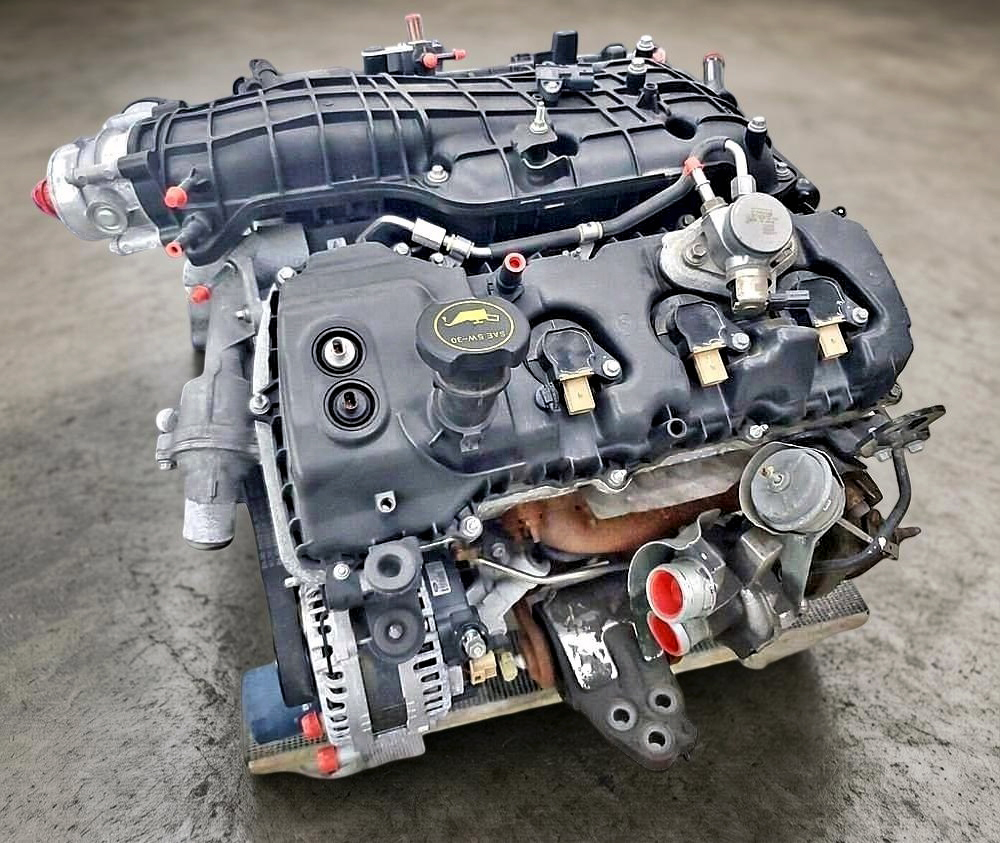
1. What changed, what broke: three generations, two layouts, one high-stakes engine
Gen 1 (2011–2016): Strong bottom end, weak timing and dirty lungs
The first-gen 3.5 EcoBoost was built off the Duratec 35 block but stuffed with forged internals to survive boost. It used a long single timing chain and a Direct-Acting Mechanical Bucket (DAMB) valvetrain; no rockers, just lobes slamming directly onto buckets.
Simple, fast, and solid. The downside? Chain stretch showed up early, especially with long oil-change intervals and overheated oil.
Early turbos were small with mechanical blow-off valves. In 2013, Ford switched to larger snails with electronic valves and a Bosch fuel system. Power delivery smoothed out, but load on the chain and cam phasers increased.
Without port injection to clean valves, carbon piled up. And on 2011–2012 trucks, the intercooler condensed enough water to stall the engine during a hard pass.
Gen 2 (2017–2020): Dual injection, dual chains, new problems
Gen 2 ditched the old block for a fresh design. Each bank got its own primary chain, and Ford swapped the DAMB setup for roller finger followers with hydraulic lash adjusters.
A variable-pressure oil pump managed hot idle pressure better. Direct injection got a port injector twin to wash intake valves and control knock.
High-Output versions cranked up the boost, especially in the Raptor and Ford GT. They ran hotter, stretched tolerances thinner, and punished weak oil.
Cam phaser rattle became widespread across both standard and HO models. By 40,000 miles, cold-start ticking turned into warranty claims.
Plastic oil pans on early Gen 2 builds added more drama; many seeped, some dumped pressure. Ford converted leaking pans to aluminum in TSB 20-2306.
Gen 3 (2021–present): Better parts, worse build slips
Ford kept the architecture but refined the packaging. The harmonic balancer shifted, the HPFP got relocated, and smaller turbos with rotary electronic wastegates improved response. Cam phasers got a new locking design, stronger pins, and tighter oil control.
Then came the defects. Some 2024–2025 engines left the factory with misaligned cup plugs that blew out under pressure, draining oil in seconds. Others had bad connecting rods that fractured under load.
These failures came straight from the factory floor. When dealers caught them early, they swapped in a full long block. Missed cases ended with rods through the block and trucks towed in locked solid.
Truck vs SUV layout: The water pump risk
Longitudinal layouts, used in F-150s, Expeditions, and Transits, run an external water pump off the serpentine belt. When they fail, they leak coolant and overheat. That’s inconvenient, not catastrophic.
Transverse setups flip the risk. Explorers, Flex, and Taurus SHO models bury the water pump behind the timing cover and spin it with the timing chain. When that seal fails, coolant dumps into the oil.
No puddle, no temp spike. Just chocolate-milk sludge, low oil pressure, and wiped bearings before the driver knows what hit them.
3.5 EcoBoost generations and core risk profile
| Gen / years | Typical models | Fuel system | Timing layout | Biggest chronic risks |
|---|---|---|---|---|
| Gen 1 (’11–’16) | F-150, Expedition, Flex, Taurus | DI only | Single long primary | Chain stretch, valve carbon, CAC condensation |
| Gen 2 (’17–’20) | F-150, Raptor, Expedition | DI + PFI | Dual primaries | Cam phaser rattle, plastic pan leaks, heat load |
| Gen 3 (’21–present) | F-150, PowerBoost hybrid, big SUVs | DI + PFI | Dual primaries | Early build defects, lingering phaser concerns |
2. Induction-side failures that steal power before parts actually break
Gen 1 valve carbon buildup that slowly chokes airflow
Carbon starts building the moment oil vapor and fuel mist hit hot intake valves with no fuel wash. Direct injection feeds the chamber, not the valves, so deposits bake hard over time.
Cold starts turn rough, idle hunts, and midrange pull fades even though boost looks normal on the scan tool. Misfire codes often follow once airflow turbulence disrupts combustion under load.
Cleaning means walnut blasting, not chemicals. Catch cans slow the mess but don’t erase what’s already stuck. Dual injection in later engines stops new buildup, but Gen 1 motors carry whatever damage their early miles created.
Charge air cooler condensation that mimics a failing turbo
Early F-150 intercoolers cooled charge air so efficiently that humid highway cruising filled them with water. It pooled quietly at the bottom until a hard throttle event sucked it into the intake. The engine stumbled, bucked, and sometimes dumped into limp mode mid-pass.
Ford addressed it under TSB 13-8-1 with deflectors and PCM updates to reduce condensation. Many trucks still show the behavior in humid regions. Aftermarket intercoolers with drain ports fix the issue, while drilled weep holes trade water control for small boost leaks.
Boost complaints that originate from air and fuel balance
True turbo failures make noise or lose boost constantly. Induction problems act differently. Power drops only under certain conditions, usually cold, humid, or during quick throttle transitions. Scan data shows boost targets met but misfire counts climbing, or intake air temps spiking after a short pull.
Misdiagnosis burns money fast. Turbos get blamed, swapped, and the stumble comes right back. Airflow restrictions, pooled condensation, or mixture instability usually sit upstream, untouched, and still causing the same drive quality hit.
Why scan data matters more than seat feel here
Induction faults hide behind normal boost numbers. Intake air temperature trends, humidity history, short-term fuel trims, and per-cylinder misfire data tell the real story. Without them, parts get thrown at symptoms. With them, the fix stays focused and repeat failures stop.
3. Timing chains, cam phasers, and top-end tick that won’t quit
Gen 1 chain stretch from oil shear and long OCIs
The first-gen 3.5 ran a single long timing chain. Throw in turbo heat, thin oil, and 10,000-mile change intervals, and the chain starts elongating.
The guides wear. Tensioners lose authority. On cold starts, chain slack rattles hard against the cover. It means cam and crank timing are already drifting.
Diagnostic flags show up in the PCM as correlation faults like P0016. Power loss hits during load changes or gear shifts, and throttle feels lazy.
A proper fix means pulling the front cover and replacing the chain, guides, tensioners, and usually the VCT phasers. Doing one piece at a time often brings the problem right back.
Phaser rattle that starts cold and keeps coming back
Across Gen 1 and Gen 2, cam phaser rattle became the signature 3.5 EcoBoost complaint. It’s loudest right after startup, usually 2–5 seconds of sharp mechanical chatter that fades once oil pressure pins the internals.
Ford released a wave of bulletins: TSB 15-0131, TSB 21-2119, CSP 21N03, 21N08, and more. Most called for phaser replacement, and some included full timing kits.
But many trucks came back. The redesigned 2021+ phasers with updated locking pins and part numbers (ML3Z-6256-A, ML3Z-6C525-A) are the only parts that consistently shut the rattle down.
Pressure problems that feed the whole failure tree
Low oil pressure at hot idle shreds timing fast. Gen 2 trucks with plastic pans often seep without warning. As level drops, oil aerates and tensioners lose grip. The variable-pressure pump can’t recover once cavitation sets in, especially with old or thinned-out oil.
TSB 20-2306 replaced those plastic pans with aluminum units. Trucks that didn’t get the upgrade still show pressure drops and phaser complaints, even with short oil intervals. The oiling system ties together every weak point up top.
Top-end noise complaints vs likely issue
| Symptom at start-up | Duration | Likely issue | Typical fix package |
|---|---|---|---|
| Brief tick then quiet | <1 second | Normal oil fill to followers | Monitor, good oil, no codes |
| 2–5 second loud rattle cold only | A few seconds | Worn cam phasers | All 4 phasers, often chains and guides |
| Persistent rattle warm or cold | Constant | Severe chain wear / guide damage | Full timing set, inspect VCT solenoids |
4. Heat cracks the weak points: turbo lines, warped manifolds, and water pump failures
Turbo coolant line leaks that hide until they don’t
The rear-mounted turbos on 3.5 EcoBoost trucks get fed coolant through quick-connect fittings with O-rings. Heat cycles cook those seals. They shrink, crack, and start weeping.
The drips hit hot turbo housings and vanish before they ever touch the ground. What you get instead is a low coolant warning, a faint sweet smell, or sudden overheating during a tow.
By the time you spot crust around the fitting, the others aren’t far behind. Smart shops replace all four lines once one starts leaking. Access is tight.
Reaching the passenger-side rear fitting often means pulling the turbo. Aftermarket -AN kits ditch the plastic clips and O-rings for threaded braided lines that actually hold up.
Manifolds that chirp, tick, and snap studs under load
Cast-iron log manifolds on Gen 1 and early Gen 2 models don’t stay flat forever. Repeated heat cycles warp them. Rear studs take the stress, flex, and eventually snap. What’s left is an exhaust leak near the firewall. It chirps under throttle, ticks at cold idle, and melts nearby heat shields or wiring if ignored.
Some trucks throw O2 sensor codes or show weird trim behavior when the leak gets bad enough. The fix means pulling the manifold, extracting broken studs; sometimes with the head still on; and installing updated hardware and a flatter manifold casting.
Most owners replace both sides at once to avoid repeating the job 6 months later.
Internal water pumps that ruin transverse engines from the inside
Transverse 3.5L models use a chain-driven water pump buried behind the timing cover. When that seal fails, coolant leaks straight into the oil; not onto the ground. There’s no low-coolant light. No puddle. Just a slow drop in oil pressure as the bearings get washed out.
Drivers don’t notice until the engine loses power, throws cam or knock codes, or seizes completely. Some notice “milkshake” on the dipstick, but by then it’s often too late. The weep hole meant to vent coolant externally clogs easily. No warning. No save.
Truck engines avoid this. They run an external, belt-driven pump that fails visibly; leaks, noise, or overheating before damage. But for transverse layouts, the only insurance is early water pump replacement before 100,000 miles or running until failure.
5. Spark, fuel, and knock control under load: what breaks when boost shows up
Weak coils and old plugs that can’t hold spark under pressure
Boosted cylinders need more voltage to fire. As pressure rises, so does resistance at the plug gap. Worn electrodes or tired coils that ran too hot for too long start breaking down. Misfires show up under load only; chugging in 3rd gear, stumble on a hill, or harsh dropouts when towing.
Most owners don’t change plugs early enough. On Gen 1, Motorcraft SP-580 plugs work best with a tighter gap around 0.030–0.032 for tuned trucks.
Gen 2 and Gen 3 engines run SP-594 or SP-596, with gaps closer to 0.028 under heavy boost. Miss the window and you get random misfire codes, often blamed on turbos or injectors. Wrong guess means wasted money.
Low-speed pre-ignition from bad fuel and lazy shifts
Low-octane gas and heavy throttle at low RPMs invite trouble. Turbo engines under load at 1,500–2,000 RPM can spike combustion temps.
That’s where LSPI (low-speed pre-ignition) lives. Even before it hits hard, the PCM senses knock and starts pulling timing. Boost drops. Power fades. Misfire counters climb.
Drivers feel it as inconsistent throttle; fast one day, sluggish the next. Some tune it out with octane boosters. Others switch to 91+ to smooth it. But when the system keeps pulling timing, the engine runs hotter and the risk builds.
What towing, tire size, and tune actually do to margins
Raise boost, add weight, or bolt on 35s and the margin for error shrinks fast. That extra load hits turbos, rods, pistons, and cooling systems all at once.
Tuned trucks burn hotter, need tighter plug intervals, and push knock control to the edge. It’s not rare to see spark blowout, coolant creep, or knock codes after a towing weekend; even on a truck that was fine stock.
Catch-can setups, upgraded intercoolers, and tighter oil change schedules help, but they don’t erase the stress. Tuned trucks demand more. Some take it, some don’t.
6. When it fails, who it hits: failure clusters by year, mileage, and use case
Mileage bands where weak spots show up first
Timing chains on Gen 1 engines usually start stretching around 90,000 miles, especially on trucks with 10,000-mile OCIs and cheap oil. Charge air cooler stumble hits even earlier; some owners report limp-mode events by 30,000 in humid zones.
Gen 2 cam phaser rattle creeps in between 40,000 and 80,000 miles. That’s regardless of oil type. Once it starts, it rarely gets better. Plastic oil pans on early builds begin weeping around 60,000.
Transverse engines with internal water pumps often look clean until they cross 100,000; then bearing failure shows up out of nowhere.
Towing accelerates all of it. City use loads up carbon and hits cold-start systems harder. Highway trucks fail later, but when they do, the jobs are bigger.
Safer years versus red-flag years in the used market
Early Gen 1 F-150s (2011–2012) catch the worst CAC condensation cases and small turbo drive quality quirks. Mid-cycle 2013–2014 trucks are safer but still need timing and valve cleaning. 2015–2016 models are better; more sorted, but still DI-only.
2017–2020 Gen 2 trucks brought dual injection but got crushed by phaser failures. 2018 is one of the worst for cold-start rattle. Ford issued coverage under 21N03 and 21N08, but that only helps trucks under 70,000–100,000 miles. Above that, owners pay full freight.
Gen 3 (2021–present) fixed most design issues but shipped with serious assembly flaws. Engines with bad cup plugs or rods were recalled under 24S70 and 25S55, but not all failures got caught before they blew. Build quality; not design; is the weak link here.
3.5 EcoBoost owner profiles and likely problems
| Use pattern | Typical model | Most likely issues | Risk level if poorly maintained |
|---|---|---|---|
| Heavy towing, long highway | F-150 FX4 / Max Tow | Turbo coolant leaks, manifolds, phasers | High |
| Short trips, city only | F-150 Lariat | Carbon (Gen 1), phasers, chain noise | Medium-high |
| Family SUV, transverse | Explorer/Flex | Internal water pump, chain, cooling | Very high |
| Highway commuter | F-150 XLT | Phasers, occasional turbo seep | Medium |
Hybrid PowerBoost quirks that don’t follow old patterns
The PowerBoost hybrid system adds electric torque and constant start-stop cycling. That means more cold-start events, even while idling at lights. The engine runs in shorter bursts, which sounds easier; until the oil never heats fully and carbon starts building again.
Some owners report subtle shudder in low-speed transitions or odd shift behavior, but hard failures remain rare. It’s too early to call the long-term risk. The engine shares Gen 3 architecture, so oil pressure and cam timing still matter. But hybrid load patterns may stretch or shift where those failures show up.
7. EcoBoost vs. Coyote: which one survives your ownership plan
Pulling power vs rev range: how they handle real-world load
The 3.5 EcoBoost hits peak torque low; under 2,500 RPM; and holds it flat. That keeps gear hunting to a minimum when towing or climbing. Most loads move easier without downshifts, and the truck feels stronger pulling out of a curve or up a grade.
The 5.0 Coyote doesn’t hit hard down low. It revs clean, loves to spin, and pulls hard past 5,000 RPM. That makes it better for high-speed passing or empty-bed highway trips. But for trailer work, it needs to downshift early and often to stay in the powerband.
What each engine carries and what can go wrong
The EcoBoost comes with more to fail. Turbos, CAC, HPFP, phasers, dual timing chains, and a more complex vacuum and emissions system. Big repairs cost more and take longer. A full timing/phaser job can hit $6,000 at the dealer. Turbo leaks or broken manifolds run over $3,000 if both sides are involved.
The 5.0’s biggest headaches hit around 2018–2020 with oil consumption and phaser tick of its own. But the engine stays simpler overall. One timing set. No turbos. No intercooler plumbing. Long-term costs run lower for most owners, even if it burns a little oil.
Which engine fits your endgame
If you’re keeping the truck under 100,000 miles and want towing grunt, the EcoBoost delivers more power per RPM. But if the plan is 200,000+ with basic maintenance and fewer surprises, the Coyote carries lower risk.
The V8 gives up midrange torque, but rewards mechanical simplicity and better odds of lasting without major repair.
Ignore oil change intervals, run low on coolant, or push the tune too far; and either engine can let go. But one forgives it. The other charges interest.
8. Recalls, repair bills, and the price of keeping it alive
Real recalls that swap engines, not just gaskets
In late 2024, Ford launched Recall 24S70 for misaligned rear cup plugs in 3.5 EcoBoost engines. The plugs blew out mid-drive, dumping oil in seconds.
Failures mostly hit 2024–2025 F-150s, Expeditions, and Navigators. The fix? New long block if damage was found. If caught early, dealers reinstalled the plug using a new press tool and sealant kit.
Then came Recall 25S55 for bad connecting rods. Poor machining led to bearing failure and, in some cases, rods exiting the block. Most owners never saw a warning; just a stall and a seized engine. These trucks got full engine replacements. No patch, no soft fix.
Several other campaigns hit related systems: 25S19 (valve body machining), 25V823000 (brake booster loss), and 25V512000 (axle bolt fracture). None touched the engine directly but affected how the truck drove or stopped; important if you’re chasing symptoms during diagnosis.
What failure costs when it’s on your dime
Dealer pricing runs high. A full cam phaser job with chains and tensioners hits $4,500–$6,800. Independent shops can land it between $3,000–$4,200, assuming quality parts. A single turbo replacement costs $2,500–$3,500 at the dealer, or $1,200–$1,800 at an experienced shop.
Internal water pumps on transverse models cost $3,000–$4,500 at a dealership. Independent techs quote $1,500–$2,200, but labor is brutal.
Manifold repair? Expect $800–$1,100 per side if the studs aren’t buried. Walnut blasting valves comes in under $600, unless you walk into a dealer; then it doubles.
Estimated 3.5 EcoBoost repair costs (2024–2025 rates)
| Repair Item | Independent Shop | Dealership |
|---|---|---|
| Cam Phasers (All 4) | $3,000 – $4,200 | $4,500 – $6,800 |
| Timing Chain & Guides | $2,000 – $2,800 | $3,500 – $5,000 |
| Turbocharger (Single) | $1,200 – $1,800 | $2,500 – $3,500 |
| Internal Water Pump (FWD) | $1,500 – $2,200 | $3,000 – $4,500 |
| Exhaust Manifold (Single) | $800 – $1,100 | $1,500 – $2,200 |
| Walnut Blasting (Valves) | $400 – $600 | $800 – $1,200 |
What surviving past 200,000 miles really takes
The engine can go the distance, but not by coasting. That means 5,000-mile oil changes, not 10,000. Use synthetic, and don’t run it low. Change plugs before misfires start.
Gap them right. Run 91+ if towing or tuned. Watch coolant level weekly. Reseal the turbo lines before they leak. Replace the phasers before they tick. Clean the valves if Gen 1.
Do all that, and the 3.5 EcoBoost can push past 200,000 miles without opening the bottom end. Skip any part, and it sends a warning; once. Then it breaks.
Sources & References
- What is Ecoboost? 3.5L Ford Ecoboost V6 Generations … – Full Race
- Ford EcoBoost engine – Wikipedia
- The 3 Versions Of Ford’s 3.5-Liter V6 EcoBoost Explained – CarBuzz
- 2024 Ford F-150 3.5L EcoBoost® V6 Engine Overview
- 7 Common Ford F-150 3.5L EcoBoost Problems And How to Fix Them – Truck Insiders
- 2nd Generation Ford F-150 3.5L EcoBoost Engine – Truck Insiders
- How Ford Is Combatting Its EcoBoost Engine Failure Problem – Top Speed
- Find Existing Ford F-150 Car Recalls – Dealer Rater
- Capacities and Specifications – Engine Specifications – 3.5L Ecoboost™
- 5 Ford 3.5 Ecoboost Problems & How to Fix Them – The Lemon Law Experts
- Is the 3.5L Ecoboost really that bad? : r/f150 – Reddit
- Ford 3.5 EcoBoost Years to Avoid: Common Problems & Recall Guide (2025)
- Ford 3.5 EcoBoost Engine Problems – CoPilot for Car Shopping
- TECHNICAL SERVICE BULLETIN 3.5L EcoBoost – Cold … – OEMDTC
- tsb15-0131 – Timing Chain, Phasers | PDF | Automotive Technologies – Scribd
- Curious to what everyone’s opinions are of the 3.5 vs the 5.0. : r/f150 – Reddit
- Is this the dreaded cam phaser rattle? 2018 f150 XLT 3.5L Eco boost..70k miles – Reddit
- Lincoln Protect Coverage for 3.5L Cam Phaser Failure – Zeigler Ford ESP
- July 15, 2021 TO: All U.S. Ford and Lincoln Dealers … – nhtsa
- U.S. Ford and Lincoln Dealers SUBJECT: Customer Satisfaction Program 21N08 … – nhtsa
Was This Article Helpful?