
Swallow gravel on the 1–2 shift. Reverse drops out. No 4th. That’s a 4L60E on borrowed time. These units don’t fail mysteriously. They follow a pattern: cracked sun shells, burnt 3–4 clutches, valve body bores that leak like sieves.
Heat cooks the seals, pressure drops, and the converter slips until the PCM slams every shift to survive. Here’s what really breaks, how to fix it for good, and when to quit nursing a core that’s already circling the drain.
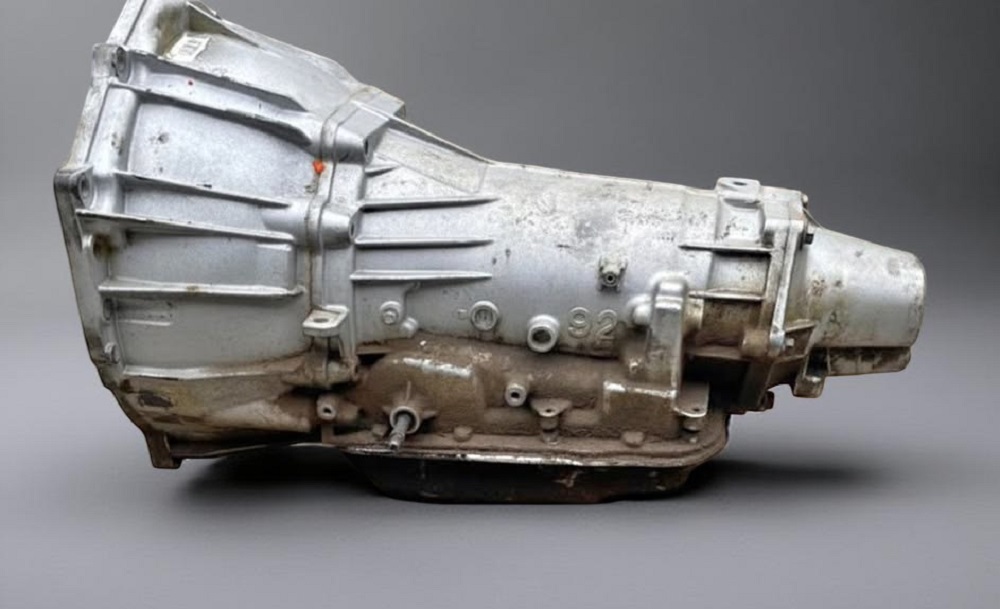
1. Weak bones, strong signals: why the 4L60E breaks the way it does
Old parts, new wiring: how the 700R4’s skeleton still runs the show
GM didn’t start from scratch with the 4L60E. It grafted electronic controls onto the same core layout used in the 700R4. That means the hard parts, planetaries, drums, bands, and shafts, still carry the geometry and material limits of early ‘80s tech.
The switch to electronic shifting in 1993 let the PCM command solenoids for timing and pressure instead of relying on a throttle valve cable. But that upgrade didn’t touch the rotating assembly.
You still get a stamped sun shell, a weak sprag, a small 3–4 clutch pack, and a fluid circuit that leaks under heat.
Where the gears slam, the case cracks – high stress ratios and real-world overload
First gear drops torque hard: 3.06:1. Then the 1–2 shift slams into a 1.62:1 gear. Fourth gear overdrives at 0.696:1. Every shift flips torque direction through a narrow set of parts, sprags, shells, bands, and any delay or low pressure makes them slip or shock-load.
Torque rating clocks in around 360 lb-ft. That’s on paper. Toss on 33s, a tune, or 6,000 pounds of trailer, and the internal stress climbs fast. Tow in OD and the 3–4 clutches glaze.
Mat it in 1st and the sun shell neck twists. Long grades with heat-soaked fluid melt seals that were never specced for that duty cycle.
4L60E gear ratios and likely stress points
| Gear | Ratio | Primary Holding Parts In Play | Typical Risk Under Load |
|---|---|---|---|
| 1st | 3.059:1 | Forward clutches, input sprag | Sprag abuse, sun shell shock |
| 2nd | 1.625:1 | 2–4 band, sun shell | Band slip, shell fatigue |
| 3rd | 1.000:1 | 3–4 clutches, input drum | 3–4 pack heat, drum leaks |
| 4th | 0.696:1 | 3–4 clutches, sun shell, OD section | 3–4 burnup, shell fracture under cruise |
Smart control, dumb failures: how electronics drive pressure into the dirt
The PCM uses throttle position, engine load, and speed sensors to manage shifts through the EPC solenoid and shift valves. But the solenoids don’t create pressure, they just time it.
Real clamping force still comes from fluid, and any mismatch between sensor data and hydraulic delivery means clutches slip under load.
Once the EPC coil degrades or the valve bore wears, line pressure drops off right when it’s needed. That lets the 3–4 pack flare. The torque converter shudders. The PCM sees slip, kicks P1870, and starts over-boosting line pressure to compensate. But that just masks the leak, it doesn’t stop it.
2. Where it snaps, burns, or slips before your eyes
Sun shell shears: the neck snaps, and three gears vanish
The OE sun shell was stamped steel with a narrow neck where the splines meet the sun gear. That neck twists under load and eventually gives up. When it does, the box loses 2nd, 4th, and Reverse in one hit.
It doesn’t fade. It bangs, then drops to 1st and 3rd only. You’ll get free-revving on a 2–3 or 3–4 shift attempt, maybe Reverse grinds or disappears. Pop the pan and there’s often metal flake or full-on chunks.
The fix is standard now; ditch the stock shell. Any rebuild worth its tools runs a hardened sun shell like The Beast or Sonnax Smart Shell. Both fix the neck. The latter also adds a bearing to replace the old thrust washer.
3–4 clutches toast: thin stack, poor seal, high heat
The 3–4 clutch pack doesn’t carry enough surface area to hold torque in OD once the seals start leaking. The 3–4 apply piston shrinks with heat cycles. The lip seals get hard and let fluid bypass. That reduces clamp force and lets the plates slip.
The input drum adds its own problem. It leaks internally at the shaft spline, leaking off 3rd-gear pressure that should feed the 3–4 clutch. It’s a slow leak, but it’s enough to flare the 2–3 shift and scorch the clutches by highway speed.
Modern rebuilds vacuum-test the drum, seal the shaft with Loctite, and spec better pistons and clutches with more surface and more heat resistance. Anything less is repeat business, guaranteed.
2–4 band fade: soft shifts, no OD, and servos that crack
The 2–4 band grabs the reverse input drum and holds it for 2nd and 4th. A worn band shows up as a lazy 1–2 shift or no 4th gear at all. The factory servo doesn’t help. It’s plastic. Crack it under pressure and the apply force drops off a cliff.
Too much servo pin travel means the band doesn’t grip. Too little and it drags, cooking itself and the drum. The fix is mechanical; measure the pin depth, correct apply clearance, and replace the servo with a Corvette or billet upgrade to get stronger, faster engagement.
Signature mechanical failures and how they show up to the driver
| Failure Type | Driver Symptoms | Typical Issue Inside |
|---|---|---|
| Broken sun shell | No 2nd, no 4th, no Reverse, sudden bang | Thin stamped shell neck fatigue |
| Burnt 3–4 clutches | 2–3 flare, slips into “neutral” then grabs | Seal leak, drum leak, heat buildup |
| Worn band / bad servo | Soft 1–2, no 4th, sometimes flare into OD | Band wear, cracked servo, low apply |
3. When the valve body lies and P1870 slams the shifts
Converter slip triggers max pressure, welcome to the P1870 cycle
P1870 doesn’t mean “maybe.” It means the converter clutch is slipping under lockup and the PCM’s throwing the hammer. Once it sees RPM split during steady cruise, it spikes line pressure to full and cuts future lockup. That’s why the next 1–2 shift hits like a brick.
The problem starts at the TCC regulator bore. The PWM solenoid pulses a steel valve back and forth in a soft aluminum sleeve. That bore eggs out. Once that happens, apply oil leaks past the valve, and the converter clutch never gets full pressure. That’s where the shudder begins.
Most drivers don’t know it’s the converter. But tap the brake at cruise and the shudder vanishes, that unlock signal proves the TCC was dragging.
Solenoid swaps fail because the leak’s in the metal
Plenty of DIYers try to fix P1870 with a new solenoid. It might buy a few weeks, maybe even a month. Then the code comes back and the shift bang returns.
The bore itself needs to be cut and sleeved. Shops use ream kits and drop in an oversized valve or steel sleeve; Sonnax and TransGo are the go-to names. Anything short of a full bore correction is temporary. If the converter’s already glazed, even that might not hold.
Worn valves cause random pressure drops and mystery shifts
The AFL valve meters flow to every solenoid. When its bore wears, pressure feed gets erratic. That shows up as ghost shifts, soft engagement, or harsh downshifts with no code.
Boost valve wear in the pump causes the same issue; pressure slips under throttle. That’s how you get a good cold 3–4 shift that turns into a slip-and-burn once it’s hot and under load.
Modern reman valve bodies usually come sleeved across the board: TCC, AFL, boost. Pair that with a fresh EPC solenoid and pressure stability returns.
Common valve body wear points and what they cause
| Valve / Bore | Main Job | Wear Result | Driver Symptoms |
|---|---|---|---|
| TCC regulator | Apply converter clutch | TCC apply leak | Shudder, P1870, hot harsh 1–2 |
| AFL valve | Feed solenoids hydraulic oil | Erratic solenoid feed | Random mis-shifts, hunting |
| Boost valve | Raise pressure under load | Low line at throttle | Soft shifts, clutch and band slip |
4. When the wiring lies and solenoids fake a transmission failure
Shift solenoids glitch and lock the box in the wrong gear
Shift solenoids A and B work in binary pairs to select each gear. If one sticks or its circuit dies, the PCM loses control of the logic. You get the wrong gear, or you get stuck in one with no upshift.
Blow the TRANS fuse or lose ignition power, and the system defaults both solenoids to OFF. That locks the unit into 3rd gear, no 1st, no 2nd, no 4th. The truck crawls off the line like it’s towing a house, but cruises smooth at 45.
These aren’t deep mechanical issues. A basic circuit check or scan tool can call it out. Most shops misdiagnose it, drop the pan, and miss the blown fuse.
EPC faults throw pressure off a cliff or to the ceiling
The EPC solenoid sets line pressure based on current from the PCM. When the solenoid coil breaks down or the screen plugs with metal, it sticks low or jams high.
Low EPC pressure causes delayed engagement, soft shifts, and quick clutch wear. High pressure slams every gear, especially when hot. If the trans thuds hard going into Drive, or the 1–2 shift feels like a punch, it’s usually the EPC jacked to max as a failsafe.
Flaky EPCs are common after 150,000 miles, especially if the fluid’s dark. Replace it with a name-brand unit and confirm pressure at the port.
Sensor noise scrambles shift timing and ends converter lock
A dead VSS leaves the PCM blind. No speed signal means no upshifts, stuck in 1st, no speedometer, and TCC never locks.
A bad TPS gives jumpy throttle readings. That messes with shift timing, causes 2–3 or 3–4 flares, and ruins wide-open shifts. Some GM modules substitute estimated load when the TPS cuts in and out, making it worse.
Engine-side misfires or weak spark cause torque drop under load. That feels like converter shudder or slip but shows no codes. Scope the ignition before blaming the transmission. Misdiagnosed engines take out good gearboxes every week.
5. What it feels like vs what’s actually busted
Hard break, no drive: the moment the hardware gives out
Lose Reverse, 2nd, and 4th in one hit? The sun shell let go. Hear a bang, then coast with no engagement? Could be a snapped output shaft or sprag failure. No Drive but it moves in L1 and L2? That forward sprag’s blown.
These failures aren’t slow. They come with violence or total silence. Drop the pan and you’ll see the story: heavy glitter, shredded shell pieces, or chunks of thrust washer. Once metal’s loose, it scrapes through the rest, planetaries, pump rotor, drum splines.
Flares, delays, and lazy engagement point to hydraulic loss
Slipping into neutral on the 2–3 shift is a red flag, burnt 3–4 clutches, often from low apply pressure. Slow engagement into Drive or Reverse? The pump isn’t holding line. Could be a worn EPC, a leaking seal, or a filter half-plugged with clutch dust.
These symptoms build over time. They don’t set codes. The shift still completes, until one day it doesn’t. That’s when you find black fluid, no friction left, and a converter filled with mud.
Shudder and slam that vanish cold but hit hot
Shudder at cruise that stops when you tap the brake is converter lockup gone sideways. It’s not the engine, it’s the TCC slipping. Most show up with no code. A brake tap unlocks the converter and the vibration disappears.
Harsh 1–2 shifts only when hot? That’s the PCM reacting to slip. It jacks pressure to save the clutches, but the damage is already in motion. These boxes drive polite cold and punchy once warm. That mood swing means line pressure isn’t matching load, and the converter or valve body’s leaking.
6. When towing, tuning, or tires push it over the edge
Overweight and overheated: how usage shreds the weak points faster
Haul a loaded trailer in Overdrive or roll on 35s with no re-gear, and the clutches don’t stand a chance. The 2–4 band and 3–4 clutch pack aren’t built to hold weight under low line pressure at highway speed. Line pressure drops, heat spikes, and the seals start to shrink.
Converter temps climb fastest in long pulls. Once the fluid crosses 230°F, it cooks the rubber and varnishes the bores. The torque rating on paper, 360 lb-ft, doesn’t account for lifted trucks, big tires, or tuned LS motors making 450+ through the stock box.
Why a built 4L80E stops the leak when power climbs
The 4L80E doesn’t shift like the 60, it shifts harder, but it stays alive when torque loads stack up. First gear is shorter (2.48 vs 3.06), so it hits softer off the line, reducing shell and sprag shock. Its clutches carry more surface, and the entire rotating mass is stronger by design.
Weight rating jumps to 8,000 lbs. Torque rating climbs over 440 lb-ft. With a shift kit and cooler, most stock 4L80Es run clean up to 500 hp. No custom tuning, no band-aids. Just mass and oil volume that can take the hit.
4L60E vs 4L80E for problem-prone builds
| Feature | 4L60E | 4L80E | Reliability Takeaway |
|---|---|---|---|
| Torque rating | ~360 lb-ft | ~440 lb-ft+ | 4L80E tolerates big-block/boosted power |
| First gear | 3.06 (hard launch, high load) | 2.48 (softer hit, stronger) | 4L60E stresses sun shell and sprag more |
| GVW rating | ~6,000 lbs | ~8,000 lbs | Heavy trucks belong on 4L80E past a point |
| Typical HP limit | ~350–400 hp with upgrades | 500+ hp with mild upgrades | Big power, big tires favor 4L80E |
The 4L65E and 4L70E aren’t the bulletproof upgrades they sound like
The 4L65E adds 5-pinion planetaries and an extra clutch plate in the 3–4 pack. The 4L70E carries a few more refinements. But the valve body still wears, the sun shell still cracks, and the TCC still leaks unless sleeved.
They survive a little longer, not a lot better. Drop either behind a cammed 6.0L or a supercharged setup without internal upgrades, and they follow the same script. The badges changed. The weak points didn’t.
7. What a rebuild really fixes and what gets skipped if you don’t ask
Local bench job or reman box: what you’re actually buying
A typical shop rebuild runs $2,000–$2,700 installed. You get new frictions, fresh seals, and maybe a better sun shell if the shop’s honest. But most reuse the drum, skip vacuum testing, and ignore valve body wear unless you call it out.
A quality reman unit costs more, usually $3,000–$4,200, but arrives with sleeved bores, hardened shells, upgraded servos, and full clutch packs already in place. Most include a warranty that covers labor and parts for 3 years or 100,000 miles.
Installers still mess it up. A missed converter seat or dirty cooler will end any transmission, reman or not.
4L60E repair tiers and how much “problem fixing” each really buys
| Service Type | Typical Cost (parts + labor) | Commonly Addressed Issues | What Usually Stays Stock |
|---|---|---|---|
| Fluid/filter service | Low | Minor shift feel, temp control | All hard parts and valve bores |
| Solenoids / minor VB fix | Low–mid | Some shift complaints, basic TCC issues | Worn bores, sun shell, 3–4 pack spec |
| Local “stock” rebuild | Mid | Fresh frictions, seals, sometimes shell | VB wear if not sleeved, cooling setup |
| Performance/HD rebuild | Mid–high | Sun shell, band, 3–4, servos, VB upgrades | Cooler often still marginal |
| Quality reman unit | High | Full hard-part and VB correction package | Install errors if shop cuts corners |
What serious builds never skip and why shops still do
A hardened sun shell is non-negotiable. So is a sleeved valve body and a reamed TCC bore. The 3–4 clutch pack needs more plates and a better apply piston. The 2–4 band needs a higher apply servo, and the plastic accumulators have to go.
Shops skip these if you don’t spec them. They cost more in parts, take more time, and don’t show up until after the 12-month warranty runs out. But they’re the only way to stop 3–4 flares, P1870, and sun shell failure from coming back.
Rebuild it soft and you’ll be back in 18 months. Build it right and the box holds under load and heat.
Install slipups that torch a fresh unit before it clears the parking lot
If the converter isn’t fully seated, three clicks onto the pump, the rotor shears on first startup. If the cooler’s full of debris, it’ll send metal back into the new unit within 15 minutes of run time.
Back-flushing matters. Not air. Not brake clean. A real heated flush machine with full-flow test pressure.
Fill matters too. Dexron VI only. Engine running, hot, on level ground. Dipsticks lie when cold, and overfill foams under load. That’s how a brand-new transmission eats itself on day one.
8. Heat ends everything: how to keep it alive after the fix
When the fluid cooks, the transmission’s already dying
Once ATF crosses 230°F, it starts breaking down. The friction modifiers burn off. The seals shrink. Varnish builds up in every bore and on every valve. That’s when the converter shudders, the 3–4 clutches start slipping, and the EPC solenoid loses clean modulation.
Most failures trace to one number: temperature. Towing in OD, climbing grades, or running big tires with a stock tune pushes fluid into the danger zone. There’s no warning light for transmission heat. You don’t see the damage until it slips, or bangs.
Bigger cooler, better line pressure: how to stop the next meltdown
A real external cooler, not just the in-radiator loop, drops fluid temps by 30–50°F. That margin keeps seals alive and clutches from glazing. It’s the single best upgrade for anyone towing or daily-driving in traffic.
A good shift kit makes every shift faster, firmer, and cleaner. That reduces overlap, cuts clutch heat, and trims wear. Pair it with a small bump in commanded line pressure in the PCM. More pressure means more clamping force and fewer chances for slip.
Maintenance that matters: how to catch it before it breaks again
Flush the fluid every 30,000 miles if you tow. Every 40,000–50,000 miles for street use. Ignore the “lifetime” fill line in the manual, those engineers don’t rebuild gearboxes.
Drop the pan. Check the magnet. Watch for early signs: soft 1–2 shifts, a 2–3 flare, or lockup shudder under light throttle. Pressure test at the line port. If you see a drop under load, the leak’s inside, and it’s starting again.
Sources & References
- Common 4L60E Transmission Issues and How to Prevent Them
- History of the 4L60E and How It Stacks Up Against the 4L80E …
- 4L60E Vs. 4L80E Transmissions: What Are The Differences? – Jalopnik
- How Do I Know If My GM 4L60E Transmission Is Failing …
- 4L60E vs 4L80E Performance Transmission Differences
- 4L60E vs 4L80E: Overdrives For Overachieving Performance
- Cruising Smoothly: A Detailed Look at 4L60E vs. 4L80E Transmissions – SBT Japan
- 4L60E Rebuild Diagnosis and Parts | PDF | Pump | Clutch – Scribd
- General Motors 4L60-E Transmission • Problems, Solutions …
- Common Problems with the 4L60E & 4L65E – Monster Transmission
- 30 Common 4L60E Transmission Problems & Repair | Charlotte NC …
- 4L60E Common Problems | PDF | Transmission (Mechanics) | Clutch – Scribd
- 3 Symptoms Of A Failing 4L60E Transmission And How To Diagnose The Problems
- Diagnosing GM Trouble Code P1870 | MOTOR Magazine
- 4L60E Transmission 3-4 Clutch Burn Up Repair Kit (1993-2004)
- 4L60E Common Failure Points – Gears Transmission
- 30 Common 4L60E Transmission Problems | PDF – Scribd
- 4L60E Transmission Failures & Fixes | PDF – Scribd
- I have a 4L60E with a burnt up 3-4 clutch. Any other must have upgrades while I’m in there?
- Help me diagnose my broken 4L60E transmission out of my truck
- All Over the Map: Attacking 4L60/E Burnt 3-4 Clutches with Confidence – Sonnax
- 4L60E Line Pressure Testing Procedure | PDF – Scribd
- p1870 : r/AskAMechanic
- 4L60E Transmission P1870 Transmission component slipping (early valve body) – YouTube
- 4L60E Transmission TCC Valve Repair 1996-1999 GM Transmissions
- 5 Signs Your Car Has a Bad Transmission Shift Solenoid (Only MECHANICS Know)
- My 4L60E transmission is acting up here’s the symptoms and list of codes
- GM 4L60 (TH700-R4) & 4L60E 3-4 Clutch PowerPack®
- Installation and Operation Manual for 4L60E, 4L65E, and 4L70E Transmissions
- Transmission Rebuild Costs | Street Smart® Transmission
- Transmission Replacement Cost Estimate – RepairPal
- 4L60E TCC Valve Upgrade – Fixes P1870 Code For 1996-1999 GM Transmissions
- 4L60E Transmission rebuilt 2WD/4WD 450HP
- 4L60E Rebuild Prices – Sun West Transmissions and Radiators
- Checking 4L60E Line Pressure