
Fire it up, hear the clatter; then the dash lights scream. DEF warning, low oil pressure, turbo codes.
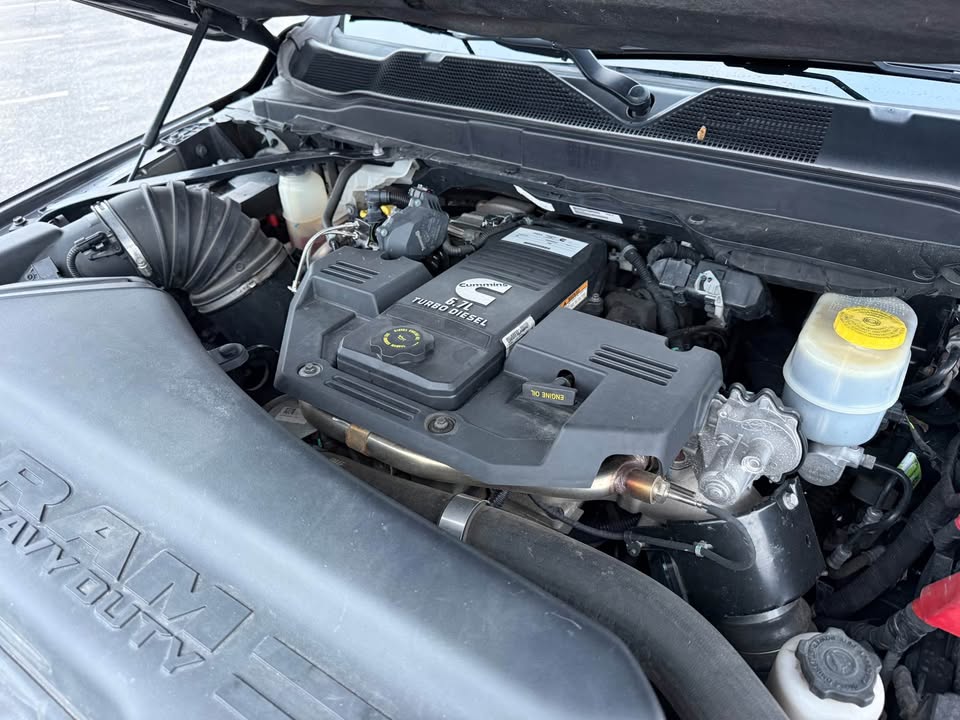
That’s the 6.7 Cummins story for thousands of Ram owners running anything from bone-stock 2012s to tuned 2024s. Behind the torque and tow ratings sits a powerplant loaded with high-pressure fuel, brittle emissions gear, fragile lifters, and a bolt that’s totaled engines from inside the intake.
Some failures follow a pattern. Others hit out of nowhere. This guide breaks down how the 6.7 fails, which years carry the worst risk, and what keeps them alive past 300,000 miles instead of racking up a $15,000 rebuild.
1. Why the 6.7 fails where the 5.9 didn’t
Bigger bore, higher pressure, thinner margin for error
The 6.7L Cummins came with a longer stroke and a wider 4.21-inch bore. That let it breathe harder, but left less sealing surface between cylinders and coolant jackets. Add the spike in peak cylinder pressure needed to hit 1,000+ lb-ft, and the head gasket started taking more abuse.
Tuned trucks and heavy haulers push those pressures higher. Stock bolts stretch, the head lifts, and coolant pukes out the degas bottle. The 5.9 never dealt with this. Its smaller 4.02-inch bore gave it more gasket land and less blowout risk under load.
No longer a mechanical brute, now it’s high-strung and stacked with electronics
The 5.9’s fuel and air system was simple: fixed turbo, early common-rail or even mechanical injection, no aftertreatment. The 6.7 dropped into a different world, HPCR injection, VGT turbo, EGR, DPF, and later SCR with DEF dosing. Every layer added power and cleanliness but chipped away at simplicity.
The bottom end stayed strong. Most failures shifted outward into systems stacked with sensors, electronics, and tight tolerances. When something fails, it often doesn’t quit gently; it drops into derate, limp, or leaves you dead in the road.
Power climbed, block stiffened, and the margins shrank
Early 6.7s pushed 350 hp and 650 lb-ft. By 2024, they reached 420 hp and 1,075 lb-ft. The 2025 High-Output model further increases this to 430 hp.
To handle that, Cummins moved to a Compacted Graphite Iron (CGI) block in 2019. CGI added strength without bulk, letting the rotating assembly keep up with big-torque numbers.
But it wasn’t across-the-board improvement. While the block and crank hardened up, weak points showed elsewhere, gaskets, turbo vanes, lifters, and the infamous fuel pumps. The extra power didn’t come free.
5.9 vs 6.7: where strength improved and where problems shifted
| Area | 5.9L B-series | 6.7L Cummins (2007.5–2025) | Net effect on problems |
|---|---|---|---|
| Block material | Cast iron | Cast iron → CGI (2019–2024) → Cast Iron (2025+) | Stronger for high torque in later years |
| Fuel system | Mechanical/early common rail | HPCR with CP3/CP4, higher pressures | More sensitive to fuel quality, pump failures |
| Air system | Fixed turbo | VGT with electronic actuator | Better response, more vane/actuator issues |
| Emissions hardware | Minimal/none | EGR, DPF, then SCR/DEF | New codes, more derate/limp events |
| Head gasket loading | Lower Pmax | Higher cylinder pressure and torque | More gasket issues under load/tuning |
2. Emissions gear that grinds the 6.7 down
EGR faults that fake head gasket failure
The EGR system sends hot exhaust back into the intake. On the 6.7, that means carbon builds fast, on the valve, inside the passages, across the intake shelf. Once that valve sticks open, idle turns rough and smoke pours out. Closed tight, and NOx spikes. Either way, expect codes and a drop into limp mode.
The real punch comes from the cooler. Over time, thermal stress cracks the core, letting coolant leak into the exhaust. You lose coolant without a visible leak, tailpipe blows white smoke, and techs start hunting blown gaskets. Many engines got torn down for a head job when the EGR cooler was the real problem.
DPFs that choke on city miles and drown oil in fuel
The DPF traps soot until exhaust heat burns it off. On a truck that gets worked, hot loads, long grades, it stays clean. Short-trip trucks clog fast. The regen cycle runs more often, injects extra fuel, and spikes exhaust temps to clean the filter.
Early trucks used in-cylinder regen that dumped fuel during the exhaust stroke. That unburned fuel diluted the oil and wore down bearings. Later setups moved injection into the exhaust stream, but fuel still gets into the oil when regens stack up. Miss a few oil changes and the rod bearings don’t last.
DEF glitches that end in countdown-to-zero speed limits
SCR adds DEF to clean up NOx. But it’s picky, bad fluid, cold weather, or a failed sensor throws P20EE, P207F, or P202E. The DEF injector can crystalize and clog. NOx sensors burn out early. Sometimes the fluid’s just garbage.
Once a fault sticks, the system throws warnings and starts a countdown. You get limited to 55 mph, then 5 mph. No override. No limp. Just a truck that crawls unless you scan, reset, or replace half the emissions stack.
The 67A recall helped with dosing calibrations, but didn’t erase the sensor fragility baked into these trucks.
Core 6.7 Cummins emissions problems and what drivers actually see
| System | Typical codes | Common mechanical cause | What the driver notices |
|---|---|---|---|
| EGR | EGR flow, temp codes | Stuck valve, plugged passages, cracked cooler | Rough idle, smoke, coolant loss, derate |
| DPF | Soot load, P244A | Short trips, high idle, regen failure | Frequent regens, low power, “See dealer” |
| SCR/DEF | P20EE, P207F, P202E | NOx sensor fault, bad DEF, clogged injector | DEF warnings, countdown, speed limits |
3. VGT turbos that foul, stick, and smash actuators
How soot strangles the turbo’s sliding vanes
The Holset VGT runs a sliding nozzle ring with movable vanes that adjust exhaust flow. It spools fast down low and holds boost up top, but it lives inside a soot bath. On trucks that idle too long or rarely see high EGTs, carbon locks those vanes in place.
Once they stick, airflow collapses. The turbo can’t adjust, and the truck either dogs off the line or over-boosts on hills. Heat and pressure build, drive pressure spikes, and codes hit: over-speed, underboost, and vane-position faults start flooding the ECM.
Vane position dictates how your truck pulls, or stalls
When vanes stick closed, you’ll feel low-end grunt, but drive pressure shoots up, EGTs soar, and turbo seals take the hit. Stick open, and the truck falls flat. No spool, no pull, nothing but lag until you’re past 2,000 RPM.
Boost surges and throttle hesitation usually point here. So does the classic “lazy turbo” feel when towing. The ECM might log P003A or P2563, but the real failure is mechanical binding that software can’t fix.
Actuator carnage when soot makes the motor fight the turbo
The actuator mounts to the turbo and drives the vane position. When vanes bind, the motor fights back, until the plastic gears break or the internal sensor dies. Actuator failure can also throw a hard P003A or P003B, lock the turbo in fail-safe mode, or spike EGTs under load.
Sector-gear tests tell the story fast. Remove the actuator. If the sector gear on the turbo shaft won’t move by hand, the turbo’s cooked. If it swings free, the actuator’s shot.
Replacement isn’t plug-and-play; setup requires off-truck pre-alignment and scan-tool calibration or the new unit won’t talk to the ECM. Miss that step, and the fresh part won’t last.
4. Fuel system failures that tank the whole engine
CP3s that wear slow, not dirty
The Bosch CP3 ran from 2003 through 2018, then returned in 2021 after the CP4 debacle. It’s a 3-piston workhorse with internal lube and wide tolerances. It takes mild contamination, minor air, and the wrong filter better than anything that came after.
When it wears, it does it quietly; slow rail pressure drop, occasional hard starts, maybe a weak injector or two. No shrapnel, no tank flush, no full-system replacement. Most CP3s die old, not ugly.
CP4.2 pumps that eat themselves alive
The 2019–2020 Ram 6.7 got a Bosch CP4.2. This pump doesn’t tolerate air or poor fuel. Miss a prime after a filter change, and the tappets float. They rotate, grind the cam lobe, and turn the pump into a metal flake cannon.
Shrapnel hits the rails, the injectors, the return line, then cycles into the tank. Once it happens, the fix isn’t just a new pump; it’s the whole fuel system. That means new injectors, lines, rails, and a cleaned or replaced tank. The bill runs $6,000 to $10,000 on average, often higher.
Y78 recall, swap kits, and the buyer’s checklist
Ram finally recalled the CP4 trucks under Y78, swapping the pump for a CP3 and flushing the system. Most repairs happened by late 2022, but plenty of trucks escaped the recall or got partial service.
Visual ID helps—CP3 has a domed rear cap and straight fittings. CP4 sits taller and has an exposed hex nut on top. Build codes, dealer history, or an inspection of the high-pressure lines can confirm what’s in the bay. Any 2019–2020 truck without CP3 documentation carries a loaded chamber under the hood.
Bosch CP3 vs CP4 on the 6.7 Cummins
| Pump | Years on Ram pickups | Design basics | Typical failure style | Owner risk level |
|---|---|---|---|---|
| CP3 | 2003–2018, 2021+ | 3-piston, internal lube | Gradual wear, low rail pressure | Low to moderate |
| CP4.2 | 2019–2020 | 2-piston, fuel-lubricated tappets | Catastrophic shrapnel event, full system contamination | High, if not recalled/upgraded |
5. Internal damage from bolts, lifters, and blown gaskets
Grid heater bolts that destroy cylinders
The factory grid heater draws over 200 amps through a single stud in the intake plenum, right in front of cylinder 6. Over time, the joint arcs and cooks itself loose. When that nut or bolt snaps, it gets sucked straight into the combustion chamber.
Once inside, it batters the piston, shatters valves, cracks the head, and often ruins the block. Plenty of 6.7s have gone from smooth idle to scrap metal in one key cycle.
Banks, BD, and others offer delete or relocation kits, but many are too late. Repairs run $15,000 to $30,000, and insurance rarely touches it.
Hydraulic lifters that seize and shred the cam
Starting in 2019, Cummins swapped to hydraulic roller lifters. Sounds good on paper, no lash adjustment, quieter valvetrain, but these lifters don’t forgive bad oil or long intervals.
They run plain bearings instead of needles. If oil pressure sags or viscosity’s off, rollers stop spinning. The cam lobe grinds flat. Metal spreads across the oiling system and wipes the engine.
Ticking at cold start is the first warning. Ignore it, and you’ll be pricing out a long block. TSBs now recommend 10W-30 or 5W-40 only; 15W-40 is no longer safe on these units.
Head gaskets that blow when boost climbs
The 6.7’s wider bore leaves less sealing land between bores. Crank up boost or cylinder pressure, especially on tuned trucks, and stock TTY bolts can’t hold. The head lifts, gases escape, and the gasket fails.
Common signs: bubbling in the coolant bottle, white smoke under load, pressure in the cooling system even when cold. ARP 625+ head studs are now standard on anything pushing big power. Stick with factory torque specs and OEM bolts only if the truck’s stock and stays that way.
6. Crankcase pressure that finds every weak seal
Forgotten CCV filters that trigger a chain of leaks
The 6.7’s closed crankcase system routes blow-by gases through a filter in the valve cover. That filter traps oil mist and vents the rest back into the intake. When it clogs, pressure builds in the crankcase and starts looking for exits.
First hit is the front seal. Then the rear main. Then the turbo oil seals. Eventually, oil seeps from the front cover, seeps past the dipstick tube, and coats the intercooler piping in black film. Most owners blame bad gaskets. It’s pressure.
Factory service intervals that don’t match real-world duty
Early trucks called for CCV filter swaps every 67,500 miles. Newer models bumped that to 75,000. Problem is, towing, high idle, and dusty roads clog filters faster. Trucks worked hard should cut that interval in half.
Watch for signs: oil cap that rattles or hisses, oil seeping from odd spots, or turbo noise from oil starvation. Ignore it long enough, and turbo bearings start to wobble.
Reroute kits that clean pipes but raise new flags
Some owners run CCV reroutes or catch cans to vent blow-by outside the intake. That keeps the turbo clean and stops oil from gumming up charge-air pipes.
But there’s a compromise. You’ll smell it in the cab with the windows down. States with emissions checks may fail the truck. And reroutes won’t fix the real issue if the filter’s already plugged.
CCV service guidance by 6.7 Cummins generation
| Model years | Factory CCV interval | Severe-duty best practice | Common “too late” symptom |
|---|---|---|---|
| 2007.5–2018 | ~67,500 miles | 30,000–40,000 miles | Front cover seep, turbo oil mist |
| 2019–2024 | ~75,000 miles | 40,000–50,000 miles | Rear main leaks, oily intercooler hoses |
| 2025+ | Improved top-service unit or High-longevity unit | Inspect periodically | Pressure-driven leaks if never checked |
7. Same block, different lives, how duty cycle shapes failure
Pickup torque vs. vocational grind
The ISB6.7 shares the same basic long block with Ram’s 6.7L, but the job is night and day. Medium-duty trucks, buses, box trucks, delivery rigs, run constant RPM and load. They make 220–300 hp, not 400+.
Pickup 6.7s swing between unloaded errands and heavy fifth-wheels. They spike EGTs in bursts, then cool off at stoplights. That start-stop abuse is what clogs DPFs, gums VGTs, and warps gaskets.
Why vocational fleets dodge the worst emissions failures
Medium-duty rigs stay hot. Long routes, heavy loads, no idle time. That keeps soot levels low, lets SCR systems stay dry, and keeps DEF injectors from crystalizing.
Pickups idle in fast-food lines, tow occasionally, and rarely hit the RPMs needed to cook the DPF clean. Then the codes start, P244A, P207F, P20EE. Emissions gear loves heat, and pickups don’t give it enough.
Problem stacks that shift by use case
Pickup owners see turbo actuators burn up, VGTs stick, oil leaks from ignored CCV filters, and blown head gaskets from tuned loads.
Medium-duty fleets face different wear: EGR coolers plugging from massive hours, valves coked up from constant low-speed runs, and oil thickened from poor idle habits. But their DPF and DEF systems usually live longer; hot pipes stay clean.
6.7 Cummins problem patterns: pickup vs medium-duty
| Use case | Typical power rating | Emissions pain points | Mechanical pain points |
|---|---|---|---|
| Ram HD pickup | 350–430 hp | DPF clogging, DEF/NOx sensor issues | VGT vane/actuator, CCV leaks, head gaskets |
| ISB6.7 medium-duty | 220–300 hp | EGR plugging, NOx sensors | EGR coolers, wear from high-hour service |
8. Year-by-year weak spots and the hard reset in 2025
Which years break where: cluster failures by generation
2007.5–2012: First-gen 6.7s brought in DPF and EGR, but no DEF yet. These trucks suffer from in-cylinder regen fuel wash, early turbo soot issues, and high oil dilution. Grid heater bolts were already starting to drop into cylinder 6 by 100,000 miles.
2013–2018: SCR/DEF entered the scene. The upside was better emissions compliance. The downside, NOx sensors started failing fast, DEF quality codes stacked, and injectors began crystallizing. Most saw a 67A emissions recall.
2019–2020: Power jumped to 1,000 lb-ft. So did failure risk. These trucks got the CP4.2 grenade pump, hydraulic lifters with no needle bearings, and a sharper rise in lifter-cam failures. These years define the high-power, high-cost risk.
2021–2024: CP3 returned under recall pressure. Emissions components held steadier, but lifter wipeouts kept destroying engines, especially in trucks run on thick oil or stretched intervals. Turbo actuators still died early on city-driven rigs.
2025+: Full redesign. The grid heater’s gone, replaced by glow plugs. The CP4 is history. A CP8 pump and revised fuel path aim to clean up lubrication and longevity.
Cylinder head, intake tract, and injector placement all shifted for service access and airflow. A new ZF 8-speed ditches the sluggish 68RFE.
What keeps these engines from failing early
Skip factory oil intervals on trucks that regen often. Cut to 7,500 miles or less. Replace fuel filters every 15,000 with Fleetguard or Mopar NanoNet filters; cheap ones let grit through. CCV filters should be swapped at 30,000–40,000 in heavy-use trucks.
Work the engine hard at least once a week. Let EGTs rise. Let the DPF cook. Light loads and short trips choke the system. Catch VGT lag, oil seepage, or cold-start ticks early, before they turn into $4,000+ turbo or cam jobs.
Hardware that saves engines:
• CP3 swap kits for 2019–2020
• Grid heater delete or relocation kits
• Lift pumps with 2-micron filtration (FASS, AirDog)
• ARP 625+ studs for tuned trucks
• VGT cleaning kits or early replacements before actuator failure
What 2025 fixes, and what still falls on the owner
The 2025 updates hit the right targets. No more heater bolt risk. No more CP4 implosions. No more lifter guts chewing cams to dust. The CP8 pump runs cooler, lubricates better, and tolerates more air. Glow plugs eliminate a long-standing failure point.
But the emissions stack is still there. The DPF still hates short trips. Oil still dilutes under stacked regens. Crankcase filters still need to breathe. And 1,075 lb-ft still stresses head gaskets when tuning goes wild.
No matter the year, this engine holds together only when the owner stays ahead of the mess, on oil, filters, load cycles, and factory weak spots that still haven’t gone away.
Was This Article Helpful?