
Derates. Choked boost. Coolant vanishing fast. The 6.7 Powerstroke doesn’t fail quietly when it’s pushed too far.
Ford’s first in-house diesel ended the Navistar era with a clean-sheet CGI block, reversed flow heads, and up to 1,200 lb-ft of torque. But that torque comes at a cost; high rail pressures, plastic cooling hardware, fragile sensors, and fuel-system roulette with the CP4.2.
This guide cuts through the sales pitch. It breaks down how each generation of 6.7 falls apart, what it takes to keep them running past 300,000 miles, and which upgrades matter before the price of failure jumps into five figures.
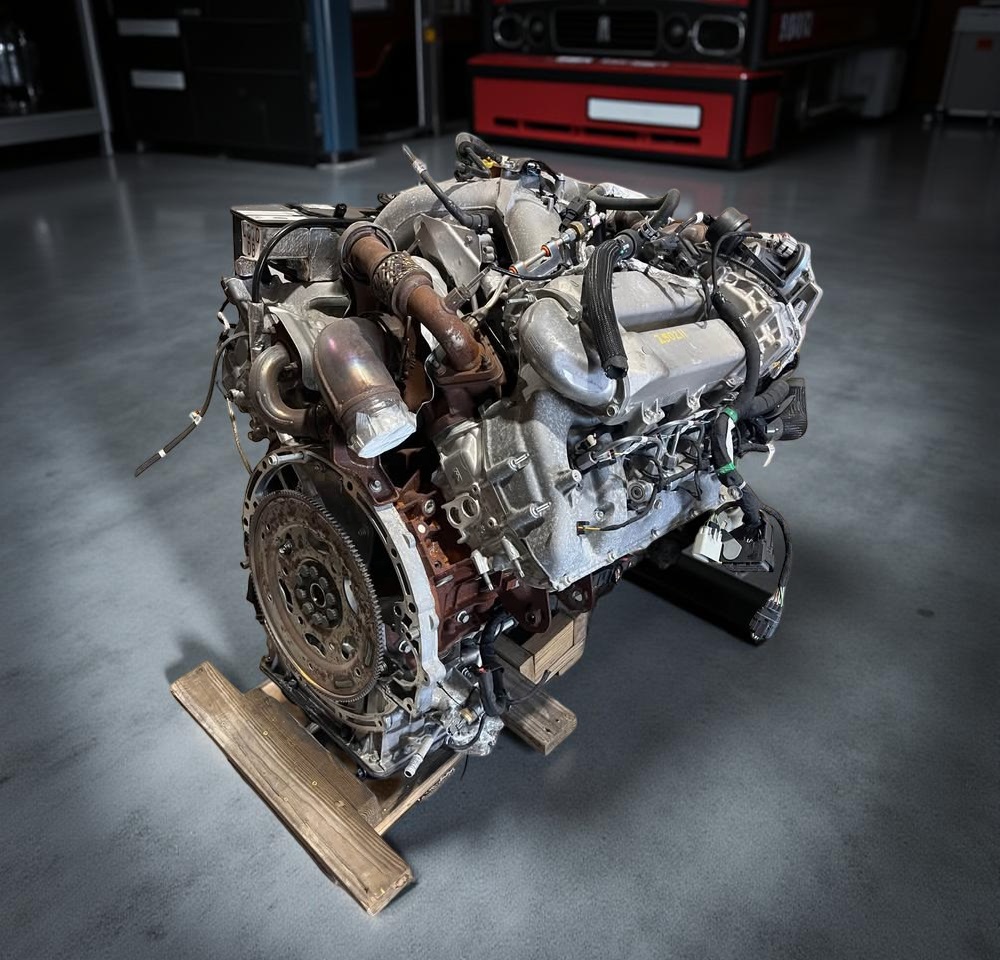
1. Why the 6.7’s architecture hits hard, and breaks hard
Ford’s reversed flow layout changed the game, not the laws of heat
The 6.7 starts with compacted graphite iron, a jump from the brittle gray cast used in the 6.0 and 6.4. CGI handles heat and cylinder pressure without ballooning the block, letting Ford pull serious torque without thickening everything around it.
Turbo lives in the valley. Exhaust dumps straight into the turbine. Intake runners swing outboard, not in. That cuts spool lag and gives faster throttle response, but it stacks heat in the tightest part of the engine bay. Valley EGTs spike under load, and oil, sensors, and wiring packed in the same area feel it first.
Heads stay planted. Each cylinder gets six bolts, not four like the 6.0. Gasket blowouts are rare, even under tuned loads. But heat stress shifts downstream, through charge pipes, turbo seals, sensors, and coolant tees that weren’t designed to take it.
Each generation adds torque, and stress everywhere else
| Generation | Model years | Rated hp | Rated torque (lb-ft) | Turbo setup | Piston material | Rail pressure |
|---|---|---|---|---|---|---|
| Gen 1 | 2011–2014 | 390–400 | 735–800 | GT32 DualBoost VGT | Aluminum | ~30,000 psi |
| Gen 2 | 2015–2019 | 440–450 | 860–935 | Larger Garrett GT37 VGT | Aluminum | ~30,000 psi |
| Gen 3 | 2020–present | 475–500+ | 1,050–1,200 | Updated VGT, HO options | Steel | ~36,000 psi |
Boost climbs. So does fuel pressure. Injector duty cycles stretch. Oil cooks faster. Charge pipes hit the red zone under tuned loads. Late-gen engines hold more power, but parts around the block start to show the strain first, especially plastic fittings and piezo injectors that don’t forgive dirty diesel or skipped intervals.
Early models lose turbos. Mid-gens shed coolant. Late models chew through sensors and fuel hardware when quality drops or maintenance slips. It’s the same block underneath, but every system around it runs closer to failure under pressure.
The 6.0 blew gaskets. The 6.7 blows money.
| Engine | Core strengths | Failure points that cost big |
|---|---|---|
| 6.0L | Solid power when bulletproofed | Gaskets, EGR coolers, oil system clogs |
| 6.4L | Bottom-end strength, fast twin turbos | Fuel dilution, cracked pistons, regen failures |
| 6.7L | Strong block, great head sealing, CGI | CP4.2 pump, turbo heat soak, plastic connectors |
The 6.7 doesn’t pop head gaskets like the 6.0. It doesn’t flood the oil pan like the 6.4. But it’ll eat a fuel system from one bad tank, drop boost from a cracked pipe, or spike coolant pressure through a split plastic T.
It fixes old failures but replaces them with high-dollar ones, because every major system runs tighter, hotter, and under more pressure than ever before.
2. CP4.2 failures hit fast, and wreck the entire fuel system
Why the CP4.2 can’t handle U.S. diesel
Bosch’s CP4.2 pump drives two plungers with a roller-tappet cam and relies on the diesel itself for lubrication. No oil circuit. No forgiveness. If the fuel’s too dry, air gets in, or water sneaks past the separator, the cam-to-roller film fails. The roller twists, the cam lobe eats metal, and the debris goes everywhere.
That shrapnel doesn’t stay in the pump. It heads downstream, rails, injectors, tank. First sign is often subtle: faint glitter in the fuel filter, brief rail-pressure drops under load, or a light lope at idle. When the failure hits full, it’s not one part. It’s the whole system.
What grenading looks like, parts, damage, and cost
| Component | Typical damage | Repair action | Cost impact |
|---|---|---|---|
| CP4.2 pump | Seized roller, scored internals | Replace with CP4.2/CP3/DCR | Major parts + labor |
| Piezo injectors (x8) | Nozzle scoring, jamming | Full set replacement | High parts cost |
| High-pressure lines/rails | Metal debris contamination | Replace all | Moderate to high |
| Tank and low-pressure lines | Shrapnel from return flow | Flush or replace | Added labor + parts |
| Fuel filters | Plugged with metal | Replace; check for recontamination | Minor, diagnostic flag |
Flushing rarely works. Debris hides in regulators and hose elbows. Miss one, and it ruins your new pump. A full failure runs $8,000–$12,000+ with labor, depending on how far the metal traveled.
How bypass kits and pump swaps actually change the outcome
“Disaster-prevention” kits intercept the pump’s return flow before it hits the tank. They don’t save the pump, but they stop shrapnel from reaching injectors and rails. If the pump fails, you’re out one pump, not an entire system.
Swapping to a CP3 or DCR pump changes the outcome completely. No roller-tappet weak point. More tolerant design. Tuning-safe. But some setups void emissions compliance and extended warranties.
Daily drivers lean on bypass kits. Tow rigs and tuned builds go full swap. Either way, stock CP4.2s age like milk once fuel quality drops or filters stretch past interval.
3. Turbo failures and charge-air blowouts under heavy load
Early GT32s gave fast spool, and faster failures
The 2011–2014 trucks run a GT32 DualBoost turbo. Twin inlets feed a single compressor, all buried in the valley. Great throttle response. But the early ones used ceramic ball bearings, and that’s where things go sideways.
Under hard pulls and quick shutdowns, the ceramic bearings fracture. That sends the shaft wobbling. Oil blows straight into the exhaust. You get a shriek, clouds of blue smoke, and power loss all at once.
While Ford attempted to address the GT32’s fragility with a mid-cycle update in 2013, most owners and technicians consider the 2015 transition to the larger Garrett GT37 VGT as the definitive fix for turbo reliability issues
GT37 and later turbos hold longer, but hate heat
Starting in 2015, Ford moved to the GT37 VGT. Bigger compressor. Steel internals. More reliable, unless it gets heat-soaked. Extended towing without a proper cooldown bakes the oil, sticks the vanes, and gums the actuator. You’ll see P2263 or P0299 codes, sluggish boost, and oil residue in the charge tract.
Oil quality matters. So does shutdown timing. Sloppy oil change habits or keying off right after a grade turns a healthy GT37 into a locked-up hunk of metal. Tuned trucks fail faster, especially if crankcase pressure’s been building from a clogged CCV system.
Plastic charge pipe pops, and leaves you crawling
The factory cold-side charge pipe is plastic, ribbed, and routed right where heat and pressure stack. Under stock load, it holds. Tuned or towing? It bursts or slips loose without warning.
Failure sounds like a shotgun blast. Boost drops to zero. Black smoke pours out the tailpipe. You’re in limp mode with no power up the hill. Most failures happen during passes or climbs, right when you can’t afford it.
The fix is simple and mandatory: swap to an aluminum or reinforced silicone pipe with better clamps. Every tuned 6.7 should have one. So should every tow pig running hot.
4. Emissions parts that clog, crack, and shut the truck down
EGR coolers clog with carbon, or leak coolant straight into the intake
Exhaust gas recirculation on the 6.7 sends hot gases through a cooler, then back into the intake. At idle or in town, exhaust temps stay too low to keep soot suspended. That soot sticks, layers, and slowly chokes flow. By the time P0401 triggers, flow’s already cut by half or more.
Some coolers crack internally. Coolant disappears. Starts run rough. You smell sweet exhaust. Ignore it, and coolant hits pistons and valves. Loss piles up fast, especially when the leak’s small enough to dodge detection but steady enough to thin the coolant mix every trip.
DPF face-plugs when regens can’t keep up
Active regens spike exhaust temps past 1,000°F to burn off soot in the DPF. That works, until soot output beats burn rate. Short drives, cold starts, and injector issues dump raw fuel into the mix. Ash loads build. DPF can’t clear itself. Backpressure climbs, fuel mileage drops, and derate kicks in.
Face-plugged filters act like they’re full, even after regen. Repeated regens every 100–150 miles instead of 400–600 usually mean something upstream is off: bad injectors, weak turbo, or EGR flow errors.
DEF tank faults, EGT sensors, and emissions shutdown triggers
| Component | Common failure mode | Typical symptoms |
|---|---|---|
| EGR cooler | Clogged or internal coolant leak | P0401, cold-start smoke, coolant loss |
| DPF | Excess ash, can’t regen | Frequent regens, limp mode, backpressure |
| SCR/DEF tank | Heater or level/quality sensor fault | DEF warnings, speed countdown |
| EGT sensors | Thermal failure, false high-temp read | Shutdown or derate, P0544/P0546 codes |
Early EGT sensors fail often. Open circuits or bad reads trick the PCM into thinking temps are too high. The truck cuts power or shuts down entirely, even if temps are normal. Updated sensors and reflash help, but once the sensors start going, more usually follow.
Emissions issues don’t build slowly. They pile until the truck locks itself into protection mode. Even small faults, if stacked, can leave you stuck.
5. Cooling system cracks under heat, pressure, and plastic shortcuts
Two cooling loops, one weak link: old coolant and heavy towing
The 6.7 runs two separate coolant loops. One handles the heads, block, and turbo valley. The other cools the intercooler, fuel system, and transmission. Both get hammered under load, especially when pulling long grades or working in hot climates.
Sludge builds fast when the wrong coolant gets used or old fluid stays too long. Water pumps wear early. Sand and casting debris tear through EGR coolers. High loop temps boil cheap coolant mixes, and low-temp side failures sneak past owners until pressure spikes blow out fittings.
Radiator seams split, plastic tees crack, and quick-connects dump coolant fast
The primary radiator uses crimped plastic end tanks. Pressure swings and heat cycling open up the seams, especially at the top corners. You’ll spot orange or yellow stains near the top, or wet crossmembers with no clear trail.
Plastic quick-connects seal with soft O-rings. Age and pressure deform the housing, and leaks start slow. The worst offender is the heater hose T-fitting. When it cracks, it blows coolant in seconds. No warning. No puddles. Just a fast overheat and potential top-end damage before the dash gauge even moves.
Brass tees, better clamps, and upgraded hoses stop most of these. But it takes crawling under the truck and checking every connection, not waiting for the steam.
Coolant chemistry, filter kits, and what smart owners catch early
Motorcraft Orange was used through 2021. Newer models run Yellow OAT. Both go acidic if ignored. Both carry scale and debris if the system was never flushed after the break-in miles.
Inline filter kits trap casting sand and rust flakes before they hit the water pump or clog the EGR cooler. Especially useful on 2011–2016 trucks, where the coolant loop was more prone to early buildup.
Owners who check reservoir color, sniff for sweet smell, and test pH catch problems before they crack something expensive.
6. Crankcase pressure climbs, oil control slips, and leaks start stacking
CCV filter backs up, and pressure finds the path of least resistance
The crankcase ventilation (CCV) box vents blow-by gases and filters out oil mist before routing it back to the intake. Ford calls for a 67,500-mile interval on the filter, but trucks that idle long or tow heavy clog it much sooner.
Once it clogs, crankcase pressure spikes. Oil gets shoved past seals. You’ll hear a faint hiss at the dipstick. Charge pipes fog up. Dipstick tubes and oil fill caps spit mist. Tuning or high-load use makes it worse. Many fleets switch to 2017+ style CCV boxes or full reroute kits just to stop the pressure rise.
Rear main leaks and turbo seals blow when pressure builds too long
Too much crankcase pressure stalls oil drainback. Turbo seals become the first weak point. Oil floods into the compressor or turbine housing, leaving a trail of blue smoke and oil-drenched intercooler pipes. Catch it early and the turbo survives. Wait too long and seals can’t hold.
Rear mains follow. So do upper oil pan gaskets. Any seal that used to weep starts pouring. And unless crankcase pressure is addressed, new seals won’t hold long. Always check CCV flow before blaming the leak on age or mileage.
Oil spec and interval choices matter more than the sticker suggests
Factory fill is 10W-30, but many owners running hot or tuned go straight to 5W-40 or 15W-40 full synthetic. Thicker oil holds up better under sustained boost, long pulls, and high ambient temps. It also resists shear and coking in the turbo center housing.
The sump takes 13 quarts. But quantity doesn’t fix abuse. Letting oil go 10,000 miles between changes under load cooks turbo bearings and accelerates ring wear. Tuned engines, or any that see max EGTs, should cut intervals and step up viscosity, period.
7. Real symptoms before failure, what shows up, and what it means
Fuel pressure and boost codes flag the usual suspects
Fuel delivery issues throw P0087 (low rail pressure) or P0088 (high rail pressure). These pop when the CP4.2 starts shedding metal or the filters choke up. You’ll feel it as hard starts, low power under load, or random stalls.
Turbo issues bring P2263 or P0299. First points to VGT vane problems or stuck actuators. Second usually means boost loss, either a leaking charge pipe, worn turbo, or vane position not matching commands.
Run live data while pulling a hill. Compare commanded vs actual rail pressure and boost. If they’re off by more than 10% at load, start inspecting fuel or charge-air, not the transmission.
Owners shrug off coolant drips, frequent regens, and slow EGR codes
Low coolant messages that come and go? Usually a slow leak from the radiator seam or a quick-connect. White haze at cold start and disappearing coolant? Likely a leaking EGR cooler, even before codes show.
Regens every 100–150 miles mean soot’s building too fast. It’s not just a clogged DPF. Bad injectors, poor combustion, or early EGR faults push soot past the regen system’s capacity.
The PCM doesn’t wait long. Once backpressure rises or flow drops, it cuts power. And when owners keep driving through derate, they risk cooking pistons, cracking filters, or pushing coolant into cylinders.
Smoke, noise, and feel before the light ever comes on
Thin blue smoke on decel? Turbo oil seals or crankcase pressure pushing past rings. White haze at cold start, plus coolant loss? EGR cooler leak, not condensation. Black smoke under throttle? Boost leak or injector dumping extra fuel.
Whistles that shift into a coarse whoosh usually mean the charge pipe has started to split. Metallic ticks near the front cover track to the CP4.2 or a dry accessory. Sudden regen changes, oil usage spikes, or crankcase hissing aren’t “quirks.” They’re signals, and they don’t fix themselves.
8. What big failures cost, and which upgrades actually stop them
The bill when key systems fail
| Failure / repair event | Parts range (USD) | Labor (hrs) | Ballpark total (USD) |
|---|---|---|---|
| CP4.2 failure – full fuel system | $6,000–$8,000 | 15–25 | $8,000–$12,000+ |
| Turbocharger replacement | $2,000–$3,500 | 8–14 | $3,000–$6,000 |
| EGR cooler replacement | $700–$1,500 | 8–15 | $2,000–$4,000 |
| Radiator + hose/tee leaks | $600–$1,500 | 4–8 | $1,200–$3,000 |
| Rear main / upper pan reseal | $300–$800 | 10–18 | $1,800–$4,000 |
| Short block / long block replacement | $8,000–$14,000 | 25–40+ | $15,000–$22,000+ |
Cab-off labor drives costs up. So does contamination; once metal spreads through the fuel system, flushing won’t cut it. Emissions repairs carry stacked labor from hard-to-reach parts buried under sensors, pipes, and cooling lines.
Real fixes that reduce risk long-term
Certain upgrades stop known failure paths cold:
• CP4.2 disaster-prevention kits catch metal before it spreads
• CP3/DCR pump swaps eliminate the weak roller design
• Aluminum cold-side pipes prevent boost loss and limp mode
• Brass heater tees and better hoses stop catastrophic coolant dumps
• 2017+ CCV boxes or reroutes reduce crankcase pressure and turbo leaks
• Inline coolant filters catch scale before it clogs EGR coolers
Skip the vanity mods. These hard upgrades pay off when the temp spikes, the fuel’s dirty, or the load hits max.
How the 6.7 compares against Duramax and Cummins
| Platform | Peak torque class | Strengths | Known weaknesses |
|---|---|---|---|
| 6.7 Powerstroke | ~1,200 lb-ft | Strong block, head seal, valley turbo | CP4.2 pump, cooling leaks, EGT sensors |
| 6.6 Duramax (L5P) | ~975 lb-ft | Smooth ride, stout fuel system | DEF tank faults, sensor quirks |
| 6.7 Cummins (Ram) | ~1,075 lb-ft | Simple layout, easier service | CP4.2 in 2019–20, grid heater bolts |
The Powerstroke wins on integration and power. But it runs hotter, denser, and tighter, so the margin for neglect is thinner. Trucks that tow smart, get upgraded early, and keep fluids fresh pass 300,000 miles without a teardown. The rest don’t.
Sources & References
- Ford Power Stroke Diesel: History Through Time
- Ford 6.7 Powerstroke Engine: Everything You Need To Know
- The History and Evolution of Powerstroke Engines – Blessed Performance
- Detail Specs and Analysis of the 6.7L Powerstroke – Sinister Diesel
- 6.7 Powerstroke Engine – Stealth Performance Products
- 9 Common 6.7 PowerStroke Problems: A Troubleshooting Guide …
- CP4 Failure Can Be Costly: Save Your Ford 6.7L Powerstroke With The S&S Diesel CP4 Disaster Prevention Bypass Kit – XDP Blog
- CP4 Failure: Symptoms, Causes, Prevention, & Upgrades
- Comprehensive 6.7 Powerstroke Specs: All You Need to Know – Rob Sight Ford
- 6.0 Powerstroke vs. 6.7 Powerstroke: Which Do You Need? – Blessed Performance
- 2020 Ford Super Duty 6.7L Engine Specs – SPE Motorsport
- Ford 6.7 Powerstroke Problems: 8 Common Failure & Solutions – SuncentAuto
- The S&S CP4 Disaster Prevention Kit: CP4 Failure Explained – FASS Motorsports
- Averting Catastrophe With S&S Diesel Motorsport’s CP4 Disaster Prevention Kit
- 2011-2025 F250 & F350 6.7L S&S Diesel CP4 Disaster Prevention Kit – Stage 3 Motorsports
- 6.7L Powerstroke – Most Common Issues Guide – Sinister Diesel
- 5 Common 6.7 PowerStroke Engine Problems – Boosted Performance
- 6.7 Powerstroke DPF Delete Problems (2025 Guide and Fixes) – SPEtuner
- Ford 6.7 Diesel Problems: Guide to Common Issues
- Examining 5 Causes of DPF and EGR Failure – Blessed Performance
- 2018 6.7 with coolant loss with no extrenal leaks – 6.7L Power Stroke® Diesel Engines
- 7.3L vs. 6.0L vs. 6.4L vs. 6.7L Powerstroke – Which Engine is the Best – CNC Fabrication
- 6.7 POWERSTROKE COMMON COOLANT LEAKS & WHERE TO LOOK‼️ – YouTube
- Ford 6.7L PowerStroke MOST COMMON Coolant Leaks & How to Fix – YouTube
- I replaced heater hose but it leaked all coolant out the bottom quick connect. – Reddit
- Quick connect at bottom of radiator has some drops coming out. : r/DieselTechs – Reddit
- Coolant Hoses & Pipes For 2011-2016 Ford Trucks With 6.7L Powerstroke Engines – XDP
- 6.7 Powerstroke upper radiator hose coolant leak – YouTube
- 6.7 Powerstoke Coolant Leak Fix – YouTube
- 2017 F450 Powerstroke 6.7 Liter Common Coolant Leak Fix – YouTube
- 6.7 Powerstroke Super Common Coolant Leak – YouTube
- 2020 6.7 Power Stroke w/Steel Pistons | Good Sam Community – 3208629
- 6.0 vs. 6.4 vs 6.7: Which Powerstroke Engine is Better? – DFC Diesel
- CCV Filter 6.7 Powerstroke: What It Does, When to Replace It, and How to Change It – Bullet Proof Diesel
- CCV Filter 6.7 Powerstroke Replacement: Cost & DIY Guide – SuncentAuto
- 6.7L Powerstroke CCV Upgrade Guide: Best Delete & Reroute Kits Compare – SPEtuner
- How To Delete 6.7 Powerstroke CCV [Full Guide] – SPELAB
- 6.7L Glow Plugs – 6.7L Power Stroke® Diesel Engines – Diesel Technician Society
- How To Detect Early Signs of Failure in a 6.7 Powerstroke – Blessed Performance
- 6.0 vs 6.4 vs 6.7 Powerstroke: Which Diesel Engine Is Best?
- Top Power Stroke Engines | Most Reliable Power Stroke Years – Hot Shot’s Secret
- BD Variable Vane Exhaust Brake 08-10 6.4L Powerstroke – Diesel Power Products
- When to actually use an exhaust brake? 6.7L powerstroke 121k Miles : r/Diesel
Was This Article Helpful?