
Drop the hammer, hit the throttle; overdrive flares, then a gut-punch shift into limp. Again.
That’s the failure loop on tuned Cummins trucks running the 68RFE. Chrysler stretched a gas transmission to do diesel work, then masked its weakest link with software.
The overdrive pack warps. Valve body cross-leaks drain pressure. The converter shudders, sheds debris, and poisons everything downstream.
This guide rips the lid off. Where the 68RFE bends. What actually changed in 2019. Which fixes matter. And when to ditch it for an Allison or Aisin instead.
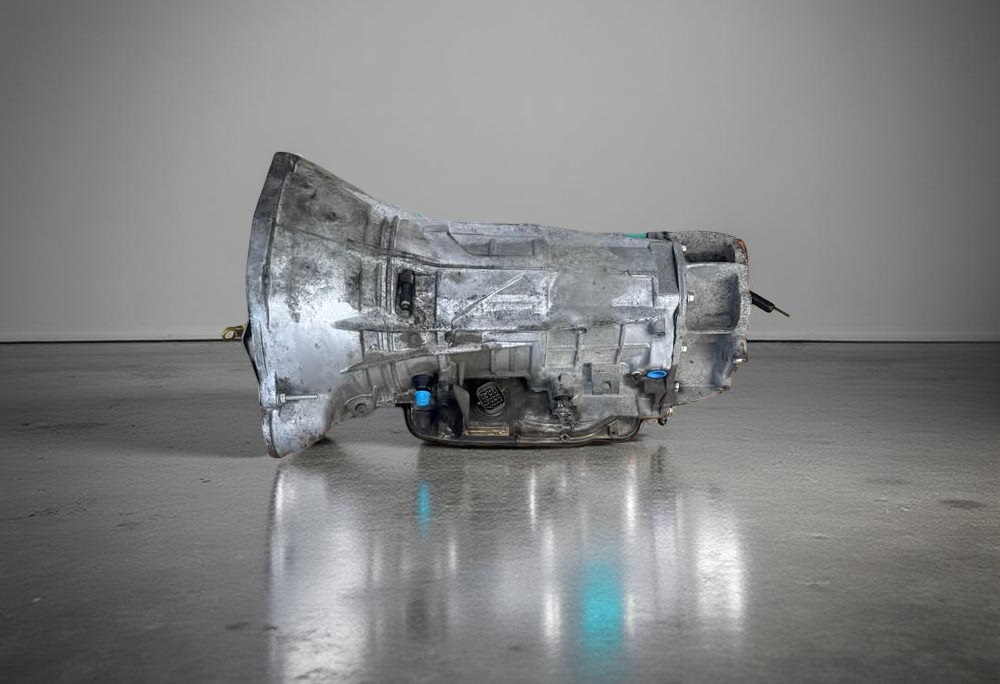
1. RFE roots and a diesel workload the case never really grew into
Gas-truck bones behind a 6.7 Cummins
The 68RFE was never built from scratch. Chrysler reworked the 45RFE, a gas half-ton unit, into the 545RFE for Durangos and Dakotas, then stretched it again for heavy-duty diesels.
Planetaries got wider. Clutch packs added plates. The case thickened up. But the internals stayed trapped inside a small-frame layout that never left its original constraints.
Input drums and hydraulic logic didn’t scale with torque. So while the Cummins torque climbed from 650 lb-ft in 2007 to over 850 lb-ft by 2019, the transmission relied on line pressure and programming to pick up the slack.
Heat soared. Clutch packs thinned out. And at every power level, overdrive burned first.
Double overdrive ratios load the weakest gears
The 68RFE runs a 3.23 first, 0.81 fifth, and 0.62 sixth. Those deep overdrive gears drop RPM, but they also slam the clutches with torque when towing.
On hills, the engine wants to stay in the power band. The transmission drops into 5th or 6th instead. That multiplies load at the clutches instead of pushing it through the axle.
The tighter you gear the rear end, say 3.42s or oversized tires, the more those tall ODs get punished. This isn’t just a matter of bad luck. It’s geometry.
68RFE vs Aisin vs Allison: ratios and overdrive load context
| Gear / Function | 68RFE Ratio | Aisin AS69RC | Allison 1000 | Real-World Effect Under Tow |
|---|---|---|---|---|
| 1st | 3.23 | 3.75 | 3.10 | Launch torque multiplication |
| 5th (OD1) | 0.81 | 0.77 | 0.71 | Moderate OD load |
| 6th (OD2) | 0.62 | 0.63 | 0.61 | Highest OD clutch stress |
| Reverse | 4.44 | 3.54 | 4.49 | Reverse sprag loading |
2. Mechanical weak links where the hard parts give up first
Thin overdrive steels fold under heat
Overdrive fails first because the parts run out of mass. The OD pack uses single‑sided frictions with steel cores around 0.034 in thick, stacked tight inside a small drum.
Load a shift at highway speed and those plates soak heat fast. They cone, then drag even when released, which snowballs slip and heat on the next pull.
Tow heavy or spin tall tires and the cycle speeds up. The fluid darkens. The steels blue. Slip shows up as a flare on the 5–6 shift long before the truck quits moving.
Housing flex bleeds clamp force away
Line pressure climbs as the TCM fights slip. The factory OD housing responds by flexing. Clamp load goes uneven across the pack, hot spots form, and the thin steels take the hit. Power level doesn’t have to be wild for this to happen; stock trucks that tow see it.
Aftermarket housings add rigidity and let builders run thicker, double‑sided frictions. That change raises thermal capacity and keeps pressure where it belongs instead of bending the drum.
Factory OD stack vs upgraded OD stack
| Spec / Feature | OEM 68RFE OD Pack | HD Aftermarket OD Pack |
|---|---|---|
| Steel core thickness | ~0.034 in | ~0.060+ in |
| Plate type | Single‑sided | Double‑sided |
| Housing | Thin cast drum | Reinforced or billet |
| Heat capacity | Low | Much higher |
| Failure mileage | 80k–150k towing/tuned | Power‑limited, not mileage |
4C clutch and L/R sprag crack under shock
The 4C clutch works hardest in loaded 5th. Roll into throttle at speed and torque spikes while apply pressure lags. The frictions glaze, then slip, then burn. Once 4C goes, ratio codes follow and the truck loses gears in chunks.
The Low/Reverse sprag takes a different beating. Hard 4WD launches, rocking in mud, or jerky reverse maneuvers shock the element as it releases mid‑launch. When it cracks, first or reverse disappears with no warning, and metal spreads fast through the unit.
3. Valve body cross-leaks that starve pressure and slip the clutches
SSV bore wear drops pressure in the worst circuits
The Solenoid Switch Valve controls feed pressure to both overdrive and the torque converter clutch. It cycles constantly. Over time, the steel valve hammers the aluminum bore, and the end plugs erode. The result: cross-leaks that dump fluid into the pan or wrong circuits.
Once that bore wears, OD clutches don’t get the pressure they need. Slip starts under load, especially on hills or highway pulls. The TCM may catch it with P0871, but often the shift flares show up before the code does.
Galvanic mismatch speeds the damage
Factory SSVs pair a nickel/iron valve with an aluminum body. Hot ATF, pressure, and dissimilar metals create a battery effect, galvanic corrosion. The bore chews out faster than normal wear. Once the leak starts, no tune or pressure tweak can stop the drop.
Oversized anodized valves help, but the bore must be reamed. Without that fix, even fresh SSVs wear loose and bleed again within a few thousand miles under towing.
Accumulators and plates that fold under pressure
The 68RFE runs plastic accumulator pistons and soft-sealed bores. Those seals don’t hold up under tuned pressure or long heat cycles. The piston starts leaking. The cushion effect disappears. Line pressure gets vented before it can apply the clutch.
Back it with a factory accumulator plate, and flex or full blow-out isn’t far off. Raise pressure and that backing plate bows or pulls bolts. That failure dumps an entire clutch circuit, usually 4th gear, and dumps codes like P0734 or P0735 with a sudden hard downshift or no-move.
Common 68RFE hydraulic wear points and road symptoms
| Component / Area | Wear Pattern | Typical Codes / Symptoms |
|---|---|---|
| SSV bore & plugs | Erosion, cross-leak | P0871, OD slip, hot 5–6 shift flare |
| Accumulator pistons | Cracked plastic, leak | Mushy shifts, delayed engagement |
| Accumulator plate | Flex or bolt pull-through | Sudden 4th-gear limp, P0734/P0735 |
| Pressure sensor | Drift, failure | P0933, erratic line pressure behavior |
4. 2019+ changes that fixed shift feel but raised rebuild stakes
A second valve body and split control logic
In 2019, Ram added a lower valve body section. It carved out the TCC and reverse solenoids from the overworked L/R circuit, spreading the load. That helped converter lockup come in smoother and took heat off the sprag during reverse.
On paper, the update was solid. On the road, it helped with clunks and shudder. But it also meant that post-2019 units need their own rebuild parts, and make more demands when tuning or swapping.
Blue solenoid pack and PI curve mismatch
Earlier 68RFEs ran gray solenoid packs. The 2019+ units switched to blue packs with new internals. Each has a unique “PI curve”, a pressure vs flow profile burned into the TCM.
Miss that programming after replacing the pack or valve body, and the truck miscalculates clutch fill timing. The result: harsh shifts, lost adaptation, or clutch burn-up on break-in.
No amount of fluid or line pressure tricks will fix a wrong PI curve. It has to be flashed with wiTECH. Builders who miss this step get warranty calls in under 5,000 miles.
Built wrong for the year, and tuning finishes it off
2019+ units are sensitive. A “built” 68RFE that reuses earlier internals or ignores solenoid type won’t last long once line pressure goes up. Tuning that pushes early lockup or max pressure makes the mismatch worse, especially if the wrong valve body or channel plate is reused.
Shops now treat pre-2019 and 2019+ as different transmissions. Solenoids, valve bodies, test procedures, and tuning maps all diverge. Get the wrong combo, and you’re back in limp with codes and debris in the pan.
5. Heat, bypass valves, and the converter shudder that poisons everything
Bypass valve blocks flow when cooling is needed most
Starting in 2013, Ram added a thermal bypass valve to the 68RFE cooler circuit. It forces ATF to skip the cooler until fluid hits ~180°F. The goal was quicker warmups. But under load, the valve sticks shut. Now the truck’s climbing a grade, converter locked, ATF at 230°F, and the cooler’s doing nothing.
The damage ramps up fast past 220°F. Seals harden. Frictions glaze. Every shift runs hotter than the last. And because the driver sees no warning until the fluid’s burnt, most catch it late, when the damage is already baked in.
Deletes and thermostats that finally let it breathe
A bypass delete opens the loop. Cooler flow starts immediately. A performance thermostat does the same, but with regulated flow control. Either option drops peak towing temps by 30–50°F depending on load and ambient air.
For stock trucks that tow heavy, it’s the first upgrade that actually saves clutches. Without it, fluid heat cycles harder every trip, and OD wear comes sooner even with careful shifting.
Converter clutch slip spreads debris into the valve body
The factory single-disc lockup clutch isn’t built for tuned torque. It locks soft, slips under load, and can’t spread the heat. Long hills or light throttle cruise makes it shudder, then balloon. Once that cover distorts, the clutch fails, and sheds metal straight into the cooler circuit and solenoid pack.
Many owners replace the converter, skip the flush, and lose the next one even faster. That shudder you feel at 55 mph isn’t just annoying. It’s the start of debris migration, bore scoring, and hydraulic collapse.
Heat-related 68RFE problems and what drivers feel
| Heat Source / Issue | Driver’s Seat Symptom | Long-Term Result |
|---|---|---|
| Stuck thermal bypass | Temp gauge creeping on mild hills | Seal hardening, OD clutch glazing |
| Weak converter lockup clutch | Rumbling shudder at light throttle | Converter debris, valve body clogging |
| High temp towing in OD | Sluggish shifts, burnt ATF smell | OD/4C burn-up, limp mode |
6. Limp mode, code clusters, and how failure usually unfolds
Adaptive logic pushes the pressure until it breaks
The 68RFE learns as it wears. Every shift gets logged. If it takes too long to apply or slips too far, the TCM cranks solenoid duty to build more pressure. That band-aid holds, until it doesn’t.
Once the adaptation hits the ceiling, the transmission dumps into 4th gear. That’s limp mode. No overdrive, no torque converter lockup, just enough gear to get home. It’s not random. It’s the end of a slow, measurable slide.
Code clusters that map straight to the weak links
Certain trouble codes don’t just hint, they point. P0871 means OD pressure is bleeding off. P0735 flags failed ratio in 5th. P0740 signals a converter that’s lost lock. P0933 or P0944 mean you’ve got a full pressure loss or a failing pump.
When these codes group up, they tell you where to look and how urgent it is. Some mean “build soon.” Others mean “tow it, don’t drive it.”
Code clusters and suspected internal 68RFE damage
| Code Combination | Likely Damage Area | Typical Next Step |
|---|---|---|
| P0871 + light slip in 5th/6th | SSV bore wear, OD leak | Valve body rebuild / SSV repair |
| P0735 + burnt fluid smell | OD/4C clutch burn-up | Full teardown, clutch & housing |
| P0740 + shudder, no other ratio codes | Converter lockup clutch failure | Converter + cooler/valve body flush |
| P0933 or P0944 with no move/hard limp | Pump or major pressure loss | Immediate shut-down, full rebuild |
From soft shifts to stranded in four steps
It usually starts with soft OD shifts or mild flares. The driver shrugs it off. Next comes occasional limp mode under tow. Then consistent codes. Finally, a hard 1–2 clunk, no 5th or 6th, and fluid dark enough to smell through the dipstick.
Raise power, tow long grades, or run big tires without mods, and the curve steepens. What could’ve been a $1,200 valve body turns into a $7,500 full build.
7. When the fix isn’t another 68RFE
Aisin AS69RC holds torque but locks you out of control
Ram bolts the AS69RC behind High Output Cummins trucks and chassis cabs. It’s built bigger, deeper 1st gear, stronger gearsets, more clutch capacity. Torque rating clears 1,000 lb‑ft in stock form. It shrugs off loads the 68RFE cooks under.
But it shifts clunky, parts cost more, and TCM tuning is nearly locked out. No pressure tweaks, no shift point mapping. You run what Ram gave you. For commercial tow rigs at stock power, it’s the safer choice. Tuners hate it.
Allison swap ends the cycle but hits hard up front
The Allison 1000 conversion isn’t cheap. Expect $12,000–$15,000 after parts, labor, bellhousing adapters, driveshaft mods, and TCM integration. But once it’s in, you’ve got commercial‑grade fluid flow, massive clutch volume, and no light-duty carryover parts.
Drivers who’ve nuked two or more 68RFEs often go this route. Done right, it’s a one‑and‑done solution. Debris stays out of the valve body. Converter slip doesn’t mean instant failure. And you never worry about blue solenoid packs or PI curve mismatches again.
Built 68RFE vs. swap: where each makes sense
A properly built 68RFE holds 1,200–1,500 lb‑ft with a billet valve body, OD housing, triple-disc converter, and tuning. It shifts firm, adapts fast, and costs less than a full swap. But it still lives inside a gas-truck envelope. OD space is tight. Cooling demands stay high.
Pick the transmission that fits your power and use. Light tune? Tow on weekends? A built 68RFE can last. Daily tow rig with 25,000 lbs on the hitch? Swap it.
68RFE (built) vs. Aisin vs. Allison: which fits which truck
| Option | Approx Torque Capacity | Tuning Flexibility | Typical Cost (Installed) | Best For |
|---|---|---|---|---|
| Built 68RFE | ~1,200–1,500 lb‑ft | Very high | $6,500–$12,000 | Tuned 6.7s, mixed use, hot-rod diesels |
| Stock Aisin AS69RC | ~1,000 lb‑ft | Very low | Built into truck price | Stock HO tow rigs, commercial fleets |
| Allison 1000 swap | 1,500+ lb‑ft | High (with kits) | $12,000–$15,000+ | Long-term heavy tow and high power |
8. Keeping a 68RFE alive when the truck actually works for a living
Fluid, filters, and parts that buy real miles
Factory service intervals of 60,000–120,000 miles don’t cut it in the real world. Diesel shops pin it closer to 20,000–30,000 miles for heavy tow and 30,000–50,000 for moderate use. Wait longer, and worn fluid starts softening seals, glazing clutches, and building varnish in the valve body.
Use real ATF+4, not a bargain blend. Replace the plastic spin-on filter coupler with a billet one before it cracks or backs out under heat. And don’t just drop the pan, check what’s in it. Friction material or metal dust means you’re already behind.
Driving habits that protect the clutches
Towing over 10,000 lbs? Lock out 6th. Going up grades? Drop to 4th before you floor it. Holding 5th or 6th under throttle is what warps the OD pack. Better to run higher revs in direct than cook the thin plates trying to save fuel.
Avoid wide-open throttle while in overdrive. That habit alone nukes converters and triggers limp mode. Boosted 4WD launches? That’s how you take out the sprag or crack the 4C clutch. Pull smooth, let the converter lock before you hammer it, and give the fluid time to cool on the downhill.
Rebuilds vs. built vs. swap: the break-even line
A stock rebuild runs $4,500–$6,500. Most reuse factory parts, skip the OD housing, and leave the SSV bore untouched. Behind a tuned truck, they don’t last. You’ll see flares again in under 50,000 miles.
A built 68RFE costs $6,500–$12,000 depending on converter, valve body, and tuning. But it’s the only way the unit survives 1,000+ lb-ft long term. An Allison swap breaks $12,000+ but ends the cycle. No bore wear. No thermal bypass. No OD choke point.
Stack two stock rebuilds back to back, and you’ve already paid for the build or the swap.
Sources & References
- 68RFE Vs. Aisin AS69RC Transmissions: How Do They Compare? – Jalopnik
- Chrysler 68RFE Vs. Aisin AS69RC: What’s The Difference Between These Transmissions?
- Flawed From The Factory: Taking A Hard Look At The Many Failure Points Of The 68RFE
- Chrysler 68RFE Transmission • Problems, Solutions & Upgrades – Next Gen Drivetrain, Inc.
- Aisin vs. 68RFE: Which Transmission Should You Build Behind Your 6.7L Cummins?
- 68RFE vs Aisin vs Allison | Best Cummins Transmission Swap – ATS Diesel Performance
- 68RFE Transmission Problems, Upgrades, and Allison Swap Solutions for 6.7L Cummins
- 68RFE advice : r/Diesel – Reddit
- 68RFE Frequently Asked Questions | Shop Transmissions, Torque Converters
- 68RFE safe limits. – igotacummins
- You searched for “68rfe”. – Sonnax
- Troubleshooting 68RFE OD Clutch Failure | Sonnax
- 68RFE Rebuild Cost vs Built Transmission — What You Need to Know
- 68RFE Transmission Guide: Problems & DIY Upgrades – Diesel Power Products
- Chrysler 68RFE Valve Body • Problems, Solutions & Upgrades – Next Gen Drivetrain, Inc.
- Chrysler 68RFE ’19-Later Changes & Identification – Sonnax
- 68rfe slippage? : r/Cummins – Reddit
- 68RFE OD Clutch Failure – Gears Magazine
- Gear Slipping – igotacummins
- Common 68RFE Transmission Problems and Solutions
- 68RFE Towing Setup Guide, Cooler Upgrades, Converter Options, and Safe Power
- ATS 3100052392 Thermal Bypass Valve Delete 13-18 Ram 6.7L Cummins
- ATS Thermal Bypass Valve Upgrade 2013 to 2018 6.7L Cummins (68RFE & AS69RC Transmission) – Blessed Performance
- RevMax 68RFE-929A Transmission Cooler Thermostatic Bypass Delete | 201 – Alligator Performance
- 68RFE Transmission Problems: Full Breakdown & How Monster Transmission Fixes Them
- Tier One’s Built 68RFE Transmission Breakdown
- Transmission in limp mode 68RFE – igotacummins
- A Ton Of Transmission Codes – 2011 RAM 3500 68RFE? – igotacummins
- 68RFE Diagnostic : r/Cummins – Reddit
- Transmission Diagnostic Trouble Codes
- Transmission Diagnostic Trouble Codes
- Aisin AS69RC vs. 68RFE: Which Transmission Do You Have? | Monster Tran
- How to Extend the Life of Your 68RFE Transmission: Maintenance Tips You Need to Know
- Ram 2500 Diesel Maintenance Schedule | Oil, Fuel Filter & DEF Service Guide
- RAM 2500 Maintenance Schedule
- 68RFE Maintenance Recommendations : r/Cummins – Reddit
- What is considered AGRESSIVE driving in a 68RFE – igotacummins
- 6.7 Cummins with 68RFE – what gear you tow in? | Good Sam Community – 1729330
- Ram owners. What gear while towing on highway? | Good Sam Community – 2408364
- 68RFE Cost Breakdown 2025 — Rebuild vs Replacement vs Built – Inglewood Transmission
Was This Article Helpful?