
The 8L90 doesn’t blow chunks. It jitters, hesitates, then smooths out like nothing happened. That’s what makes it hard to pin down.
One day it feels like a tire’s out of round. Next day it bangs the 1–2 shift when cold. No codes, no warning lights; just a transmission that feels wrong in a different way every time.
What’s behind it? This thing runs on tight hydraulic timing and fluid that behaves a certain way. When either drifts, even slightly, it doesn’t throw errors; it just stops feeling right.
This breakdown covers what actually fails, what GM changed, and why the so-called fixes don’t always hold. Some repairs buy time. Others dig deeper. Knowing the difference matters.
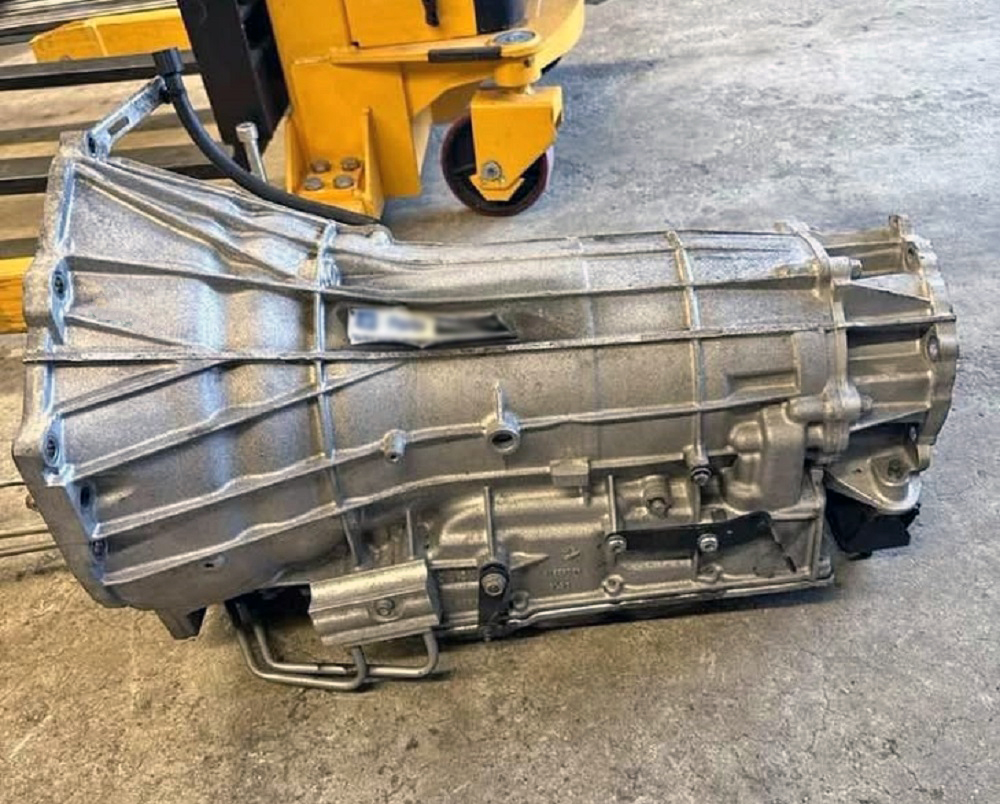
1. The engineering bet GM made with the 8L90
Efficiency took the wheel, not longevity
The 8L90 was built to win a numbers game. GM needed more gears, quicker shifts, and lower highway rpm, all without upsizing the case or missing CAFE targets. Engineers answered with a 7.0:1 ratio spread and aggressive downspeeding that kept V8s loafing in top gear.
But the whole strategy leaned hard on the torque converter clutch. Unlike older automatics, it doesn’t wait for load; it stays active during light throttle and cruising.
That’s where the fuel savings and snappy feel come from. Trouble is, that same setup lays the groundwork for long-term wear that shows up in feel, not defect.
A pump design that doesn’t forgive slop
Pressure comes from a binary vane pump baked into the valve body. It spins off-axis, feeds high volume at low speed, then cuts drag at cruise. Compact. Efficient. But it only plays nice with clean fluid and tight tolerances.
Once air sneaks in, or wear opens the bores, timing slips. Shifts start flaring. Then they start hitting harder. This system doesn’t mask wear by boosting pressure; it broadcasts it through every shift.
Why the torque converter carries the burden
Packaging forced a short, wide converter. That moved the smoothing job to the clutch lining and its controlled-slip strategy, usually in the 10–30 rpm range. When friction stays stable, the ride feels silky. When it doesn’t, you get vibration in the seat during steady cruise.
It throws people off. They blame tires or pavement, not the converter. But the drivetrain checks out fine, and the shake shows up in a narrow speed band, right where the clutch modulates.
Where the 8L90 hides in the lineup
| Vehicle | Model Years | Engine | Variant |
|---|---|---|---|
| Corvette C7 | 2015–2019 | 6.2L V8 | 8L90 |
| Camaro SS / ZL1 | 2016–2019 | 6.2L V8 | 8L90 |
| Silverado 1500 | 2015–2018 | 5.3L / 6.2L V8 | 8L90 |
| Sierra 1500 Denali | 2015–2018 | 6.2L V8 | 8L90 |
| Escalade | 2015–2018 | 6.2L V8 | 8L90 |
| CTS-V | 2016–2019 | 6.2L V8 | 8L90 |
Why gearing makes the converter work overtime
The close steps between gears keep rpm low, and the converter constantly adjusting. It avoids lugging, but it also means full lockup rarely happens. As fluid ages and valves wear, that constant modulation turns into quirks you can feel.
2. The complaint patterns owners keep chasing
Shudder that feels like rough pavement
It hits between 25 and 80 mph, steady throttle, no active shift. The cabin buzzes in short pulses, like coarse asphalt, then fades when you lift or dig in. That’s why drivers start with “balance” and “alignment” long before anyone checks the transmission.
GM testing pinned it to converter clutch slip frequency syncing with road speed, not engine rpm. If the shake tracks vehicle speed and vanishes under load, the converter’s doing the modulating. Nothing else in the driveline behaves that way.
Cold 1–2 that snaps your neck
After an overnight sit, the first upshift hits hard. Feels fine the rest of the day. Most owners describe it as a single jolt; sharp, but not repeatable until the next cold start.
What’s happening is fluid drainback from the C4 circuit. The module calls for fill on that first shift, engine speed flares, pressure arrives late, and the shift lands with a thump. Software can soften the delay, but it can’t refill dry circuits instantly.
Drive and Reverse delays that feel like slop
Shift into Drive or Reverse and nothing happens, then the gear clicks in with a mild bump. It’s most obvious in parking lots or stop-and-go traffic, and often shows up alongside shudder.
It comes from air in the apply circuits and slow fluid purge through the valve body. When pressure control is tight and fluid’s fresh, it’s barely noticeable. But once wear sets in, the lag shows up like clockwork.
Why these problems stack up over time
Most owners don’t deal with just one issue. Shudder usually shows up first. Then the cold 1–2 lands. Later, you get lag into gear. Each symptom points to a different weak spot, but they’re all tied to the same hydraulic system falling out of sync.
3. Torque converter shudder and why fluid takes the heat
The slip strategy that never lets up
The 8L90 doesn’t lock or unlock its converter clutch like a switch. It modulates. At light throttle and steady cruise, the clutch stays partly engaged, slipping by 10–30 rpm. That happens in traffic, on light grades, and during cylinder deactivation. Not just during shifts.
So the clutch is always working. Heat cycles build up, and the fluid between the clutch faces becomes more than just lube; it carries load.
How moisture wrecks clutch control
The early factory-fill fluid picked up water over time. As the moisture climbed, the friction curve flattened out and got twitchy. The clutch tried to hold a steady slip speed, but kept flipping between grab and slide.
That jumpiness shows up as a vibration tied to road speed, not engine rpm. You change throttle or load and it fades. That’s why drivers blame pavement or tires before ever looking at the converter.
How different fluids behave during converter clutch modulation
| Fluid property | Dexron VI (typical licensed range) | Mobil 1 Synthetic LV ATF HP |
|---|---|---|
| Viscosity @ 40°C | 28–32 cSt | 27.0 cSt |
| Viscosity @ 100°C | 5.7–6.2 cSt | 5.7 cSt |
| Viscosity Index | 140–155 | 152 |
| Pour Point | −40°F to −55°F | −54°F |
| Friction behavior under controlled TCC slip | Not tuned for constant low-rpm slip | Formulated for 8L90 TCC slip stability |
Dexron VI checks the boxes on paper. But it wasn’t built for low-rpm clutch modulation. Mobil 1 LV ATF HP was. It holds tighter friction under slip, resists moisture drift, and stays predictable. That’s why GM stopped leaning on generic Dexron fills when shudder complaints started piling up.
Why drain-and-fill doesn’t fix it
A single drain-and-fill only replaces about a third of the fluid. The rest hides in the converter, cooler, and passages. Fresh fluid smooths things for a bit. Then it mixes back with the old stuff, and the symptoms return.
That’s why shudder fades for a few thousand miles, then comes roaring back. The clutch surface hasn’t changed, and the overall fluid chemistry hasn’t either.
What a full exchange actually does
The triple-flush method runs roughly 20 quarts through the system, enough to chase out the old fluid from the converter and cooler instead of just thinning it out. The new fluid keeps the friction stable across slip cycles, even as temperature and moisture vary.
If the shudder stops after that, friction was the problem. If it doesn’t, the converter clutch is already glazed. And at that point, no fluid is going to save it.
4. Valve body wear and the shifting that won’t behave
How pressure loss hides from diagnostics
Inside the valve body, pulse dampeners run non-stop to smooth out solenoid pulses. They ride bare in aluminum bores and side-load the casting every cycle. Over time, that motion wears the bore into an oval and that oval leaks pressure.
No code flags it. It just robs signal oil before it reaches the clutch valve. The TCM still commands the same current, not realizing the clutch is getting shorted on pressure.
Why flares lead the way
Once pressure starts leaking off, the clutch grabs late. Engine rpm flares, then the clutch slams in harder than intended. What starts as a lazy shift turns into a jolt. Most drivers first notice it under light throttle.
As the bore wear deepens, the flares shrink and the hits get sharper. At that point, no software tweak fixes it. The metal’s already carved.
The solenoid angle no one talks about
The 8L90 packs nine solenoids, mostly variable-force, and they rely on precise bore fit. Over time, retainers loosen, solenoids rock, and the bores wear faster from movement alone.
Now pressure gets inconsistent. One gear shift feels fine, the next feels off. It all depends on which solenoid circuit is leaking more at that moment.
When valve body swaps don’t stick
Each valve body has a Part Unique Number (PUN) etched in. That code links to a specific calibration file that tells the TCM how much juice each solenoid needs. Swap in a different unit without flashing the right PUN, and the TCM guesses wrong from the first shift.
It won’t throw an error; it’ll just act weird. Late shifts, hard shifts, unstable adapts. Feels like worn hardware, but the baseline’s mismatched.
When pump wear joins the party
High-mileage units start cavitating at the off-axis pump during hot idle or low-speed crawl. Pressure dips, fill times stretch, and you feel a lag into gear. Shops often misread it as converter or clutch trouble, since the symptoms overlap.
By the time the pump’s worn enough to cause problems, the valve body and converter usually aren’t far behind. That’s why complaints start stacking; they’re all part of the same pressure-control spiral.
5. Diagnosing 8L90 problems without chasing ghosts
Spotting converter shudder without second-guessing
Shudder has a signature: 25–80 mph, light throttle, no shift happening. The vibration tracks road speed, not engine rpm. Tip in or lift, and it fades.
GM’s diagnostic method leans on frequency matching. If the vibration matches the torque converter clutch slip frequency, it’s coming from inside. If it lines up with engine rpm or wheel speed directly, the problem lives elsewhere in the driveline.
Why “couldn’t duplicate” keeps landing on the paperwork
Shudder’s picky. It needs warm fluid, steady load, and just the right gear. Short test drives, cold starts, or throttle-heavy runs won’t trigger it.
That’s why owners feel it daily and dealers don’t catch it. The issue’s not random; it’s conditional. And if the tech misses those conditions, scan data stays clean and the case goes cold.
Drawing the line between “normal” and “too rough” on 1–2 shifts
GM’s documentation allows a lot of room in what it calls “normal.” A firm cold 1–2 without flare usually makes the cut. But once you add rpm flare, delayed apply, or a sharp jolt, it crosses the line.
The harsher it feels, the more likely you’re stacking cold temps, long sit time, borderline fluid level, and outdated software. That’s when it stops feeling like a quirk and starts feeling like a defect.
When gear delays mean more than lazy software
A brief pause shifting into Drive or Reverse after stopping usually traces to fill timing and air purge. Programming can mask it, but it can’t overcome pressure loss from worn bores or a tired pump.
If the delay hits warm or cold, day after day, the hydraulics are leaking off behind the scenes.
The symptom-to-source cheat sheet that holds up
| What you feel | When it shows up | Most likely source | Best confirmation path |
|---|---|---|---|
| Rumble-strip vibration | 25–80 mph steady throttle | TCC slip instability | Frequency match testing, fluid history |
| Bang or flare on 1–2 | First drive after sitting | C4 circuit drain-back | Calibration level, hot fluid check |
| Pause into Drive/Reverse | Parking maneuvers | Apply circuit fill loss | Scan data, pressure behavior |
| Flare then firm shift | Light throttle upshift | Valve body bore wear | Line pressure trends, valve body inspection |
6. What GM fixed, what they softened, and what they skipped
The service bulletins that actually move the needle
GM went straight for the source of the shudder. TSB 18-NA-355 ditches partial fluid swaps and mandates a full exchange using Mobil 1 Synthetic LV ATF HP. With the right machine, techs push 20 quarts through the system, flushing out the converter and cooler instead of just mixing old with new.
If the converter clutch still has clean surface left, results come fast, cruise vibration drops out, shifts feel smoother, and the hunting under light throttle dies off. If the clutch face is already glazed, fluid won’t cut it.
Where GM backed off on shift harshness
TSB 16-NA-361 deals with harsh 1–2 upshifts, but mostly by drawing a wide “acceptable” range. Dealers are told to check calibration, verify fluid level, and avoid replacing parts unless something’s clearly out of spec.
That frustrates owners, but GM doesn’t see drain-back behavior as a safety issue. Software updates and fluid level tweaks help, but they can’t fix worn bores or tired circuits. The harsh shift stays if the hardware’s too far gone.
Bulletins that sound helpful but miss the mark
Some TSBs get lumped into 8L90 talk even though they target unrelated issues. TSB 20-NA-104, for example, addresses false “Shift to Park” messages caused by a flaky switch. It helps with battery drain and alerts, but won’t touch shift feel or converter slip.
Owners sometimes leave with multiple bulletins applied and improved performance, but only one actually mattered. The rest just came along for the ride.
GM bulletins that matter, and where they fall short
| Bulletin | Targets | Typical dealer action | What it doesn’t address |
|---|---|---|---|
| 18-NA-355 | TCC shudder | Full exchange to updated LV ATF HP | Worn or glazed converter clutch |
| 16-NA-361 | Harsh 1–2 shift | Calibration check, often no parts | Valve body wear, drain-back severity |
| 20-NA-104 | “Shift to Park” alert | Switch or wiring repair | Shudder or shift quality |
Quiet hardware updates that started showing up post-2018
Around 2018–2019, GM began slipping in some internal tweaks. Stator supports and covers were reshaped to purge air better at low speeds. Clutch pistons and seals got thicker to avoid cracking, and return springs were revised to give smoother apply timing.
But these aren’t drop-in parts. Older units need matching seals, springs, and calibration to behave. Mix generations without the right pairing, and you get new problems that look like fresh defects.
What this means for owners trying to fix it today
GM didn’t redesign the transmission. They patched pressure sensitivity with better fluid and softened some symptoms with software. That helps if the parts are still healthy. But if wear’s already set in, the cycle keeps repeating until the hardware gets replaced.
7. Aftermarket fixes that go after the pressure leak
Why valve body kits work when fluid doesn’t
Once the valve body starts leaking internally, no fluid’s going to save it. That’s where correction kits come in, not to reprogram, but to reseal. Companies like Sonnax target the bores that wear out first: pulse dampeners, clutch control, and signal oil paths.
Their updated valves use tighter machining and O-rings to seal off the leaks. When the pressure lands where it should, the TCM’s commands stop swinging between soft and harsh. Shifts finally feel consistent again.
Locking solenoids in place to stop bore damage
Heat weakens the factory solenoid retainers. Once they loosen, the solenoids rock inside the bore, and that side-load chews up the aluminum fast. Steel clip inserts from aftermarket kits lock them down and keep the bore geometry intact.
This isn’t about performance gains. It’s about stopping wear before it gets worse. On units that still shift okay but feel inconsistent, solenoid stabilization can freeze the problem where it is.
When the converter becomes the weak link
If you’ve done the full fluid exchange, sealed the valve body, and the shudder still won’t quit, look at the converter. Most likely, the clutch face inside is cooked. Aftermarket converters step up with stronger dampers and friction material that can handle constant slip without glazing.
This doesn’t change how the transmission is tuned. It gives the clutch a fighting chance to survive the original strategy. On higher-torque builds and trucks that tow, a better converter is usually what breaks the repeat-failure loop.
Cooling doesn’t fix, it preserves
Heat breaks down fluid and speeds up wear. Trucks working hard or stuck in traffic often push temps past 230°F. External coolers don’t repair anything, but they do drop peak temps and stretch the life of a healthy transmission.
If you’ve already fixed the source problems, better cooling helps keep them from coming back.
Where these fixes actually fit
Aftermarket solutions don’t change how the 8L90 was designed. They reinforce the soft spots, worn bores, rocking solenoids, converter glazing, before those issues turn into defects. When installed early, they buy stability. When installed late, they hold the line.
8. 8L90 vs. 10L90: Why one problem faded and others replaced it
What really changed with the 10-speed
GM didn’t add gears just to pad the spec sheet. The 10L90 brought smarter logic. It skip-shifts to hold the engine in its efficiency band without leaning on constant converter slip. That’s the difference. Less slip at cruise means less strain on the torque converter clutch.
Hydraulics still matter, but the system doesn’t hover on the edge as much. You get fewer steady-throttle complaints tied to TCC modulation, even though the pump design and packaging remain tight and sensitive.
Where the 10L90 still trips
Adding gears didn’t erase pressure issues. Valve body wear and solenoid movement still show up, but in different ways. Some later 10-speeds triggered safety recalls after momentary pressure drops led to rear-wheel lock events. The lessons carried over were partial.
Plenty of owners who traded out of an 8L90 into a 10L90 swapped shudder for other quirks. It’s a different flavor of control weirdness, not a clean slate.
The legal timeline and shifting outcomes
| Date | Event | Practical impact |
|---|---|---|
| 2023–2024 | Broad class certification phase | Internal docs came to light, defect claims gained traction |
| Jun 27, 2025 | Class action decertified on appeal | Owners left with individual claims or split subclasses |
Ownership trade-offs by how the vehicle’s used
Commuters feel the 10L90’s improvements most. Light throttle, steady cruise, less converter slip, smoother feel. But if you tow or drive hard, you’re still exposing hydraulic wear. The gear count doesn’t protect against pressure loss.
For current 8L90 owners, the 10L90 isn’t a solution. It’s a shift in behavior. Better in some conditions, still vulnerable in others. Expect fewer complaints in the daily grind. But under stress, the old patterns can still creep back in.
Sources & References
- 8L90 and the different variations… – Transmax Transmissions
- The GM 8L90 Transmission: Innovations, Issues, and Applications
- Introducing The New General Motors 8L90
- 8L90 Introduction Webinar Handout
- Chevrolet Silverado Transmission Repair Guide (2014-2024) | 8-Speed Problems & Costs
- Francis et al v. General Motors, Llc – 2:19cv11044 – Class Action Lawsuits
- Service Bulletin TECHNICAL – nhtsa
- GM wins appeal on 8-speed transmission class-action lawsuit
- 6L80 vs 6L90: Devil’s in the Details – Gearstar Performance Transmissions
- 8L90 8-Speed Automatic Transmission | GM Powered Solutions – General Motors
- GM 8L transmission – Wikipedia
- 2015 Corvette: GM TechLink: All New 8L90 8-Speed Automatic Transmission – Print View
- Saturation Dive: The GM 8L90 8-Speed Automatic Transmission | The Truth About Cars
- GM 6L80E and 8L90E Drag Race Transmissions – ATI Performance
- Supermatic 10L90 Transmission Kit Installation Instructions – Crate Engine Depot
- Chevrolet Performance Supermatic 10L90-E 10-Speed Automatic Transmission – Holley
- Service Bulletin – nhtsa
- What is Causing that? A Look at the GM 8L90’s Most Common Concerns – Gears Magazine
- Service Bulletin TECHNICAL – nhtsa
- TC concerns : r/Silverado – Reddit
- The GM 8-Speed TCC Shudder Solution – Lubegard
- 8L90 Transmission Service Experience – Did I get ripped off? : r/Silverado – Reddit
- Mobil 1™ Synthetic LV ATF HP
- Mobil 1 Synthetic A/T Fluid 1 Quart 124715 | O’Reilly Auto Parts
- DEXRON – Wikipedia
- Mobil 1 Synthetic LV ATF HP 124715 Reviews | Summit Racing
- 8L90 Solenoid Strategies – Gears Magazine
- What’s the truth on the 10 speed transmission? I hear the 8 speed has all sorts of issues : r/Silverado – Reddit
- General Motors 8L90 Transmission • Problems, Solutions & Upgrades
- Shift Zip Kit® Part No. 8L45-8L90-SHIFT-ZIP – Sonnax
- Now That Was a Good PUN – Programming and Part Numbers on 8L45/8L90 Solenoids
- 2019 silverado 8-speed shifts hard going from 1st to 2nd – Reddit
- 8L90 Changes and Updates – They Are Not Created Equal! – Gears Magazine
- GM Faulty Transmission Litigation – Keller Rohrback
- Sixth Circuit Affirms Class Certification in Massive Defective Transmission Lawsuit Against GM – Cohen Milstein
- GM Transmission Lawsuit: Eligibility and How to Join | 11/25/2025
- Sonnax 8L45 8L90 Transmission Shift Zip Kit GM 8 Speed Valve Body Correction
- 8L90 8L45 TCC Zip Kit – Global Transmission Parts
- 10L80, 10L90, 10R140, 10R80 Solenoid Stabilization Clip Insert – SunCoast Performance
- GM 10L90 (Gen. 2) Transmission – Sonnax
- Common 8L90 Transmission Problems and How Upgrades Can Fix Them
- Blog – Circle D Transmission
- The Aftermarket GM 8L90 Transmission: Improvements That Matter – Go Powertrain
- Bulletin No.: PIP5437A Date: Nov-2016 Subject: 8L45 8L90 Diagnostic Tips for Harsh Shifts – nhtsa
- Tips for Success with GM Transmission Fast Learn Process – Sonnax
Was This Article Helpful?