
Sixty grand for a “premium” EV, then the wheel starts peeling like sunburnt vinyl after one summer commute. Bubbling. Flaking. The surface lifts at 3 and 9 like it’s shedding skin.
It’s not rare. Drivers from the Model 3 to the S Plaid have logged complaints as early as 4,000 miles, some up to 15,000 watching the vegan leather break down fast. One owner gets a free swap. Another gets quoted $950 with a shrug.
“Normal wear and tear,” they say. But the material says otherwise.
This guide lays it all out: why Tesla wheels fall apart early, which models qualify for service bulletins, and what to do when they deny the claim. We’ll cover factory fixes, aftermarket options, and small-claims strategies that have already worked.
If your wheel’s gone slick or sticky, that may be your first warning sign.
1. The not-so-leather truth behind Tesla’s steering wheels
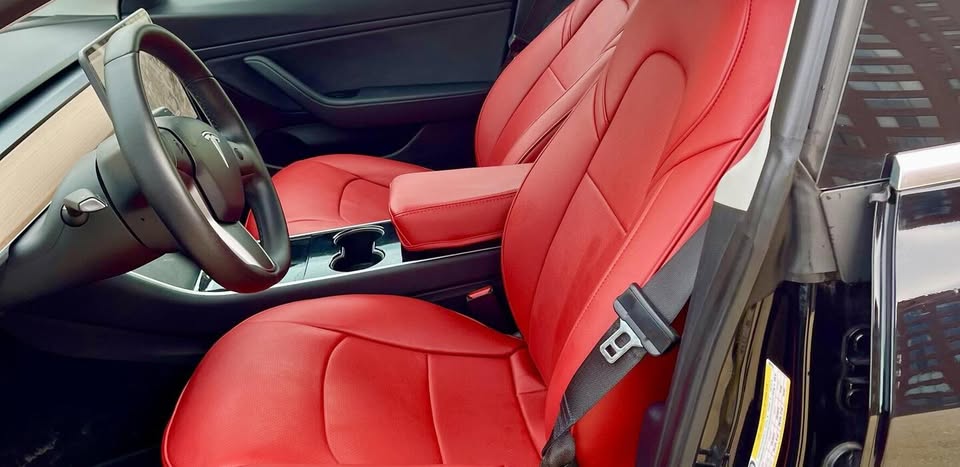
At first glance, the wheel feels premium, smooth finish, tight contours, and a slick match for the high-tech dash. But it’s not leather. It’s plastic in disguise.
Tesla calls it “vegan leather,” but it’s really a polyurethane (PU) skin stretched over molded foam. The texture and color come from a thin topcoat; the foam gives it shape. Trouble is, PU doesn’t hold up against real-world driving.
PU’s chemical weakness starts in your palm
The material stays soft thanks to plasticizers, chemicals that keep the surface flexible. But once you hit it with hand sanitizer, sunscreen, or even body oil, those plasticizers leach out. The surface tightens, dries, and turns brittle. Then heat and pressure do the rest, causing the skin to lift or bubble.
This isn’t guesswork. Lab tests and material science reports show alcohol, zinc oxide, and UV rays break down PU’s molecular structure. When the polymer chains snap, the topcoat loses its grip on the foam. It stretches, cracks, and peels.
Why the 3 and 9 o’clock grips fall first
That’s where your hands live and where sweat, sanitizer, and friction concentrate. Cabin temps over 140 °F only speed things up. Moisture gets trapped inside, while UV and chemicals break the surface from the outside.
And if the glue underneath fails? Game over.
Tesla’s own bulletin SB-23-32-003 points to weak adhesive in certain Model 3 and Y wheels. Paired with a thinner top layer for weight savings, it’s a recipe for early failure, no matter how careful you are.
2. Where Tesla wheels peel first, and how fast it goes downhill
Start with the 3 and 9 o’clock grips. If they’re tacky or dull, you’re in stage one. What’s next? Bubbles, flaking, and full-on topcoat lift like sunburnt vinyl peeling off the dash.
It follows a pattern. And it kicks in way sooner than you’d think.
Model 3 and Y: Fremont builds show the earliest lift
Owners of 2020–2023 Model 3 and Y, especially Fremont builds, report peeling as early as 15,000 miles. Tesla flagged it in bulletin SB-23-32-003, blaming separation at common contact zones. The damage always starts where your hands land.
Reddit threads and Tesla forums are packed with early failure reports, even from drivers who used nothing but water and microfiber. Some saw bubbling before 20,000 miles.
Model S and X: yoke wheels fail just as fast
It’s not just the budget trims. Model S and X owners, especially with the yoke steering, face the same peeling. Bulletin SB-24-32-005 covers yoke wheels made from Feb 2021 to Jan 2024. Some owners saw failures in under 5,000 miles.
One Plaid driver replaced the yoke three times in 10,000 miles. Others reported cracking along with peeling, pointing to deeper adhesive or foam issues.
Same story, every time
1. Surface dulls. The finish fades and feels sticky.
2. Bubbles form. Blisters pop up where hands rest most.
3. Peeling begins. The topcoat splits and foam peeks through.
Photos show it unfolds fast, sometimes in just a few weeks. Doesn’t take abuse either. One hot day and a dose of hand sanitizer is all it takes to start the spiral.
3. What’s really eating Tesla’s steering wheels
Tesla blames wear and tear. But when wheels bubble before your second tire rotation, that excuse falls apart. The real culprit? A mix of chemistry, heat, and corner-cutting.
The chemical cocktail on your hands
Start with what’s riding on your skin. Alcohol-based sanitizer is the biggest offender; it seeps into the PU and attacks the glue underneath. Sunscreen doesn’t help either. Whether it’s zinc oxide or chemical UV filters, it slowly poisons the topcoat.
Even hand lotion plays a role. That oily layer expands under heat, gets trapped inside the plastic skin, and warps it from the inside out. You don’t need to spill anything. Just moisturized hands on a sunny drive can kick off the breakdown.
Sunlight pushes things over the edge
Park in the sun, and that sleek black cabin turns into a heat trap. UV doesn’t just fade color, it shreds the polymers holding the wheel together. The heat swells every contaminant absorbed into the material. Before long, you’ve got warped plastic and lifting edges.
In hot climates, cabin temps hit 60 °C (140 °F). That’s more than enough to weaken adhesives, deform plastics, and push already stressed wheels into full delamination.
Weak glue and thin skin seal the deal
In October 2023, Tesla issued SB-23-32-003, confirming steering wheel material separation in 2020–2023 Model 3 and Y vehicles. Techs blamed bad adhesive batches, especially in Fremont-built cars. Add Tesla’s lighter-weight design with a thinner outer layer, and it doesn’t take much to break it down.
Then came SB-24-32-005, targeting the yoke wheels in Model S and X from early 2021 to early 2024. Same problem, different shape. In some cases, Tesla approved full yoke and airbag replacements.
This isn’t about rough driving or sloppy cleaning. The design itself is skating on thin ice.
4. What Tesla says and what they actually do
Peeling wheel? You’d think Tesla would cover it under warranty. Sometimes they do. But outcomes vary wildly depending on your model, mileage, and the mood at the service desk.
Two bulletins show Tesla knows
Tesla laid it out in writing. Bulletin SB-23-32-003 covers wheel separation on 2020–2023 Model 3 and Y units built in Fremont. It calls the issue “cosmetic” but tells techs to replace the wheel.
For the S and X yoke wheels, SB-24-32-005 targets builds from Feb 2021 to Jan 2024. The fix? Full yoke and airbag replacement, no hemming or hawing.
Sounds solid until you walk into a service center.
Warranty roulette: free for some, $950 for others
Some owners show up, mention the bulletin, and walk out with a new wheel. Others get quoted $950 for the exact same defect.
What makes the difference? Documentation and determination. Owners who brought photos, VINs, and copies of the bulletin had better odds. A few even cited Reddit or YouTube to prove it wasn’t an isolated case.
Consistency is a problem. One California Model 3 owner got denied twice before a third service center finally honored the bulletin using the same photos.
Tesla’s bulletin claims vs. real-world outcomes
| Model | Bulletin # | Covered Years | Tesla’s Official Position | Typical Owner Experience |
|---|---|---|---|---|
| Model 3 / Y | SB-23-32-003 | 2020–2023 (Fremont) | “Cosmetic” separation, replace wheel | Mixed: Some free, others charged $950 |
| Model S / X Yoke | SB-24-32-005 | Feb 2021–Jan 2024 | Replace yoke and airbag | More consistent, but some still denied |
Can you count on a warranty fix? Not without a fight. Tesla’s warranty excludes “normal wear and aging,” and they lean on that clause unless you show up ready to push back.
5. When Tesla won’t fix it, here’s how to push back
Denied under warranty? You’ve still got ammo. Plenty of Tesla owners have flipped the script with solid documentation, smart escalation, and in some cases, a court win.
Step 1: Build your case before you walk in
Start with photos, clear shots of the peeling, VIN, mileage, and timestamps. Then grab the right bulletin:
• SB-23-32-003 for 2020–2023 Model 3/Y (Fremont)
• SB-24-32-005 for Feb 2021–Jan 2024 Model S/X yoke
Open your service request through the Tesla app, attach the files, and reference the bulletin directly. Don’t wait for them to connect the dots, do it for them.
Step 2: Escalate if they brush you off
If a service rep calls it “normal wear,” push back. Use the app’s message center to escalate. Still denied? Email the service manager. Quote the bulletin, attach your evidence, and ask for a written reason behind the rejection.
Some owners got traction by linking to Reddit threads or videos showing the same issue, it proves Tesla’s seen this before.
Step 3: Skip arbitration, take it to small claims
Take Adam Davenport. His 2021 Model 3 wheel started peeling early. Tesla denied it, called it wear. He tried arbitration and lost, then filed in small claims court. He showed photos, service bulletins, and the original denial.
He won. Tesla covered the repair, court fees, and interest. His story caught fire on Reddit and YouTube, and others followed his lead.
Tesla’s purchase agreement has an arbitration clause, but you can opt out within 30 days of delivery. Even if you didn’t, some owners skip it and still win in court. Judges tend to side with evidence, not vague warranty fine print.
Step 4: Keep an eye on class actions
Firms like Pomerantz LLP are already gathering complaints over 2020–2024 wheel failures. No lawsuits have landed yet, but momentum is building.
If you got denied or paid out of pocket, save the receipts. The more owners speak up, the harder it gets for Tesla to duck responsibility.
This isn’t just about one peeling wheel. It’s about whether premium still means anything once you’ve signed the papers.
6. Fixing the peel: factory swaps or DIY reinforcements
Once the top layer lifts, it’s not coming back. But how you fix it depends on your budget, your patience, and whether you want to go through Tesla or around them.
Option 1: Tesla replacement, clean, but not always free
If your VIN falls under a bulletin and Tesla approves it, they’ll swap the whole wheel (or yoke) with an updated part. Fast, OEM fit, no hassle.
But if they call it “cosmetic”? You’re looking at a $950 bill. That’s what Model 3 owners in California and Florida have been quoted. Even mobile service may charge full price if the fix isn’t pre-approved.
Option 2: Hand-stitched leather wrap, budget fix with style
This is the go-to DIY move. For $40 to $160, you can get a custom-fit wrap in leather, Alcantara, or carbon-look vinyl. It hides the damage, adds grip, and shields the surface going forward.
Install takes about an hour, longer if you’re picky. You’ll need to hand-stitch it. No shortcuts. Brands like Mewant and RedlineGoods make wraps that match Tesla wheels, including yoke styles.
Option 3: Aftermarket wheel swap, premium look, warranty risk
Want to ditch the PU for good? You can upgrade to stitched Nappa leather, Alcantara, or even carbon fiber with LED accents. Prices range from $400 to $1 100.
Looks sharp. Feels better. But it’s a mod, and Tesla might not like it. If the airbag or column has issues later, expect questions. Best to let a pro handle the install.
Option 4: DIY repair kits, cheap patch for light damage
If it’s just scuffing or tiny flakes, a black dye + PU sealant kit can hold you over. Colourlock and POR-15 make kits for under $70. They won’t reverse separation, but they’ll clean up the look.
Repair options by cost, time, durability, and risk
| Fix Type | Cost Estimate | Install Time | Lasting Power | Warranty Risk |
|---|---|---|---|---|
| Tesla OEM Replacement | $0 to $950+ | 30–60 min | High | None if approved |
| Hand-Stitched Wrap | $40 to $160 | 1–2 hrs (DIY) | Moderate–High | None |
| Full Aftermarket Wheel | $400 to $1 100 | 1–2 hrs (pro) | High | Yes (possible) |
| DIY Patch/Dye Kit | $3 to $70 | 30–90 min | Low–Moderate | None |
If Tesla denies the fix, a wrap or swap is your next best move. Just weigh your options, looks, cost, and whether you care about keeping Tesla happy.
7. How to stop the next peel before it starts
Once it’s fixed, the goal is simple: don’t let it happen again. But that means changing how you clean, what you touch, and how you park.
Clean smart, not like it’s leather
Ditch the bleach wipes, dashboard sprays, or fancy leather conditioners. Tesla’s polyurethane “vegan leather” needs a microfiber cloth, warm water, and a drop of mild soap. Spray the cloth, not the wheel, and wipe gently. Dry it right after.
Got dye transfer or stubborn grime? Dab with isopropyl alcohol, then follow with a damp cloth. Skip anything with ammonia or solvents. They’ll eat the topcoat and leave the surface brittle.
Keep greasy hands off the wheel
Sanitizer, sunscreen, lotion, they all break down PU. Don’t grip the wheel with damp palms. Let products absorb fully before you drive. Even trace residue can soak in and stretch the top layer under heat.
One Reddit user traced his third peeling yoke to sweaty SPF-coated hands on hot drives. Small habits, big damage.
Stop the heat before it cooks the glue
A parked Tesla becomes an oven in minutes. When cabin temps hit 140 °F, adhesives soften, foam warps, and chemical breakdown kicks in. Use a sunshade. Crack the windows. Even a few degrees helps.
Add a ceramic shield for daily defense
Ceramic coatings made for synthetic leather, like Gyeon LeatherShield, create a barrier against oil, sweat, and UV. Apply every 6 to 12 months. It won’t fix damage, but it can slow it down.
Don’t wait for the wheel to look bad
Build it into your routine. Wipe down the wheel weekly with a damp microfiber. If it’s already sticky or chalky, you’re too late; the topcoat’s starting to go.
If it takes this much effort to keep a wheel intact, maybe it was never meant for real-world hands in the first place.
8. Tesla’s not alone, other brands are peeling too
This isn’t just a Tesla problem. As automakers move away from real leather toward “vegan” synthetics, peeling wheels are turning into a full-blown industry issue.
Lucid’s “Purluxe” fails just like Tesla’s
Lucid Air owners have reported early bubbling and breakdown in the brand’s upscale Purluxe interior. Same story: high-contact points give out fast. Lotions and cleaners seep into the surface, heat expands the damage, and the wheel starts to flake.
As one owner put it: “Looks great in the showroom. Starts melting in your driveway.”
BMW, Mercedes, Ford; all caught in the same trap
BMW’s Sensatec wheels, found in 3-Series and X-Series, are flaking too. Most failures start up top, where UV hits hardest.
Mercedes calls theirs Artico. Ford uses ActiveX. Both have seen cases of bubbling, cracking, and delamination. Hand sanitizer’s the prime suspect in dozens of reports.
Even Mazda’s faux leather wheels are flaking. One owner reported peeling by 4,000 miles, despite careful cleaning and no heavy use.
Synthetic doesn’t mean durable
Every brand on this list went synthetic to hit sustainability goals. But PU just isn’t tough enough for daily abuse. Heat, sweat, friction, UV, these materials weren’t built for all that. At least not yet.
Real leather’s not flawless either, but it’s thicker, breathes better, and shrugs off heat cycles longer. Until PU formulas improve with stronger adhesives and better UV blockers, this will keep happening.
Tesla didn’t invent the problem. But their spotty warranty response made them the poster child.
9. Replace it, wrap it, or fight it; what actually fits your case?
The wheel’s peeling. Tesla shrugs. Now what? You’ve got four solid options, and the right one depends on your VIN, your budget, and how much fight you’ve got left.
Get the free swap, if your VIN’s covered
Start here. If your Model 3 or Y was built in Fremont (2020–2023), or if you’ve got a Model S or X with a yoke from Feb 2021 to Jan 2024, Tesla may cover it under SB-23-32-003 or SB-24-32-005.
Still under warranty? Show photos and quote the bulletin. Tesla won’t offer it, you’ll have to ask. Loudly.
Wrap it, if you want a clean fix without the drama
No warranty? No problem. A stitched leather wrap costs under $160, installs in about an hour, and hides the damage for good. It adds grip, lasts years, and won’t flag your warranty.
Just skip the cheap covers. Go for precision-fit wraps from trusted Tesla aftermarket brands. Loose vinyl only makes it worse.
Upgrade it, if you want the best and don’t mind the risk
Aftermarket wheels in Nappa leather, Alcantara, or carbon fiber are the top-tier fix. They’re stronger, sharper-looking, and hold up longer. But they’re pricey. And they’re a mod.
If the steering system fails later, Tesla might blame your swap. You’re rolling the dice, but it’s the most durable route.
Take it to court, if Tesla denies and the bill stings
Got photos, a VIN, and the bulletin, but Tesla says no? That’s when small claims court becomes your best wrench. People like Adam Davenport already proved it works. Show your evidence, file your claim, and fight back. Class-action firms like Pomerantz LLP are already sniffing around, too.
Don’t live with a wheel that looks like it’s been in a bar fight. There’s always a solution and sometimes, a fight worth having.
Keep your hands clean and your records cleaner
A Tesla wheel shouldn’t peel like a rental car. But here we are.
This isn’t a mystery. That soft-touch “vegan leather” is just plastic. Hit it with sanitizer, sunscreen, or summer heat, and it starts to bubble and lift. Tesla knows it. That’s why they issued SB-23-32-003 and SB-24-32-005. Getting them to admit it at the service center? That’s on you.
If your wheel’s already peeling, document it. Take photos. Quote the bulletin. Push for the fix. If they say no, push harder. Small claims court is real, and it’s working.
If your wheel’s still intact, now’s the time to keep it that way. Skip sanitizer. Use a sunshade. Wipe it weekly with warm water and a soft cloth. And for extra defense, apply a ceramic coating made for PU surfaces. Vegan leather might save cows. But it won’t save your wheel without serious help.
Stay ahead of the peel. Stay loud if it happens. And don’t let “cosmetic wear” be Tesla’s excuse to dodge a fix you already paid for.
Sources & References
- SB-23-32-003 – Replace Steering Wheel Due to Material Separation | Tesla
- Model S Steering Wheel Peeling at 15k Miles | Reddit
- Tesla Yoke Material Degrading After 4K Miles | Carscoops
- Tesla Steering Wheel Peeling – Small Claims Court Win | Reddit
- Tesla Steering Wheel Repair Advice | Reddit
- DIY Tesla Steering Wheel Repair | Reddit
- Solutions for Rapid Tesla Steering Wheel Wear | Teslabs
- My Model Y Steering Wheel Was Peeling! DIY Fix | YouTube
- How to Protect Tesla Vegan Leather with Gyeon Coating | Tesbros
- Ceramic Coating Tesla Vegan Leather Seats | YouTube
- SB-24-32-005 – Replace Steering Yoke Due to Peeling Issue | Tesla
- Vehicle Warranty Overview | Tesla
- Does Changing the Steering Wheel Affect Tesla Warranty? | EVGoer
- Model 3 Steering Wheel Peeling Warranty Discussion | Reddit
- Tesla Steering Wheel Class Action Investigation | Pomerantz LLP
- Lucid Purluxe Steering Wheel Peeling | Lucid Owners Forum
- Mazda Steering Wheel Peeling from Sanitizer | Reddit
- Mercedes Artico Bubbling Issue | Reddit
- Ford ActiveX Steering Wheel Peeling | Reddit
- Colourlock Leather Steering Wheel Repair Kit | The Clean Garage
- Custom Tesla Steering Wheel Covers | RedlineGoods
- Tesla Steering Wheel Wraps | Mewant
- Tesla Yoke Steering Wheel Upgrade – Nappa Leather | Hansshow
- Interior Cleaning Instructions – Tesla Owner’s Manual
- Automotive Upholstery Do’s and Don’ts | Genesis Auto
- UV Breakdown of Polyurethane | ResearchGate