
Rain beats down on the pass. The trailer starts to pull, the Ram hunts for a gear, then the engine races as the transmission quits holding. The climb’s over before it starts.
Inside that case, pressure’s leaking past a worn valve body. The overdrive clutch can’t stay locked, fluid cooks, and the 68RFE gives up under the very load it was sold to handle.
It happens everywhere, hauling lumber, pulling fifth wheels, even on bone-stock trucks under warranty. The torque’s real; the hardware’s not keeping up.
This piece breaks down why these Ram 2500 automatics fail, how to read the warning signs, and which fixes actually stand up to the heat.
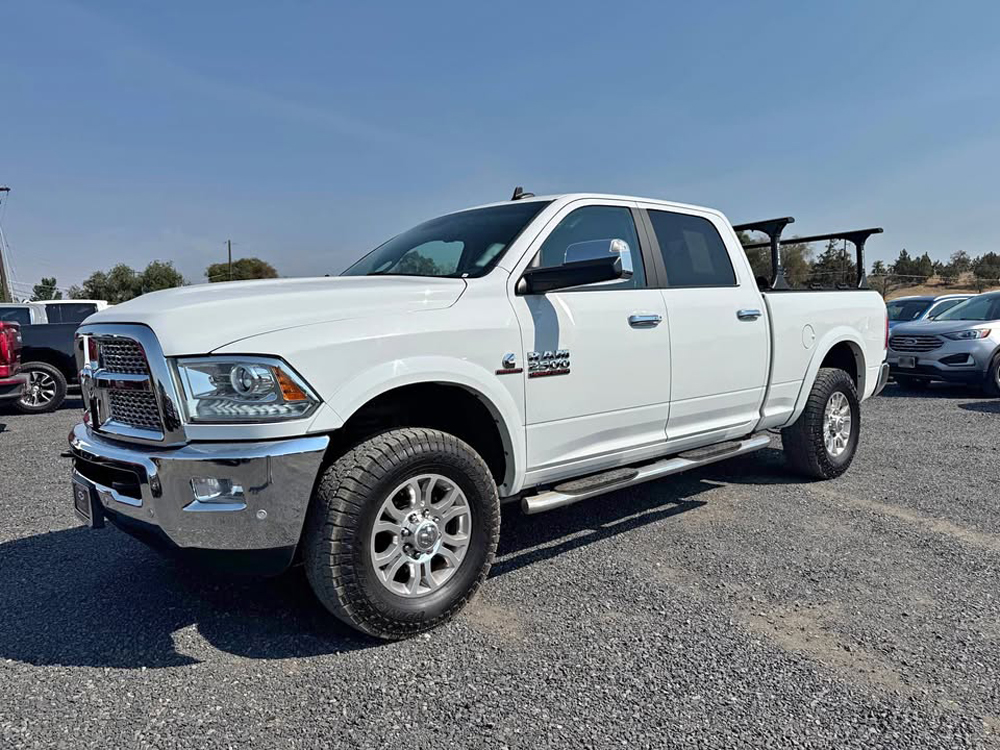
1. Model-year and powertrain map that saves you hours
Cummins or Hemi, here’s the gearbox you’re fighting
Most 6.7L Cummins 2500s run the 6-speed 68RFE. High-Output diesels and many chassis-cab or HD-trim trucks use the Aisin AS69RC, with the AS66RC showing on some earlier HO applications.
Gas 5.7L and 6.4L Hemi HDs carried the 66RFE through the mid-2010s. Fifth-gen 2019-up moved gas models to ZF 8-speeds, while diesels kept 68RFE or Aisin. Trim badges, build sheets, and pan shape confirm it fast. Get that right before chasing symptoms.
Paper specs meet steep grades and hot fluid
The 68RFE was sized for stock torque and moderate towing. Long grades, oversized tires, or tuning push it past its clutch volume and valve-body sealing. The Aisin brings higher base capacity, yet heat and limited K-clutch area still wear it down in heavy service.
The 66RFE shares the RFE hydraulics and shows the same pressure losses and converter shudder on gas HDs. If the job site or campground adds weight and heat, the weak points show early.
Symptom families that point to the unit and issue
A sharp 4-5 flare under load, then a slip on cruise, puts the 68RFE’s overdrive pack and valve body on the suspect list. Aisin units that surge or hang in upper gears often trace to K1 or K2 wear and a small-area converter.
Gas 66RFE trucks that thump on 2-3 or shudder at 50–65 mph flag cross-leaks and a tired pump. Ratio and pressure codes seal the story. P0734 or P0735 signal incorrect gear ratio after an OD event.
P0871 or P0870 point to pressure switch rationality and valve-body leakage. Add temp creep on grades, and you are looking at a thermal bypass valve that is routing hot fluid past the cooler.
2. 68RFE: built for torque, doomed by hydraulics
Pressure paths that collapse under load
The 68RFE’s biggest flaw sits in its valve body. Every shift depends on clean, sealed hydraulic circuits, yet the aluminum plate flexes and wears until fluid sneaks between channels.
That pressure loss snowballs, sluggish shifts turn into delayed engagement, then full-blown slip. The solenoid switch valve bore wears oval, leaking charge oil, and tripping P0871 or P0870. Tuners who bump pressure to “fix” it only speed the failure.
The stock separator plate can’t stay flat past 100–120 psi; it bows, the checkballs cut grooves, and the cross-leaks multiply. Once the clutches start starving for line pressure, the whole unit cooks from the inside out.
Overdrive clutch and drum: the weak link every tow exposes
The overdrive clutch pack carries the full load during highway pull, yet its friction discs are too thin and too few. Under constant torque, they glaze, slip, and burn. The input drum that houses them flexes at high rpm, letting the frictions lose contact.
That’s the famous 4-5 flare, engine revs climb while road speed stays put. Each slip scorches fluid, and heat distorts the steel plates until the drum warps. Once the overdrive pack’s done, debris spreads through the circuit, and the pump chews itself trying to recover pressure.
Converter and TCC control: where heat meets chaos
Lockup behavior on the 68RFE rarely stays consistent. The torque converter clutch (TCC) regulator valve wears its bore, making pressure erratic. One trip it locks firm, the next it chatters or refuses to hold.
That constant slip spikes fluid temperature and shakes the driveline. Stock converters don’t have the surface area or stiffness to keep up with Cummins torque, especially when hot.
The result is highway shudder that feels like misfire but lives inside the converter. Once that heat migrates upstream, the input shaft and OD hub take the beating.
The 2013–2016 valve-body bolt defect that triggered limp mode
From 2013 to 2016, another flaw surfaced. Valve-body plate bolts loosened with mileage, letting the separator plate lift just enough to dump pressure.
Trucks would shift fine one moment, then drop into neutral and relaunch in limp. Scans show P0734 or P0735, signaling lost gear ratio in 4th or 5th.
Later production used thread locker and revised torque specs, but early units need inspection or full valve-body replacement. Ignore it, and the next hill climb ends with no drive and a flatbed.
Fixes that actually end the cycle
A solid rebuild starts with a billet channel plate or upgraded valve body to seal those pressure paths for good. Pair it with a billet overdrive drum holding extra frictions, a billet input shaft, and a multi-disc converter built for continuous lockup.
These upgrades move the 68RFE from survival mode to steady work. Each addresses the exact issue point, pressure integrity, clutch volume, and thermal control, without risking on band-aid flashes or fluids that promise miracles.
68RFE failure chain and targeted repair
| Symptom / DTC | Issue | Mechanical Remedy |
|---|---|---|
| 4–5 flare, P0734/35 | OD clutch slip, drum flex | Billet OD drum, extra frictions, improved cooling |
| Harsh or lazy shifts, P0871 | Cross-leaks, warped plate, solenoid bore wear | Billet channel plate, performance valve body, new solenoid pack |
| Highway shudder, TCC hunt | Worn TCC valve, weak converter | Sonnax-type valve fix, billet multi-disc converter |
| Limp/neutral (’13–’16) | Valve-body bolt loosening | Inspect and Loctite bolts or replace assembly |
3. Aisin AS69RC and AS66RC: strength with details
Why the “indestructible” reputation doesn’t hold up
The Aisin AS69RC built its legend on raw torque capacity, not longevity under abuse. Its heavy cast case and deep gearsets can swallow more load than the 68RFE, but that strength hides a few blind spots. The internal layout favors smooth, bus-like shifts.
That comfort tuning sacrifices clutch bite and oil pressure in the gears that matter most under load.
The K1 and K2 clutch assemblies, the workhorses for underdrive and overdrive, carry limited friction area, and their teeth round off after enough heat cycles. What starts as a mild flare at highway merge turns into slip and debris in the pan.
Where the gears really give up
The first to surrender is usually the K1 clutch. It runs every time the truck’s in a low gear, so stop-and-go driving or frequent launches load it constantly. Its damper setup softens engagement but drains apply pressure, letting the frictions glaze.
Once K1 starts to drag, shifts feel lazy and heat soars. The K2 clutch, used for overdrive gears, wears next. The hub cracks or warps from repeated high-rpm lockup events, especially in tuned HO trucks.
When the K2 teeth round off, the transmission hunts between 4th and 6th and throws ratio codes. Every failed apply leaves fine metal in the fluid, which scorches the converter and bearings.
Converter and wiring harness: small parts, big headaches
The stock torque converter uses a 3-steel/3-friction lockup stack. On paper, it holds, but its small friction surface slips once the Cummins pushes beyond factory torque. That slip doesn’t stay local; it sends heat through the pump and into the clutch circuits.
The cast-aluminum stator inside the converter wastes torque during acceleration, giving the truck a soft, delayed pull even when healthy. Electrical gremlins add another layer. The internal harness runs through tight bends inside the case.
After thousands of heat cycles, insulation cracks and copper fractures. Drivers chasing “random limp” often discover the fault lies in that cooked harness, not the solenoids.
Building a real fix instead of a reputation
Aisin rebuilds that last start with a performance valve-body kit that boosts clutch pressure without risking shift quality. Corrected accumulator circuits stop the lazy gear change that wears K1 and K2 packs.
Heavy-duty K-clutch assemblies with improved friction material hold torque far better than stock. Add a billet multi-disc converter with a larger lockup surface and a refreshed internal harness, and the unit can handle roughly 600 horsepower before stress lines appear.
Go past that without these upgrades, and the Aisin’s “commercial-grade” promise fades under the same heat and pressure that took out the 68RFE.
4. 66RFE on gas HDs, pressure loss, and converter shake
The RFE hydraulics repeat the same mistakes
Same family, same weak spots. The 66RFE’s valve body loses seal at the plate and bores, so line pressure falls when the truck needs it most. That shows up as a thump on 2–3 or 3–4, lazy engagement cold, and a highway shudder that feels like misfire at 50–65 mph.
The pump wears, charge oil drops, and the converter slips long enough to cook fluid and glaze the frictions. Scan tools often catch P0871 on the way to harsher shifts and rising temps.
Parts that stop the shake and save the tow
Reliable gas HD builds start with pressure integrity. A performance valve body with a billet channel plate keeps the circuits sealed and holds apply pressure under load. Pair that with a stronger multi-disc converter sized for steady lockup on grades.
If the pan shows glitter or the line graph sags, add a fresh solenoid pack and address pump wear with updated hard parts. Run ATF+4, shorten the service to about 30,000 miles when towing, and the 66RFE settles into clean shifts instead of hunting and heat.
5. Heat, the multiplier that ends every RFE
The thermal bypass valve that quietly disables cooling
Every modern Ram 2500 with a 68RFE, 66RFE, or Aisin carries a Thermal Bypass Valve (TBV) in the cooler circuit. Its job sounds harmless: keep fluid out of the cooler until it warms up, but when it sticks, it traps hot oil inside the transmission.
Many valves jam in bypass position after a few seasons of towing. Once that happens, the cooler never sees flow, temps climb past 220°F, and every seal and clutch in the box starts to suffer. Fluid breaks down fast, varnish coats the solenoids, and the overdrive pack turns black long before the odometer hits six digits.
The low-cost fix that pays back every mile
Deleting or replacing the TBV restores constant flow through the cooler. A simple unrestricted bypass kit, about $100, forces 100% of the fluid to route through the heat exchanger, no matter the temperature.
Combine that with a high-capacity external cooler and a clean airflow path, and line pressure stays steady instead of collapsing in traffic or grades.
Trucks that tow heavy or run tuned benefit the most; temperatures drop 20–40°F, extending fluid and clutch life more than any additive ever could.
Fluid, filters, and service intervals that actually prevent issue
Every RFE platform lives or ends by its fluid. 68RFE and 66RFE units need ATF+4 under Mopar’s MS-9602 spec. Aisin transmissions use ASRC fluid that meets JWS3309.
Wrong fluid chemistry ruins friction materials and swells seals within weeks. Severe-duty work, towing, mountain hauling, or high-power tuning demands a 30,000-mile service rhythm.
That means new filters and fresh fluid, not just a top-off. A monthly dipstick check for color and odor tells more than any scan tool. Clear red is safe.
Dark brown with a burnt smell means it’s already too hot. Treat 200°F as a warning, 220°F as the limit. Crossing that line once may not end the transmission, but running there often guarantees a rebuild.
6. What the truck feels versus what’s failing inside
Road feel that maps straight to the bad part
Cold start, drop in to drive, and nothing bites for a second. That delay points to low charge oil from a tired pump or a TBV stuck in bypass that starves the cooler.
A 45–65 mph shudder with light throttle flags TCC control wear and a weak converter on 68RFE and 66RFE units. A sharp 4-5 flare under load followed by rising temps, puts the 68RFE’s overdrive pack and input drum at the top of the list.
On Aisin trucks, lazy upshifts that hang in 4th or 5th track back to K1 or K2 loss, and a converter with too little lockup area.
Codes that shorten the hunt to a few bolts and bores
Incorrect ratio in 4th or 5th, P0734 or P0735, usually means overdrive slip on a 68RFE or K2 wear on an Aisin. Pressure switch rationality, P0871 or P0870, ties directly to cross-leaks at the valve body and an ovaled solenoid switch bore.
One-gear limp with no upshift often follows a hot pull, then a key cycle; that pattern fits the 2013–2016 68RFE valve-body bolt issue. Confirm on the floor, not in theory.
Drop the pan, read the magnet, check cooler flow with the TBV open, air-check the clutches, and watch line pressure and TCC slip on a grade. If pressure sags when the converter locks, the hydraulics are leaking; if slip refuses to settle, the converter and TCC circuit are done.
7. Building a transmission that actually earns its keep
Stock tow rigs: cheap moves that buy real life
For a truck that still runs factory power, the goal’s simple: keep it cool and keep pressure where it belongs. Start with a TBV delete and a larger external cooler to stop heat from stacking up on long grades. Service fluid and filters every 30,000 miles, not when the book says.
If shifts start to lag or codes like P0871 show up, swap in an updated solenoid pack or a performance valve body with a billet plate to stop cross-leaks. These low-dollar upgrades are the difference between a smooth pull and a roadside limp at 80,000 miles.
Tuned work trucks: holding pressure against torque
Once tuning enters the mix, the 68RFE and 66RFE both need stronger parts to survive. Line pressure climbs past what the factory plate can handle, and the overdrive clutch becomes a fuse.
A billet multi-disc converter and a performance valve body stabilize lockup and clutch apply under torque. Add friction count in the OD drum and monitor temps on every haul. This setup handles real-world towing without pushing into full race hardware or breaking the bank.
Heavy haulers and high-power builds: the billet threshold
Tuned Cummins trucks over 550–600 horsepower need more than fluid and luck. The factory drum and input shaft twist under high lockup torque, and the converter’s limited friction area turns into a heat pump.
A full “billet threshold” build uses a billet overdrive drum, input shaft, reinforced hubs, and a low-slip converter built for continuous lockup.
Pair those with a precision valve body that keeps pressure stable through every shift. Costs run $3,000–$5,500 for the major hardware, but it’s the foundation that keeps a 30,000-pound rig climbing without slipping into neutral.
Real-world parts and price bands (installed averages)
| Package | Core Components | Typical Parts Cost | Role in Longevity |
|---|---|---|---|
| Cooling & Service | TBV delete, high-capacity cooler, filters, ATF | $250–$700 | Keeps heat and debris from snowballing |
| Hydraulic Restore | Performance valve body, billet channel plate, solenoid pack | $900–$1,800 | Restores pressure and shift control |
| Converter Upgrade | Billet multi-disc converter | $1,000–$1,800 | Locks up clean, cuts slip, and heat |
| Billet Threshold | Billet OD drum, input shaft, hubs, converter, VB | $3,000–$5,500+ | Core strength for tuned Cummins power |
| Full Built Unit | Complete reman “68RFE/AS69” performance transmission | $4,500–$9,000+ | Ready-to-install reliability with rated capacity |
8. Tuning, pressure strategy, and why fresh builds still end
Line pressure without sealing turns into scrap
Cranking line to 100–120 psi looks smart on paper. With a stock separator plate and worn bores, it just bows metal and opens cross-leaks faster. Checkballs peen grooves, the solenoid switch valve ovalizes, and clutch feeds lose volume right when torque peaks.
Adaptives see slip and add more pressure, which warps the plate again. The result is a hot, noisy apply that shears friction, not a clean hold. A performance valve body and billet channel plate must come first. Pressure only helps once the circuits seal and stay flat.
Lockup timing that breaks shafts and hubs
Hard TCC lock during the 3–4 upshift under load hammers the input shaft and the OD hub. Low-rpm lock at highway pull does the same thing, just slower. The converter hunts, slip spikes, and heat pours into the drum.
Command lock after the shift, not during it. Use a smooth apply ramp and a small steady-state slip target, about 20–50 rpm, until temps stabilize. Hold full lock only once gear is settled and throttle is clean.
On Aisin, keep K2 out of repeated lock–unlock cycles on grades. On 68RFE, avoid lock in high gear below about 1,600 rpm with heavy trailers.
Relearn, temp gates, and break-in that keep it alive
Every fresh unit needs a proper quick-learn and a controlled drive cycle. Let the TCM set clutch volume indexes with light throttle, flat ground, and normal temps. Gate heavy pulls until sump is at least 150°F and stays under 200°F on a climb.
Keep early miles simple: no boosted launches, no long-grade lockup testing, no wide-open throttle kickdowns. After 300–500 miles of clean shifts, raise the load in stages and watch line pressure and TCC slip on a scan tool.
If slip can’t settle or pressure sags during lock, fix hydraulics before tuning the numbers higher.
9. Ownership habits that keep these units alive
Load discipline and gearing sanity
Every automatic has a limit, and most issues start long before the warning light. A truck dragging a 14,000-pound trailer with 37-inch tires and stock gearing runs the converter near stall for miles.
That extra slip turns into 230°F fluid and fried clutches. Match axle ratio to tire size, 4.10s for heavy towing, 3.73s for mixed work, and keep overdrive lockout handy on grades.
Torque multiplication through the converter only works clean when rpm stays above 1,800 under pull. Anything lower stacks heat faster than the cooler can shed it.
Gauges that tell the truth before the smell does
Factory trans temp gauges lag minutes behind reality. Add digital PIDs for trans temp and TCC slip on a tow screen or handheld tuner. Slip that holds steady under 50 rpm means the converter’s happy; numbers swinging past 150 mean it’s burning up.
Treat 200–210°F as normal working range, 220°F as a sign to lift, and anything higher as a stop-and-cool situation. A cheap OBD readout often saves a $6,000 rebuild.
Inspections that prevent the next tow bill
Every service should include a pan drop, magnet check, and a quick look at cooler flow. A restricted line or stuck TBV sends clear warning, fluid dark, level low, magnet glittery.
For 2013–2016 68RFE trucks, pull the valve body and verify the bolt torque before it backs out and drops pressure mid-haul.
On high-mileage Aisin units, inspect harness connectors for heat cracks that mimic limp mode. Catch these details early, and the truck stays earning instead of waiting for a rollback.
What the failures prove about the Ram HD drivetrain
Every transmission in the Ram 2500 lineup tells the same story: power outran the plumbing. The Cummins makes torque that small passages and thin plates can’t manage, and once the heat climbs, the hydraulics fold.
The 68RFE cracks first with its overdrive pack and valve-body leaks. The Aisin takes longer to surrender but still burns through K-clutches and converters when used hard. Even the gas 66RFE carries the same pressure decay that leaves it hunting between gears on hills.
The weak link isn’t software or luck; it’s an undersized oil circuit fighting too much weight and temperature. Once pressure drops, clutches slip, fluid burns, and the spiral starts. The cure is always mechanical: more clutch volume, stiffer plates, solid converter lockup, and a cooler that never stops flowing.
Owners who delete the thermal bypass, upgrade the hydraulics, and keep their service tight stop treating the transmission like a fuse. Those trucks tow season after season without the 4–5 flare or limp mode warning.
The rest keep proving what the data’s shown for years: the Cummins powertrain only stays bulletproof once the transmission is built to take the hit.
Sources & References
- 68RFE Frequently Asked Questions | Shop Transmissions, Torque Converters
- Mastering Cummins Automatic Transmissions: A727, 47RH, 47RE, 48RE, 68RFE, Aisin & Allison Kits – CPP Diesel
- Ram Heavy Duty (fifth generation) – Wikipedia
- Aisin AS69RC Common Problems – Monster Transmission
- Press Kit: 2007 Ram 2500/3500, What’s New for ’07 – Stellantis Media
- 66RFE Transmission RAM 2500, RAM 3500, 5.7L, 6.4L 2013-2018 – Xtreme Performance
- 66RFE TRANSMISSION 5.7L 6.4L
- How To Recognize RAM Transmission Failure Symptoms
- Dodge Ram 2500 Transmission Problems: Lemon Law Solutions
- Common 68RFE Transmission Problems and Solutions
- Transmission Overheating? Here’s What You Need to Know.
- Top 5 Signs Your 68RFE is Failing — Don’t Wait Until It Blows – Inglewood Transmission
- 68RFE Transmission Guide: Problems & DIY Upgrades – Diesel Power Products
- Fixing the Root Cause of the Problem: Solving Issues with the 68RFE Transmission
- Ram HD limp mode 68RFE transmission – Service Bulletin
- NUMBER: 18-061-20 REV. A GROUP: 18 – Vehicle Performance DATE: October 17, 2020 – nhtsa
- Dodge Ram 3500 Transmission Fluid Change Kit – 2007-24 – 68RFE 66RFE 6 Spd – Eurol
- ATS 3100052392 Thermal Bypass Valve Delete 13-18 Ram 6.7L Cummins
- Mopar 5189966AE ASRC Automatic Transmission Fluid – XDP
- Aisin Seiki AS69RC Transmission • Problems, Solutions & Upgrades
- ATS 66RFE Transmission Package 2WD 4WD 2013-2018 Ram 5.7L / 6.4L Hemi
- How To Know If Your 65RFE or 66RFE Transmission Is Failing – Powertrain Products
- 68rfe – signs of failure to look for? : r/Cummins – Reddit
- Chrysler 68RFE Transmission • Problems, Solutions & Upgrades – Next Gen Drivetrain, Inc.
- ATS Thermal Bypass Valve Upgrade 2013 to 2018 6.7L Cummins (68RFE & AS69RC Transmission) – Blessed Performance
- Dodge Cummins Transmissions – RevMax Converters
- AISIN AS69RC Transmission Stage 1 – 600HP Max
- 2018 RAM 3500 SRW – Aisin Trans Braking Point
- Dodge Ram 66RFE & 68RFE Transmission Problems EXPLAINED – YouTube
- SportMonster Dodge 66RFE Transmission & Torque Converter
- Transmission Overheating: Causes, Symptoms, and How to Prevent It – Tier One
- RAM 2500 Maintenance Schedule
- Towing and Hauling with the 68RFE Transmission: Tips for Optimal Performance – Tier One