
Fire it up, and the 12-inch screen stays black. No speed. No gear. No warning lights.
That’s the recall in plain terms. Officially tagged NHTSA 25V826, this one hits around 72,509 Ram trucks from the 2025 and 2026 model years, specifically those running the full digital instrument cluster.
A bad software load can knock the display out at startup or while driving, wiping every legally required indicator from the dash. When that screen’s dead, you lose track of speed, gear selection, and brake warnings. That’s a federal safety violation. Stellantis had no choice but to recall it.
What follows breaks down how the failure shows up, why regulators stepped in, what dealers are doing, and what this means if one of these trucks is in your driveway or on your list.
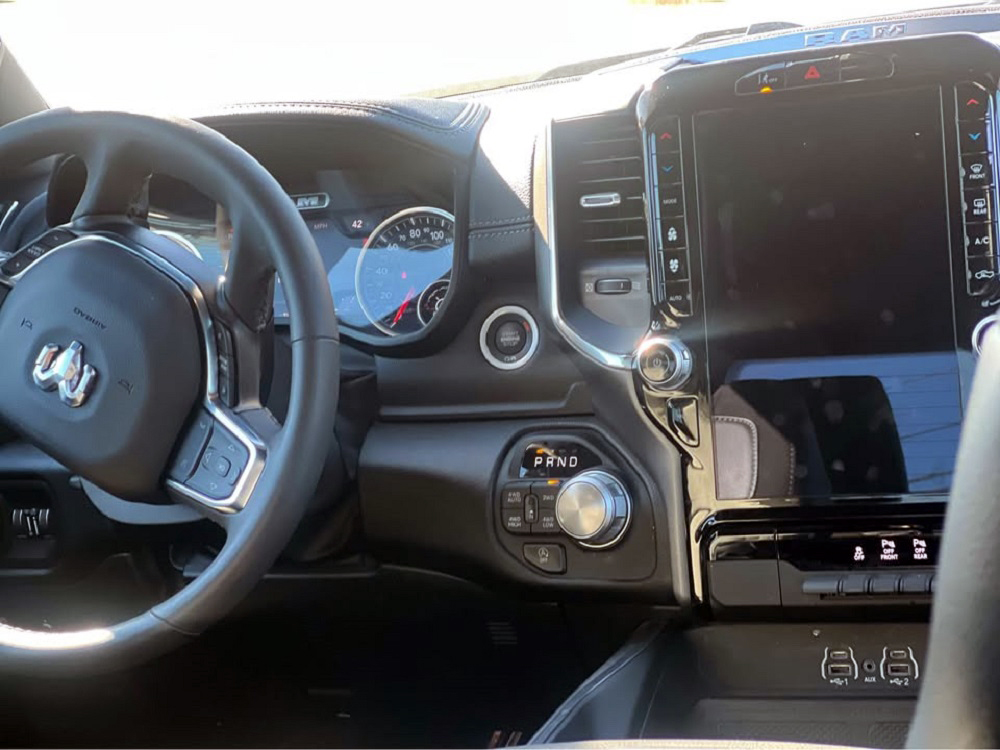
1. What the Chrysler Ram 72K Recall Really Covers
Why the digital cluster failure forced a recall
This one doesn’t live in the gray zone. NHTSA 25V826 is a black-and-white safety recall, tracked by Stellantis under B4C and B8C. It targets one part only: the 12-inch digital instrument cluster.
No airbags, no steering system, no infotainment screen. Just the display that replaced analog gauges and now carries speed, gear position, and brake warnings.
That narrow focus matters. Random electrical bugs earn TSBs or software updates. A safety recall halts sales, flags VINs, and forces dealers to complete the fix before keys change hands. This one qualified because it wipes out federally required info as soon as the screen goes dark.
Why a blank cluster breaks federal safety law on the spot
When the display shuts off, it takes three required elements with it. The speed readout disappears. The gear position indicator vanishes. And the brake warning light can’t illuminate.
That’s a direct hit to FMVSS 102, 105, and 135, rules that don’t care whether the brakes still work. If the truck can’t warn the driver, it’s out of compliance the moment the cluster blanks.
Regulators don’t need volume to act. One confirmed failure that removes those safety indicators is enough to demand a recall. That’s how a software bug, something owners might brush off, forced Stellantis into an official fix campaign with no wiggle room.
How “72K Ram recall” became the phrase everyone repeats
Stellantis doesn’t use the nickname. The number came from the raw VIN count: 72,509 trucks across light-duty, heavy-duty, and cab-chassis lines. Media rounded it. Owners repeated it. Search engines locked it in.
Now, when someone types “chrysler ram 72k recall,” they’re looking at NHTSA 25V826, a single software fault inside a single cluster, stretching from suburb-bound half-tons to fleet-spec trucks with flatbeds and toolboxes.
2. Which Ram Trucks Are in the 72,509-VIN Net
Which trucks actually carry the risk
The recall doesn’t follow trim levels, engines, or option codes. It tracks one thing only: the 12-inch full digital cluster. Any 2025 or 2026 Ram that rolled off the line with that screen handling speed, gear, and brake warnings is under the recall.
That includes Ram 1500 half-tons, Ram 2500 and 3500 pickups, and a slice of 3500, 4500, and 5500 cab-chassis trucks ordered with the same display unit.
Trucks with smaller screens or hybrid analog/digital clusters don’t carry the same risk. They use different hardware, different software, and fall outside the scope. That’s why two trucks sitting on the same dealer lot can have completely different recall status based on what’s behind the glass.
Build dates set the boundary
The recall lines up with a specific batch of software installed during production. For Ram 1500, the affected build range runs from October 3, 2023 to November 12, 2025. The heavy-duty and cab-chassis trucks fall into a tighter window: mid-July 2024 through July 19, 2025.
Anything built outside those windows got a different software version and never entered the recall pool. That’s why Stellantis can draw a clean line, even between trucks that look identical in the cab. The difference lives in the code, not the plastic.
How the model spread stacks up
The numbers explain why this recall shows up in suburban driveways and jobsite yards at the same time. Most affected trucks fall under the half-ton category, but the digital cluster made its way across the work-truck spectrum too.
| Model | Model Years | Approx. Units | What ties them together |
|---|---|---|---|
| Ram 1500 (DT) | 2025–2026 | ~43,400 | Largest volume, most 12″ clusters |
| Ram 2500 | 2025–2026 | ~19,700 | Shared IPC software with HD line |
| Ram 3500 pickup | 2025–2026 | ~9,000 | Same digital cluster architecture |
| Ram 3500/4500/5500 cab-chassis | 2025–2026 | ~450 | Fleet and upfit trucks with 12″ cluster |
3. What Fails Inside the 12-Inch Digital Cluster
That screen isn’t just a fancy speedo
On these trucks, the 12-inch cluster handles everything, speed, gear position, engine alerts, brake warnings, and safety status icons. Ram didn’t back any of it up with physical lamps. The digital panel became the one and only source for all driver-facing info.
When it works, the layout looks sharp and modern. When it fails, the dash goes stone silent. That all-or-nothing setup is exactly why this fault turned into a recall. No backup bulb kicks in. Once the screen blanks, you’re driving blind on every legally required display.
The software’s the problem, not the glass
The failure doesn’t come from bad wiring or screen defects. Stellantis traced the issue to a Marelli firmware load that can stall during boot, or glitch out while the truck’s already moving. When it hits, the cluster stops displaying data and stays dark until the vehicle is restarted or the module gets reset.
Some trucks throw a warning light seconds before the blackout. Others don’t show a thing. That inconsistency helped tip the scale toward recall, because there’s no dependable heads-up before the screen cuts out.
Why some owners see it once, others never
Stellantis puts the failure rate at around 1% of the 72,509 affected trucks. That low percentage explains why some owners never see the issue, while others hit it multiple times. It’s not a constant bug, it’s a timing trap buried in the software.
It usually triggers during startup, or in rare edge conditions that don’t happen every drive. That’s why reports are all over the map: one-time flukes, months of nothing, then two failures in a week. Owners can’t avoid it, predict it, or reproduce it reliably.
4. Why Regulators Stepped In So Hard
One blackout equals three federal violations
When the cluster drops out, the truck doesn’t just lose niceties, it loses displays required by law. The PRNDL vanishes, violating FMVSS 102. The brake warning light disappears, triggering violations of FMVSS 105 and 135.
It doesn’t matter if the brakes still work. If the driver can’t be alerted when something’s wrong, the truck fails inspection right then and there. Federal code doesn’t tolerate “usually works.” One mode of failure is enough to force compliance action.
Real-world risk, not a lab scenario
Imagine a Ram 3500 towing downhill with a slow brake fluid leak. The dash should flash a warning before anything goes wrong mechanically. But if the cluster’s dead, that alert never shows. The first clue might be a spongy pedal or extended stop, and by then, it’s too late.
Same deal on the job site. Backing up a cab-chassis with no visible PRNDL can land you in reverse when you wanted neutral. These aren’t edge cases, they’re everyday use cases where missing data turns a glitch into a hazard.
Why every truck got roped in
Even if only 1% of affected trucks ever blank the screen, Stellantis couldn’t wait around and fix just the bad ones. Once a software image is flagged for breaking federal standards, every truck carrying that code is suspect.
Regulations don’t leave room for “wait and see.” If the defect exists in the population, the whole group gets pulled into the recall, symptoms or not. That’s why all 72,509 VINs are on the hook until software is replaced or the cluster’s swapped.
5. How This Recall Came Together Behind the Scenes
The issue shows up, then refuses to stay put
Stellantis didn’t launch a 72,000-truck recall overnight. It started with scattered complaints, blank clusters that wouldn’t repeat and were easy to brush off. But by September 2025, engineering flagged a pattern. Same digital display, same build window. It stopped looking random.
That’s how software defects work. They don’t break loud or clean. They nag, vanish, then show up again just often enough to trigger an internal escalation.
The moment it turned into a compliance problem
By November 21, 2025, Stellantis’ Vehicle Regulations Committee drew the hard line. Every time the cluster went dark, the truck violated multiple FMVSS rules. At that point, it wasn’t an internal quality issue anymore, it was a federal compliance breach.
Once that call was made, the clock started. On December 1, 2025, Stellantis filed a Part 573 safety recall report, triggering campaign 25V826 and locking the company into a mandatory repair program.
Stop-sales hit dealers first and fast
Dealers got the order on December 4, 2025, and it came with teeth. Any unsold truck under the recall couldn’t legally leave the lot, not even for a test drive, until it was repaired. No carve-outs for demos, no waivers.
That same day, the VIN lookup tools went live. But owner letters weren’t scheduled to drop until early January 2026. That left a gap where dealers were stuck explaining trucks buyers couldn’t take home, and owners didn’t even know they had an active safety recall.
6. What the Dealer Actually Does to Fix It
Most repairs are quick software reflashes
The majority of these trucks won’t need new hardware. Dealers match the VIN to recall 25V826 and use Stellantis campaign codes B4C or B8C to guide the process. Those codes matter, light-duty and heavy-duty Rams don’t always run the same cluster modules, and mixing up the flash can cause new problems.
Technicians reprogram the instrument panel with a corrected Marelli software load, then power-cycle the display and check for proper boot, gear indication, and brake warning functionality.
In theory, this takes minutes. But in the real world, wait times hinge on how many trucks are stacked up and how fast the service lane moves.
When a reflash fails, the whole cluster gets swapped
Some clusters just won’t take the update. They fail during flashing, lose the new data, or still go dark after reprogramming. When that happens, the dealer moves to the backup plan: full replacement of the 12-inch digital cluster.
This isn’t just a parts swap. The new unit must be programmed to match the truck’s VIN, mileage, features, and configuration all have to line up.
That adds time, especially if parts are on hold or the dealer’s programming queue is full. Fleet-spec cab-chassis units may face even longer turnaround based on how they’re routed through service.
Why this isn’t handled over the air
Yes, these trucks can take some OTA updates, but Stellantis didn’t go that route. Because the cluster controls federally mandated displays, NHTSA requires traceable, VIN-level proof of correction.
A dealer repair order meets that bar. It confirms the fix, clears the stop-sale, and feeds the result into recall tracking systems.
That record matters. It’s what shows up on Carfax, satisfies insurers, and tells future buyers the truck doesn’t carry the defective software anymore.
7. What Owners Should Do While This Is Active
How to check your truck without guessing
Forget the sales pitch and trim level. The VIN is what matters here. Run your 17-digit VIN through the NHTSA recall tool or the Mopar recall lookup and search specifically for 25V826.
You’ll see one of three things: “remedy available,” “open/incomplete,” or nothing at all, if your truck falls outside the affected build window.
Don’t assume that a working screen means you’re in the clear. This isn’t tied to any fault code you can pull with a scan tool. It’s about software version, not current behavior.
If the screen goes black on the road
Treat it like a real safety failure. Back off the throttle, leave extra space, and stop as soon as it’s safe. Shift into Park by feel if you must. Only cycle the ignition if you need the screen back just to move out of traffic.
If the display stays dark, stop driving. Snap a photo or video if you can, then get it towed. No brake warning means you’re flying blind on a critical system. Keep rolling, and the risk starts to pile up fast.
Paperwork that protects you later
After the recall is done, save the repair order and any recall letters tied to 25V826. That record sticks with the truck and it matters. Whether you’re selling, trading, or dealing with insurance, proof of a completed safety fix moves the needle.
If you’re shopping for a Ram, use it as leverage. An open recall lowers value and complicates title transfer. If the seller refuses to get it fixed, they’re handing you a reason to walk away, or push harder on the price.
Sources & References
- Ram trucks recalled due to instrument panel display failure, NHTSA says
- Part 573 Safety Recall Report 25V826 | NHTSA
- Ram Recalls 72,000 Trucks Over Blank Displays – Kelley Blue Book
- Ram Recalls 72000 Trucks for Blank Instrument Cluster Displays Due to Software Glitch
- Ram Recalls 72,000 Trucks After Digital Dashboards Go Blank While Driving – Autoblog
- Ram trucks recalled due to instrument panel display failure, NHTSA says | FOX 13 Tampa Bay
- New Safety Recall Advanced Communication – B4C – nhtsa
- Ram Has A Problem With Disappearing Instrument Clusters In New Trucks – CarBuzz
- 72,500 Ram Trucks Recalled for Instrument Clusters – Cars.com
- Dodge Ram Instrument Cluster Common Issues and Failures – CBoardRepair
- Ram trucks recalled due to instrument panel display failure, NHTSA says | FOX 32 Chicago
- safety recall – nhtsa
- Find Existing Ram 3500 Car Recalls – DealerRater
- Recall alert: 72K Ram trucks recalled over problem with instrument panels – KIRO 7
- Technical Service Bulletin (TSB) – Flash: Instrument Panel Cluster (IPC) Updates – nhtsa
- Check for Recalls: Vehicle, Car Seat, Tire, Equipment – NHTSA
- Look for Vehicle Recalls | Official Mopar® Site
- Recall alert: 72K Ram trucks recalled over problem with instrument panels – WHIO TV
- Uconnect® Software Update Center: For Stellantis Vehicles
- Downshift: Ram Truck Recall, Acura NSX Restomod, and Purple Rivians – The Drive