
It starts with a knock. Then the light flashes. Then the power’s gone. One minute your Hyundai or Kia runs fine. The next, it’s rattling, bogging, or shutting off mid-drive. And you’re left wondering, did the engine just die, or did Hyundai already know it would?
This isn’t bad luck. The 2.4L Theta II has a known defect: leftover metal from factory machining. It clogs oil passages, starves bearings, and spins rods until the block’s done. Millions of engines carry the risk.
Recalls exist, but they’re layered, slow, and full of details. Some owners get a new engine. Others get denied. This guide shows what fails, how it fails, and what actually gets covered.
1. Why the 2.4 Theta II crisis breaks the usual recall approach
The damage starts deep in the crank, not around the edges
At Hyundai’s Alabama plant, some 2.4 cranks left the line with metal debris still trapped inside the oil passages. Once the engine fired up, oil pressure flushed those shavings straight into the rod bearings.
No light came on. No code set. The bearings wore hot, clearances widened, and knock showed up late, after the damage was baked in. Nothing on the outside fixes it. No gasket, sensor, or bolt-on part touches what’s already been carved into the rotating assembly.
That’s why repairs keep ending in short blocks or full engine swaps. Once the crank’s compromised, there’s nothing to save.
Normal recall behavior vs the 2.4 Theta II
| Area | Typical recall | 2.4 Theta II |
|---|---|---|
| Issue | Isolated part or software | Internal oiling and bearing wear |
| Early warning | Clear fault or defect | Silent wear until knock |
| Repair scope | Single component | Engine replacement |
| Risk after repair | Minimal | High, unless full engine replaced |
| Safety exposure | Low | Stalling and fire risk |
The 2.4’s role in the wider Theta II collapse
The 2.4 shares its bearing layout and oil-feed design with the 2.0T, MPI, and hybrid Theta II variants. Different trims, same weak point.
What made the 2.4 stand out was scale. It powered Hyundai and Kia’s highest-volume sedans and crossovers, running hot in stop-and-go traffic. Failures came fast, faster than recall coverage expanded.
That triggered outside pressure. A whistleblower exposed internal failure data, pushing NHTSA to intervene. The 2020 consent order forced Hyundai and Kia into broader recalls, financial penalties, and active monitoring. From there, the strategy shifted from selective repairs to damage control.
What failure looks like from the driver’s seat
When a 2.4 fails, it doesn’t stall quietly. Rod failure can dump oil on hot exhaust, which is how engine loss turns into a fire.
Even when it doesn’t burn, the cost lingers. Engines go on national backorder. Dealers run out of loaners. Owners keep making payments while their car sits dead in a service bay. Coverage exists, but it’s slow, conditional, and inconsistent.
That’s the setup for everything that follows. Once you understand how this engine fails, and how Hyundai responds, the patchy coverage starts making sense.
2. Where the 2.4 Theta II actually shows up
Hyundai dropped it into its biggest sellers
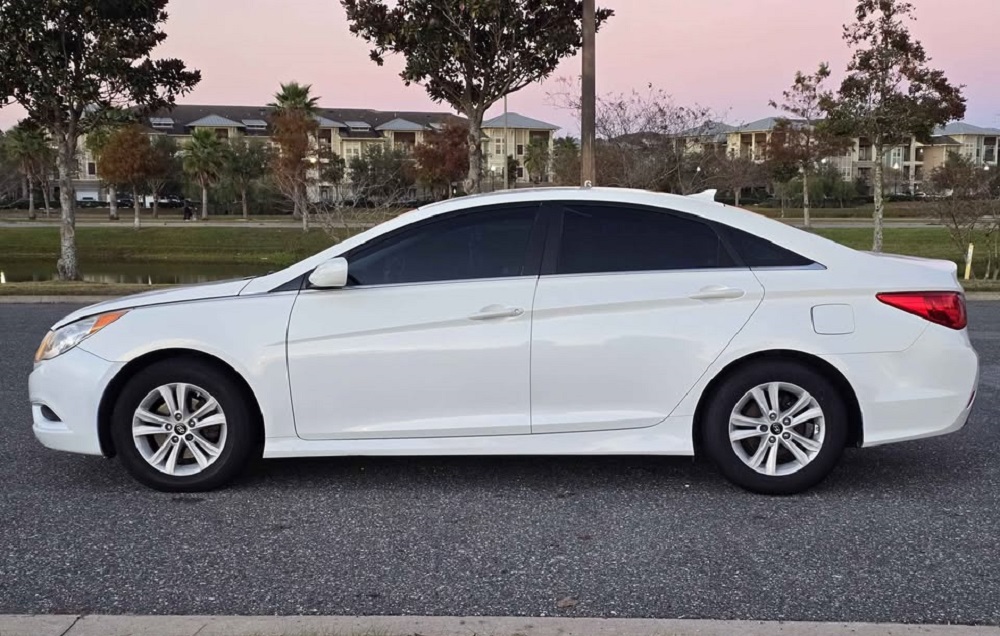
Hyundai used the 2.4 Theta II in its core lineup for years. The Sonata tops the failure list, followed by Santa Fe Sport and Tucson as the engine moved into crossovers. These weren’t rare trims, they were mass production cars.
The first recall wave hit 2011–2014 Sonata and 2013–2014 Santa Fe Sport. Later recalls pulled in newer builds once fire reports and bearing failures mounted.
Coverage still varies by market. U.S. and Canadian vehicles don’t always share the same recall IDs or VIN breakpoints, even with identical hardware.
Kia used the same 2.4 and saw the same failures
Kia dropped the same engine into Optima, Sorento, and Sportage. Failure patterns mirrored Hyundai’s, even when the campaigns lagged behind.
Optima matched Sonata almost exactly in failure rate and design. Sorento and Sportage saw issues too, especially in heavier trims where heat loads rose faster.
Some MPI and hybrid versions were skipped early on, but eventually pulled into recalls once regulators linked their failures to the same internal oiling flaw, not the fuel system.
Highest-risk combos by model and year
These aren’t guesses, they’re the models with the highest known failure density across public recalls, lawsuits, and internal campaign data.
| Brand | Model | Model years (U.S.) | Engine | Build source |
|---|---|---|---|---|
| Hyundai | Sonata | 2011–2014 | 2.4 GDI | Alabama |
| Hyundai | Santa Fe Sport | 2013–2014 | 2.4 GDI | U.S. / Korea |
| Hyundai | Tucson | 2014–2015 (select) | 2.4 GDI/MPI | Korea / U.S. |
| Kia | Optima | 2011–2014 | 2.4 GDI | U.S. / Korea |
| Kia | Sorento | 2012–2014 | 2.4 GDI | Georgia / Korea |
| Kia | Sportage | 2011–2013 | 2.4 GDI | Korea |
3. How the 2.4 Theta II fails deep inside the block
Debris rides the oil path, bearings pay the price
Failure starts before the engine sees its first mile. Metal left inside the crankshaft oil passages gets swept into the rod bearings as soon as oil pressure builds. Those bearings carry the most load, and don’t tolerate blockages.
Once debris hits the surface, wear builds fast. Clearances open, heat climbs, and the oil film starts breaking down. No dash light catches it. No scan tool sees it. You don’t know what’s happening until the knock shows up late.
That’s why every teardown looks the same; scored bearings, heat spots, and debris trails right at the oil feed holes. This isn’t abuse. It’s baked in from day one.
The knock-to-failure chain drivers feel too late
This failure doesn’t hit all at once. It walks through a clear sequence, silent at first, catastrophic by the end.
| Stage | Inside the engine | What the driver feels |
|---|---|---|
| Early wear | Light bearing scoring, reduced oil flow | Nothing unusual |
| Progressing | Clearances open, bearing heats | Metallic knock under load |
| Critical | Oil pressure unstable, bearing near seizure | Loud knock, vibration, dash warning |
| Seizure | Bearing locks or spins | Sudden stall, power loss |
| Block breach | Rod fails, block punched | Oil dump, smoke, possible fire |
Why some survive and others seize early
Usage separates survivors from breakdowns. Short trips, long idle time, and stop-and-go traffic drive oil temps up and starve pressure at the bearings. Highway driving keeps things cool, flow steady, and failures fewer.
Manufacturing variation plays its part too. Some cranks had more debris. Some bearings had tighter clearances. That’s how one engine dies at 60,000 miles while another clears 150,000.
Later builds tightened cleaning procedures and added KSDS monitoring, but the basic layout never changed. The risk narrowed. It didn’t disappear.
4. How the 2.4 recall timeline fell behind the failures
First recalls chased noise, not the underlying problem
The earliest campaigns focused on knocking complaints. If you passed a noise test, you kept your engine, even if the damage was already working its way through the bearings.
That approach boxed in early coverage. It caught some failures. But it left thousands of bad engines still in service, unprotected, slowly wearing out. By the time recalls expanded, many had already seized.
Expansion came when data and regulators forced the issue
As failures mounted, NHTSA stepped in. Internal documents showed Hyundai and Kia knew about broader risks. Investigations followed. Pressure built.
The result: consent orders, financial penalties, and forced shifts in strategy. Recalls stopped being isolated events. They became stacked, overlapping waves, with many VINs affected multiple times for related engine issues.
The major U.S. recall actions targeting the 2.4
| NHTSA ID | OEM Ref | Models (2.4) | Model years | Engine focus | Stated defect | Remedy |
|---|---|---|---|---|---|---|
| 15V-568 | Recall 132 | Hyundai Sonata | 2011–2012 | 2.4 GDI | Machining debris, bearing wear | Inspect or replace engine |
| 17V-226 | Recall 162 | Sonata, Santa Fe Sport | 2013–2014 | 2.4 GDI | Rod bearing failure risk | Inspect or replace engine |
| 17V-224 | Kia Companion | Optima, Sorento, Sportage | 2011–2014 | 2.4 GDI | Same pattern as Hyundai recalls | Inspect or replace engine |
| 20V-746 | Recall 198 | Santa Fe, Sonata Hybrid | 2011–2013 | 2.4 MPI / HEV | Premature wear, fire risk | Inspect, replace, add KSDS |
| 21V-727 | Recall 209 | Mixed Hyundai/Kia fleet | Mixed | Multi-engine | Stalling and bearing failures | Inspect, replace, add KSDS |
Fire-risk recalls piled on top of engine failures
Separate recalls targeted oil leaks and electrical faults, especially ABS module shorts and engine fires tied to failed seals. Many of the affected VINs overlapped with 2.4 engine recalls.
That left owners juggling multiple safety campaigns, some saying “don’t drive,” others saying “don’t park in a garage,” while engines sat dead waiting for backordered replacements.
Open recalls hurt resale, trigger insurance flags, and confuse owners who think one repair cleared everything. It doesn’t. If you’ve got a 2.4 Theta II, one fixed recall doesn’t mean the car’s safe, or done.
5. KSDS knock-sensor software: what it actually does and doesn’t
How KSDS hears bearing failure before the engine goes
KSDS doesn’t add hardware. It repurposes the factory knock sensors to detect mechanical noise, specifically, a repeating vibration that follows crankshaft speed, not combustion.
When rod bearings wear unevenly, they create a pattern the sensors can track. The software filters out one-off spikes and focuses on repeated signals tied to specific RPM/load zones. That’s what separates random engine noise from real bearing failure.
This isn’t prevention. KSDS doesn’t stop damage, it just spots it early enough to catch the failure before it turns destructive.
What the driver sees when KSDS kicks in
Once KSDS confirms the pattern, it doesn’t wait. It flashes the light, drops power, and locks the engine into limp mode. Throttle response tanks. RPM gets capped. Steering and brakes stay normal, but the engine’s done pulling.
| Step | What the system detects | What the driver sees |
|---|---|---|
| Pattern forming | Repeating knock signal begins | No warning yet |
| Confirmation | Sustained bearing-linked vibration | Flashing MIL, maybe a chime |
| Protection | Risk threshold exceeded | RPM limit, reduced power |
| Record | Fault data stored | Limp mode stays active |
| Dealer check | Data pulled and confirmed | Engine inspection or replacement |
Why KSDS connects directly to coverage, not just the engine
KSDS isn’t optional. Hyundai and Kia tied it to the longest engine coverage available. From the brand side, it’s about fire risk and liability. From the owner’s side, it’s about getting a new engine under settlement rules.
Skip KSDS, and the warranty gets murkier, even if the engine fails in exactly the way the recall describes. Missing software gives the automaker room to blame timing, notice, or usage.
It doesn’t save your engine. But it does protect the claim when it fails.
6. Warranty extensions and settlements: where outcomes get decided
Engine I vs. Engine II and how that split defines your coverage
Settlement coverage falls into two groups:
Engine I: 2.4 GDI motors with the highest failure rates. These get lifetime short-block coverage, tied to the vehicle (not the owner), if KSDS is installed and maintenance meets minimums.
Engine II: 2.4 MPI and hybrid variants pulled in later. These get 15-year or 150,000-mile coverage, depending on documentation.
The details matter. Oil change records, software status, and mileage at failure decide who gets a free engine and who gets denied.
Settlement coverage that applies to 2.4 engines
| Settlement | Engine type | Coverage term | KSDS required | What gets checked |
|---|---|---|---|---|
| Engine I | 2.4 GDI | Lifetime short block | Yes | KSDS installed, oil change records |
| Engine II | 2.4 MPI / HEV | 15 years / 150,000 miles | Usually | Service docs, timing of failure |
What gets reimbursed and what doesn’t
Repairs done before recall launch can qualify for reimbursement, but only with clean paperwork. Receipts need to show date, mileage, and that bearing failure caused the repair.
Towing and rentals are often covered, up to daily and total caps, but owners usually front the cost. Missing invoices or vague shop notes slow everything down or cut the payout.
Fires are separate. Verified engine-fire cases can trigger full vehicle value payouts, but only if investigators tie the cause to bearing failure, not wiring faults or aftermarket parts.
Buybacks, trade-ins, and where leverage lives
Buybacks aren’t automatic. They show up when engine supply runs out, or when the mileage pushes repair costs higher than resale value. Trade-in offers land more often on older models where a new engine won’t fix depreciation.
The trade may be fast, but it costs leverage. Once you sign the car away, settlement rights shrink. Compare any offer against current value, downtime, and claim eligibility before jumping.
Two owners can have the same failure and end up in completely different situations. The outcome comes down to paperwork, mileage, and timing, not the noise under the hood.
7. How dealers decide if your 2.4 gets a new engine
What the Bearing Clearance Test really checks
Once your car shows up with knock data or limp mode, the process turns clinical. Techs pull the plugs, spin the crank by hand, and run the Bearing Clearance Test (BCT) using factory-calibrated tools. It’s not a judgment call. It’s a spec check.
If clearance is within limits, the car gets released, even if it still knocks. Borderline numbers go to Hyundai’s tech line. Anything out of spec triggers an engine request. If the crank’s seized, there’s no debate, it’s approved on the spot.
The test doesn’t predict failure. It just proves the damage already crossed Hyundai’s threshold.
BCT outcomes and dealer response
| Result | What the reading shows | Dealer action |
|---|---|---|
| Pass | Clearance within spec | Release vehicle, continue monitoring |
| Borderline | Slight excess movement | Recheck or consult tech line |
| No pass | Confirmed bearing wear | Submit engine request |
| Seized | Crank won’t rotate | Immediate replacement approval |
The photos and oil evidence that can make or break your claim
The BCT result is only part of the file. Dealers must submit photos of oil levels, sludge, dipstick readings, and even crank rotation videos. That evidence carries more weight than anything you say at the counter.
Low oil isn’t always a dealbreaker. But dry dipsticks, sludge buildup, or missing service records are. Clearing fault codes or driving too long after limp mode also works against approval, it wipes the digital trail.
This is where claims fall apart. Same engine failure, different paperwork, different outcome.
Evidence that shapes approval or denial
| Evidence | Acceptable | Red flag |
|---|---|---|
| Oil level | Near full or add mark | Dry dipstick, barely drains |
| Sludge | Light varnish | Thick deposits, tar, or coked-up valvetrain |
| Service history | Within limits | Long gaps, missed intervals |
| KSDS data | Stored and intact | Cleared, missing, or incomplete |
| Oil consumption | Documented response | Ignored complaints, no follow-up |
What to do if the claim gets denied
A denial isn’t the end, unless you stop there. Ask for everything: photos, test results, internal notes. Those files show exactly what Hyundai used to make the call.
If the engine’s open, get your own photos. Timestamp them. If sludge is the issue, visual proof can push back. You can also enter BBB arbitration, which handles more claims than lawsuits ever do, and turns more on documentation than engine theory.
The system moves slow. But the owner with the best paper trail usually wins.
8. Why approved engines still take months to show up
The real bottleneck isn’t approval, it’s supply
Getting a “yes” doesn’t get you an engine. Most replacements are reman short or long blocks, and they flow through a limited remanufacturing pipeline shared across Hyundai and Kia brands.
Even with approvals in place, parts like cranks, heads, and blocks stay backlogged, and builds get held up for quality checks or batch sequencing. Dealers can track orders, but they can’t speed them up.
That’s why the delays feel random. The system wasn’t built to swap this many engines.
What owners deal with while the car just sits
Many cars end up parked, dead, for months. Loaners dry up fast. Rentals hit your card, then get reimbursed later, if you’ve got the right paperwork. Daily caps apply. Reimbursement only lands after the repair is done, not during the wait.
Payments continue. Insurance can get complicated. Storage fees stack up. Missed work happens. Updates stop. And there’s no clear ETA, just “parts on order.”
The longer it drags, the more likely Hyundai offers a way out.
Reported wait windows for 2.4 engine replacements
| Model group | Typical wait range | Common choke points |
|---|---|---|
| Sonata 2.4 | 3–7 months | Reman blocks, cranks |
| Santa Fe / Tucson 2.4 | 2–6 months | Long blocks, heads |
| Sorento / Sportage 2.4 | 3–10 months | Engine kits, ancillaries |
When delays turn into buybacks or trade deals
After months in the queue, Hyundai may switch gears. If mileage is high or your VIN’s stalled too long, they might offer a buyback or trade credit to cut their losses and move the case off the books.
Some offers match book value. Others fall short when you count months of downtime. Accepting ends the process. Declining keeps the claim alive, but drags the timeline even further.
At this point, it’s not about engine damage. It’s about cost, age, and whether keeping the car makes financial sense for anyone.
9. A clean approach for owners and used-car shoppers
What current 2.4 owners should do now
Start with the VIN. Whether you’re covered hinges on open recalls and the KSDS software status. If the update isn’t installed, get it done before the knock starts, not after.
If you hear ticking or see a flashing check engine light, ease off. Limp events create the digital trail that links the failure to coverage. Clear the code, and you wipe the proof. Write down what happened, when, and how far you drove. Claims are built on records, not memory.
Once a case opens, stay sharp. File every invoice, tow slip, rental receipt, and email. The owners who get paid are the ones who can show every cost and every delay.
How to shop a used Hyundai or Kia with the 2.4
Never buy blind. Run the VIN through Hyundai’s recall checker and the Theta engine settlement portal before you test-drive anything. If the car shows open recalls or lacks the KSDS update, it’s not a safe buy, no matter how smooth it runs.
Service history matters more than mileage. A 2.4 that already got a recall engine is often safer than a low-mile example still on the original block. If it knocks cold, even faintly, walk away.
These cars run cheaper for a reason. And resale stays weak, even after the engine’s replaced. Don’t ignore the savings. Just make sure the risk is already behind you.
Where the 2.4 fleet goes from here
Most 2.4s will land in one of three buckets: replaced engine, buyback or trade-out, or out-of-warranty failure. That middle lane, covered but not yet failed, is closing as time and miles stack up.
Hyundai and Kia moved on. New engines use different blocks, cleaner machining, and tighter QC. That doesn’t erase what happened. But it’s why support lingers, because millions of these are still on the road.
The approach now isn’t chasing perfection. It’s keeping records, watching timing, and knowing where you stand. That’s what flips the recall from dead weight into leverage.
Sources & References
- The Biggest Problem With Kia & Hyundai’s Theta II Engines – Jalopnik
- Hyundai-Kia’s Billion Dollar Engine Problem that Broke the NHTSA Civil Penalty Barrier
- Hyundai and Kia’s Decade of Very Troublesome Engines Continues | The Truth About Cars
- 5 Engines Consumers Should Avoid – Norman Taylor & Associates
- Hyundai / Kia Engine Fire Hazard Class-Action Settlement – Hagens Berman
- IMPORTANT SAFETY RECALL
- FAQ – Hyundai
- Engine Recalls – Hyundai
- How To Tell If Your 2011-2019 Hyundai or Kia Engine Might Fail – The Drive
- UNITED STATES DEPARTMENT OF TRANSPORTATION NATIONAL HIGHWAY TRAFFIC SAFETY ADMINISTRATION 1200 New Jersey Avenue, SE West Buildi
- Recall 162 Dealer Best Practice Guide – nhtsa
- engine inspection / replacement (recall campaign 198) – nhtsa
- DOT NHTSA ODI Document
- engine inspection / replacement (recall campaign 209) – nhtsa
- Consumer Alert: Kia and Hyundai Issue Recalls for 3.3M Vehicles, Advise Owners to Park Outside | NHTSA
- Part 573 Safety Recall Report 25V549 | NHTSA
- Hyundai and Kia Announce Recall For Loose Bolts Inside The Engine | AutoGuide.com
- Hyundai Issues Recall and Engine Software Update for Certain Sonata and Santa Fe Sport Vehicles – HyundaiNews.com
- Questions about Campaign 966? – Hyundai – Recalls
- Service Campaign 953 Dealer Best Practice – nhtsa
- engine monitoring logic (service campaign 966) – nhtsa
- Bearing Clearance Tester (BCT) Procedures – nhtsa
- KSDS update – Hyundai – Recalls
- powertrain extended warranty – Hyundai – Recalls
- Hyundai Theta Engine Settlement – Class Action Lawsuits
- NOTICE OF PROPOSED CLASS ACTION SETTLEMENT
- EXHIBIT A – Hyundai Theta Engine Settlement
- Kia Engine Class Settlement
- Engine Recall Claim Denied, But Alternative Resolution : r/Hyundai – Reddit
- What to expect at the dealership with my engine seizure? : r/Hyundai – Reddit
- dtc p1326 – engine bearing inspection / engine replacement (service campaign t6g) – nhtsa
- BBB NATIONAL PROGRAMS INFORMATION AND ARBITRATION …
- FAQ | HMA Engine Settlement – Hyundai Theta Engine Settlement
- My car been at the dealer since February I got approved for a new engine, March 21st and we are now in April is this common? : r/Hyundai – Reddit
- Going on 4 months now waiting for my engine to be replaced, what are my options? – Reddit
- 2020 Palisade Engine Replacement : r/HyundaiPalisade – Reddit
- Has anyone waiting on a new engine actually received it? : r/HyundaiPalisade – Reddit
- Nationwide back order of engines : r/HyundaiPalisade – Reddit
- My Hyundai Sonata Has Been at the Dealer For 7 Months Waiting For a New Engine, They Say They’re Waiting On Parts, I Think They Are Just Stalling | Torque News
- now on backorder for months. How long did it take you to get a new engine? : r/Hyundai – Reddit
- Too many miles for GDI engine replacement. : r/Hyundai – Reddit
- Does the new Hyundai 2.5 L fix the 2.4 L issues that caused engine failures? – Reddit