
Drop the throttle, and it barely moves. MIL blinks. Power fades. Highway turns hostile.
That failure comes from Hyundai’s Knock Sensor Detection System (KSDS), a software update meant to intercept engine damage before it turns explosive.
Once installed on millions of Theta II, Nu, and Gamma engines, KSDS listens for rod-bearing knock and slams the car into limp mode at the first hint of trouble.
Plan A was mechanical. But engine fires, bearing debris, and parts shortages forced a pivot. Hyundai chose software over replacement, reflashing ECUs instead of swapping out short blocks.
This guide unpacks what KSDS actually does, how the P1326 code works, who qualifies for lifetime coverage, and why warranty claims keep getting rejected even after the update.
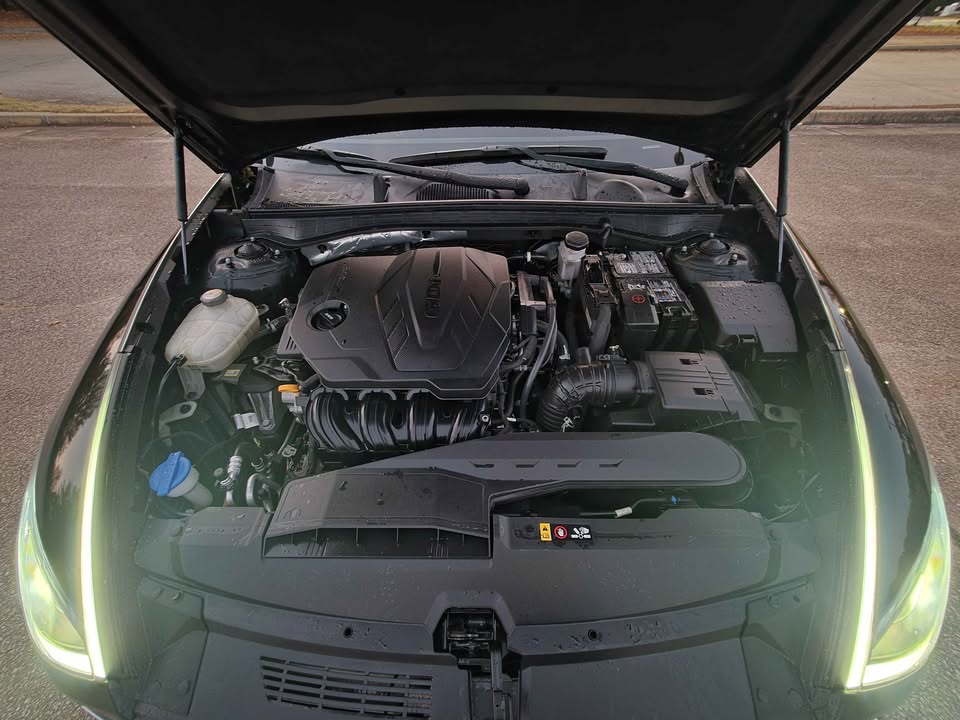
1. How Hyundai’s bearing defects blew wide open
Theta II starts the fire
Engines started knocking. Then seizing. Then catching fire without a crash. Most failures traced to Hyundai’s high-efficiency Theta II GDI platform. Early engines built in Montgomery, Alabama, left the line with metal debris hidden inside the crankshaft oil passages.
In April 2011, a change in the crankshaft machining process left behind microscopic shavings that never got flushed out. Once oil pressure hit, those fragments were forced straight into the rod bearings. Lubrication failed on day one.
Once that oil film collapsed, friction took over. Bearings overheated, warped, and sometimes welded to the crank. When the rod snapped, it often punched a hole through the block and sprayed oil onto hot engine parts. No crash. Just combustion.
Nu and Gamma follow the same path
Nu and Gamma engines didn’t dodge the bullet. The Nu 2.0L GDI, used in everything from the Elantra to the Tucson, used low-tension piston rings for better fuel economy. That backfired. Oil slipped past the rings, burned in the chamber, and left the bearings starving.
Carbon built up behind the rings. Oil consumption spiked. If owners didn’t top off between changes, the bearings ran dry and failed. Hyundai called it “wear,” but BCT results and internal memos showed a deeper problem.
Gamma 1.6 GDI engines, including those in the Kia Soul and Veloster, were officially recognized in the In re: Hyundai and Kia Engine Litigation II settlement due to potential connecting rod bearing defects.
While failure mileages vary, these engines are subject to mandatory KSDS software updates to detect abnormal vibrations and trigger a safety ‘limp mode’ to prevent sudden stalling or engine failure.
Affected Hyundai/Kia engine families and failure patterns
| Engine family | Displacements | Fuel system | Key failure trigger | Safety risk |
|---|---|---|---|---|
| Theta II | 2.0T, 2.4 GDI/MPI | GDI & MPI | Crankshaft debris from flawed machining | Rod through block, oil fires from block puncture |
| Nu | 2.0 GDI | GDI | Oil consumption from carbon-clogged rings | Seizure, sudden stall, potential fire risk |
| Gamma | 1.6 GDI | GDI | Connecting rod bearing wear and oil consumption | Sudden stall or KSDS-triggered limp mode |
Too many engines, not enough blocks
The scale broke the system. Between Hyundai and Kia, millions of GDI engines were at risk. Dealers couldn’t stock that many short blocks, and global suppliers couldn’t machine them fast enough.
Replacing every engine wasn’t possible. So Hyundai bet on a workaround: KSDS. A software flash that repurposed the knock sensor to listen for bearing damage instead of combustion knock. It wouldn’t fix a bad engine, but it might catch it before it exploded.
2. What the Knock Sensor Detection System actually does
How KSDS turned old hardware into a fire alarm
Hyundai didn’t add new parts. KSDS repurposed what was already there, the knock sensor buried deep in the block. Normally, that sensor listens for detonation. But after the software update, it got new instructions: flag the low-frequency rumble of a failing rod bearing.
The logic runs through the ECM, not a separate module. Once the algorithm sees that vibration signature, it logs a P1326 code and flips the car into limp mode. No warning light for low oil, no temperature spike, just a blinking check engine light and a sudden loss of throttle.
The code doesn’t go away with a restart. The car won’t climb hills or merge at speed. And unless the dealer clears it, you’re stuck with a capped RPM and sluggish throttle no matter what gear you’re in.
What P1326 does to power, speed, and performance
Once P1326 sets, the ECM clamps engine speed to around 1,800 RPM. Doesn’t matter if you’re wide open, fuel and air get cut, and spark timing is softened to protect the bottom end. The car can still hit 60 mph on flat ground, but any uphill grade or passing move becomes a risk.
Throttle feels delayed, like pushing through wet cement. The KSDS logic stays locked until a dealer scans the car and checks the calibration version. This limp mode isn’t about saving performance, it’s about preventing metal shards and oil fires if the bearing finally lets go.
How KSDS limp mode changes engine behavior
| Parameter | Normal operation | KSDS active (P1326 set) |
|---|---|---|
| Engine speed limit | 6,000–6,500 RPM | 1,800–2,000 RPM |
| Highway speed capability | Full throttle available | Taps out around 60–65 mph |
| Acceleration response | Normal | Delayed, dull |
| Fire risk | High if bearing fails at load | Reduced from stress drop |
| Rear-end collision risk | Normal | Higher in fast traffic |
When KSDS guesses wrong and throws you into limp mode anyway
False triggers aren’t rare. Some cars get P1326 even when the bearings look clean. Dealers have traced misfires to piston slap, noisy valve lash, poor grounds, and even cheap oil filters that mess with harmonic balance.
The system reads vibration, not wear, and any out-of-range frequency can trip the limp mode. That leads to BCT tests that come back clean, only for the code to return weeks later. Some owners ride that cycle for months: flashing light, trip to the dealer, no fix, repeat.
Forums call it a scam. Hyundai calls it protection. But under the hood, KSDS plays a guessing game, one that some cars lose even when nothing’s broken.
3. How Hyundai split the recall into safety, software, and strategy
When a recall means fire risk, and when it just means you’re on your own
Hyundai’s engine defect response wasn’t a single recall. It was a stack of campaigns, some federally enforced, others framed as “product improvements.” The legal weight makes all the difference.
Take Recall 209 (21V-727). It’s a safety recall tied to fire risk in Nu 2.0 GDI engines. Dealers must inspect the bearings, and if the clearances are out of spec, they’re required to replace the engine.
Even if it passes inspection, they still install KSDS. It’s mandatory, no mileage limit, no expiration. Skip it and the recall stays open in NHTSA records and shows up on Carfax.
Now contrast that with Campaign 966 or 982. These aren’t recalls in the legal sense. They’re software pushes that install KSDS on a broader set of engines, ones that haven’t caught fire yet but still show bearing-wear trends. Declining them doesn’t break the law, but it cuts off your path to a lifetime warranty.
Inside Recall 209: inspect, replace, or flash and wait
Recall 209 targets a narrow VIN range, mainly 2017 Sonatas and Tucsons with the Nu 2.0 engine. If the vehicle lands in that group, the dealer performs a Bearing Clearance Test (BCT) using a calibrated gauge. Too much play? You get a new engine. Within spec? They flash KSDS and send you on your way.
That’s the issue. Even if the engine’s running fine, you don’t leave without KSDS. Hyundai’s goal wasn’t just fire prevention, it was tracking failures at scale. And once KSDS is on the car, any future bearing knock puts you back in limp mode until a dealer intervenes.
Skipping this recall locks you out of warranty extensions and sets you up for a harder fight if the engine lets go later.
Campaigns 966 and 982: flash now, or lose your warranty later
Campaign 966 launched the original KSDS rollout. Campaign 982 expanded it. These updates went to millions of Theta II, Nu, and Gamma VINs, even if the engines hadn’t shown symptoms. Dealers installed the new ECM logic, checked the knock sensor, and sometimes inspected wiring. No bearing test. No parts replaced.
But Hyundai tied a rope to it. If the software wasn’t installed and the engine failed later, you’d lose eligibility for lifetime coverage under the class-action terms. Most owners signed up fast, because the update was free, and ignoring it meant eating a $5,000 engine bill down the road.
How recall types affect your repair and warranty outcome
| Program type | Example ID | Target vehicles | Dealer action required | What you lose if ignored |
|---|---|---|---|---|
| Safety recall | 209 / 21V-727 | High fire-risk VINs (e.g. 2017 Nu 2.0) | Bearing inspection, engine swap if failed, KSDS install mandatory | Open recall, reduced safety, strong leverage with NHTSA |
| Product-improvement campaign | 966 / 982 | Broad VINs with bearing wear trend | KSDS install, optional sensor or harness check | No warranty extension, harder claim if engine fails |
| No campaign or outside scope | N/A | VINs built after process fix or not at risk | No action | No KSDS protection, no extended coverage, normal warranty applies |
4. How KSDS became the gatekeeper for Hyundai’s engine warranties
Lifetime coverage with strings attached
Hyundai didn’t hand out lifetime warranties to every owner. The TXXI program only applies to select Theta II GDI engines, and only if KSDS was installed first. Skip the software update, and the warranty vanishes, no matter how well the engine was maintained.
This coverage sticks with the car, not just the first buyer. Sell it to a second or third owner? Still covered, as long as the software was flashed and the car wasn’t used commercially.
The warranty zeroes in on the short block, the crankshaft, rods, bearings, and internal block damage. If a failed bearing wrecks the head or timing assembly, those parts get replaced too, but only if they were damaged as a direct result.
Miss a campaign, run too long between oil changes, or flash the ECM with third-party software, and the whole deal’s off.
Not all engines get lifetime, some get 15 years or 150,000 miles
The TXXM program offers long but not permanent coverage for engines outside the original Theta II GDI scope. That includes Nu GDI, Gamma GDI, and even some Theta II MPI engines. These warranties run 15 years from the in-service date, or 150,000 miles, whichever comes first.
Just like the lifetime tier, TXXM depends on a KSDS install. No software, no warranty. The same applies to maintenance. Even a single oil change that stretches past the time or mileage threshold can give Hyundai an excuse to deny coverage later.
So while the coverage looks generous on paper, it demands near-perfect compliance.
Cash settlements and rebates for those who already got affected
Owners who paid out of pocket before the settlements landed weren’t left behind. Hyundai set up multiple buckets for repair reimbursements, rental/tow coverage, and “lost faith” rebates.
These weren’t capped at warranty-only repairs, independent shop invoices were accepted as long as the VIN and failure aligned with the campaign scope.
Goodwill checks landed for long delays, repeated limp modes, or warranty denials later overturned. Some owners even got extra compensation just for bailing early, selling their Hyundai or Kia because they didn’t trust it anymore. If they bought another Hyundai, the rebate grew.
What owners could get under settlement payout tiers
| Claim type | What’s covered | Typical outcome |
|---|---|---|
| Engine repair reimbursement | Dealer or independent shop engine replacement | Full or near-full refund with invoices and matching VIN |
| Rental/towing reimbursement | Out-of-pocket costs tied to engine failure or P1326 | Approved if linked to campaign or warranty case |
| Goodwill payments | Repeat failures, KSDS misfires, long wait times | Modest checks if escalated with clear documentation |
| “Lost faith” rebate | Vehicle sold due to fear of failure | $500–$2,000 depending on model year and proof of sale |
5. When Hyundai shuts the door: how “neglect” voids everything
The maintenance rules that flip a claim from yes to no
Hyundai built in a back door. Even with KSDS installed and a VIN in scope, they can deny an engine replacement if they call it “exceptional neglect.”
The thresholds are buried in the details: go over 10,500 miles between oil changes, wait more than 14 months, or let sludge build to a Level 4 or 5, and the warranty coverage gets cut off.
These aren’t guesses. Techs take photos during teardown. If the inside of the engine looks like burnt caramel, expect a denial. Dealers log sludge levels using documented visual guides. Even if you changed the oil yourself, missing receipts or unbranded filters give Hyundai grounds to blame you.
They’ll also flag any case where the owner ignored rising oil consumption. Complaints about “adding a quart every 1,000 miles” that never made it to a service advisor can come back to haunt you. Hyundai argues that letting the engine run dry, even slowly, counts as owner-caused damage, not a defect.
Why your word means nothing without receipts
Saying “I always took care of it” doesn’t carry weight. Hyundai’s arbitration partners want proof: oil change records, filter part numbers, service dates, and mileage. A missing invoice from a quick-lube shop can sink the whole claim, even if the rest of the history is spotless.
Second and third owners get hit hardest. If the previous owner skipped a few services or never uploaded their repair history to Carfax, there’s no trail to follow. Hyundai sees a dirty engine and calls it case closed.
Even legitimate maintenance can backfire. Mixing dealer work with DIY intervals, or switching from synthetic to conventional oil, can flag your claim for extra scrutiny.
How Hyundai defines “exceptional neglect”
| Trigger | Threshold cited | How it’s used |
|---|---|---|
| Oil-change mileage gap | More than 10,500 miles between changes | Claim denied as wear from old oil, not internal defect |
| Time between oil changes | More than 14 months | Vehicle flagged as poorly maintained even with low mileage |
| Sludge or varnish rating | Level 4 or 5 buildup | Photos used to shift blame unless owner can prove maintenance |
| Ignored oil consumption | No documentation of adding oil | Hyundai claims owner allowed starvation that led to bearing failure |
When KSDS was installed, but Hyundai still denies the fix
Even owners who followed every step can get blindsided. A dealer might forget to enter the KSDS install into the system. Or the car throws P1326, but the ECM flash never took, even though the owner was told it did.
Some get denied because their car failed before the KSDS was installed. Others get turned away because of ambiguous service coding, like an oil change logged under the wrong VIN, or a repair flagged as “customer pay” when it should’ve been “campaign.”
Once the claim’s denied, the burden lands squarely on the owner. You’ll need to dig up invoices, escalate through Hyundai Consumer Affairs, and sometimes file for arbitration.
6. Fire risk dropped, crash risk climbed
Fewer engines ignited, more cars stalled in traffic
KSDS did what it was built to do. Engine fires from rod failure dropped sharply across affected Hyundai and Kia models once the software rollout hit critical mass. The logic worked: cap RPM, reduce internal stress, and the bearing survives long enough to avoid punching a hole in the block.
But the issue wasn’t silent. Thousands of drivers hit limp mode without warning, P1326 set mid-commute, power vanished, and they were left crawling across freeway lanes to reach a shoulder. Some described it as feeling like a transmission failure. Others thought the car had shut off entirely.
In one case logged by the Center for Auto Safety, a 2018 Kia Soul lost power in the middle of an Atlanta merge ramp. The driver barely cleared traffic before stopping dead. A 2014 Elantra GT owner described the loss of acceleration as “terrifying,” nearly getting rear-ended in morning rush.
These near-misses came from a system designed to stop fires, but they sparked a different kind of risk: stalled cars in high-speed zones.
The warning signs most drivers missed before limp mode hit
Most owners didn’t see P1326 coming. Some heard cold-start rattles, a soft ticking that vanished once warm. Others noticed rhythmic knock at light throttle, especially on uphill climbs. A few reported sluggishness or delayed power before the MIL ever blinked.
These signs weren’t always dramatic. They blended into the background until the ECM caught something it didn’t like and slammed the car into safe mode. KSDS wasn’t tuned to predict failure days in advance. It reacted when a threshold was crossed, often right in the middle of a drive.
Drivers who reported early symptoms were often told “no problem found.” Then weeks later, the code set and the power dropped.
The cycle that traps owners between resets and real repairs
Once P1326 hits, the path forward forks. Some engines get replaced on the first visit. Others pass the Bearing Clearance Test and go back to the street with a cleared code. When the knock returns, the process starts over.
This creates a loop: limp mode → dealer visit → no replacement → code returns. Each round resets the frustration. Dealers can’t replace engines without a failed BCT. Owners can’t make the BCT fail on demand.
Parts delays made it worse. In peak campaign periods, engine backorders stretched months. Some owners paid out of pocket for rentals not covered by the settlement. A few were charged diagnostic fees even when the underlying issue matched campaign coverage.
The result? Drivers stuck in a loop with no clean exit, unless the bearing finally lets go or they lawyer up.
7. What happens in the service bay when P1326 sets
How techs assess a KSDS-locked engine
When a car rolls in with P1326, the clock starts ticking. Techs begin by pulling the freeze-frame data and verifying the knock sensor calibration. If the KSDS software version isn’t current, the update gets installed before anything else.
From there, it depends on the symptoms. If the engine is rattling hard, seized, or refusing to crank cleanly, dealers skip testing and order a new long block. No diagnostic limbo, just straight to replacement. But if the engine sounds clean or the knock is subtle, it’s time to run the Bearing Clearance Test (BCT).
What the BCT actually measures, and why it matters
The BCT checks for axial play in the connecting rods using a dial gauge and manual crank rotation. Too much clearance means the bearing is already hammered, whether or not it’s making noise. If the readings exceed factory tolerances, the engine is flagged and replaced under warranty or recall.
But borderline engines often pass. That’s where the headaches start. The tech clears the code, reflashes the ECM again, and sends the customer home. No new engine. If the knock returns or limp mode re-triggers, the whole loop starts again, sometimes with no additional wear visible to push the numbers over the BCT limit.
The cutoff between “replace” and “release” can come down to fractions of a millimeter. And that leaves a lot of engines teetering between warranty repair and wait-and-see.
What to check on the invoice if your engine was replaced
Not every replacement engine is the same. Some owners get a full long block, block, head, valvetrain, timing gear. Others only receive a short block, which includes the rotating assembly but leaves the top end untouched.
Dealers don’t always explain the difference. But it shows up in the part numbers and labor hours. A short block swap might list fewer components and reuse old sensors, hoses, and external parts. Long block installs often come bundled with coolant flushes, updated gaskets, and sometimes even a new knock sensor.
Owners should look for key lines: “short block assembly,” “long block,” “KSDS software update,” and whether the BCT results were recorded. Missing info can sink a future claim or resale dispute.
8. How the knock sensor saga forced Hyundai to change course
Fines, audits, and a federal safety office that didn’t exist before
By 2020, Hyundai and Kia weren’t just fielding complaints, they were answering to consent orders from NHTSA. Investigators found internal documents showing the companies knew about Theta II engine defects as early as 2011.
The recalls came late, and the scope was too narrow. That triggered RQ17‑004, a formal defect investigation that broke open the strategy behind Hyundai’s slow response.
The fallout cost Hyundai $140 million in penalties, with $54 million paid upfront and another $46 million hanging over their head unless they met strict compliance rules. Kia paid $70 million under a separate consent order.
To satisfy regulators, both automakers had to stand up U.S.-based safety offices with real authority, build test facilities, and hand over their internal safety data to independent auditors. The message was clear: fix your engines, or the government will fix your system.
Software response started with rod knock, now targets EV power loss
Hyundai didn’t walk away from KSDS once the fire risk dropped. They leaned into the idea. When Ioniq 5 and EV6 owners began reporting sudden power loss tied to the ICCU (Integrated Charging Control Unit), the solution followed the same pattern: push a software update first, swap hardware only if codes persist.
These EV failures didn’t cause fires, but they left drivers without warning, same danger, different powertrain. The update throttled charge flow, added new DTC logic, and kicked the system into protection mode when anomalies were detected. Sound familiar? It’s KSDS for electrons.
Hyundai figured out that in a world of short blocks and six-month backorders, software was the cheapest recall tool.
What this means for every owner still watching the MIL blink
For anyone driving a KSDS-equipped Hyundai or Kia, the landscape hasn’t shifted much. You’ve got extra warranty coverage, but only if you play by the rules. That means every oil change logged, every campaign completed, and every trip to the dealer documented in Hyundai’s backend.
When the check engine light flashes and the car slams into limp mode, that’s not a quirk, it’s the system doing what it was programmed to do. Whether the bearing’s truly shot or the knock sensor’s hearing ghosts doesn’t change the outcome.
The fix lives at the intersection of software patches, warranty terms, and whether the shop flags you as “maintained” or “negligent.” And the only way to win that fight is to have your paper trail clean and your VIN history locked down.
Sources & References
- The Biggest Problem With Kia & Hyundai’s Theta II Engines – Jalopnik
- Common Problems With Kia & Hyundai’s Theta Engines
- Addressing Common Hyundai Engine Issues: Guidance and Solutions
- Engine Recalls – Hyundai
- FAQ – Hyundai
- Hyundai-Kia’s Billion Dollar Engine Problem that Broke the NHTSA …
- UNITED STATES DEPARTMENT OF TRANSPORTATION NATIONAL HIGHWAY TRAFFIC SAFETY ADMINISTRATION 1200 New Jersey Avenue, SE West Buildi
- New Hyundai, Kia Engine Failure Settlement Covers 2.1M Additional Vehicles [UPDATE]
- Hyundai/Kia Vehicle Defect Class Actions – McKenzie Lake Lawyers LLP
- P1326 Code: What It Is And How To Fix It – CarBuzz
- KSDS-Knock Sensor Detection System- P1326 is a scam so Kia Hyundai can dodge responsibility & rip us off. – Reddit
- NHTSA Opens Investigation into Hyundai’s Theta II Engine Debris Recalls
- KSDS update – Hyundai – Recalls
- product improvement campaign – Hyundai – Recalls
- Kia Canada is looking for 3812 Sorentos that haven’t yet had a recall fix – Driving.ca
- Hyundai Issues Recall and Engine Software Update for Certain Sonata and Santa Fe Sport Vehicles
- Hyundai Sonata P1326 Code: What It Is And How To Fix It – CarBuzz
- P1326 Code: What Is It And How To Fix It – Car Talk – Panda Hub
- Knock Sensor Detection System – ECU Logic improvement (PI1802) – nhtsa
- Questions about Campaign 966? – Hyundai – Recalls
- Service Campaign 982: Engine Monitoring Logic – Dealer Best Practice – nhtsa
- Kia Code P1326 and your Service Options at Emich Kia in Denver
- Experience, so far, with Hyundai Canada – Engine Recall (Code P1326) – Elantra GT (2014)
- NHTSA Announces Consent Orders with Hyundai and Kia Over Theta II Recall
- IMPORTANT SAFETY RECALL – nhtsa
- IMPORTANT SAFETY RECALL – nhtsa
- Recall 209: ENGINE INSPECTION / REPLACEMENT … – nhtsa
- NOTICE OF PROPOSED CLASS ACTION SETTLEMENT
- powertrain extended warranty – Hyundai – Recalls
- Engine Class Action & Warranty Extension TXXI Dealer Best … – nhtsa
- FAQ – Hyundai Theta Engine Settlement
- Hyundai Theta Engine Settlement – Class Action Lawsuits
- BBB NATIONAL PROGRAMS INFORMATION AND ARBITRATION …
- Kia HECU Settlement – Home
- Hyundai Lifetime Warranty Information
- 2018 KIA Soul Recalls, Complaints and Investigations – The Center for Auto Safety
- Hyundai Recalls Over 145,000 EVs for ‘Loss of Drive Power’ – Motor1.com
- Sonata P1326 : r/Hyundai – Reddit
- Knock Sensor Detection System – ECU Logic improvement (PI1802) – nhtsa
- engine inspection / replacement (recall campaign 209) – nhtsa
- Service Campaign T3G & Warranty Extensions TXXC/TXXI – ENGINE BEARING INSPECTION / ENGINE REPLACEMENT- Dealer Best Practice – nhtsa
- 2022 Hyundai Ioniq 5 in NHTSA Probe: Power Loss Risk – Consumer Action Law Group
- NHTSA Opens Safety Probe Into 2022 Hyundai Ioniq 5 Over Power Loss – InsideEVs
- 2022 Hyundai Ioniq 5, Kia EV6 in NHTSA Investigation over Power Loss – Car and Driver
- Safety agency reports power problems in Hyundai Ioniq 5 SUVs – FOX 5 Atlanta
- Engine Recall – Hyundai