
Start cranking and it barely fires. Cold, rough, and louder than it used to be. By 180,000 miles, the Ford 6.2L Boss doesn’t hide wear anymore. Valve springs sag, intake flaps tick, oil stains the driveway, and in newer models, a failed fuel pump can cut power mid-drive.
Most failures creep in slowly, unless you’re one of the unlucky few who drop a valve and lose the engine overnight.
Forget the brochure talk. This engine was built to tow, haul, and idle hot. And it usually does, right up until the weak spots hit. Here’s where those cracks show up, how deep they run, and whether the 6.2 is still worth buying or keeping in your fleet.
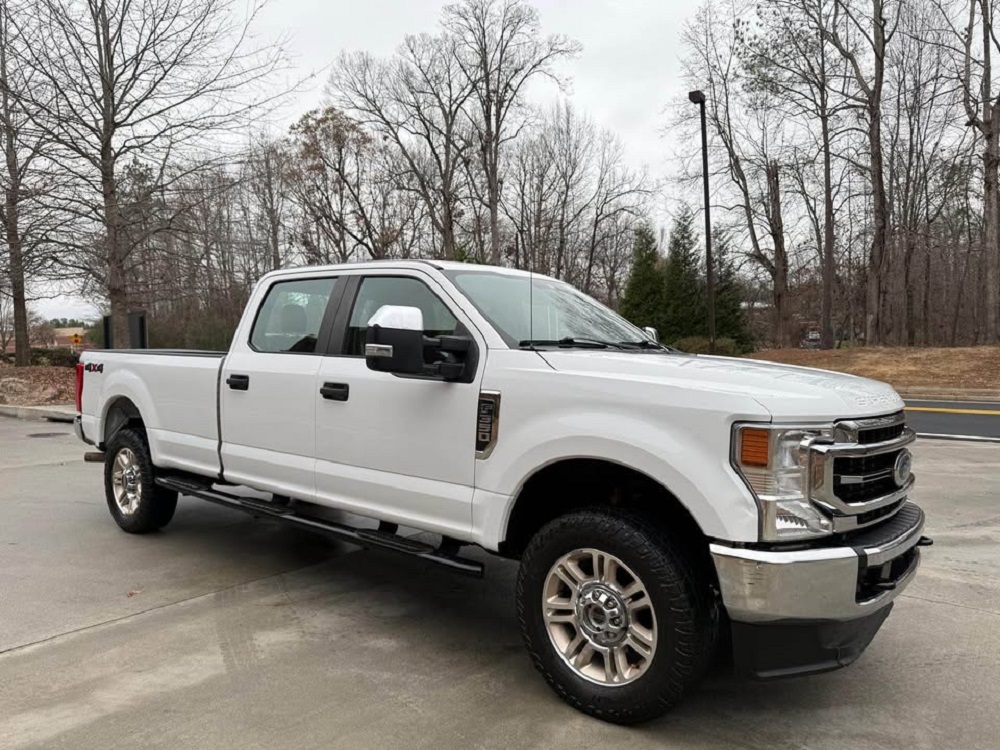
1. How Ford’s 6.2 Boss was built to be beat on
Big iron, simple cams, and why it survives hard work
Ford built the 6.2 Boss for load, heat, and hours. The core is a cast‑iron deep‑skirt block with cross‑bolted mains and wide 4.53‑inch bore spacing. That layout supports big valves, thick cylinder walls, and stable crank geometry under sustained tow RPM.
Up top sits a simple SOHC, 2‑valve valvetrain with roller rocker shafts. No cam phasers, no cylinder deactivation, no turbo heat. Dual‑equal VCT trims timing without adding fragile hardware.
Oil capacity lands at 7 quarts, fed by a crank‑driven gerotor pump meant to keep pressure steady when the engine’s hot and loaded.
That architecture explains the pattern you see in the field. These engines don’t suffer early design failures. They accumulate fatigue. When parts finally give up, they do it after years of stress, not out of the gate.
Where Ford put the 6.2, and how use shapes failures
The 6.2 first proved itself in the 2010–2014 F‑150 SVT Raptor, living at high RPM in heat, sand, and sustained throttle. In 2011 it became the standard gas engine for F‑250 and F‑350 Super Duty trucks through 2022, then spread into chassis‑cabs, bucket trucks, and E‑Series work vans.
Those roles matter more than mileage. Raptors load the valvetrain and cooling system. Super Duties spend hours towing, idling hot, and pulling grades.
Fleet trucks rack up cold starts, short trips, and long idle time. Each duty cycle targets a different weak spot, which is why failure reports look scattered until you line them up with usage.
| Platform / Years | Typical Use Pattern | What That Means for Problems |
|---|---|---|
| 2010–2014 F‑150 SVT Raptor | High RPM, off‑road, sustained heat | Valvetrain fatigue, cooling stress |
| 2011–2022 F‑250/F‑350 Super Duty | Towing, plowing, hot idle | Valve springs, leaks, cooling wear |
| Chassis cabs / fleet trucks | Utility bodies, bucket work | Cold‑start fouling, IMRC wear, ignition issues |
| E‑Series / other applications | Stop‑and‑go delivery | Heat soak, fuel and ignition complaints |
Reputation on paper versus what shows up in the bay
In the shop, the 6.2 earns respect because it avoids the disasters that burned earlier Ford gas engines. No spark‑plug ejection like the 5.4 Triton. No lifter collapse drama like some newer V8s. Most failures follow predictable wear paths tied to age and duty cycle.
That predictability doesn’t make repairs cheap. Valve spring failures can scrap an engine. IMRC noise sends owners chasing the wrong diagnosis.
Cold‑start flooding leaves trucks when software updates are skipped. The 6.2 gives warnings, but it expects attention. Miss those signals and the repair jumps from maintenance money to replacement money.
2. Where the 6.2 Boss breaks and how bad it gets
Five failure zones that keep showing up
Valve springs crack and drop valves. Intake runner flaps tick and throw codes. Cold-start flooding fouls plugs and floods oil. Long-idle trucks start leaking oil or cooking coolant. And the 2021–2023 recall throws fuel pumps that cut power without warning.
Spring failures hit hardest. One breaks, and the valve hangs open. Piston hits it. Game over. Intake issues usually start with ticking, plastic linkage wear or weak vacuum pods.
Cold-start flooding shows up in trucks without the PCM update. Misfires, long cranks, no-start. Oil smells like fuel if it happens often.
Oil leaks start with valve covers and front covers around 150,000 miles. Cooling issues come in through water pump weeps, cracked radiator seams, and plastic hose ends.
Fuel-pump recall trucks can stall out mid-drive. It’s not rare. It’s confirmed.
How often they hit and what the bill looks like
| Problem Area | Typical Mileage Window | Severity if Ignored | Usual Repair Type |
|---|---|---|---|
| Valve spring failure | 120,000–220,000+ | Can destroy piston/head (dropped valve) | Head job or engine replacement |
| IMRC tick / runner faults | 80,000–180,000 | Noise, power loss, limp-mode risk | Intake or actuator/linkage fix |
| Cold-start flooding / misfire | Any; worse in cold states | No-start, fuel in oil, long crank | PCM update, plug/coil service |
| Oil leaks / consumption | 150,000+ | Low oil level → cam and rocker wear | Gaskets, seals, tighter oil checks |
| Cooling system breakdowns | 100,000–150,000+ | Overheat, head gasket risk | Pump, radiator, thermostat, hoses |
| Fuel-pump recall stalling | Low to mid miles (’21–’23) | Sudden stall, no restart | Dealer module replacement (recall 25V-455) |
What it does better and worse than Triton or Godzilla
The 6.2 doesn’t eject plugs like the 5.4 or shred lifters like early Godzillas. It cracks springs, leaks oil, and ticks at the intake, but most failures follow hours, not random chance.
Triton owners feared spark blowouts. Godzilla owners chase lifter noise. 6.2 owners check oil and listen for ticking. One bends valves, one breaks plugs, one just gets loud. Pick your poison.
3. Valve spring failure: when the 6.2 eats itself alive
One crack, one valve, one dead engine
The 6.2 runs beehive springs over 16 valves in a tight, interference layout. If one spring fractures, the valve stops closing. The piston keeps moving. Contact bends the stem or snaps the head clean off. That loose valve punches holes through the chamber, piston crown, and sometimes the block.
Failures cluster in high-hour trucks, plow rigs, tow fleets, oilfield haulers. Most happen past 150,000 miles, but there’s no upper limit. Some pop at 220,000. Others blow early if the truck runs hot and heavy all year. One bad spring can end an otherwise solid motor.
The early warnings most owners miss
When a spring weakens, the engine doesn’t scream. It twitches. Idle drops rough. A faint tick shows up on one bank. Misfire codes hit one cylinder, usually a P030X. If it’s caught there, the fix is manageable: new springs, fresh valve seals, maybe a retainer if it cracked.
Ignore that tick, and the spring lets go. Now it’s loud. Power drops. Cylinder dies. Exhaust tone shifts. Keep driving, and the valve drops. Now you’re hauling a dead block, not a trailer.
| Stage | What You Hear / Feel | Risk Level | Typical Fix If Caught Here |
|---|---|---|---|
| Early fatigue | Rough idle, light tick, random misfire | Moderate | Replace suspect or full spring set |
| Spring fracture | Loud tick, misfire, low power | High (stop now) | Shutdown, head repair or full teardown |
| Dropped valve | No start, knocking, smoke, metal shrapnel | Critical | Long block or full engine replacement |
Who needs to pull the heads before it’s too late
Preventative spring jobs aren’t for everyone. But for rigs that see 150,000+ hard miles, the math shifts. Oilfield trucks. Plow setups. Campers that cross mountains every season. These trucks hold gear high, live above 3,000 RPM, and idle for hours in the cold.
Labor’s steep, pulling the heads means downtime, gaskets, machine work. But it’s cheaper than dropping a valve through a good piston. Most shops won’t push the job unless there’s a tick, but high-mileage fleets already know: pay early, or pay again with the tow bill.
4. Intake tick and runner flap rattle that sounds like it’s eating lifters
Inside the 6.2’s two-path intake system
The 6.2 intake manifold isn’t static, it switches airflow paths. At low RPM, vacuum actuators hold flaps closed, forcing air through long runners for better torque. When RPM climbs, those actuators open flaps and shorten the path, letting the engine breathe faster.
That switch is handled by a set of plastic arms, metal pins, internal springs, and a pair of vacuum “biscuits” that command the motion. All of it sits inside the manifold or just below it, out of sight and out of mind until it starts ticking like a lifter.
Flap chatter, vacuum loss, and code-hiding intake noise
When the springs inside the actuators lose tension or the plastic links wear out, the flaps don’t stay tight. They bounce. The noise is a rapid tick that climbs with RPM but softens at wide-open throttle.
Most owners think it’s a valve issue. Many techs do too, until the scope shows no valvetrain lag. Some throw P2004‑style IMRC faults, some don’t. Trucks can lose low-end power, hesitate on part throttle, or surge under light load.
The problem tends to show up between 80,000 and 180,000 miles, though fleets with long idle cycles can trigger it earlier. Warm weather makes it worse, less vacuum, more slop.
Fixing the tick without breaking the bank
Ford’s official answer is to replace the entire intake manifold. That means new actuators, flaps, and internals, parts and labor that can top $2,500.
But many techs now use “field fixes” that rebalance spring tension. Some drill the diaphragm housing. Others shim the springs. Done right, they stop the flap rattle without touching the intake body.
| Option | Parts + Labor Ballpark | Pros for Owner | Cons for Owner |
|---|---|---|---|
| New intake manifold assembly | High ($2,000–$2,500) | Factory-correct, restores full function | Expensive, unnecessary if actuators still good |
| Replace actuators / linkages | Medium ($400–$900) | Targets failed components | Still labor-heavy, may not silence the tick |
| Spring-tension “field fix” | Low (<$200 DIY/labor) | Cheap, proven in fleets and forums | Not OEM, results vary by tech skill |
Spotting intake noise before tearing into the valvetrain
IMRC tick doesn’t act like a bad lifter. It changes with flap position. It fades at full throttle. It disappears when the actuator is manually commanded open with a scan tool.
Valve tick is sharper, more rhythmic, and often follows a misfire. Intake flap chatter is lighter and echoey, closer to dash plastic buzz than a true mechanical knock. Pulling the wrong side apart burns time and budget. If you hear a tick but the truck’s still running clean, check the flap control first.
5. Sixteen plugs, flooded starts, and ignition headaches
Why the Boss 6.2 needs double the spark
Big bore means long flame travel. Ford used two plugs per cylinder to keep the burn fast and stable, especially under load and E85 use. That makes 16 spark plugs across eight cylinders, each tied to its own coil and plug wire.
It works well when fresh. But as the miles pile up, the extra hardware doubles the chances for arc-over, cracked boots, and coil shorts.
The ignition layout isn’t just large, it’s buried. Upper plugs are easy. Lower ones crowd near brake boosters and steering shafts. They seize, break, or leave if left untouched past 100,000 miles. Tune-ups on tired trucks often turn into partial teardowns.
When cold fuel floods leave all 16 plugs at once
On 2017–2018 Super Duties, cold-start misfires weren’t random. The PCM dumped fuel before the block warmed, and in 40–50°F weather, that extra fuel soaked all 16 plugs. The result: long crank, no start, or raw fuel in the oil. Ford’s TSB 18‑2188 flashed the PCM with a leaner cold-start strategy to fix it.
But plenty of trucks never got the update. In the field, techs found clear-flood workaround, floor the pedal while cranking to cut fuel. It works, but if flooding happens more than once, oil contamination follows. That thins viscosity, drops pressure, and eats bearings.
Plug swaps, coil failures, and tune-up risks
The 100,000-mile interval doesn’t always match real-world wear. Heavy tow rigs foul plugs faster. Trucks that see short trips or winter idle cycles often need new coils by 80,000. Every plug change carries risk: stuck threads, cracked porcelain, or boots fused to the rail.
Missed service windows let arcing start. That heat chews boots, burns terminals, and kicks off random misfires. Some owners chase codes across cylinders, P030X, swapping coils one at a time until the full set fails.
| Item | Owner Impact | Best Practice |
|---|---|---|
| 16 plug count | Higher parts and labor cost | Bundle with other major service intervals |
| Hard-to-reach lower plugs | Broken plugs, stripped threads | Use proper torque, anti-seize, dielectric grease |
| Cold-start flooding | No-start, long crank, fuel in oil | PCM flash (TSB 18-2188), wide-open throttle clear |
| Coil/boot arcing | Misfires under load, burnt terminals | Replace full sets if more than one has failed |
6. Where the 6.2 starts leaking, overheating, and burning oil
Seals that sweat, gaskets that quit
Valve covers leak down the heads. Timing covers seep near the crank. Oil pans drip from the crossmember. It starts around 150,000 miles, sooner on hot-idle or tow rigs.
Rear mains are rarer but show up in high-hour trucks. None of these leaks leave the engine right away. But every drop lowers the oil level, and that’s what wears the cam and rocker gear.
Oil burn that shows up late and eats bearings
Once past 150,000 miles, most 6.2s start using oil. Some burn a quart every 1,500 miles, faster if they run E85 or live at high RPM.
Run it low, and valvetrain wear kicks in. Hot-idle oil pressure drops. Lifters get noisy. Some trucks survive on top-offs. Others spin bearings. Owners who follow the book interval pay for it with cam damage.
Cooling parts that crack under pressure
Water pumps go between 100,000 and 150,000. Most leak at the weep hole first. Radiators split at the lower tank seam, especially under load.
Plastic quick-connects crust and fail without warning. Thermostats get lazy. Most overheating happens in a pull, not at idle, and by the time the gauge moves, it’s already hot.
| Component | Mileage Range | Warning Sign | Risk If Ignored |
|---|---|---|---|
| Valve cover gaskets | 120,000–200,000+ | Film on covers, burnt oil smell | Fire risk, oil loss |
| Oil pan gasket | 150,000+ | Drips under crossmember | Mild unless unchecked |
| Front cover seal | 150,000+ | Oil near crank pulley | Drops oil level |
| Water pump | 100,000–150,000 | Coolant leak, bearing whine | Overheats, possible gasket failure |
| Radiator | 100,000–120,000+ | Wet seam, coolant loss | Overheats under load |
| Hose quick-connects | 120,000+ | White crust, sudden leak | Blowout, steam, shutdown |
7. Why the 6.2 can feel lazy and how gearing and tuning wake it up
Throttle lag, soft shifts, and the feel of a held-back engine
The 6.2 makes power high in the revs, but stock throttle maps delay response. Tip-in feels muted. Downshifts take too long. The 6R140 transmission favors early shifts and low RPM, especially in tow-haul mode.
Drivers climbing grades or pulling trailers often report boggy response until the PCM finally allows a gear drop. The engine wants to work. The software holds it back.
Unloaded, this makes for a quiet drive. Under load, it frustrates. The torque’s there, but it hides behind shift logic and throttle smoothing.
Axle ratios that change how it climbs and how it burns
Most Super Duties came with either a 3.73 or 4.30 rear axle. That single spec changes how the truck feels on a hill.
With 3.73s, the engine lugs lower and needs more downshifts. It works fine when empty, but feels slow in a tow. The 4.30 wakes up low-speed pull, holds gears longer, and climbs stronger, but spins more RPM on the highway.
| Axle Ratio | Highway RPM (cruise) | Grade Pull / Towing Feel | MPG Impact Unloaded |
|---|---|---|---|
| 3.73 | Lower | Slower downshifts, softer pull | Slight fuel savings |
| 4.30 | Higher | Stronger pull, faster response | Slight fuel penalty |
How mild tunes reshape throttle and shift behavior
Most owners who tune the 6.2 don’t chase dyno numbers. They’re chasing drive quality. Basic flash tuners like the SCT X4 allow sharper throttle response and more aggressive shift points.
The result is a truck that kicks down earlier, hits gears harder, and holds RPM where the engine breathes best. Gains of 25–30 lb-ft at the wheels are common, but the real change is in feel, not numbers.
Emissions compliance varies. So does warranty risk. But for trucks out of coverage, a mild tow-friendly tune restores the response the stock maps choke out.
8. Recalls that shut it down, or leave it cold in winter
Fuel pump failures that stall 2021–2023 trucks
Over 850,000 Super Duty trucks with gas engines got swept into recall 25V‑455 / Ford 25S75. The issue sits inside the tank. A contaminated jet pump blocks fuel flow to the main pump, especially in warm weather, hot fuel, or low tank levels.
Stalls hit fast. No sputter, no warning. Power cuts mid-drive, and some trucks won’t restart. The problem affects 6.2, 6.8, and 7.3 V8s across 2021–2023 F‑250, F‑350, and F‑450 platforms.
Dealers inspect the module. If contamination shows, they replace the pump assembly. Some early repairs were done before the formal recall using the same part number, so check the VIN again, prior work may not count as recall completion.
Cold-start reflash for 2017–2018 Super Duty
TSB 18‑2188 targets crank/no-start complaints on 2017–2018 Super Duty trucks with the 6.2. When temps dropped into the 40s, the stock PCM fueling strategy dumped too much fuel at startup, fouling plugs and flooding oil.
The fix is a reflash that alters the cold-start table. It doesn’t touch hardware, but it stops the repeat no-starts and fuel-thinned oil. Dealers can still apply it years later, but many trucks were sold or traded with the issue unaddressed.
Owners who crank the pedal to the floor to “clear flood” may get it running, but if the flash isn’t done, it’ll happen again.
Why recall checks still matter on a well-running truck
Even if the engine sounds clean and runs strong, an open recall can leave it without power. The fuel-pump defect affects trucks with low mileage. The cold-start bug hits in the right weather, not at the shop.
VINs should be checked on both NHTSA.gov and Ford’s own recall tool, since campaigns often hit one system before the other.
| Campaign / TSB | Affected Trucks | Driver Symptoms | Dealer Fix |
|---|---|---|---|
| 25V‑455 / 25S75 | 2021–2023 gas Super Duty | Stall while driving, no restart | Inspect and replace fuel pump module |
| TSB 18‑2188 | 2017–2018 Super Duty 6.2 | Crank/no-start, plug fouling, fuel in oil | PCM reflash, oil check, plug replacement |
9. Who should run a 6.2 and who should walk away
Owners that the 6.2 still fits like a glove
The 6.2 makes sense for drivers who need old-school muscle without diesel drama. Tow rigs pulling 8,000–12,000 pounds. Fleet trucks that rack up hours, not speed. Plow setups in cold states that idle long, start rough, and burn through fuel.
It skips turbo lag, avoids lifter collapse, and stays clear of cylinder deactivation. Most hit 200,000 miles with only planned wear. And when it does break, it doesn’t hide behind layers of electronics, you can tear it down with basic tools and get it back to work.
Noisy? Yes. Thirsty? Always. But in fleets that hate downtime and owners that do their own maintenance, the 6.2 still earns its spot.
Red flags that should stop a used buy on the spot
Any sharp tick with a matching misfire? That’s a valve spring warning shot. Blue smoke out the pipe? Rings or seals are gone, and the oil’s already in the cat.
Hard cold starts in a 2017–2018 that haven’t had a PCM update? It’s been flooding. Radiator stains, steam, and empty coolant tanks? That truck’s been hot, and the head gasket might not have survived it.
No maintenance logs, no recall history, no oil-change records? You’re buying a guess.
How to keep one alive past 250,000
Cut oil intervals to 5,000–7,000 miles. Check the level every other fill-up. If the cold starts drag, check for flooding and pull a TSB record. At 120,000, listen closely for ticking on cold start, especially if the idle kicks rough.
Don’t chase misfires with single coil swaps. Pull the whole rail and check the boots. Watch the coolant neck for leaks. If you’re pulling long grades and the fan won’t shut off after the hill, the radiator’s losing efficiency.
The trucks that survive longest don’t do it by chance. They do it because somebody paid attention.
Sources & References
- Ford Boss engine – Wikipedia
- Ford 6.2L BOSS V8 Engine Specs, Power & History
- 6.2 Ford Engine: The Pros, Cons, History and Specs Of An Engine Icon – CarBuzz
- 3 Common Ford ‘Boss’ 6.2 Engine Problems | Powertrain Products Blog
- Ford 6.2 Engine Problems: Everything Wrong with the Boss – Newparts.com
- 6.2 vs 7.3/6.8 motor : r/FordTrucks – Reddit
- Ford Super Duty F-250 SRW XL Trim – Tim’s Truck Capital
- Engine Overview: The Ford 7.3L “Godzilla” V8 – Hemmings
- I know it makes for a more efficient fuel burn but good god 16 spark plugs for a 6.2l – Reddit
- Engine Specifications – 6.2L
- Engine Specifications – 6.2L
- 6.2 reliability : r/F250 – Reddit
- Intake Manifold Runner Valves: What You Need to Know – In The Garage with CarParts.com
- Signs of a Bad Intake Manifold Runner Control – AutoZone.com
- 2018 Ford F250 6.2 Liter Engine Noise Diag/Fix – YouTube
- Here is an easy way to fix the intake runner noise on 6.2L : r/F250 – Reddit
- 4 SYMPTOMS OF A FAILING INTAKE MANIFOLD RUNNER CONTROL (IMRC) P2004 P2007 P2008 – YouTube
- ford 6.2 plugs – DoItYourself.com Community Forums
- 16-Pack NGK G-Power Spark Plugs For Ford F-250 Super Duty 6.2L V8 2011-2021 – 0.044″ Gap – Adelaide Epic Ride
- TECHNICAL SERVICE BULLETIN 6.2L – Crank/No Start With … – nhtsa
- Chilton’s Ford Pick-Ups 2004-12 Repair Manual [26668] 1620920093, 9781620920091
- Case 2:18-cv-14371-RLR Document 1 Entered on FLSD Docket 09/10/2018 Page 1 of 75 – Class Action Lawsuits
- Motorcraft Spark Plug failures on 2015 F250. OEM not always better? : r/FordTrucks – Reddit
- ENA Spark Plug Wire Set 6.2 Compatible With Ford F-250 F-350 Super Duty V8 6.2L F250 F350 2017 2018 2019 2020 – 876 Baldwin
- Ford F-250 Super Duty Cooling System & Coolant Leak Guide – RepairPal
- SYMPTOMS OF A BAD WATER PUMP – YouTube
- Ford Diesel Diagnostics – Oregon Fuel Injection
- Ford Issues Recall For 850000+ Trucks, SUVs and Cars to Address Fuel Pump Failures
- Silverado and Sierra 6.2L Nightmare: Why Owners Call the Recall Fix a “Cheap Band-Aid … – Torque News
- GM L87 V8 Engine Failure Class Action – Hagens Berman
- GM’s Broken 6.2L V8s Are Stranding Owners for Weeks as Replacement Engine Pipeline Dries Up : r/gmcsierra – Reddit
- How to Delete or Disable Active Fuel Management (AFM) on GM Engines – OnAllCylinders
- Is there a better modern big block gas engine than the 7.3 Godzilla? : r/Ford – Reddit
- SCT X4 7015 Handheld Tuner & Performance Programmer Ford Vehicles
- 2012 Truck & Diesel SSMs – FSA – TSB