
Slide into traffic, tap the gas, and it’s locked in 3rd. No upshift, no warning; just limp mode. The 62TE was never built clean.
Chrysler grafted a two-speed compounder onto the old 41TE, stuffed it under minivan hoods, and called it progress. It’s a compact six-speed with too much going on in too little space.
This guide tears through how that design fails; heat soak, sealing losses, board flex, compounder leaks, and why ProMasters cook these units alive.
If it slips, shudders, or won’t move when hot, the answer’s usually in the drums, solenoid pack, or the fluid it cooked in.
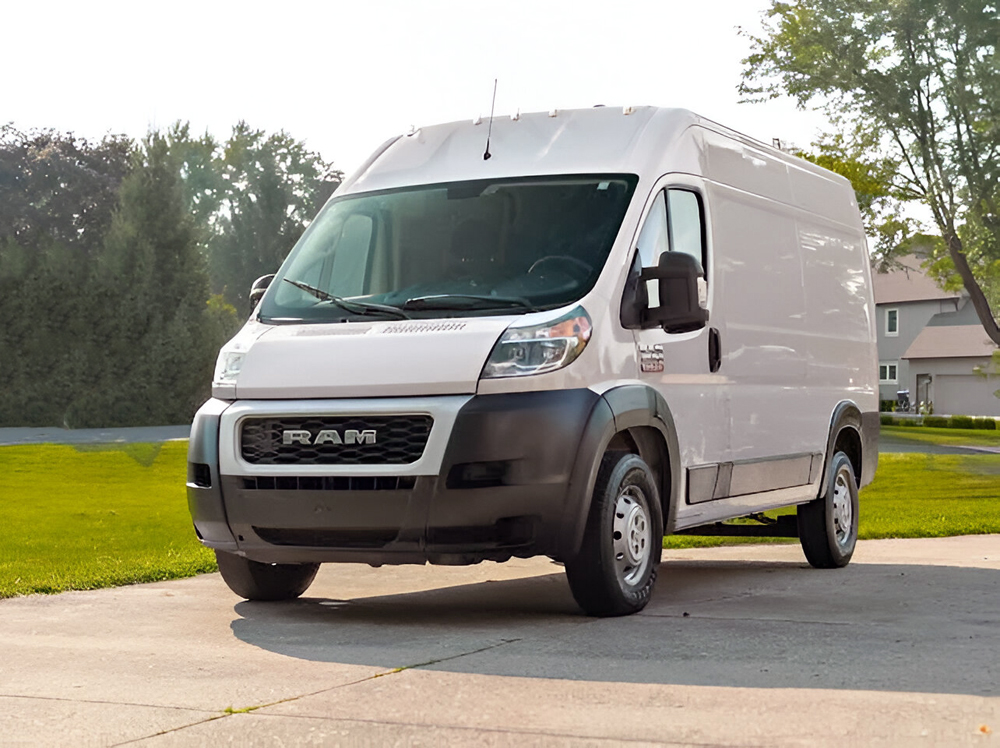
1. The 62TE’s borrowed bones and pressure-packed guts
How Chrysler stacked gears instead of starting over
Chrysler didn’t start fresh. They bolted a two-speed compounder onto the 41TE’s four-speed core and called it six. The compounder rides the countershaft and runs its own clutches, LC, DC, ORC, and a tiny planetary set. No extra clearance, just more parts crammed in.
That packing forced compromises. A shallower pump, tighter clutch paths, less room for cooling. Pressure lines split across the main case and compounder tubes. Each added seal and bore becomes another leak path when heat and age hit.
No extra thermal margin, no space to bleed off pressure spikes. Just a geartrain built for minivan duty, now asked to do more with less.
Where each gear hits, and what breaks when pressure slips
Each gear relies on specific clutch pairs. When fluid pressure drops, ratios slip, burn, or misfire. Fourth prime runs only during hard downshifts. If compounder timing’s off, the whole stack flares.
62TE Gear / Clutch Load Map
| Gear | Effective ratio | Main clutch elements on* | Typical driving situation | Main wear point if pressure is low |
|---|---|---|---|---|
| 1st | 4.127 | UD + LC + ORC | Takeoff, hill starts | LC clutch, compounder seals |
| 2nd | 2.842 | UD + DC | Low-speed acceleration | UD clutch, DC clutch |
| 3rd | 2.284 | OD + LC | City driving, light throttle | LC clutch, OD clutch |
| 4th | 1.452 | OD + DC | Normal in-town cruise | OD clutch, DC clutch |
| 4th Prime | 1.573 | Special 6–4/5–4 downshift combo | Hard kickdown, passing | LC/DC in compounder, ratio errors if slipping |
| 5th | 1.000 | Direct / compounder direct | 1:1 mid-speed cruise | Direct clutch, centerline sealing |
| 6th | 0.686 | OD + compounder direct | Highway fuel-economy gear | OD clutch, heat-soaked fluid |
| Reverse | 3.214 | Rev elements + compounder red. | Backing up with load | Reverse clutch, LC if used aggressively |
*UD = Underdrive, OD = Overdrive, LC = Low Clutch, DC = Direct Clutch, ORC = Overrunning Clutch
The weight that cooks it: vans, routes, and duty cycles
The 62TE showed up across family vans and work vans alike. Minivans didn’t stress it much. ProMasters did.
62TE Applications and Complaint Patterns
| Model / Platform | Typical years with 62TE | Typical use pattern | Curb-weight range (approx.) | Most common complaints |
|---|---|---|---|---|
| Town & Country / Grand Caravan | ~2008–2019 | Family, light shuttle | 4,500–4,800 lb | Harsh 1–2, occasional flare, solenoid codes |
| Dodge Journey | ~2009–2020 | Mixed family/commuter | 3,800–4,200 lb | Slip on light throttle, early converter shudder |
| Chrysler Pacifica (gas FWD) | 2017+ (select trims) | Family, road trips | 4,300–4,700 lb | Shudder, software-flash shift complaints |
| Ram ProMaster 1500/2500/3500 | ~2014–2022 | Heavy delivery / trades van | 4,600–6,000+ lb | Overheat, repeated failures, no-move hot |
2. Electrical triggers, limp codes, and locked-up converters
Board flex, solder cracks, and the solenoid pack that ends drive
The 62TE’s solenoid pack does more than fire shifts. It reads line pressure feedback through a set of pressure switches built into the same housing. Chrysler combined both functions into a sealed unit with a 23-way connector, gold pins for pressure switch signals, tin for the solenoids themselves.
Heat cycles twist the housing. The upper contact board flexes just enough to break connections or separate solder pads. The result: pressure switch “rationality” faults that come and go with temperature.
Limp mode hits hardest hot, clears when cold. Shops misread it as a software issue or intermittent short. It’s not. The plastic body warps, and the board separates.
P083B and similar codes flag the failure, but not always on the first scan. When it hits hot and clears after cool-down, it’s board flex, not wiring.
EMCC shudder and the converter that won’t let go
Torque converter lockup is controlled by the VFS circuit using Chrysler’s EMCC strategy. It starts with partial lock in mid-throttle cruise, then adds more pressure as load rises. When it works, fuel economy goes up. When it sticks, it drags the engine down to idle like a manual car with the clutch still engaged.
Sticking solenoids or worn valve bores keep the converter coupled even after the TCM commands release. On scan tools, input speed tracks engine RPM even at a full stop; clear sign the converter didn’t unlock.
Drivers feel it as a stumble or shudder right before a stop. The engine bucks, then smooths out. Shops chase engine misfires, but the converter’s still locked and the EMCC isn’t responding. Flushes don’t fix it. Solenoid or valve body replacement does.
Key 62TE DTCs and Likely Issue Areas
| DTC | What the TCM sees | Most likely issue area | Typical driver symptom | Drive or park? |
|---|---|---|---|---|
| P0732 | Gear 2 incorrect ratio | LC / compounder leak or wear | Slip/flare 1–2–3, harsh downshift | Limit driving |
| P0734 | Gear 4 incorrect ratio | OD clutch or centerline leak | Flare into 4th, harsh 4–3 kickdown | Limit driving |
| P0735 | Gear 5 incorrect ratio | Direct clutch housing leak / snap ring | Slip in 5th, high-RPM highway cruise | Limit driving |
| P0792 | Intermediate/compounder speed fault | Speed sensor or wrong reluctor tooth-count | Erratic shifts, quick Limp-In | Avoid highway |
| P083B | LC pressure switch rationality | Solenoid-pack internal board flex | Sudden 3rd-gear Limp-In, often hot | Safe to limp to shop |
| P1776 | Solenoid switch valve (SSV) latched | Valve-body SSV bore wear / sticking | Harsh engagements, delayed Drive/Reverse | Service soon |
3. Slip, flare, stall; how drivers feel 62TE failures in the seat
What fails first: shift flares, slammed downshifts, and stoplight drags
Light throttle through 2–3 and it flares. Coast into a light and it slams into 1st. These aren’t software quirks, they’re pressure losses in the clutch circuits.
When the low clutch (LC) or overdrive clutch (OD) wears or loses apply pressure, the TCM sees longer fill times. If the solenoid or valve body can’t keep up, the shift flares. On coastdown, crossleaks at the SSV bore delay the release, snapping into gear late.
A dragging converter on approach to a stop means the EMCC isn’t letting go. Solenoid valve bores wear, the clutch stays partially engaged, and engine RPM hangs on instead of dropping. The stumble feels like a misfire, but spark checks clean. Scan the input speed. If it tracks RPM below 5 mph, the converter’s stuck.
Reverse delay often points to pump pickup problems. If the filter seal’s loose or double-seated, the pump cavitates. Cold start works. Hot restart? No drive, no reverse, no pressure.
Limp-in mode defaults to 3rd. If solenoid logic fails, the board warps, or the TCM sees a clutch ratio it can’t verify, the fallback hits. No code sometimes. Other times it’s stacked with ratio errors, pressure switch faults, and P1776 from SSV hangup.
Common 62TE Symptoms and Likely Causes
| Driver symptom | Likely internal cause | First checks a tech should do |
|---|---|---|
| Flare 2–3 or 3–4 on light throttle | LC/OD clutch slip, low line pressure | Fluid level/condition, scan for ratio codes, pressure test |
| Harsh 1–2 and 2–1 coast-down bump | Valve-body wear, outdated calibration | Check for TSBs/updates, line pressure, CVI / adapts |
| Shudder or “drag” coming to a stop | TCC solenoid sticking, EMCC control issue | Watch ISS vs RPM on scan tool, TCC command status |
| No Reverse or delayed Drive/Reverse | Low mainline pressure, suction leak, SSV wear | Fluid pickup issues, filter seal, pressure at idle |
| Stuck in 3rd (Limp-In) | Solenoid-pack fault, ratio error, SSV issue | DTC list, solenoid-pack tests, wiring and grounds |
When the compounder leaks, burnt clutches and cold-start lies
The compounder drum handles both LC and DC clutches. Early units used rotating sealing rings that wore grooves into the aluminum drum.
Once that seal path’s cut, fluid leaks off under load. The unit holds just long enough to pass a cold start. Hot fluid thins, pressure drops, and the next upshift flares or fails.
Burnt LC clutches show up as P0732. Direct clutch leaks or snap ring groove wear trigger P0735. If both show up with no metal in the pan, suspect the compounder drum and tube seals, not the geartrain.
Later drums used non-rotating tabbed rings to reduce wear, but high-mile or hot-loaded units still groove the bore. Once that leak path forms, rebuild’s the only fix. No valve body or software update masks a pressure loss that big.
The valve body bore that mimics a failing solenoid
The solenoid switch valve (SSV) rides in a bore that wears faster than most shops expect. The TCM fires it once per key cycle to test function. If the bore is worn, it sticks. That triggers P1776, even if the solenoid pack is fine.
Builders misdiagnose it constantly. They replace the solenoid pack, clear the code, and the issue returns two weeks later. If Drive or Reverse takes 2 seconds to engage hot, the SSV bore’s likely leaking or hanging.
TransGo and Sonnax both offer valve-body repair kits with sleeves. Some builders install a full reman valve body instead. Either works; just don’t chase this with a new pack unless the bore’s been addressed.
4. No-move failures, line pressure losses, and the pump that quits hot
The check ball that drains it dry without a sound
Some 62TEs roll into the bay with no drive in any gear; no sound, no clunk, no warning. Pan drops clean. Fluid’s red, no metal, no debris. One thing in the bottom: a steel check ball.
That ball sealed a line pressure tap cast into the case. When it blows out, fluid dumps back into the pan instead of pressurizing the clutches. No forward, no reverse, no stall speed; just dead quiet.
The fix isn’t a rebuild. Tap the hole, install a 1/8-inch pipe plug, and pressure comes back. Miss it, and shops quote remans for a leak that costs less than five bucks to fix.
Hot fluid, slow pickup, and filter seal failures
Drive delays that clear cold but get worse hot usually trace back to suction. The pickup tube runs straight into the filter. If the old seal’s stuck in the pump bore and a new filter’s shoved in, the seal double-stacks. That leaves a tiny gap. Air gets in, fluid doesn’t.
Once air bubbles hit the pump, pressure drops fast. The van starts to whine. Cold fluid’s thick enough to mask it. Hot fluid thins, and the converter starves. Cavitation damage shows up first in the pump gear tips, then at the hub splines on the converter.
Some filters pop out during hard launches or quick reverse moves. When they drop, pickup’s gone. Verify the seal’s seated once, not twice. And always check if the filter was replaced before the issue started.
Builders don’t guess; pressure proves the call
A shop that guesses sends the trans back twice. Builders don’t guess. They air-check every clutch circuit. They stall-test in Drive and Reverse. They log pressure at idle, in gear, hot and cold. They read CVIs to see if the TCM’s been fighting wear.
Converter cut-open checks confirm stripped hubs or ballooned faces. A reman pump without cooler flow means nothing. Real diagnostics find the failure before the teardown. Shops that skip these steps chase the wrong fix, and owners pay twice.
5. Why ProMasters eat 62TEs alive
Minivan parts, cargo van punishment
The 62TE was built for light shuttle duty, not heavy loads and short-cycle stops. ProMasters running roof racks, cargo shelving, and toolboxes often weigh 1,500 lb more than a stock Grand Caravan. Add a ladder rack, and you’re over 6,000 lb before the first delivery.
The gear spacing doesn’t help. Tall 1st and 2nd gears put more load on the converter. Line pressure has to work harder to hold clutches. In city loops, sump temps climb fast. The shallow pan can’t shed heat, and the converter never gets a cooldown.
Long grades, constant throttle, high load; each gear slip feeds heat into the next. One missed fluid change, and that spiral cooks the compounder or melts the solenoid board.
What overheats it, where it leaks, and how water sneaks in
The stock heat exchanger routes ATF through a cooler loop tied to the engine coolant system. In theory, it keeps warm-up quick and prevents overcooling. In practice, it can stick closed, bypassing the cooler entirely.
The ProMaster’s thermal bypass valve often fails shut. That leaves the ATF circulating inside the case with no cooling path. Sump temps spike above 240°F. Clutch packs glaze, then slip, then fry.
Some failures come from above. If the windshield cowl drain tube is cracked or missing, rain dumps straight into the trans vent. Water mixes with ATF+4 and turns milky beige. Emulsified fluid clogs the filter, and the pump starts to cavitate. The van moves cold, then quits hot, then won’t restart in gear.
Duty Cycle vs Cooling and Service Strategy
| Use case | Typical pattern | Fluid service interval (real-world) | Cooling upgrades that make sense | Extra checks to add |
|---|---|---|---|---|
| Family minivan | School runs, highway trips | 40–50k miles | Stock cooler usually OK; inspect heat exchanger for leaks | Watch for shudder, keep ATF cherry red |
| Light commercial / shuttle | Airport runs, mixed city/highway | 20–30k miles | Add external cooler in series, consider bypass upgrade | Inspect pan for debris at each service |
| Heavy delivery / ProMaster cargo | City only, loaded, frequent stops | 10–20k miles | Robust external cooler, thermal bypass delete, deep pan | Verify cowl drain, sample fluid for water/emulsion |
Which upgrades hold, and which ones just buy time
A deep pan buys cooling headroom. A proper external cooler sheds heat fast. Deleting the thermal bypass ensures fluid reaches the cooler every time. These help, but only if the trans still has clutch material left.
Line pressure upgrades like the TransGo 62TE-HP-A kit increase clutch apply force. On a fresh build, that’s a win. On a unit with thin frictions or crossleaks, it just speeds up the burn.
Hard parts matter more. Later compounder drums with revised sealing, upgraded pump gears, sleeved valve bodies; these rebuilds live. But soft fixes on a worn trans don’t last. And once the fluid smells burnt, none of the upgrades save it.
6. Fluid myths, quick learn fails, and the wrong way to save a 62TE
When the wrong ATF ruins everything
The 62TE only runs right on ATF+4. Nothing else holds converter lockup smooth under EMCC control. Universal fluids promise compatibility, but most lack the friction modifiers Chrysler specs. That mismatch shows up first as torque converter shudder, then weird shift sequencing under light throttle.
Power flushes on neglected boxes do more harm than help. Old clutch material suspended in the fluid sometimes masks a failing drum or pressure leak. Flush that grit out, and the worn clutches suddenly slip clean. Units that worked before a “service” come back with no 3rd or flare into 4th.
Stick to drain-and-fill if it’s been ignored. New filter, fresh ATF+4, and watch behavior cold to hot.
Fluid and Adapt Strategy by Scenario
| Scenario | Recommended fluid service | Quick Learn / adapt reset needed? | Road-test pattern after service | Risk if skipped |
|---|---|---|---|---|
| Low-mile family van (well maintained) | Drain-and-fill every 40–50k miles | Usually no | Verify all upshifts/downshifts under light load | Mild flare might develop over time |
| Mid-life unit with minor flare | Drain-and-fill + filter, check cooler | Yes, if solenoid/valve work done | Light/medium throttle drive cycle, watch CVIs | Harsh or lazy shifts, extra wear |
| High-mile neglected transmission | Gentle drain-and-fill only (no flush) | Case-by-case | Short loops, avoid towing, monitor for flare | Sudden slip if old “grit” was helping |
| Fresh rebuild/reman | Full fill with ATF+4, clean cooler or new | Yes, mandatory | OEM Quick Learn, then varied speed/ load drive | Chatter, bang shifts, premature wear |
| Solenoid-pack replacement only | Top-off or partial drain-and-fill | Yes | City cycle, repeated light stops and starts | Odd shift timing, adapt fights new parts |
How Quick Learn works, and what it won’t hide
Quick Learn runs at idle, in Park, with the brake applied. Fluid must be warm, throttle under 3%, engine over 500 RPM. The TCM pulses each solenoid and times the clutch fill delay. That value gets logged into the CVI memory cell. Each gear has its own.
Bad learn behavior shows up fast. If it clunks into 2nd, skips 4th, or overdrives early, the reset didn’t hold, or the hardware’s shot. Fresh valve body with worn drums won’t adapt cleanly. High CVIs after reset mean the clutches already need more fluid to engage; an early warning of trouble ahead.
No amount of software corrects a leak path or warped drum. If CVIs climb fast after a clean learn, the build’s already going soft.
7. Factory recalls, flash fixes, and what Chrysler actually covers
Park pawl failures and the 23V-301 recall
Some ProMasters won’t hold in Park. The pawl hits the gear but doesn’t lock. Chrysler tied it to interference inside the transmission; either debris or misalignment keeps the pawl from fully engaging.
Recall 23V-301 (Dealer code 44A) covers 2019–2021 Ram ProMasters. The fix starts with a PCM update that monitors park engagement. If the software flags incomplete lockup, the dealer opens the transmission and replaces internal park components.
No parts? No repair. Some owners got sent home with a software patch and a warning to use the parking brake. No tow, no loaner.
Flash updates that calm shifts, but won’t fix heat or leaks
TSB 21-008-21 applies to 2017+ FWD models with harsh 1–2 upshifts and banging coast-down into 1st. Chrysler revised torque management, line pressure ramp rates, and converter logic. It doesn’t add new hardware, just recalibrates how the transmission reacts.
Older bulletins (2012–2016) targeted shift timing, coast clutch release delays, and EMCC logic. These flashes help when the internals are still solid. If the clutch packs are cooked or valve bores leaking, the update won’t land clean.
Shops sometimes skip the flash because the symptoms feel mechanical. But harsh engagement with clean fluid and no codes is often software, not metal.
Where used buyers stand, and what paperwork actually matters
A low-mile van with the original 62TE is a risk. If the fluid’s dark, shifts flare, or Quick Learn hasn’t been done, the clutches may already be glazed. Once the converter locks hard or Reverse delays, it’s on the edge.
The better buy is a unit with receipts for a quality reman. Look for known builders; JASPER, RevMax, Mopar direct. Confirm cooler and bypass were replaced. Without that, even a new box will cook again.
Warranty or not, the rebuilt units that last are the ones that got adapted right, broke in clean, and stayed on ATF+4. Everything else runs on borrowed time.
Sources & References
- GM 62TE Transmissions: All You Need To Know – Powertrain Products
- Ultradrive – Wikipedia
- Six-Speed Success! 62TE Things To Do To … – Gears Magazine
- 62TE Update – Front Wheel Drive 6 Speed
- Technical Service Information: Chrysler 62te | PDF | Gear | Manufactured Goods – Scribd
- 2007 Chrysler 62TE Transmission Guide | PDF | Leak – Scribd
- Dodge/Chrysler/Jeep 62TE – JASPER® Engines & Transmissions
- 62TE Transmission: Specs, Fitment Tips & Reman Options – Go Powertrain
- 62TE Transmission Common Problems
- How We Fix Chrysler/Dodge/RAM Van Transmissions (62TE)
- A Compound Solution – Gears Magazine
- P0732 Code: Gear 2 Incorrect Ratio – In The Garage with CarParts.com
- 62TE Pressure Switch Rationality, P083B. Limp Mode – No Stored Codes – Grand Caravan
- P0732 – Gear 2 Incorrect Ratio: Troubleshooting and Repair Guide – ZipTuning
- P0734 OBD-II Trouble Code: Gear 4 Incorrect Ratio – YourMechanic
- P0734 Code Symptoms, Causes, Diagnostic Guide & Repair Cost Estimates – Flagship One
- Chrysler 62TE SHIFT KIT® Valve Body Repair Kit – TransGo
- Ram ProMaster 2010s Transmission Problems? Will replacing entire transmission fix the issue? – Reddit
- Superior Transmission Parts Thermal Bypass Kit, Use With Offset, External Cooler Block Type A95996B-5K – transend
- 62TE Parts – Whatever It Takes | Part Lookup
- 62TE-HP-A High Pressure Tuneless™ Kit – TransGo
- 62TE-HP – Dodge Chrysler Mopar Transgo Reprogramming Kit Fits 62TE 2007-on – Transparts Warehouse Inc
- Promaster 62TE Water Intrusion – Gears Magazine
- 62TE – Summitracing
- Change 62TE Transmission Fluid on Chrysler Town and Country, Dodge Caravan | Pump Whine Goes Away? – YouTube
- The ATF+4 Tranni oil looks like this on my 62TE Transmission. Chrysler T&E. Should I be worried? – Reddit
- The ATF+4 Tranni oil looks like this on my 62TE Transmission. Chrysler T&C. Any advice is welcomed! – Reddit
- THIS BULLETIN SUPERSEDES SERVICE BULLETIN 21-013-16 – NHTSA
- THIS BULLETIN SUPERSEDES SERVICE BULLETIN 21-012-14 REV. A – NHTSA
- Safety Recall 23V-301 – NHTSA
- Map Title 21-008-21 – NHTSA
- SB-10069304-0335.pdf – NHTSA
- NUMBER: 21 -007-13 REV. C – NHTSA
- NUMBER: 21-013-12 – NHTSA