
Hear a knock deep in the bellhousing. Scan throws P06DD. Dealer says “engine backorder.” Payments keep coming.
That’s the reality some GMC owners face with the 3.0 Duramax, especially the later LZ0 variant. Designed as the quiet, torque-rich diesel for half-ton trucks and SUVs, it promised big towing, low revs, and 30+ mpg highway. But under the hood, it’s not all clean burn and quiet idle.
This guide cuts through the brochure. Here’s how it’s built, what fails when it’s pushed, and why some engines clock 200,000 miles while others throw in the towel by 4,600.
1. How the 3.0 Duramax Was Built to Save Weight, And Where It Gives Up Ground
Inline-six layout, aluminum guts, and the wrong kind of quiet
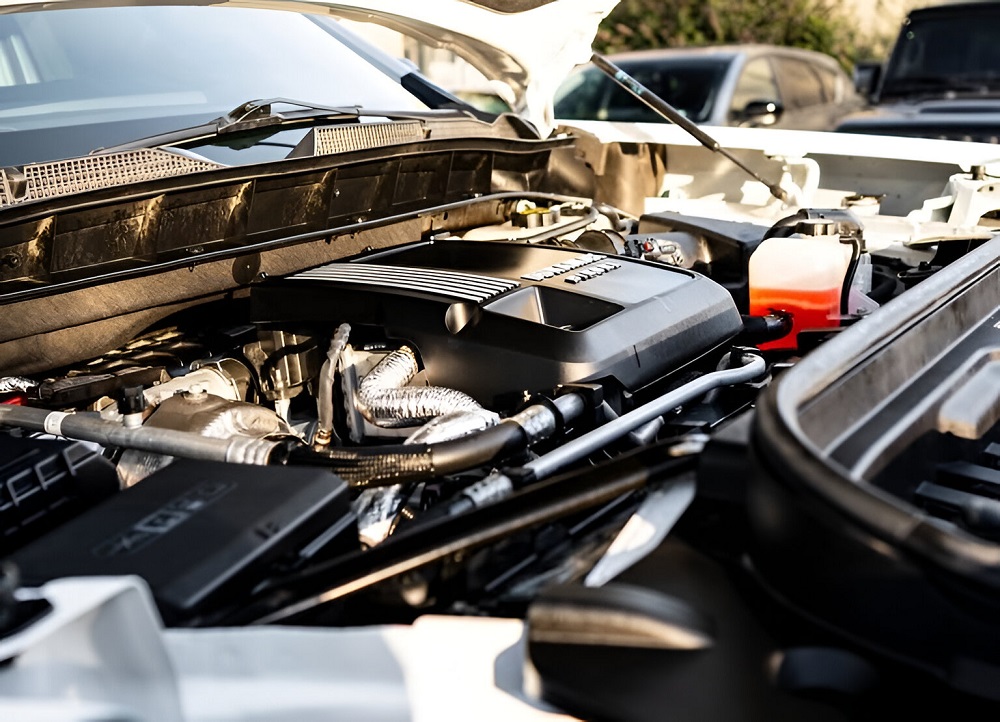
The 3.0L Duramax is a long, lean inline-six. Smooth at idle, quiet under load, but loaded with compromises. GM wanted diesel torque without diesel clatter.
So they cast the block and head in aluminum, shaved weight for half-ton use, and routed the oil pump with a rear wet belt to slim down packaging.
Every gain came with a compromise. Aluminum expands faster than iron and sheds heat quicker, but it’s softer under high bearing loads.
Tighter packaging forced hot components like the DPF and EGR closer to the firewall. And the crank sits deep in a block that won’t forgive bad fuel, delayed service, or poor diagnostics.
This engine wasn’t meant for semis. It was built for upscale tow-and-go buyers who wanted V8 power without the V8 gulp.
LM2 to LZ0, steel pistons in, stress climbs with them
LM2 launched in 2020 with cast aluminum pistons and a conservative 277 hp. It did the job, but GM pushed harder by 2023. The updated LZ0 swapped in steel pistons, tweaked the turbo, and raised compression to 15.2:1. Power jumped to 305 hp and torque hit 495 lb-ft, most of it showing up before 2,800 rpm.
Steel pistons tolerate heat better and resist crown cracking under higher cylinder pressures. But the rest of the engine has to keep up.
More boost, more fuel, and tighter timing load up the crank, rods, and bearings harder than before. And while the oil pump belt got a longer interval, its rear-mounted location still locks in a hefty service bill.
The LZ0 pulls stronger and hits regen temps faster, but it’s not just a stronger LM2. It’s a higher-stressed variant with more to lose when things go wrong.
LM2 vs LZ0 3.0 Duramax Core Specs
| Feature | LM2 (2019–2022) | LZ0 (2023–present) |
|---|---|---|
| Horsepower | 277 hp @ 3,750 rpm | 305 hp @ 3,750 rpm |
| Peak torque | 460 lb-ft @ 1,500 rpm | 495 lb-ft @ ~2,750 rpm |
| Compression ratio | 15.0:1 | 15.2:1 |
| Piston material | Cast aluminum | Steel |
| Turbocharger | VGT (Garrett) | Revised Garrett VGT |
| Oil-pump drive | Rear wet belt (150k interval) | Rear wet belt (200k interval) |
| Block / head material | Cast aluminum / aluminum | Cast aluminum / aluminum |
| VIN 8th digit | “T” | “8” |
Platform spread, VIN clues, and where the strain shows up first
The 3.0 Duramax runs across half-ton trucks and full-size SUVs. Sierra 1500, Yukon, Silverado, Tahoe, Suburban and Escalade all share it.
Model year matters, but so does what the engine’s being asked to do. Short-trip grocery runs hammer the DPF and EGR. Towing heavy in high heat pushes oil pressure and cylinder temps.
The eighth VIN digit gives the engine away: T for LM2, 8 for LZ0. Dealers use it. So should you.
Some LZ0s are failing as early as 4,600 miles, usually in trucks working harder than the brochure promised. LM2s have fewer catastrophic cases, but nagging issues like long-crank starts and EGR clogs still sideline plenty of commuters.
3.0 Duramax Applications and Usage Patterns
| Platform | Engine code years* | Typical use profile | Main risk cluster |
|---|---|---|---|
| GMC Sierra 1500 | LM2: ~2020–2022 | Mixed commute / light towing | Fuel/DEF issues, long crank (LM2) |
| GMC Sierra 1500 | LZ0: 2023–present | Heavier towing, higher output | Thrust-bearing worry, DEF/DPF updates |
| GMC Yukon | LM2/LZ0 by year | Family hauler, highway miles | DEF heater, EGR/regen on short trips |
| Chevy Silverado 1500 | LM2/LZ0 | Work+play, towing boats/campers | HPFP risk with bad fuel, trans TSBs |
| Tahoe/Suburban/Escalade | LM2/LZ0 | Highway cruiser, loaded families | Emissions sensors, wet-belt anxiety |
*Exact adoption timing varies by model; see VIN or factory sticker to confirm.
2. Internal failures that shut trucks down early
Crankshaft end-play on LZ0, when the bottom end starts walking
Hear a sharp knock near the bellhousing, then catch a flash of the oil pressure light. On some 2025–2026 LZ0 engines, the crank starts walking, moving fore and aft beyond tolerance.
The thrust bearing at the #3 main wears down, oil control falters, and P06DD hits the scanner. Once the crank shifts, bearing faces smear fast and metal rides the oiling system.
GM laid out the procedure in TSB 25-NA-307. Techs pop the converter cover, lever the crank through the flexplate, and measure pulley-bolt travel with a dial indicator. Trucks that flunk this test don’t get fresh bearings. They get long blocks.
LZ0 Crank End-Play Specs and Failure Window
| Measurement / item | Spec / detail |
|---|---|
| Acceptable end play | 0.0033–0.0124 in |
| Measurement point | Crank pulley bolt, converter pried fore/aft |
| Typical warning code | P06DD oil pressure control performance |
| Audible clue | Rhythmic knock at bellhousing |
| Highest concern window | 2025–2026 LZ0 |
| Common outcome out of spec | Long-block replacement |
LM2 long-crank starts traced to a rear cam exciter wheel
Turn the key and wait. Ten seconds. Fifteen. Sometimes it fires, sometimes it doesn’t. Many LM2 trucks suffer from a warped rear cam exciter wheel that scrambles timing signals during cranking. The injectors sit idle, waiting for a clean sync that never lands.
That wheel lives at the rear of the engine. Getting to it means either pulling the transmission or lifting the cab, labor clocks in at 30+ hours. Some trucks won’t throw a single code. Others flag cam correlation faults that vanish once the engine stumbles to life. The issue? Mechanical, buried, and expensive.
The rear wet belt, low failure rate, high labor reality
The oil pump runs off a wet belt tucked deep inside the rear timing cover. The belt holds up well, even past 150,000 miles, but it’s boxed in tight. Replacing it means splitting the engine and transmission. That same zone also houses the rear main seal.
When the seal leaks, it doesn’t seep, it pours. Oil drops fast, and dirt follows. Most shops bundle rear cover and belt service to dodge paying double on labor. Skip the belt, and you’re risking it won’t fail before the seal does.
Oil Pump Wet Belt Service Profile
| Item | LM2 | LZ0 |
|---|---|---|
| Interval | 150,000 miles | 200,000 miles |
| Time limit | 15 years | 15 years |
| Typical labor | 7–15 hours | 7–15 hours |
| Ballpark total cost | $1,200–$1,500 | $1,200–$1,500 |
| Field failure reports | Rare | Early lifecycle, limited data |
Early warning signs owners can’t ignore
Fresh trucks shouldn’t knock at the bellhousing or flash oil pressure codes. That’s not break-in, it’s bottom-end trouble. Find metal on the drain plug early on, and odds are you’re staring down bearing failure. Long crank times that slowly worsen? That’s cam sync loss, not just a weak battery.
These problems don’t fix themselves. Oil control faults and crankwalk only grow worse with miles. Ignore the signs, and the engine won’t limp, it’ll quit.
3. Emissions hardware that trips limp mode and empties calendars
DEF heaters and level sensors that cry foul first
Cold weather exposes weak spots in the DEF system. The tank’s heaters, level sensors, and control module are voltage-sensitive and don’t like moisture.
Failures pop P20BB, P20C3, and similar codes, kicking off a countdown to reduced power. Software updates have lowered current draw and eased thresholds, but hardware failures still spike in freeze-prone states.
If the heater shorts internally, the module flags the whole system. You’ll drive fine until the counter hits zero, then you’re stuck in limp mode. The wait for parts often outlasts the diagnosis. Coverage depends on whether the fault logged clean or bounced between states.
DPF loading, false efficiency flags, and regen chaos
The DPF is mounted hot and close to the engine to heat up fast. That works on highway runs, but city driving chokes it with soot. Short trips never get the exhaust hot enough, forcing the truck into frequent active regens. That burns more fuel, dilutes oil, and tanks mileage. Dash warnings flash even when the filter isn’t full.
Recent ECM tunes fixed early false flags, but the core issue lingers. Too many short cycles starve passive regen. The system keeps chasing temp with fuel dumps. If the truck idles a lot or runs short distances, DPF warnings show up early, and often.
EGR clogging that drags idle and power down
Both high- and low-pressure EGR circuits route exhaust soot back into the intake. Long idles and cold starts clog the valve throats and coolers, narrowing flow paths and skewing readings. Throttle gets lazy. Idle turns rough. “Reduced Power” lights up under part load.
Cleaning buys you time if the buildup’s caught early. But once the passages glaze over, full parts replacement is the fix. The system handles highway use well, but months of city driving will gum it up, and it won’t bounce back on its own.
Software patches that help, and limits they can’t cross
Updates help smooth regen logic, dial back false codes, and stretch limp-mode triggers. They calm the system. What they can’t do is rebuild broken parts or reroute sensors.
When a sensor shorts or a valve clogs, no update can save it. You’ll get countdowns. Power limits. And the wait begins for hardware.
4. Fuel-System Failures That Total the Bill Before the Truck
HPFP grenades and full-rail contamination
The high-pressure fuel pump (HPFP) runs tight tolerances and throws shrapnel when it fails. One bad tank of diesel, and the internal roller can score the camplate, shedding metal straight into the fuel rails.
Injectors seize, regulators clog, and GM greenlights a full-system replacement: tank, pump, rails, lines, injectors.
Failure often starts with hard starts, loss of power under throttle, or the classic “marbles in a can” rattle. If the pump grenades, the ECM sometimes throws rail pressure codes or injector balance faults. But by the time codes stick, damage is deep and warranty coverage turns into a fight over fuel samples.
DEF misfills and water contamination that void everything
Wrong nozzle. Late night. DEF hits the diesel filler and melts the entire system. Urea and water blend into a corrosive slurry that damages pumps, lines, and sensors within minutes. Most owners don’t realize until the truck dies in traffic or won’t restart after a fuel-up.
Dealers don’t cover DEF cross-contamination under warranty. Same for water in fuel. If the WIF sensor triggers and water hits the injectors, you’re on the hook, especially if you blew past a fuel filter interval or skipped the drain routine in humid zones. Repair costs mirror HPFP failures because the damage path is identical.
Filter intervals that separate survivors from rebuilds
Factory calls for 30,000 miles between fuel filter changes. Most techs and high-mileage owners cut that in half. Filters catch the water and rust before they touch injectors. Wait too long and you’re not just risking a clog, you’re risking full fuel-system failure.
Severe-duty schedules matter. So do regional habits. Northern trucks see more condensation. Southern trucks take dirt. Either way, short intervals buy time.
Official vs Real-World Maintenance Targets
| Item | Factory interval | Expert / severe-duty recommendation | Why it matters |
|---|---|---|---|
| Fuel filter | 30,000 miles | 15,000–22,500 miles | Keeps HPFP/injectors safe from debris/water |
| Engine oil + filter | ~7,500 miles (OLM) | 5,000–7,500 miles | Controls soot and fuel dilution |
| Engine air filter | 45,000 miles | ~30,000 miles (dusty = sooner) | Protects MAF, turbo, and EGR loading |
| Transmission fluid | 90,000 miles | ~45,000 miles if towing | Reduces 10L80 heat and valve-body wear |
5. The 10L80 Transmission, When Shifting Becomes the Problem
Diesel torque loads up the clutch packs early
The 10L80 bolts up clean behind every 3.0 Duramax. On paper, it handles 600 lb-ft. In practice, that rating doesn’t mean forever.
This box uses tight gear spacing and rapid shifts to keep the RPMs down, but towing or steep grades push the line pressure up fast. Internal clutch packs ride the edge, especially when software mismanages torque modulation during low-speed shifts.
Drive complaints stack up quick: hesitation, flare between gears, thuds when dropping from 4 to 3. Most aren’t broken parts, they’re control losses from valve-body wear or torque learning drift. And when fluid goes dark early, the countdown to hardware failure starts.
Feed valve wear triggers a safety override, and a recall
The Feed Limit Low valve meters pressure into critical circuits. It’s aluminum. So is the bore. Over time, the valve shaves the housing, pressure bleeds off, and the clutch-to-clutch timing falls apart. In worst cases, the box flares then slams, sometimes locking the rear wheels.
GM issued Recall N242454440 to cut the risk. The patch doesn’t replace the worn part. It’s a software band-aid that watches for slip and forces reduced-gear operation if conditions hit the threshold. Affected trucks drop into 5th gear only, no warning. Safer than a wheel lock, but not a real fix.
Drivers notice: late shifts, engine bogs, strange downshift behavior in traffic. The code trails often lead to internal wear that software can’t erase.
GM’s new fix: steel valve kits, not full swaps
TSB 25-NA-255 rolled out a parts-based fix. Instead of replacing the whole valve body, GM now sells a kit with a steel Feed Limit Low valve, revised spring, and spacer plate gasket. It’s cheaper. It’s faster.
And it mirrors the move toward steel pistons in the LZ0 engine, GM’s quiet admission that aluminum can’t hold up in high-friction zones.
Service writers may not mention what’s installed. Ask directly. A truck that had the software-only recall isn’t cured. Only a physical valve swap resets the wear clock.
And if the fluid hasn’t been changed by 45,000 miles on a tow truck? Expect that clock to run short.
6. Real-World Tradeoffs, Fuel Wins vs Mechanical Payback
MPG numbers that beat gas V8s, until the wrench turns
The 3.0 Duramax posts real highway gains over the 5.3 V8, often clearing 30 mpg unloaded. Daily commuters, long haulers, and rural drivers who run steady speeds see the full benefit. The torque hits low, holds strong, and keeps revs down while towing mid-weight loads like campers or car haulers.
City use flips the equation. Regens run hot, fuel economy drops fast, and soot clogs EGR paths. DEF costs add up. Add diesel’s higher price per gallon in many states, and the gap shrinks unless you’re logging big miles.
3.0 Duramax vs 5.3 V8 (Sierra 1500 Example)
| Metric | 3.0L Duramax (LZ0) | 5.3L Gas V8 |
|---|---|---|
| City MPG (est.) | ~23 mpg | ~17 mpg |
| Highway MPG (est.) | ~33 mpg | ~23 mpg |
| Peak horsepower | 305 hp | 355 hp |
| Peak torque | 495 lb-ft | 383 lb-ft |
| Max towing (spec’d right) | 13,300 lb | 11,500 lb |
| Fuel type & extras | Diesel + DEF | Gasoline only |
When the diesel premium actually pays for itself
The diesel upcharge only earns its keep for a specific kind of owner. Drivers running 15,000–20,000 miles per year, often on the highway, usually see the best ROI, especially if towing. Diesel torque cuts downshift drama and holds gears clean. Fuel range stretches beyond 700 miles with a gentle foot.
But if the truck mostly hauls groceries or idles on work sites, emissions gear works against you. Short trips spike soot load. DEF burns faster. Any repair past 100,000 miles, wet belt, valve body, HPFP, can erase years of fuel savings in one visit.
Safer engine picks by code and job profile
LM2 trucks carry long-crank risk, an earlier wet-belt interval, and a more fragile piston. But they also have a quieter failure record when used lightly and serviced well. If it’s a highway-only commuter, it’s a manageable bet.
LZ0 trucks bring stronger pistons, more torque, and a longer belt interval, but 2025–2026 builds carry the crank walk shadow. Those years need deeper inspection, especially if bellhousing noise or P06DD shows up on scan.
Skip both for a gas V8 if the truck’s a city mule or weekend toy. But for full-time towing, heavy loads, and long stretches between stops, a clean-running 3.0 Duramax, especially a post-2026 LZ0, still earns its paycheck.
7. The Diagnostics and Maintenance Habits That Actually Work
Warning signs that can’t wait, not even a mile
Knock from the bellhousing on a new LZ0 means shut it down. That rhythmic clunk is the crank moving, P06DD just confirms it. Keep driving, and you’ll spin bearings before a tech ever touches it.
Long crank times on cold start? If it’s an LM2, assume cam signal loss. Wait too long and the timing slips harder until it doesn’t fire at all.
Reduced power with emissions codes means the truck’s already counting down. Ignore it and you’re stuck in fifth gear or parked waiting for DEF parts on backorder.
Pop the drain plug. Shiny flakes in the oil, especially under 20,000 miles, don’t come from break-in, they come from damage.
Maintenance that keeps the failure curve off your back
Oil every 5,000–7,500 miles with a real diesel-rated filter. Fuel filter every 15,000–22,500, especially in high-heat or humid regions. Always drain water if the sensor trips.
Run the truck hard enough to let it regen without injecting extra fuel. Tow? Drop trans fluid at 45,000, don’t trust the 90,000-mile promise if clutch packs already slip.
Bundle repairs smart. If the rear main’s leaking, do the wet belt. If the valve body’s acting up, use the steel repair kit, not another soft aluminum core. Early service is cheaper than one late failure.
What to check before buying a used 3.0 Duramax
Start cold. Long crank or rough light-off? Walk away. Scan for P06DD, EGR flow codes, rail pressure faults, or regen history. Pull the build year and match it to the engine code: T for LM2, 8 for LZ0.
Ask what parts have been replaced. Ask if the valve-body kit was done or just the software patch. Look for paperwork that shows real maintenance, not just oil changes but filters, trans fluid, DEF heater repair, or wet-belt service planning.
If it’s a 2025–2026 LZ0 with knock, skip it. If it’s clean, serviced, and driven right, it might be one of the good ones. If not, the bill won’t wait long.
Sources & References
- GM’s 3.0L Duramax Engine: Specs, Reliability Record, And Popular Applications – CarBuzz
- 3.0L I-6 LZ0 Duramax Turbo Diesel Engine| GM Powered Solutions
- GMC & Chevy 3.0 Duramax Problems [2025 Overview] | Lemon Law …
- Best 3.0 Duramax year(s)? : r/gmcsierra – Reddit
- GM 3.0L Duramax Diesel Thrust Bearing Problem Causes Engine Failure, No Recall?
- 5.3L vs. 3L Diesel? : r/Silverado – Reddit
- How To Tell if Your Truck Has a LM2 or LZ0 3.0l Duramax Engine – DmaxStore
- 3.0L Duramax Diesel vs. 5.3L V8 | Compare GM Engines | Hamby Automotive Network
- 3.0L Duramax Diesel Engine vs. 5.3L V8 Engine – Jeff Fender GMC
- Genuine GM ACDelco 55493234 Oil Pump Belt LM2 LZ0 3.0L Duramax Diesel 2020–2025
- 3.0L Duramax Maintenance Guide: Intervals, Fluids, and Expert Tips
- So what is the issue with the 3.0 Duramax engines?
- 10L80 transmission issues. How are you driving? : r/Silverado – Reddit
- GM 3.0L LZ0 Duramax Crankshaft Migration and End-Play Failure
- LZ0 3.0 Duramax: GM Flags Crankshaft End Play Behind Bellhousing Noise & P06DD (25-NA-307)
- LZ0 3.0 Duramax Crankshaft End Play – GM Issues Bulletin 25-NA-307
- GM TECHNICAL ASSISTANCE CENTER (TAC) – TechLink
- Owner Says His 2025 GMC Sierra AT4’s 3.0 Duramax Failed at Just 4,600 Miles With a “Woodpecker” Knock
- 2025 Chevy Silverado Duramax Owner Says His 3.0L Crapped-Out 5K In
- 3.0L Duramax Problems: Here’s What Owners Report Most Often
- 3.0L Duramax Diesel has known long crank start issues, but no recall
- 3.0L Duramax Diesel LZ0 Engine Diesel Mechanic Review TOP 5 Issues
- 2020-2025 LM2 LZ0 3.0 L Duramax Diesel Oil Pump Belt Genuine GM ACDelco 55493234
- How a TERRIBLE design in the 3.0L BabyMax causes HOURS of unnecessary maintenance!
- Oil Pump Drive Belt TOTAL COST – 3.0 Duramax – YouTube
- 3.0 Duramax Maintenance: Intervals and Fluids
- 3.0 Duramax Oil Pump Belt Replacement Cost (Real Numbers & Service Interval) – YouTube
- Service Bulletin TECHNICAL – NHTSA
- Service Bulletin INFORMATION – NHTSA
- 5 GMC 3.0 Diesel Problems & How to Fix Them – The Lemon Law Experts
- Service, water in fuel!
- 3.0L owners – fuel filter intervals
- Duramax Engine Maintenance FAQ – Northwest Chevrolet
- Maintenance Advice for a GMC Sierra 1500 With a Duramax Diesel Engine
- General Motors 10-Speed Billet Valve Body Upgrade Kit w/ PulseDelete™
- GM 10-Speed Automatic Transmission Recall Fix: Bandaid or Reliable?
- GM Issues New Valve-Body Repair for P0747 on 10-Speed (10L80/10L90)
- 3.0 duramax vs 5.3
- Duramax 3.0L Diesel Cost of Ownership Model
- Has GM confirmed whether or not the 3.0 Duramax will continue production after 2025?
- 2026 GMC Sierra 1500 Review: What You Get Today—and What GM Is Saving for 2027
- FALSE DPF FAILURE CODES FIXED – 2024 3.0 Duramax: ECM Update Available