
Rattle. Clatter. That boxer noise on cold start might sound harmless, until it swells into knock, smoke, or a slow death by oil starvation. Subaru’s 180-degree flat-four anchors every major model with sharp balance and low center of gravity.
But the layout creates its own wear patterns: coolant pools against head gaskets, oil lingers in sidewalls, and wide engine geometry drives up labor on basic repairs. Failures follow a clear arc, blown gaskets, oil burn, carbon buildup, RTV clogs, and each generation brings its own version.
This guide cuts straight to the patterns that matter. What breaks, when it starts, and how disciplined care, not luck, keeps these engines running past 200,000.
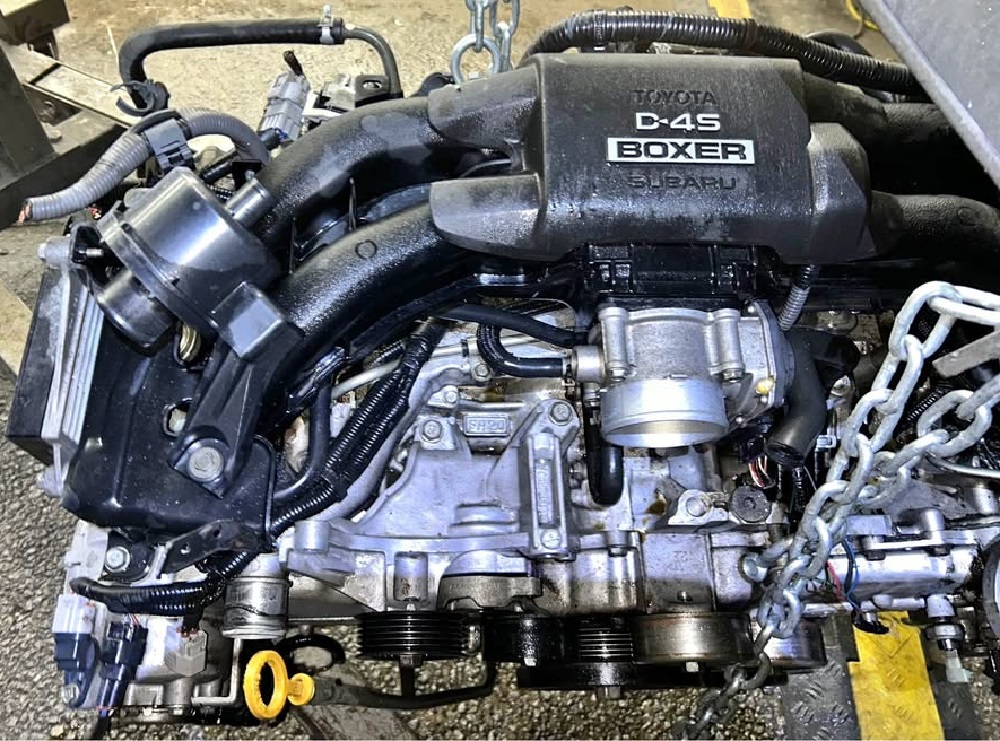
1. Boxer design rewrites the approach on balance, heat, and repair bills
Built-in balance, low center of gravity, and why Subaru stuck with it
Flat-opposed pistons fire sideways instead of up and down. That symmetry cancels out primary vibrations, letting the crank spin clean at high RPM without counterweights or balance shafts. No buzz at idle. No shake under load. That smoothness was baked in before engineers touched mounts or tuning.
The layout drops the crank low in the bay, pulling the engine’s mass closer to the road. Subaru leans hard on this geometry.
It lines the engine, trans, driveshaft, and diffs along one axis, tightening AWD grip and helping the car stay planted in a corner. Add crumple zones around that low-mounted block, and Subaru checks the crash test boxes too.
They kept this layout because it sells. Not for bragging rights, but for how the car feels turning in, climbing through snow, or steadying on a cambered off-ramp.
Coolant chemistry turns hostile when the layout traps heat and fluid
When the engine shuts down, coolant and oil don’t drain away like they do in a vertical inline. They settle sideways, against gaskets, sealant beads, and head flanges. That constant soak cooks the edges, and any weak coolant mix speeds the damage.
Boxers also stretch wide. That means longer coolant paths, more elbows, and harder-to-burp spots in the jacket. Any restriction, scale, air bubble, or failing thermostat, creates local hot zones. These don’t always trip the gauge, but they warp heads, soften gasket coatings, and invite long-term failures.
One more twist: aging grounds and poor coolant swaps can spark electrolysis. In EJs especially, that turned the battery-side head into a corrosion magnet.
Spark plug swap? Not without lifting the motor
Basic access costs more in a boxer. Plugs fire sideways into heads crammed next to frame rails. Valve cover gaskets sit behind brackets and harnesses. Front O2 sensors hide near crossmembers that catch every splash of Midwest salt.
Shops often jack up one side of the engine just to get a straight shot at the plugs. Head gasket jobs? Most pros yank the engine to do it right. That adds hours, but avoids broken bolts and slathered RTV from in-bay shortcuts.
Labor drives the tab, even when parts are cheap. On the lift, boxer engines reveal their biggest compromise, clean geometry on the road, dirty work on the bench.
2. EJ head gasket failures followed two paths, both expensive
Early EJ25D cooked itself from the inside out
From 1996 to 1999, Phase 1 EJ25D engines ran composite head gaskets that blew inward. Exhaust gas punched through to the coolant jackets, churning up bubbles and dumping heat where it didn’t belong. Long grades triggered temp spikes. Hot restarts failed without a spark or misfire in sight.
The thin cylinder walls couldn’t hold steady. Aluminum expansion hammered the gasket every time temps rose. Once combustion reached the coolant, the clock started. Heads warped. Blocks cracked. And the gauge stayed quiet until it was too late.
How early EJ gaskets failed from the inside
| Engine code | Model years | Gasket type | Failure path | Common outcome |
|---|---|---|---|---|
| EJ25D | 1996–1999 | Composite | Exhaust into coolant | Rapid overheating, warped heads |
| EJ22 (Phase 1) | 1990–1998 | Composite | Rare | High-mileage survival |
Later EJ251–253 leaked outward and rotted electrically
Subaru moved to SOHC 2.5L engines in 1999. The failure slowed down, but didn’t stop. Gaskets wept oil and coolant along the seam. It hit hot exhaust shields, cooked off, and left a smell long before anyone saw fluid on the ground.
Bad grounds turned it worse. As straps corroded, current jumped through the coolant, removing the graphite coating from the steel gaskets. The driver-side head, nearest the battery, took the hit first, and shops got used to seeing the same side fail every time.
Subaru’s “conditioner” tried to bandage it with sealant. It coated surfaces but never fixed the chemistry. Years later, Subaru finally moved to MLS gaskets, after the damage had already become routine.
A repaired EJ lives or dies by how the job was done
Clean compression numbers don’t prove anything. A reliable EJ has the receipts: MLS gaskets, resurfaced heads, new bolts, fresh hoses, a flushed cooling system, and a radiator that isn’t half-clogged. The quick jobs skip machine work, reuse bolts, and slap on sealant where metal should’ve met stone.
Done right, the fix runs $2,000–$4,000, depending on shop rates and parts used. The cheap ones sell fast, and fail faster.
If there’s a safe bet, it’s a late EJ253 with documentation. If it’s an early EJ25D and there’s no proof? Doesn’t matter how smooth it idles cold, you’re risking it.
3. FB engines traded gaskets for oil thirst and paid for it
Low-tension rings couldn’t hold the line
To chase fuel economy, Subaru dropped piston ring tension and thinned out oil to 0W‑20. That combo cut friction, but it also let oil sneak past the rings and burn off, especially under heat, high revs, or cold starts where clearances stretched wider. Ring design, cylinder wall prep, and oil control strategy all missed the mark.
Oil didn’t just vanish slowly. Some engines burned through a quart in under 1,200 miles, tripping lights between scheduled changes. That left bearings dry and owners guessing, until rods started knocking or the engine seized mid-trip.
Class actions, short blocks, and where Subaru drew the line
Subaru eventually caved under lawsuits and customer pressure. TSB 02‑157‑14R laid out the test: burn more than ⅓ quart in 1,200 miles and you qualified for a new short block. But the fix wasn’t automatic, VINs had to fall in specific ranges, and oil logs had to prove the burn rate.
FB oil-burn repairs tied to VIN and test results
| Model & engine | Years | Trans | At-risk VIN range (approx) | Fail threshold | Factory fix |
|---|---|---|---|---|---|
| Forester 2.5 FB25 | 2011–2014 | CVT/MT | Below ~*529004 / *543650 | > ⅓ qt per 1,200 miles | Short block with updated rings |
| Impreza 2.0 FB20 | 2012–2013 | CVT/MT | Below ~*033336 / *886714 | > ⅓ qt per 1,200 miles | Short block replacement |
| Legacy/Outback 2.5 FB25 | 2013–2014 | CVT/MT | Below ~*048086 / *321435 | > ⅓ qt per 1,200 miles | Short block replacement |
Subaru’s oil consumption threshold stayed high. If you only burned a quart every 2,000 miles, you didn’t qualify. Eight-year/100,000-mile extensions helped some, but owners outside those windows paid out of pocket, even when failures matched known patterns.
Oil level isn’t optional on these blocks
Burning a quart every 1,000 miles might not break the engine if you’re checking it constantly. The trouble starts when drivers stretch intervals or trust the dipstick without logging mileage.
Once the pickup runs dry, damage stacks fast: rod bearings score, cam journals starve, and oil filters hide glitter too fine to spot without cutting them open.
Best-case ownership means checking oil every tank or every 500–1,000 miles and logging it. FB engines don’t tolerate slop here. Miss a top-off and it’s not a slow decline, it’s a dry-sump freefall.
4. Carbon choke hits FA and DI FB engines right in the intake
Crankcase vapors bake valves when fuel doesn’t wash them
Direct injection sprays fuel straight into the combustion chamber. That means intake valves never see detergent-rich fuel, just crankcase mist and EGR soot looping through the intake.
Over time, that mix builds into a crust, tacky at first, then hard as kiln-fired tar. It starts at the valve backs and creeps into ports.
Early signs show up cold. Misfires on startup, rough idle until warm, weak throttle tip-in. Power fades higher in the revs. The ECM tries to mask it, but drivers feel it under load or in hot traffic where heat soak makes the crust swell.
EGR and PCV system layout varies by model, but the failure mode doesn’t. Carbon grabs airflow and holds it back until it’s forcefully removed.
Dealer fixes started with cleaners, ended with walnut shells
Subaru watched the problem evolve. At first, they pushed P.E.A.-based fuel cleaners, bottled treatments poured in the tank or sprayed through the intake. Those barely touched the valve deposits. Misfire counters on the Subaru Select Monitor flagged trouble long before issues fell apart.
Bulletins shifted to walnut shell blasting. Intake pulled. Valves closed. Soft abrasive shells fired into the ports and vacuumed out. It worked, but required time, gear, and skill. Most shops didn’t push it until cold-start misfires stacked up or roughness values crossed trip thresholds.
Carbon cleaning methods and their real limits
| Method | Where it goes | Best for | Limitations |
|---|---|---|---|
| Tank P.E.A. additive | Injectors and chambers | Light combustion deposits | Skips intake valves entirely |
| Induction P.E.A. spray | Through intake tract | Moderate valve carbon | Doesn’t cut heavy, layered buildup |
| Walnut blasting | Direct to closed valve faces | Heavy deposits and misfire codes | Labor-heavy, requires teardown |
SSM logs roughness counts per cylinder. Above 34, Subaru flags the cylinder for cleaning. Below that, many dealers send you home until symptoms worsen.
Short trips and cool oil feed the buildup
DI engines run hotter at the intake and cooler at the valves. That temp split cooks oil vapor and condensation into carbon. Constant short trips make it worse, never reaching full operating temp, never drying the vapor.
Air Oil Separators (AOS) help. Unlike simple catch cans, they reroute oil back into the pan instead of holding it. That keeps the vapor loop cleaner without filling up or starving the sump.
Carbon prevention isn’t a once-and-done job. FA and DI FB drivers who push their cars, regular highway pulls, long cycles to full temp, see less buildup than commuters stacking cold starts.
Walnut blasting every 30,000 to 60,000 miles keeps airflow sharp and misfire lights off. Skip it, and the power fades before the CEL even shows.
5. RTV clogs, oil starvation, and FA24’s growing pain points
RTV chunks in the pickup turn a strong motor weak
Subaru sealed the FA24 block, timing cover, and oil pan with RTV instead of gaskets. Done right, it holds. Done fast, it sheds. Excess bead from the inside edge breaks loose under heat and vibration, dropping into the pan where it drifts toward the pickup screen.
The FA24 pickup uses a five-sided mesh basket. One clogged face isn’t fatal, but once RTV builds on more than one, oil flow drops. Track use, long uphill grades, or extended high RPM finishes the job. Bearings go dry. Then they spin.
Failures don’t need years to show. Early break-in miles or fresh reseals done without a full 24-hour cure can flush RTV right into the pickup before the owner even hits their second oil change.
Filter autopsies and pan drops tell the truth
Cutting the oil filter open tells the story early. If pleats show glitter or silicone chunks, the pan needs to come off. Shops that know FA24s don’t wait for knock, they look inside before the bearings scream.
Once open, the lower pan reveals the pickup basket and the RTV sitting near it. Cleanout is surgical: no scrapers that drop shavings, no pressure washers that push debris deeper. Clean pickup, clean pan, new RTV with a measured bead and 24 hours to set. Anything less risks a repeat.
Smart oiling checks for FA24 engines
| Check/service | What’s done | When to do it |
|---|---|---|
| Oil filter cut-open | Check pleats for RTV or metal | After aggressive break-in or track use |
| Lower pan removal | Clean RTV from pickup and pan floor | If filter shows debris or engine is loud |
| Proper RTV reseal | Thin bead, hand prep, full cure | Any time sealing surfaces are redone |
Many factory reseals skip the cure wait. Cars come back same-day, oil added before the RTV cures, and the next failure is already in motion.
Turbo heat cracks manifolds on early FA24F builds
The FA24F turbo used in the Ascent, Outback, and Legacy ran a ferritic stainless manifold that couldn’t handle the expansion. Welds cracked. Bellows split. Exhaust leaked into the engine bay or up toward the cabin firewall.
It started as a sharp tick on cold start. Some owners noticed a drop in fuel economy. Others smelled fumes. Subaru eventually swapped to austenitic stainless steel and issued a 15-year, 150,000-mile coverage extension on the redesigned manifold and front pipe in affected markets.
Exhaust complaints traced to FA24F hardware
| Symptom | Likely source | Factory response |
|---|---|---|
| Ticking at cold start | Manifold or bellows crack | TSB 09‑106‑23R, manifold replace |
| Exhaust smell in cabin | Leak at front pipe gasket | TSB + extended coverage |
| Burnt oil smell after shutdown | Cam carrier or valve cover | Standard powertrain repair |
Some cars show all three. Warranty helps if you’re in range, but once it lapses, the bill climbs, especially with rusty hardware in the mix.
6. Noise at startup or load? Here’s what matters and what wrecks the motor
Cold piston slap sounds worse than it is
Subaru pistons run looser than most. That slack shows up cold. The skirts rock in the bore until thermal expansion tightens the fit. It hits hardest on cold mornings, light hollow tap, low RPM, disappears once warm. No misfire, no smoke, no loss of power.
The design favors efficiency and long-term clearance stability. In colder states, slap shows up more often. High-mile EJs and FBs keep ticking for years with that noise. It doesn’t mean failure, unless someone lets the oil run low and turns it into knock.
Rod knock ends the engine, no warning needed
Rod knock doesn’t fade. It deepens with revs, follows throttle, and ramps up under load. You’ll hear it once the bearing has lost too much material to stay seated. Cold oil slows it. Hot oil makes it louder. Once you hear it warm, the bottom end’s already compromised.
Starvation from oil consumption, clogged pickups, or RTV debris sets the stage. Thinner 0W‑20 makes it worse at temp. Once the bearing spins, the crank journal scores and oil pressure tanks. No additive fixes it. Only a teardown or replacement saves the block, if it’s even salvageable.
What slap sounds like vs what knock means
| Characteristic | Piston slap | Rod knock |
|---|---|---|
| When it’s loudest | Cold start, low RPM | Hot idle, rising with load |
| Tone of sound | Light, hollow, tinny | Deep, hammer-like, metallic |
| Change with throttle | Softer with revs | Louder, faster with throttle |
| Change with temperature | Fades when warm | Worse as oil thins |
| Issue | Skirt-to-wall clearance | Worn or spun rod bearing |
Fast checks before pulling the pan or calling the tow
Pop the oil cap, smell for fuel. Pull the dipstick, look for metallic flecks. If the sound shifts suddenly, cut the filter and check for glitter in the pleats.
Phone video helps. One cold clip, one warm. Techs can spot slap, knock, or valvetrain tick from rhythm and tone. Don’t drive it to prove a point. If knock’s confirmed, shut it down and tow. Running it one more mile ruins any shot at a rebuild.
7. What long-term reliability really means for Subaru boxers
Survey scores stay high, but only some engines earn them
Subaru charts well in Consumer Reports and J.D. Power. The badge shows up on “Most Reliable” lists year after year, but the scores don’t separate EJ gaskets from FB ring failures or FA24 exhaust issues.
Owners who made it to 250,000 miles often did it on the second engine, or with rebuilt heads and resealed pans. The numbers count survivors, not failures per owner.
Subaru’s flat-fours reward precision. Miss the timing, skip a flush, let oil run low, failure stacks fast. But engines that got head jobs, short blocks, carbon cleanings, or RTV pan reseals early? Many are still pulling hard at 200,000-plus.
The habits that actually keep these engines alive
Some owners stretch intervals. Others log every dipstick check. In Subaru land, the second group wins. Oil burn, coolant pH drift, carbon buildup, and RTV flakes all give warning, if you’re looking.
Boxer maintenance that actually prevents failure
| Area | What to do | Problem it prevents |
|---|---|---|
| Engine oil | Check every 500–1,000 mi, never trust intervals | FB/FA low oil, rod knock, turbo failure |
| Coolant & grounds | Flush on time, clean grounds, use proper mix | EJ electrolysis, gasket damage |
| DI intake cleaning | Walnut blast every 30k–60k on FA/FB DI | Valve carbon, misfire, power loss |
| Exhaust & leaks | Track cold-start ticks and shutdown smells | Manifold cracks, cam carrier seep |
| RTV/oiling (FA24) | Inspect filter, pan, and pickup on hard use | Oil starvation, spun bearings |
No shortcut replaces this routine. Modern boxer engines don’t fail at random, they punish slop, and they pay back discipline.
Best used bets and what to skip without proof
Clean EJ22s with records run forever. Repaired EJ253s with MLS gaskets and new head bolts still make sense. FB25s from the post-oil-burn years survive if oil was watched. FA24 cars punch hard, but don’t forgive neglect.
Proof beats claims. Skip cars without invoices. No receipt for a head job? Assume it wasn’t done. No filter cut after a reseal? You might already be driving with RTV in the screen.
Buyers who treat these motors like aviation engines, logs, intervals, diagnostics, get the longest run. Everyone else just gets a warning light and a ticking crank.
Sources & References
- Subaru Boxer Engine Explained Delray Beach FL
- The Heart of Performance: Understanding the Subaru BOXER Engine Advantage
- Subaru’s Boxer Engine Explained | Sport Subaru in Orlando
- Subaru Oil Leaks: Common Issues and What to Watch For | Dickerson Automotive
- Subaru Head Gasket Problems Explained. – All Wheel Drive Auto
- Why do Subarus blow head gaskets so often? : r/cars
- What Is a Boxer Engine? Benefits & Performance | Subaru
- 2022 Subaru WRX Owners Are Finding RTV Clogging Their Oil …
- These Subaru Model Years Were The Worst Affected By Head Gasket Problems – Jalopnik
- Subaru Head Gasket Issues Explained – Orion Automotive Services
- Subaru Head Gasket Problems Explained – ultimatesubaru.org
- Are the head gasket issues on the 2.5 engines as bad as everyone says? : r/subaru
- The Top 5 Symptoms of an Exhaust Manifold Leak — And What to Do about Them
- Genuine Subaru Cooling System Conditioner Add To Coolant Head Gasket 2 PACK OEM
- Subaru SOA635071 OEM Coolant System Conditioner – Genuine Factory Part For Subaru Vehicles – alublack.com
- SERVICE BULLETIN – nhtsa
- Boxer engine problems : r/subaru
- My 2012 Subaru Forester 2.5L FB is part of a TSB with massive oil consumption issues – is my motor doomed even if I am crazy diligent with my oil levels?? : r/SubaruForester
- Subaru Oil Consumption Class Action Lawsuit – Gibbs Mura
- SERVICE BULLETIN – nhtsa
- Carbon Buildup DI FA20? : r/subaru
- Direct Injection and Carbon Build Up : r/SubaruForester
- Forester XT- frequency of removing carbon buildup? : r/SubaruForester
- Tips for cleaning carbon buildup on 2020 wrx? – Reddit
- SERVICE BULLETIN – nhtsa
- SERVICE BULLETIN – nhtsa
- SERVICE BULLETIN – nhtsa
- My thoughts on the RTV “issue” (serious) : r/2022wrx
- The Problem with “Free” FA24 RTV Recalls: Speed Over Quality …
- Is Excess RTV coming back to haunt us? : r/wrx_vb
- RTV Oil Issue – 2025? : r/GR86
- Exhaust manifold crack : r/SubaruAscent
- SERVICE BULLETIN – nhtsa
- SERVICE BULLETIN – nhtsa
- Exhaust Pipe (Front) Warranty Extension, (WI22-013) – nhtsa
- Tech Tip: Subaru Forester/Outback’s Common Issue #misfiremotorsports #subaruforester #subaruoutback – YouTube
- Rod knock or Subaru clatter?? The sound goes away when it gets warmed up – Reddit
- Is piston slap actually what causes the engine knock? : r/mechanic
- Is this piston slap or rod knocking? – ultimatesubaru.org
- Watch And Listen How A Subaru Engine Rod Knock Vs Piston Slap Sounds Like – YouTube
- piston slap vs. rod knock | Turbobricks – The Volvo Performance Community
- Subaru Consumer Reports – AutoNation Subaru Scottsdale
- 2025 Subaru Legacy Reliability, Consumer Ratings & Pricing – J.D. Power
- How often should you walnut blast with the Fa’s : r/WRX