
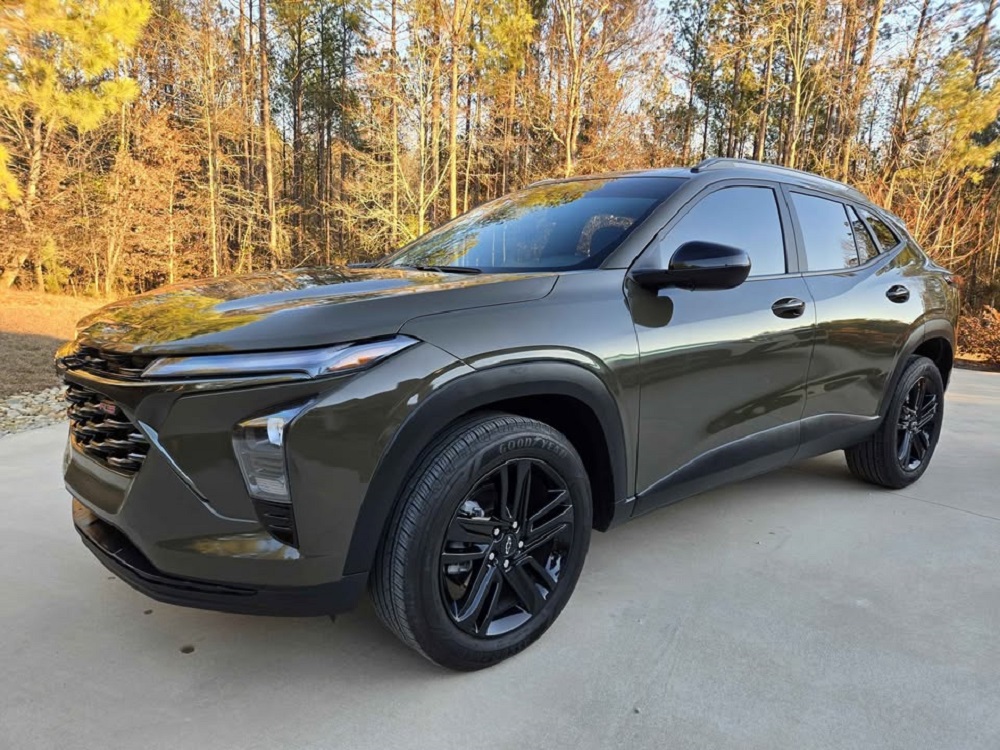
Hear a tick, lose oil pressure, catch a whiff of burning oil. That’s how this one starts. GM’s 1.2L Ecotec LIH powers budget crossovers like the Trax, Envista, and Encore GX.
It’s a compact turbo three-cylinder built for mileage and torque in city traffic. But under that fuel-sipping badge sits a belt bathed in oil, a fast-spooling turbo riding a fragile wastegate, and a wiring harness that doesn’t like to shake.
This guide cuts through the spec sheet. It breaks down how the LIH is built, where the failures hit first, why the wet timing belt takes out more than just the cams, and how to keep the thing running once the factory warranty runs cold.
1. How GM built the LIH, and why the layout fights itself
Three cylinders, shared castings, and turbo-tight packaging
The 1.2L LIH is a modular inline-3 from GM’s CSS family. Aluminum block and head, DOHC, 4 valves per cylinder, direct injection, and a small turbo bolted right to the head. No frills, just torque.
It’s tuned for low-end punch; 162 lb-ft at 2,500 rpm. Perfect for city driving, not highway pulls. Tight packaging keeps weight down but packs the heat in. Turbo sits inches from the belt housing and oil feeds. When oil quality drops, that heat scorches everything.
Shake, buzz, and what’s “normal” for an inline-3
Inline-3s rock. That’s physics. GM skipped balance shafts here and leaned on tuned mounts and ECM smoothing. Idle shake and deep grumble? TSB 20-NA-084 says they’re normal.
But vibration still chews on wiring, connectors, vacuum lines. MAF harness breaks from internal strand fatigue. Mounts sag, loading exhaust joints and shoving turbo angles out of spec. Harshness isn’t just annoying, it’s mechanical creep that wears everything soft.
Wet belt and oil-fed internals, one bad fluid takes out all three systems
No chain here. The timing belt runs in oil, driving the cams and oil pump. It’s efficient, but fragile. One oil feeds the whole engine; belt, bearings, turbo.
Bad oil chemistry? Belt swells and frays. Debris hits the pickup screen. Oil flow tanks. Turbo starves, vacuum pump locks up, lifters clatter. All from a belt that was supposed to run quieter and smoother.
2. Wet timing belt breakdown, why oil dilution turns this motor into shrapnel
Designed for quiet gains, not dirty miles
GM buried the timing belt in oil to cut drag, dampen noise, and grab a fractional MPG boost. It drives both the cams and oil pump, meaning there’s no backup if it slips. The design assumes good oil, steady highway speeds, and long intervals; conditions most owners never hit.
City miles, short hops, and cold starts flood the sump with fuel. Auto Stop/Start cycling keeps the oil cold. The belt runs wet, but the chemistry turns toxic fast.
Fuel-thinned oil swells the belt and strips the teeth
Direct injection washes fuel down the cylinder walls. That fuel winds up in the oil, thinning it out and soaking the belt in a chemical mix it wasn’t built to handle. Rubber hardens. Fabric backing frays. Sprockets dig into softened teeth.
Cracks show first. Then frayed edges. Then full tooth shear. The belt swells, jams, or jumps timing. All while shedding debris into the oil pan with every mile.
Belt debris plugs the pickup and starts ending parts
Once the belt starts shedding, the oil pickup becomes a filter. Fibers collect on the screen. Oil pressure drops. Anything fed from that circuit gets starved: turbo, vacuum pump, VVT solenoids, bearings.
The dash throws low-pressure warnings. Brakes get stiff. Turbo starts to whine. Engine may stall, misfire, or just feel flat. By the time codes show, damage is already baked in.
Wet belt failure chain and what the driver feels
| Stage in Belt Failure | What’s Happening Internally | Driver Symptoms / Codes | Damage If Ignored |
|---|---|---|---|
| Early surface cracking | Rubber hardens, micro-cracks start | None, maybe faint tick on cold start | Future debris risk builds |
| Edge fray / minor tooth wear | Fibers shed into oil, small particles in the sump | Occasional low-oil-pressure flicker on hot idle | Pickup screen gradually plugging |
| Heavy shedding, swollen belt | Fibers mat on pickup, flow restriction | Solid low-pressure warning, lifter/turbo noise | Bearing wear, cam/VVT faults |
| Teeth chunking / jump | Belt jumps timing or strips at crank | No-start, severe misfire, metal-to-metal contact | Bent valves, full engine replacement risk |
Ignore the 150K promise and plan for early surgery
GM claims a 150,000-mile / 15-year service life. Most shops don’t buy it. On short-trip cars, belt degradation often shows up by 60,000. By 90–100,000 miles, a replacement job should already be on the books.
It’s not just a belt swap. Techs pull the oil pan, front cover, inspect the pickup, and flush debris. Good shops replace the tensioner, seals, and vacuum pump feed too. It’s a $1,500–$2,200 job on a crossover worth $7,000. Wait too long, and it’s not a repair; it’s a forfeit.
3. Turbo trouble, rattles, underboost, and cold-weather failures
Wastegate wear triggers P0299 and early morning racket
The LIH turbo spools fast but rides a thin margin. Its wastegate uses a pin-and-bushing linkage that flexes with every boost cycle. Over time, the joint eggs out; slop builds, sealing gets lazy, and the gate rattles like a loose heat shield on cold starts.
Once that play exceeds spec, the valve can’t shut tight. Boost drops. The ECM flags P0299 for underboost. GM knew it was coming. Special Coverage N242484750 covers turbo replacement up to 150,000 miles for qualified models. But if you’re out of scope, you’re paying full freight.
Vacuum leaks and frozen regulators mimic turbo death
Before blaming the turbo, check the vacuum side. The wastegate actuator needs solid vacuum, about −50 kPa, to hold shut. That vacuum comes from a cam-driven pump and runs through a regulator valve and soft lines that age fast.
Leaks at the hoses, brittle tees, or a stuck regulator throw off the whole system. In winter, oil vapor or moisture can freeze inside the solenoid and lock it out. GM issued a tank kit to stabilize vacuum. If shops skip the diag and jump to a turbo replacement, they miss the fix, and waste the parts.
Intercooler icing strangles airflow in sub-zero temps
In deep cold, the charge-air cooler becomes a trap. Warm, humid boost air hits a freezing core. Moisture condenses, then ices. The engine chokes on its own breath.
Symptoms stack fast: zero power, stumble, misfires, boost and baro sensor codes. Sometimes it clears on restart. Sometimes it doesn’t. GM’s answer? A grille cover, revised wide-fin intercooler, and ECM tweaks that bump idle and shift RPM to keep heat up.
Common turbo/charge-air complaints on the 1.2L LIH
| Condition / Environment | Likely Issue | Driver Symptoms | Dealer / Tech Fix |
|---|---|---|---|
| Cold start rattle, P0299 | Worn wastegate linkage | Rattle when cold, low boost, CEL | Turbo replacement under special coverage |
| Hesitation in deep cold | Intercooler icing | No power, surging, misfires | Grille cover, updated CAC, ECM flash |
| Soft boost, no obvious noise | Vacuum leak or stuck regulator | Sluggish accel, intermittent underboost | Repair hoses, replace regulator valve, vac tank |
| Sudden turbo whine + smoke | Oil starvation from belt debris | Whistle, blue smoke, rapid power loss | Replace turbo, clean oil system, address belt |
4. Electronics that stall, surge, or cut power without warning
MAF harness failures from vibration fatigue
The MAF reads airflow and sets the fuel mix. On the LIH, it rides just downstream of the airbox with a short, fragile harness. That harness gets flexed every time the engine rocks at idle or under load. Over time, the fine strands inside the insulation snap.
The ECM starts throwing P0101 or U060F, bad airflow data or total signal loss. The engine goes into limp mode. Sometimes it stalls outright.
GM issued revised repair procedures, but many techs still chase the sensor instead of checking the wiring. A broken wire buried in the loom sends owners on a parts-chucking spree.
Auto Stop/Start timing bug triggers detonation on restart
Some builds shipped with bad ignition timing logic after Stop/Start events. When the engine restarts, the spark timing comes in too early. On light throttle, it knocks. On heavy throttle, it can hammer the piston top hard enough to cause real damage.
The A242435780-01 recall flashes the ECM with updated logic. Until it’s done, detonation can show up as a ping, rattle, or hesitation. Some owners never notice. Others hear it daily. The risk isn’t theoretical; enough hard hits can collapse a ring land or bend a rod.
Sensors that trip limp mode even with no mechanical fault
This engine depends on clean sensor data. Crank position, cam position, boost pressure, baro, all feed into fuel and spark control. If one drops out, the system shuts down power to protect itself.
That’s how you end up with P0335, P0340, P0299, and a glowing “Reduced Engine Power” message even when the motor’s mechanically fine. Most of these sensors ride right next to hot or vibrating surfaces. When a belt starts shedding or oil pressure dips, signal quality often follows.
Key sensor/ECM problems and what owners see
| Component / System | Typical Codes | Road Feel / Dash Messages | Usual Repair Path |
|---|---|---|---|
| MAF + harness | P0101, U060F | Reduced power, stalling, hard restart | New MAF, harness repair/section |
| CKP / CMP | P0335/336, P0340/1345 | Sudden stall, no-start, random misfires | Sensor replacement, timing correlation |
| Boost / MAP sensor | P0299, sensor perf | Sluggish, no boost, limp mode | Sensor, wiring check |
| ECM timing logic (S/S) | None or generic knock | Harsh restart knock, rattling, CEL | ECM software update (recall) |
5. Oil dilution, carbon buildup, and habits that wreck small turbos fast
Fuel in the oil ends timing belts and bearings
Short trips and cold starts load the sump with raw fuel. Direct injection sprays right at the cylinder wall, and unburnt fuel slips past the rings when the motor’s cold. The oil gets thinner, slick turns to solvent.
That chemical soup softens the wet timing belt, breaks down its surface, and attacks bearing surfaces under load. Add boost and low rpm, and you get LSPI, a high-pressure knock that can chip pistons. GM’s answer is simple but strict: use dexos1 Gen 3 full synthetic and change it at 5,000 miles in city duty, not 7,500.
Carbon chokes intake valves and softens throttle response
DI engines don’t wash the valves with fuel. Over time, crankcase vapors bake onto the intake ports. First it dulls throttle tip-in. Then it roughs out idle. Eventually it misfires.
Buildup shows up around 40,000–60,000 miles depending on driving habits. Light cases respond to chemical cleaners. Heavy deposits need walnut blasting. GM doesn’t call for it in service intervals, but techs see it often by mid-mileage.
Bad PCV and lazy driving feed LSPI risk
A sticky PCV valve pulls too much oil vapor or not enough, either way, you lose. It coats the intake, worsens carbon, and spikes oil usage. Most owners won’t catch it until they hear a knock or smell burnt oil.
LSPI hits under load at low rpm; flooring it in 5th gear at 1,200 rpm, lugging uphill, or towing without downshifting. The best way to dodge it: avoid heavy throttle at low rpm, use top-tier 87 octane, and keep software updated.
6. What fails in the real world, and when to expect it
Field data shows rare blowups, but high-dollar repairs when they hit
Catastrophic failures are low-volume, but not low-cost. Most 1.2L LIH engines make it past 60,000 miles without a bang. But when things go south, they go hard; oil-starved turbos, shredded belts, locked-up vacuum pumps. The kind of damage that totals a car worth five figures when new and four on resale.
Surveys show decent early reliability. But owner forums and lemon sites tell another story: once problems hit, they’re rarely isolated. Belt debris doesn’t stop at the pump; it wrecks the turbo and lifters. A bad MAF harness leads to limp mode, misfire, then turbo starvation if ignored.
Recalls and special coverage that actually save money
Several high-risk failures now fall under GM coverage:
• Turbo wastegate rattle / P0299 ➜ Special Coverage N242484750 (15 years/150,000 miles)
• Auto Stop/Start detonation risk ➜ Emissions Recall A242435780-01
• MAF harness wiring fatigue ➜ Bulletin repairs, dealer rewires loom section
• Intercooler icing ➜ Grille cover, updated CAC, software tweaks (TSB-driven)
Each fix ties to a known symptom. Most are VIN-locked, so don’t guess; run the number. These aren’t goodwill repairs. If you qualify, GM pays.
Failure timing depends on how, and where, the car’s driven
This engine doesn’t wear out the same way for everyone. A short-hop city car sees belt degradation, wiring failure, and carbon buildup fast. Highway cruisers dodge the worst, but oil age still sneaks up by 100,000.
Common 1.2L LIH issues by mileage and use
| Use Pattern | 0–40k miles | 40–80k miles | 80k+ miles |
|---|---|---|---|
| Short-trip city, lots of S/S | MAF harness, software quirks, icing | Early belt wear, carbon buildup, P0299 cases | High belt-debris risk, turbo/oil pump problems |
| Mixed commuting | Minor sensor issues | Some carbon, occasional turbo rattle | Belt inspection critical, belt job window |
| Mostly highway | Usually trouble-free | Light carbon, isolated turbo coverage cases | Belt still aging, but slower; watch oil leaks |
7. 1.2L vs 1.3L, picking the engine that won’t bite later
Belt vs chain, and why one risks taking the whole motor
The 1.2L LIH runs a rubber belt in oil. The 1.3L L3T runs a steel timing chain. That single change rewrites the long-term repair story. The belt sheds fibers, plugs the pickup, and starves the turbo. The chain stretches, but it doesn’t contaminate the oil.
Both engines share quirks; wastegate rattle, MAF harness issues, software recalls, but only the 1.2L risks everything on oil chemistry. Mechanics trust a chain with wear. They don’t trust a rubber belt soaked in old fuel-thinned oil.
Powertrain pairings that shift how the car feels
The 1.2L comes with front-wheel drive and a 6-speed automatic. The 1.3L usually pairs with AWD and a 9-speed. That changes everything from launch feel to highway passing.
The bigger engine holds gear longer, keeps boost steadier, and avoids the kickdown scramble. It’s not just stronger, it’s calmer. In real-world driving, the 1.3L often uses less fuel on the highway by staying in higher gears with less effort.
When the 1.2L makes sense, and when to walk away
The 1.2L works if the use case is right: light miles, warm weather, clean oil, steady speeds. It hates cold starts, short commutes, and delayed maintenance.
Skip any oil change, and you risk chewing the belt. Buy used with no records, and you’re buying someone else’s damage. At 80,000 miles with unknown history, walk unless the price leaves room for a full front-end teardown.
1.2L LIH vs 1.3L L3T (problem-focused)
| Parameter | 1.2L Ecotec LIH | 1.3L Ecotec L3T |
|---|---|---|
| Timing drive | Wet rubber belt in oil | Steel chain |
| Main “big” issue | Belt delam → oil starvation | Typical small-turbo wear, sensors |
| Output | ~137 hp / 162 lb-ft | ~155 hp / 174 lb-ft |
| Trans pairing | 6-speed auto, FWD only | 9-speed, often AWD available |
| Long-term risk view | Belt is the wildcard | More conventional, easier to trust |
8. Habits that keep the 1.2L alive, and what ends it early
Oil and belt strategy, where most owners screw it up
Every part on this engine depends on clean oil. The timing belt rides in it. The turbo feeds from it. Skip one interval and you start the failure chain.
Use dexos1 Gen 3 full synthetic only. For city driving or short trips, 5,000 miles max. No stretch. Highway-only drivers can push to 7,500, but not on budget oil. Belt inspection starts by 60,000, serious talk by 90,000. No one should run the factory 150K number without checking it first.
A belt job isn’t just the belt. You’re paying for pan removal, tensioners, pickup cleaning, and often a vacuum pump. Plan early or pay big later.
Breathing and boost, keep air clean and heat under control
Intake valve deposits start early. Plan on chemical cleaning by 40,000 and walnut blasting if idle gets rough. A lazy PCV valve feeds oil and vapor into the intake, choking performance and fouling the turbo.
Keep oil topped off. Listen for rattle at cold start. Let the turbo cool after a long pull. Those three habits alone can double the turbo’s lifespan.
Drive it like it matters, especially in cold or hot stop-and-go
In cold climates, use a winter grille cover and don’t hammer the gas from a frozen start. In hot cities, avoid long idle and short shutdowns. Let the engine warm fully a few times a week. Don’t lug at 1,200 rpm in high gear.
This engine behaves more like a motorcycle than a minivan. Maintenance keeps it running. But the driver keeps it alive.
Owner choices that move the needle on 1.2L Ecotec longevity
| Owner Habit / Choice | Effect On Risk | What A Careful Owner Does |
|---|---|---|
| Oil spec & interval | Make-or-break for wet belt and bearings | Uses dexos1 Gen 3, 5k-mile changes |
| Short-trip, cold stop/start | Increases fuel dilution and belt attack | Combines errands, takes longer drives |
| Ignoring recalls / updates | Leaves software and hardware issues active | Checks VIN for open campaigns regularly |
| Belt inspection and replacement timing | Sets odds of belt-debris engine loss | Plans a proactive belt job, not reactive |
| Winter prep (icing, covers) | Affects turbo and drive quality in deep cold | Uses covers, watches for icing symptoms |
Sources & References
- Chevrolet 1.2L LIH ECOTEC Turbo Engine Specs & MPG | Gordon Chevrolet in Jacksonville,FL
- Chevrolet 1.3L L3T ECOTEC Turbo Engine Specs | Gordon Chevrolet in Jacksonville,FL
- 2020 Buick Encore GX New Model Features – nhtsa
- GM Engineer: L3B turbo-four is a true truck engine – Hagerty Media
- 2022 Buick Encore GX Price, Value, Depreciation & Reviews | Kelley Blue Book
- 2025 Buick Envista Avenir : Premium Looks at a Bargain Price – Motor Illustrated
- 2024 Buick Encore GX Problems & Complaints – The Lemon Law Experts
- My first 3 cyl : r/Justrolledintotheshop – Reddit
- TECHinfo 1.2 PureTech Turbo_EN_rev_0.pdf
- Is the puretech 1.2 engine as notoriously bad as people claim it is? : r/peugeot – Reddit
- 1.2 Puretech Wet Timing Belt: Everything you need to know …
- The wet timing belt – the owners’ cross to bear – O.G.S. Mechanics
- Why So Many People Hate Wet Timing Belts – The Autopian
- Are wet belts really that bad? : r/CarTalkUK – Reddit
- Just got this message, 208 2013 modell. Should I be worried? What can it be pleas help : r/peugeot – Reddit
- Top 10 Signs Your Turbocharger Needs Maintenance – Essex Turbos
- Turbo Charger for 2023 Chevrolet Trailblazer | GM Parts Center
- Service Bulletin – nhtsa
- Service Bulletin TECHNICAL – nhtsa
- PIP5829A MIL Illuminated With DTC P0299 and/or Cold Start Rattle Noise From the Engine Compartment – nhtsa
- GLOBAL SAFETY FIELD INVESTIGATIONS DCS6638 URGENT – DISTRIBUTE IMMEDIATELY Date: August 8, 2023 Subject: N232407740 – Special Co – nhtsa
- Special Coverage N242484750 Turbocharger Replacement – nhtsa
- Chevy 2022 Equinox and Trailblazer Have A Major Engine Problem – MotorBiscuit
- GM’s Small Turbocharged Engines Suffer From Loss of Performance …
- Request for Pictures of Broken Wire in the Harness Between the ECM and Multifunction Sensor (MAF Sensor), DTC – nhtsa
- 5 Recalls for 2021 CHEVROLET Trailblazer – The Center for Auto Safety
- GENERAL MOTORS DCS6982 URGENT – DISTRIBUTE IMMEDIATELY Date: August 14, 2024 Subject: REVISION: A242435780-01 – Emission Recal – nhtsa
- Are three-cylinder turbo engines worth buying? : r/whatcarshouldIbuy – Reddit
- Are 1.2 liters are less reliable as 1.3 : r/whatcarshouldIbuy – Reddit
- How are the 1.2 and 1.3L turbo engines doing so far on the Trax and Trailblazer? : r/Chevy
- How to Choose Chevrolet Trailblazer: Buying Guide – CarInterior – Alibaba.com
- Envista – GM Answers
- 2026 Buick Envista Owner Manual – GM Answers
- Would you buy a 3 cylinder vehicle? : r/AskAMechanic – Reddit
- 2024 and above model the engine reliability : r/ChevyTrax – Reddit
- Is there anything positive about the 1.2 liter 3 cylinder in the Buick Envista : r/AskAMechanic
- For GM Onix /Tracker /Chevrolet 1.0L 1.2L 12V Engine Timing Tool Kit CR490 | eBay
- How To REMOVE CARBON Build Up From DIRECT INJECTION Engines For $12 – YouTube
- 7 ALARMING Symptoms of a Bad PCV Valve (Could Ruin Your Engine) – YouTube
- Is the GM 1.2L I-3 Turbocharged engine like in the 2024 Chevy Trax decent? – Reddit