
Ticks cold. Burns oil. Throws low-pressure warnings. The 6.0 was supposed to be bulletproof. So why does the dash light up like it’s on life support?
Start with this, not all 6.0s are built the same. Gen III iron-block LQ4s and LQ9s run simple and strong. Gen IV LY6s and L96s add VVT and sensor quirks. But the AFM-equipped L76, L77, and LZ1? That’s where things go sideways, lifter collapse, oil loss, and cam lobe destruction.
This guide cuts the motor open. Which RPO tags to watch. Where failures start. How the oil system masks pressure drops. And what separates a 400,000-mile runner from a rebuild waiting to happen.
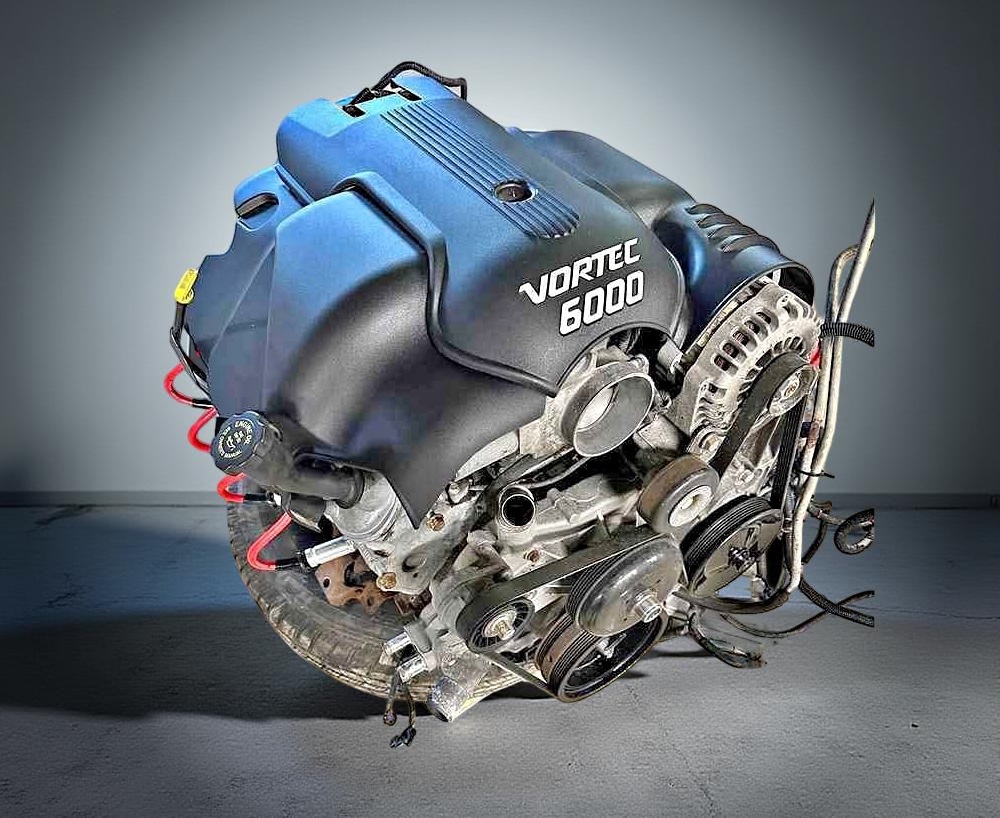
1. The 6.0 you’ve got changes what breaks first
Gen III LQ4 and LQ9: simple iron, mostly mechanical pain
The LQ4 and LQ9 built the 6.0’s reputation. Both run deep-skirt iron blocks with cathedral-port heads and zero AFM or VVT to complicate things. No phasers. No solenoids. Just a crank-driven oil pump and rock-solid cam drive.
The LQ4 used dished pistons and a 9.4:1 compression ratio, hitting around 300 hp and 360 lb-ft. The LQ9 bumped that to 10.1:1 with flat-top pistons and a hotter tune, landing around 345 hp and 380 lb-ft. Same 317 heads, same block casting.
These early 6.0s don’t quit, but they leak, rattle, and corrode. Rear knock sensors rot in the valley after water intrusion. Exhaust bolts snap cold. Intake gaskets seep. Oil pressure sensors lie. Still, the bottom end keeps going.
That’s why they’re swap gold. Clean RPO, no AFM, iron block. But online reliability chatter favors these because they’re pulled from junkyards, not babied to 300,000 miles. That skews the story.
LY6, L96, and LC8: Gen IV with phasers, not lifter traps
By 2007, the 6.0 went full Gen IV. The LY6, L96, and LC8 still use iron blocks but pack in VVT, tighter emissions tuning, and rectangular-port heads for better high-rpm breathing.
The LY6 hit 352 hp with E38 ECM control and a single-bolt cam gear. No AFM, but oil matters more. VVT uses a phaser and solenoid that’s picky about pressure. Cheap oil or long intervals turn that system into a rattle trap fast.
The L96 extended the run until 2019, adding flex-fuel and E85 support. Same block, same VVT, same wear points, just updated injectors and fuel rails. These motors show up in Silverado HDs, Express vans, and other fleet-duty bruisers.
The LC8 shares bones with the L96 but runs CNG or LPG. It gets hardened valves, hotter combustion, and dry-seated heads that wear faster in high-idle use. Valve recession hits sooner on CNG fleet trucks that never shut off.
L76, L77, LZ1: aluminum blocks and the AFM problem tree
Not all 6.0s skipped AFM. The L76, L77, and LZ1 bring it back with aluminum blocks, active lifters, and valley manifolds that turn oil into a problem, not a solution.
The L76 showed up in 1500 trucks as “Vortec Max,” blending AFM and VVT with flat-top pistons and rectangle-port heads. The L77 added flex-fuel and served in police sedans and export platforms. The LZ1 went hybrid in the Yukon and Tahoe, mixing electric drive with a fragile top end.
AFM brings a new failure path. Four lifters collapse on command. Oil pressure toggles them via the VLOM. Once varnish sets in or oil thins out, they stick. That eats lobes, triggers misfires, and sends metal into the sump.
These are the 6.0s that quit early unless AFM is deleted or babied with short intervals and premium oil.
2. AFM lifter collapse and valvetrain damage on the fuel-saver 6.0s
AFM hardware, oil control, and where it jams
AFM runs through special lifters with an internal lock pin and a side oil feed. The VLOM in the valley routes oil pressure to those lifters when the ECM calls four-cylinder mode. Pressure drops, pins move, valves stop following the cam. Pressure returns, pins should re-lock.
Heat and varnish ruin that handshake. Tight oil passages glaze over. Thin oil at idle loses pressure. Pins hang half-set, rollers skid, and the cam takes the hit first. Once a pin misses its seat, the failure clock starts running.
What drivers hear, what scanners see, what metal does next
The first clue is a sharp tick that shows up hot, not cold. Idle shakes. Power drops on one hole. The MIL flashes with P0300–P0308, sometimes paired with cam or VVT correlation complaints once the lobe wears down.
Keep driving and the roller flats the cam. Iron dust circulates. The phaser and bearings eat that grit. Oil pressure looks fine until it does not. Tear-downs usually land between 100,000 and 180,000 miles, earlier on short-trip trucks and late oil changes.
Repair paths that stop the issue and ones that don’t
An OE-style repair swaps AFM lifters, the VLOM, and often the cam. Labor is heavy and the same oil paths remain. Many shops open the top end once and remove the problem instead. A delete uses a non‑AFM cam, standard lifters, a solid valley tray, and a tune that shuts the system off.
Fuel economy drops about 5 to 8 percent in mixed driving. Reliability jumps because oil pressure stops doing gymnastics. Once a cam is damaged, deletes cost less over time than repeating lifter jobs.
| Strategy | Parts Scope | Typical Cost | Risk After Repair |
|---|---|---|---|
| Keep AFM | AFM lifters, VLOM, cam as needed | $2,500–$4,500 | Recurrence if oil control slips |
| Delete AFM | Non‑AFM cam, lifters, tray, tune | $3,000–$5,500 | Low when oil stays clean |
3. Oil system weak points that trigger phantom pressure drops
Pickup tube O-ring: the cold-start ghost code
The oil pump sits low, spinning off the crank. It feeds from a long pickup tube sealed by a rubber O-ring. That O-ring cooks over time, shrinks, cracks, lets air slip in before oil.
When that happens, cold starts show pressure under 10 psi, then recover as rpm builds. No knock, no real starvation, just aerated oil that trips warnings.
Some techs confirm it with the “two-quart overfill” trick. If pressure returns, the O-ring’s shot. Replacing it means a pan drop and a few hours, not a new pump.
Rear pressure sensor and the hidden screen that fakes a fault
The pressure sensor threads into the top of the block behind the intake. It’s a common failure. When it leaks internally or shorts, the dash pegs high or flatlines. Some read zero, others lock at 80 psi.
Below the sensor is a screen, meant to keep gunk out of the VLOM. That screen plugs with sludge. On AFM blocks, that restriction doesn’t just skew readings, it chokes lifter control. Many misfire and low-pressure complaints trace back to this mesh, not the pump.
VVT phaser and solenoid: oil-sensitive timing faults
Gen IV 6.0s use a single cam phaser, controlled by a solenoid that meters oil flow to internal vanes. Once varnish builds or debris hits the solenoid screen, timing goes soft. Idle loops, power drops, and P0011 or P0014 show up in the log.
Cheap filters, missed oil changes, and long idle sessions speed the damage. Once a phaser rattles, it’s past recovery. Solenoids can be cleaned or replaced. Phasers get noisy when they’re worn. And by then, the top-end job starts stacking labor and parts fast.
| Driver Symptom | Issue | Fix |
|---|---|---|
| Cold low oil pressure | Pickup tube O-ring leak | Drop pan, reseal pickup |
| Pegged gauge or zero pressure | Sensor failure or clogged screen | Sensor and screen replacement |
| VVT codes, surging idle | Dirty oil or clogged solenoid | Oil change, solenoid clean/replace |
| Misfire on AFM engine | Low VLOM feed from oil restriction | Full top-end and system clean |
Once pressure problems start, sensors lie and the damage spreads. Don’t chase codes, start at the pickup.
4. Exhaust ticks, gasket leaks, and coolant weak links that take out the top end
Exhaust bolts snap cold and seal hot, until they don’t
The aluminum head expands faster than the iron manifold. That stress pops the rearmost and front bolts first, usually around 120,000 to 150,000 miles. Cold starts tick like a collapsed lifter. Noise fades as heat closes the gap.
But the leak still draws fresh air into the manifold. That throws off O2 readings, sends fuel trims rich, and bakes the cats. On long hills, fumes creep into the cab. Removing snapped bolts often means wrestling hardened steel from tight engine bays, many techs just slot the flange and clamp around it.
Intake gaskets leak air, valley moisture rots knock sensors
The plastic intake manifold sits over composite gaskets that pull away with age. That lets unmetered air slip in, leaning out the mix at idle and triggering long-term fuel trim spikes. Lean codes follow: P0171, P0174. Some owners chase MAF or O2 sensors first.
On Gen III blocks, the knock sensors live low in the valley, under the intake. Water from engine washing or seeping gaskets collects and corrodes them. Once they fail, the ECM pulls timing like the engine’s knocking full time. That tanks mileage and makes throttle response go soft.
Water pumps, RTV mistakes, and what cooks the head
Most pumps start leaking around 150,000 miles. Look for dried crust at the weep hole, pulley play, or belt chirp. The repair is simple, unless someone smears RTV where they shouldn’t.
Plug the bypass or neck passage with sealant, and coolant won’t circulate. That overheats the head, drops a valve seat, and melts a piston. Dex-Cool neglect adds to the mess, mixed coolant, air pockets, and rotted heater cores show up next.
| Component | Mileage Range | Driver Symptom | Est. Cost (Parts + Labor) |
|---|---|---|---|
| Exhaust bolts | 120,000–150,000 | Cold tick, exhaust smell | $500–$900 |
| Intake gaskets | 100,000+ | Lean codes, rough idle | $350–$800 |
| Water pump | ~150,000 | Drip, squeal, overheat | $400–$600 |
The tick’s not always a lifter. The leak’s not always oil. And the damage climbs fast once coolant or air throws off trim.
5. Oil burners and stuck rings that hide behind carbon
PCV design floods the intake with liquid oil
Early valve covers had wide-open baffles that let oil mist and droplets enter the intake under high vacuum. Long downhills, decel, or idle pulled liquid oil straight past the throttle blade.
On AFM engines, the issue’s worse. The VLOM dumps pressurized oil at the deactivated cylinders. That oil rides up the bores, slips past loose rings, and starts cooking.
Once baked on, the carbon keeps piling. Blow-by spikes. Plugs foul. Cold starts turn sluggish. GM’s official line allows 1 qt every 2,000 to 3,000 miles, but AFM 6.0s often burn 1 qt per 500 under load.
Rings lose tension and trap heat
The rings aren’t weak, but they coke hard. Sticky oil fills the ring grooves. Tension fades. Combustion gasses slip past into the crankcase, boosting pressure and spreading sludge.
You’ll hear piston slap on cold starts. Carbon “rap” on hot shutdown. Sometimes compression drops on one hole without a clear mechanical break. Techs try the GM ring soak, upper-cylinder cleaner and hours of soak time, but once the bores wear, it’s done.
What still helps and what’s too late
GM revised the valve cover design. Newer baffles (P/N 12570427 or 12642655) redirect flow and reduce intake oil. Catch cans help on performance trucks or high-idle fleets, especially in cold climates or short-trip routes.
But if oil use doesn’t change after baffles and cans, the rings are shot. Some owners live with it, topping off every few weeks instead of rebuilding. Others chase it all the way down. What doesn’t work: additives, cheap filters, or long intervals. They make it worse.
6. Sensors and electronics that throw real engines off track
Knock sensors fail quietly and pull timing hard
On Gen III blocks, knock sensors sit in the valley under the intake. Water gets in from steam cleaning, bad intake seals, or careless hose routing. Once moisture hits, the sensor corrodes or shorts.
Codes P0327 and P0332 pop up. The engine doesn’t knock, but the ECM thinks it does. Timing drops. Power fades. Fuel mileage tanks. Replace both sensors, not just one. Use a new harness. Seal the rubber boots with RTV to keep moisture out the next time.
MAF drift and coked throttle blades confuse idle control
The MAF sensor reads incoming air to calculate load. After 100,000 miles of dust and oil vapors, it misreads flow. That skews timing, shifts, and fuel trims. Drivers feel lazy throttle, stumble, or odd downshifts.
At the throttle body, carbon gums up the blade. Idle bypass gets restricted. Cold starts surge, or stall. Trucks that idle long or drive short distances show it fastest. Cleaning both, then resetting idle and throttle learn, often fixes what feels like a dead ECM.
VVT and cam/crank codes, mechanical or just dirty oil?
Codes like P0011, P0014, or cam/crank correlation faults usually trace back to VVT oil control issues. But not all of them mean the sensor’s dead.
Sludge in the solenoid. A phaser that sticks. Timing chains that stretch and throw off sync just enough to flag a code. The trick is reading scan data. If advance isn’t tracking, or timing bounces at idle, the problem’s mechanical.
Start with oil health. Then clean or swap the solenoid. Still off? You’re into phaser or timing gear wear. Don’t guess. Data and oil tell the real story.
7. Which 6.0s go 300,000 and which ones don’t
Fleet data proves the iron-block bottom end holds
LQ4, LY6, and L96 engines rack up 300,000 to 400,000 miles in heavy vans and HD pickups without opening the short block. What makes it last? Deep-skirt iron casting, six-bolt mains, and a big crank that turns slow and stays cool. These motors don’t rev high, don’t run hot, and take abuse without bending.
One look at Silverado 2500 work trucks and Express vans with 350,000+ on the clock says it all. The bottom end doesn’t quit, everything around it does.
AFM blocks need babysitting or surgery
L76, L77, and LZ1 engines can run long too, but not without help. AFM lifters collapse. Rings coke up. Sensors misread. Some trucks drop dead before 130,000. Others run past 250,000 with AFM disabled and oil changed like religion.
The key difference is oil control. Fail that, and the top end goes soft. Catch it early, delete the system, and the aluminum blocks still hold together.
| Variant | AFM | Trust Level Long-Term | Notes |
|---|---|---|---|
| LQ4/LQ9 | No | Very High | Simple Gen III setup, no VVT/AFM |
| LY6/L96 | No | Very High | Gen IV VVT, great in fleets |
| LC8 | No | High | Same as L96, but hotter seats wear faster |
| L76/L77 | Yes | Medium | Lifters collapse early if AFM not deleted |
| LZ1 | Yes | Low | Hybrid + AFM = complex failure paths |
Cheaper to run than a Duramax, if you can feed it
The 6.0 gulps fuel. Expect 10–13 mpg unloaded. Tow 10,000 lb and watch it dip to 8–9. But unlike the 6.6 Duramax, there’s no DEF, no $5,000 injectors, no finicky high-pressure pumps. Oil changes are cheaper. So are sensors, pumps, and gaskets.
That’s why fleets stick with it. Less downtime. No $1,500 tow bills for no-starts. A little thirsty, yes, but brutally predictable.
8. Power mods that move the limit from oil to metal
Bigger cams, bigger risk unless you build around it
Drop in a cam and the 6.0 wakes up, until the valvetrain quits. Aggressive lobes pound lifters. Stock pushrods flex. Weak springs float at high rpm. Then the chain jumps or the roller eats the lobe.
Sloppy tunes make it worse. Surging idle. Knock sensor false triggers. Timing yanked when the ECM hears valvetrain noise and thinks it’s detonation. Want it to live? Upgrade springs, use hardened pushrods, and don’t trust a tune that came off a forum post.
Boost builds hold, until you pass the safe edge
Stock 6.0 short blocks survive at 500 to 700 hp with smart tuning. Holdener, Sloppy, and dozens of junkyard turbo guys have proved it. But push past 800 and the rods start bending, pistons crack, and ring lands lift.
Even at 600, you’ll need more than boost. Tight ring gaps cause butted rings. Weak fuel delivery leans it out. Marginal oil pressure at high rpm cooks bearings. The block holds. The top end is what blows first.
Daily driver or weekend toy? The risk curve flips
A mild exhaust and cam in a 2500 work truck might run 200,000 easy. But put that same LQ4 in a drift car with spray and no cooling upgrades? It won’t make 30,000.
That’s why many keep their hauler stock and build something else for fun. The 6.0 doesn’t quit, but start stacking mods without backing them up, and what fails first won’t be the bottom end. It’ll be the part you didn’t reinforce.
Sources & References
- Ultimate 6.0 Vortec Engine Guide – Specs, Reliability, & Top Mods – Chevy Trucks
- 6.0-Liter Engines | GM, Chevy, GMC, Cadillac, Saab Motors For Sale
- See How A Bad Mechanic Ruined This GM 6.0 V8 – CarBuzz
- 6.0 Vortec Engine: Performance, Reliability, and Versatility – Flashark
- General Motors LS-based small-block engine – Wikipedia
- Highest mileage 6.0 Vortec engine : r/Silverado – Reddit
- Everything To Know About GM’s 6.0L V8 Engine – SlashGear
- LS Engine Detailed Specs – LS DEPOT
- A Guide to the GM LS Engine Family – autoevolution
- 7+ Best 6.0 Vortec Max Engine Upgrades for MAX Power! – cmu.edu.jm •
- Exploring the different 6.0-liter Chevy engines over the years
- LZ1 6.0L Engine Specs: Performance, Bore & Stroke, Cylinder Heads, Cam Specs & More
- LZ1 Vortec 6.0L V8 Gen IV Engine Swap Guide – PSI Conversions
- 6.0L V-8 LC8 Alternate Fuel CNG/LPG | GM Powered Solutions
- Service Bulletin TECHNICAL – nhtsa
- Chevy Silverado Engine Problems: Complete 2025 Guide by Model Year | Rohnert Park Transmission
- Service Bulletin TECHNICAL – nhtsa
- GMC/Chevy AFM Oil Consumption – Ongoing Issue – Olathe Toyota Parts Center
- Service Bulletin TECHNICAL – nhtsa
- Service Bulletin TECHNICAL – nhtsa