
Boost hits. Temp climbs. Then the exhaust turns sweet and steamy, your 2.3 EcoBoost just lost its seal. Early blocks flex at the deck under pressure.
Ford chased cooling gains with an open-deck design, but that left thin spots between cylinders where head gaskets sink, crack, and let coolant slip into the chamber. Some 2016–2019 Focus RS builds took it even further, wrong gasket, wrong flow path, wrong part for the job.
But the gasket’s just the start. LSPI can punch holes in pistons if the low-pressure fuel sensor shorts. Carbon chokes airflow. Wastegate clips fall off. Heat bakes the turbo bearings unless you idle down. Even the 2025 recall shows Ford’s still chasing basic fuel delivery fixes.
This guide breaks the cycle. Here’s how the 2.3 fails, who’s most at risk, and what it takes to keep it alive past 100,000.
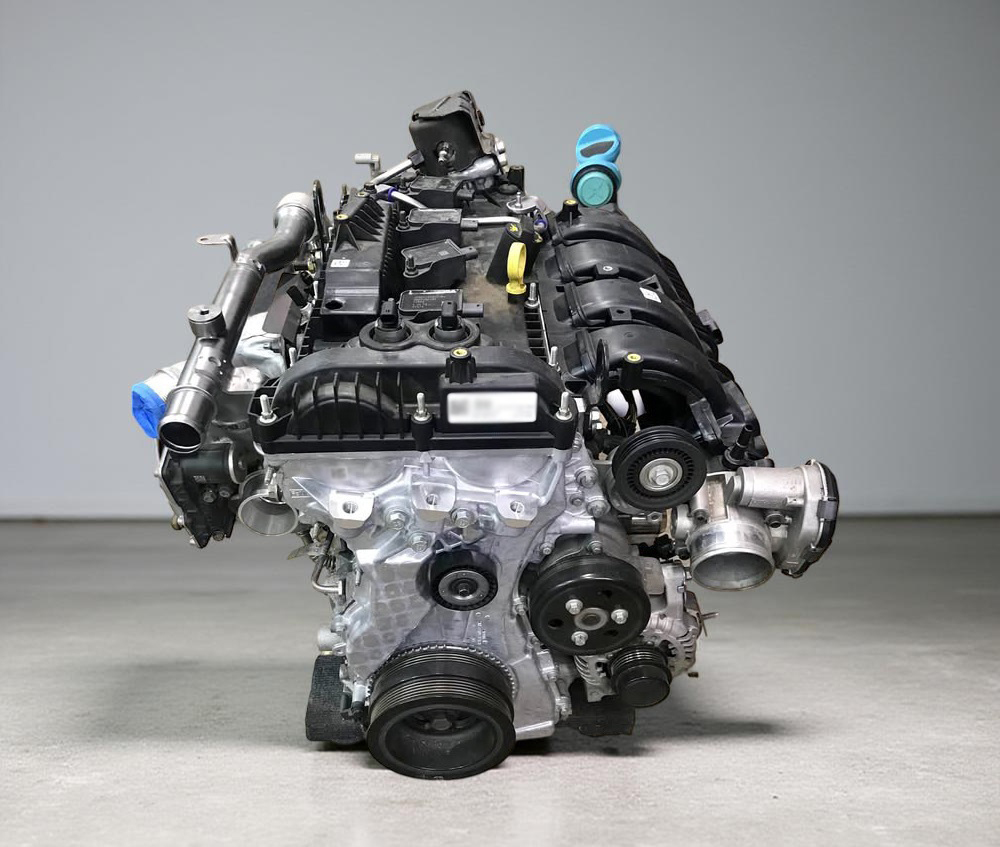
1. Why the 2.3 EcoBoost fails where the 2.0 holds
Open-deck block trades strength for flow
Ford ditched the 2.0’s closed-deck structure for a high-pressure cast aluminum open-deck block on the 2.3. That gave coolant direct access around each cylinder, shedding heat fast under load.
But it also removed the crosswebs that once tied the tops of the cylinders to the outer wall. There’s nothing bracing the bores at the deck, just a thin ring of aluminum clamped under the gasket.
Under boost, those unsupported bores flex. Especially once hot. That flex shears load across the head gasket’s sealing ring, and over time, it starts to cut in.
On tuned engines or during long towing climbs, that movement ramps fast. You won’t spot it until the coolant vanishes or steam trails the tailpipe.
Bore walk breaks the seal from inside
Every hot-cold cycle makes the bores shift. Not front to back, but side to side, micro-millimeters at a time. That side load, known as bore walk, saws at the fire ring with every cycle. Eventually, it wears a groove deep enough to let pressurized gas slip through, and coolant follow.
Between cylinders 2 and 3, where the coolant jacket thins and block temps spike, failure hits first. That spot gets hammered by lateral motion and hot soak. It’s not about mileage, it’s about time spent under pressure, especially in heat-soaked restarts after hard use.
Strong bottom end hides a weak upper deck
The crank doesn’t care. Forged 4340 steel, held in check by a ladder-frame girdle and cross-bolted mains. That bottom end shrugs off torque spikes from towing, tuning, and hard launches. But the real failure zone isn’t down low.
The weak point lives up top, where the gasket floats across the open deck with nothing backing it up. Once that seal fails, no bearing strength saves the block. Coolant slips in. The gasket frets deeper. Misfires follow. And unless the casting’s been updated, it’ll do it again.
2. Focus RS head gasket failure came from one bad build, not the whole engine line
Track-level heat pushed the RS past its margin
Ford cranked the Focus RS to 350 hp and aimed it at track days, not grocery runs. Sustained boost, repeated hot laps, and aggressive torque targets kept coolant temps pinned near the ceiling.
That duty cycle punished the rear cylinders hardest, where flow slows and heat stacks. In this environment, gasket choice and coolant routing stop being details and start being survival gear.
A mismatched gasket created hot spots that cooked the head
Early RS engines left the factory with the Mustang-spec head gasket. Same bore, wrong coolant holes. The passages did not line up with the RS head’s flow path, so coolant stalled around the back of the block.
Local temps spiked, the head warped, and the gasket gave way. Coolant followed gravity into one cylinder, then two, and compression fell off a cliff.
17B32 fixed the error, not the scars
Ford rolled out 17B32 to catch the mistake. Cars got pressure-tested, then received a revised “C” gasket, a new head, or a full long block depending on damage.
Engines that overheated for miles before the fix can carry residual distortion at the deck or head surface. That risk shows up later as unexplained coolant loss, even with the correct gasket installed.
3. Coolant intrusion wasn’t just the RS, early blocks were flawed across the board
Slotted deck grooves weakened the seal from day one
Early 2.3, 2.0, and 1.5 EcoBoost blocks used slotted grooves between the cylinders to spread coolant across the deck. Good for flow, bad for structure.
The gasket had to bridge these thin aluminum slots with no solid backing underneath. Under boost, heat, and pressure cycling, the fire ring didn’t hold. Over time, it extruded into the slot, cut through, and let coolant seep straight into the chamber.
Cross-drilled 2020 redesign finally brought real support
In 2020, Ford changed the casting. Gone were the open slots. In their place, small angled coolant passages drilled diagonally from the outer wall into the deck. Same flow, more metal.
That restored full sealing surface between cylinders and gave the head gasket something solid to clamp. Failures dropped. Owners noticed. Tuners pushed harder without popping gaskets weekly.
Intrusion shows up cold, wet, and quiet
Most 2.3 failures don’t scream, they wheeze. Overnight, coolant seeps into a chamber. On startup, the misfire hits, white smoke curls from the pipe, and the idle stumbles.
DTCs like P0300, P0316, and over-temp codes follow. If the oil turns milky, bearings start to die fast. The car might still drive, but the block’s already toast.
Nelson lawsuit laid the block design bare
The Nelson v. Ford class action hit hard because it named the core defect: slotted deck grooves and head sealing failure.
Plaintiffs argued that the issue affected multiple EcoBoost engines, not just the RS, and that Ford’s repairs were patch jobs, not solutions. Ford pushed back with short-block swaps and quiet TSBs, but the lawsuit dragged the casting problem into public view.
2.3 EcoBoost block generations and coolant risk
| Model years | Deck feature | Typical risk profile |
|---|---|---|
| 2015–2019 | Slotted grooves | Highest coolant-intrusion risk |
| 2020+ | Cross-drilled passages | Stronger sealing, far fewer cases |
4. Fuel system faults triggered both piston failures and federal recalls
Bad fuel sensor made the engine run lean under boost
The early low-pressure fuel sensor misread tank pressure, telling the PCM everything was fine, even when pressure dropped. So the pump underdelivered. Cylinders ran lean under load, and that’s where LSPI strikes.
One pop before top dead center, and the piston shatters. Owners called it EcoBoom. It wasn’t drama, it was a hardware failure wrapped in poor calibration.
2025 recall exposed a second weak link in the pump
Ford’s 25V-455 recall finally admitted the in-tank pump itself could fail. More than 850,000 vehicles were recalled, Mustangs, Broncos, Explorers, and others running the 2.3.
Heat warped internals, jet pump passages clogged, and the diaphragm lost pressure. The result? Instant stall. No warning, just fuel cut and dead throttle.
Risk spikes in hot weather, low tank levels, or long highway drives. That’s when vapor lock hits hardest, and owners found themselves coasting to the shoulder with traffic flying by.
Real symptoms surface long before total failure
Before it dies, the system coughs. Stumbles at part throttle. Hesitation after restart. Intermittent reduced-power mode. CEL pops up, then clears.
Replace the LPFS with the updated BU5Z-9F972-B and swap the pump if it falls under the recall. Ignoring early clues means betting a boosted GDI engine can survive a lean-out. Most don’t.
5. Direct injection carbon stacks fast and drags everything else with it
No fuel wash means the valves cook in oil vapor
The 2.3’s GDI layout fires fuel straight into the chamber, skipping the intake valves entirely. That means nothing rinses off the oily mist from the PCV and EGR systems. Over time, it bakes on.
Sticky deposits build up on the back of the valves, especially in short-trip, cold-weather driving. By 40,000 miles, some engines choke airflow so badly they misfire cold and stumble under load.
Walnut blasting clears it, but only if you catch it in time
Catch cans slow it down, but don’t stop it. Dealer “induction cleanings” won’t fix severe buildup. Only walnut blasting, intake off, media blast, vacuum out, works once airflow drops.
Most shops charge $400–800. Expect it around 60,000–90,000 miles if you do city driving, short trips, or skipped oil changes. A well-placed catch can helps, especially in colder climates where moisture and fuel vapor condense more.
Misfires, cat stress, and timing tension build fast
Choked valves throw off airflow. Boost spikes to compensate. Cylinder pressure climbs. That hammers the timing chain, overloads knock control, and pulls the spark and fuel trims out of range.
Misfires start small, then heat up the catalytic converter as raw fuel slips through. If the cats go, the bill climbs fast, and it started with unburned oil mist caked on the valves.
Common 2.3 carbon-related complaints and likely causes
| Symptom | Likely cause |
|---|---|
| Rough cold idle, no codes | Moderate valve deposits |
| High-load stumble, light misfire | Heavy deposits, marginal plugs/coils |
| Persistent misfires, cat codes | Severe deposits plus ignition and fueling stress |
6. Turbo holds, but heat chews up the pieces around it
Twin-scroll layout spools quick, but needs tighter tolerances
The 2.3’s twin-scroll turbo separates exhaust pulses between cylinder pairs, feeding the turbine with balanced pressure for fast response. The core unit’s solid. It’s the peripherals that break.
Wastegate control, actuator clips, and heat-soaked bearings cause more failures than the turbo itself. One weak link, and boost drops off a cliff.
Wastegate rod clips backed off and left owners stuck
Early Mustangs and Explorers saw a run of wastegate actuator rods popping free from the lever. Just a loose clip, but when it backs off, the wastegate hangs open. Boost dies. Power flatlines. DTC P0299 follows.
Some cars rattle on decel, metal on metal. Ford issued TSBs 16-0121 and 16-0122 with updated clips or full actuator swaps. Some techs skipped the clip and just zip-tied the rod to keep it from bouncing off again.
Hot shutdowns roast the turbo from the inside out
After a hard pull, oil sits boiling in the turbo’s center housing. Shut the engine off too quick, and it cooks into hard carbon, coking. That grit chews at the shaft and seals.
Over time, the turbo whines, smokes on boost, and oil consumption climbs. Blue haze from the tailpipe is the first clue. Cold-start your fix habits too: let it idle 60 seconds after heavy boost to purge the heat.
7. Ignition failures confuse the engine and wreck the transmission shift logic
Plugs wear fast under boost and take drive quality with them
Boosted cylinders pack more air, more pressure, and demand a tighter spark. Factory intervals stretched plug life to 100,000 miles, but that’s fantasy for the 2.3.
By 40,000, gaps widen and spark starts to blow out under load. Misfires show up at part throttle or under heavy acceleration. Most owners blame the turbo or tune first, until new plugs fix it in one shot.
Misfires trigger LSPI and destroy cats through raw fuel
Worn plugs push the coils harder. Weak coils drop spark. That sets off LSPI under low-speed, high-load conditions. Cylinder pressure spikes, ringlands crack, pistons crater.
Even when it doesn’t boom, misfires dump fuel into the exhaust. Unburnt gas hits the cat glowing hot, melts substrates, trips efficiency codes, and ruins emissions hardware.
Bad spark throws off shifts on 10-speed autos
The 10R80 doesn’t shift by RPM alone, it adapts to torque. So when the engine stumbles from misfires or limp boost, the transmission gets confused.
Harsh shifts, flare, gear hunting, classic signs. TSB reflashes help, but not if the misfire’s still there. Plug it, clean it, fix the engine side first. Otherwise, every shift gets worse.
8. Keeping a 2.3 alive takes more than stock intervals and factory advice
Casting year and block updates decide how long it lasts
Before buying a used 2.3, check the block. If it’s a 2015–2019 casting, ask for head gasket service history or proof of a Ford-installed short block.
Best-case? A 2020+ block with cross-drilled passages. Worst-case? An early engine with no repair records, long oil intervals, and coolant loss on cold start. The difference can mean $6,000 in repairs, or none at all.
Shorter service intervals aren’t optional, they’re survival
Run synthetic oil every 5,000 miles, not the factory 10,000. Use the right viscosity for climate and load. Spark plugs every 40,000 if stock, every 15,000–20,000 if tuned.
Catch-can contents should be checked with every oil change in cold climates or short-trip driving. Pressure test the cooling system yearly, even if coolant loss isn’t obvious. Hidden seepage still eats gaskets.
Bad habits destroy fast, especially on early blocks
Hot shutdowns cook turbos. Low fuel under boost strains the pump. Lugging the engine in high gear overloads bearings. Tunes without supporting hardware spike pressure at weak points, usually between cylinders 2 and 3.
Even with a revised block, the 2.3 stays a tight-clearance, high-pressure engine. It needs margin, not neglect. Treat it like a boosted four that’s always riding the edge. Because it is.
Sources & References
- 5 Ford 2.3 Ecoboost Problems & How to Fix Them – The Lemon Law Experts
- What’s The Reliability Of Ford’s 2.3L EcoBoost Engine? Here’s What Owners Have To Say
- EcoBoost Engine Types – JEM-Sport
- Ford 2.3 EcoBoost Problems & How to Fix Them [2025 Update …
- Difference between TS, ST, and 2.3L blocks. – Engineered …
- What is the difference between the TS, ST, and 2.3L cylinder blocks?
- Head Gasket Issues : r/ecoboostmustang – Reddit
- EcoBoost 2.3L I4 Engine and Drivetrain – Full Race
- Ford 2.3L Ecoboost Specs, Features, Performance & Reviews | Ford Component Sales LLC
- Ford Coolant Engine Defective Class Action Lawsuit | Sacramento …
- Ford Focus RS v Mustang EcoBoost 2016 Comparison – carsales.com.au
- Ford Issues Fix For Focus RS Head Gasket Failure – autoevolution
- 17B32 Gasket Recall : r/FocusRS – Reddit
- Ford 2.3-liter EcoBoost Engine: Specifications, Issues, and Reliability! – YouTube
- Customer Satisfaction Program 17B32.pdf
- Did ford update the 2.3L ecoboost in 2020 to fix coolant entering the cylinders? – Reddit
- Porosity in Ford Blocks – Blue Oval Forums
- ’17 RS with B head gasket (46k mi) : r/FocusRS – Reddit
- TECHNICAL SERVICE BULLETIN 2.0L EcoBoost – Coolant In Cylinders, White Exhaust Smoke And/Or Illuminated MIL 19-2346 – nhtsa
- Can anyone confirm that in 2020 and newer, Ford moved away from this open chamber block design? : r/ecoboostmustang – Reddit