
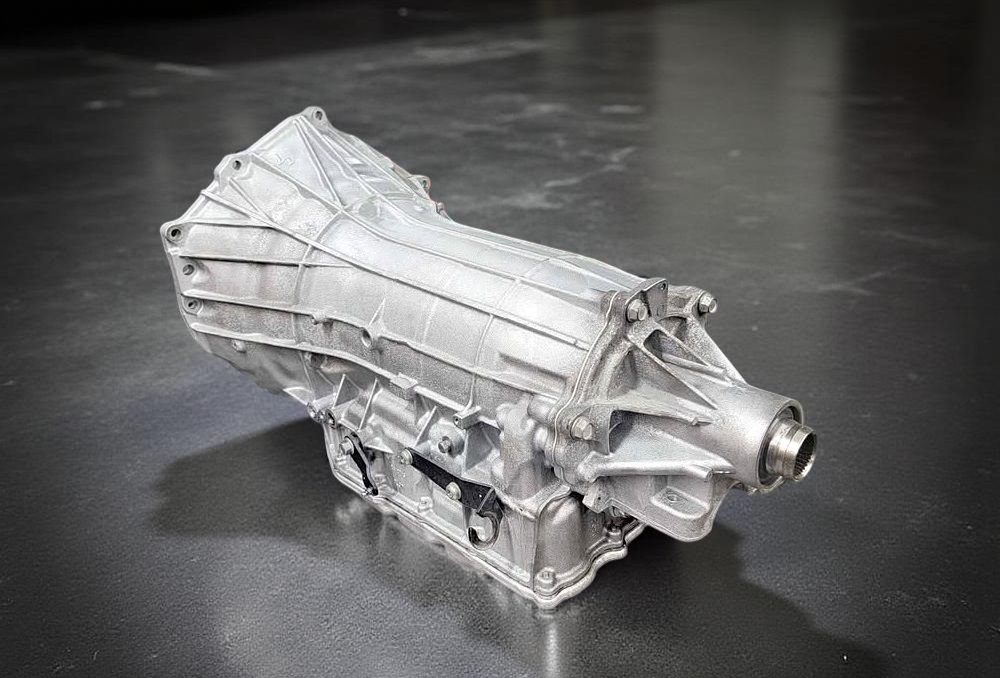
Shudders. Slips. No reverse. The 6L90 (RPO MYD) rarely quits without a warning shot; but when it goes, it goes loud. GM built it to handle big torque from gas V8s and 6.6 Duramax diesels. It runs a long case, six-pinion gearsets, and wide-ratio gearing for highway mileage.
That strength comes with pressure. Heat, friction, and fluid breakdown don’t just wear it down; they knock out the converter, score the valve body, and take line pressure with them.
This guide pulls the unit apart. What fails. Why. When a flush helps, when it finishes it off. And how to keep it alive once the codes start stacking.
1. Why the 6L90’s layout builds strength and brews failure
What separates a 6L90 from a 6L80
The 6L90 (RPO MYD) shares its bloodline with the lighter 6L80 (RPO MYC), but it carries heavier bones. The case runs nearly 1.5 inches longer to fit a six-pinion input gearset, reinforced clutch packs, and a thicker output shaft.
Torque handling jumps past 700 lb-ft in factory setups; enough to match 6.6L Duramax loads and 1-ton GCWR targets.
You’ll find it behind L96 and L9H Vortec 6.0s, the LC8 CNG variant, and in 3500 vans, 2500HD trucks, and performance builds like the Camaro ZL1. But it’s the use case, not just the engine, that shoves these transmissions to the edge.
Commercial fleet vans sit in traffic and idle loaded. HD pickups get flogged on the jobsite. Backed-up trailers, steep boat ramps, and lifted tires all shove heat and load through the geartrain. That’s where problems start faster than in a grocery-run 1500.
What actually changed in the hard parts
| Attribute | 6L80 (MYC) | 6L90 (MYD) | Why it matters |
|---|---|---|---|
| Case length | Shorter | Longer | Heat retention, more mass, more soak |
| Input gearset pinions | 4 or 5 | 6 | More load spread, more debris when it fails |
| Output shaft spline | 32 or 36 spline | 32/36/45 spline options | Swaps go wrong fast with mismatched shafts |
| Typical engine pairings | 5.3L, 6.0L (L77) | 6.0L (L96, L9H), 6.6L Duramax | Higher torque = higher line pressure demand |
| Internal gear strength | Lighter-duty planetaries | Reinforced carriers, thicker drums | Still fail under heat, slip, and shudder load |
| Control strategy | TEHCM + ECCC TCC | Same system, heavier duty cycle | Shared weak points, more punishing environment |
Spline count matters. Many 6L90s use a 45-spline output shaft that won’t fit driveshafts or yokes made for the 6L80. Mis-matching parts during swaps or rebuilds wrecks lineups and triggers early failure.
Ratio spread and lockup tuning put heat over time
The 6L90’s ratio spread is wide. First gear is deep for loaded launches; fifth and sixth keep revs low at cruise. That sounds great for fuel burn, but it hands off more heat to the torque converter, especially under light throttle.
GM’s ECCC lockup strategy relies on partial slip to smooth vibration on AFM-equipped engines. Instead of locking solid, the clutch holds a steady slip, about 30–50 RPM, to avoid driveline bucking.
But partial slip means constant friction. That friction cooks the TCC lining and loads the pump harder than a traditional lock.
Tuned calibrations push for early lockup in higher gears, often under 45 mph. With converter clutch apply happening before full pressure stabilizes, any leak, varnish, or bore wear turns smooth slip into shudder.
GM risked fuel economy and comfort. The cost is friction material breaking down early, especially in heavy, hot, or tuned applications.
2. Torque converter shudder hits first, and takes everything with it
GM’s lockup strategy runs hot from the start
The Electronically Controlled Capacity Clutch (ECCC) system lets the TCC slip on purpose. Instead of locking solid, it maintains a small speed difference, 30 to 50 RPM, between engine and transmission input. The goal’s to smooth out vibrations from AFM engines under low-load cruising.
That slip turns the converter into a heat generator. Light throttle at 40–50 mph, especially in 5th or 6th, builds heat fast. Dexron VI’s low viscosity doesn’t help. Add moisture, varnish, or wear, and the clutch lining starts to break down. That’s when the converter sticks and slips unevenly.
The result is the “rumble strip” shudder, a rhythmic vibration under steady cruise. By the time you feel it in the pedal or floorboard, the TCC’s already glazing over.
Once debris hits the pan, the system eats itself
| Step | What’s failing inside the 6L90 | What you see or feel |
|---|---|---|
| TCC lining starts slipping | Friction material breaks down under partial lock | Light shudder, RPM flutter at cruise |
| Lining sheds into fluid | Fine fibers and dust circulate through the pump | Shifts get erratic, TCC slip widens |
| Pump clearance opens | Rotor/slide wear lowers line pressure at temp | Flare on upshifts, hot fluid smell |
| Filter starts to plug | Ingested debris slows flow, causes cavitation | Sudden neutral at stops, intermittent no-move |
| Clutches lose grip | Burnt packs and regulator leaks drop holding power | No reverse, slipping in 3rd and 5th, hard downshifts |
The TCC failure isn’t isolated. Once the lining goes, every system behind it starts wearing faster. Low pressure triggers solenoid faults. Debris sticks valves. Cavitation knocks out the pump. And without clean flow, the clutches glaze, then burn.
Fluid swaps only work when damage hasn’t set in
A full flush can help early if the fluid’s still red and the shudder’s just started. But once the pan holds glitter, or you’ve got P0741 with blackened ATF, the damage is past recovery. You’re dealing with a worn converter, valve-body bore leaks, and pressure loss at temp.
Swapping fluid at this point can backfire. High-detergent ATF dislodges varnish that was sealing worn bores. Pressure drops. Shift timing goes haywire. One week it’s slipping, next week it’s stuck in limp. Flush late, and the transmission finishes what the converter started.
3. TEHCM and valve-body wear scramble the transmission’s brain
TEHCM’s biggest flaw is where it lives
GM stuffed the Transmission Electro-Hydraulic Control Module (TEHCM) inside the fluid pan, right where heat, debris, and varnish collect. The module includes the TCM, solenoids, pressure switches, and wiring, all bathed in hot ATF.
Over time, metal shavings and degraded fluid coat the pressure-switch manifold. Heat cycles warp the ribbon circuits and weaken solder joints. Variable Force Solenoids stick or lose response.
That’s when limp mode kicks in, usually in 4th or 5th gear, with a “Service Transmission” alert and no clear fault on the surface.
Solenoid faults often originate from fluid starvation, not electronics
| Issue | What fails inside the 6L90 | What shows up on the scan tool or dash |
|---|---|---|
| Line-pressure solenoid starved | AFL bore leak drops feed pressure to solenoids | Harsh shifts, random flares, mixed P07xx |
| TCC solenoid fouled | Debris jams TCC control valve or warps stator support seal | P0741, inconsistent lockup, shudder returns |
| Solenoid C feed loss | Regulator bore wear starves 4-5-6 clutch | P0796, slipping or flaring 4th–6th |
| Pressure-switch manifold cracked | Internal leak fakes clutch pressure reading | P1817/P1818, wrong gear detected, limp mode |
You’ll often get multiple solenoid codes at once. Most aren’t electrical; they’re hydraulic. A leaking AFL valve or worn bore drops supply pressure, and the solenoid gets blamed for the lazy shift.
Valve-body wear leaks pressure where it matters most
The Actuator Feed Limit (AFL) valve regulates hydraulic feed to every solenoid. It sits in a soft aluminum bore with a steel valve. After enough hot cycles and fluid hammering, that bore egg-shapes. Feed pressure wobbles. Solenoids lag or misfire. The PCM reads it as a bad unit, even if the electronics are fine.
That’s why rebuild shops sleeve worn bores instead of just swapping parts. Replacing a TEHCM without fixing the AFL bore just pushes the failure down the road.
4. What breaks inside the 6L90 when it finally quits
The 1-2-3-4 clutch piston can’t hold under pressure
This clutch pack stays engaged through 1st, 2nd, 3rd, and 4th gears, almost nonstop duty. Early 6L90 units used a weaker piston design that cracks under line pressure, especially under load or towing. Cracks let apply fluid leak past the seals, causing soft engagement or full loss of drive.
The housing itself can also fail. Snap-ring grooves shear out. The piston seal face splits. Once it loses pressure, you’ll see long delays shifting into Drive or a complete no-move condition. Power’s gone, even though the engine revs.
GM issued an update with a thicker, ribbed piston. Rebuilders now treat this as a must-swap part, even on mild applications.
3-5-R drum welds split under torque
The 3-5-Reverse drum takes abuse during 3–5 upshifts and reverse engagement, both high-torque events. Weld cracks inside the drum let pressure leak away from the apply circuit. You get delayed reverse, then no reverse at all. Third and fifth start slipping under throttle.
This failure’s more common in trailered trucks and vans that back uphill or run oversized tires. Once cracked, the drum’s junk. There’s no sealing it. Top rebuilders cut the drum open during teardown to confirm hairline splits that only show up hot.
Pump wear drains pressure, one stall at a time
The 6L90 uses a vane-style pump with a rotor and slide that ride tight clearances. But grit from a failing converter wears both. Builders using abrasive resurfacing tools (“whizz wheels”) make it worse, leaving grooves that spike pressure cold, then drop it hot.
Line pressure loss at idle usually originates from one of three spots: worn rotor, scored slide, or a missing boost-valve pin. That pin regulates pressure at low RPM. When it shears or disappears during rebuild, pressure dives and clutches burn even with a fresh valve body.
Once the pump cavitates, it’s game over. No flow means no pressure. No pressure means no forward or reverse.
5. Heat breaks the silence, and GM’s thermal strategy lets it
Stock thermal bypass keeps fluid hot too long
The factory thermal bypass valve (TBV) holds cooler flow closed until the transmission hits target temp. On early calibrations, that meant no real cooling until ATF was already pushing 220°F or more. The idea was faster warm-up for emissions and efficiency. But in the real world, towing, mountains, loaded vans, it backfired.
Fluid hits 240°F+ before the cooler even gets flow. That heat hardens seals, cooks clutch linings, and kicks off the converter shudder cycle even faster. By the time temps stabilize, the damage is already stacked.
GM quietly revised the bypass in later years, but many trucks and vans still run the early setup, especially fleet vehicles that never saw the dealer after purchase.
How cooling mods actually shift lifespan
| Cooling setup or mod | Typical operating temp | Upside | Trade-off |
|---|---|---|---|
| Stock early TBV | Peaks at 230–250°F | Fast warm-up | Fluid breakdown, early clutch wear |
| Updated “70-degree” TBV | Opens around 160°F | Lower average temp, less shudder risk | Slightly slower warm-up in cold |
| Full bypass / pill flip | Cooler always open | Max protection in hot climates or towing | Overcooling in winter, slower cabin heat |
| External stacked-plate cooler | Adds thermal capacity | Critical for big tires, mountains, trailers | Needs tight install, leak-proof plumbing |
The “pill flip” bypass mod pushes fluid through the cooler all the time. It’s a cheap DIY change that drops temps by 30°F or more. But in cold climates, it delays warmup and can mess with cabin heat. Still, for loaded rigs or tuned trucks, it’s the most effective temp drop without opening the trans.
Fluid quality and service strategy change the outcome
Basic Dexron VI barely holds up under ECCC shudder cycles. High-end synthetics like Mobil 1 LV ATF HP resist shear better and stay more stable hot. Some are less hygroscopic, too, meaning they don’t soak up moisture that breaks down friction modifiers.
Towing, tire upgrades, and tuning all call for shorter fluid intervals. GM’s “100,000-mile” factory number is fantasy once temps cross 220°F regularly. In real use, most builders recommend a 30,000–50,000-mile change with a pan drop and filter, sooner if there’s any hint of converter shudder.
Temperature is the multiplier. Keep it under control, and the rest has a shot at surviving.
6. What drivers feel vs. what the 6L90 is actually doing
Symptom-to-failure map from pedal feel to internal fault
| Driver complaint | What’s failing inside the 6L90 |
|---|---|
| Rumble-strip feel at steady cruise | TCC friction breakdown, debris in lockup valve or stator bore |
| Harsh 2–3 or 3–4 shifts when hot | AFL valve leak, solenoid starvation, warped valve body bore |
| Sudden no-move after long highway run | Cavitating pump, filter restriction, low hot pressure |
| No reverse or delayed reverse engage | Cracked 3-5-R drum, clutch fluid bypass, piston failure |
| Random limp mode in high gear | TEHCM ribbon fault, cracked pressure switch manifold |
| RPM whine under load that rises w/ speed | Rotor/slide scoring, over-temp fluid, cooler restriction |
Most failures don’t hit out of nowhere. They show up in heat-soaked conditions first. Harsh shifts that clean up cold. A reverse delay that gets longer every week. That faint drone under load before the whine turns to slip.
DTCs don’t guess, they point to the weak link
| Code | Simplified meaning | What usually causes it in the 6L90 |
|---|---|---|
| P0741 | TCC stuck off / failed to lock | Worn converter clutch, solenoid debris, stator seal leak |
| P0776 | Solenoid 2 performance (3-5-R clutch) | Cracked drum weld, regulator bore wear |
| P0796 | Solenoid 3 performance (4-5-6 clutch) | Bore wear, solenoid C starvation, hot pressure loss |
| P2714 | Solenoid 4 performance (2-6 clutch) | Sediment clog, feed leak, warped valve bore |
| P1817/P1818 | Fluid pressure switch faults | Pressure switch manifold crack, internal TEHCM failure |
| P0730 | Incorrect gear ratio | General clutch slip, speed sensor skew, line pressure drop |
P0741 gets misread more than any other. Most shops chase the solenoid. But if TCC slip RPM rises under load and only drops when coasting, it’s mechanical. The clutch is gone or the stator support is leaking.
Codes like P0796 or P2714 often mean the solenoid’s working fine; it’s the pressure feed that failed. Hot, thin fluid plus bore wear equals fake solenoid codes that come back even after new electronics.
7. Rebuilds that hold vs. fixes that fail again
OEM-style repairs work, but only in early-stage failures
If the converter hasn’t eaten itself yet, a basic refresh might still work. That means a new OE converter, updated 70-degree thermal bypass, fluid and filter, and maybe a clean-up valve body if the bores aren’t shot.
But it only holds if the TEHCM is VIN-matched, properly programmed, and the transmission relearn procedure is done right. Skip that, and you’ll be chasing flare and harsh shifts that won’t self-correct.
GM’s TSBs focus on heat thresholds and cooling logic, not hard-part upgrades. That’s fine for low-mile units with mild symptoms. Once there’s glitter in the pan, though, you’re past the limit of what a factory-style repair can handle.
What goes into a real “built” 6L90 that actually lasts
| Upgrade type | Example upgrade | What it solves |
|---|---|---|
| Torque converter | Billet cover, multi-disc lockup, carbon friction | TCC shudder, cover flex, early P0741 recurrence |
| Valve body and hydraulics | Sleeved AFL bore, revised TCC circuits | Low pressure, fake solenoid codes, bore leaks |
| Clutch drums and pistons | HD 1-2-3-4 piston, reinforced 3-5-R drum | Cracked pistons, drum weld failures |
| Hard parts and shafts | Billet intermediate shaft | Shaft twist/fracture in tuned/tow applications |
| Cooling hardware | Updated TBV, large external cooler | Overheat, converter glazing, clutch seal hardening |
Shops that know the 6L90 treat the AFL bore and converter as non-negotiable upgrades. Just swapping frictions and solenoids won’t hold pressure under load if the feed circuit leaks or the converter shell warps.
Big-box reman vs. performance builds, don’t buy the name
Mass-produced remans reuse too many stock parts. You might get an updated pump or new frictions, but the valve body bores are usually untouched. The converter might be cleaned, not replaced. That’s how the same P0741 or P0796 shows up 20,000 miles later.
Performance shops build based on use case. Tow pig? They’ll spec a triple-disc converter and extra cooling. Daily driver? Focus on pressure stability and revised shift calibration. High-HP street car? Billet shafts and stronger clutches. A reman doesn’t care. A real builder dials the fix to the load.
If the torque converter’s junk and the bores are worn, skip patchwork. Anything less than a sleeved valve body and a quality converter is buying time, not solving the problem.
8. How long the 6L90 lasts, and when it doesn’t
Light duty survives. Heavy duty eats it alive.
Half-ton trucks running empty most of the time can see 150,000–200,000 miles before the first major issue. That’s if fluid gets changed and temps stay under 220°F.
Once you start towing or add big tires, the countdown accelerates. Converter lining breaks down early. Bore wear hits sooner. Hot-idle pressure drops.
2500 and 3500 trucks, especially ones that tow heavy or live in mountains, often see failure between 80,000–140,000 miles. For commercial vans, like Express or Savana cutaways running near max GVWR daily, back-to-back failures under 100,000 isn’t rare.
The biggest factor isn’t the engine; it’s load, heat, and neglect. A 6.0L truck that never tows can outlast a Duramax van with poor service by 50,000 miles or more.
Where the 6L90 still holds up, and where newer units pull ahead
| Transmission | Common pairing | Strengths | Weak points vs. 6L90 |
|---|---|---|---|
| 6L90 (MYD) | HD gas V8s, vans, some Duramax | Simple, well-supported, proven aftermarket upgrades | TCC shudder, poor heat control, bore wear |
| 8L90 / 8L45 | 2015+ V8 SUVs, Camaro, Silverado | Faster shifts, better fuel economy, more ratios | Own history of converter issues, harder to tune |
| 10L80 / 10L90 | 2018+ HD trucks, Escalade, ZL1 | Broad gear spread, better converter lock, temp logic | More complex, limited long-term durability data |
The 6L90 isn’t dead, but it’s no longer GM’s top choice. New platforms favor the 10-speeds for efficiency and smoother gear transitions. That said, for rebuilders, fleets, and tuned builds, the 6L90 still offers proven hard-part upgrades, deep support, and simpler logic.
With heat under control, synthetic ATF, and updated internals, it can be a reliable workhorse. Let temps spike and pressure drop, and it becomes a repeat offender with a ticking clock.
Sources & References
- 6L90E Transmission Specs and Identification
- The Novak Guide to the GM 6L80 & 6L90 Automatic Transmissions
- 6L80 vs 6L90: Devil’s in the Details – Gearstar Performance
- GM 6L transmission – Wikipedia
- The History of the TH 6L90E Transmission: Power, Performance, and Durability
- Top 5 Signs Your 6L80E/6L90E Is Failing – Inglewood Transmission
- How we Fix GM Transmission Failure (6L80 & 6L90)
- GM 6L90 Transmission Problems: Symptoms, Fixes, and Reliability Guide (2025)
- General Motors 6L90-E Transmission • Problems & Solutions – Next Gen Drivetrain, Inc.
- Common 6L90E Transmission Problems and How Monster Fixes Them
- 6L80E Torque Converter Shudder: Causes & Fixes – Monster Transmission
- GM Torque Converter Shudder Prevention – Rocha’s Automotive Inc.
- 6L90E shuddering when converter locked and under load [Archive] – EFILive Forum
- Bad Torque Converter Symptoms, Diagnosis, and Fixes
- 6L80/6L90: Issues That Could Drive You Crazy – Gears Magazine
- Tackling Clutch Failure in the GM 6L80/90 – Gears Magazine
- Solution For OBD Code Error P0796 – PartsAvatar.ca
- 6L80 / 6L90 TEHCM Guide: Common Failures, Year Differences & Tag ID Reference
- GM 6L45/50, 6L80/90 No Movement Conditions: Analysis & Repair Tips – Sonnax
- P0741: Torque Converter Clutch Circuit Performance or Stuck Off – Edmunds
- Service Engine Soon Lamp Illuminated On Driver Information Center (DIC), Transmission Not Shifting Properly and/or Slipping – nhtsa
- 6L50 6L80 6L90 Updates Webinar Handout
- Addressing GM 6L80, 6L90 No Reverse Condition – Sonnax
- PIP5882 Diagnostic Tips – 2014 through 2021 6L80 MYC and 6L90 MYD Transmissions with an Overheat Concern – nhtsa
- 6L80 TSB questions : r/Silverado – Reddit
- What’s going on with my transmission temp : r/Silverado – Reddit
- 6L80 thermal bypass delete. extend the life of your transmission? have any of you guys done this? : r/ChevyTahoe – Reddit
- Thermal bypass a bad idea? : r/Silverado – Reddit
- PartsAvatar.ca – OBD Trouble Code Error P0741
- 6L50/80/90
- p0741 Code – Torque Converter Clutch Circuit Performance/Stuck Off | KBB
- 6L90 Troubleshooting, Diagnostic Help! – TRNW
- P0741: Torque Converter Clutch Solenoid Circuit Performance/Stuck Off – In The Garage with CarParts.com
- P0741 Code Symptoms, Causes, Diagnosis & Repair Costs Guide Info – Flagship One Blog
- 6L90 Transmissions | Heavy Duty GM Performance
- All You Need To Know About GM 6L80E/6L90E Transmissions – Powertrain Products
- 6L80/6L90 Torque Converter – Billet Cover 1600-1800 Stall Performance Upgrade
- GM 252mm Pro Series 6L80/6L90 Torque Converter – Circle D Specialties
- 300mm 6L80e/6L90e HD Billet Torque Converter – Turner Racing Transmissions
- 6L90E JMDZ 300mm 6.0L 6.2L Torque Converter Billet MULTI-CLUTC 6 PATS Warranty
- 300mm 6L80e/6L90e Extreme HD Billet Torque Converter – Turner Racing Transmissions
- GM 6L90 Transmission Investigation – Norman Taylor & Associates
- GM RPO & SPID Sticker Guide for Engines & Transmissions
- 6L80 Transmission FAQ | Frequently Asked Questions