
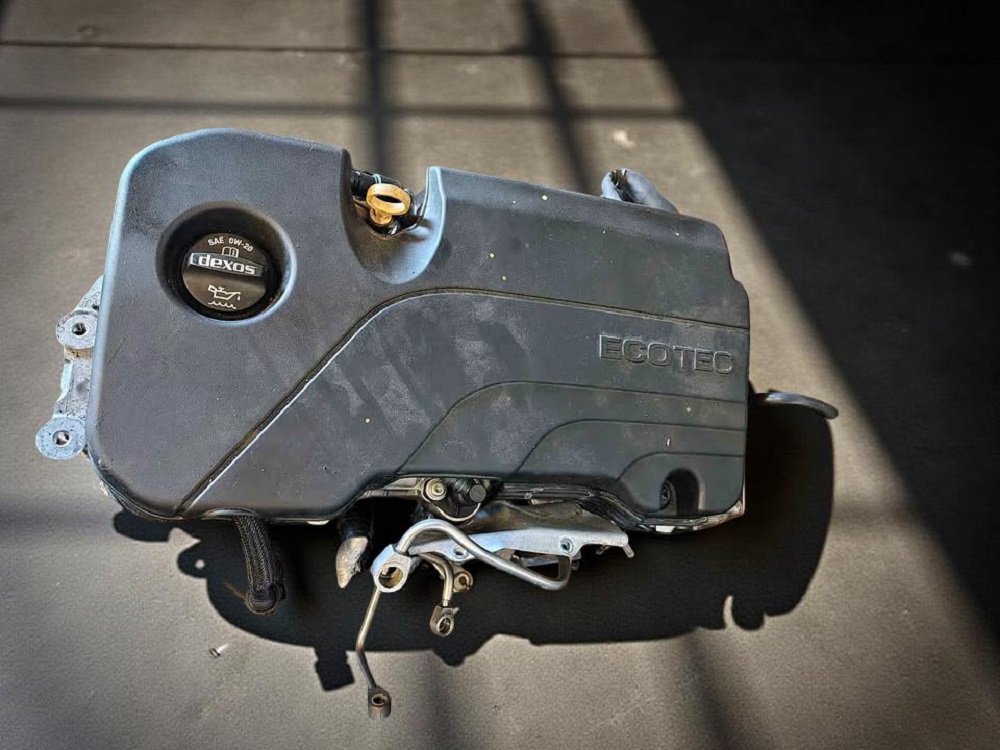
Roll into boost. Lose power. Pop the hood and find a hot gauge, hissing idle, and oil where it shouldn’t be. That’s the 1.4L Ecotec in the wild, GM’s small turbo four built to stretch fuel and pack torque into compact cars like the Chevy Cruze, Sonic, Trax, and Buick Encore.
Two versions ran the show: the earlier LUJ/LUV with a cast-iron block and MPFI, and the later LE2 with direct injection, an aluminum shell, and sharper numbers on paper.
Both struggle in the real world. PCV blowouts. Plastic cooling parts that crack under heat. Pistons that shatter from LSPI. Seals that seep, leak, and coat the block in grime by 100,000 miles.
This guide tears into the engine’s failure points, tracks the damage to real repair bills, and lays out fixes that actually hold.
1. Where the 1.4L splits: block, boost, and what fails first
LUJ/LUV vs LE2: two engines, two different failure paths
GM didn’t just evolve the 1.4 Ecotec, it rebuilt it from the block up. Early LUJ and LUV variants sit on a cast-iron base with port injection, plastic PCV covers, and pressed wrist pins. These were built thick to handle boost but ended up lugging extra weight and heat.
The later LE2 engine came from the modular SGE lineup and dropped mass wherever possible. It runs an all-aluminum block with cast-in liners, high-pressure direct injection, and fully floating wrist pins riding on a forged crank.
The PCV system moved to a different location and fuel metering got sharper, but at a cost. Higher compression (10.0:1) and tighter knock margins opened the door to LSPI and piston damage at low RPM, high-load events.
Boost pressure stayed in the same ballpark, but the failure patterns split. LUJ/LUV engines break down from crankcase pressurization, oil leaks, and heat stress. The LE2 leans into ring land failures, misfires, and LSPI-driven teardown jobs.
Specs that tell the story: why each version breaks its own way
| Parameter | LUJ/LUV (Family 0) | LE2 (SGE) | Reliability angle |
|---|---|---|---|
| Block material | Cast iron | Aluminum w/ cast-in liners | LE2 runs hotter, trades strength for weight |
| Fuel system | MPFI | SIDI | LE2 faces LSPI and carbon buildup |
| Compression ratio | 9.5:1 | 10.0:1 | Knock risk climbs with poor fuel or oil |
| Rated output | 138 hp / 148 lb-ft | 153–155 hp / 177 lb-ft | LE2 squeezes more stress per cycle |
| Valve cover | Plastic w/ built-in PCV | Aluminum, relocated PCV path | LUJ/LUV covers crack, PCV diaphragms blow out |
| Wrist pin design | Pressed-in | Fully floating | LE2 handles load better after piston update |
LE2 powers most 2016+ Cruze and Encore models. LUJ/LUV ran through 2011–2015 in Sonic, Trax, and the first-gen Cruze. Misfire codes, crankcase leaks, and cooling breakdowns stack differently depending on which block you’re wrenching on.
2. LUJ/LUV PCV failures: why lean codes don’t always start with a sensor
Internal check valves, plastic covers, and a design that self-destructs
The LUJ/LUV doesn’t use a serviceable PCV valve. Instead, it hides the key pressure control parts inside two plastic pieces: a molded orange check valve buried in the intake manifold and a rubber diaphragm built into the valve cover.
When both work, idle vacuum pulls blow-by gases cleanly. Under boost, the check valve snaps shut to keep pressure out of the crankcase.
That balance falls apart fast. The orange valve wears down, hardens, or vanishes completely, sometimes sucked into the intake stream. Boost pressure then floods the crankcase, and the diaphragm tears wide open.
With that vacuum leak, idle turns rough, trims spike, and the ECM starts choking airflow to keep the engine lit.
How scan data and hissing sounds point to the real failure
| Indicator / PID | Healthy LUJ/LUV | Failed PCV value | Driver-facing symptom |
|---|---|---|---|
| Throttle angle at idle | ~8% or higher | ~2% | ECM closes throttle to fight leak |
| Short-term fuel trim (STFT) | ±5% | +20 to +25% | Lean idle, fuel dump, random stumble |
| Breather port sound | Quiet | Loud hiss or vacuum noise | Sucking sound at valve cover |
| Dipstick pull behavior | No change | Hiss stops or shifts | Pressure equalizes, noise changes instantly |
The valve cover gets replaced first at most shops, but if the manifold check valve’s still shot, the new cover fails again, fast. MAF sensors, throttle bodies, even ECUs get wrongly blamed when this sealed plastic duo is what’s actually broken.
Pressure spikes that chew through seals and fill the charge pipes
Once boost leaks past the manifold and pounds into the crankcase, seals start weeping. Valve covers, front mains, rear mains, none of them hold long under that pressure.
Oil coats the bellhousing and builds up at the front crank seal. Some shows up in the charge pipes or intercooler, falsely blamed on the turbo.
Aftermarket PCV fix kits relocate the check valve outside the manifold and keep pressure off the diaphragm. That stops the chain reaction before it burns through the seals and fills the bay with false flags.
3. Cooling system failures: plastic parts can’t survive 225 degrees
Why “hot but normal” cooks these engines over time
GM tuned the LUJ/LUV to hover between 210°F and 225°F, well above what most plastic parts like to see. That heat sharpens fuel economy and emissions, but it warps housings, crushes O-rings, and cooks Dexcool into sludge if it’s not flushed regularly.
The water pump, thermostat, expansion tank, and water outlet all take turns failing, usually after year 8 or mile 80,000.
Some fail quietly. Others leak fast. And a few, like the outlet housing, can drop coolant quick enough to trigger “Engine Hot, A/C Off” warnings on the dash.
Once Dexcool escapes, corrosion creeps in. The same coolant that’s designed to flow smoothly ends up fouling sensors and pitting metal if left oxidizing in a half-dry system.
Common weak links and how they fail under load
| Component | Material/design | Typical failure | What you’ll notice |
|---|---|---|---|
| Water outlet housing | Glass-filled nylon | Cracks, warped flange, broken hose ports | Coolant puddle near transmission side of engine |
| Thermostat housing | Plastic/composite, integrated | Seal creep, housing leak | Coolant loss, temp climbs at idle or cruise |
| Expansion tank | Molded plastic | Hairline cracks at seams or ports | Steam smell, low coolant with no drip spot |
| Water pump (early) | Aluminum body, shaft seal | Seal failure, pulley noise | Crusty Dexcool buildup, squeal, or damp belt area |
| Turbo coolant lines | Metal with rubber O-rings | O-ring hardening, minor seepage | Damp spots around turbo and firewall |
Why aluminum upgrades stop the repeat failures
Aluminum outlets and thermostat housings don’t warp, soften, or split the way plastic ones do. Factory parts often fail every 30,000 to 50,000 miles. Aftermarket kits like those from ZZP or Melett swap the plastic for machined aluminum and solve the housing leaks for good.
Pairing those parts with a fresh cap, full system bleed, and clean Dexcool cuts out the pattern of overheats and random coolant drops. It’s not just a fix, it’s the last time you’ll be chasing puddles from a cracked flange.
4. Turbo trouble and P0299: when boost falls flat
Small turbo, tight fit, constant heat soak
The 1.4L Ecotec turbocharger isn’t just bolted to the manifold, it is the manifold. This integrated design lights the catalyst fast and cuts part count, but it also concentrates heat around the wastegate, charge pipes, and oil feed lines.
The ECM expects boost to rise cleanly under load. If it sees a drop of more than 14 kPa (~2 psi) between desired and actual boost at wide-open throttle, P0299 gets triggered.
The layout’s compact, but that tight packaging means repairs get expensive fast, most of the front half of the engine bay has to come off to swap the turbo, even when the core unit itself isn’t the real problem.
Wastegate problems usually trip the light, not full turbo failure
| Root cause | What breaks | Typical test clue |
|---|---|---|
| Weak wastegate preload | Spring loses tension, arm wiggles freely | Lever moves too easily, low WOT boost |
| Missing actuator clip | Arm detaches from gate | Clanking noise, no boost under load |
| Cracked solenoid nipples | Vacuum leak at boost control solenoid | P0299 with odd idle vac, frayed vacuum lines |
| Manifold crack (wastegate) | Stress-relief cracks near wastegate seat | Cosmetic only unless leak is large |
GM’s own bulletins state small manifold cracks near the wastegate port are normal. The cracks don’t always cause underboost unless they grow large enough to leak pressure before the turbine.
Feed-line coking and hot shutdowns that destroy the turbo
Early oil feed lines didn’t have proper shielding. Shut the car off hot, and the oil in those lines bakes into sludge. That chokes flow to the turbo bearings, setting them up to fail the next time you spool hard. Over time, oil starvation wipes out the center housing.
If the turbo gets replaced, the feed and return lines must be changed too. Old lines carry hardened carbon that’ll destroy a brand-new unit.
GM eventually revised these lines and updated the ECM to keep cooling fans running for up to 10 minutes after shutdown. That helps pull heat out of the housing and slows the coking, but only if the software’s up to date.
5. LE2 internal damage: when LSPI takes out the piston
LSPI hits hard, low, and without warning
The LE2’s direct injection setup runs leaner, hotter, and with tighter piston-to-wall clearances than the LUJ/LUV. That opens the door to Low-Speed Pre-Ignition (LSPI), a condition where fuel-air mix lights off before the spark, usually during high load at low RPM.
Think uphill in 6th gear with heavy throttle. One violent pressure spike is all it takes to crack the ring lands or lift the piston crown.
These aren’t rare edge cases. Early LE2s built between 2016–2018 saw regular failures, often before 60,000 miles. It usually starts with a P0301, rough idle, and tailpipe smoke.
By the time a compression test confirms the dead hole, the skirt’s already scored and the cylinder wall’s starting to take damage too.
How cracked pistons lead to misfires, oil use, and blow-by
| Symptom set | Likely cause inside LE2 |
|---|---|
| Rough idle + sudden misfire code | Shattered ring land, lost compression |
| New oil use + blue smoke | Rings can’t scrape properly, oil burns every cycle |
| PCV noise + oily intake | Crankcase pressure pushing blow-by everywhere |
Tear-downs show broken top ring lands, scuffed skirts, and damaged bores. Once the crack forms, the engine starts inhaling oil and dumping it out the exhaust. The PCV system can’t keep up, leading to more pressure, more oil loss, and new false codes down the line.
GM’s hardware fixes and why oil spec matters more than ever
By mid-2018, GM released an updated LE2 piston design to reinforce the ring lands, while continuing to utilize the fully floating wrist pins and forged steel crankshaft that define the LE2’s bottom end.
But the real fix came with Dexos 1 Gen 2 and Gen 3 oils. Those newer formulas cut calcium levels and added magnesium-based detergents, proven to slash LSPI events under stress.
Using the wrong oil, anything not Dexos Gen 2 or newer, isn’t just a mistake. It’s a short fuse on a known weak point. GM tied the fix directly to oil chemistry because nothing else worked consistently. Older oils trigger the very spikes that break these pistons, even when the hardware’s been revised.
6. External leaks and seal failures: where the 1.4 starts losing oil
Oil cooler leaks buried under the turbo
The block-mounted oil cooler on the 1.4L Ecotec hides behind the turbo, roasting next to the manifold. Heat cycles stiffen the cooler’s seals until they shrink, crack, or just let go entirely.
Once they do, oil can leak externally onto the block or internally into the coolant, where it mixes into a brown milkshake and coats the reservoir.
Severe leaks leave burned oil smells in the cabin, damp turbo oil lines, or visible smoke from oil hitting the hot downpipe. The job’s labor-heavy because the turbo and manifold have to come off just to reach the cooler.
By 100,000 miles, most shops quote a full cooler replacement, not just the gaskets, since the metal housing can warp from long-term heat exposure.
Front crank, timing cover, and valve-cover seepage with age
| Leak point | Common mileage | Clues in the bay |
|---|---|---|
| Timing cover RTV seams | 100,000+ miles | Oily mist at front block, lower splash shield soaked |
| Front crank seal | 80,000+ miles, hot use | Belt sprayed with oil, crank pulley slings visible grime |
| Valve-cover gasket | Any post-PCV failure | Oil on firewall side, exhaust-side smell, coil packs wet |
PCV overpressure is a major accelerant here. Blow-by that builds in the crankcase forces oil past seals that were never meant to handle it. On LUJ/LUV engines, the timing cover leaks often follow a failed PCV diaphragm by 20,000 miles or less.
Timing cover reseal isn’t a light job. With the water pump and cam/crank gears involved, it runs 6–7 hours of labor and needs cam/crank locking tools. That puts it near the top of non-catastrophic repair bills on these engines.
Real-world repair costs for the usual oil leak suspects
| Repair | Labor time | Cost range (USD) | Notes |
|---|---|---|---|
| Oil cooler replacement | 5.0–7.0 hours | $400–1,700 | Turbo removal drives labor |
| Timing cover reseal | 6.0–7.0 hours | $750–1,300 | Requires timing tools, fresh sealant |
| Front crank seal | 1.0–2.0 hours | $150–350 | Often done during belt or cover reseal jobs |
| Valve-cover replacement | 1.0–1.5 hours | $100–250 (parts + labor) | Must fix PCV issue or it’ll fail again |
Repeat leaks add up. Many owners burn more cash chasing separate small leaks than it’d cost to reseal the whole front end once. Timing it right, doing seals with the belt, doing the cooler with turbo work, cuts overlap and avoids double labor.
7. How to make the 1.4L Ecotec last without living at the shop
Tight oil and plug intervals keep misfires and failures in check
Forget the 5,000-mile factory oil change interval. With turbo heat, PCV pressure, and LSPI risk on DI engines like the LE2, the real number is 5,000 miles.
Always use full synthetic oil that meets the latest Dexos Gen 2 or Gen 3 spec. Skip that, and you’re feeding sludge into your turbo and risking piston failure from LSPI.
Plugs are another trap. These engines run a coil rail across all four cylinders. If you leave plugs in past 40,000–50,000 miles, gaps widen, voltage spikes, and coils start misfiring. Replacing plugs early keeps the ignition system alive and misfire counts down.
Short trips, high idle time, and keying off hot? They all push oil and coolant systems harder. That’s when you need even tighter intervals, no coasting between services.
Preventive swaps that save more than they cost
| Preventive fix | What it prevents | When to do it |
|---|---|---|
| External PCV fix + new cover | Stops crankcase pressure and lean codes | After first PCV failure |
| Aluminum outlet & thermostat | Ends plastic cracking and leaks | First outlet crack or at 80,000+ miles |
| Updated turbo oil feed line | Prevents coking and turbo failure | With turbo work or around 100,000 miles |
| Coolant cap + fresh Dexcool | Avoids pressure spikes and boiling over | Every 5 years or after major cooling repair |
These parts don’t just reduce breakdowns. They reset the weak points of the platform and push failures back beyond the point where most owners would still have the car.
When the 1.4 Ecotec is worth fixing and when to walk
A maintained LUJ/LUV or LE2 with upgraded PCV, fresh cooling parts, and the right oil can go 200,000+ miles. The engines that fail early almost always show the same trail: skipped Dexos spec, delayed PCV repair, and cooling system patches done with the same brittle plastic.
Regions with stricter inspections, where repairs aren’t optional, see longer service life. That’s not luck. It’s pressure to fix what breaks before it becomes a breakdown. Treated right, the 1.4 isn’t bulletproof, but it’s stable. Neglect even one system, and the repairs start stacking fast.
Sources & References
- 1.4-Liter Engines | GM, Chevrolet, Buick, Cadillac Motors For Sale
- GM Family 0 engine – Wikipedia
- Chevrolet Cruze – Wikipedia
- Trouble Shooter | PCV Orifice Diaphragm | MOTOR Magazine
- 2017 Cruze 1.4L Turbo 12k miles, cracked piston issue – Reddit
- 2020 GM Ecotec 1.4L Turbo Coolant Leak Water Outlet Replacement (Cruze, Encore, Sonic, Trax) – YouTube
- TRIFECTA: Meet the GM LE2 Engine – News – trifectaperformance.com
- Chevrolet 1.4L LUV ECOTEC Turbo Engine Specs | Gordon Chevrolet
- PORT vs DIRECT vs DUAL INJECTION – a DETAILED comparison – YouTube
- 2013 Cruze timing cover leak – Reddit
- 1.4l problems chevy cruze – Reddit
- Oil leak. Crankshaft seal or timing cover gasket? : r/cruze
- 2013 1.4L – advice on PCV/manifold issues? : r/cruze
- My 2013 Cruze with 155,000 miles. : r/Justrolledintotheshop
- Check valve still there yet I’m still pulling a vacuum through valve cover. 2014 cruze 1.4. – Reddit
- Is it normal ? : r/cruze
- 2012 1.4 possible turbo issue? : r/cruze
- 2015 Chevy Cruze 1.4 Lean Code = Valve Cover & Intake Manifold – YouTube
- V3.4+ GM 1.4L Turbo PCV Fix/Upgrade Kit – CruzeKits.com
- 2012 1.4T EcoBoost 121kMiles; runs HOT but doesn’t ‘overheat’… : r/cruze
- Why does the LUJ engine have such a bad reputation in the US but not in Europe? : r/cruze
- Thoughts on the 1.4LE2 engine : r/cruze
- ZZP 1.4L Aluminum Coolant Outlet Kit – ZZPerformance
- 4th water outlet replacement on my 2013 1.4L Cruze – Reddit
- Service Bulletin – NHTSA
- Aluminum Water Outlet Thermostat Housing For Chevrolet Cruze Sonic Trax Buick | eBay
- Small oil leak. 2014 1.4l Turbo. Is this the turbo? : r/cruze
- Preliminary Information – NHTSA
- Misdiagnosis of Returned Turbochargers – TechLink
- Chevy 1.4 turbo, probably the 10th one I’ve seen crack like this. : r/Justrolledintotheshop
- LSPI: Low-Speed Pre-Ignition – DSPORT Magazine
- Broken Piston Rings and Misfire on 2011-2019 GM 1.4L LUV and …
- Service Bulletin TECHNICAL – NHTSA
- Is there a 1.4T with better pistons? : r/cruze
- Service Bulletin TECHNICAL – NHTSA
- 1.4T Engine Overhaul Rebuild & Pistons Fit For Buick Encore Chevrolet Cruze LE2 | eBay
- 2015 1.4L LT engine oil cooler leak. 1700 bucks seems a bit ridiculous for parts and labor : r/cruze
- Front timing cover seal leak? : r/cruze
- Chevrolet Cruze Engine Oil Cooler Replacement Cost – RepairPal
- Chevrolet Cruze Oil Cooler Repair Costs – YourMechanic
- High Cost on Leakage Repair, looking for thoughts 2011 Chevrolet Cruze LT – Reddit
- Timing Cover Leak : r/cruze
- Chevrolet Cruze Maintenance, Service & Repair Costs – YourMechanic
- Chevy Cruze Maintenance Schedule | Cincinnati Auto Repair – Jake Sweeney Chevrolet
- How to Maintain a High Mileage Car: Essential Tips and Checklist – CarShield
- Most important preventive maintenance for high-mileage car? – Mechanics Stack Exchange
- LE2 Engine PCV fix : r/cruze
- Chevy Cruze Maintenance Schedule Pittsburgh PA – Baierl Chevrolet
- Just learned about this other pcv/intake manifold/valve cover kit. : r/cruze