
Slams into gear. Hunts. Drops a wrench light. That’s how the 10R140 announces it’s in trouble. Ford’s heavy-duty 10-speed was built to tame 1,000+ lb-ft from the 6.7 Power Stroke and 7.3 Godzilla.
Clutch-to-clutch design, no bands, no sprags; just pure hydraulic timing across six packs and four planetaries. On paper, it pulls harder, shifts smarter, and saves fuel doing it.
But when the CDF drum walks, the shell cracks, or the strategy mismatches, that timing collapses. High gears vanish. Harsh shifts stack up. This guide cuts through the software updates and shop guesses to show what really fails, what actually works, and what saves the box before it burns itself down.
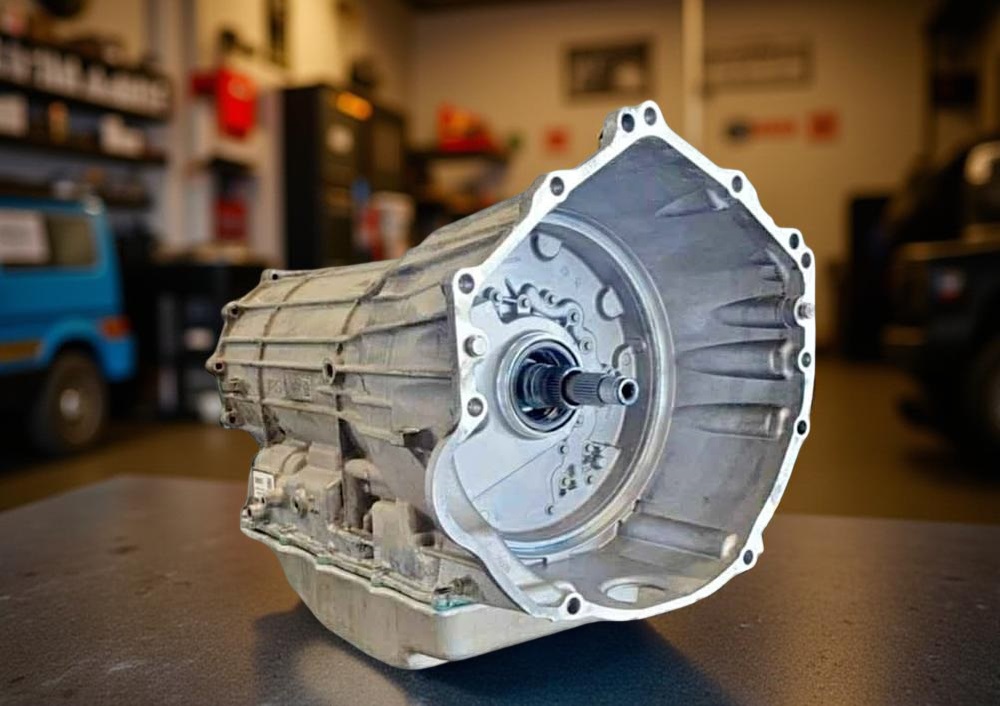
1. Why the 10R140’s internals fail where the 6R140 held strong
Clutch-to-clutch guts with zero margin for slop
The 10R140 packs six clutch packs, A through F, and ditches the bands, sprags, and overruns found in older setups. Every gear swap depends on exact overlap between clutch release and apply. One delays, the other grabs too soon, and the box either flares or slams.
All that’s housed in a case barely larger than the old 6-speed. Ford squeezed in four planetary sets and 10 forward gears using tighter packaging, but every shortcut raised the stakes. If a solenoid lags or pressure drops, there’s no backup. The shift misfires. The damage starts.
How the gear spread changes towing loads
The first gear ratio jumps from 3.97:1 in the 6R140 to 4.615:1 in the 10R140. That gives more grunt off the line. Reverse jumps even harder, 4.87:1 vs 3.12:1, giving real pushback on a hill.
But the key isn’t just the bottom gears. Midrange fill-ins and triple overdrives keep the engine tighter in its torque band under load.
| Gear | 6R140 Ratio | 10R140 Ratio | Real-World Effect |
|---|---|---|---|
| 1st | 3.97 | 4.615 | More torque off the line |
| 4th | 1.14 | 1.80 | Added pulling gear mid-curve |
| 6th | 0.67 OD | 1.28 | Now a mid gear, not top |
| 7th–10th | – | 1.00–0.64 | Highway rpm stays lower, steadier |
| Reverse | 3.12 | 4.87 | Backs trailers easier under load |
The upside is smoother engine load control. The downside? More shifts per mile, more chances to slip, bang, or wear.
Shared DNA with GM and the 10R80 family
Ford designed this box solo, but it shares core logic and architecture with the smaller Ford 10R80 and 10R60 (which were co-developed with GM) and GM’s 10L1000. All rely on Casting-Integrated Direct-Acting Solenoids (CIDAS) and adaptive shift logic. They use the same 13-digit strategy coding for solenoid targeting.
What that means in practice: many failures originate from tuning mismatches, voltage dips, or small solenoid flow errors. But the 10R140 adds its own twist, a custom CDF drum layout that carries the load for 9th and 10th gear. When that drum walks or wears, no amount of software saves it.
2. CDF drum failures that erase high gears under load
Sleeve migration that strangles 10th gear
The CDF drum carries three clutch circuits; C, D, and F, in one stacked assembly. Inside it sits a thin internal sleeve meant to stay parked. Under heat, rpm, and repeated high-load shifts, that sleeve can creep. Once it moves, it blocks feed ports and chews through sealing rings.
The first sign shows up at highway speed. The truck refuses 10th, throws P07F7, or drops into a reduced-gear strategy. Pressure loss, not electronics, causes it. Fluid, software, and resets won’t pull that sleeve back where it belongs.
Outer shell grooving and plate hang-up
Around the CDF drum sits the tall aluminum outer shell techs call the trash can. The F clutch works hard in the upper gears and reverse. Over time, its plates hammer grooves into the shell wall. Those grooves trap plates during apply and release.
Shifts start to feel sticky. Reverse may grab late or bang. Keep pulling heavy and the stress concentrates at the groove. That’s where shells split, usually right through the wear track, dumping metal into the pan.
RF clutch load and drum cracking
The RF clutch takes heavy torque during aggressive shifts and hard towing. Its tabs pound the drum notches every time pressure ramps fast. Add tuning or repeated high-throttle upshifts and the pounding turns into fractures.
When the RF drum cracks, drive disappears. The pan fills with steel and aluminum. At that point the case comes out, no shortcuts. Builders treat this as a structural failure, not a serviceable one.
Updated CDF drum and hardened shell revisions
Ford revised the CDF drum in late 2022 with an internal lip that physically stops sleeve movement. Hardened and anodized shells followed to resist plate hammering. These parts show up in service units and current production.
Any 10R140 torn down without these updates goes back together on borrowed time. The original drum and soft shell define the early failure window.
3. Valve body control that snowballs small glitches into full-blown failures
Solenoids that shut down pressure when voltage dips
The 10R140’s main control uses Casting-Integrated Direct-Acting Solenoids (CIDAS) to hit each clutch circuit with precise pressure. These aren’t dumb on-off solenoids; they modulate flow in real time based on current. But they’re “normally low,” meaning no voltage equals no pressure.
Weak battery, failing alternator, dirty grounds; any of those cut voltage just enough to stall a solenoid or slow its ramp. Shifts turn harsh. Apply gets delayed. One clutch slips while another grabs, and the TCM doesn’t always catch it in time. No code doesn’t mean no problem.
Strategy mismatches that fry fresh parts
Each solenoid gets a band number from 1 to 5 based on flow. Ford matches that to a 13-digit Solenoid Body Strategy code etched on the case and valve body. That code tells the TCM how to drive each solenoid to hit the pressure targets.
Replace a valve body or TCM and skip the reprogram? The software sends flow commands meant for solenoids with different banding. One gets over-amped. Another gets underfed. Shifts turn erratic. Damage starts from mismatched logic, not bad parts.
Adaptives that teach the box the wrong lessons
The 10R140’s TCM tracks every shift in milliseconds. It learns, sometimes too well. Haul heavy during break-in, drag race it early, or run it with low voltage, and the adaptives record that mess as “normal.”
Even once the hardware’s fine, the shift logic still compensates for problems that no longer exist. That’s when good boxes feel off, or a fresh valve body still shifts rough. Adaptives don’t reset themselves, you have to wipe them clean. Until then, the TCM’s running bad math on good gear.
4. Ford bulletins, recalls, and what they expose under the surface
Park-not-park defect that risks rollaway
Recall 23S06 flagged a loose internal bolt that could stop the transmission from locking into Park, even when the shifter says it did. Trucks could roll if left on a slope, chocks or not.
This hits hard for Super Duty drivers who haul trailers. Drop into Park, unhook, and the truck moves? That’s not a fault you see coming. It’s a design oversight with serious real-world stakes.
Early shift complaints and soft fixes
First-run 2020 builds drew complaints for harsh 1st–5th upshifts. Ford pushed TCM reprogramming through bulletins like TSB 20-2043 to smooth things out. It helped some trucks, but only the ones where software timing, not hard parts, caused the bind.
Others came back. Same complaints, now with added slip or limp. The surface-level flash didn’t stop deeper CDF or valve body issues already in motion.
P07F7 and the CDF drum bullseye
Ford followed DTC P07F7 straight to the CDF drum. Bulletins like TSB 23-2160 walk techs through fluid checks, software calibration, and a scan-tool “main control break-in” routine. If the box still acts up, the teardown comes next.
In most cases, the sleeve inside the drum moved. When it did, no reset saved it. The only real fix was swapping in the updated drum with the internal lip.
New shift routines that show what’s failing now
The latest bulletins, including TSB 24-2101, lay out a clear diagnostic path. First, techs are told to pull codes like P0729, P0731, or P2704.
Then they’re instructed to run a scan-tool “main control break-in” routine with the truck on the lift. This cycles the clutches and clears minor valve hang-ups without opening the box.
Only if the break-in fails does Ford recommend tearing down the valve body or inspecting the CDF drum. That sequence says a lot. The problems Ford expects now aren’t random; they’re targeting sticky valves, calibration mismatches, and worn drum internals.
5. Symptoms that show up first, codes that follow, and what shops often get wrong
Garage bang, delayed engagement, and no-show Drive
Start cold and shift into Drive. The 10R140 might hesitate, then slam. Or stall a second too long before it grabs. Some trucks bang into Reverse. Others feel like Neutral before suddenly lunging forward.
That’s not Park-pawl hardware; it’s pressure control. Low fluid, incorrect level, bad grounds, or corrupted adaptives all stall solenoid response. Shops chasing electrical faults sometimes miss that a fresh fluid check or reset clears it.
Lost top gear, limp strategy, and ratio codes
When 10th gear goes missing, the TCM usually flags P07F7. The truck stays in 9th or drops into a limited-gear fallback. That’s CDF drum territory; pressure loss or apply failure.
Other codes round out the picture:
| Code | What it points toward |
|---|---|
| P0731 | 1st gear slip, bad apply, or wrong ratio |
| P0729 | 6th gear mismatch, often OD or CDF issue |
| P2704 | E-clutch performance loss, hub or drum wear |
| U0415 | ABS signal error, shift timing interference |
Stacked together, they tell a story. Single codes get ignored. Patterns point to core damage.
ABS ghosts that fake shift failures
The TCM uses ABS data to time shifts and detect slip. If a wheel-speed sensor feeds noise, the shift strategy misfires. The box flares. Downshifts turn violent. No hardware fault, but it sure feels like one.
When the ABS drops offline, the issue clears. That’s the giveaway. Real clutch damage doesn’t fix itself mid-drive. Bad sensors do.
Early warning signs that escalate fast
What starts as an occasional flare or stiff 3–4 shift turns into consistent thunking, loss of 10th, or slipping Reverse. By then, grooves may be cut into the drum. Shell might be near failure.
If caught early, you’re looking at fluid change, strategy flash, and maybe valve body work. Wait too long, and you’re shopping full units.
6. Fluid choice, service intervals, and why temp and level make or break this box
Mercon ULV works fast but cooks quicker
The 10R140 runs Mercon ULV, a super-thin synthetic fluid built for speed. It flows fast, trims drag, and lets the clutch packs trade gears without overlap. That keeps shifts crisp when everything’s clean.
But the compromise is thermal fragility. High load and high gear count push temps faster than older six-speeds. Once ULV hits the edge, it breaks down fast.
Varnish clogs valve spools. Glazed plates start slipping. Solenoids stick. One overheated tow can load the pan with sludge before the filter even clogs.
Real-life service beats factory claims every time
Ford’s long-life fluid claim doesn’t hold up under load. Builders and fleet techs see clean units stay that way with early maintenance, first dump around 10,000 miles to clear out break-in debris.
Heavy haulers often pull fluid again by 35,000. Light-duty trucks can stretch closer to 60,000, but even that’s pushing it if the box runs hot or shifts soft.
The mistake is treating the 10-speed like the old 6R140. That box could eat abuse longer. This one runs tighter tolerances, thinner fluid, and more heat events per mile.
Overfill foams. Underfill starves. Both wreck shift quality.
Fluid level isn’t a driveway guess. This isn’t Dex III in a TH400. The 10R140 needs level set hot, with a scan tool or temp readout. Miss that window, and the system lies.
Too low, and the pump pulls air. That creates flare, delayed engagement, and misfires that mimic solenoid failure. Too high, and the turbine churns the fluid into foam. That lowers pressure where it matters most; between clutch apply and release.
Either way, the TCM reacts like hardware’s broken. Shops swap parts. Problem stays.
Reset the brain or it won’t relearn right
Fresh fluid means nothing if the control logic thinks it’s still compensating for wear. The TCM needs a full adaptive clear before it can relearn proper shift timing.
Scan tools like Forscan can wipe it clean. Battery-off resets work too, but not always on newer calibrations. Some trucks take a manual pedal sequence with key cycles.
But the reset’s only half the job. The drive cycle matters just as much. The box needs clean, low-load shifts through all 10 gears, plus smooth N to R to D transitions at idle. Skip that, and it relearns garbage. Most complaints after fluid service come from skipped relearns, not failed parts.
7. Driving habits, trailer loads, and tuning tweaks that make or break this box
Gear hunting piles on heat in the top stack
Towing on rolling grades, the 10R140 loves to surf between 8th, 9th, and 10th. Each shift event brings a short slip, and every slip builds heat. On cruise control, the box may bounce gears nonstop to chase mpg, especially in normal mode.
That’s not just annoying. It’s hard on the CDF clutch group. The more it searches, the more it wears. Long hauls with a trailer in high gears can cook ULV fluid past its limit without ever triggering a limp.
Tow/Haul mode and gear lockout keep it alive longer
Tow/Haul recalibrates the whole approach. It holds gears longer, downshifts sooner, and keeps line pressure higher under load. That alone cuts wear. But the smarter move is using manual mode to lock out tall gears on long climbs or loaded descents.
Blocking 10th, or even 9th, keeps the truck in a power gear, avoids hunt cycles, and stops the clutches from bouncing between partial applies. Less cycling means less heat, fewer shifts, and cleaner pressure traces across the board.
Big tires and bad tuning force it to lug
Throw 37s on a stock 3.55 gear truck and it’ll feel like it’s dragging an anchor. The trans tries to compensate by upshifting early to keep revs down, but the engine bogs and the clutches start slipping. That lag adds up fast in tall gears under load.
Regearing helps, but only if the tune follows. Proper TCM or powertrain tunes recalibrate pressure curves, shift timing, and adaptive targets. Done right, the clutches see cleaner apply and release patterns.
Done wrong, the trans gets cooked from slow apply ramps and confused adaptives. Builders see more burned CDF drums from tuning mismatches than from towing abuse.
8. When to build it, when to dump it, and what actually makes a 10R140 survive
Common build paths and the failures they fix
Most serious rebuilds start with an updated CDF drum, the post-2022 design with the internal sleeve stop. That’s the first line of defense against 10th gear loss and pressure drop.
From there, towing builds usually add a hardened outer shell and a multi-disk billet converter to handle repeated high-torque shifts without cracking or plate fatigue.
High-power builds go further. Extra clutches in the E and F drums spread the load. Some shops tweak lube flow to the P3 carrier or valve body to cool hot spots.
Valve body kits replace sticky spools and raise line pressure on-demand without flaring. None of it’s cosmetic. Every upgrade targets a known problem.
The 10R140 lives harder than the 10R100
Ford split its 10-speed strategy by torque band. The 10R140 handles 1,033 lb-ft in 6.7 diesels and 7.3 gas Super Dutys. The lighter 10R100 runs in 6.8 gas F-250s with softer clutch packs and smaller planetary sets.
That matters. A worked 10R140 sees nastier loads, higher temps, and more adaptive strain. Same control logic, different pain points. The 10R140’s problems hit harder and sooner if it’s tuned, overloaded, or under-serviced.
When the build makes sense and when it doesn’t
If the truck’s clean, the chassis solid, and the owner hauls heavy for work, a built 10R140 is money well spent. You’re buying uptime. But when the CDF is already shot, metal’s in the pan, and the body has rust or tired internals, rebuilding turns into a losing game.
Too often, money goes into the trans when the truck’s value won’t follow. Better to find a fresher platform with the right hardware already baked in than drop $7,000 into a box that’ll still be chasing voltage dips and load curves next haul.
Sources & References
- Chrysler 68RFE vs. Aisin Seiki AS69RC vs. Ford 10R140 vs. Allison 10L1000 – Diesel World
- Key Differences Between the 2025 Ford Super Duty and 2024 Ford Super Duty – Alan Jay Ford of Wauchula
- The 2025 Ford Super Duty: A Game-Changer in Heavy-Duty Trucks – Gray-Daniels Ford
- Ford 10R140 Transmission • Problems, Solutions & Upgrades – Next Gen Drivetrain, Inc.
- Ford 10-Speed Transmission Problems – Lemon My Vehicle
- It’s a Family Affair – 10R140, 10R80, and 10R60; The Same But Different – Gears Magazine
- 10R140 Transmission Category 2 Expanded Capacity – SunCoast Performance
- The Biggest Complaints About Ford’s 10-Speed Transmission (And What’s Been Fixed So Far) – Jalopnik
- Rudy’s 10R140 Built Transmission for 2020-2025 Ford F250/F350 6.7L Powerstroke
- Direct Connection: 10R60, 10R80, and 10R140 Solenoids Make Shifts Happen!
- Sun Coast 6R140 Guardian HD Towing Transmission With Torque Converter
- Ford 6R140 Transmission Guide: Specs, Common Issues & Remanufactured Upgrades
- 10 speed ford transmission shift issue solved – Reddit
- 10 speed ford transmission shift issue solved : r/superduty – Reddit
- Transmission Failures and Problems with 10R80 and 10R140 (Ford & GM)
- 10R140 CDF Drum Failure – YouTube
- TECHNICAL SERVICE BULLETIN 6.2L/7.3L – 10R140 – Illuminated Powertrain Malfunction (Wrench) Indicator With DTC P07F7 And Loss – NHTSA
- Ford 10-Speed Transmission Problems: Important Updates (2025)
- TECHNICAL SERVICE BULLETIN 10R140 Automatic Transmission – Harsh Engagement/Harsh Shift/Delayed Shift With Or Without DTCs
- Tackling Ford & GM 10-Speed Valve Body Problems | Sonnax
- Ford Shifting Rough? How to Reset Your TCM (3 Easy Methods That Actually Work)
- Some 2020 F-Super Duty vehicles equipped with a 6.7L engine and 10R140 transmission and built on or before 15-Jan-2020 may exhibit harsh upshifts
- Breaking Down the Basics of Banded Solenoids – Sonnax
- Are these symptoms of the CDF drum issue? : r/fordexpedition – Reddit
- CONTROLLING – ATRA Gears Magazine
- Quick Tip: Ford® 6.7L Transmission Solenoid Characterization – Snap-on
- 2010 F-150 – Lobo Solenoid Strategy | PDF – Scribd
- Ford 10 Speed Transmission Lawsuit: Updates to Know in 2025 – The Lemon Law Experts
- TECHNICAL SERVICE BULLETIN 10R140 Automatic Transmission – Harsh/Delayed Engagement And/Or Harsh/Delayed Shift
- TECHNICAL SERVICE BULLETIN 10R140 Automatic Transmission – Harsh Reverse To Drive Engagements With No DTCs
- P0731 OBD II Error Code Solution – PartsAvatar.ca
- P0731 Code: Gear 1 Incorrect Ratio – In The Garage with CarParts.com
- Ford F-Super Duty 10R140 Transmission Issue | PDF – Scribd
- How To Reset Ford Transmission Control Module – Step-By-Step Relearn Procedure
- PSA – Clear your adaptive transmission tables with Forscan : r/f150 – Reddit
- 20-24 F250 & F350 6.7L Stage 2 750HP 10R140 Transmission
- 6R140 Transmission: The Heavy-Duty Workhorse for Ford Super Duty Trucks
- 2023–2025 Power Stroke Transmission Tuning Support – HP Tuners
- ASAP Calibrations 10r140 Transmission Tuning (EZLYNK) | 2020-2022 F250-F450
- 5 Star Tuning: Custom Tunes & Performance Tuners
- 5 Star tunes : r/f150 – Reddit
- 2024 2025 trans Q : r/F250 – Reddit
- 2025 Ford Super Duty vs. 2024 Ford Super Duty: Key Differences and Upgrades – Jarrett Ford Dade City
- 2025 Ford Super Duty: What’s New and Why It Stands Out | Jess Ford of Pullman
- 2025 Ford Super Duty Technical Specs | PDF | Trailer (Vehicle) | Ford F Series – Scribd