
Snaps a manifold bolt. Drops oil pressure cold. Throws lean codes in winter. The 4.8 Vortec breaks down one part at a time.
Not many go out with a bang. They grind through sensors, seals, and gaskets until power drops, idle goes rough, and repairs start stacking faster than the miles.
This guide breaks down the actual failure points, shows what separates the LR4 from the L20, and lays out how far a 4.8 can go before the smart move is a swap.
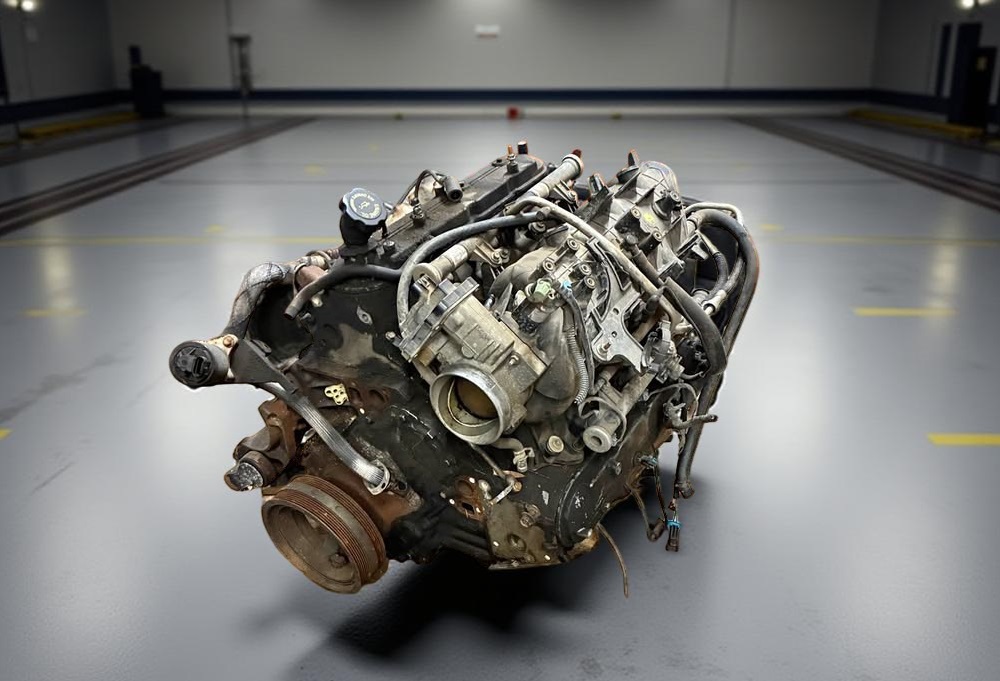
1. Why the 4.8 Vortec fails differently than its LS brothers
Short-stroke layout changes how this engine wears
The 4.8 runs a 3.780-inch bore with a 3.267-inch stroke, shorter than the 5.3’s 3.622. Long 6.275-inch rods push the power band higher and keep piston speed down at cruise. That geometry reduces cylinder wall scuffing and ring wear over high mileage.
Cathedral-port 862 and 706 heads flow well at RPM, but the engine gives up low-end torque. That forces more downshifts under load and keeps oil temperature higher during towing. Sustained lugging shows up later as timing chain stretch and valvetrain noise, not broken rods.
LR4 vs LY2 vs L20: what actually changed
The LR4 used a 24x crank reluctor and Gen III PCM logic. The LY2 moved to a 58x wheel and Gen IV electronics. The L20 added VVT and flex-fuel capability. None of those changes altered the rotating assembly or block architecture.
Knock sensors stayed buried in the valley. Plastic intake hardware stayed in place. Oil pressure sensing stayed at the rear of the block. Failure points follow the hardware, not the badge on the valve cover.
The smartest design choice GM made, no AFM hardware
The 4.8 never received AFM lifters, solenoids, or oil routing. No collapsible lifters to hang. No oil consumption tied to deactivated cylinders. No cam lobes wiped by lifters that stop rotating.
What fails instead is external and predictable: oil pickup seals harden, sensors corrode, plastic fittings fracture, and cooling loss does the real damage. When a 4.8 dies early, it’s almost always after oil pressure or coolant was ignored.
2. External engine problems most 4.8 owners meet first
Knock sensor corrosion cuts power and fuel economy
GM buried both knock sensors in the valley under the intake. Foam gaskets were supposed to keep water out. They don’t. Over time, moisture pools around the sensor wells, corrodes the terminals, and shorts the signal.
The PCM can’t trust the reading, so it pulls timing. That knocks down power, drops fuel mileage by 2–4 mpg, and throws P0327 or P0332. Fixing it means pulling the intake, swapping the sensors and harness, and sealing the wells with RTV per TSB 02-06-04-023.
Skip the RTV and the problem comes back.
Rear exhaust bolts shear and leak cold
Iron manifolds on aluminum heads don’t age quietly. Cylinders 7 and 8 run hotter, expand faster, and cycle more stress through the rearmost bolts. They shear clean off. When they do, you get a cold-start tick that fades warm, plus exhaust smell under load.
Ignore it long enough and the leak warps the manifold, throws off fuel trims, and burns the O2 sensors. At that point, you’re not just chasing noise, you’re paying for a full replacement and fighting rusted studs in tight spaces.
Intake gaskets leak vacuum, coolant, or both
The intake is plastic. The gaskets are silicone pressed into a carrier. On older engines or in cold climates, they shrink, harden, or crack. That pulls unmetered air into the manifold and leans out the mixture at idle.
Expect P0171, P0174, rough cold starts, hissing near the manifold, and idle that clears up warm. On early LR4s, the gasket also seals a coolant passage. Failures there mix air and coolant and can cause internal loss without an obvious puddle.
Common external problems vs. what you actually feel
| Problem area | Issue | Typical symptoms drivers notice |
|---|---|---|
| Knock sensors | Corrosion in valley wells | Power loss, poor mpg, stored knock codes |
| Exhaust manifold bolts | Thermal cycling / bolt head shear | Cold tick, exhaust smell, CEL over time |
| Intake manifold gaskets | Aged/shrunken plastic carrier gaskets | Lean codes, rough cold idle, hissing |
3. Oil-pressure and lubrication issues that can end a healthy 4.8
Pickup-tube O-ring hardens and starves the pump
A single O-ring seals the pickup tube to the oil pump. Over time, heat and pressure flatten it. Once that happens, the pump pulls in air with the oil. On cold start, pressure drops or flickers. As the engine warms, expansion seals the gap temporarily, but damage is already building.
This failure doesn’t leave puddles or trigger immediate codes. It shows up as ticking lifters, noisy bearings, and pressure that tanks under load. If ignored, it wipes the bottom end while the dipstick still reads full.
Oil pressure sensor and screen throw off diagnosis
Gen IV engines (LY2 and L20) use a pressure sensor at the back of the block. When it fails, the gauge pegs high, drops to zero, or jumps around without warning. That’s just part of the problem.
Beneath the sensor sits a small mesh screen meant to protect the VVT solenoid. With age and poor oil service, sludge clogs the screen. Now you’ve got real low pressure at the sender, even if the pump is doing its job. Mechanics chasing a “bad sensor” sometimes miss the screen and overlook the actual flow restriction.
Oil pump and relief valve problems aren’t always cheap
High-mileage 4.8s can lose pressure from more than just the O-ring. The oil pump itself wears out, gear clearance grows, or the pressure relief valve sticks open. Once that happens, pressure crashes across all temps.
If the engine’s quiet and oil pressure improves warm, a front-cover reseal and new O-ring or pump can save it. If there’s noise, metal in the filter, or pressure stays low hot, the bearings are already gone. At that point, you’re not fixing, you’re replacing.
4. Fuel and induction problems that masquerade as “bad engine”
Early fuel regulators dump gas straight into the intake
On 1999–2003 LR4s, the fuel pressure regulator mounts right on the rail and runs a vacuum line. When the diaphragm fails, it pulls raw fuel through that line straight into the intake manifold. You won’t see a puddle, you’ll smell it.
Idle turns rich and lumpy. MPG tanks. Black smoke rolls from the tailpipe. Hard starts get worse after shutdown. Pop the vacuum line with the engine running. If it smells like fuel, or worse, drips, you’ve found it.
PCV pull-through and carboned throttles trip limp mode
Later engines route the PCV system through the driver-side valve cover. That design pulls oil vapor into the intake, where it cakes the throttle blade with sludge. The throttle starts sticking. Idle flares. Stalls show up at stoplights. Eventually, the PCM cuts power and throws a “Reduced Engine Power” message.
Clean the throttle. Replace the PCV side if it’s fouled. Most of these limp-home complaints trace back to airflow and oil vapor, not internal failure.
Misfire from worn plugs or tired coils, not failed lifters
Spark plugs on these engines last 80,000 to 100,000 miles, on paper. In reality, stretched gaps and oil-fouled threads show up sooner, especially if the PCV’s been pulling hard. Misfires get blamed on “LS lifter tick,” but usually it’s just a weak spark under load.
Coils typically hold past 150,000 miles, but start missing when heat or vibration breaks down the windings. If the truck’s hunting at cruise or bogs under throttle, check plugs and coils before digging into the cam.
5. Cooling and plastic hardware failures that can end a 4.8 early
Heater-hose connectors snap and dump the system
At the firewall, GM used plastic quick-connect fittings to join heater hoses to the core. They get brittle with age, heat cycles, and vibration. When they crack, and they do, it happens without warning. One bump or hose wiggle, and the connector breaks off in your hand.
When that fails, coolant dumps instantly. If the engine’s running, it pegs the temp gauge before you’ve cleared the intersection. Overheat once and you risk lifting a head. Fail to shut it down and the head gaskets start weeping soon after.
Water pumps and radiators fail with age, not miles
The pump runs off the belt and usually makes it to 100,000–150,000 miles. But when the weep hole starts dripping or the bearing whines, it’s time. Ignore it and the pulley tilts, seizing the belt and taking out steering and charging with it.
Plastic end tanks on factory radiators crack at the seams. Thermostats stick open or shut. One runs cold all winter. The other pegs hot in traffic. Neither failure throws a clear code, but both chip away at the aluminum heads.
One overheat can warp the heads and end the engine
The 4.8’s iron block shrugs off heat. Its aluminum heads don’t. Overheat once and you risk warping the deck. That blows the seal on the multi-layer steel gaskets. Coolant starts disappearing. Combustion gases slip past and pressurize the system.
Some trucks keep going with a bottle in the back seat. Others pressurize the system, overheat again, and crack a head. If temps spike, scan the data. Don’t rely on the dash gauge. It’s slow to react and won’t show how fast the real damage happens.
6. Internal durability limits, where the 4.8 finally gives up
Timing chains stretch and lifters collapse with miles
The 4.8 runs a single-row chain with plastic guides. Over time, the chain slackens. Cam timing drifts. Cold starts rattle. Power drops off without showing codes. On engines past 200,000 miles, this is common, especially if oil changes were skipped or cheap filters were run.
Lifters wear down, too. The rollers pit or stop spinning. Oil pressure at the lifter drops, and you get a steady tick that doesn’t go away warm. If you’re in this deep, it makes sense to swap lifters and timing together. Waiting usually means scoring the cam.
Bottom-end holds boost, until it doesn’t
The stock rods handle 600–650 hp when the tune’s clean. Cast pistons crack ring lands near 700 hp if detonation sneaks in. The crank rarely fails. Rod bolts and high RPM are the real limiters, especially on early pressed-pin setups.
Spin it high, skip the tune, or lean it out, and it won’t survive. Most boosted 4.8s die from bad fuel and lazy spark curves, not hardware. Keep it safe and the short block holds together longer than most expect.
Wear signs that don’t need a rebuild, yet
Cold piston slap? Normal. A little oil loss every 1,000 miles? Still running. Minor pan seep or rear main drip? Just keep it topped off.
But once pressure drops hot, metal shows in the oil, or compression tanks on a dead hole, the game changes. Misfires with matching low readings mean cylinder damage. At that point, patching it buys time, not miles.
7. How the 4.8 compares against the 5.3 and 6.0
Skips the AFM mess that takes down bigger V8s
The 5.3 and 6.2 Gen IVs got stuck with AFM. The 4.8 never did. No lifters collapsing. No clogged solenoids. No oil-pulled rings on half-active cylinders.
Owners of AFM trucks end up doing full cam and lifter jobs, or deleting the system entirely, just to get reliability back. Meanwhile, high-mileage 4.8s keep running original lifters and cam cores. It’s one of the few GM V8s from this era that doesn’t need surgery just to stay in service.
Vans and fleet trucks prove the long-game
The 4.8 showed up in everything from half-ton pickups to Express and Savana vans. Plenty have cleared 300,000 miles on stock internals with nothing more than sensors, gaskets, and pumps.
Fleet shops liked the 4.8 for a reason. Lower torque meant less stress on drivetrains. Fewer failure points meant fewer comebacks. It may feel underpowered compared to a 6.0, but it spends more time running and less time on stands.
Tows less, revs more, but survives longer when maintained
| Engine | Approx. hp / rpm | Approx. torque / rpm | Real-world behavior |
|---|---|---|---|
| 4.8 Vortec | ~302 @ 5,600 | ~305 @ 4,000 | Screams when loaded |
| 5.3 Vortec | ~315–355 @ 5,200 | ~335–383 @ 4,000 | Stronger pull at mid-range |
| 6.0 Vortec | ~332–352 @ 5,400 | ~367–380 @ 4,200 | Built to carry serious weight |
The 4.8 isn’t a torque monster. Put a trailer behind it and it’ll drop gears and wind out. That’s fine, if you’ve kept coolant and oil in check. Skip a flush, lose a seal, or ignore temps, and the revs do more damage than the load.
8. What it costs to fix common 4.8 Vortec engine problems
Real prices for the jobs owners actually face
| Repair | Parts estimate | Labor estimate | Notes |
|---|---|---|---|
| Knock sensors + harness | $50–$100 | $400–$700 | Intake off, valley clean and RTV dam |
| Intake manifold gaskets | $50–$150 | $300–$500 | Often done with knock sensors |
| Oil pressure sensor + screen | $50–$70 | $130–$200 | Gen IV; must check actual pressure |
| Water pump | $80–$110 | $200–$350 | Do thermostat and belt inspection together |
| Exhaust manifold bolt repair | $20–$50 (clamps/bolts) | $200–$500 | Worst cases need manifold replacement |
| Fuel pressure regulator (early) | $50–$100 | $100–$200 | Quick win on rich-running engines |
When the repair bill passes reman pricing
Stack lifters, timing, oil pump, and sensors on a 250,000-mile block, and you’re well into reman money. Add labor and you’ve got more tied up in the old short block than a replacement costs.
If pressure’s low, compression’s uneven, or metal shows in the pan, patchwork stops making sense. A full teardown might reveal worn mains or scoring too deep to hone.
Junkyard swaps are cheaper, but carry risk
Used 4.8s show up cheap, often $400–$800, because they’re not in high demand for swaps. That’s good news if you’re trying to rescue an old work truck on a budget.
Don’t just grab the first one off the rack. Do a compression check. Spin the crank. Drop the pan if they’ll let you. Yards that back their motors with even a 30-day start-up warranty are worth paying extra for.
9. Keeping a 4.8 Vortec out of trouble for the long haul
Fluids and checks that actually matter
Change the oil often and don’t cheap out. High-mileage 4.8s stay alive on pressure, not promises. If the gauge flickers hot, something’s wrong. Don’t stretch intervals trying to save $30. Run decent oil, change it early, and pay attention to what the engine tells you.
Coolant matters just as much. Rust and acid chew up gaskets, eat into the heater core, and pit the water pump. Flush the system on schedule and inspect the bottle for crust or discoloration.
Cheap upgrades that stop known failures
Swap the plastic heater-hose connectors for stainless or aluminum before they snap. If the intake’s coming off, do the knock sensors and harness. Drop in a new pickup O-ring if the pan’s ever off. Clean the throttle and PCV system before it triggers limp mode.
These aren’t mods. They’re repairs that haven’t happened yet. Do them early and the engine stays out of trouble.
Setting it up for what’s next, daily, tow mule, or turbo build
For a long-haul daily, keep it stock and clean. Use parts that last and check pressures often. If you’re towing, add cooling capacity, upgrade fluids, and keep RPM under control with gear selection and tire size.
If it’s getting boost, plan the fuel system, lock in a real tune, and don’t rely on knock sensors to save you. Rods and pistons hold if the detonation doesn’t come first. Skip the prep and you’ll be shopping for another short block fast.
Sources & References
- Guide to LS iron-block truck/SUV motors – Street Machine
- Chevy LR4 Engine Specs • Help Center – Summit Racing
- 2011 Chevy Silverado Engines: 4.8L, 5.3L, 6.2L V8 Specs, Problems & Repair Guide
- Comprehensive Guide to the 4.8 Vortec Engine – Flashark
- LR4 4.8L Engine Specs: Performance, Bore & Stroke, Cylinder Heads, Cam Specs & More
- Vortec 4.8 LS Build: Horsepower Recipes, Specs, & Upgrades – Speedway Motors
- 4.8 vs 5.3 : r/ChevyTrucks – Reddit
- Buy a 4.8L GMC/Chevy Remanufactured Engine – Fraser Engines
- LR4 4.8L Engine Upgrade Guide: Expert Advice for LR4 Engine Mods to Maximize Performance – OnAllCylinders
- 2012 Chevy Silverado Engines: 4.8L, 5.3L, 6.2L V8 Specs …
- Rebuilding GMs Gen 4 Engine | PDF – Scribd
- How To Diagnose GM Knock Sensors – P0327 & P0332 – YouTube
- APDTY Intake Manifold Gasket & Knock Sensor Repair Kit (141615) – Fix For GM 4.8L, 5.3L, 6.0L Engine TSB
- 2001 CHEVROLET Suburban – The Center for Auto Safety
- Bad Knock Sensor: Common Symptoms and Testing Procedure – In The Garage with CarParts.com
- 7 SIGNS OF A FAILING EXHAUST MANIFOLD AND GASKET GOING BAD AND NEEDS TO BE REPLACEMENT – YouTube
- Symptoms of a Bad Intake Manifold Gasket Leaking and when Replacement is Necessary
- SYMPTOMS OF A BAD INTAKE MANIFOLD GASKET – YouTube
- LS/Vortec Pickup Tube O-Ring Failure (With Proof) – YouTube
- 10295 Oil Pump High Pressure For GM Gen 3/4 LS 4.8 5.3 5.7 6.0 6.2 LS1 LS6 LS2 | eBay
- How to Delete or Disable Active Fuel Management (AFM) on GM Engines – OnAllCylinders
- gmc chevy 4.8 5.3 6.0 low oil pressure fix – YouTube
- Chevrolet Silverado 1500 Oil Pressure Sensor Replacement Cost Estimate – RepairPal
- The Top 5 Symptoms of a Bad Fuel Pressure Regulator – In The Garage with CarParts.com
- Biggest Symptoms Of A Bad Pressure Regulator And How To Test For It – QFS Overdrive
- SIGNS OF A FAILING FUEL PRESSURE REGULATOR AND HOW TO CHECK IF IT’S BAD
- Are Chevy Express Cargo Vans Reliable? A Comprehensive Guide for Bradenton and Beyond | SRQ Auto Blog
- Metal Heater Hose Connector; 74.93 mm (00-09 Silverado 1500) – American Trucks
- How to Replace Chevrolet/GMC Heater Hose Connectors – NAPA Blog
- Chevrolet Silverado 1500 Heater Hose Fittings – Advance Auto Parts
- 1999-2025 GM Stainless Steel Heater Hose Connector – 5/8” Hose to 3/4” Tube
- The Chevrolet Express/GMC Savana full-size vans are the most overlooked vehicles on the planet. They’re also rather extraordinary : r/cars – Reddit
- The 5 Most Common Chevy 4.8L Vortec Engine Problems
- Water Pump W/Thermostat for 1999-2006 Chevrolet GMC 4.8L 5.3L 6.0L VORTEC AW5104
- Chevy Reliability: 4.8L vs 5.3L? : r/Trucks – Reddit
- Chevy 4.8 vs the 5.3 : r/Trucks – Reddit
- 4.8 Vs 5.3 worth 2k more? : r/ChevyTrucks – Reddit
- Used 2007 Chevrolet Silverado 1500 Specs & Features | Edmunds
- Chevy Silverado vs GMC Sierra: Full Size Truck Battle – DELLA Chevrolet
- 4.8/5.3 Vs. 6.0/6.2- Which Is A Better Foundation To Build Upon – LSX Magazine
- Intake Manifold Gasket Replacement Cost Estimate – RepairPal
- Chevrolet Silverado 1500 Intake Manifold Gasket Replacement Cost Estimate – RepairPal
- Chevrolet Silverado 1500 Intake Manifold Gaskets Replacement Costs – YourMechanic
- Most Reliable Used Trucks: Low Maintenance, Long Life – Auto Fanatics
- 4.8L vs 5.3L? sierra/silverado : r/GMT800 – Reddit
- How reliable is the 4.8l v8 and the transmission for that model year? Not doing anything heavy, just gonna be used as a family truck. – Reddit