
Chimes, heat, power drop. The turbo’s whistling one second, then the engine’s flat and steaming the next. The 2.0L GME Hurricane is quick, compact, and torque-heavy, but too many are falling apart under stress.
Plastic tanks crack near the turbo. Pumps leak. High-pressure fuel hardware sheds metal into the rail. Some engines came with sand still inside the block. One fault triggers a shutdown. Two? Tow truck.
This guide breaks open what’s inside the 2.0 turbo, where the heat builds, and what fails first, before you take a chance on a Jeep that might already be cooked.
1. Why the Jeep 2.0 turbo runs hot, hard, and unforgiving
Core build, where stress concentrates, and why it’s fragile under boost
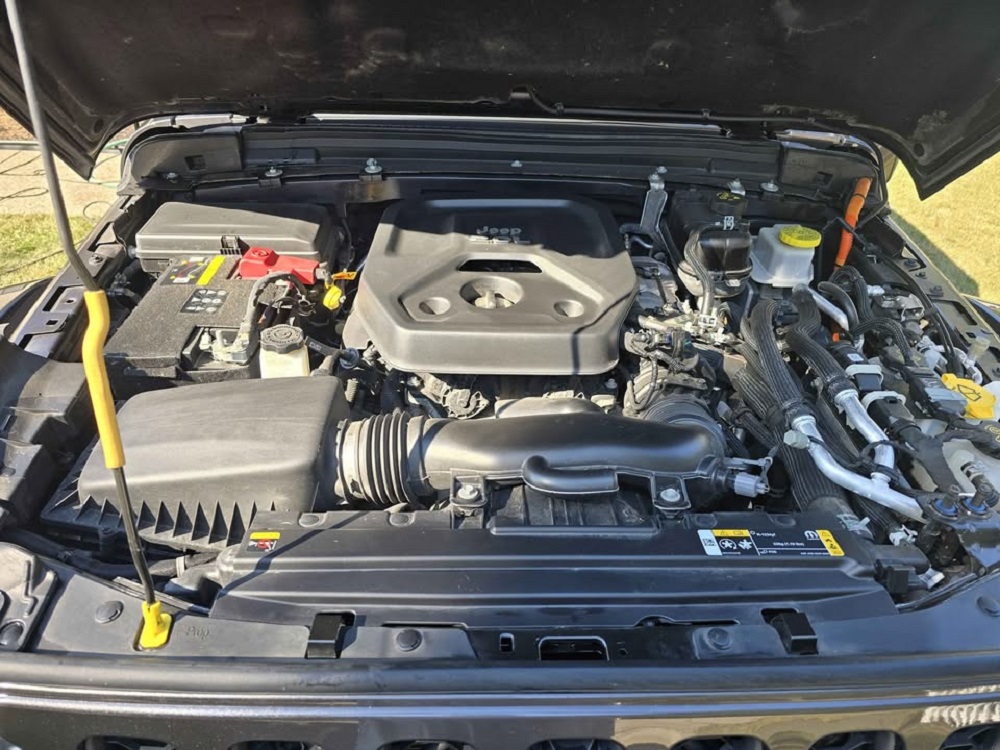
The 2.0L GME T4 runs a die-cast aluminum block with iron liners, twin cams, 4 valves per cylinder, dual VVT, and a twin-scroll turbo. The exhaust side’s tight. Turbo’s bolted right to the head. Not much room to shed heat.
Compression sits at 10:1, high for a boosted four. Add direct injection and the engine lights quick, builds torque low, and stays hot. Cylinder pressure spikes fast. That’s great for grunt. But any knock, oil thinning, or coolant loss hits harder here than it would on a big lazy six.
The cooling layout splits in two: one circuit for the block and head, another for the air-to-water intercooler. That second loop cools the charge air inside the intake manifold.
Works fast, but traps air if bled wrong. One small leak in either loop can spike temps, cook sensors, and push the engine into limp mode before a driver sees steam.
How it performs compared to the 3.6 V6 and 3.0 EcoDiesel
| Engine | Layout | Power / Torque (approx.) | Torque character | Typical homes |
|---|---|---|---|---|
| 2.0L GME Turbo I4 | Turbo gas I4 | 270 hp / 295 lb-ft @ 3,000 rpm | Mid-range punch, boost-heavy | Wrangler, Cherokee, 4xe |
| 3.6L Pentastar V6 | NA V6 | 285 hp / 260 lb-ft @ higher rpm | Needs revs, linear feel | Wrangler, Grand Cherokee |
| 3.0L EcoDiesel V6 | Turbo diesel | 260 hp / 442 lb-ft @ 1,400 rpm | Heavy low-end torque | Wrangler, Grand Cherokee |
The 2.0 outpulls the 3.6 at part throttle. It makes more torque sooner, even with smaller displacement. But it leans hard on the turbo and fuel system to do it, and those are exactly where failures pile up.
The diesel wins at sustained load. The V6 keeps running even when neglected. The 2.0 needs perfect conditions to stay smooth.
Strong power, sharp limits, and where this engine locks you in
When it’s working right, the 2.0T feels quick. Pulls clean in the midrange. Good high-altitude power. Lighter than the V6 or diesel, so the front end feels sharper.
But the compromise’s real. Boost climbs fast under load, which drives oil temps and cooling demands through the roof. The intercooler’s compact, efficient, but heat-soaks easy when airflow drops.
The engine bay’s tight. Plastic tanks and fittings sit near the turbo. And the more systems it ties together, GDI, hybrid drive, eTorque, CAN-bus logic, the more ways it can shut down from one bad signal or sensor misread.
No margin means no slack. Run cheap fuel, stretch oil changes, ignore a coolant drip, and this engine bites back.
2. Cooling system weak points and why heat takes this engine down fast
Split cooling, tight packaging, and reservoirs that crack under pressure
The 2.0T runs two coolant loops. One feeds the block and head. The other cools the air‑to‑water intercooler buried in the intake. Both routes snake through a crowded bay where turbo heat never really leaves.
The expansion tanks sit too close to the hot side. After enough heat cycles, the plastic fatigues. Hairline cracks open at the seam, the neck, or the lower outlet. Cold, they seal. Hot, they vent. Coolant boils off without a puddle, leaving dried pink crust and a hot-syrup smell.
Drivers notice the warning late because the level drops slowly. By the time the chime sounds, the head’s already heat‑soaked and the ECU is pulling power to save it.
Water pump fasteners, thermostat hang-ups, and slow leaks that escalate
Stellantis flagged under‑torqued water‑pump inlet bolts on early builds. Vibration backs them out. Coolant seeps past the tube. Miss the thread locker during repair and the leak comes back.
Thermostat housings add another failure point. Sticking stats and air trapped during refills cause erratic temps. Gauges wander. Cabin heat fades. Codes like P0128 pop after warm‑up. Each episode spikes localized heat around the turbo and exhaust ports.
On an aluminum block under boost, repeated near‑overheats do damage even when the needle never pegs. Gaskets fatigue. Turbo bearings cook. Sensors drift.
Idle heat, trail work, and airflow limits that overwhelm the system
Low speed exposes the weak spots. Rock crawling, traffic, winches, armor, and big tires all ruin airflow. The electric fan runs flat out. The intercooler pump stays on. Heat stacks faster than it can leave.
Mud, bugs, or bent fins choke the radiator and condenser stack. Charge temps climb. Coolant temps follow. The ECU cuts torque, then shuts the party down.
| Symptom | What’s usually failing |
|---|---|
| Coolant smell, no puddle | Cracked expansion tank |
| Overheats at idle only | Restricted airflow or weak fan |
| Temp swings, poor heat | Air trapped or sticking thermostat |
| Repeated limp mode | Coolant loss or A2W pump strain |
Once heat control slips, everything downstream suffers. This engine doesn’t tolerate “almost overheating.”
3. High-pressure fuel failures and why the top end clogs fast
HPFP wear, metal debris, and full fuel system contamination
The high-pressure fuel pump rides off the cam and sends fuel straight into the cylinders at extreme pressure. If the pump wears, it sheds metal. That debris doesn’t stay local. It flows to the rail, hits all four injectors, and sometimes backs up to the in-tank module.
Long crank. Rough idle. Sudden stall. Rail pressure drops. Techs scan, see faults, swap the pump, and miss the rest. The new one fails again unless the whole system’s cleaned. Shops replace the pump, injectors, rails, and lines, or the damage loops.
While the 2.0T uses a high-pressure fuel pump (HPFP) similar in concept to those in diesel platforms, it was not part of the high-profile Recall 01A (NHTSA 23V-263), which specifically targeted the 3.0L EcoDiesel.
However, 2.0T owners should still monitor for rail pressure drops, as any HPFP failure can contaminate the entire fuel system with metal debris.
GDI carbon buildup and how the intake chokes over time
Direct injection skips the valve wash. There’s no fuel mist cleaning intake ports. Meanwhile, oil vapor from the PCV coats the back of the valves. Heat bakes it on.
At first, there’s no sign. Then the idle turns lumpy. Cold starts stumble. Light-throttle cruising feels jittery. Flow’s restricted. Misfires start creeping in.
Top-tier fuel helps. So does short-interval oil. Some owners run intake cleaners or catch cans, but real buildup needs walnut blasting once you’re past 60,000 miles.
Low octane fuel, pulled timing, and long-term damage stacking up
The manual says the 2.0 “can run” 87 octane. On paper, sure. But this engine runs 10:1 compression with a turbo. Haul weight, climb grades, or run big tires on regular, and the knock sensors go to work pulling timing.
The ECU saves the block, but it pays a price. Hotter combustion. Higher piston temps. Turbo spinning harder to make up the torque.
Drivers who use premium, change oil every 5,000 miles, and watch fuel trims get long life. Those who cheap out often get P0300 misfires, burnt plugs, or bearing wear before 60,000. This engine doesn’t forgive poor fuel or lazy service.
4. Hybrid add-ons that short out or cripple the whole powertrain
eTorque charging failures and 48V system faults that mimic engine death
eTorque isn’t a hybrid. It’s a 48V belt‑driven motor that replaces the alternator. It feeds a lithium pack under the body and a DC‑DC converter that powers the 12V system.
When the converter glitches, the battery stops charging. The dash lights up. Power steering dies. Then the Jeep shuts off like the engine seized, even though the problem’s electrical.
Some owners chase fuel or turbo problems for weeks before checking voltage. If 12V output falls under load, everything goes down: EPS, ABS, hybrid modules, start‑stop, and eventually propulsion.
Battery health and charging rates should be the first check on any eTorque-equipped Jeep with weird stalls or limp mode.
Hybrid cooling lines and exposed underbody parts that don’t belong off-road
The 48V battery sits under the rear seat. Its lines run low. Water crossings, rock hits, and mud buildup around the battery cooling lines aren’t theoretical, they happen. Skid plates help, but don’t seal everything. Lines crush. Seals fail. Wet connectors short weeks later.
Wrangler owners who trail hard know the risks. Some remove eTorque hardware just to get back to a normal 12V setup.
4xe software faults that stop drive with no warning
The full hybrid 4xe setup ties the 2.0 turbo, electric motor, and battery controller into one control stack. One module misfires, and the drivetrain goes dark. No limp mode, just a dead pedal and a cluster full of warnings.
Current recalls cover software faults where the Hybrid Control Processor overloads, resets mid-drive, and drops propulsion without mechanical damage. Some get fixed with a flash. Others leave drivers on the freeway and leave no clear trail until hybrid codes are pulled.
Power loss, shutdown, and no restarts aren’t always the engine. On 4xe models, they’re often control-chain failures. Shops that skip hybrid diagnostics waste time and parts chasing the wrong fault.
5. Casting sand in the oil and the recall that parked 113,000 Jeeps
Leftover sand in the block that grinds the engine from the inside
The 2.0T block is cast in sand molds. When cleaned right, the sand gets flushed before final machining. But batches of Wrangler 4xe and Grand Cherokee 4xe engines left the factory with pockets of grit still inside.
That sand rides the oil circuit. It scours bearings, clogs galleries, and eats the crank. Once it hits the turbo feed, it starves the charger. By then, it’s too late. Metal flakes coat the pan, and the pump starts cavitating.
The failure’s not slow. In some units, the engine lets go without warning, dead quiet one mile, thrown rod the next.
What the failure looks like before and after it goes terminal
Early signs, if they show up, include cold knock, flickering oil pressure at idle, or fine glitter on the dipstick. Then comes the real break: locked rotation, holes in the block, or oil shooting onto the exhaust.
Fires followed. Stellantis logged 36 engine fires tied to this defect before the Do Not Drive order came down.
Which models are affected and how they’re handled at the dealer
The official line hits 2024–2025 Wrangler 4xe and 2023–2025 Grand Cherokee 4xe units built between July 2023 and March 2025. Campaign 25V-766 triggered full engine replacements, not repairs, for blocks tied to contaminated batches.
But the issue’s murkier on out-of-scope vehicles. Some non-hybrid 2.0T builds share the same casting supplier. They’re not recalled, but may carry the same risk.
The only safe call on a suspect unit: oil inspection, block casting check, and full documentation. If the damage is done, the whole engine gets scrapped and replaced.
6. Turbo system flaws and why boost doesn’t always mean power
Wastegate slop, underboost codes, and torque that fades mid-pull
The 2.0’s twin-scroll turbo runs an electronic wastegate. Cold starts or throttle lift often trigger a metallic rattle, light at first, louder as miles stack up. The flapper arm wears or loosens, and the actuator stops sealing boost cleanly.
Power dips. The throttle feels soft. Then comes P0299: underboost. Some drivers ride it out. Others chase the fault with no clear answer. The boost might build fine at idle but fall flat under load.
Once the hardware wears too far, the turbo can’t hold pressure, and fuel trims spike trying to compensate.
Charge pipe leaks and intercooler cracks that mimic turbo failure
Charge air leaves the turbo, runs through the air‑to‑water intercooler in the intake manifold, then hits the cylinders. That path runs through plastic joints, clamps, and a core that can split under pressure.
Leaks at the couplers or cracks in the end tanks lose boost. The turbo works harder. Fuel economy drops. A faint whoosh under throttle and oil mist near the pipe seams are dead giveaways.
Shops misdiagnose these leaks all the time. The turbo gets blamed, replaced, and the issue stays. Smoke tests and pressure checks catch the real fault.
Sensor faults, CAN line drops, and limp mode from pure electrical noise
Boost control rides on data. The ECU reads MAP, MAF, IAT, and throttle angle, then adjusts wastegate and fuel. One dropped signal triggers a chain reaction. Limp mode kicks in. Cruise shuts off. CAN faults scatter across unrelated modules.
Loose connectors, rubbed harnesses, or dirty grounds spike U-codes. Most aren’t real failures, just bad signals that ruin drive quality.
4xe models take it further. Hybrid modules add more traffic to the CAN bus. One noise spike near the hybrid battery or inverter can trip multiple systems. Some failures clear with a battery pull. Others need deep module scans to sort out.
On these Jeeps, diagnosing a power loss means checking wires before parts. The turbo isn’t always to blame.
7. Jeep-specific patterns that change how the 2.0 turbo fails
Wrangler JL: cramped bay, slow airflow, and cooling system stress
The JL’s body shape traps heat. Add big tires, bumpers, and armor, and airflow drops even more. The fan runs constantly. The coolant tank sits near the turbo.
Temps spike during trail work or long idle. Cracks form at the reservoir neck or seams. Owners top off coolant again and again without spotting the leak.
Overheats hit hardest at idle, especially on lifted rigs crawling in low gear. Boost stays low, but the engine bay cooks. Intercooler bricks heat-soak. Electric fans can’t keep up. The A2W system starts losing efficiency after just one climb.
Cherokee KL: gear hunt, soft launches, and oil consumption flags
Cherokee pairs the 2.0T with a 9-speed ZF automatic that never quite settles. It hunts gears at low speed, which makes the engine feel boggy. Slow pullouts, reverse-to-drive transitions, and throttle blips often come with a soft lag or shudder. Drivers blame the engine, but the trans is usually at fault.
Some KL builds also burn oil, with reports appearing between 30,000 and 50,000 miles. While owners often report consumption of one quart every 1,000 miles, FCA’s official technical standard (TSB 09-007-15) considers up to one quart per 2,000 miles (under 50k miles) or one quart per 750 miles (over 50k miles) to be within ‘acceptable’ limits.
Regardless of the standard, excessive consumption has led to ring replacements or full short block swaps under warranty in several cases.
Grand Cherokee and 4xe: added weight, hybrid load, and highway failures
The 4xe versions of the Grand Cherokee carry more weight and more tech. That stresses the engine differently. More towing, longer high-speed trips, and hybrid cycling push heat into the oil and turbo over time.
Failures here lean electric. Owners report propulsion dropouts, sudden power loss, and software faults tied to hybrid control. These don’t show up in Wranglers that mostly stay local or trail-based. They show up at speed, under full load, when both gas and electric systems are switching torque.
Some 4xe units also overlap with the sand-contamination recall. Even without a VIN match, owners report cold knock and oil pressure dips, signs worth checking before resale or any big repair.
8. What long-term owners see and how to keep the 2.0T alive
Jeeps that cross 100,000 miles and what separates the ones that make it
Some 2.0T engines hit 120,000 or more with just sensor swaps, cracked tanks, and worn charge pipes. Those rigs get oil changes every 5,000 miles, run premium fuel, and catch coolant leaks early.
Others burn out before 60,000. Stretch oil intervals, run cheap gas, ignore temp swings, and the failures pile up fast, HPFP failures, turbo wear, electrical faults, and full shutdowns.
What lasts is maintained. What breaks gets ignored.
Maintenance steps that stop breakdowns before they start
Forget the manual intervals. Run full synthetic every 5,000. Check coolant levels often, and bleed the system right. Replace the tank if there’s crust, even without a leak. Use 91-octane unless you want timing pulled and knock climbing under load.
Clean the intake every 30,000 miles. If you’re wheeling in dust, change the air filter more often. Watch boost numbers and fuel trims. Any drop in pressure, any odd misfire, check it now, not later.
This engine doesn’t limp for long. It quits.
Who should run the 2.0 turbo and who should walk
If you’re a commuter who wants torque, solid MPG, and can stick to a strict service schedule, the 2.0T can go the distance. It rewards discipline and punishes delay.
If you tow heavy, run remote trails, or want low-effort durability, skip it. The 3.6 Pentastar keeps working with fewer sensors, fewer modules, and more room to breathe. The 3.0 EcoDiesel hauls better and runs cooler under load.
For used buyers, any Jeep with repeat overheating, low oil pressure, or hybrid glitches should be inspected for block casting, coolant system damage, and HPFP debris before money changes hands. Repairs aren’t cheap. One missed fault means a full teardown or a long wait for a new engine.
Sources & References
- Stellantis Hurricane engine – Wikipedia
- FCA Global Medium Engine – Wikipedia
- 2020 Jeep Wrangler Engine Options & Towing Capacity | 3.6L vs. 2.0L
- A Tale of Two Systems – Intercooling System Overview – Air-to-Water vs. Air-to-Air Intercoolers | Mishimoto
- 2025 Jeep Wrangler Specs & Performance
- 2025 Jeep Wrangler Performance | Fontana Chrysler Dodge Jeep RAM
- Is the 2.0 Turbo Worth It? : r/Jeep – Reddit
- PSA to JL 2.0T owners for TSB on Overheating | NOVA Jeepers
- Jeep 2.0T (GME T4) Engine Overheating Issues – DIAGNOSE and REPAIR – YouTube
- My jeep wrangler 2020 JLU 2.0 turbo has been overheating at idle – Reddit
- Everything You Need to Know About the 2020 Jeep Wrangler 2.0 Coolant Reservoir – Real Talk from a Daily Driver – AliExpress
- Map Title 07-001-22 REV. B – NHTSA
- 2021 jeep wrangler unlimited 48k miles, coolant problem – Reddit
- SAFETY RECALL – NHTSA
- High Pressure Fuel Pump Failure – FCA – OEMDTC
- Is Your HPFP Going BAD? Here’s How to Tell – YouTube
- Common 2.0L Hurricane Turbo Engine Problems and How Warranty Helps
- What is eTorque and does my Jeep Wrangler have it? – Metalcloak
- Anyone experience e-torque issues with their JL? : r/Wrangler
- eTorque reliability : r/Wrangler – Reddit
- Bad Friday for the Jeep : r/Wrangler
- Jeep Grand Cherokee, Wrangler 4xe Recalled For Possible Engine Fire – CarBuzz
- ‘Do Not Drive’ advisory: Jeep issues engine recall for Wrangler 4xe, Grand Cherokee 4xe – WTOL
- Stellantis Recalls Nearly 113,000 Jeeps Over Self-Destructing Turbo-Fours – The Drive
- 2021 Jeep 2.0 Turbo Problems – Turbo Rattle, A/C Noise & CAN Bus Failure – YouTube
- Fault P0299 May Not Be Caused By The Turbocharger – Motorcar Parts of America
- Jeep Grand Cherokee Recalled over Potential to Lose Drive Power – Car and Driver
- 2022 Jeep Grand Cherokee – The Center for Auto Safety
- Jeep Recall Notices & Safety News | Kelley Blue Book
- All 2025 Jeep Recalls By Model In One Place – CarBuzz
- 2020 JEEP Wrangler Recalls, Complaints and Investigations – The Center for Auto Safety
- Jeep Cherokee Reliability and Common Problems – In The Garage with CarParts.com
- 2014–2022 Jeep Cherokee: pros and cons, common problems – Samarins.com
- 2.0L Turbo vs 3.6 V6? : r/Wrangler – Reddit
- 2.0 engine longevity : r/Jeep – Reddit
- Stellantis upgrades its Hurricane 4-cylinder engine – ItalPassion