
Oil light flickers. A knock cuts through the cabin. Then silence. Some 3.8s throw rods from crank debris left behind at the factory.
Others eat oil through stuck rings or sputter from carbon-clogged valves. GDI brings power but trades it for heat, soot, and sensitivity. Timing chains stretch, solenoids jam, and the KSDS throws limp mode when it hears trouble coming.
Every failure starts somewhere. Here’s where each one begins, and which 3.8s still hold up.
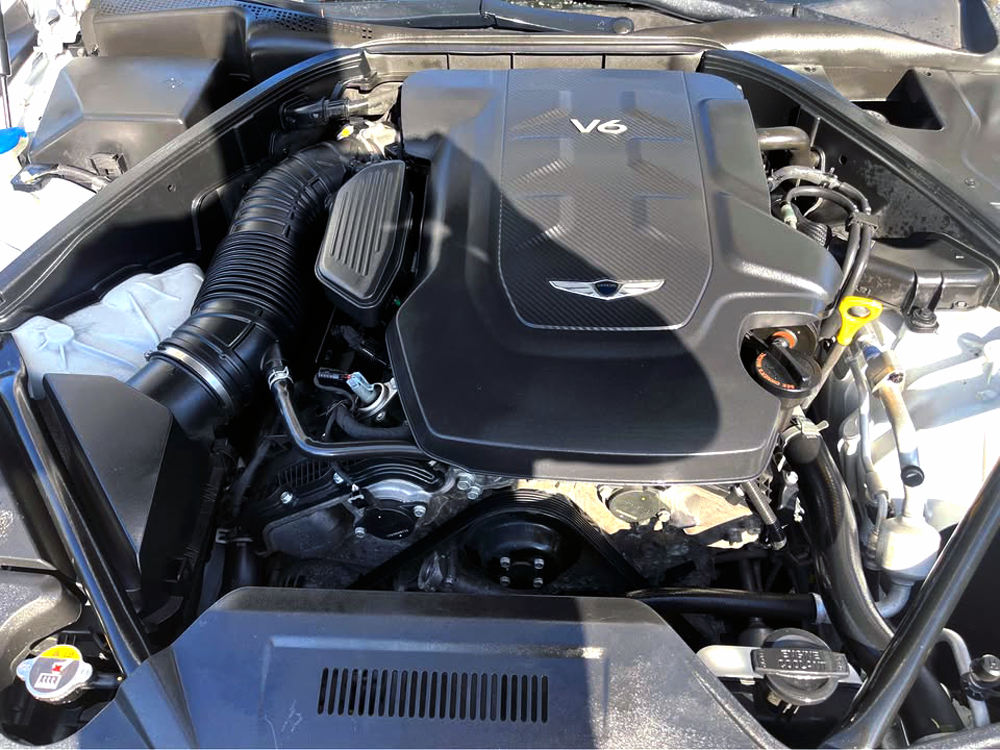
1. How the 3.8 Lambda is built and why problems split by generation
Shared guts across every 3.8
All Lambda 3.8s ride on a 60-degree aluminum V6 block with DOHC, 24 valves, and a chain-driven timing system. Bore and stroke stay fixed at 96.0 × 87.0 mm across every version. Later engines added D-CVVT and higher compression, but the base structure stayed the same.
No belts here, just a steel primary chain driving the cams through hydraulic tensioners and plastic guides. That timing cover’s fully integrated, so gasket leaks can smear everything up front. Oil spec matters. Sludge ends tensioner pressure, and varnish gums the VVT.
Hyundai tuned these for smooth torque delivery over short-burst power. Most pull around 290 hp in stock trim but rely heavily on oil cleanliness and thermal stability to stay in spec.
How fuel system, compression, and emissions rewired the risk
The early G6DA used MPI and 10.4:1 compression. Less power, but port injection kept the valves clean and ran cooler under load. These landed in first-gen Genesis sedans and Azeras.
The G6DK stuck with MPI but stretched output to 290–312 hp depending on layout. It still washed the valves and rarely suffered from carbon. Many call this the sweet spot.
Then came G6DJ with direct injection, 11.5:1 compression, and real top-end shove. But it brought baked-on carbon, stuck rings, HPFP sensitivity, and thinner oil margins. Genesis coupes and sedans used this spec in rear-drive sport trims.
The G6DN landed in Telluride and Palisade with Atkinson-cycle tuning, 13.0:1 compression, and GDI. Efficiency rose, but so did oil use, carbon, and low-RPM knock. These run hot under heavy load, and longer oil intervals make the risk worse.
3.8 Lambda variants
| Code | Fuel system | Layout / apps | Power (hp) | Torque (lb-ft) | Key traits / risk notes |
|---|---|---|---|---|---|
| G6DA | MPI | Early Genesis, Azera, etc. | 260–267 | 253–257 | Simple fueling, fewer carbon issues |
| G6DK | MPI | Lambda II RS MPI (RWD/FWD) | 290–312 | 264–265 | “Sweet spot” for reliability vs output |
| G6DJ | GDI | Genesis sedan/coupe RS | 333–348 | 291–295 | High comp, carbon, bearing and HPFP sensitivity |
| G6DN | GDI/Atkn | Palisade, Telluride | 291 | 262 | SUV tune, oil-consumption complaints |
Why platform and usage change what breaks first
Genesis sedans and coupes spin the engine faster and hit full load more often. These drivers tend to follow maintenance schedules and use premium fuel, which helps the engine live longer despite the power tune.
SUVs tell a different story. Palisade and Telluride 3.8s idle longer, lug under load, and often run 7,500-mile oil intervals on bulk fill. That heat stress cooks rings, builds carbon, and lets varnish clog the VVT solenoids.
City miles do the most damage. Short trips don’t let the oil boil off fuel or the chain tensioners fully pressurize. Add GDI soot, and problems pile on fast. Highway-heavy use slows the wear, but doesn’t erase it.
2. Crankshaft swarf, rod bearings, and block‑ending failures
Where the metal comes from and why it stays
Some 3.8s left the factory with metallic debris trapped in the crank’s oil drillings. That grit circulates from the first startup, scoring the soft rod bearings while the engine still feels healthy. Clearances widen slowly. Oil pressure drops first at hot idle, then everywhere.
The wear curve stays quiet for tens of thousands of miles. Drivers feel nothing until the bearing surface is already chewed. By the time noise shows up, damage has momentum.
How a bearing failure announces itself
The first sound is a light, rhythmic tick that tracks RPM, most obvious cold or at idle. Load turns it into a dull hammer. Drained oil carries shimmer, and the filter pleats glitter under a light.
Pressure warnings flicker when the oil thins hot. Power falls off. The engine may still run clean enough to fool a quick scan, but the mechanical story is already written.
KSDS, limp mode, and why codes don’t equal a result
Hyundai’s KSDS software listens for bearing-frequency vibration through the knock sensors. When it hears the pattern, it caps RPM near 2,000 and limits speed. That can prevent a rod from exiting the block, but it doesn’t heal the bearing.
False triggers happen. Water intrusion at the sensor connector, harness corrosion, or mounting issues can set P1326 without internal damage. Oil pressure, oil condition, and metal checks decide which path you’re on.
Rod‑bearing signals and what they point to
| Symptom | What’s happening | Next move |
|---|---|---|
| Light knock, no codes | Early clearance growth or valvetrain | Oil analysis, listen, shorten intervals |
| P1326 with metal in oil | Active bearing wear | Park it, document, engine evaluation |
| P1326 after heavy rain | Sensor or harness fault | Inspect connectors, rerun tests |
| Loud hammer, misfire, power loss | Bearing near failure | Tow only, expect long‑block replacement |
Why failures feel sudden to owners
Bearings fail on time, not on warning. The oil film thins, heat spikes, the shell spins, and the rod loses its cushion. From the driver’s seat it feels instant. Internally it’s been eroding for months.
Once the shell spins, oil pressure collapses across the crank. Continued driving risks a windowed block and oil on hot exhaust, a known fire path on these platforms.
3. Oil consumption, stuck rings, and disappearing oil on GDI 3.8s
Why Atkinson GDI 3.8s eat more oil than expected
High compression, long expansion stroke, and heat-stressed oil rings make the G6DN burn oil early. The Atkinson cycle holds combustion pressure longer, cooking oil on the upper cylinder walls. Low-tension rings save fuel but trap less blow-by, letting soot and fuel sneak past.
Once the rings stick, they stop scraping. Oil pools in the chamber and vanishes between fill-ups. Combustion gases foul the crankcase, thinning the oil even more.
What TSB 23-EM-008H tests before Hyundai agrees to replace it
Dealers start by checking for leaks, sludge, or codes. If it passes that, they fill and seal the crankcase, send the owner off for 1,000 miles, and log every top-off.
If consumption crosses about 1 quart per 1,000 miles, they run a chemical ring-cleaning service. Then comes a second 1,000-mile test. Fail again, and Hyundai authorizes a full engine swap under warranty.
Oil consumption path in TSB 23-EM-008H
| Stage | Dealer action | What the owner sees |
|---|---|---|
| 1 | Leak check, code check | Basic inspection |
| 2 | 1,000-mile monitored test | Must track mileage and visits exactly |
| 3 | Chemical ring cleaning | Short downtime, idle may smooth out |
| 4 | Second 1,000-mile test | Confirms whether cleaning helped |
| 5 | Long-block engine replacement | Fresh engine, new break-in, warranty reset |
How drivers spot real failures, not just “normal” use
Needing a quart every 1,000–1,500 miles in light-duty use isn’t normal. Blue smoke on startup, fouled plugs, or a rough idle tied to heavy top-offs points straight to stuck rings. No puddles, no smoke under load, just vanishing oil and rising fuel trim.
Track your top-offs by mileage. Snap photos of the dipstick, log the bottle size, and mark the odometer. Service writers need proof before they call it a defect.
4. GDI intake-valve carbon buildup and drive complaints
How carbon locks down airflow in the GDI 3.8
Port injection washed the valves. GDI doesn’t. On the G6DJ and G6DN, fuel sprays straight into the chamber. Intake valves stay dry and hot, catching oil vapor and PCV mist like flypaper. That film bakes into black crust, then keeps growing.
City driving speeds it up. Short runs never get hot enough to burn deposits off, and cold starts condense more blow-by on the valve stems.
What buildup feels like behind the wheel
Misfires hit cold and fade fast. You’ll feel a rough 15–30 second stumble after startup, even with no codes. Later, throttle gets jumpy, low-end torque drops, and the engine pings despite premium gas.
Misfire codes jump between cylinders with no pattern. Swapping coils or injectors won’t help if the real problem’s airflow blocked by carbon.
What clears it, and what’s a waste of time
Fuel additives don’t touch the problem. They burn in the chamber. Intake valves never see the fuel. Chemical induction helps early, but only if buildup hasn’t hardened. Once the deposits go black and spongy, blasting’s the only option.
Walnut blasting cleans the valves. Manifold off, ports sealed, crushed shells shot through a wand. Most 3.8 GDI engines need it around 60,000 to 80,000 miles if driven in stop-and-go traffic.
What cleans GDI valves and when it works
| Method | Access level | Cuts heavy carbon? | Use case |
|---|---|---|---|
| Tank additives | None | No | Useless for GDI valve cleaning |
| Induction chemical | Low | Partial | Early buildup, maintenance/prevention use |
| Walnut blasting | High | Yes | Misfires, loss of power, hard deposits |
5. Timing chain, tensioners, and D‑CVVT problems
Why clean oil is the only safety net for the timing system
The 3.8 runs a single primary chain off the crank, driving four cams through tensioners and guides. That tension is hydraulic; lose oil pressure or plug a feed port, and slack creeps in. Chains start to rattle. Guides wear through. VVT phases drift.
Sludge clogs the tensioners. Varnish gums the solenoids. Chain wear isn’t stretch, it’s pin and roller erosion that shifts cam timing until the ECM sees the mismatch.
What shows up when timing drifts off target
Cold starts give it away first. Rattle near the front cover that fades once pressure builds. Then the CEL lands with P0011 or P0021, sometimes on both banks, sometimes only when hot.
Power drops low in the revs. Throttle response softens. Idle feels choppy even when trims and spark look fine.
VVT solenoids fail early on neglected oil
The D‑CVVT system runs through oil-fed solenoids with fine mesh screens. GDI soot and oxidized oil plug them fast. Once clogged, cams can’t advance or retard. The ECM locks them where they sit, which can flatten power and end efficiency.
Front-bank solenoids are easy. Rear-bank units on longitudinal layouts take hours. Swapping solenoids without fixing oil quality just buys time.
Timing/VVT symptoms and where to start
| Symptom | Probable cause | First checks |
|---|---|---|
| Cold start rattle + high mileage | Tensioner or guide wear | Oil pressure test, listen at front cover |
| P0011/P0021 with clean oil | VVT solenoid fault | Command tests, inspect screens |
| Persistent knock + correlation code | Chain wear | Mechanical timing check, cam/crank data |
6. Fire risks, fuel leaks, and stall faults tied to 3.8 platforms
Starter-solenoid fires and why some cars still haven’t been fixed
In 2015–2016 Genesis sedans and later G80/G90s, moisture can enter the starter solenoid. If it shorts to power, the system stays live, even when parked. That arcs the solenoid, heats the wiring, and can start an engine bay fire with the key out.
The fix is a relay kit that reroutes the high-current path outside the main junction box. Hyundai issued a “park outside” warning for any car without it. Some used cars still haven’t had it installed.
Fuel leaks from high-pressure GDI hardware
GDI runs fuel pressure over 3,000 psi. Some 3.8s had fuel tubes that weeped or sprayed where they meet the rail. Hyundai recalled G80 and GV80 models for this exact fault. The smell hits first, raw gas at startup. Then comes visible wetness or rich codes from pressure loss.
High-pressure pumps on these engines also fail. When the fuel control valve sticks, P0088 trips. Rail pressure spikes. The engine runs rich, can stall, and oil gets thinned by excess fuel.
Electrical shorts that mimic engine trouble
Some 3.8-equipped cars, particularly Hyundai Palisade and Kia Telluride models, have experienced internal shorts within their ABS/HECU modules.
These shorts can lead to early signs such as dead batteries, random parasitic draw, or no-start without a Check Engine Light, and in some cases, pose a fire risk. When they go, they can drain the system overnight or overheat quietly.
The engine may run fine, but misdiagnosing these faults as sensor or wiring issues wastes time. Any no-start or repeated drain in a Genesis or GDI SUV needs recall verification first.
7. Which codes actually matter, and what the ECM does about them
DTCs that signal real mechanical problems, not just glitches
P1326 is the loudest. It means the knock sensors heard bearing-frequency vibration. Not ping. Not misfire. Bearing knock. It triggers limp mode immediately and forces inspection.
P0326 is softer. It flags knock sensor performance or range, maybe a bad sensor, maybe a harness issue, maybe real knock if the fuel’s wrong or the cylinder’s running hot.
P0011 and P0021 show timing drift. If the VVT solenoids are clean, check the chain. P0300 misfire codes bounce between cylinders when carbon or oil fouls the spark. P0088 means the HPFP is overfeeding the rail, fuel’s dumping, AFRs go rich, and oil gets washed.
Critical 3.8 Lambda codes and what they flag
| Code | Meaning | What it points to |
|---|---|---|
| P0326 | Knock sensor performance issue | Sensor, harness, or detonation |
| P1326 | Bearing-frequency vibration alert | Rod bearing wear or sensor false positive |
| P0088 | Fuel rail pressure too high | HPFP or fuel control valve failure |
| P0300+ | Random/specific misfire | Carbon buildup, fouled plugs, coil/injector |
| P0011/21 | Cam timing advanced | Chain wear, dirty VVT solenoid, low pressure |
How the ECM reacts when failure is on the table
Limp mode from P1326 caps RPM near 2,000. Enough to reach a shop, not enough to break the engine. But if the bearing’s truly failing, even that’s risky. Oil pressure is already borderline.
P0011 and P0021 pull ignition timing and throttle response. Misfire codes force the ECM to cut fuel to affected cylinders to protect the cat. P0088 can lead to long cranks, stalls, and rough idle from rich mixtures the PCM can’t correct fast enough.
When owners chase sensors but miss the real failure
Clearing P1326 without checking for metal, low pressure, or glittered oil is a mistake. Many try sensors first, new knock sensor, cam sensor, O2 swap, before ever pulling the filter. Bad idea.
On these engines, the code often shows up late. Fluid, spark, and airflow need to be verified first. Electronics follow the damage, they rarely cause it.
8. Which 3.8 years still hold up, and where they fail anyway
How reliability shifts between MPI, GDI, and Atkinson
G6DA runs port injection with low compression. It avoids carbon, handles cheap fuel, and shrugs off poor maintenance better than the rest. But age hits it hard, gaskets seep, guides rattle, and chains go loose after 120,000 miles.
G6DK is still MPI, but stronger. These engines live longest when fed clean oil. It’s the least sensitive to fuel or carbon issues, and many cross 200,000 with basic service. Still needs chain and VVT checks near the 150k mark.
G6DJ brings power, but with risk. Direct injection stacks carbon, eats HPFPs, and wipes bearings if maintenance lags. It can live, but not by accident.
G6DN was built for low-end torque and SUV load. Atkinson cycle boosts efficiency, but also raises cylinder temps. Oil control suffers. These burn oil, choke on carbon, and trip KSDS limp mode more often than the rest.
3.8 Lambda reliability by variant
| Engine code | Strengths | Common problems | Best used for |
|---|---|---|---|
| G6DA (Lambda I MPI) | Simple fueling, low carbon | Chain wear, gasket leaks | Budget builds, low-load use |
| G6DK (Lambda II MPI) | Balanced power/longevity | Wear with poor oil, chain slop | Long-term daily with short intervals |
| G6DJ (Lambda II GDI) | Big power, sharp response | Carbon, HPFP, rod bearings | Enthusiast cars with maintenance logs |
| G6DN (Atkinson) | Torque, economy under load | Oil burn, carbon, limp mode complaints | Family SUVs with dealer history |
Why warranty extensions don’t guarantee coverage
Hyundai pushed some powertrain warranties to 15 years or 150,000 miles on KSDS-equipped engines. But coverage depends on receipts, clean oil, and no signs of abuse. Tear-down photos that show sludge or aftermarket tunes can end a claim fast.
Some class-action settlements also extended coverage to second owners, but only if service records line up. No paper trail, no engine.
VIN checks confirm campaign status. But dealers still deny warranty work if the oil’s cooked or the block looks neglected.
When a 3.8 is worth saving, and when to leave it
Genesis sedans and coupes with clean oil, tight timing, and carbon service hold value. They’re tunable, smooth, and proven if maintained.
Telluride and Palisade 3.8s can be reliable haulers, but only if they’ve passed the oil-consumption test and had regular blasting. Top-offs every 800 miles with no record? Walk.
Any 3.8 with active P1326, metal in the oil, or failed oil-use tests without a documented long-block swap is a risk. No receipts, no deal.
Sources & References
- Hyundai Lambda engine – Wikipedia
- Hyundai’s High-Performance Engines And Where You’ll Find Them – CarBuzz
- Hyundai Genesis – Wikipedia
- Direct Injection Lambda 3.8-Liter Engine – Hyundai – HyundaiNews.com
- Common Hyundai Engine Problems to Watch Out for – In The Garage with CarParts.com
- New Hyundai Class Action Lawsuit regarding Lambda Engine Problems
- 2016 Hyundai Genesis Recalls | Cars.com
- Hyundai’s Most Powerful Engines Ranked By Horsepower Output – CarBuzz
- 15 Of The Most Reliable Hyundai Engines Ever Built – SlashGear
- Common Problems: Hyundai Genesis Kia 3.8-L V6 Engine – MotorBiscuit
- Diagnosing Carbon Buildup On GDi Injectors – Carwood
- 2012 HYUNDAI GENESIS COUPE – HyundaiNews.com
- Should we buy this car or is it too risky? : r/Hyundai
- Urgent Petition for Rulemaking and Safety Investigation into Hyundai 3.3L V6 Lambda II Engine Failures – nhtsa
- Engine Recalls – Hyundai
- Hyundai Class Action Lawsuit Alleges Engine Defect Should Have Resulted in Recall Actions – AboutLawsuits.com
- KSDS Software Update (Campaign 966) – Hyundai – Recalls
- Questions about Campaign 966? – Hyundai – Recalls
- product improvement campaign – Hyundai – Recalls
- Took my Elantra in for a recall… and everything went downhill : r/Hyundai
- Bad Timing Chain Symptoms: Top Signs of Imminent Failure – Bluewater Performance
- HMA TSB – nhtsa
- 2020 Pali oil consumption : r/HyundaiPalisade
- Welp, it happened. Oil consumption : r/HyundaiPalisade
- Oil Consumption TSB : r/Hyundai
- Engine Oil Consumption Lawsuit : r/Hyundai
- Hyundai class action over excessive oil consumption dismissed
- ENGINE OIL CONSUMPTION INSPECTION AND REPAIR … – nhtsa
- GDi Servicing: Don’t let carbon build-up become a big issue – Delphi
- 2016 Hyundai Genesis What do you recommend for cleaning intake valves on GDI engines?
- Do I Need Walnut Blasting? How Carbon Buildup Affects Your Engine (and What to Do About It) – King’s Auto Center