
Score a dirt-cheap 750i. Crack the throttle. Feel the torque hit hard at 1,800 RPM. Then watch the oil light blink, coolant drop, and smoke curl from the pipes. BMW’s first hot-vee V8 ran like a flagship but cooked itself like a smoker box.
This guide breaks down why the N63 ran hot from day one, how early engines burned oil and timing chains before 60,000 miles, what the N63 Customer Care Package really covered, and how each Technical Update (TU, TU2, TU3) changed the equation.
You’ll see which versions still pose a risk, what common failures cost, and how to stop the valley heat from eating your wallet.
1. Why the N63 runs hotter, harder, and faster than it should
Turbo heat jammed into the V
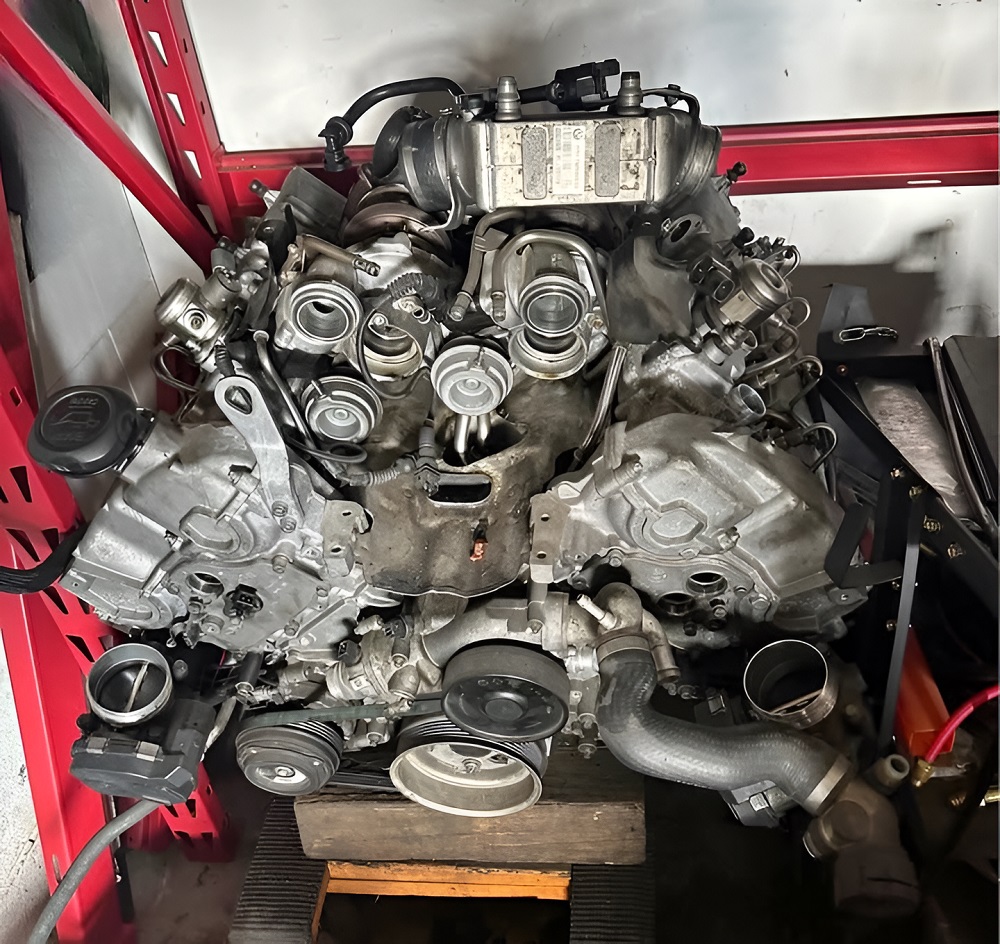
BMW flipped the script with this one. Instead of putting the intake in the valley and turbos on the outside like the older N62, the N63 shoved both turbos and exhaust manifolds into the tightest spot on the block, right between the banks. That’s where the heat starts stacking.
This “hot-vee” design shortened the exhaust path, which helped with turbo spool and cold-start emissions. But the compromise was serious: over 1,000°F in the valley under load, with coolant lines, PCV hoses, and sensors baked right next to glowing turbine housings.
The engine bay got tighter, airflow got worse, and everything plastic or rubber nearby started to age in dog years.
Alusil block and direct injection run hotter than old-school V8s
The N63’s all-aluminum Alusil block and heads helped save weight and hold structure under boost, but they don’t forgive overheating. Bore and stroke sit tight at 89 x 88.3 mm for a square 4.4L layout.
High cylinder pressures, narrow water jackets, and direct injection add thermal load that never really dissipates, especially in stop-and-go.
Piezo direct injectors on early engines hit higher fuel pressures than typical port systems, and they sit right in the combustion chamber. That means less cooling from fuel wash, more carbon buildup on valves, and extra work for the oil and coolant to keep temps in check.
The hotter the layout, the faster everything ages
Older BMW V8s like the N62 and even the S65 used conventional layouts, turbo-free, room to breathe. They didn’t trap heat between the heads.
The N63 runs hotter across the board: valley temp, oil temp, intake air temp, and post-shutdown soak. That last one causes the most damage. After shutdown, the turbos keep roasting the valley with no airflow and no oil movement.
Plastic tees warp. Rubber PCV lines split. Valve covers turn brittle. Even sensors near the turbos fail from exposure. And that’s not counting what long oil intervals do to chain tensioners and upper-end gaskets once the oil starts thinning out.
Every major failure in this engine ties back to one core reality: the heat in the valley never stops working against it.
2. Why the N63 burns oil like a two-stroke
Valve seals leak straight into the chamber
BMW stuffed the exhaust valves tight against the center of the engine, right where the turbos roast the head. That heat cooks the valve stem seals, rubber rings meant to keep oil from leaking into the cylinders. Once they harden and shrink, oil trickles down the guides and burns off at startup or after idling.
You’ll spot it when you hit the gas after a red light: a blue puff from the tailpipes, sometimes enough to fog the rear camera. On cold mornings, it may misfire for a few seconds before clearing.
The exhaust gets oily, cats foul early, and oxygen sensors start throwing rich codes. Some owners report burning a quart every 600 to 800 miles before 80,000 miles. Others don’t notice until emissions checks fail or neighbors start asking why their luxury car smells like a lawnmower.
PCV cracks, oil drain leaks, and valley vapor overload
The crankcase vent system rides in the worst spot: low in the valley, right next to the heat. It’s plastic and rubber from the factory. On early engines, those PCV hoses and separators crack, split, or shrink off their fittings.
That pulls unmetered air into the intake, adds oil vapor to the mix, and spikes long-term oil use.
Turbo drain lines don’t help either. Oil seeps out at the flange, drips onto the valley floor or down the back of the block, and either smokes off or ends up on the garage floor.
Most owners smell burning oil long before they ever see a warning light. Some chase phantom gasket leaks or replace valve covers, only to find the PCV guts or turbo returns were the actual cause.
Burn patterns point to top-end damage
You can tell what’s failing by when and how the smoke shows up. Here’s how to decode it:
Oil consumption & smoke patterns
| Owner Symptom | Most Likely Issue(s) | Typical First Checks |
|---|---|---|
| Blue puff after idle or long downhill | Hardened valve stem seals | Bore-scope exhaust valves, oil on plugs, tailpipe soot |
| 1 qt every 600–1,000 miles, no visible leaks | Valve seals + general ring/cylinder wear | Compression test, leak-down, service history review |
| Oily smoke only on boost, oil on turbo housings | Turbocharger seals or oil return lines | Inspect turbo in/out, shaft play, oil at compressor |
| Oily smell, light smoke from cowl, valley wet | PCV hoses, vent lines, upper covers | Remove covers, inspect valley hoses and fittings |
| MIL on, rich codes plus oil use | PCV failure plus heavy valve seal leakage | Smoke test PCV, check fuel trims and plug condition |
Valve seals and PCV failures often show up together. If you’ve got one, the other’s probably close behind.
3. How N63 heat damages coolant parts and plastic lines
Coolant lines harden, crack, then dump under load
The hottest zone on this engine is the tight space between the turbos. BMW routed rubber coolant lines and plastic tees right through it. That setup saves space, but it costs longevity.
Over time, the rubber stiffens and the plastic turns brittle. Micro-seepage turns into dried white crust around hose ends. A few thousand miles later, the part splits wide open.
You’ll see low-coolant warnings come and go. Then, on a hard pull or long hill, the system dumps pressure and you’re stuck watching the temp needle climb. On the highway, failures here can spike coolant temps before the fan even has a chance to respond.
Overheats and hydrolock wreck the lower end
Cracked fittings don’t just make a mess; they can send coolant into the intake. On N63 engines, water can pool in the runners when the engine shuts down. If a cylinder fills and the piston comes up, hydrolock follows. That bends rods or locks the crank solid.
Less dramatic, but just as damaging, are the mild overheats. When valley temps spike, head gaskets take the hit. Seals shrink. Oil cooks in place.
Repeated thermal cycling stresses head bolts and warps mating surfaces. Even if the car survives the overheat, it may develop low compression, timing drift, or internal bearing wear down the road.
Replace-before-failure parts that buy time
A few parts deserve early retirement on every N63, regardless of miles. First is the expansion tank. They crack near the cap or neck and let coolant burp out under pressure.
Second: turbo coolant lines and tees, anything plastic near the valley. Swap them with updated parts every 60,000 miles. Valley hoses, heater connections, and any plastic elbow with visible aging should go in the bin too.
BMW’s original 15,000-mile oil and 100,000-mile cooling intervals didn’t account for how much heat the hot-vee loads into these parts. Stick with that schedule and you’re just waiting for plastic to fail at the worst moment.
4. When timing chains stretch, the engine’s on borrowed time
Cold rattle means the chain’s already moving
The N63 uses a three-chain setup; primary chain from crank to intake cam, plus secondary chains running to the exhaust cams. Plastic guides keep tension, and oil-fed hydraulic adjusters handle slack. But once oil breaks down from heat, tensioners lag and friction climbs.
That’s when chains start to stretch. Plastic guides score, then crack. At startup, the chain slaps metal. You’ll hear it: a sharp rattle that clears in seconds. Ignore it, and VANOS faults follow.
Correlation codes between cam and crank sensors show up next. Then performance drops, sluggish throttle, lazy low-end torque, stumble off idle.
One tooth jump turns it into a scrap block
A stretched chain eventually skips. When it does, valve timing swings off just enough to clip a piston. On the N63’s tight clearances, one tooth can bend all eight intake valves on one bank.
Some shops offer head rebuilds, but most treat a jumped chain as a write-off, especially if piston damage or bearing wear shows up in the teardown.
Even before it jumps, advanced wear can throw cam timing far enough off that VANOS units start to fail. Overcorrection in software masks it for a while, but fuel trims and emissions suffer.
Owners often mistake the stumble for a bad injector or coil. By the time the true cause is caught, oil pressure may already be low from worn bearings.
Real costs when the timing goes sideways
Here’s what owners face when the chain starts to go, or worse, when it lets go entirely:
Typical N63 repair cost ranges (USD)
| Repair / Service | Parts Estimate | Labor Estimate | Total Ballpark | Notes |
|---|---|---|---|---|
| Timing chain & guides | $2,000–$3,500 | $10,000–$13,000 | $12,000–$16,500 | Dealer engine-out price. Some independents quote $4,000–$8,000 in-chassis. |
| Valve stem seal replacement | $300–$600 | $5,000–$8,500 | $5,300–$9,100 | Dealers quote high. Specialists with fixtures charge $2,500–$4,000 in-chassis. |
| Full set of injectors (8) | $6,000 (Index 12) | $1,200–$1,800 | $7,200–$7,800 | Index 12 prices surged. Often done with carbon clean, plugs, and coils. |
| Single turbocharger replacement | $1,500–$2,200 | $1,800–$2,600 | $3,300–$4,800 | Access through subframe/side; doubles for both turbos |
| Coolant reservoir & hoses | $250–$400 | $200–$350 | $450–$750 | Cheap vs. what a failure can cost |
| Walnut blasting (carbon clean) | – | $600–$900 | $600–$900 | Every ~60,000 miles recommended by many specialists |
Shops quote chain jobs at $12,000 and up because the engine usually has to come out. If oil starvation tagged the bottom end, expect to add bearings, gaskets, and possibly a full long block to the list.
5. Fuel system faults that flood, foul, or fail under load
Early injectors leak raw fuel straight into the cylinders
The first-gen N63 used piezo-electric injectors to hit fast pulse widths at high pressure. On paper, they offered precision. On the road, they stuck open. When that happens, fuel dumps into the combustion chamber even when the engine doesn’t want it, especially after shutdown or on cold start.
Cylinders wash down, oil films are removed from the walls, and piston rings take the hit. Some engines spin fine but lose compression fast. Others hydrolock right in the driveway.
Raw fuel smell in the oil, rich running, and random misfires are all common. Owners report heavy fuel trims, rough idle, and plugs fouled black before 40,000 miles.
HPFP breaks down under turbo V8 demand
The high-pressure fuel pump (HPFP) feeds over 2,000 PSI to the rail under boost. When it wears out, pressure falls and startup suffers. Most drivers notice it first as long cranks.
Then throttle response goes soft. Codes pop up for rail pressure deviation or “drivetrain malfunction.” On a twin-turbo V8, those symptoms destroy confidence fast.
Some pumps fail gradually, dropping volume on hot restarts or cutting out above 4,000 RPM. Others fall off a cliff with no warning. Misdiagnosis is common, many replace coils, plugs, even injectors before catching a soft or failing HPFP.
Direct injection stacks carbon on the valves
No fuel ever touches the back of the intake valves on a DI-only system. Oil vapor from the PCV system mists across hot metal. Over time, that builds up into thick carbon deposits. Short intake runners, low port velocity, and high engine bay heat only make it worse.
Symptoms come on slow: rough idle, stumble off cold start, misfire codes that don’t trace to a single cylinder. Walnut blasting every 60,000 miles clears it out. Some owners stretch longer, but once performance drops or fuel trims spike, it’s time to pull the intake and scope the damage.
Map your symptoms to the right failure
Fuel and air symptoms vs. likely N63 causes
| Symptom Set | Likely Causes | First-line Tests |
|---|---|---|
| Rough cold start, random misfires, raw fuel smell | Leaking piezo injectors, carbon buildup | Leak-down, injector balance, borescope valves |
| Long crank, low power, “drivetrain malfunction” | HPFP wear, low fuel pressure | Rail pressure logs, HPFP volume test |
| Hesitation on tip-in, surging at light throttle | MAF drift, small boost or PCV leaks | Smoke test, MAF data, fuel trims |
| Misfire under boost, no obvious fuel smell | Coil/plug breakdown plus carbon | Scope coils, pull plugs, check for carbon |
Injector issues show up early on pre-2013 engines. Fuel pump faults creep in later. Without logs, guessing between them burns money fast.
6. What BMW actually fixed under the Customer Care Package
CCP coverage started broad, then narrowed fast
BMW dropped Service Bulletin B001314 in 2014. The goal: get ahead of failures on early N63 engines. It applied to 2008–2013 builds across the 5, 6, 7 Series, X5, and X6 with N63B44O0. The dealer ran a diagnostic scan, uploaded FASTA data, then replaced components flagged in BMW’s internal logic tree.
The list was long. Chains got measured for stretch. Injectors swapped to newer solenoid types. PCV hoses, MAFs, fuel sensors, batteries, and even vacuum pumps made the cut.
BMW also updated software and shortened oil change intervals from 15,000 miles to roughly 10,000 or 12 months. Most cars took at least a week to complete. Some were down for a month.
Dealer discretion shaped what got replaced
Technicians followed ISTA prompts. If the timing chain measured inside spec, it stayed. If the battery passed load tests, it wasn’t touched. Even failing parts got skipped if the system didn’t flag them during the short test.
Some cars came out with half the engine refreshed. Others got new chains, MAFs, injectors, vacuum lines, and a full PCV system, all under goodwill, not warranty. But if a part didn’t throw a fault, owners had no say. Failures that happened 2,000 miles later were on them.
Lawsuit forced BMW to pay out, if you hit their conditions
The Bang v. BMW class action covered owners whose cars kept burning oil or blowing components post-CCP. The settlement included oil change reimbursements, partial battery refunds, and long-block engine replacement if the car failed two oil consumption tests.
Payouts followed a mileage ladder. Under 50,000 miles? BMW paid 100%. Past 100,000? Owners had to cover up to 75%. Many got stuck between failed parts and rejected claims. Others landed engines with only 15–25% cost share.
CCP skipped key failure zones that still damage N63s
The Customer Care Package left valve stem seals alone unless they already dumped visible smoke. It didn’t swap valley coolant lines unless they were leaking that day. Plastic fittings, turbo drains, and aging expansion tanks stayed untouched.
The program helped with injectors and chain stretch, but didn’t reverse the damage done by years of high heat. Most coverage windows are now expired. Today’s owners either buy with full repair records or pay out of pocket for the same repairs CCP once covered.
N63 CCP and settlement coverage overview
| Issue Area | Handling Under CCP / Bang Settlement | Outcome for Many Owners |
|---|---|---|
| Timing chain stretch | Tested; replaced if beyond spec | Some engines saved early, others missed |
| Fuel injectors | Updated injectors installed where needed | Big reliability gain vs original piezo units |
| PCV & vent lines | Replaced with higher-temp parts | Slower oil misting, fewer valley leaks |
| Valve stem seals | Generally not covered as routine CCP item | Still major failure/cost driver |
| Oil service interval | Shortened to ~10k mi / annual | Helps later life, doesn’t undo early damage |
| Full engine failure | Partial long-block subsidies (Bang) | Cost share still steep at higher miles |
7. How each N63 version stepped away from disaster
TU1 forged the bottom end and fixed the worst injector
The first major update, N63TU or B44O1, landed in 2013. BMW swapped the brittle piezo injectors for solenoid HDE units, added Valvetronic to ditch the blow-off valves, and rebuilt the lower end with forged rods and crank. Piston crowns got reshaped to handle the new flame speed and knock profile.
This version ran smoother and had fewer cold-start failures. PCV routing changed, but valley heat still worked over the hoses and turbo drains. Timing chains stayed vulnerable unless oil was changed early. Still, most TU engines outlasted the original.
TU2 cleaned up spool and cooled the block smarter
The N63TU2 showed up in 2016 with twin-scroll turbos, electric wastegates, and a revised vacuum system. The oil cooler moved inside the V, and pistons gained double drainback ports to reduce oil pooling. Boost response improved, and idle trims held tighter even with light carbon buildup.
These engines still carbon up, and the turbo layout didn’t fix oil seep into the valley. But owners who stick to 5,000–7,500 mile oil intervals report far fewer chain or injector failures. The DI system stayed solenoid-based, and HPFP wear became more predictable, usually showing up past 80,000 miles.
TU3 raised pressure and pulled in S63-grade internals
Launched in 2018, N63TU3 brought 350-bar injection, a switch from Alusil to arc-wire sprayed bores, and S63 connecting rods from the M5. The cooling system tightened up, and the thermal load was spread out with better fan logic and coolant routing.
Peak output rose to 523 hp in top trims like the M850i. Oil consumption dropped. Turbo seals held better. Injectors stayed clean longer.
These engines are still heat-loaded, but the metallurgy and pressure management finally caught up to the architecture. TU3 carries the best long-term odds if it gets treated like a high-output performance engine, not a 7 Series grocery-getter.
Risk shifts as the tech matures
N63 generation vs. typical owner risk
| Generation | Common Model Examples | Main Improvements vs Prior Gen | Relative Risk Profile* | Ownership Sweet Spot |
|---|---|---|---|---|
| Original | 2009–2012 750i, 2011–2013 550i, E70 X5 50i | First hot-vee, piezo DI, early cooling layout | Highest – oil use, chains, injectors | Only with proof of CCP + fresh major work |
| N63TU | 2013–2016 550i/750i, F15 X5 50i | Solenoid DI, stronger internals, better PCV | Moderate – still heat-sensitive | With records and short 5k–7.5k oil intervals |
| N63TU2 | 2016–2019 750i, early G30 M550i, late X5 50i | Twin-scroll, electric wastegates, revised cooling | Lower – but still maintenance heavy | Good with warranty or strong independent care |
| N63TU3 | M850i, X5/X6 M50i, later M550i, newer 750i | Higher fuel pressure, new bore coating | Lowest – most robust package | Best choice for long-term if budget allows |
*Risk profile based on failure patterns and repair frequency, assuming average maintenance.
8. What it really costs to keep an N63 on the road
Low prices don’t mean low cost
Used listings for 2011–2012 550i or X5 50i look like a steal, often under $12,000. But that discount exists for a reason. Most early N63 cars lost half their value before 80,000 miles.
Techs and shops know why. One timing job, valve seal repair, or turbo replacement can wipe out any savings in a single visit.
Resale stays soft unless the big jobs are already done. Clean title alone means nothing. Without invoices showing recent top-end and chain work, that bargain luxury car may be one blown seal away from a $16,000 bill.
The service rhythm that keeps them alive
To keep an N63 running without hemorrhaging cash, short-cycle everything. Run full synthetic oil every 5,000 miles. Change plugs and coils by 30,000. Replace PCV and coolant lines near 60,000. Don’t stretch expansion tanks, turbo hoses, or belts just because they “look fine.”
Use oil analysis to watch for fuel dilution or bearing wear. Check crankcase vacuum regularly. Run battery tenders if the car sits more than two days. The auxiliary cooling pumps rely on healthy voltage after shutdown to protect turbos. A weak battery cuts that protection and cooks the valley faster.
Cooling mods work, but come with compromises
Plenty of owners run 90°C thermostats, sport oil cooler valves, or remove the engine cover entirely to drop temps. These moves do lower peak valley heat and slow plastic aging.
But they don’t fix the layout. In colder climates, cooler thermostats can leave oil too cold, leading to fuel and water contamination in the crankcase.
Heat wrap around the downpipes helps shield nearby hoses but may raise turbine housing temps and shorten turbo life if done poorly. Modding for longevity works best when paired with strict maintenance, not as a shortcut.
Each version carries its own price tag
Rough annual “risk budget” by N63 generation (out of warranty)
| Generation | Age Range Today | Suggested Annual Repair/Reserve Budget* | Notes |
|---|---|---|---|
| Original | ~10–16 years | $3,000–$6,000 | High chance of at least one major job if not already done |
| N63TU | ~8–12 years | $2,000–$4,000 | Better hardware, but still chain/seal/heat-sensitive |
| N63TU2 | ~5–9 years | $1,500–$3,000 | Fewer catastrophic failures when maintained properly |
| N63TU3 | ~2–7 years | $1,500–$2,500 | Newer, but complex; budget for premium maintenance |
*Loose planning numbers for owners paying independent-shop rates, not a quote.
Warranty turns a risk into a plan
Factory CPO coverage or a solid third-party service contract takes the edge off N63 ownership. Buyers who secure a plan that covers injectors, chains, and turbos can daily-drive one of these cars without panic every time the idle dips or the CEL flashes. Skip the warranty, and every rattle means pulling the dipstick or checking the coolant tank in the dark.
Sources & References
- BMW N63 – Wikipedia
- BMW N63 Engine Variants – BimmerWorld
- BMW N63 Engine: Pros, Cons and Reliability
- BMW N63 engine service action (Service Bulletin B001314) – 2010 …
- BMW Settles N63 V8 Oil Consumption Lawsuit – BimmerLife
- BMW N63 vs N63TU vs N63TU2 vs N63TU3: Evolutions of the Bavarian Hot-V8 – YouTube
- BMW N63 vs N63TU vs N63TU2 vs N63TU3: Evolutions of the Bavarian Hot-V8 | Tech
- All About the BMW N63 Engine – In The Garage with CarParts.com
- BMW N63 Engine Overview – The Complete Guide – Bimmer Merch
- N63TU (650i GC) Preventive Maint & Engine Heat Management? – 6Post.com | BMW 6-Series Forum – Bimmerpost
- Engine and Engine Bay Heat Management? – 6Post.com | BMW 6-Series Forum – Bimmerpost
- Will installing a 90c thermostat increase N63 engine life? – XBimmers.com | BMW X6 Forum X5 Forum
- BMW N63 Common Problems – Alex’s Autohaus – European Auto …
- F10 N63 typical issues list – 2010 2011 BMW 5 Series Forum F10 – Bimmerpost
- What Are The Top 3 Common BMW S63 and N63 Engine Issues – CG Motorsports
- BMW 4.4-liter N63 Engine Experiencing Frequent Reliability Problems – autoevolution
- N63 turbo coolant lines. Is there a more permanent repair? : r/BmwTech – Reddit
- n63 what problems to expect after ccp – 2010 2011 BMW 5 Series Forum F10 – Bimmerpost
- Understanding Timing Chain Failures in BMW Engines – Steinway Auto Repair
- BMW Offers Customer Care Package for N63 Engines, Confirms Report about Reliability Issues – autoevolution
- Estimator BMW 550i Fuel Injector Replacement Cost – RepairPal
- BMW X5 Coolant Reservoir Replacement Cost Estimate – RepairPal
- I received a recall notice for the overflow bottle replacement. – Page 2 – BMW M8 Forum – Bimmerpost
- SI B00 13 14 Maintenance and General Hints December 2014 Technical Service N63 Customer Care Package Overview BMW is providing a – nhtsa
- How does the n63 v8 customer care package work? : r/BmwTech – Reddit
- BMW N63 Engine Evolution | PDF | Rotating Machines | Vehicle Technology – Scribd
- BMW N63 And S63 Differences And Evolution – BimmerLife
- Differences between N63 and N63tu – 7Post – 7 Series Forum – Bimmerpost
- Stop the 50i/N63tu bashing – BMW X5 and X6 Forum (F15/F16)
- Low temp thermostat on N63 : r/BmwTech – Reddit
- N63TU3 Low Temp 90C T-stat – BMW 5-Series Forum (G30)
- Sport Oil Cooler Valve for N54 and N55 BMW – Burger Motorsports
- What is the point of the lower temp oil cooler thermostat? – 2Addicts | BMW 2-Series forum
- N63 or n63tu – 2010 2011 BMW 5 Series Forum F10 – Bimmerpost
- How problematic n63 engine? : r/BMW – Reddit