
Kicks into gear, slams again. Feels like the rear just got clipped. That’s how TL automatics start to go. Between 1996 and 2014, Acura ran four different generations of automatics in the TL.
The early 4-speeds hold together. The first 5-speeds don’t. Third-gen boxes need pressure switches and clean fluid or they burn up. Fourth-gen models get quieter but start shuddering from bad converter lockup logic.
This guide calls out what fails, which fixes work, and when to walk.
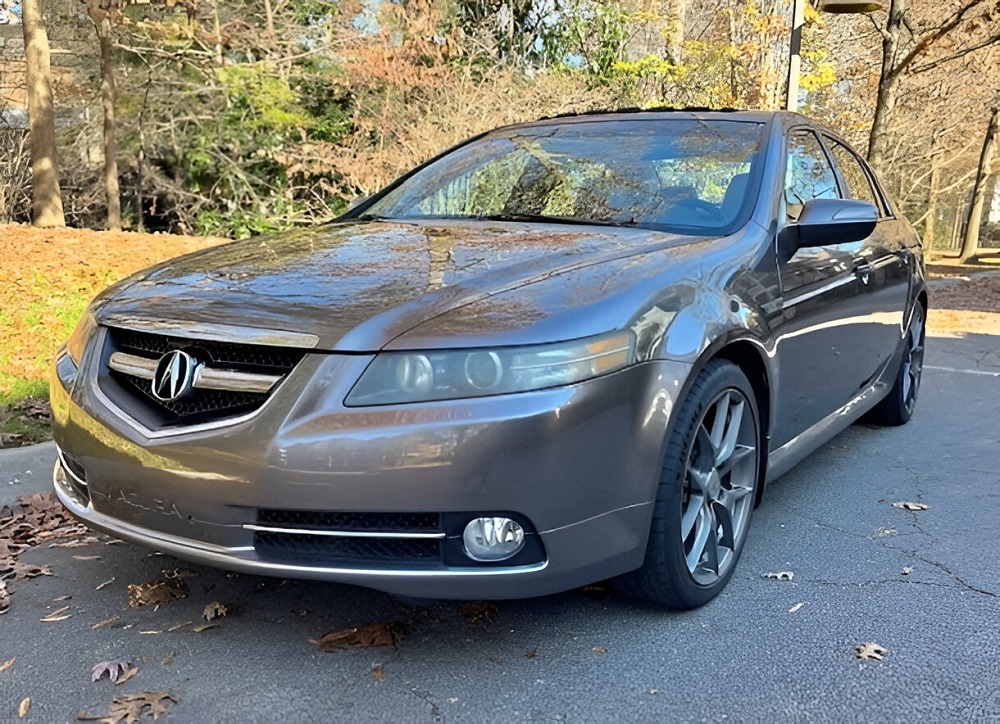
1. Transmission changes that shaped the TL’s weak spots
What each generation used, and how it handled stress
Acura cycled through three automatic layouts across four generations. The first TL ran a longitudinal 4-speed with old-school gear spacing and fat clutch packs.
No overdrive, no shift tricks, just basic hydraulics that rarely failed catastrophically. From 1999 on, Acura went transverse and dropped in a 5-speed with tighter ratios, sport logic, and compact internals that couldn’t handle heat.
The 3rd-gen kept that same 5-speed through 2006, then swapped in a stronger version borrowed from the Acura RL. The 4th-gen added a new 6-speed and SH-AWD on higher trims, but software and torque-converter tuning became the new battle zone.
Manuals were available on select trims, mainly Type-S and SH-AWD, isolated from most automatic-specific failures. Those are a different animal.
Acura TL generations vs. transmission hardware and risk level
| Gen / years | Engine layout & trans | Main failure themes | Overall trans risk (owner view) |
|---|---|---|---|
| 1st gen 1996–1998 | Longitudinal 4-speed auto | Case-bolt recall, otherwise durable | Low |
| 2nd gen 1999–2003 | 5-speed auto (SportShift) | 3rd-gear clutch failure, overheating, lock-up | Very high |
| 3rd gen 2004–2006 | Carryover 5-speed auto | Heat-sensitive, repeat failures if neglected | High |
| 3rd gen 2007–2008 | RL-spec 5-speed auto | Better internals, still fluid-sensitive | Moderate |
| 4th gen 2009–2014 | 5/6-speed auto, SH-AWD | Torque-converter judder, prop shaft noise | Moderate |
| Manuals (Type-S / select) | 6-speed manual | 3rd-gear pop-out, clutch wear | Low–moderate |
Why the move to 5-speeds broke the early automatics
Honda’s first 5-speed automatics squeezed more gears into the space of a 4-speed. That meant tighter clutch packs, smaller fluid passages, and more complex shift control.
Under load, those new internals shed debris faster and ran hotter. Once ATF broke down, heat stacked up. Narrow galleries clogged. Pressure dropped. Clutches slipped and scorched.
SportShift logic didn’t help. The PCM triggered more aggressive downshifts and earlier lockup, which pushed parts harder with less margin. The design could drive great on paper but punished owners who skipped fluid changes or ran hot.
Every generation after chased smoother shifts, better MPG, and faster kickdowns. The increased risk was tighter tolerances and higher risk if the fluid, switches, or cooling system lagged behind.
2. First-gen TL (1996–1998): the 4-speed that never flinched
Simple layout, oversized internals, and rare failures
The UA1 and UA3 TLs ran a longitudinal 4-speed mated to either a 2.5L inline-5 or a 3.2L V6. The gearbox was old-school Honda: wide gear spacing, thick clutches, and minimal electronics. No shift logic layers. No sport-mode overthinking. Just hydraulic guts that moved fluid and applied pressure.
Failures were rare. When they did show up, they followed age, not design flaws, seeping seals, tired solenoids, maybe a sticking valve body. Plenty of these hit 200,000 miles on nothing but drain-and-fill ATF service.
Transmission case-bolt defect and NHTSA recall 99V227000
One real defect forced action. In early production models, a transmission case bolt could loosen with vibration. If it backed out far enough, the trans could separate from the differential. That broke the drive connection and left Park non-functional. The wheels wouldn’t lock, even on a slope.
Honda’s fix under recall 99V227000 was simple, swap the bolt for a revised design with better thread engagement and Loctite. Over 100,000 vehicles were flagged. Once corrected, the risk vanished.
Why the 4-speed still outruns its younger cousins
The key wasn’t some secret build quality. It was mechanical margin. Fewer clutch packs. Lower fluid temp. Wider passages. The box never needed to juggle high-torque downshifts or multi-step shift maps.
Later TL automatics chased performance with smaller components under more heat. The first-gen stayed big and under-stressed. That’s why owners still find clean survivors with original transmissions that don’t even shift hard.
3. Second-gen TL (1999–2003): the 5-speed that self-destructs
Fragile 3rd gear clutch packs and cascading failure
Starting in 1999, Acura ditched the proven 4-speed and rolled out a new 5-speed automatic with tighter gear splits and “SportShift” logic. The weak point sat dead center, 3rd gear. The clutch pack was thin, prone to glazing, and shed friction material fast. That debris flowed straight into the ATF.
Once the fluid carried grit, it plugged narrow oil galleries and screens. Lubrication pressure dropped. Heat ramped up. More clutches slipped, burned, and spread more debris. The unit cooked itself from inside out. Many failed before 100,000 miles, especially with skipped fluid changes.
How the failure feels behind the wheel
Owners didn’t get warning lights. They got flares and slams. Upshifts from 2–3 or 3–4 started slipping at high RPM. The transmission would downshift hard at cruising speed, straight into engine braking. A few cases even locked up solid on the highway.
These weren’t soft-shift complaints. Acura logged crashes. The behavior triggered NHTSA involvement. This box degraded rapidly. It threw punches before it quit.
Recall 04V-176: oil squirter retrofit and inspection protocol
By 2004, Acura admitted 2nd gear was starving for oil during high load. They issued recall 04V-176, targeting 2001–2003 TLs.
Cars under 15,000 miles got a revised return line with a directional squirter to bathe 2nd gear. Higher-mile cars were opened up. If blueing or discoloration showed on the gear, the whole transmission came out.
Plenty of units passed visual inspection but still failed months later. Heat damage wasn’t always visible, and internal clutch wear had already started before the recall was applied.
Class action fallout and the 7.75-year warranty window
Legal pressure hit next. Acura extended warranty coverage to 7 years 9 months or 109,000 miles for affected 1999–2003 models. But coverage didn’t mean resolution. Replacement units installed before March 2005 often reused the same flawed clutch designs.
Only post-2005 remans with revised internals saw real durability gains. Even then, fluid quality and cooling still made or broke the repair. For many owners, the extended warranty just meant a second failure on Acura’s dime.
4. Third-gen TL (2004–2008): pressure-sensitive and fluid-hungry
2004–2006 models carried over the weakest traits
Acura launched the 3rd-gen TL with sharper looks and more power, but the 5-speed automatic came straight from the previous gen. The gearbox still used the same basic layout and clutch packs, and the same thermal limits applied.
Clutch degradation followed a familiar pattern: mushy 2–3 shifts, flares into 3rd and 4th, and eventual no-drive conditions between 120,000–170,000 miles.
Among these, 2006 logged the highest owner complaints. Fluid neglect and pressure loss were the usual issues. The box needed near-perfect conditions to survive past 150,000 miles.
RL-derived update in 2007–2008 improved survival odds
For 2007, Acura replaced the aging transmission with a tougher version used in the RL. This updated box kept the same housing but featured stronger clutches, better fluid routing, and upgraded thermal handling. Failure rates dropped, especially in cars that received regular service and clean ATF.
These late 3rd-gen units still required vigilance. Internal wear didn’t disappear, it just slowed. Most high-mile survivors got there because the owners stayed on top of fluid and electronics.
3rd and 4th gear pressure switches controlled more than shift feel
The weak link on both early and late 3rd-gens wasn’t mechanical, it was electronic. The pressure switches for 3rd and 4th gear told the PCM whether hydraulic pressure reached the clutch packs. When those sensors drifted or clogged, the PCM pulled pressure back and extended shift timing.
That made things worse. Softer shifts created more slip, more heat, and more friction loss. Over time, the transmission cooked itself. Fixing it was simple, swap both switches around every 60,000 miles. Use updated parts and new crush washers.
3rd-gen TL autos: failure levers owners can influence
| Model years | Transmission spec | Major weak point | Preventive actions that help most |
|---|---|---|---|
| 2004–2006 | Early 5-speed auto | Heat-sensitive clutch packs | 3×3 fluid service, 3rd/4th pressure switches, cooler health |
| 2007–2008 | RL-spec 5-speed auto | Fluid breakdown under load | Same as above; responds better to good fluid and switches |
The AV6 Accord swap turned out to be the fix Acura never built
After enough failures, the community found a workaround: drop in the 2006–2007 Accord V6 automatic. Internally, that BAYA-code unit had better flow paths, stronger friction material, and a cleaner record. It bolted straight in.
You had to transfer a few parts, TL harness, oil warmer, range switch, and some brackets, but the result was a more durable box that didn’t carry the TL’s same heat baggage. It wasn’t OEM-approved. It didn’t need to be. It worked. Most owners still prefer this swap over a dealer reman.
5. Fourth-gen TL (2009–2014): torque-control problems and AWD complications
New 6-speed added refinement, not immunity
By 2009, Acura upgraded the TL’s automatic to a new 5- and 6-speed family with better cooling, tighter programming, and revised internal architecture.
Full-on gearbox implosions dropped way off. But owners didn’t get silence. Complaints shifted to driveability quirks, judder, shudder, and vibration at speed.
SH-AWD trims stacked on more complexity. Rear differential, prop shaft, and centerline alignment issues added cost to any drivetrain repair, even if the trans itself held up.
Lock-up clutch judder traced to degraded ATF and poor cycling
Judder showed up between 20–45 mph under light throttle. No codes. No misfire. Just a rhythmic shudder that felt like unbalanced tires or a bad engine mount. Honda’s teardown teams tracked it to degraded ATF and a lock-up clutch that cycled too aggressively at low speeds.
Software ran the converter in and out of partial lock to save fuel, but old fluid couldn’t keep the clutch smooth. Heat buildup broke down the friction properties, turning light slip into vibration.
The TSB fix (like 16-033 and 16-030) called for a two-part process: flash the PCM/TCM with updated control logic, then run a triple flush using fresh ATF-DW1. If the judder came back, dealers replaced the converter under an 8-year/105,000-mile extended warranty.
SH-AWD prop shaft whine and bearing noise at speed
On SH-AWD cars, many owners started chasing a new noise, whine or droning between 35–65 mph. The transmission checked out clean. The sound came from the prop shaft. Bearing degradation inside the shaft housing set up a mid-range harmonic that mimicked trans noise.
The fix meant full replacement. Price tags landed around $1,800–$2,200, depending on labor and source. Plenty of owners ignored it once out of warranty unless it worsened.
Oil-burning J37 added downstream risk to drivetrain health
The 3.7L J37 engine in SH-AWD trims brought torque and intake noise, but also higher oil consumption. Engines that ran low on oil spiked trans temps, wore converter components faster, and stressed the cooling loop.
Owners who focused only on ATF service and skipped engine oil checks set themselves up for deeper issues. Converter chatter, delayed shifts, and overheating were all downstream symptoms of a neglected J37.
6. Maintenance strategies that actually reduce Acura TL transmission problems
Why the 3×3 method works and single drains don’t
Each drain-and-fill only removes about 3 quarts of ATF. That leaves old, overheated fluid trapped in the torque converter and valve body. If the unit’s already showing symptoms, a single drain barely moves the needle.
The 3×3 method hits harder. Drain 3 quarts, refill, drive a short cycle through all gears, then repeat twice more. That process gets you to 80–90% fresh fluid without opening the case. It’s the baseline for any TL automatic that hasn’t failed yet.
Stick with ATF-DW1 or a trusted full synthetic. The old ATF-Z1 formula doesn’t hold up under modern converter cycling. It’s been pulled from dealer shelves for a reason.
Pressure switch replacement resets shift accuracy
3rd and 4th gear pressure switches send critical hydraulic data to the PCM. When they drift or clog, the PCM misjudges circuit pressure and pulls timing. That creates long, soft shifts that overheat the clutches and shred ATF.
Swapping these switches every 60,000 miles keeps shifts crisp and fluid temps down. Use OEM or high-end aftermarket. Cheap sensors fail early or leak through the threads. Always replace the crush washers, reusing them causes seepage that ruins the job.
Without working switches, even perfect fluid won’t protect the transmission. The PCM flies blind.
Driving habits that change trans temps and fluid life
Short trips, towing, and mountain climbs push fluid temps into the danger zone. Holding partial throttle in the lock-up range, like cruising at 45 mph with light load, builds converter heat faster than downshifts.
Let the car warm up before pushing it. Avoid dropping into Drive while rolling backward. Don’t flash between Reverse and Drive without a full stop. That sudden spike hammers the clutches and valve body.
SH-AWD models need more than just ATF checks. The rear diff and transfer case fluid carry their own heat loads. Ignoring them invites whine, slip, or full lockup once wear sets in.
7. When the TL transmission fails: repair paths and cost math
Catch early symptoms before the clutches are toast
Minor flares, harsh cold shifts, or delayed engagement aren’t fatal. If the ATF still smells clean, pressure switches and a 3×3 fluid exchange can buy real miles. Some drivers recover smooth shifts with nothing more than fresh sensors and better fluid.
Once you see metallic flakes in the pan, no forward gear, or a shudder that returns right after a flush, the box is done. You can’t drain burned friction material out of a unit that’s already lost pressure integrity.
AV6 swap, rebuild, or reman: each fix has a clear lane
The AV6 Accord swap lands at the sweet spot. It fits. It works. And it uses better internals than the TL ever got from the factory. Salvage yards and shops charge $1,500–$2,500, including labor and fluids. Parts history varies. You take a risk on mileage.
Independent rebuilds cost more, usually $2,500–$4,000, but you get fresh clutches, seals, and solenoids. Quality depends on the builder. Some hold 100,000+ miles. Others fail before the warranty’s out.
Dealer remans run $4,800–$6,500 with a 36-month parts and labor guarantee. That only makes sense on low-mile 3rd or 4th gen cars in excellent shape.
Typical 2024–2025 repair cost bands for Acura TL automatics
| Option | Ballpark cost (parts + labor) | Best fit scenario | Main drawback |
|---|---|---|---|
| Pressure switches + 3×3 fluid | $150–$500 DIY / indy | Early-stage 3rd-gen issues | Won’t fix burned clutches |
| AV6 Accord swap | ~$1,500–$2,500 | 3rd-gen with failed auto but good shell | Yard parts, mixed history |
| Independent rebuild | ~$2,500–$4,000 | Well-kept car with local trans specialist | Quality varies shop to shop |
| Dealer reman | ~$4,800–$6,500 | Low-mile, clean later-gen TL | Can exceed market value of older cars |
Some repairs don’t pencil out, know when to bail
If the transmission quote tops 12 months of a replacement car payment, run the numbers. Add rust, interior wear, and known engine issues to the stack. For most 2nd-gen TLs, putting in a $5,000 trans makes no sense.
Clean 3rd-gen Type-S or 4th-gen SH-AWD models still hold value. If the rest of the car is tight, the fix can pay off. If not, you’re chasing a drivetrain that already gave you every warning it could.
8. Manual-transmission TLs – fewer failures, different rules
Why the 6-speed holds up when automatics don’t
The manual skips every failure tied to ATF, pressure switches, and shift solenoids. No lock-up clutch. No internal valve body. No heat-cycling fluid to burn down the box. When it breaks, it’s from overuse, not weak design.
Most problems come from wear, not defect. Clutch drag, syncro grind, and the well-known 3rd-gear pop-out on UA6 models show up on high-mile or hard-driven cars. Smooth 1–2 shifts when cold and regular fluid changes with MTF that meets Honda’s spec keep them healthy.
Owners report 200,000+ miles on original clutches when driven clean. The box isn’t indestructible, but it stays in the fight longer.
Mounts, shafts, and other driveline parts still fail
Manuals bring their own weak links. Engine mounts crack and sag, loading the trans at odd angles. The intermediate shaft bearing wears out and creates vibration that feels like a gearbox issue. Axles click or bind under throttle. None of these ruin the transmission, but they mask themselves as internal failures.
Wheel hop and hard launches do real damage. The differentials in these boxes don’t like shock loads. Get traction on one wheel during a burnout and the side gears can chip under sudden torque transfer.
Drivers chasing long life swap mounts early, use quality MTF, and avoid dead-stop full-throttle launches. That’s the maintenance map. Ignore it, and the manual ends up on jack stands just like the auto.
Sources & References
- Acura TL Reliability and Common Problems – In The Garage with …
- 1998 Acura TL Repair: Service and Maintenance Cost – RepairPal
- Acura TL – Wikipedia
- How to Choose an Acura TL: Is It Reliable? Buying Guide – CarInterior
- Acura TL | American Automobiles Wiki – Fandom
- 1996 Acura TL Consumer Reviews & Ratings | Kelley Blue Book
- 1996 Acura TL Review & Ratings – Edmunds
- 1996 ACURA TL Recalls, Complaints and Investigations – The Center for Auto Safety
- Acura Model Chronology: 1996-1998 2.5TL/ 3.2TL
- Looking at buying a 2nd gen TL. What causes the trans failure? : r/AcuraTL
- Resolving 2003 Acura TL Transmission Problems: Expert Solutions Await—Call 855-CLE-AUTO Today!
- Honda and Acura Recall Various 2001-2004 Vehicles Due to an Internal Transmission Fault (04V176000) – RepairPal
- Acura TL 2003 Recalls Check Results – ClearVin
- 28600-P7W-013 Genuine Acura Transmission Pressure Switch
- Question before buying 3rd gen tl (transmission) : r/Acura
- Reliability on 3rd and 4th gen Acura TL? – Reddit
- 2006 Acura TL 3rd and 4th Gear Pressure Switch Question – Reddit
- PSA: change your 3rd gear pressure switch : r/AcuraTL
- 3G TL trans pressure switches : r/Acura
- Where do you guys recommend buying 3rd and 4th gear pressure switches for my ’08 TL? : r/Acura
- Acura TL 2004-2006 auto gear pressure switches (3rd and 4th +gaskets) – EndLess RPM
- OEM Transmission 3RD Gear Oil Pressure Switch Sensor For HONDA Acura 28610RKE004 – eBay
- Genuine Acura TL Oil Pressure Switch
- Transmission Replacement Cost Estimate – RepairPal
- Buy new car or rebuild transmission 2000 Acura TL? – General Discussion
- AV6 Transmission Swap Guide for TL | PDF – Scribd
- Just pulled my first engine. 2005 Acura TL. Doing the “AV6 swap” using a 2006/7 Accord transmission. – Reddit
- Well I didn’t believe the posts about the 3G auto transmissions being shit, but I guess they were right. She just blew up… : r/Acura
- Changing Pressure Switches and Restarting Transmission on a 04-06 Acura TL – YouTube
- Here Are The Acura TL Years To Avoid – CoPilot for Car Shopping
- 2012-14 TL: Judder from the Torque Converter Lock-Up … – NHTSA
- View Message – NHTSA
- View Message – NHTSA
- 2012–14 TL: Judder from the Torque Converter Lock-Up Clutch After Software Update – NHTSA
- 2010 Acura TL SH-AWD AWD … What should I be weary of with the 2010? – Reddit
- TL 3rd vs 4th Gen : r/Acura
- Talk me out of buying a 4th Gen TL with a manual transmission : r/Acura
- How to do the 3×3 trans drain on a 2007 Acura TL Type S? – Reddit
- 2014-2020 Acura MDX Transmission Fluid Change 3x3x3 method – YouTube
- 3×3 fluid change. How long between the 3 drain/fills? : r/AcuraTL
- Amsoil OE ATF 2004 Acura TL Transmission fluid change 3×3 – YouTube
- Replace Acura TL transmission or sell and buy new car? : r/whatcarshouldIbuy
- Transmission Rebuild Vs. Replacement: Which Option Is Best For You?