
Slips on the 2–3 shift, then grabs hard. RPM jumps, then settles. That’s how Corolla transmission trouble usually starts. Since the mid-1990s, Toyota has cycled through old-school 4-speeds, multiple CVTs, hybrids, and manuals under the same badge.
The 4-speeds soak up abuse and run past 200,000 miles with basic fluid care. The 2005–2008 cars throw harsh shifts from cracked ECM boards.
The 2014–2018 K313 CVTs hiss, overheat, and limp when fluid breaks down. The 2019 Direct Shift units fix the launch feel but add new handoff quirks and one major recall.
This guide calls out what fails, which years carry real risk, and when service saves it or replacement makes more sense.
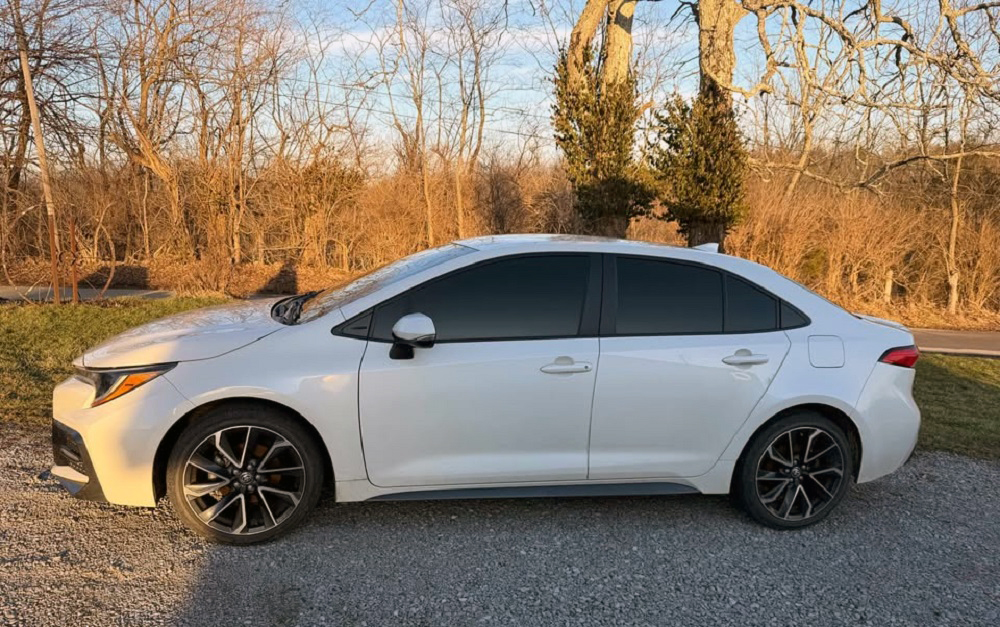
1. Corolla transmission families by generation and risk pattern
From hydraulic 4-speeds to heat-loaded CVTs
Track the Corolla from 1995 to 2026 and the hardware keeps changing.
1995–2002 cars ran U340E 3- and 4-speed automatics. Pure hydraulic logic with electronic trim. Thick clutch packs. Wide fluid passages. They tolerate dirty ATF and still move.
2003–2008 moved to the U341E 4-speed. Strong geartrain. Weak link showed up in the ECM, not the transmission. Cracked solder joints on the board scrambled solenoid signals and caused slam shifts.
2009–2013 kept the 4-speed alive. By then, it was dated but durable. Most failures past 150,000 miles relate to pump wear, TCC clutch glazing, or low line pressure from thin fluid.
2014 changed the game. The K313 CVT replaced the 4-speed in most trims. Steel push-belt. Two variable pulleys. High clamping pressure. Fluid quality became critical.
2019 introduced the K120 Direct Shift CVT on 2.0L cars. A physical launch gear handles takeoff below about 25 mph. Above that speed, the system hands off to the belt and pulleys.
Hybrids ran a different path. The e-CVT uses a planetary power-split device with two motor-generators. No belt. No pulley faces. Many units pass 250,000 miles with routine fluid service.
Where problems cluster by generation
| Gen / Code | Years | Main Transmission(s) | Strength Pattern | Common Failure Profile |
|---|---|---|---|---|
| 8th (E110) | 1995–2002 | U340E 3/4-spd auto, 5-spd manual | Simple geartrain, low stress | Age leaks, clutch wear |
| 9th (E120) | 2003–2008 | U341E 4-spd, 5/6-spd manual | Strong hardware | ECM board failures |
| 10th (E140) | 2009–2013 | 4-spd auto, 5-spd manual | Peak planetary durability | TCC slip past 150k mi |
| 11th (E170) | 2014–2018 | K313 CVT, 6-spd manual | Better MPG, lighter internals | Hiss, limp mode, P2757 |
| 12th (E210) | 2019–2023 | K120 CVT, e-CVT, 6-spd iMT | Launch gear, refined control | 2019 CVT recall units |
| 12th facelift | 2024–2026 | Updated K120, hybrid e-CVT, GR 6-spd | Software tuning improvements | Fluid still critical |
Early 4-speeds fail from mileage and neglect. Design defects are rare.
2005–2008 cars shift violently from ECM circuit cracks. The fix was a module replacement under recall, not a rebuild.
2014–2016 K313 units show the highest complaint volume. High heat, belt load, and valve body turbulence accumulate in traffic and desert climates. Limp mode triggers with P2820 when pressure control falls out of range.
2019 hatchbacks with the 2.0L K120 saw a torque converter impeller defect. Toyota replaced entire CVT assemblies on affected VINs. Failure meant sudden loss of drive at highway speed.
High-risk owners and low-drama setups
High-mileage 4-speed cars over 180,000 miles face pump wear and clutch thinning. Burnt fluid and delayed engagement mark the point of no return. Reman swaps run $2,500–$3,500 installed.
K313 CVTs in hot states carry more thermal stress. Long climbs and stop-and-go traffic push fluid temps past 220°F. Fluid breakdown accelerates belt slip and pulley scoring.
Early 2019 K120 hatchbacks without recall confirmation carry real risk. A failed impeller means zero propulsion. Dealer replacement units cost $4,000–$6,000 out of warranty.
Lowest drama sits with 2009–2013 4-speed automatics under 150,000 miles and documented fluid service. Hybrid e-CVT cars with clean coolant circuits and fluid changes rarely see internal failure before 250,000 miles.
2. Old-school 4-speed automatics: strong gears, silent electronic traps
U340E and U341E: why these 4-speeds survive abuse
Run one past 200,000 miles and it often still shifts. The U340E and U341E use simple planetary gearsets and hydraulic clutch packs. Line pressure stays stable even with moderate fluid neglect. Clutch drums are thick, and the torque converter lockup clutch engages late to reduce heat.
Cold delay into Drive often points to front pump seal wear. A worn pump leaks pressure until fluid warms. Light 3–4 flare under load signals thinning ATF and clutch glazing. Most units fail from wear past 150,000–200,000 miles, not design flaws.
Torque converter clutch slip sets P0741 when lockup can’t hold. Shudder at 45–55 mph in light throttle follows. Ignored long enough, the converter sheds debris into the pan. A full rebuild runs $2,000–$3,000.
2005–2008 ECM failures that fake a dying transmission
Feel a sudden bang into 2nd or a random neutral flare at steady speed. Many 2005–2008 Corollas blamed the gearbox. The real fault lived inside the ECM circuit board. Thermal cycling cracked solder joints that control shift solenoids.
Erratic signals spiked line pressure. The transmission slammed into gear or delayed shifts without internal damage. Some cars logged communication faults like P1603. Others showed no codes at all.
Toyota issued a recall and replaced affected ECM units. Swap the module and the harsh shifting stopped. No clutch packs changed. No rebuild required.
When the 4-speed actually wears out
Notice a mild 2–3 flare under steady throttle. Weeks later, it slips every time. Burnt fluid smells sharp and dark brown. Drop the pan and metal dust coats the magnet.
Overdrive loss often relates to worn clutch packs. Pump wear lowers pressure at highway speed. Fluid temp climbs past 210°F on long drives. At that point, a reman unit around $2,500 installed makes more sense than chasing internal parts one by one.
3. K313 CVT: heat, hiss, and pressure loss
Inside the K313: belt load and hydraulic stress
Rev climbs, speed lags, then the car catches up. That’s classic early CVT behavior. The K313 uses a steel push-belt clamped between two variable pulleys. Hydraulic pressure controls pulley width and belt grip.
Line pressure must stay high under load. Fluid acts as both lubricant and friction modifier. Once fluid shears down, belt slip starts. Slip scores pulley faces and sheds fine metal into the valve body.
Operating temps often sit between 190°F and 230°F in traffic. Repeated heat cycles thin the fluid. Toyota marketed long intervals, but field failures show fluid breakdown well before 100,000 miles.
The hot-soak hiss and T-SB-0016-19
Hear a high-pitched hiss once the car warms up. Many 2014–2018 cars showed this after 20–30 minutes of driving. The source related to the valve body plate design.
Fluid turbulence at the separator plate created noise and uneven pressure. The issue appears in T-SB-0016-19. Some cars received updated valve body assemblies. Others ran noisy but intact for years.
Noise alone doesn’t confirm failure. Persistent hiss with pressure codes signals internal wear. Valve body replacement runs $800–$1,500 installed.
From whine to limp mode, how the K313 breaks down
| Symptom | Likely Cause | Repair Range (USD) |
|---|---|---|
| Steady highway whine | Input/output bearing wear | $2,000–$3,500 unit swap |
| Surge under light throttle | Degraded fluid, pulley glazing | $200 fluid, or full unit |
| High revs, no power | Overheat, pressure solenoid fault | $600–$1,500 valve body |
| Delayed Drive engagement | Internal pressure leak, solenoid lag | $1,000+ repair |
Overheat triggers limp mode and may log P2820. Vehicle speed drops and throttle response dulls. Restarting clears it until temps spike again. Persistent events point to internal scoring and pressure loss.
Once metal debris circulates, solenoids stick. Pressure control falters under load. Full CVT replacement runs $3,000–$4,500 for reman units.
Service intervals that keep the belt alive
Fluid condition determines belt grip. Severe use demands changes at 30,000–45,000 miles. Normal commuting stretches to 60,000 miles at most.
Fluid level checks require the overflow method. The car must sit level. Fluid temp must read within spec before removing the standpipe plug. Wrong temp means wrong fill.
Skip fluid service long enough and pulley faces groove. Groove depth past tolerance requires full replacement. Most neglected K313 units fail between 120,000 and 180,000 miles.
4. K120 Direct Shift CVT: launch gear fix, new weak links
The physical first gear that changed takeoff
Roll off a stop and it feels like a normal automatic. The K120 uses a real first gear below about 25 mph. That gear handles high torque at launch. After that speed, the system hands power to the belt and pulleys.
This cuts belt load during the highest stress phase. Clamping pressure drops during launch compared to K313. Belt heat falls during city driving. Toyota aimed for better durability and cleaner acceleration feel.
Above the handoff point, it runs like any other CVT. Line pressure and fluid health still control belt grip. Fluid neglect still leads to slip and scoring by 120,000–150,000 miles.
2019 hatchback recall: sudden loss of drive
Accelerate hard, then lose propulsion with no warning. Early 2019 Corolla Hatchback models with the 2.0L engine faced this risk. The torque converter pump impeller blades were improperly bonded during manufacturing.
Blades could detach under load. Loss of hydraulic pressure meant total drive loss. No flare, no gradual slip. Just a dead drivetrain at speed.
Toyota replaced complete CVT assemblies on affected VINs. Out-of-warranty replacement costs run $4,000–$6,000 at dealer rates.
Gear-to-belt handoff hesitation and calibration faults
Cruise past 20–30 mph and feel a brief stumble. That’s the launch gear handing off to the CVT section. Early calibrations showed rough transitions in some cars. Software updates smoothed clutch timing and pressure ramp.
Worn handoff clutches amplify the hesitation. Low fluid volume or degraded fluid worsens the shift feel. Some cases log ratio mismatch or pressure codes.
Repeated slip during the handoff accelerates clutch wear. Once friction material thins, the transition shock becomes permanent. Internal clutch repair requires full CVT teardown, often exceeding $3,500 in labor and parts.
5. Hybrid e-CVT: planetary simplicity, rare internal failure
Power-split hardware that skips belts and pulleys
Press the pedal and engine rpm floats without fixed shifts. The hybrid Corolla uses a planetary power-split device. One motor-generator starts the engine. The other blends torque to the wheels.
No steel belt rides between pulleys. No high clamping pressure squeezes friction faces. Power flows through a fixed gearset and electric motors.
Fluid lubricates bearings and gears. It does not manage belt grip. Many units pass 250,000–300,000 miles with only fluid service and cooling system care.
Sluggish climb feels like transmission failure
Climb a long grade in 100°F heat and power fades. The hybrid battery and inverter heat up. The system reduces electric assist to protect components. Engine rpm rises while acceleration drops.
Drivers blame the transmission. The planetary gears remain intact. No belt slip occurs. Once temperatures fall, full assist returns.
Scan data shows battery or inverter temp limits. True e-CVT gear failure remains rare below 200,000 miles.
Service demands and warranty coverage
Hybrid transaxle fluid still ages. Most specialists suggest 60,000–100,000 mile intervals. Coolant for the inverter loop must stay clean and full.
Hybrid components carry longer coverage than gas-only drivetrains. Many markets list 8 years or 100,000 miles for hybrid systems. Some 2020+ models extend battery coverage to 10 years or 150,000 miles.
Out-of-warranty e-CVT replacement can exceed $4,000. Internal planetary gear damage remains uncommon before extreme mileage or collision-related contamination.
6. Manual gearboxes: synchro wear and pop-out under load
Early 5-speeds: grind, notch, and highway pop-out
Shift into 4th at 70 mph and feel it kick back to neutral. Early 2000s 5-speed Corollas show this after 180,000–220,000 miles. Worn synchro hubs lose their sharp engagement edges. Dog teeth round off and can’t hold under load.
Cold shifts feel notchy when gear oil thickens. Grinding into 2nd signals synchro ring wear. Sloppy linkage bushings add play and mask internal damage.
Bushing refresh may tighten feel. True pop-out under steady throttle points to internal wear. Full rebuild with synchros and hubs often runs $1,500–$2,500 in parts and labor.
6-speed iMT units: rev-match load and synchro fatigue
Drop from 3rd to 2nd and feel the throttle blip. The iMT system matches engine rpm during downshifts. That feature changes shift timing and load on synchros.
Some 2019+ hatchbacks report hard 1–2 shifts when cold. Others struggle to engage 1st from a stop. Rolling the car slightly often lets the gear mesh.
Warranty cases have seen all six synchros replaced. Excess wear shows up before 50,000–70,000 miles in severe cases. Parts cost alone for a full synchro set can exceed $800 before labor.
What real manual failure sounds like
Hear a steady whine on decel in 3rd or 4th. That points to input or output shaft bearing wear. Noise rises with vehicle speed, not engine rpm.
Clutch slip under full throttle in 4th gear signals disc wear. Rev climbs without matching speed. Clutch kits run $600–$1,200 installed depending on labor rates.
True gear tooth failure throws metal into the oil. Drain fluid and see glitter. At that stage, internal repair means full teardown and often exceeds $2,000.
7. Diagnosing Corolla transmission problems: codes, data, and false alarms
Match the symptom to the right gearbox
Feel a harsh slam into 2nd with no warning lights. On 2005–2008 4-speeds, suspect the ECM before the gearbox. Erratic solenoid control mimics clutch failure.
Hear a high-pitched hiss once the CVT warms up. On 2014–2018 K313 units, check valve body history and fluid age. Noise plus pressure codes raises internal wear risk.
Lose power with high rpm and little movement. Any CVT can enter limp mode from heat. Fluid temps over 230°F often trigger protection logic and ratio limits.
| Likely Years / Unit | First Suspect |
|---|---|
| Random harsh shifts 2005–2008 4-spd |
ECM board failure |
| Hot hiss, normal drive 2014–2018 K313 |
Valve body plate / turbulence |
| High rpm, low speed 2014+ CVT |
Overheat, pressure fault |
| Pop-out of 4th/5th 2000s 5-spd manual |
Worn synchro hub or dog teeth |
| Sluggish on long climb (hybrid) 2019+ e-CVT |
Battery or inverter thermal limit |
Misread the symptom and the repair bill doubles.
DTCs that separate solenoids from hard parts
Scan the car before approving anything. P0741 or P2757 points to torque converter clutch performance. On K313 units, that often relates to the pressure control solenoid or valve body scoring.
P0841 flags fluid pressure sensor range issues. Low fluid level, clogged filter, or pump wear can trigger it. Ignoring it leads to clutch slip and heat rise.
P2820 marks a pressure control solenoid “J” fault. Limp mode usually follows. Persistent return after clearing signals internal contamination.
P0711 indicates fluid temp sensor performance. A bad sensor can command wrong pressure and odd shifts. Replace the sensor and retest before condemning the transmission.
Clearing codes without fixing underlying issue resets the clock. Repeated limp events cook fluid and glaze clutch surfaces above 240°F.
The diagnostic steps that prevent a $4,000 mistake
Log live data during a road test. Watch commanded ratio versus actual ratio. Slip under load reveals belt or clutch wear.
Check fluid with the correct overflow method and temp window. Overfill or underfill changes pressure behavior. Many “bad CVTs” turn out low on fluid after leaks.
Inspect the pan when serviceable. Fine metal dust suggests early wear. Large flakes point to mechanical damage.
Cross-check VIN for recalls and TSB history. An unresolved ECM recall or CVT campaign changes the repair path. Skip these steps and a $600 valve body job becomes a $4,500 transmission swap.
8. Maintenance, costs, and smart buying strategy
End the “lifetime fluid” myth
Read the owner’s manual and you’ll see vague language about normal driving. In real shops, fluid condition decides CVT life. Heat shears additives and lowers belt friction capacity. Once friction modifiers fade, slip starts.
K313 units show wear when fluid runs past 60,000–80,000 miles untouched. Severe use needs service at 30,000–45,000 miles. Fluid temps above 220°F shorten additive life fast.
4-speed automatics tolerate neglect better. Even they benefit from 40,000–60,000 mile changes. A $250 fluid service beats a $3,500 rebuild every time.
| Transmission Type | Factory Messaging | Real-World Interval | Risk if Ignored |
|---|---|---|---|
| 4-spd auto | Minimal service under normal use | 40,000–60,000 miles | Pump wear, TCC slip |
| K313 CVT | “Lifetime” fluid language | 30,000–60,000 miles | Belt slip, valve body scoring |
| K120 CVT | Similar lifetime wording | Handoff clutch wear | |
| Hybrid e-CVT | Light service guidance | 60,000–100,000 miles | Bearing wear over long term |
| Manual | Often ignored | 60,000–90,000 miles | Synchro and bearing wear |
Neglect pushes most K313 failures into the 120,000–180,000 mile range.
What repairs really cost in 2026
Start with fluid. Drain and fill runs $150–$350 depending on region. Valve body or solenoid jobs fall between $600 and $1,500.
Used transmission swaps cost $1,500–$3,000 installed. History remains unknown. Reman CVT units with warranty run $2,500–$4,500.
Dealer-installed new units climb past $4,000–$6,000. On a 10-year-old Corolla worth $8,000, that math hurts.
| Service | Typical Cost (USD) | When It Makes Sense |
|---|---|---|
| Fluid drain/fill | $150–$350 | Preventive or early symptoms |
| Valve body / solenoid repair | $600–$1,500 | Confirmed pressure-related DTCs |
| Used transmission swap | $1,500–$3,000 | Low vehicle value, budget fix |
| Reman transmission | $2,500–$4,500 | Newer car, want warranty coverage |
| New dealer unit | $4,000–$6,000+ | Recall, goodwill, or near-new vehicle |
Cross 60–70% of vehicle value and replacement starts making more sense than repair.
Picking the right Corolla for your risk tolerance
Seek 2009–2013 4-speed cars with documented fluid changes. Those units hold up under moderate neglect. Avoid 2005–2008 models without proof of ECM recall completion.
Choose 2019+ Direct Shift CVT cars with recall work confirmed. Check for smooth launch-to-CVT transition during a hot drive. Scan for stored pressure codes before buying.
Hybrid e-CVT models offer the lowest internal failure rate. Confirm cooling system health and fluid service history. Most reach 250,000 miles without internal transaxle repair.
Sources & References
- What Are the Toyota Corolla Models by Year? A Complete Breakdown – CarInterior
- A Brief Toyota Corolla History: Generations of Success – be forward blog
- Toyota Corolla Complaints, Problems and TSBs
- Toyota Recalls 3,400 2019 Corolla Hatchback Models For CVT Issues [News] – TFLcar
- CVT Toyota Corolla guide: What to look for when buying – CarInterior
- How Reliable Is the Corolla CVT Transmission? – Clutch
- Toyota Corolla Generations | CarsDirect
- Toyota Corolla Sedan Generations: All Model Years | CarBuzz
- Toyota K CVT transmission – Wikipedia
- What Are Common Toyota CVT Transmission Problems and How to Fix Them? – CarInterior
- 4 Unreliable Toyota Corollas To Reconsider Due to Engine and Transmission Issues
- Toyota Transmission Problems Explained: Symptoms, Costs, and Fixes – Breaking AC
- Transmission Replacement Cost – AutoZone.com
- Which Toyota Models Have CVT Transmissions and How Reliable Are They? – CarInterior
- What You Need to Know About Toyota Corolla SE CVT Transmission – CarInterior
- CVT Hiss Noise Valve Body Replacement – nhtsa
- 5 Toyota CVT Transmission Problems & How to Fix Them – The Lemon Law Experts
- Is Toyota still reasonably the #1 most reliable brand, given it’s recent history of CVT issues?
- Buying new car but cautious of CVTs : r/COROLLA – Reddit
- Toyota Australia recalls Corolla vehicles to replace CVT assembly | Latest News
- Toyota recalls 2019 Corolla due to faulty CVT – Pakwheels
- Common Problems with the e-CVT (Toyota Hybrid Models) – ASR Gearbox Repairs
- How expensive will these cvts cost to repair ? : r/COROLLA – Reddit
- Let’s really talk CVT : r/COROLLA – Reddit
- 2019 Corolla Hatchback MT transmission complaint : r/Toyota – Reddit
- 2019 Toyota Corolla Hatchback: Manual Transmission In Detail – YouTube
- Why is my Toyota Corolla popping out of fourth gear after driving at high speeds? – CarKiller
- manual transmission poping out of gear. – Toyota Owners Club of North America
- Toyota OEM Synchro Set (6) – EC60 EC67 Corolla 1.8L 2014-22 Elise 2ZR 1ZR
- DTC – K313 – Toyota-Club.Net
- DTC – K313 – Toyota-Club.Net
- 18b-105-115 Toyota k313 CVT Transmission DCT p2757 TCC Pcs Performance Fault | PDF
- Troubleshooting Toyota CVT Problems: Expert Insights and Solutions
- Toyota Engine Trouble Codes & Diagnostics
- When Should You Change Your Toyota Transmission Fluid?
- How Often Should You Change the Transmission Fluid in Your Toyota?
- How reliable are Toyota’s CVTs? – Reddit
- Diagnosing and Resolving Toyota Corolla CVT Problems: Expert Insights and Solutions
- Baton Rouge, LA – Detailed Auto Topics – How Do I Check Toyota Transmission Fluid – AGCO Automotive
- How to Change CVT Transmission Fluid on a 2021 Toyota Corolla by Orion – HowToo
- Transmission Replacement Cost Estimate – RepairPal
- Understanding the Costs of Replacing a Solenoid: What You Need to Know – Oreate AI Blog
- Is it worth replacing a CVT transmission? Cost vs. value analysis – CarInterior
- Comprehensive Guide to Toyota Warranty Coverage and Extended Protection Plans
- 2024 Toyota Warranty Explained: What’s Covered And What’s Not – Performance Toyota Blog
- What warranty coverage do I have on my Toyota vehicle?
- Toyota Extended Warranty: Keeping Your Toyota Lasting for Years to Come
- Toyota Corolla Extended Warranty: Cost, Coverage and Plans – Consumer Affairs
- Toyota Extended Service | Elk Grove Toyota