
Hear a deep knock, watch the oil light blink, feel the steering go heavy. That’s how Hyundai 2.0 failures start. Between 2004 and 2026, Hyundai ran four main 2.0L families across Elantra, Sonata, Tucson, Kona, and Veloster.
Beta II iron blocks rarely headline failures. Theta II aluminum blocks did, with rod bearings that seize and sometimes punch holes through cases. Nu engines chase low friction, then start drinking oil or rattling cold. Smartstream cleans up combustion but adds complex thermal modules and sensor weak points.
This guide sorts Theta swarf seizures from Nu ring coking and Smartstream coolant leaks. It lays out the recalls, settlements, and warranty traps that matter. Then it shows which fixes buy time and which engines deserve a hard pass.
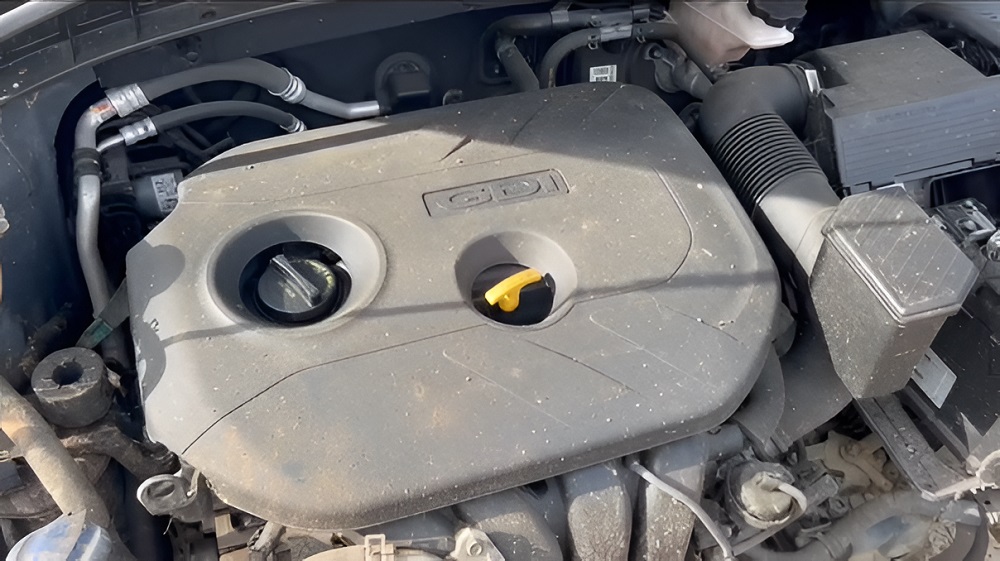
1. Hyundai 2.0 families and where problems cluster
Iron to aluminum, and the efficiency risk
Start with the cast-iron G4GC Beta II. Thick cylinder walls, belt-driven cams, port injection. Fewer headline failures, mostly oil leaks and timing belt neglect past 90,000 miles. Blocks rarely crack unless overheated hard.
Shift to aluminum with Theta II in 2004. Lighter block, tighter clearances, dual CVVT, then GDI and turbo. Less mass, higher compression, hotter chambers. That cut weight and raised output, but it narrowed the margin for oil starvation.
Nu followed in 2011. Bore dropped to 81 mm, stroke stretched to 97 mm. Weight fell to roughly 115 kg. Low-tension rings reduced friction, but they rely on clean oil and strict intervals under 5,000 miles in city use.
Smartstream G2.0 keeps the 81 x 97 layout. Compression climbs to 12.5:1 to 13.5:1 in some trims. Many variants return to port or dual injection. Thermal control moved to an integrated electronic module with five coolant paths.
Same 2.0 badge, very different failure math
Theta II 2.0 GDI and T-GDI show up in 2011–2016 Elantra, 2011–2014 Sonata, some Tucson and Veloster trims. Failures cluster around rod bearings. Metallic debris in crank oil galleries scars bearing overlays. Clearance grows, oil pressure drops, rods seize.
Nu 2.0 MPI and GDI power 2017–2020 Elantra, 2016–2021 Tucson, Kona, and base Sonata trims. Oil consumption rises after 70,000 to 100,000 miles in many cases. Stuck oil-control rings let a quart disappear every 1,000 to 2,000 miles. Cold-start slap often shows before full bore scuffing.
Smartstream 2.0 runs in 2021-up Elantra and 2022-up Kona base models. Fewer bearing complaints so far. Early problems center on coolant leaks at the water temp sensor and thermal module faults. Overheat risk rises fast if coolant drops below the reservoir seam.
Hybrids complicate the Nu story. The 2.0 Atkinson hybrid adds an exhaust heat exchanger. Internal valve failure can dump coolant into the exhaust. Drivers report thick white smoke and empty reservoirs within 5 to 10 miles.
Core Hyundai 2.0 engine families and primary failure patterns
| Engine Family | Common Codes | Block / Head | Fuel System | Typical Power (hp) | Primary Failure Theme |
|---|---|---|---|---|---|
| Beta II | G4GC | Iron / Alum | MPI | 138–145 | Age-related leaks, belt failures |
| Theta II | G4KD / G4KH | Alum / Alum | GDI / Turbo | 165–276 | Rod bearing seizure, fire risk |
| Nu | G4NA / G4NC / G4ND | Alum / Alum | MPI / GDI / CVVL | 147–173 | Oil burn, ring coking, piston slap |
| Smartstream G2.0 | G4NH / G4NS | Alum / Alum | MPI / Dual / Atkinson | 147–160 | TMM leaks, sensor faults |
Oil starvation destroys Theta II fast. A spun bearing can lock the crank at highway speed. Repair means a short block, often $6,000 to $9,000 retail without settlement coverage.
2. Theta II 2.0 GDI: how rod bearings turn into block windows
Machining debris in the oil galleries
Cut crank oil passages at the Alabama plant between 2011 and 2019. Fail to clear metallic swarf from those galleries. Send engines out with debris still inside the crankshaft.
Start the engine and that debris moves with the oil. It reaches the rod bearings first. The hydrodynamic oil film gets scored, then wiped thin. Bearing overlay flakes off, clearance grows past spec, and copper shows early in teardown.
Oil pressure drops as clearance increases. Hot idle pressure can fall below 10 psi. The oil light may flicker before full knock sets in.
Rod knock, seizure, and fire risk
Hear a deep metallic thud under load. It gets louder with RPM and hill pulls. Lift off the throttle and the noise softens. That pattern points to rod bearings, not lifters.
Ignore it and the bearing can spin. The crank journal overheats and smears metal. The rod can lock on the journal at 60 mph. Some rods break and punch through the aluminum block.
Pressurized oil sprays onto the exhaust manifold. Flames follow in documented non-collision fires. Many failures cluster between 60,000 and 120,000 miles.
KSDS software and forced limp mode
Install the Knock Sensor Detection System update. It retunes the knock sensor to listen for bearing-frequency vibration. When it detects abnormal patterns, it stores codes and limits RPM to about 2,000.
Drivers see a warning and feel power drop. The car still moves, but barely. Limp mode aims to stop block puncture before the rod exits. Towing from limp mode often saves the crank and rods from total destruction.
Skip the update and lifetime short-block coverage can vanish under settlement rules.
Theta II 2.0 GDI failure progression
| Symptom | Mechanical Cause | Driver Clue | End Result |
|---|---|---|---|
| Deep knock under load | Rod bearing clearance enlarged by scoring | Louder uphill, worse hot | Bearing seizure |
| Oil light flicker at idle | Oil loss through worn bearing | Flicker at stoplights | Rapid wear escalation |
| Sudden stall at speed | Bearing locks crankshaft | Engine dies, no restart | Loss of power assist |
| Hole in block | Broken rod exits case | Oil spray, smoke, fire smell | Engine total loss |
Short-block replacement runs $6,000 to $9,000 retail without coverage, and many dealers replace the entire long block once a rod exits the case.
3. Nu 2.0: oil burn, piston slap, and timing chain noise
Low-tension rings that start drinking oil
Fit low-tension oil control rings to cut friction. Stretch oil intervals to 7,500 miles in normal service. Run short trips in city traffic. Heat and fuel dilution bake carbon into the ring grooves.
Oil rings stick and stop scraping the cylinder wall. Oil slips past into the chamber. Consumption climbs to 1 quart every 1,000 to 2,000 miles in many 70,000 to 120,000 mile engines. Spark plugs foul and catalytic converters overheat from oil ash.
Compression can still test “normal” early on. Leak-down numbers often rise once ring lands wear. Long-term oil burn can warp the cat substrate, a $1,200 to $2,000 repair.
Cold-start piston slap that turns into bore damage
Hear a hollow tick for 10 to 60 seconds on cold start. Aluminum pistons rock in the bore before full expansion. Light slap fades warm and may never return that day.
Severe cases don’t quiet fully. Skirts scuff and cylinder walls show vertical scoring. Oil consumption and slap often travel together. Australian litigation cited brittle ring failures in some Kona and Veloster units, leading to wall damage and sudden power loss.
Once bore scuffing sets in, honing rarely saves it. Re-ring jobs fail if cylinder taper exceeds spec. Full rebuild or replacement often exceeds $4,000.
Hybrid exhaust heat exchanger that dumps coolant
Run the 2.0 Nu hybrid in Sonata and related models. Add an exhaust heat recovery unit to warm coolant fast. Internal valve failure can leak coolant into the exhaust passage.
Drivers report thick white smoke under acceleration. Coolant level drops from full to empty within a short drive. No puddle forms under the car. Engine temps spike once coolant falls below the pump pickup.
Heat exchanger replacement can run $1,500 to $2,500 parts and labor. Continued driving risks warped heads and head gasket failure.
Timing chain stretch and tensioner rattle
Listen for a sharp rattle at cold start near 90,000 miles. Hydraulic tensioners lose pressure overnight. Worn guides add slack and timing drift.
DTCs like P0011 or cam/crank correlation codes may set. Idle goes rough and fuel trims swing. Jump a tooth and valves can meet pistons on interference variants.
Chain, guides, and tensioner service often runs $1,200 to $2,000. Ignore rattle long enough and bent valves push repair costs past $3,500.
Nu 2.0 failure patterns by mileage
| Failure Mode | Common Mileage | Primary Cause | Typical Repair Cost |
|---|---|---|---|
| High oil consumption | 70,000–120,000 | Ring coking, stuck oil rings | $3,000–$6,000 if rebuild |
| Piston slap with scuffing | 40,000–100,000 | Skirt wear, bore scoring | $4,000+ engine work |
| Hybrid heat exchanger leak | 40,000–80,000 | Internal valve failure | $1,500–$2,500 |
| Timing chain slack | 80,000–150,000 | Tensioner and guide wear | $1,200–$2,000 |
Run low on oil in a Nu engine and rod bearings can fail the same way as Theta, with hot idle pressure falling below safe limits in under 500 miles of neglect.
4. Smartstream 2.0: thermal modules, coolant leaks, and software blind spots
High compression and tight thermal control
Run 12.5:1 to 13.5:1 compression in many Smartstream 2.0 trims. Pair it with Atkinson valve timing and an IVT. Some variants use dual injection to control deposits and pre-ignition.
Higher compression means tighter heat control. Coolant temp must stabilize fast and stay steady. Oil temp and head temp swings can trigger knock control and timing pull within minutes. Normal operating coolant temp sits near 190°F to 210°F.
Miss that window and efficiency drops. Run hot and aluminum heads warp faster than older iron blocks.
Integrated Thermal Management Module failures
Replace a simple thermostat with an electronic Thermal Management Module. Route coolant through the radiator, engine bypass, oil cooler, heater core, and sometimes the transmission cooler. Control flow with an electric valve and temperature sensors.
Early 2021 Elantra and 2022 Kona units saw machining burrs at the water temp sensor port under Service Campaign T8F. Burrs prevented proper sealing. Small leaks started at the sensor body. Coolant dripped down the head with no large puddle.
Let coolant drop below the expansion tank seam and air enters the system. Overheat can follow within 5 to 10 miles of highway driving. Head gasket repair can exceed $2,500.
Thermostat drift and DTC P0128
See DTCs P0128 or P2181 in some Nu and early Smartstream engines. Thermostat sticks open or drifts out of spec. Engine runs too cool for too long.
Cabin heat weakens. Fuel trims richen during extended warm-up. Oil dilution rises with repeated short trips. Combined MPG can fall by 2 to 4 points.
Thermostat replacement runs $300 to $700. Ignore it and fuel wash accelerates ring and chain wear.
Instrument cluster software recall and hidden warnings
Lose warning lights on 2025–2026 models under Recall 293. Instrument cluster fails to display speed or engine alerts. Overheat and low oil pressure warnings may not show.
Driver sees a blank or partial display. No oil light, no temp alert. Hardware failure plus no visible warning shortens reaction time to seconds.
Engine damage from unnoticed overheating can occur once coolant exceeds 240°F. Aluminum heads can warp after a single severe overheat event.
Smartstream cooling and control issues
| Issue | Model Years | Primary Cause | Typical Repair Cost |
|---|---|---|---|
| Water temp sensor leak (T8F) | 2021 Elantra, 2022 Kona | Burrs at sensor port | Covered campaign or $400–$800 |
| Thermostat drift | 2019–2022 2.0 variants | Faulty thermostat element | $300–$700 |
| Cluster software recall 293 | 2025–2026 models | Instrument panel software bug | Recall update |
| TMM valve fault | 2021–2024 Smartstream | Electronic valve failure | $800–$1,500 |
Smartstream 2.0 depends on intact coolant flow and working electronics; lose either, and head damage can begin once coolant crosses 240°F under load.
5. Cooling system weak points that cook these engines
Slow leaks that pull air and start cavitation
Lose a few ounces of coolant every week. No puddle forms under the car. Check hoses, bypass tubes, and sensor ports on 2017–2018 Elantra and similar models. Small seepage at junctions can go unnoticed for months.
Air enters the system once the level drops. The water pump pushes a mix of coolant and air. Cavitation bubbles collapse against aluminum surfaces. Pitting forms in water jackets and near the head gasket fire ring.
Repeated hot spots stress the gasket. Local metal temps can spike above 250°F even if the gauge looks stable. Head gasket replacement often runs $1,800 to $3,000.
Overheat cycles that warp aluminum heads
Overheat once and shut it down fast. Overheat twice and aluminum starts to move. Theta, Nu, and Smartstream all use aluminum heads. Warp can begin after a single severe event above 240°F to 250°F.
Coolant loss leads to steam pockets. Steam doesn’t transfer heat well. Metal temps climb while the gauge lags. Oil thins and oxidizes above 260°F.
Warped heads fail leak-down tests. Machine work plus gasket and bolts can exceed $2,500. Full engine replacement climbs past $6,000 in many markets.
Hybrid cooling loops that fail loud
Add electric pumps and extra valves in hybrid 2.0 systems. Route coolant through exhaust heat recovery and battery-adjacent components. Failure paths multiply.
Internal valve failure in the exhaust heat exchanger can dump coolant straight into the exhaust stream. White smoke pours out under load. Coolant reservoir can empty within a short highway run.
Continue driving and cylinder head temps spike fast. Overheat damage can occur in under 10 miles once coolant falls below pump pickup.
Cooling failures by pattern and impact
| Failure Type | Common Models | Primary Cause | Damage Path |
|---|---|---|---|
| Bypass tube seepage | 2017–2018 Elantra 2.0 | Junction leaks | Air ingestion, cavitation |
| Sensor port leak | 2021 Elantra 2.0 | Machining burrs | Coolant loss, overheat |
| Exhaust heat exchanger leak | 2020 Sonata Hybrid | Internal valve failure | Coolant in exhaust, rapid depletion |
| Repeated overheat cycles | All aluminum 2.0 families | Low coolant or stuck thermostat | Warped head, blown gasket |
Run low on coolant and these engines can exceed 250°F metal temperature under load, a threshold where aluminum head distortion becomes permanent.
6. Settlements, recalls, and the details that decide who pays
Theta II lifetime short-block coverage
Cover many 2.0 and 2.4 Theta II GDI engines under the U.S. settlement. Lifetime short-block warranty applies for rod bearing failure. KSDS update must be installed and documented. Failure must show bearing damage, not abuse.
Short block means block, crank, rods, pistons, and bearings. It often excludes accessories, turbochargers, and some labor add-ons. Dealers inspect for sludge and low-oil signs before approval. Claims can be denied for “exceptional neglect” such as running without oil.
Retail short-block replacement can exceed $7,000 without coverage. Approved claims drop owner cost to $0 under the program terms.
Engine II settlement for Nu 2.0 GDI
Extend coverage to 15 years or 150,000 miles under the Engine II program. Applies to certain Nu 2.0 GDI and 2.4 Theta II MPI engines. KSDS must be active. Maintenance records matter.
Covered failures include connecting rod bearing damage and some internal engine failures. Oil consumption cases may require documented tests. Dealers often run oil consumption monitoring over 1,000-mile intervals before approval.
Out-of-pocket engine replacement without coverage can run $5,000 to $9,000 depending on region and labor rates.
Canadian class actions and regional add-ons
Layer Canadian settlements on top of factory programs. Cases such as Wolfe and Kodybko addressed engine and fire risks. Some provide reimbursement for past repairs. Deadlines and VIN eligibility apply.
Canadian programs may include ABS module fire issues in certain models. Inspection or recall completion often required for eligibility. Transport Canada recall checks differ from NHTSA VIN tools.
Miss filing windows and reimbursement rights can expire. Some claims close within months of notice publication.
Key 2.0-related warranty and settlement coverage
| Engine Family | Program | Coverage Window | Core Requirement |
|---|---|---|---|
| Theta II 2.0 GDI | Theta Settlement | Lifetime short block | KSDS installed |
| Nu 2.0 GDI | Engine II Settlement | 15 years / 150,000 miles | KSDS installed, maintenance proof |
| Theta II 2.4 MPI | Engine II Settlement | 15 years / 150,000 miles | Same conditions |
| Various models (Canada) | Engine / ABS class actions | Varies by case | VIN eligibility, inspection |
Settlement protection ends if neglect is proven, and documented oil starvation can void coverage even with KSDS active.
7. Model and year risk map: where failures cluster hardest
Match the badge to the engine under the hood
Check 2011–2016 Elantra and 2011–2014 Sonata first. Many carry the 2.0 Theta II GDI. Rod bearing failures and engine replacements show up often in service histories. Look for notes like “short block replaced” or KSDS update performed.
Scan 2017–2020 Elantra and 2016–2021 Tucson. Most use the 2.0 Nu MPI or GDI. Oil top-off visits every 1,000 to 2,000 miles raise red flags. Cold-start rattle past 90,000 miles points toward timing chain wear.
Review 2021-up Elantra and 2022-up Kona base trims. These run the Smartstream 2.0. Check for Service Campaign T8F completion and cluster software updates. Coolant leak complaints within the first 30,000 miles deserve pressure testing.
Hybrids like the 2016–2019 Sonata Hybrid use the 2.0 Nu Atkinson. Exhaust heat exchanger failures often appear between 40,000 and 80,000 miles. White smoke and rapid coolant loss often precede overheat damage.
Common model and engine pairings
| Model / Years | Likely 2.0 Engine | Headline Risk | High-Cost Outcome |
|---|---|---|---|
| Elantra 2011–2016 | Theta II GDI | Rod bearing seizure | $7,000+ engine replacement |
| Sonata 2011–2014 | Theta II GDI | Highway stall, fire risk | Block puncture |
| Elantra 2017–2020 | Nu 2.0 MPI / GDI | Oil consumption, chain noise | $4,000+ rebuild |
| Tucson 2016–2021 | Nu 2.0 GDI | Oil burn, carbon buildup | Catalytic converter damage |
| Sonata Hybrid 2016–2019 | Nu 2.0 Atkinson | Heat exchanger leak | Overheat, head warp |
| Elantra 2021–on | Smartstream 2.0 | Sensor leaks, TMM faults | $2,500+ head repair |
Used-car ads rarely list engine family. VIN decoding or service invoices tell the truth. Engine replacement records can raise resale value if done under settlement.
A clean Carfax with no engine notes on a 2012–2014 Theta II car raises risk, not confidence, since many failed before 120,000 miles.
Read service records like a technician
Search for “engine assembly replaced” or “short block.” Confirm mileage at replacement. Multiple thermostat or coolant sensor visits on Smartstream models hint at recurring leaks.
Look for oil consumption test entries on Nu engines. Dealers often document 1,000-mile checks. Three or more top-off visits in 5,000 miles suggest ring coking.
Check recall completion for KSDS and cluster software. No record means no coverage safety net. Buying without verifying VIN recall status can shift a $7,000 failure onto your wallet.
8. Mitigation strategy: what actually shifts failure odds
Oil chemistry and intervals that protect bearings and rings
Run full synthetic meeting API SP and ILSAC GF-6. Those specs target LSPI control and timing chain wear. Cheap bulk oil accelerates chain stretch and ring deposits in Nu and Theta engines.
Cut intervals to 3,000 to 5,000 miles in city use. Short trips fuel-dilute oil fast. Dilution thins viscosity and weakens bearing film strength. Hot idle pressure can drop below 15 psi in worn engines.
Check the dipstick every 1,000 miles on Nu and Theta. Many 2.0 engines lack oil level sensors. One quart low can raise oil temps and increase bearing load within a single highway run.
Intake cleaning, ring soak, and chain service timing
Perform induction cleaning every 30,000 miles on GDI variants. Carbon builds on intake valves and disrupts airflow. Misfires and rough idle often originate from valve deposits.
Use piston soak procedures only when oil rings stick. Some techs use solvent-based cleaners to free coked rings. Results vary once cylinder walls show scoring. Severe taper or out-of-round bores won’t recover with chemicals.
Replace timing chain, guides, and tensioner once rattle starts near 90,000 to 120,000 miles. Waiting for cam/crank codes increases valve contact risk. Chain service before failure costs $1,500 on average, bent valves double that.
Smartstream ownership – coolant and software discipline
Inspect coolant level monthly on Smartstream models. Pressure test at the first unexplained drop. Small sensor or TMM leaks can escalate fast under load.
Keep instrument cluster and ECU software current. Recall 293 and related updates restore warning visibility. No temp or oil alert shortens reaction time to seconds.
Monitor for DTCs like P0128 and resolve them early. Running cool for months increases fuel dilution and chain wear. Ignoring thermostat drift can shave tens of thousands of miles off engine life.
Keep, sell, or replace
Keep a Theta II with documented short-block replacement and KSDS active. Sell a car with persistent rod knock or repeated oil light flicker. Walk from a Nu engine burning a quart every 800 miles.
Buy Smartstream with verified campaign completion and no coolant loss history. Budget for proactive maintenance rather than reactive rebuilds. Engine replacement on an uncovered 2.0 can exceed $8,000 in many U.S. markets.
Sources & References
- Hyundai Nu engine – Wikipedia
- 2.0 Hyundai Engine Guide: What to Look For
- DOHC 16V Hyundai Engine Guide: What to Look For – CarInterior
- Hyundai’s $5 Billion Engine Recall Nightmare Explained
- The Biggest Problem With Kia & Hyundai’s Theta II Engines – Jalopnik
- Most Reliable Hyundai Engines: Top 10 Ranked for Longevity
- Hyundai Tucson – Wikipedia
- Hyundai Theta engine – Wikipedia
- Water Temperature Sensor LEAK INSPECTION AND REPAIR (SERVICE CAMPAIGN T8F) – nhtsa
- Hyundai Engine Class Action – Register Now
- Engine Recalls – Hyundai
- Recall 209 – Nu Engine 2.0L – Dealer Best Practice – nhtsa
- Hyundai / Kia Engine Fire Hazard Class-Action Settlement – Hagens Berman
- What Those Knocking Sounds Mean In Your Hyundai Engine – Riverhead Hyundai Blog
- piston slap vs. rod knock | Turbobricks – The Volvo Performance Community
- Hyundai Engine II Class Action Settlement: Home
- A timeline of the Theta II failures from a mechanic : r/kia – Reddit
- 2025+ 2.0 Engine Good? : r/kia – Reddit
- What Is Piston Slap and How Can You Get Rid of It? – In The Garage with CarParts.com
- Is this an engine knock/piston slap? – Hyundai – Reddit
- Control for Electrical Coolant Valve in Engine Thermal Management Module | Request PDF
- Coolant leak through exhaust on 2020 Sonata Hybrid : r/Hyundai – Reddit
- Can Overheating Cause a Blown Head Gasket? – Mint Auto Service
- engine thermostat replacement dtc p0128 / p2181 – nhtsa
- 2018 Elantra Overheating – Mysterious Coolant Loss – HouseCallAutoRepair – YouTube
- Radiators Explained – Pro Alloy
- How To Identify A Cracked Head Gasket In Your Hyundai Car
- Hyundai – OEMDTC
- Hyundai Theta Engine Settlement: Home
- Hyundai/Kia 2.0L and 2.4L Theta II GDI Engine Class Actions – McKenzie Lake Lawyers
- Hyundai/Kia Vehicle Defect Class Actions – McKenzie Lake Lawyers LLP
- powertrain extended warranty – Hyundai
- Hyundai Recalls Tucson, Santa Fe Over Power Loss – Kelley Blue Book
- Hyundai Recalls Tucson and Santa Fe Vehicles for Loose Connecting Rod Bolts
- Well this is a bummer… : r/HyundaiSantaFe – Reddit
- New Recall : r/HyundaiSantaFe – Reddit
- 2026 Hyundai SANTA FE Recalls – Cars.com
- Buy Hyundai Sonata Engine – Rebuilt, Used & Recon Units UK
- What Hyundai Gets the Best Gas Mileage? (Updated for 2025)
- 2024 Hyundai Models by Miles per Gallon | Hyundai Fuel Efficiency – Huffines Hyundai Plano
- 2026 Hyundai Tucson MPG & Gas Mileage
- Hyundai Tucson Fuel Economy: How Efficient Is It?
- What is the Hyundai Elantra MPG?
- TCU SOFTWARE UPDATE & INSPECTION FOR TRANSMISSION NOISE OR DAMAGE (RECALL 263) – nhtsa
- Technical Service Bulletin – nhtsa