
Spool the turbo, tip into throttle, hear a sharp metallic crack. Power drops, the check-engine light flashes, and the smooth 2.0 starts to shake. That’s how many GM 2.0 turbo failures begin.
Since 2003, GM has run five major 2.0L turbo Ecotec variants, LK9, LNF, LHU, LTG, and LSY. Power climbed to 275 hp from just 2.0 liters, with high boost and tight clearances chasing torque and mpg.
Some versions age with minor leaks and chain noise. Others crack pistons, throw coolant codes, or eat thrust bearings. This guide maps what breaks, why it breaks, and what actually keeps one of these engines from turning a brief rattle into a full engine swap.
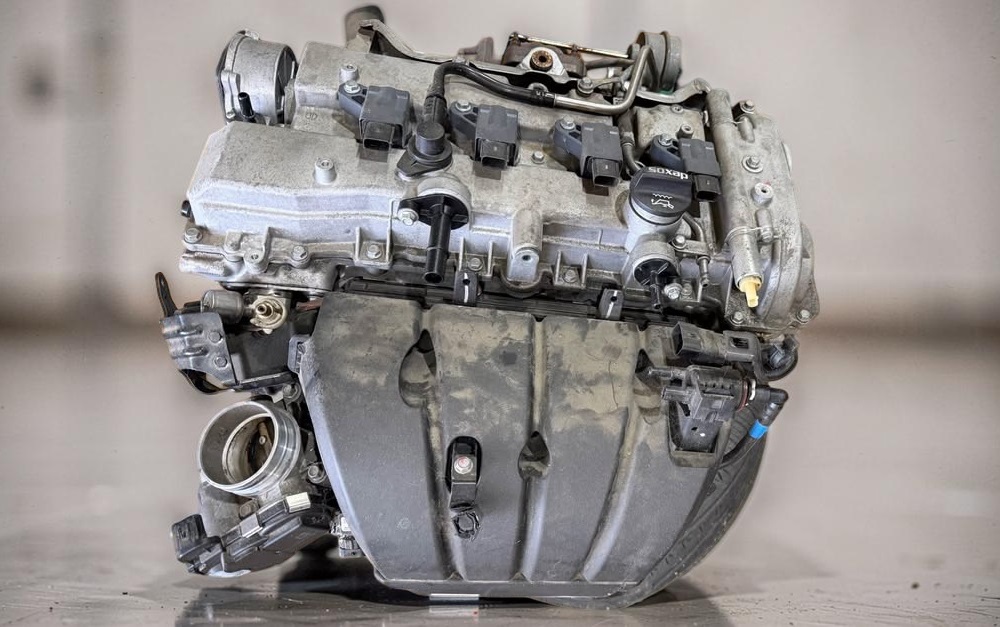
1. GM 2.0 turbo generations and where trouble really starts
Saab roots to high-boost world engine
Launch the story in Sweden. The early LK9, known as the B207 in Saab form, ran port injection and modest boost up to 12.3 psi. Compression stayed conservative. Power ranged from 148 to 207 hp depending on tune.
Those engines used multi-port fuel injection. Intake valves saw fuel wash, so carbon buildup stayed low. Failures leaned toward age, oil leaks, and turbo wear past 150,000 miles.
Then came LNF in 2007. Direct injection arrived, boost climbed near 20 psi, and output jumped to about 260 hp. Stronger bulkheads and sodium-filled exhaust valves handled heat, but carbon buildup and timing wear started to show by 100,000 to 150,000 miles.
| Engine code | Years / key models | Injection type | Boost range | Typical failure pattern | Risk level |
|---|---|---|---|---|---|
| LK9 / B207 | 2003–2014 Saab 9-3, BLS | Port injection | 7–12 psi | Leaks, sludge, aging turbo | Low–medium |
| LNF | 2007–2010 Cobalt SS, HHR SS | Direct injection | Up to 20 psi | Carbon buildup, chain wear | Medium |
| LHU | 2011–2013 Regal Turbo | Direct injection | High teens | Carbon, fuel system stress | Medium–high |
| LTG | 2013–2020 Malibu, ATS, Camaro | DI, twin-scroll | High teens | LSPI piston failures | High |
| LSY | 2019–present XT4, CT4 | DI, ATM cooling | Moderate | Coolant valve, thrust wear | Medium–high |
Where complaints cluster by badge and year
Scan owner forums and warranty data. The LTG era, roughly 2013 to 2020, generates the most engine replacements. Malibu 2.0T, ATS 2.0T, and early Camaro 2.0T show ring-land failures between 60,000 and 120,000 miles.
LNF and LHU cars age into typical 4-cylinder wear. Timing chains rattle on cold start. High-pressure fuel pumps fail around 80,000 to 140,000 miles.
LSY complaints focus on newer Cadillacs. Codes like P00B7 and P05CE appear under 50,000 miles in some cases. Thrust-bearing checks in bulletin PIP6047 lead straight to full engine replacement if axial play exceeds spec.
| Model | Approx. years | Engine | Main risk window |
|---|---|---|---|
| Cobalt SS / HHR SS | 2007–2010 | LNF | 100k+ miles carbon and chain |
| Regal Turbo / GS | 2011–2017 | LHU / LTG | 80k–130k piston or chain |
| Malibu 2.0T | 2013–2019 | LTG | 60k–120k ring-land failure |
| Camaro 2.0T | 2016+ | LTG / LSY | Early LSPI, later cooling codes |
| ATS / CTS 2.0T | 2013–2019 | LTG | 70k–130k piston damage |
| XT4 / CT4 / CT5 | 2019+ | LSY | Under 60k coolant or thrust |
Why owners still like them
Torque hits early. Full boost often lands under 3,000 rpm. A 2.0T Malibu pulls like an older 3.6 V6 while using less fuel on the highway.
Aftermarket support stays strong on LNF and LTG. Stock bottom ends can handle mild tunes. Push too far without oil discipline and ring lands crack under pressure spikes above 1,000 psi in-cylinder.
The core hardware remains solid when maintained. Forged crankshafts, chain-driven cams, and twin-scroll turbos give strong response. Ignore oil spec or stretch intervals, and the timing chain or piston becomes the fuse.
2. LTG piston failures and the LSPI pressure spike
LTG hardware runs tight and hot
Bolt a twin-scroll turbo to 9.5:1 compression and command boost below 2,500 rpm. That’s the LTG formula. Displacement sits at 1,998 cc, redline at 7,000 rpm, with up to 275 hp and 295 lb-ft.
The block uses a forged steel crank and powdered metal rods. Pistons are lightweight aluminum with thin upper ring lands. Oil control comes from a two-stage variable-displacement pump.
Clearances stay tight to cut friction. Cylinder pressure under heavy load can exceed 1,000 psi. There isn’t much safety margin when combustion goes off-script.
| LTG design feature | Engineering goal | Failure path in the field |
|---|---|---|
| High boost at low rpm | Strong low-end torque | LSPI pressure spike at low speed |
| Direct injection (SIDI) | Precise fuel control | Carbon and oil droplets in chamber |
| Thin ring lands | Lower mass, quick rev | Ring-land cracking under spike load |
| Variable oil pump | Reduced drag | Lower flow at low rpm with degraded oil |
LSPI hits before the spark
Low-Speed Pre-Ignition fires the mix before the plug does. It happens under load, low rpm, high boost. The piston is still rising when the charge lights.
Pressure spikes fast and hard. The force pushes against the upward-moving piston. The upper ring land takes the hit.
Drivers report a sharp metallic crack under light throttle in high gear. Lugging the engine at 1,800 rpm in 6th gear sets the stage. One bad event can start a hairline crack.
Ring-land fracture and cylinder scoring
Once the crack starts, it spreads around the ring groove. A chunk breaks off. Compression drops on that cylinder.
Misfire codes follow, often P0300 or a single-cylinder misfire. Oil consumption climbs as blow-by increases. Borescope inspection shows chipped piston crowns and vertical scoring in the cylinder wall.
If the cylinder wall catches a fingernail, GM calls for full engine replacement under bulletin guidance. A remanufactured LTG long block typically costs $2,700 to $5,000 before labor. Installed costs, including parts and labor, often range from $5,500 to $9,500.
| Failure stage | Internal damage | What the driver sees |
|---|---|---|
| Early LSPI event | Micro-fracture at ring land | Sharp ping under load |
| Crack propagation | Ring land splitting | Rough idle, light misfire |
| Ring chunk loss | Cylinder wall scoring | Flashing MIL, limp mode |
| Full failure | Low compression, heavy blow-by | No power, engine swap required |
Oil chemistry changed the survival rate
GM traced LSPI frequency to oil additives. High-calcium detergent packages increased pre-ignition risk. Bulletin 17-NA-039 ties oil spec directly to LTG durability.
Dexos1 Gen 2 and Gen 3 oils cut calcium and increased magnesium. That shift reduced LSPI events in field data. Non-certified oil in an LTG under boost loads the dice against the pistons.
Oil change intervals matter. Stretching past 7,500 miles on hard-driven cars raises dilution and deposit risk. Run the wrong oil, lug the engine in high gear, and the ring land becomes the weak link.
3. LSY thermal control and the thrust-bearing problem
LSY shifts focus from peak power to control
Dial back peak output to about 230 to 237 hp. Spread torque wider across the rev range. Add Tripower valve control and, in some versions, cylinder deactivation.
Cooling moved from a simple thermostat to Active Thermal Management. The LSY uses an electric coolant flow control valve instead of a wax pellet stat. The PCM commands flow by zone, block, head, heater core, radiator.
The system chases fast warm-up and tighter emissions. It also adds more sensors, more wiring, and more failure points.
Active Thermal Management throws hard codes
When the valve sticks or a sensor disagrees, the PCM sets P00B7, P0128, or P2681. Temperature differences between zones over about 18°F can trigger a fault. The fans default to high speed to protect the head.
Drivers report loud fans, weak cabin heat, and temp gauge swings. Some cars enter reduced-power mode to limit heat load. Replacing the coolant control valve and reprogramming the module often fixes it.
| DTC | Fault focus | Common root cause | Typical repair path |
|---|---|---|---|
| P00B7 | Coolant flow low/performance | Stuck ATM valve, air pocket | Valve replacement, bleed, reflash |
| P0128 | Temp below spec | Thermostat logic fault | Software update, sensor check |
| P2681 | Bypass valve circuit | Wiring or actuator fault | Harness repair or valve module |
ATM valve replacement with labor often runs $700 to $1,200 at dealer rates.
Thrust bearing wear and crank walk
Bulletin PIP6047 outlines a more serious failure. The crankshaft thrust bearing controls axial movement. When it wears, the crank moves forward and back beyond spec.
Technicians set the crank rearward with a soft mallet. They then pry it forward and measure endplay with a dial indicator. Excess movement flags internal damage.
Drivers may notice odd scraping near the harmonic balancer. Transmission input seals can leak from crank walk. Some cases also log P05CE or P0014 without clear timing hardware failure.
If endplay exceeds spec, GM calls for full engine replacement. Long block cost and labor for LSY engines on late-model Cadillacs typically range from $7,000 to $11,000.
4. Chronic weak points every 2.0T shares
Timing chain rattle that turns into correlation codes
Hear a sharp rattle on cold start that fades in seconds. That’s the chain slapping worn guides before oil pressure builds. Plastic guides get brittle past 100,000 miles.
Low oil level or wrong viscosity speeds the wear. Stretch builds until cam timing drifts out of range. The PCM then logs P0011 or P0014 for cam/crank correlation.
Ignore it long enough and the chain can jump a tooth. Bent valves follow if timing slips far enough. A full timing set job runs $1,500 to $2,500 before any head damage.
Direct injection carbon choking the valves
Direct injection sprays fuel into the cylinder. Intake valves never see fuel wash. Oil vapor from the PCV system bakes onto the valve stems.
Build-up thickens by 60,000 to 100,000 miles, faster with short trips. Airflow drops and misfires show under load. Random misfire codes and rough idle start creeping in.
Walnut blasting restores flow. Most shops charge $600 to $1,100 for the service. Prices vary by region and the complexity of the intake manifold removal.
High-pressure fuel pump that leaks into the oil
The cam-driven HPFP boosts pressure from about 60 psi to over 2,000 psi. Internal seals can fail. Fuel then seeps into the valve-train area and oil.
Symptoms include long crank, hesitation at high load, and fuel pressure codes. Oil level may rise and smell like gasoline. Diluted oil thins out and removes bearing protection.
Left unchecked, cam lobes and rod bearings wear fast. HPFP replacement typically runs $700 to $1,300 installed for stock applications. For tuned engines requiring high-flow ‘Big Bore’ pumps, parts alone can exceed $1,900. Bearing damage can push repair costs past $4,000.
Debris after a major failure contaminates the new engine
Piston or bearing failure sends metal through the oil system. Microscopic debris lodges in the oil cooler and lines. Flushing rarely removes it all.
GM service bulletins instruct replacing the oil cooler and lines during engine swap. Some cases call for turbo replacement due to contaminated bearings. Skip those parts and the new long block can fail within a few hundred miles.
| System | Typical issue | Best-case repair | Worst-case outcome |
|---|---|---|---|
| Timing drive | Chain stretch, guide wear | Chain kit replacement ($1,500 – $2,500) | Jumped timing, bent valves |
| DI system | Valve carbon buildup | Walnut blast service ($600 – $1,100) | Misfire, cat overheating |
| HPFP | Seal leak, low pressure | Pump replacement ($700 – $1,300) | Oil dilution, bearing wear |
| Oil cooler | Metal contamination | Cooler and line replacement | Repeat engine failure |
| Turbocharger | Bearing damage from debris | Turbo replacement | Overspeed, boost loss |
5. Service intervals, fuel grade, and driving style decide survival
Long oil intervals push these engines past their limit
Run 8,000 to 10,000 miles on one oil fill under boost. Oil shears down and fuel dilution climbs. Direct injection adds raw fuel to the oil during cold starts.
The LTG’s variable oil pump reduces flow at low rpm. Thin or diluted oil drops film strength at the bearings and chain tensioner. Chain rattle and cam correlation codes show up sooner.
Most techs cut oil intervals to 5,000 to 7,500 miles for mixed driving. Hard use or tuned cars often need 3,000 to 5,000 mile changes. Stretching beyond that increases LSPI and timing wear risk.
| Service item | Light highway use | Mixed driving | Hard use / tuned |
|---|---|---|---|
| Engine oil + filter | 7,500–10,000 miles | 5,000–7,500 miles | 3,000–5,000 miles |
| Spark plugs | Up to 100,000 miles | 60,000–80,000 miles | 40,000–60,000 miles |
| Intake valve cleaning | 80,000–100,000 miles | 60,000–80,000 miles | 40,000–60,000 miles |
| Coolant service | 120,000–150,000 miles | 90,000–120,000 miles | 60,000–90,000 miles |
| Transmission fluid | 90,000–100,000 miles | 50,000–75,000 miles | 40,000–60,000 miles |
Octane rating and knock control under boost
Many 2.0T applications recommend premium fuel. The LTG runs high cylinder pressure at low rpm. Lower octane increases knock activity under load.
Knock sensors can pull timing. They cannot stop LSPI events that fire before the spark. Hot weather and heavy throttle in high gear raise intake charge temperature fast.
Running regular fuel under sustained boost raises piston risk. A few tanks of low octane in summer traffic can trigger ring-land damage. Premium fuel costs less than a $8,000 engine swap.
Short trips and stop-and-go driving build sludge and dilution
Frequent cold starts dump extra fuel into the cylinders. Some of that fuel washes past the rings into the oil. Oil level rises and viscosity drops.
Engines that never reach full operating temperature hold moisture and fuel longer. Sludge forms in the timing cover and oil pickup screen. Chain tensioners starve first when pickup flow drops.
A clogged pickup screen can cut oil pressure below safe limits. At that point, rod bearings and cam journals start to score within minutes of hard driving.
6. Bulletins, warranty fights, and how GM handles failures
LTG piston damage and oil-spec enforcement
Dealers don’t guess when an LTG drops compression. They check oil history first. Bulletin 17-NA-039 ties engine survival to Dexos1 Gen 2 or Gen 3 oil.
If service records show non-approved oil, warranty claims can stall. Techs borescope the cylinders and look for chipped ring lands. Deep scoring that catches a fingernail triggers full engine replacement under GM guidance.
Customer Satisfaction Program N182195660 added predictive monitoring for stochastic pre-ignition in some models. Software updates adjusted spark and boost control to reduce LSPI frequency. Engines with confirmed ring-land fracture still require long block replacement.
| Area | Engine | GM action | Shop directive |
|---|---|---|---|
| LSPI / pistons | LTG | TSB + oil spec enforcement | Verify oil, inspect cylinders, replace engine if damaged |
| Predictive monitoring | LTG | CSP software update | Reflash PCM to reduce LSPI events |
| Timing rattle | LTG | Timing chain bulletin | Inspect stretch, replace chain and guides |
An out-of-warranty LTG engine replacement, including parts and labor, often runs $5,500 to $9,500 retail.
LSY coolant and thrust-bearing bulletins
LSY coolant faults follow a test script. Techs command the coolant valve and monitor position feedback. Mismatch between target and actual position confirms actuator failure.
Bulletins covering P00B7 and related codes instruct valve replacement and system bleed. Software updates may recalibrate thermal targets. Labor times range from 2 to 4 hours depending on access.
PIP6047 covers crankshaft endplay measurement on certain LSY applications. Excess axial movement leads to engine exchange. No in-car thrust bearing repair is approved in these cases.
| Concern | Engine | GM action | Repair outcome |
|---|---|---|---|
| Coolant flow codes | LSY | ATM valve test and replace | Valve module and reprogram |
| Crank walk | LSY | Endplay measurement per PIP6047 | Full engine replacement |
LSY engine exchanges under warranty are common under 60,000 miles. Out-of-warranty swaps can exceed $9,000.
Documentation decides goodwill
Service records matter when failures hit at 62,000 or 75,000 miles. Dealers check oil interval gaps and parts receipts. Missing records reduce goodwill support.
Repeated misfire visits before piston failure can help a case. Stored freeze-frame data showing knock events also enters the review. GM may split cost on borderline cases.
Without records, owners often pay full retail for engine work. One missed oil interval can erase thousands in goodwill assistance.
7. Used-market risk and how to inspect before you buy
Which engine codes carry the most baggage
Scan auction listings and service histories. LTG cars from 2013 to 2019 carry the highest piston risk. Many serious failures show between 60,000 and 130,000 miles.
LNF and LHU cars are older now. Problems lean toward timing chains, carbon buildup, and worn turbos past 120,000 miles. Age and prior mods matter more than design flaws at this point.
LSY engines are newer. Coolant valve codes and thrust-bearing checks show up under 60,000 miles in some cases. A clean Carfax means nothing without service proof.
| Engine family | Typical serious issue window | Main financial risk |
|---|---|---|
| LK9 / B207 | 150,000+ miles | Age-related wear and leaks |
| LNF | 120,000–180,000 miles | Chain, turbo, carbon service |
| LHU | 100,000–160,000 miles | Fuel system, chain, carbon |
| LTG | 60,000–130,000 miles | Piston failure, engine swap ($5,500 – $9,500) |
| LSY | Under 80,000 miles | ATM faults, thrust-bearing swap, engine swap ($7,000 – $11,000) |
An LTG long block wipes out the value of many older sedans.
Cold-start test tells you more than a scan tool
Start the engine cold after it sits overnight. Listen for chain rattle beyond 2 to 3 seconds. A sharp metallic clatter at idle flags guide wear.
Rev lightly to 2,000 rpm. Watch for misfire shake or ticking under light load. On the test drive, roll into throttle at 1,800 to 2,500 rpm in a high gear and listen for ping.
Scan for stored codes even if the light is off. Look for P0011, P0014, P0300, P00B7, or history of coolant and correlation faults. Any active misfire or coolant-flow code should stop the deal.
Oil cap, dipstick, and blow-by check
Pull the oil cap at idle. Excessive vapor pulsing out suggests blow-by from ring damage. Check oil level and smell for fuel dilution.
Look inside the oil fill with a flashlight. Heavy sludge or thick deposits signal long intervals. Ask for proof of Dexos-approved oil use on LTG cars.
If oil smells strongly of gasoline and the level is high, suspect HPFP leakage. Bearing wear can follow within a few thousand miles if ignored.
A pre-purchase inspection with compression and leak-down testing costs $200 to $400. Skipping it can cost $8,000 within the first year.
8. Living with a GM 2.0T and knowing when to cut losses
Habits that extend engine life
Change oil early, not when the monitor hits 0%. Stick to Dexos1 Gen 2 or Gen 3 on LTG and LSY. Keep intervals near 5,000 miles if the car sees boost daily.
Watch coolant temps on LSY cars. Any fan running at full speed with P00B7 stored needs attention fast. Bleed the system properly after any cooling work.
Avoid lugging the engine in high gear below 2,000 rpm under load. Downshift and keep rpm in a safer band. Low rpm, high boost is where ring lands crack.
Upgrades that help, and limits they can’t cross
A quality catch can can slow intake valve carbon buildup. It won’t stop it entirely. Plan for walnut blasting around 60,000 to 80,000 miles.
Intercooler upgrades lower intake air temps on tuned cars. Lower charge temps reduce knock activity. They do not eliminate LSPI risk on early LTG pistons.
Conservative tuning matters. Pushing stock LTG internals past factory torque levels raises cylinder pressure beyond safe margins. The stock bottom end has no forged piston safety net.
When the numbers stop making sense
Price out the repair before committing. Timing chain jobs run $2,000. HPFP and carbon service together can hit $1,500.
Piston failure or thrust-bearing wear means a long block. Installed costs for engine replacement often land between $5,500 and $11,000 depending on the engine (LTG or LSY) and model. Many older Malibu or Regal models are worth less than that.
If the engine shows heavy blow-by, deep cylinder scoring, or excessive crank endplay, replacement is the only path. At that point, selling as-is may save more money than chasing a full rebuild.
Sources & References
- GM Ecotec Engine: Generation I | PDF | Motor Vehicle – Scribd
- GM Ecotec engine – Wikipedia
- GM Ecotec engine – Wikipedia#Generation_II
- 3 Most Common Chevy 2.0 Ecotec Engine Problems – Reliability
- GM PowerTrain 2.0L LTG Engine Features and … – Regulations.gov
- Chevrolet 2.0L LTG Turbo Engine Specs & Towing Capacity
- Bulletin No.: 17-NA-039 Date: Mar-2017 Subject: Information on Engine Oil Requirements for LTG 2.0L Turbocharged Engine – nhtsa
- Chevrolet Malibu / Cruze Piston Failure updated TSB
- Customer Satisfaction Program N182195660 Predictive Monitoring for Stochastic Pre-ignition (SPI) – nhtsa
- Preliminary Information – nhtsa
- Produktkatalog_2021_EN.pdf – Ravenol Romania
- Question about GM 2.0 Turbo 235 hp engine : r/Cadillac – Reddit
- PIP5578 2.0L (RPO LSY) Engine Exchange Program-Gasoline – nhtsa
- Buick lsy vs. lxh: who reigns supreme as the king of 2.0t turbo engines? – Taobao
- P00B7 Code: Diagnose & Clear Coolant Flow Control Circuit Range/Performance with iCarsoft CR Pro S
- p00b7 Code – Engine Coolant Flow Low/Performance | KBB
- OBD Code P00B7 – Engine Coolant Flow Low/Performance – Parts Avatar
- Preliminary Information – PIP6047 DTC P05CE P0014 Set As … – nhtsa
- Service Bulletin INFORMATION – nhtsa
- The Definitive Guide To The GM Ecotec LSJ Engine – Common Faults, Tech Specs, & Upgrades – ZZPerformance
- 2012 Regal 2.0 T dreaded timing chain? : r/Buick – Reddit
- 2.0L Turbo Engine Guide: How to Choose the Right One – CarInterior
- Most Common GM 2.0 Engine Problems – Lemon Law
- HPFP failure FAQ! – BMW 3-Series (E90 E92) Forum – Bimmerpost
- Symptoms Of A Bad High Pressure Fuel Pump – YouTube
- Chevrolet Service Intervals | Gemba Automotive – Tempe, Mesa, Phoenix, Surprise, Sun City West and Chandler
- Service Bulletin – nhtsa