
Lose drive mid-merge, throttle climbs, rear wheels do nothing. That’s how some early ATS rear differentials failed. Engine revs, car coasts, traffic closes in. In late 2012, GM caught a bad weld inside certain 2013 RWD cars and launched Service Update 12316.
Beyond that launch scare, the story gets murkier. Leaking seals, vent “burps,” and bearing whine stack up across 2013–2019 models. Owners call it a rear differential recall. GM calls most of it durability, not safety.
This guide breaks down the 2013 weld crisis, the chronic 195 mm housing weaknesses, the ATS-V eLSD faults, and real 2024–2026 repair costs. Then it lays out what’s still covered and what hits your wallet.
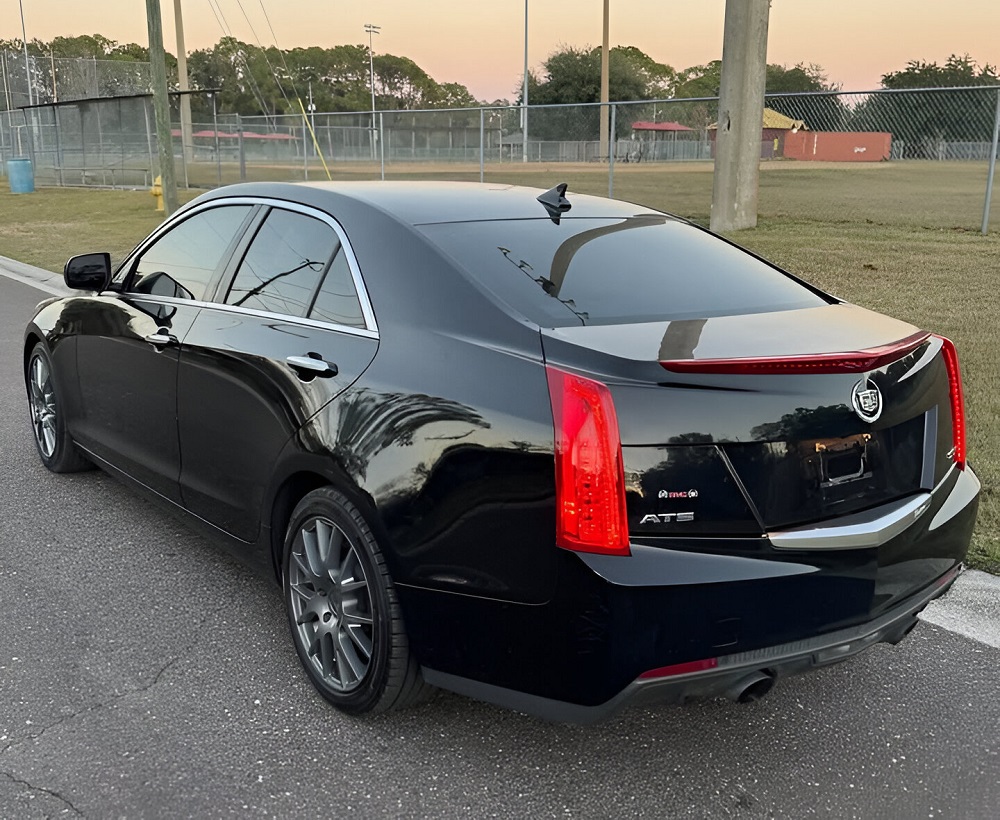
1. How the ATS rear differential became a “recall” story
Alpha platform balance came with a torque tax
Chase 50/50 weight balance, shrink the hardware, then feed it real torque. That was the Alpha platform brief for the 2013 ATS. Engineers packaged a compact 195 mm rear differential inside a tight five-link rear cradle. It had to handle 295 lb-ft from the 2.0T and up to 275 lb-ft from the 3.6 V6 in a lightweight housing.
AWD cars added more stress. Launch loads split front and rear, but the rear still absorbed shock on throttle tip-in. Hard 1–2 shifts and sticky tires spike gear load fast. The 195 mm ring gear became the drivetrain bottleneck.
ATS-V models used a different animal. The twin-turbo LF4 pushed 445 lb-ft through an electronic limited-slip unit with stronger internals and a hydraulic clutch pack. Standard ATS trims ran open or mechanical LSD units with smaller bearings and tighter packaging.
Final drive ratios varied by trim and year:
| Model years | Engine | Drivetrain | Diff type | Final drive ratio |
|---|---|---|---|---|
| 2013–2016 | 2.5L LCV | RWD | Open | 3.45 |
| 2013–2019 | 2.0T LTG | RWD / AWD | Open or mech LSD | 3.27 |
| 2013–2019 | 3.6L LFX/LGX | RWD / AWD | Open or mech LSD | 3.27 / 3.45 |
| 2016–2019 | 3.6TT LF4 | RWD (ATS-V) | eLSD | 2.85 auto / 3.73 manual |
Small housing, ball-style bearings, tight clearances. Repeated heat cycles and shock loads expose the limits around 35–45 mph when bearing noise first shows.
What owners call a recall versus what GM actually filed
Search “Cadillac ATS rear differential recall” and the weld failure dominates. The real factory action was Service Update 12316, not a federal recall.
It targeted a narrow VIN range of early 2013 RWD cars with a non-conforming ring-gear weld. Dealers received an “Urgent – Distribute Immediately” stop-delivery order.
Formal recalls carry NHTSA campaign numbers and stay open for life. Service updates run on time and mileage windows. Once closed, coverage ends.
Later problems never received recall status. Bulletins like PIP5898 and PIP5075A addressed leaks and vent issues under warranty. Out of warranty, repairs shifted to owner pay, often $800 to $1,800 for seal-related work and up to $5,800 for full OEM carrier replacement.
Three hardware paths, three failure patterns
Base 195 mm open differentials fail one way. Mechanical LSD units fail another. ATS-V eLSD units fail in a third lane.
Open and mechanical LSD housings share the same core casting. They suffer from seal starvation, vent pressure, and bearing wear. Whine at 40 mph under light throttle usually means pitted carrier bearings.
Mechanical LSD adds clutch packs. Wrong fluid without friction modifier causes chatter on tight turns. GM specifies Dexron 75W-90 LS for those units, part number 88862624.
ATS-V eLSD uses a hydraulic actuator pump, part number 84059648. When it fails, the dash flashes “Service Rear Axle” and PTM modes disable. Pump replacement alone runs $1,200 to $1,900, assuming the carrier gears survived the event.
The 195 mm housing stayed in production through 2019. Replacement part number 85571696 now consolidates earlier revisions and lists at $2,700 to $3,800 before labor.
2. 2013 ring-gear weld defect that ended drive without warning
Ring gear separated from the carrier under load
Mash the throttle, feel the car surge, then lose all pull. Early 2013 RWD ATS units carried a non-conforming weld between the ring gear and carrier. Under torque, the weld could fracture. The pinion kept spinning, the ring gear stopped transferring force to the axles.
Drivers reported instant loss of propulsion. Engine revved cleanly. The car coasted in traffic with no grinding or warning noise beforehand.
This defect centered on early-build 2013 RWD cars. AWD and later model years were not part of this weld campaign. Separation meant zero torque transfer to the rear wheels.
VIN sweep and stop-sale orders hit dealer lots
GM issued Service Update 12316, later revised to 12316A and 12316B. Dealers received an “Urgent – Distribute Immediately” bulletin in late November 2012. Unsold inventory was placed under stop-delivery until inspection and repair.
Affected vehicles fell within a narrow early-production VIN band. Dealers verified eligibility through internal GM systems, not a public NHTSA recall number. Owner letters were not mailed under a federal recall process.
Cars outside the VIN window were not covered. Once the campaign closed by time or mileage, late claims shifted to owner pay.
Full carrier replacement was mandatory, no weld repair allowed
Technicians replaced the entire differential carrier assembly. Original replacement part number was 22927262. Units arrived pre-filled with fluid, but techs had to confirm level before install to prevent dry bearing damage.
GM paid 2.5 labor hours under labor code V2722. Floor plan reimbursement applied to dealer inventory held during the stop-sale period. Owner cost during the active update was $0.
After expiration, replacing a failed early carrier follows current parts pricing. The modern consolidated unit 85571696 lists at $2,700 to $3,800 before $1,000 to $2,000 in labor.
3. The soft recalls that fixed leaks, not headlines
Snap ring blocks the oil feed and starves the seal
Spot gear oil on the inner wheel, then hear a faint growl. Bulletin PIP5898 traced many leaks to a misaligned side bearing snap ring. The ring could rotate and block the axle seal oil feed port. That port supplies lube directly to the seal lip.
When blocked, the seal runs dry. Heat builds. The lip hardens and leaks.
Fluid drops below spec. Bearings lose lubrication and start to pit around 35 to 45 mph.
The repair requires removing the differential. Techs rotate the snap ring so the gap aligns with the oil passage. Labor time runs about 3.5 hours before seals and fluid.
If whining already started, the fix escalates to full carrier replacement at $3,700 to $5,800 using part 85571696.
Vent burps fluid and coats the rear fascia
Find oil mist on the diff housing after a long highway run. Bulletin PIP5075A addressed thermal expansion forcing fluid out the top vent. Slight overfill or hard driving raised internal pressure. The metal vent cap allowed fluid to seep and spray.
Owners saw oil streaks on the rear bumper. Some assumed axle seal failure.
The correction involved relocating the vent. Dealers installed remote vent kit 15852707 with a 12-inch hose routed to the cross-member. The higher vent point reduced fluid push-out during heat cycles.
Vent relocation runs $250 to $420 if done out of warranty. Ignore it and fluid loss can drop capacity below 1.1 quarts, risking gear scuffing.
Why these bulletins quietly created full diff failures
Leak first, whine later. Many failed 195 mm units started with a small seal or vent issue. Owners drove thousands of miles with slow fluid loss. No DTC sets for low diff oil.
By the time noise became obvious, metal shavings coated the magnetic plug. Gear teeth showed pitting. Carrier bearings developed play.
At that stage, fluid service no longer helps. Replacement becomes the only fix, and dealer invoices commonly land between $3,700 and $5,800.
4. Chronic 195 mm weakness that shows up as highway whine
Bearing preload fades and the hum starts at 40 mph
Cruise at 40 mph and hear a low hum build from the rear. That’s the classic 195 mm carrier bearing wear pattern. The unit uses ball-style roller bearings with tight preload. Heat cycles and shock loads reduce that preload over time.
Once preload drops, the ring and pinion contact pattern shifts. Gear teeth start to pit. The sound rises with vehicle speed, not engine rpm.
Throttle on makes it louder. Lift off changes the pitch.
By 60 to 70 mph, the hum becomes a steady whine. Fluid changes at this stage won’t reverse pitting. The fix is gears and bearings or a full carrier assembly.
AWD load spikes eat side bearings first
Launch hard in an AWD 2.0T and the rear still takes a hit. Torque splits front and rear, but the rear diff absorbs shock when traction shifts. Tight turns under throttle add side load to the carrier bearings. Heat climbs fast in stop-and-go traffic.
AWD cars often show noise earlier than RWD. Some fail in the 40,000 to 70,000 mile range with spirited use. Misdiagnosis as wheel bearing noise is common.
Wheel bearings grow louder when you sway left or right. Diff whine stays consistent in a straight line and changes with throttle. Miss it and the repair bill jumps from seal work to $3,700 plus.
Symptom map for non-recall ATS differential failures
| Driver symptom | Speed / condition | Likely issue | Recommended action | Risk if ignored |
|---|---|---|---|---|
| Faint hum begins | 35–45 mph steady cruise | Early carrier bearing wear | Inspect fluid, check backlash and play | Progression to full gear whine |
| Loud whine rises with speed | 40–70 mph accel and coast | Pitted ring and pinion teeth | Replace gears or full carrier | Tooth fracture, loss of drive |
| Clunk on throttle tip-in | Low speed on-off throttle | Excessive backlash, worn mounts | Measure backlash, inspect bushings | Shock load damage to gears |
| Oil on inner tire | Any speed after drive | Axle seal leak, blocked oil port | Perform PIP5898 repair | Bearing starvation and noise |
| Oil mist on housing | Highway or spirited drive | Vent pressure release | Perform PIP5075A vent relocation | Fluid loss and overheating |
Carrier backlash spec sits tight from the factory. Once it exceeds tolerance, noise accelerates quickly. Most shops quote full replacement rather than resetting gears due to labor time and setup risk.
5. ATS-V eLSD hardware that adds grip and new failure paths
Hydraulic clutch pack locks in 150 milliseconds
Stab the throttle exiting a corner and feel the rear bite hard. The ATS-V uses an electronic limited-slip differential with a hydraulic actuator. A pump pressurizes a clutch pack to vary lock from 0 to 100 percent. Response time sits around 150 milliseconds under load.
The control module reads steering angle, yaw rate, wheel speed, and throttle position. It adjusts lock in real time. Auto cars run a 2.85 final drive. Manual cars use 3.73 for stronger launch feel.
Fluid condition matters. Track heat can push differential temps past 250°F. Degraded fluid reduces clutch friction and raises pump workload.
“Service Rear Axle” message and pump failures
See “Service Rear Axle” on the dash and PTM shuts off. Common fault centers on the hydraulic pump, part number 84059648. When pressure drops, the diff defaults open. Traction out of corners suffers immediately.
Some cases log internal actuator faults. Others show no hard DTC but store history codes in the chassis module. Pump replacement runs $600 to $900 in parts and $600 to $1,000 in labor.
If the clutch pack overheats or slips repeatedly, metal debris contaminates the carrier. Full eLSD assembly replacement can exceed $4,000 used and $6,000 new.
Track launches and hub stress add another weak link
Launch at 3,000 rpm on sticky tires and stress spikes fast. The LF4 delivers 445 lb-ft to the rear axle. Half-shafts use asymmetric stiffness to limit hop, but axle bolts and inner hubs still take punishment. Repeated hard launches fatigue these parts.
Loose axle bolts create clunk under load. Worn hubs add vibration at 60 to 80 mph. Ignore it and splines can strip under torque.
Track-driven cars need frequent fluid service. Many owners change eLSD fluid every 15,000 miles or after several track events to manage heat and debris.
6. Warranty lines, special coverage gaps, and where help stops
The 6-year / 70,000-mile powertrain window
Hear a whine at 55,000 miles and it should be covered. Most ATS models carried a 6-year or 70,000-mile powertrain warranty. That coverage includes the final drive housing, gears, bearings, seals, and gaskets. A documented leak or gear whine inside that window qualifies for repair at $0.
Dealers often road test and label light hum as normal. No DTC sets for bearing wear. If noise grows after 70,000 miles, the same failure shifts to owner pay.
Carrier replacement at a dealer commonly lands between $3,700 and $5,800 once out of warranty.
Why no extended special coverage followed
Other GM engines received 10-year or 120,000-mile special coverage. The ATS rear differential did not. Regulators treated most failures as durability, not safety defects. The 2013 weld issue was handled under Service Update 12316, not a lifetime recall.
Later bulletins like PIP5898 and PIP5075A addressed leaks and venting under standard warranty only. No broad extension followed for the 195 mm housing. After the coverage period ends, the financial risk sits with the owner.
Campaign checks and documentation that matter
Pull the VIN through Cadillac’s recall portal before any repair. Service Update 12316 only applied to a narrow 2013 RWD build range. Closed campaigns will show as completed or expired. Dealers can see internal history tied to the VIN.
Keep repair orders that note early noise or leaks. Warranty claims depend on documentation timing. Once mileage crosses 70,000, goodwill assistance becomes case-by-case and rarely exceeds partial parts coverage.
A denied goodwill request means full retail pricing on part 85571696 plus labor, often exceeding $4,500 out the door.
7. Real repair paths and what they cost in 2024–2026
New OEM 85571696 versus used or aftermarket
Price the fix and the numbers hit fast. GM consolidated most earlier ATS carrier part numbers into 85571696. It replaces 22875132, 22927263, 22993015, 23156305, and 84110753. Current dealer list runs $2,700 to $3,800 for the assembly alone.
Labor adds $1,000 to $2,000 depending on AWD or RWD. Total dealer invoices often land between $3,700 and $5,800. That’s common for a clean 2016–2018 car with 60,000 to 90,000 miles.
Aftermarket “new” units sell for $500 to $850. Salvage assemblies range from $450 to $1,200 based on mileage. Shorter warranties and unknown bearing wear increase the risk.
Common services and invoice totals
| Service type | Typical parts cost | Typical labor cost | Total estimate | When it makes sense |
|---|---|---|---|---|
| Fluid drain and refill | $14–$25 per quart (2–3 qt) | $60–$90 | $75–$115 | Preventive at 30,000–50,000 miles |
| Vent relocation (PIP5075A type) | $50–$120 | $200–$300 | $250–$420 | Oil mist from top vent |
| Axle seal replacement | $150–$300 | $600–$900 | $750–$1,200 | Fresh leak, no noise |
| Full carrier aftermarket | $500–$850 | $350–$600 | $850–$1,450 | Budget fix on high-mile car |
| Full carrier salvage | $450–$1,200 | $350–$600 | $800–$1,800 | Mid-mile car, owner accepts risk |
| Full carrier OEM 85571696 | $2,700–$3,800 | $1,000–$2,000 | $3,700–$5,800 | Newer car where resale matters |
| ATS-V eLSD pump | $600–$900 | $600–$1,000 | $1,200–$1,900 | “Service Rear Axle” with pump fault |
Carrier rebuilds with new bearings and gears rarely pencil out. Setup labor is high and backlash must be precise. Many shops quote full replacement to avoid gear noise comebacks.
When the repair bill exceeds the car’s value
Quote a $5,000 diff on a 2013 2.5L worth $7,000 retail. That math changes decisions fast. Some owners sell as-is for $2,000 to $3,000 below market rather than repair. Others install a $1,200 salvage unit and accept the risk.
On later 2018–2019 cars, documented OEM replacement can protect resale. Buyers ask about rear diff history on these models. A fresh 85571696 carrier with receipts can support asking price within normal market range.
On early high-mile cars, a dealer diff job can exceed 60 percent of private-party value.
8. How to catch ATS rear diff failure early
Run the VIN before turning a wrench
Pull the VIN and check for closed or open campaigns. Service Update 12316 applied only to early 2013 RWD builds. If it never got done, the carrier should have been replaced under that action. A dealer can confirm status in the GM system within minutes.
Scan for stored chassis codes even if no warning light shows. eLSD cars may log rear axle faults without an active message. Fixing a pump issue early can stop clutch debris from contaminating the carrier.
Miss this step and you risk paying retail for a problem once covered at $0.
Fluid and vent strategy that actually prevents failure
Drain and inspect fluid every 30,000 to 50,000 miles on street cars. Track or hard-driven ATS-V cars need service closer to 15,000 miles. Use the correct spec: 75W-90 Dexron MTF for open units, 75W-90 LS for mechanical LSD. Wrong fluid causes chatter and heat buildup.
Check the magnetic drain plug for metal flakes. Fine gray paste is normal. Chunks or sharp slivers mean gear damage has started.
Inspect the vent hose and axle seals during brake service. Catching a leak before fluid drops below capacity can save a $4,000 carrier.
Red flags that demand immediate inspection
Hear a new whine that rises with road speed, not engine rpm. Feel a clunk when shifting from coast to throttle at low speed. See gear oil on the inner tire or rear cross-member.
Grinding under load means gear teeth may already be chipped. Continued driving can strip teeth and leave the car without propulsion. At that point, full replacement is the only repair, often exceeding $3,700 even with independent labor rates.
Sources & References
- Opinions on the ATS? : r/Cadillac – Reddit
- Cadillac ATS-V Sedan Intensifies Passion and Boosts Performance
- 2019 Cadillac ATS Coupe
- Service Bulletin – nhtsa
- PIP5898 Rear Axle Leak – nhtsa
- Cadillac ATS rear differential issues including grinding, humming, and fluid leakage with unresolved warranty claims – RepairPal
- 2013-2019 Cadillac ATS Differential Assembly – OEM #85571696 | GM Parts Club
- Service Bulletin INFORMATION – nhtsa
- Cadillac ATS vs. Cadillac ATS-V – iSeeCars.com
- Cadillac ATS-V Features and Specs – Car and Driver
- Differentials, Assemblies & Parts for Cadillac ATS for sale | eBay
- Genuine OEM Rear Differentials, Assemblies & Parts for Cadillac ATS – eBay
- Differential Assembly Carrier 85571696 3.45 For Cadillac ATS 2.0L 3.6L 2013-2019 | eBay
- Help me decide: ATS Rear Diff : r/Cadillac – Reddit
- For 2013-2019 Cadillac ATS 2.0L 3.6L Carrier Differential Assembly #85571696 | eBay
- General Motors Genuine OEM Rear Differentials, Assemblies & Parts for Cadillac CTS for sale | eBay
- Service Bulletin – nhtsa
- Humming noise on my 2013 Cadillac ats – Reddit
- Thinking of purchasing a 2013 Cadillac Ats, good idea? – Reddit
- Service Bulletin PRELIMINARY INFORMATION – nhtsa
- A little info please. 2013 ATS 2.5 : r/Cadillac – Reddit
- 2017 ATS rear differential question : r/Cadillac – Reddit
- Cadillac ATS Drive Axle Assembly Drain & Refill Cost Estimate – RepairPal
- 2013 Cadillac ATS 2.0T AWD – How do I determine which differential (or transfer case) is causing the whine I’m hearing? : r/MechanicAdvice – Reddit
- ATS-V rear diff replacement : r/CadillacV_Series – Reddit
- ATS/ATS-V Owner’s Manual – GMC
- 2016 Cadillac ATS-V Rear End Axle Differential Lock Actuator OEM | eBay
- Cadillac ATS HVAC Air Door Actuator Replacement Cost Estimate – RepairPal
- ATS V nightmare (hoping not) : r/Cadillac – Reddit
- How Much Does a Rear Differential Replacement Cost? – SoFi
- For thos that had their Differential replaced on an ATS, how much did it cost? : r/Cadillac
- Rear Differential Replacement Cost (2026 Guide) | ConsumerAffairs®
- Cadillac ATS Differential Fluid Service Replacement Costs – YourMechanic
- Cadillac ATS Differential Gasket Replacement Costs – YourMechanic
- 16-19 Cadillac Ats-V Coupe Rear Differential 2.85 Ratio Automatic Trans Aa7296 | eBay
- 2013-2019 Cadillac ATS Differential Assembly 85571696 | TascaParts.com
- 2013-2019 Cadillac ATS Differential Assembly 85571696 – GM OEM Parts Online
- 2013-2019 Cadillac ATS Differential Assembly 85571696 | OEM GM …
- GM Recalls, Field Actions, and Warranty Center
- GLOBAL SAFETY FIELD INVESTIGATIONS DCS4917 URGENT – DISTRIBUTE IMMEDIATELY Date: November 29, 2018 Subject: N182189940 – Special – nhtsa
- Warranty and Repairs Information | Cadillac Ownership
- Warranty Information | Account | Cadillac Support
- 2013 Cadillac ATS Recalls & Safety Notices | Kelley Blue Book
- Service Bulletin TECHNICAL – nhtsa
- I been doing maint on my 2016 ats coupe 2.0t RWD. Rear differential fluid is next. I put the car on a jack and lifted the rear wheels to see if i have a Limited Slip or Open differential. 1 wheel spun forward and the other backwards. Im guessing Open Diff? What fluid should i use
- I bought gear oil to do my rear differential gear oil swap. It said it has limited slip additive in which i didn’t notice before. Gear oil is drained. In everything i have watched no one adds it. : r/MechanicAdvice – Reddit