
Hear a deep knock, then watch the dash light up and the engine quit. That’s how some Tucson failures start. Between 2010 and 2026, Hyundai ran multiple engine families through this SUV, and several landed in federal recalls and billion-dollar settlements.
Early 2.4-liter Theta II engines suffered from crank machining debris that chewed up rod bearings. The 2.0-liter Nu GDI added piston ring heat-treat defects that led to oil burn, scuffed cylinders, and the same bearing knock. Newer 2.5-liter Theta-3 engines triggered 25V549000 over under-torqued rod bolts.
This guide lays out which Tucson years sit in recall crosshairs, how failures progress from tick to seized rod, and what KSDS software and oil-change records mean when an engine lets go.
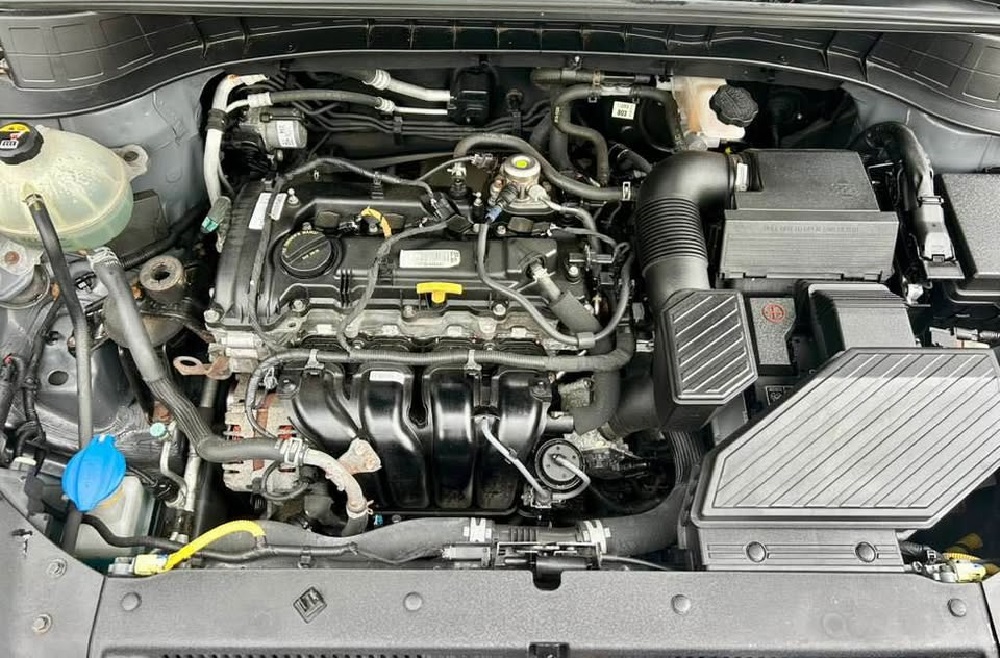
1. Tucson engines and which ones sit in recall crosshairs
Theta II, Nu, and the newer 2.5 under the hood
Trace the problem back to the Theta II. The 2.4 MPI and 2.4 GDI versions powered 2010–2015 Tucsons. Early builds left metallic debris inside crank oil passages. That debris rode pressurized oil straight into rod bearings.
Clearance opened up past spec. Oil film collapsed under load. The knock started light, then deepened with RPM, and many engines flagged P1326 before seizing.
Shift to the Nu 2.0 GDI in 2014–2021 models. Supplier heat-treatment errors left piston oil rings brittle. Rings chipped, cylinder walls scuffed, and oil consumption climbed past 1 quart per 1,000 miles in documented cases.
Low oil level fed the same bearing failure pattern. Drivers saw oil lights flicker at highway speed. Several engines ended with rods exiting the block and oil contacting hot exhaust components.
Move forward to 2025–2026 and the 2.5-liter Theta-3. NHTSA campaign 25V549000 flagged under-torqued connecting rod bolts. A loose rod bolt at 6,000 RPM can stretch, shear, and free the rod in seconds. Hyundai ordered full engine replacement for affected VINs.
Model years that carry real recall exposure
Focus on 2017 first. Recall 21V727000 targeted rod-bearing wear in that single model year. Dealers inspect bearings and install KSDS software. Engines with confirmed wear get replaced.
Scan 2019–2021 2.0 Nu models next. Recall 21V301000 covers piston oil rings and bore scuffing. Dealers perform compression and oil consumption checks before approving long-block swaps.
Earlier 2010–2013 2.4 MPI Tucsons fall under the Engine II settlement. Coverage extends to 15 years or 150,000 miles for bearing-related short-block damage. Claims depend on maintenance records and sludge inspection.
Hybrid and plug-in hybrid Tucsons use different engine architectures. They have not been central to rod-bearing fire campaigns. Their failure profile leans toward software and auxiliary systems, not crankshaft metallurgy.
Hyundai Tucson engines vs recall and settlement exposure
| Model years | Engine family | Fuel system | Primary defect pattern | Main recall or settlement track |
|---|---|---|---|---|
| 2010–2013 | Theta II 2.4 MPI | MPI | Bearing wear, rod knock, stall risk | Engine II 15 yr/150,000 mile extension |
| 2014–2015 | Theta II 2.4 GDI | GDI | Crank debris to rod bearings, P1326, fire | Theta II lifetime short-block settlement |
| 2014–2021 | Nu 2.0 GDI | GDI | Ring defects, scuffing, oil burn, bearing wear | 21V301000 + Engine II extension |
| 2017 | Theta II / Nu mix | GDI | Premature bearing wear, stall and fire risk | 21V727000 + KSDS required |
| 2025–2026 | Theta-3 2.5 | GDI | Under-torqued rod bolts, sudden rod failure | 25V549000 full engine replacement |
Full engine replacement at retail runs $8,000 to $12,000 installed, depending on market and parts availability.
2. How Tucson engines actually fail under load
Crank debris and rod bearings that eat themselves
Cut open a failed Theta II and metal shows up fast. Oil passages in some crankshafts carried leftover machining shavings. Pressurized oil pushed that debris straight into the rod bearings at 40 to 60 psi.
Bearing surface scored. Clearance grew past spec in thousandths of an inch. Oil film thinned, then metal contacted metal at every combustion stroke.
Cold starts masked early wear. Warm oil thinned out and knock got louder above 2,000 RPM. Many engines stored P1326 before total failure.
Once a bearing spins, the rod overheats in seconds. Big-end temperature spikes past 400°F under load. Seizure follows, and the rod can fracture and exit the block.
Piston rings that chip, scuff, and drain the sump
Pull a Nu 2.0 GDI apart and the cylinder walls often show vertical scoring. Supplier heat-treatment left oil control rings brittle. Edges chipped and ring tension dropped.
Oil stayed on the cylinder wall instead of scraping down. Burn rate climbed above 1 quart per 1,000 miles in documented cases. Owners saw blue smoke and fouled plugs before any knock.
Low oil level starved rod bearings first. Oil pressure lights flickered during highway ramps. Bearings failed the same way Theta II units did, even without crank debris.
Scuffed bores also cut compression. Leak-down numbers jumped above 20 percent on damaged cylinders. Long-block replacement became the only approved fix under 21V301000.
From knock to fire in four stages
Rod bearing wear starts with light ticking. Deep rhythmic knock follows as clearance widens. Vibration increases under load at 3,000 RPM and above.
Seizure can stall the engine at speed. Loss of motive power removes power steering assist. Oil sprays once a rod exits the block.
Hot exhaust manifolds sit inches away. Pressurized oil contacting 900°F surfaces can ignite. Several NHTSA complaints cite engine compartment fires after bearing failure.
Stage of failure progression
| Stage of failure | Driver symptom | DTCs commonly seen | Real-world outcome |
|---|---|---|---|
| Early bearing wear | Light tick, slight roughness | None | Progressive damage |
| Advanced degradation | Deep knock, vibration under load | P1326 | Limp mode, possible stall |
| Bearing seizure | Sudden shutdown, oil pressure warning | P1326, oil light | Engine stops, tow required |
| Rod fracture and block breach | Bang, smoke, oil trail, instant misfire | Multiple misfire codes | Fire risk, engine replacement |
Dealer-installed short blocks list near $5,000 in parts alone. Total installed cost routinely lands between $8,000 and $12,000.
3. Tucson engine recall campaigns and what dealers actually do
Recall 203 and the Nu 2.0 oil ring fallout
Target 2019–2021 Tucsons with the 2.0 Nu GDI. NHTSA campaign 21V301000 flags defective piston oil rings. Rings chip, cylinders scuff, oil burn rises fast.
Dealers start with an oil consumption test. They seal the dipstick, log mileage, and recheck at 1,000 miles. Excess use beyond spec triggers compression and leak-down checks.
Borescope inspection looks for vertical scoring. Scuffed walls and low compression justify engine replacement. Approved cases receive a long block under recall authority.
Parts shortages slowed repairs in 2021 and 2022. Some owners waited 30 to 90 days for engines to arrive. Rental reimbursement caps at $40 per day under settlement rules.
Recall 209 and the 2017 bearing watch
Pull up 2017 model year only. NHTSA campaign 21V727000 focuses on rod bearing wear and stall risk. Dealers inspect for abnormal knock and metal in oil.
Engines that show damage get replaced. No partial repair is authorized once bearing wear crosses threshold. Hyundai pays for full engine replacement in confirmed cases.
Every vehicle also receives KSDS software. The update recalibrates knock detection logic. It flags abnormal vibration patterns tied to bearing clearance growth.
Limp mode limits RPM to about 1,800 to 2,000. Throttle response drops to prevent rod fracture under load. Continued driving past this limit risks total seizure within minutes.
Recall 281 and the 2.5 rod bolt risk
Flag 2025–2026 Tucsons with the 2.5 Theta-3. NHTSA campaign 25V549000 cites improperly torqued connecting rod bolts. Even a small torque deficit can stretch bolts at high RPM.
Rod bolt torque is critical near 6,000 RPM. Under-clamped big ends hammer bearings under peak cylinder pressure. A stretched bolt can fail without prior knock.
Hyundai ordered full engine replacement. No inspection or monitoring path exists under this recall. Affected VINs receive complete engine assemblies.
Early reports estimate a small VIN pool. Retail engine replacement on this platform exceeds $10,000 installed in most U.S. markets.
Recall campaign summary
| Recall ID | NHTSA campaign | Affected years | Defect focus | Dealer remedy |
|---|---|---|---|---|
| Recall 203 | 21V301000 | 2019–2021 | Piston oil rings, bore scuffing | Inspect; replace engine if damaged |
| Recall 209 | 21V727000 | 2017 | Rod bearing wear, stall, fire risk | Inspect; engine swap + KSDS update |
| Recall 281 | 25V549000 | 2025–2026 (2.5L) | Under-torqued rod bolts | Full engine replacement |
Dealer labor for an engine swap runs 12 to 18 hours flat rate on most Tucson configurations.
4. Class-action settlements and how coverage really works
Lifetime short-block coverage under the Theta II deal
Lock in 2014–2015 and some 2018–2019 Tucsons with 2.0 or 2.4 GDI. The Theta II settlement grants a lifetime warranty on the engine short block. Covered parts include the block, crankshaft, bearings, connecting rods, and pistons.
Failure must result from connecting rod bearing damage. Dealers look for knock, P1326, metal in oil, or seized bearings. Approved claims receive a short-block or full engine at no charge.
Past repairs can be reimbursed. Valid invoices trigger 100 percent repayment for engine work tied to the defect. Towing and rental costs are also covered, often capped at $40 per day.
Lifetime coverage transfers to later owners. That protection attaches to the VIN, not the original buyer. Engine replacement under this program can exceed $10,000 retail.
Engine II expansion and the 15-year cutoff
Broaden the net to 2010–2013 2.4 MPI and 2014–2021 2.0 GDI Tucsons. The Engine II settlement extends powertrain coverage to 15 years or 150,000 miles. Protection applies to short-block or long-block damage from bearing failure.
Time starts at the vehicle’s first retail sale date. Mileage cap is hard at 150,000 miles. Claims beyond either limit fall outside settlement terms.
Rental reimbursement applies during approved repairs. Loaners or rentals up to $40 per day are allowed when engines are on backorder. Supply chain delays pushed some vehicles off the road for months.
Denials often depend on maintenance records. Missing oil change documentation can trigger a review under the “exceptional neglect” clause.
Goodwill, lost faith, and resale math
Offer goodwill payments on certain model years. Amounts ranged from $500 to $2,000 depending on vehicle age. Payments aimed to offset inconvenience and brand damage.
Provide “lost faith” rebates for owners who traded into another Hyundai. Eligible buyers could claim up to $2,000 on replacement vehicles. Deadlines and documentation requirements were strict.
Settlement coverage stabilizes resale values. A Tucson with documented KSDS install and open-ended engine coverage sells stronger than one without proof. Private-party engine replacement can still run $8,000 to $12,000 without settlement protection.
Settlement coverage summary
| Settlement track | Model years covered | Warranty length | Key condition for approval |
|---|---|---|---|
| Theta II GDI | 2014–2015, some 2018–2019 | Lifetime on short block | Bearing-related failure confirmed |
| Engine II (E2) | 2010–2013, 2014–2021 | 15 years / 150,000 miles | Within time and mileage limits |
Out-of-pocket engine replacement without settlement coverage typically exceeds $10,000 installed in U.S. markets.
5. KSDS knock detection and the warranty gate it controls
How KSDS flags a dying bearing
Install KSDS and the ECU starts listening harder. The knock sensor reads block vibration in specific frequency bands. Rod bearing knock carries a low, sharp pulse tied to crankshaft speed.
Software compares that pulse against learned baselines. It filters out normal GDI injector clatter. Once the amplitude crosses threshold, the ECU stores P1326.
The system then triggers Limp Home Mode. RPM limits to roughly 1,800 to 2,000. Throttle opening narrows to reduce load on the big-end bearing.
Continued high-load driving can fracture the rod. KSDS does not repair wear. It only slows failure progression by cutting power.
KSDS installation as a coverage trigger
Settlement terms require proof of KSDS update. No update on file can lead to “KSDS Installation Neglect” status. That status can block free engine replacement under settlement rules.
Dealer records tie the update to VIN and mileage. Campaign numbers such as 953 or 966 appear on repair orders. Owners must retain that documentation.
Recall 21V727000 stands apart. NHTSA-mandated remedies for that recall apply regardless of prior software history. Other settlement claims can depend on update proof.
Denied claims often surface after teardown. If bearing damage is present but KSDS shows incomplete, coverage can be rejected.
Limp mode behavior and real-world limits
Once P1326 sets, power drops fast. Acceleration feels flat above 30 mph. Highway merging becomes difficult under load.
Oil pressure warnings may follow. If oil pressure falls below safe threshold, the red oil lamp illuminates. Engine shutdown is required to prevent seizure.
Towing becomes the safe option. Driving past active knock detection can destroy the short block within minutes. Full engine replacement exceeds $10,000 in most U.S. markets.
6. Maintenance records and how claims get denied
Oil change gaps that trigger “exceptional neglect”
Pull the service history before teardown. Settlement rules flag gaps over 10,500 miles between oil changes. Time gaps beyond 14 months also raise red flags.
Dealers inspect inside the engine. They look for heavy varnish, sludge, and baked deposits on cam caps and head surfaces. Thick sludge can override paper records.
Oil viscosity matters in GDI engines. Running low or running dirty accelerates bearing wear. Once clearance grows, KSDS may flag P1326, but coverage can still be denied for neglect.
Neglect applies across the engine’s life. Prior owner abuse can affect a second owner’s claim. Retail engine replacement without coverage often lands above $10,000.
Dealer evidence review and denial thresholds
| Evidence reviewed by dealer | Threshold often cited for denial | Impact on claim decision |
|---|---|---|
| Mileage between oil changes | Over 10,500 miles | Supports “exceptional neglect” finding |
| Time between oil changes | Over 14 months | Treated as failure to maintain |
| Internal sludge or heavy varnish | Visible baked deposits | Used as physical proof of poor lubrication |
| Missing service documentation | No receipts or logs | Weakens owner’s defense in arbitration |
DIY service and the paper trail problem
Change oil at home and receipts become critical. Dealers want proof of oil type, quantity, and filter purchase. Handwritten logs help but carry less weight than invoices.
Independent shop work must show mileage and date. Generic entries without engine details can be challenged. Digital records from shop systems carry more authority.
BBB arbitration exists for disputed denials. Owners can appeal under settlement guidelines. Outcomes often depend on physical engine condition, not just paperwork.
Heavy sludge inside the valve cover can sink a claim even with partial records.
7. Oil consumption battles and the piston soak reality
Low-tension rings and oil that never comes back down
Watch the dipstick drop every 700 to 1,000 miles. Nu 2.0 GDI engines use low-tension oil control rings. Carbon packs into the ring lands and locks them in place.
Stuck rings stop scraping oil off the cylinder wall. Oil burns during combustion and exits through the exhaust. Blue smoke shows up under hard acceleration or cold starts.
Spark plugs foul first. Catalytic converters follow after repeated oil burn. Converter replacement can exceed $1,500 before labor.
Cylinder walls often show vertical scoring. Leak-down tests above 20 percent confirm ring sealing loss.
Dealer piston soak and what the procedure actually does
Pull the plugs and bring the engine to temperature. Dealers fill each cylinder with cleaning solvent under TSB guidance. Fluids sit for hours to soften carbon around the rings.
Some procedures add compressed air pressure. Air forces solvent into oil control ring grooves. The engine is then cranked with plugs out to purge excess fluid.
Fresh oil and filter go in immediately. Chemical residue left in the crankcase can thin oil viscosity. The process targets stuck rings, not scuffed bores.
Reported improvement varies. Some engines cut oil use by half. Others return to high consumption within a few thousand miles.
When oil burn crosses into engine replacement
Track oil use with sealed dipstick tests. Hyundai often defines excessive consumption near 1 quart per 1,000 miles. Documented scuffing plus compression loss strengthens claims.
Dealers may request multiple test intervals. Monitoring can stretch over 2,000 to 3,000 miles. Owners often add several quarts between visits.
Bore scoring combined with knock or P1326 shifts the case. At that point, short-block or long-block replacement becomes the authorized fix under recall or settlement coverage.
Out-of-pocket long-block replacement commonly exceeds $9,000 before tax and shop fees.
8. Engine fires beyond bearings and the ABS module threat
HECU shorts that ignite parked Tucsons
Pop the hood and look near the ABS unit. The Hydraulic Electronic Control Unit, or HECU, sits powered at all times. Battery voltage feeds it even with the key out.
Internal brake fluid leaks can bridge circuits. Moisture and fluid create a conductive path inside the module. Current spikes and heat builds without warning.
Early recalls replaced the fuse with a lower amperage unit. The idea was to force the fuse to blow before wires overheated. That left the original HECU in place.
Later campaigns replaced the module outright. Updated units reduce internal leak risk and update ESC logic. Retail HECU replacement often exceeds $1,200 before labor.
When engine defects and ABS recalls overlap
Some Tucsons carried both engine and HECU recalls. A vehicle could face rod-bearing stall risk and parked fire risk at the same time. Both issues centered on under-hood heat and electrical load.
Engine fires from bearing failure start with oil spray. HECU fires can start with the vehicle parked overnight. NHTSA advisories instructed owners to park outside during active campaigns.
VIN lookup confirms open campaigns. Unresolved engine and HECU recalls leave real fire exposure. Combined repair cost outside recall coverage can exceed $12,000 when engine and module both fail.
Sources & References
- Hyundai Theta Engine Settlement – Class Action Lawsuits
- Hyundai-Kia’s Billion Dollar Engine Problem that Broke the NHTSA Civil Penalty Barrier
- Engine Recalls – Hyundai
- Hyundai’s $5 Billion Engine Recall Nightmare Explained
- Engine Class Action & Warranty Extension TXXI Dealer Best Practice – nhtsa
- Engine Oil Consumption Lawsuit : r/Hyundai – Reddit
- IMPORTANT SAFETY RECALL – nhtsa
- Hyundai Theta Engine Settlement: Home
- RCONL-21V301-3165.pdf – IMPORTANT SAFETY RECALL
- 2017 Hyundai Tucson Night
- 2017 Hyundai Tucson Night – Southwest Hyundai Albuquerque
- IMPORTANT SAFETY RECALL – nhtsa
- Hyundai Tucson Electronic Stability Control Recall – Asbury Automotive
- Hyundai & Kia Fire Risk Recall Expanded – CarPro
- Hyundai Recall: Engine Stalls Due To Piston Ring Failure – RepairPal
- Recall 203 Dealer Best Practice – nhtsa
- Hyundai TUCSON Recalls – Cars.com
- Part 573 Safety Recall Report 25V549 | NHTSA
- New Recall : r/HyundaiSantaFe – Reddit
- New Hyundai, Kia Engine Failure Settlement Covers 2.1M Additional Vehicles [UPDATE]
- INFORMATION ABOUT THE ENGINE IN YOUR HYUNDAI VEHICLE – McKenzie Lake Lawyers
- Frequently Asked Questions – Kia E2 Settlement
- Frequently Asked Questions – Kia Engine Settlement
- VIN Validation – Hyundai – Recalls
- Questions about Warranty Extension TXXM?? – Hyundai – Recalls
- Hyundai Engine II Class Action Settlement: Home
- BBB NATIONAL PROGRAMS INFORMATION AND ARBITRATION RULES FOR DISPUTES OVER COVERAGE UNDER WARRANTY EXTENSION PROVIDED BY E2 CLASS
- Kia, Hyundai engine failure class action settlement
- Hyundai/Kia Vehicle Defect Class Actions – McKenzie Lake Lawyers LLP
- Consumer Alert: Kia and Hyundai Issue Recalls for 3.3M Vehicles, Advise Owners to Park Outside | NHTSA
- Hyundai and Kia Recall 3.37 Million Cars due to Fire Risk – Autoweek
- Fire Risk Recall: Hyundai, Kia Warn 3.4 Million to Park Outside – Kelley Blue Book
- FAQ – Hyundai
- FAQs – Hyundai Engine II Class Action Settlement
- Did anyone else get a brochure from Hyundai? : r/veloster – Reddit
- EXHIBIT 2 BBB NATIONAL PROGRAMS INFORMATION AND RULES FOR APPEALS OF CLAIMS DENIED BY SETTLEMENT ADMINISTRATOR UNDER E2 CLASS AC
- VIN Validation – Hyundai
- Possible Denial of Warranty Claim for Theta II Engine Due to Lack of Maintenance Records : r/kia – Reddit
- Hyundai Oil Consumption Recall – California Lemon Law Attorney
- APA Update on Kia and Hyundai Engine Reliability Issues
- Hyundai said piston rings are what cause the oil consumption issue…has anyone replaced their rings and had it resolve? – Reddit
- How To File a Lemon Law Claim Against Hyundai for Excessive Oil Consumption
- Oil Consumption TSB : r/Hyundai – Reddit
- Oil Burn? Get the Combustion Chamber Cleaning Followed by Valvoline Restore and Protect : r/Hyundai – Reddit
- Piston soak procedure (TSB 222) – which cleaning fluid (Kia, Valvoline, Berryman’s)?
- Hyundai Oil Consumption Recall: Did Hyundai Ever Fix This Issue? – Car From Japan
- $1,400 Engine Cleaning? : r/Hyundai – Reddit
- 2026 Hyundai TUCSON Recalls – Cars.com
- Hyundai Recalls Tucson, Santa Fe Over Power Loss – Kelley Blue Book
- Hyundai Tucson Recalls – RepairPal
- 2025 Hyundai TUCSON Recalls – Cars.com
- Hyundai Recall Notices & Safety News | Kelley Blue Book
- Hyundai Recalls 135K Santa Fe SUVs Due to an Increased Fire Risk – Car and Driver
- Home – Hyundai Vehicle Theft Marketing, Sales Practices, and Products Liability Litigation
- Hyundai Class Action Settlement
- Update Claim – Hyundai Vehicle Theft Marketing, Sales Practices, and Products Liability Litigation
- Hyundai Lifetime Warranty Information
- Safety Recalls & Service Campaigns – Hyundai – Recalls
- Hyundai – Recalls
- Hyundai Warranty | What Is And Isn’t Covered