
Cranks hot, won’t fire. Dies at a stoplight, then restarts after a cool-down. That’s how 7.3 Powerstroke problems show up. Built from 1994.5 to 2003, this diesel runs a HEUI system that uses engine oil to fire the injectors.
Miss 500 PSI while cranking and it won’t start. Let coolant chemistry slide and cavitation eats iron. Push late powdered metal rods past about 450 RWHP and blocks window. This guide breaks down what fails, what numbers matter, and which fixes hold.
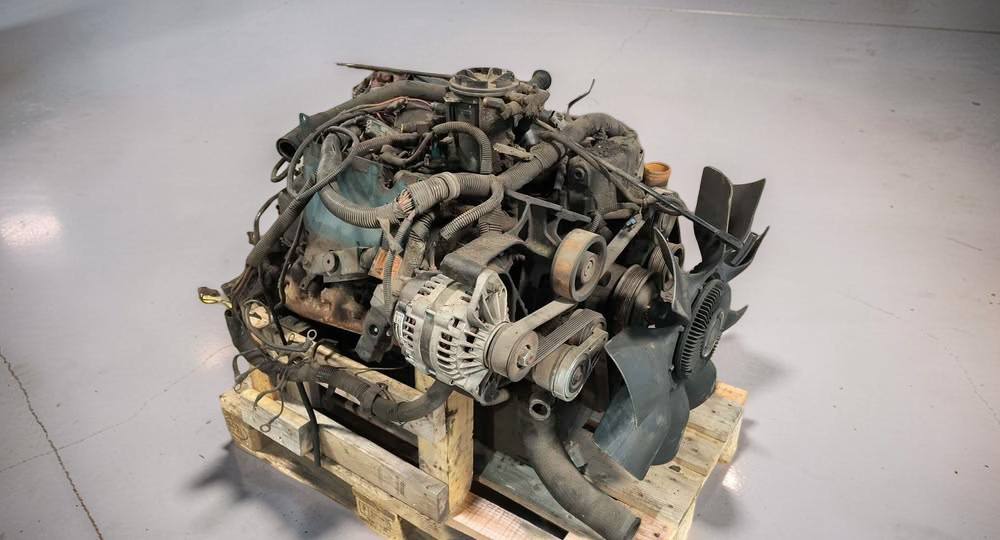
1. HEUI architecture and high-pressure oil system failures
Follow the oil path that fires every injector
Feeds bearings first. The low-pressure oil pump pushes 10 to 20 PSI at warm idle. That oil fills the high-pressure reservoir in the front cover. Starve it and the high-pressure pump runs dry.
The high-pressure oil pump uses a 7-piston axial design. Early units run a 15° swash plate. Late Super Duty pumps move to 17° for more volume. More angle means more displacement per cam revolution.
Injection won’t start below about 500 PSI ICP while cranking. The PCM won’t enable the IDM under that threshold. Hot oil thins out, clearances grow, and weak pumps fail this test first. Deadhead spec should exceed 2,500 PSI.
Track the hot no-start back to the pump
Heat soak a tired HPOP and crank time spikes. ICP stalls at 350 to 400 PSI. The engine spins, no smoke at the tailpipe. Fuel never atomizes.
Rear non-serviceable plugs leak into the valley. Oil pools under the turbo pedestal. Front cover O-rings seep and drop pressure when hot. Internal wear bleeds off volume under load.
15° pumps struggle on tuned trucks with larger injectors. 17° pumps hold volume better but still wear past 200,000 miles. Replacement HPOP runs $400 to $900 plus 4 to 6 hours labor.
Watch the IPR and ICP fight for control
The Injection Pressure Regulator meters return flow. Duty cycle at warm idle typically sits between 8 and 12 percent for Super Duty models, or 11 to 14 percent for earlier trucks. See 40 percent at idle and the system is chasing a leak. See 80 percent and it’s wide open trying to build pressure.
The ICP sensor reports pressure back to the PCM. Oil migrates through failed internal seals into the connector. That oil bridges pins and skews voltage. Surging idle and stalls follow.
Unplug the ICP and the PCM defaults to a fixed value. If idle smooths out, the sensor is suspect. Oil in the pigtail confirms failure. A new Motorcraft ICP runs about $120.
Map common HEUI oil-side failures
| Symptom | Likely cause | Test focus |
|---|---|---|
| Hot no-start, starts cold | Worn HPOP, major high-pressure leak | ICP while cranking, deadhead test |
| Long crank, low power | Weak ICP, sticking IPR | IPR duty cycle, connector oil check |
| Oil in valley | HPOP rear plug or line leak | Mirror behind pump, pressure loss |
| Random stall, no DTC | ICP dropout, IPR short | Harness wiggle, live data trace |
High-pressure leaks also hide at injector O-rings and fittings. Air in the oil aerates the system and delays pressure rise. Any sustained ICP under 500 PSI during crank equals no start.
2. Electronic controls, CPS failures, and injector wiring weak spots
Feed the PCM and IDM clean power or chase ghosts
Drop battery voltage below 10.5 volts during crank and the 7.3 acts dead. The PCM handles logic. The IDM boosts voltage to about 110 to 115 volts to fire injectors. Weak batteries slow cranking speed and starve both modules.
Corroded grounds at the fender and frame create phantom injector codes. The IDM logs contribution faults like P1316 when cylinders drop out. Low voltage skews injector pulse width and delays firing. Two fresh group 65 batteries often fix what looks like a bad injector.
Poor alternator output cooks IDM boards over time. Voltage spikes arc inside the module. Replacement IDM units run $300 to $700 depending on code and calibration.
Lose the cam signal and the engine shuts off
The Camshaft Position Sensor sits behind the water pump pulley. It reads the cam reluctor and feeds RPM to the PCM. No signal means no injection event.
Early black CPS units failed without warning. Tach drops to zero while cranking. Engine stalls at highway speed, then restarts after cooling. Ford issued recalls and updated to grey and blue sensors.
Aftermarket CPS units cause erratic timing drift. Motorcraft or International sensors hold signal integrity. A genuine CPS costs about $25 to $40 and takes 10 minutes to swap.
Let moisture reach the IDM and banks go dark
Super Duty trucks mount the IDM on the driver-side fender. Cowl leaks drip water onto the case. Rust creeps inside and corrodes the circuit board. Random misfires and no-starts follow.
Cylinder banks drop out when IDM voltage collapses. Buzz tests reveal weak or silent injectors. Corroded boards fail under heat load above 200°F internal temp. Replacement plus reflash averages $500 to $900.
Watch the under-valve-cover harness fail under heat
The Under Valve Cover Harness carries IDM voltage to each injector. Heat and oil break down plastic locking tabs. Connectors back out and stop one cylinder bank.
Engines shake hard and log contribution codes. Some owners wedge a coin under the clip to hold tension. The “quarter mod” keeps plugs seated but isn’t permanent. Full UVCH replacement costs $150 to $300 per bank in parts.
3. Fuel supply, filtration, and heater-related electrical failures
Split the years and the lift pump design
Run a 1994.5 to 1997 truck and the lift pump rides in the valley. It’s cam-driven and uses a rubber diaphragm. When that diaphragm splits, diesel floods the valley. Fuel smell, wet block, and fire risk follow.
Step into 1999 to 2003 and the pump moves to the frame rail. It’s electric and easier to service. Cranking pressure should hold near 50 PSI on Super Duty trucks. Drop below that under load and injectors overheat.
OBS trucks need at least 20 PSI while cranking. Lower than that and cold starts stretch out. A new electric lift pump runs $150 to $300 plus 1 to 2 hours labor.
Let fuel pressure fall and injectors burn up
HEUI injectors use fuel to cool the plunger. Pressure under 50 PSI starves that cooling circuit. Cavitation pits internal surfaces and scores plungers. Rough idle and white smoke show up first.
Aftermarket pumps often hold idle pressure but fade at wide open throttle. Volume drops as RPM climbs. A mechanical gauge taped to the windshield tells the truth. Sustained low pressure destroys a set of injectors that cost $1,200 to $2,000.
Clogged 10-micron filters stress the pump. Replace the filter every 15,000 miles. Ignore that interval and the lift pump becomes the fuse.
Blow Fuse 22 and the truck goes dead
The fuel bowl holds the filter and heater element. The heater sits submerged in diesel. Internal shorts arc to the housing. Fuse 22 pops and cuts PCM power.
Cycle the key and the “Wait to Start” light stays dark. Engine cranks with no fire. Unplug the heater and replace the fuse to confirm the fault. A new heater element runs about $70, but many owners leave it disconnected in mild climates.
Track common fuel-side failures
| Failure point | Typical symptom | Result if ignored |
|---|---|---|
| Valley lift pump | Diesel pooled in valley, hard starts | Fire hazard, diluted engine oil |
| Frame electric pump | Stumble at WOT, low gauge reading | Injector scoring, power loss |
| Clogged filter | Long crank, noisy pump | Burned lift pump, injector wear |
| Fuel heater short | No WTS light, blown Fuse 22 | Dead PCM, roadside no-start |
Fuel pressure below 45 PSI under load shortens injector life fast. Replace pumps before they dip under spec. A full injector set costs more than the entire fuel system combined.
4. Air intake, turbo, and exhaust-side restrictions
Warp the factory airbox and sandblast the turbo
Run a 1999 to 2003 Super Duty in dust and the stock airbox lid warps. The plastic bows near the clamp points. Fine grit slips past the filter seal. Compressor blades lose their sharp edge.
“Dusting” shows up as chipped fins and dull leading edges. Boost drops and EGT climbs past 1,250°F on a hard pull. Blow-by increases as grit scores cylinder walls. A replacement turbo runs $700 to $1,500 before labor.
Sealed intakes or the 6637 filter mod fix the leak path. Clamp tension and lid flatness matter. One dusty season can shorten engine life by 100,000 miles.
Leak the up-pipes and lose drive pressure
Factory up-pipes use donut gaskets at slip joints. Heat cycles crush the gaskets flat. Exhaust hisses at the firewall. Soot streaks mark the leak.
Pre-turbo leaks slow spool and raise EGT under load. Boost lags and tow power feels soft. Drive pressure drops before the turbine. Bellowed stainless up-pipes cure the issue long term.
Expect 4 to 6 hours labor for up-pipe replacement. Parts run $250 to $500. Ignore the leak and EGT stays elevated on every grade.
Let the EBPV stick and choke the engine
The Exhaust Back-Pressure Valve sits on the turbo outlet. The PCM closes it in cold weather to speed warm-up. Oil leaks inside the pedestal foul the actuator. The valve sticks shut.
Truck sounds like a jet and won’t build speed. Back pressure spikes and MPG drops. Warm climates rarely need the system. Delete pedestals cost about $100 to $200.
A stuck EBPV can push back pressure over 40 PSI at light throttle. Sustained restriction drives EGT and strains the turbo thrust bearing.
5. Cooling system weaknesses and cavitation damage
Pit the front cover and eat the cylinder walls
Hammer the throttle and cylinder walls vibrate hard. Coolant forms tiny vapor bubbles against the iron. Those bubbles collapse and strike the metal surface. Over time, they carve pits into the front cover and block.
Coolant loss with no visible leak raises suspicion. Oil turns milky once a pinhole opens into the crankcase. Front cover cavitation often hides behind the water pump housing. Tear-down confirms the damage.
Repair means front cover replacement and full reseal. Parts and labor run $1,000 to $2,000. Block cavitation that breaches a cylinder wall ends the engine.
Miss SCA levels and lose the iron shield
Supplemental Coolant Additives form a nitrite film on metal surfaces. That film absorbs cavitation impact. Target range sits at 1.5 to 3.0 units per gallon. Drop below spec and iron erodes fast.
Push concentration too high and solids fall out of suspension. Abrasive sludge chews up water pump seals. Test strips every 15,000 miles keep levels in range. One bottle of SCA costs under $20.
Switching to Extended Life Coolant requires a full flush. Mixing chemistries leaves protection uneven. A neglected cooling system can ruin a $5,000 engine core.
Overheat once and stack damage fast
Clogged radiators trap heat at low speed. Collapsed lower hoses starve flow at high RPM. Water pump impellers wear and slip on the shaft. Oil coolers plug with debris and spike temps.
The factory gauge masks small temp swings. Real coolant temp can climb past 230°F before the needle moves. Sustained heat thins oil and raises injector stiction risk. One hard overheat can warp the front cover sealing surface beyond reuse.
6. Bottom-end strength, forged vs powdered rods, and tuning limits
Decode the rod swap that changed everything
Build date matters after October 2000. Early engines carried forged steel rods. Late engines moved to powdered metal rods, known as PMR. A short mid-run window returned to forged before PMR became final.
Serial numbers up to 1,425,746 usually mean forged. From 1,425,747 to 1,440,712 often means PMR. From 1,440,713 to 1,498,318 forged returned briefly. After 1,498,319, PMR dominated production.
Serial charts guide you, but they don’t guarantee rod type. Pulling the pan confirms it. Mistake that detail and a big tune can window the block in one pull.
Push forged rods hard, snap PMRs sooner
Forged rods tolerate 500 to 600 RWHP with clean tuning. They bend under extreme load before they break. That bend often saves the block. Towing at 1,300°F EGT still tests them.
PMR rods hold factory power fine. Cross 450 RWHP and risk climbs fast. They fail brittle and break clean. A snapped PMR usually punches a hole through the crankcase.
Boost spikes above 35 PSI and high cylinder pressure finish them off. A full short block replacement runs $6,000 to $10,000 installed.
Match rod type to real-world power goals
| Rod type | Typical build range (approx.) | Safe RWHP range | Failure behavior |
|---|---|---|---|
| Forged steel | 1994.5–10/2000, brief mid-2001 | 500–600 | Bends before breaking |
| Powdered metal | Late 2000–2003 majority | 425–450 | Snaps, often windows block |
Stock turbo and injectors keep cylinder pressure manageable. Add 160cc injectors and aggressive timing, and margin shrinks fast. PMR engines don’t tolerate repeated high-load dyno pulls beyond about 450 RWHP.
7. Cold-weather behavior, oil viscosity, and injector stiction
Thicken the oil and the HEUI system stalls
Drop temps below 20°F and 15W-40 turns heavy. Cranking speed falls. The HPOP struggles to build 500 PSI. No 500 PSI, no injection event.
Batteries must hold over 10.5 volts during crank. Slow RPM means low ICP rise. The PCM waits for both before it enables the IDM. A weak starter can mimic a bad HPOP.
Switching to 5W-40 synthetic improves cold flow. It builds pressure faster and reduces strain on the pump. Below 0°F, thick oil alone can block a start attempt.
Lose glow plug control and flood the chambers
Eight glow plugs preheat the chambers. The Glow Plug Relay feeds them high current. Relay contacts burn and stick open. Cold cranks stretch past 10 seconds.
White smoke pours out during failed starts. Combustion chambers stay too cool for clean burn. Some trucks log glow circuit codes for all cylinders. A heavy-duty relay upgrade costs about $60 to $120.
California and Excursion models use a Glow Plug Control Module. Module failure cuts pre-glow time short. Sub-40°F starts become unreliable.
Let stiction build and cold misfires follow
Injector spool valves ride on tight oil clearances. Cold oil thickens and sticks those valves. Cylinders miss for 30 to 60 seconds after start. Miss clears once oil warms.
High-mile trucks show stiction around 150,000 to 250,000 miles. Extended oil intervals make it worse. Anti-stiction additives reduce friction but don’t fix worn injectors. A single HEUI injector runs $200 to $350, full sets exceed $1,500.
8. Compare the 7.3 to later Powerstroke generations
Stack the 7.3 against the 6.0 and pick your headache
Step into a 6.0 and power jumps fast. Variable geometry turbo spools quicker. Four-valve heads flow better at high RPM. Injection pressure climbs higher than the 7.3 can manage.
Head bolts per cylinder drop on the 6.0. Cylinder pressure rises with tuning. Head gaskets lift under heavy load. EGR coolers clog and rupture when oil coolers plug.
The 7.3 avoids EGR and VGT hardware. No DPF sits in the exhaust. Failures center on HPOP, ICP, CPS, and fuel pressure. Head stud jobs on a 6.0 often exceed $4,000 to $6,000.
Move to the 6.4 and 6.7 and add complexity
The 6.4 brings common rail injection and twin turbos. Torque climbs hard off idle. Fuel economy drops and regen cycles add heat. Cracked pistons and fuel dilution show up in stock trucks.
The 6.7 shifts to a Ford-designed block. Common rail pressure exceeds 30,000 PSI. DEF systems, SCR, and multiple EGR circuits enter the mix. Aftertreatment failures add four-figure repair bills fast.
Injectors on a 6.7 cost far more than HEUI units. A full high-pressure fuel system failure can exceed $8,000. The 7.3 runs lower pressure and fewer emissions parts.
Weigh age against emissions hardware
A clean 7.3 feels loud and slow by modern standards. Factory ratings topped out near 275 HP. Newer trucks pass 400 HP with ease. Refinement improved with each generation.
A 20-year-old 7.3 carries aging wiring and seals. Plastic connectors crack. Harness insulation hardens near exhaust heat. Electrical refresh often runs $500 to $1,500 in parts.
Late-model emissions trucks add sensors and control modules. Each adds cost and failure points. The 7.3 trades speed for simpler systems and lower parts count.
9. Diagnose it right and keep it alive long term
Attack a crank-no-start with real data
Turn the key and watch the “Wait to Start” light. No light means no PCM power. Check Fuse 22 and the PCM relay first. A blown fuse often originates at the fuel bowl heater.
Crank and watch RPM on a scan tool. Less than 100 to 200 RPM means the PCM won’t sync. A dead tach points to a failed CPS. No RPM signal equals no injection command.
If RPM shows, watch ICP while cranking. It must cross 500 PSI to fire. Stay under 400 PSI and the IDM never energizes injectors. HPOP wear, IPR failure, or a high-pressure oil leak blocks startup.
If ICP clears 500 PSI, run an injector buzz test. Silent cylinders point to IDM, UVCH, or injector faults. A proper scan tool saves hours of parts swapping. Guess wrong and you can burn $1,000 fast.
Fix the issues before the annoyances
Cavitation and coolant neglect destroy blocks. Low fuel pressure burns injectors. Air leaks dust turbos and cylinders. Oil starvation in the HEUI circuit wipes out the HPOP.
Glow plug relays and CPS failures leave trucks but don’t destroy engines. Up-pipe leaks hurt power but won’t window a block. Weak batteries slow starts yet rarely cause permanent damage. Prioritize cooling, fuel pressure, and clean oil first.
A full coolant flush and SCA reset costs under $300. Ignoring cavitation can cost a full engine. A new long block often exceeds $7,000 before installation.
Follow service intervals that match the design
Change oil every 3,000 to 5,000 miles. Use quality 15W-40 in warm climates or 5W-40 synthetic in cold zones. Replace the fuel filter every 15,000 miles. Inspect the airbox at each oil change.
Test coolant chemistry every 15,000 miles or once a year. Keep batteries matched and strong. Carry a spare CPS and a few fuses in the glove box. Neglect these basics and the HEUI system will fail below its 500 PSI start threshold.
Sources & References
- 7.3L Powerstroke HIGH-PRESSURE Oil Pump 101 – Diesel World
- Diagnosing HPOP Issues on the 7.3L & 6.0L Powerstroke’s – Riffraff Diesel Inc
- High-Pressure Oil Pumps for Powerstroke – REV Outfitters
- How To: 7.3L Powerstroke HPOP Operation Testing – Riffraff Diesel Inc
- Power Stroke History, Lesson 1: 7.3L | DrivingLine
- Understanding the 7.3 Powerstroke HPOP: Function, Failure Signs, and Replacement Tips
- How to Fix a 7.3 Powerstroke Fuel Leak – YouTube
- The 12 Most Common 7.3 Powerstroke Problems (with Solutions) – SuncentAuto
- HOW TO DIAGNOSE A BAD ICP SENSOR & INSTALL A NEW ICP SENSOR, FORD F350 SUPERDUTY 7.3 TURBO DIESEL – YouTube
- FORD POWERSTROKE DIAGNOSTICS 1994-2003 – Oregon Fuel Injection
- 7.3 CPS/IPR problem (story in comments) : r/FordDiesels – Reddit
- 7.3 Powerstroke Diesel Engine Problems And How To Fix Them
- Top Ten Most Common 7.3 Powerstroke Fail Items, And Their Fixes …
- OBDII Diagnostic Trouble Codes: Common Codes And Their Potential Causes – 7.3L and 6.0L Powerstroke – Riffraff Diesel
- 2001 7.3 glow plug codes on all cylinders – powerstroke – Reddit
- 2001 F350 7.3 – Your truck will die without this … Quarter Mod Harness Valve cover head fix. F250
- 2001 F350 7.3 Powerstroke – Quarter Mod (or 50 cent mod) Stop Injectors harness from disconnecting – YouTube
- Ford 7.3 Powerstroke Common problems Part 2: Fuel Bowl – YouTube
- Ford Diesel Diagnostics – Oregon Fuel Injection
- Comprehensive Fuel Pump Flow Testing for Powerstroke Diesel Engines
- NO START – 7.3 Powerstroke DIESEL Frame LIFT pump Replacement EASY – YouTube
- 7.3 PSD Crank No Start Troubleshooting Flowchart
- Causes of Damaged Compressor Wheels – Arashi Dynamics
- dusted 7.3 possible? : r/Diesel – Reddit
- My 7.3 front cover cavitation….. : r/FordDiesels – Reddit
- 1997 7.3 air filter question : r/FordDiesels – Reddit
- 7.3 Powerstroke Air Filter Test – YouTube
- 7.3 compressor wheel damage? : r/powerstroke – Reddit
- 11 7.3 POWERSTROKE ISSUES STOP IN AND SEE COMMON FAULTS……… – YouTube
- Supplemental Coolant Additives (SCA) – Acustrip
- What is Diesel Engine Cavitation and Why Should You Care?
- Maintaining The Cooling System On The 6.0L/7.3L Powerstroke Engine – AVI OnDemand
- Cavitation, SCAs and the Proper Maintenance of Diesel Engine Cooling Systems – Wanderlodge Owners Group
- How Much Horsepower Can Your Stock Power Stroke Handle? – Diesel World
- Powdered Metal Rods: What are they? Why are they a problem? And how to check for them. – Riffraff Diesel
- Need help with decoding a 7.3 Powerstroke engine serial number : r/FordDiesels – Reddit
- 5W-40 vs. 15W-40: The Maritime Winter Oil Guide – Rhino Truck Lube Centres
- Will using 15W-40 instead of 5W-40 hurt my engine : r/MechanicAdvice – Reddit
- 15w-40 or 5w-40 in a 7.3L after new injectors/glow plugs? : r/FordDiesels – Reddit
- Stiction Explained – Solve 6.0L & 7.3L Power Stroke Injector Problems – Archoil
- 7.3 rough cold start : r/Diesel – Reddit
- Why is my 7.3 Powerstroke hard to start in cold weather? : r/MechanicAdvice – Reddit
- 7.3 Cold Start : r/Diesel – Reddit
- 7.3L vs. 6.7L: Which Power Stroke Is Really Better? | DrivingLine
- 7.3L vs. 6.0L vs. 6.4L vs. 6.7L Powerstroke – Which Engine is the Best – CNC Fabrication
- 7.3L vs. 6.0L Ford Powerstroke Engines: What You Should Know – Blessed Performance
- If you had a choice between a 6.0 and a 6.7, which and why? : r/Diesel – Reddit
- I have a 01 7.3 power stroke with a no start issue I have changed the IPR and put a new pig tail on the IPR ICP is unplugged and a new cam sensor still no start fuel bowl has fuel and fuel pump is working any suggestions ? : r/FordDiesels – Reddit
- Trying to diagnosis ’02 7.3L crank no start no smoke. Is this the ICP sensor? – Reddit
- 97 7.3 fueling issue : r/powerstroke – Reddit