
Stall at a light. Watch white smoke trail behind. Smell coolant where it shouldn’t be. That’s how many Ford Escape engine problems begin.
Since 2001, this SUV has run everything from simple Duratec motors to turbocharged EcoBoost units and hybrids. Early trucks mostly fight coils and PCM failures.
Later models deal with cracked heads, coolant intrusion under 21N12, long-block swaps tied to 19-2346, injector fire recalls, and hybrid engine-breach campaign 23S27.
Some years are crude but tough. Others look modern and bite hard. Let’s sort the survivors from the money pits.
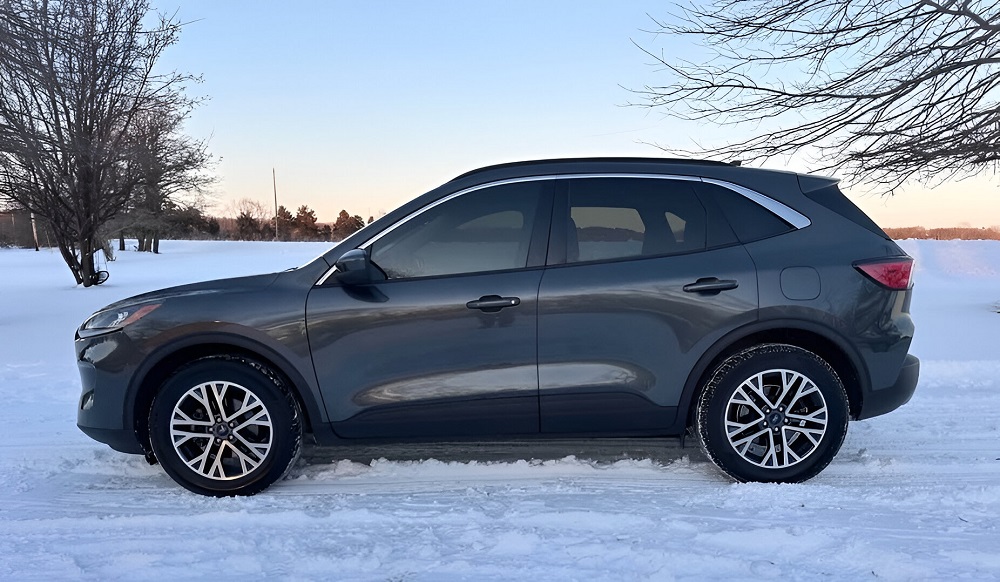
1. The Escape engine timeline and why each generation fails differently
The simple Duratec years before boost and heat took over
First- and second-generation Escapes ran the 2.0 Zetec, 2.3 and 2.5 Duratec fours, and the 3.0 Duratec V6. These were port-injected, naturally aspirated engines with iron liners and thick decks. No turbo, no high-pressure fuel pump, no direct injection soot load.
Failure patterns centered on ignition coils and PCM drivers. Coil insulation broke down around 60,000 to 100,000 miles. Misfires dumped raw fuel into the cats and cooked them. On some 2005–2008 builds, internal PCM shorts caused highway stalls and sudden loss of power assist.
Cooling systems aged the old way. Plastic thermostat housings cracked. Water pumps seeped from the weep hole. Overheating usually meant a $200 to $400 repair, not a $7,000 engine.
| Engine | Years | Common Failure | Typical Repair Cost |
|---|---|---|---|
| 3.0 Duratec V6 | 2001–2008 | Coil packs, PCM drivers | $400–$1,200 |
| 2.3 / 2.5 Duratec | 2005–2012 | PCM stall, cooling leaks | $300–$1,500 |
| 2.3 Hybrid | 2005–2012 | Electric coolant pump | $600–$1,200 |
The rotating assemblies rarely failed. Rods and crank journals held up past 200,000 miles when oil stayed clean. Most engines died from neglect, not block design.
The EcoBoost pivot and the heat spike under the hood
Third-generation Escape launched with the 1.6, 1.5, and 2.0 EcoBoost. Direct injection raised cylinder pressure. Turbochargers spun past 150,000 rpm. Exhaust gas temperatures climbed above 1,600°F under load.
Heat density increased around the exhaust ports and head gasket fire rings. The 1.6 EcoBoost showed localized head overheating that led to recall 17S09. Cracked heads leaked pressurized oil onto hot exhaust parts.
The 1.5 and 2.0 EcoBoost engines added an open-deck block with a machined coolant slot between cylinders. That slot reduced gasket sealing area at the deck surface. Under boost, combustion pressure pushed coolant into the cylinders.
Misfires set P0300–P0304. Cold starts produced white smoke from pooled coolant. Confirmed intrusion often required short-block replacement under 21N12 or full long-block replacement per 19-2346, typically costing $6,000 to $9,000 outside coverage.
The fourth generation trades block flaws for fuel and hybrid risk
The 2020 redesign moved away from the slotted block. The 1.5L Dragon three-cylinder used a revised cooling layout. Block intrusion complaints dropped sharply after the 2019 cutoff.
New risk showed up at the injectors. Recall 22S73 and later 24S16 addressed cracked injector bodies on 2020–2024 models. Leaked fuel could contact the exhaust manifold or turbo housing.
Ford’s software update monitors fuel rail pressure drop. The PCM can cut injector pulse and disable the high-pressure pump. Hardware cracks still occur, and injector replacement runs $500 to $900 per cylinder outside recall.
Hybrid models added a separate failure path. Recall 23S27 covers 2020–2023 2.5L HEV and PHEV engines for block or oil pan breach. Bearing failure can punch through the casting, release oil vapor, and trigger underhood fire risk. Long-block replacement remains the final remedy when bearing damage is confirmed.
2. First- and second-generation failures, simple engines with ugly side-system weak spots
Ignition coil meltdowns that take the PCM with them
Misfire at idle. Flashing MIL under load. That’s how the 3.0L Duratec V6 usually starts misfiring. Coil packs break down internally and spike voltage back into the PCM drivers.
On 2005–2006 builds, repeated coil failures burned out PCM coil drivers. The fix often meant coils plus a reman PCM. Total repair ran $800 to $1,500 depending on programming labor.
Unburned fuel from long-term misfire overheated catalytic converters. Substrate temps can exceed 1,600°F during sustained misfire. A clogged converter adds backpressure and drives exhaust valve heat even higher.
PCM stall events at highway speed
Cruise at 60 mph, then sudden stall with no warning. Some 2005–2008 2.3L and 3.0L models logged internal PCM faults. Owners reported loss of throttle response and dead gauges.
Failure often traced to circuit board defects inside the PCM housing. Heat cycling cracked solder joints over time. Replacement and reflash typically cost $900 to $1,400.
Loss of power steering and brake assist followed engine shutdown. Steering effort spikes immediately at highway speed. The stall event itself becomes the safety risk.
Cooling system weak links that cook engines slowly
Plastic thermostat housings warp and leak near 100,000 miles. Small coolant loss goes unnoticed until temp spikes. The gauge climbs fast once air pockets form.
Water pumps fail from seal wear, not shaft breakage. Coolant seeps through the weep hole before full failure. Replacement usually lands between $300 and $700.
Overheat these aluminum heads once and they can warp. Head gasket repair on a Duratec runs $1,500 to $2,500 with machine work. Most early Escapes avoid bottom-end failure unless severely overheated.
3. The 1.6 EcoBoost fire years, when cylinder-head heat turned into flames
Cylinder-head cracking under boost
Push the 1.6 hard, temps climb fast near the exhaust ports. The small turbo packs heat tight against the aluminum head. Localized hot spots form under sustained load.
Recall 17S09 covers 2013–2014 Escapes for this failure path. Overheating can crack the cylinder head. Pressurized oil then leaks onto hot exhaust components.
Oil hitting a manifold glowing above 1,200°F can ignite quickly. Ford documented engine-compartment fire risk tied to this sequence. A cracked head means engine teardown or full replacement, often $5,000 to $8,000 outside recall coverage.
Coolant loss and the warning gap
Many failures started with slow coolant loss. Drivers saw temp spikes or low-coolant warnings. Some engines logged P0217 or P1285 before major damage.
Ford’s remedy added a coolant level sensor and updated software. The system alerts earlier when coolant drops. The head casting and cooling layout remain unchanged.
Once the head cracks, coolant and oil mix at the breach point. Compression drops in the affected cylinder. Continued driving can overheat the turbo and warp the deck surface.
Real-world symptoms before the fire risk peaks
White smoke from the tailpipe signals coolant burning. Rough idle follows as misfires set in. Oil smell under the hood often shows up before visible smoke.
Severe cases show external oil leaks near the exhaust side of the head. Some vehicles stalled from rapid overheating. Head replacement or full engine swap remains the only durable fix when cracking is confirmed.
4. Coolant intrusion on the 1.5 and 2.0 EcoBoost, the block design that backfired
The slotted open-deck block that lost its sealing margin
Cold start. Thick white smoke. Coolant level drops with no puddle under the car. That pattern defines 2017–2019 Escape 1.5L and 2.0L EcoBoost failures.
These engines used an open-deck block with a machined coolant slot between cylinders. The slot reduced head-gasket sealing area at the deck surface. Under boost, combustion pressure flexed the narrow bridge.
Over time, the gasket lost seal or the block cracked microscopically. Coolant entered the cylinder bore. Intrusion often began between cylinders 2 and 3, where deck material was thinnest.
What coolant intrusion looks like in the data stream
Misfires show first. P0300–P0304 and P0316 log on cold starts. Some units throw P0217, P1285, or P1299 after overheating.
White exhaust smoke burns off pooled coolant overnight. Compression drops in the affected cylinder. Spark plugs come out steam-cleaned on one hole and carbon-fouled on others.
Hydrolock risk rises when coolant volume exceeds clearance at top dead center. Bent connecting rods and damaged crank journals follow in severe cases. A hydrolocked engine usually means full replacement.
The 1.5 EcoBoost short-block program
Customer Satisfaction Program 21N12 covers certain 2017–2019 1.5L Escapes. Ford authorizes repair when intrusion is confirmed through pressure testing and borescope inspection. Symptoms must match coolant loss and misfire behavior.
Repair typically involves short-block replacement and updated gasket components. Labor time runs over 20 hours. Out-of-pocket cost outside coverage lands near $5,000 to $7,000.
The updated block uses revised coolant passages. Later cross-drilled designs restore sealing surface at the deck.
The 2.0 EcoBoost long-block directive
TSB 19-2346 addresses coolant in cylinders on 2017–2019 2.0L Escapes. Ford’s published fix calls for long-block engine assembly replacement. That includes block, head, and internal components.
Parts and labor often exceed $8,000 without goodwill assistance. Dealers follow strict diagnostic steps before approval. Once intrusion is verified, patch repairs are not authorized.
| Engine | Years | Official Path | Typical Cost Outside Coverage |
|---|---|---|---|
| 1.5 EcoBoost | 2017–2019 | 21N12 short-block replacement | $5,000–$7,000 |
| 2.0 EcoBoost | 2017–2019 | 19-2346 long-block replacement | $8,000–$9,500 |
Intrusion confirmed by pressure test or cylinder inspection leads to engine replacement, not gasket reseal.
5. The 1.5 Dragon injector recalls, fuel leaking onto red-hot hardware
Cracked injector bodies under thermal stress
Fuel smell after shutdown. Rough idle. Sudden power reduction. That pattern flags the 1.5L Dragon in 2020–2024 Escapes.
Recall 22S73 and later 24S16 cover cracked fuel injectors. The injector body can split from heat cycling and vibration. High-pressure fuel then leaks into the cylinder head cavity.
Fuel drains through a relief path onto the top of the engine. It can contact the exhaust manifold or turbo housing. Those parts run well above 1,000°F under load.
Software mitigation instead of hardware redesign
Ford’s recall fix centers on PCM calibration updates. The software monitors fuel rail pressure drop. If pressure falls outside range, the system cuts injector pulse and disables the high-pressure pump.
Engine power derates to limit heat generation. A warning instructs the driver to stop. The injector itself remains a mechanical component subject to cracking.
Injector replacement outside recall typically runs $500 to $900 per unit. Labor adds 2 to 3 hours depending on access.
What drivers report before the warning hits
Hard start after sitting. Fuel odor near the cowl. Intermittent misfire codes under load.
Some vehicles enter reduced power mode without visible smoke. Others show wetness near the injector rail on inspection. A confirmed crack requires injector replacement, not cleaning or resealing.
6. Hybrid 2.5L failures, when the block itself splits
Bearing failure that punches through the casting
Knock under load. Sudden loss of power. Oil smell seconds later. That sequence ties to the 2.5L HEV and PHEV engines in 2020–2023 Escapes.
Recall 23S27 and NHTSA 23V-380 document engine block or oil pan breach. Internal bearing failure can send a connecting rod through the casting. Oil and fuel vapor then escape into the engine bay.
This is a structural failure, not a gasket leak. Once the block or pan breaches, oil loss is rapid. Engine seizure can follow within minutes.
Hybrid propulsion keeps the vehicle moving
The electric motor can still propel the Escape after the gas engine fails. The high-voltage battery masks the mechanical damage for a short time. Drivers may continue rolling with oil spraying below.
Hot exhaust components sit inches from the breach area. Oil contacting a catalytic converter above 1,200°F can ignite. Fire risk increases if the vehicle continues under electric assist.
Ford’s remedy includes PCM updates and engine inspection. Units showing bearing damage require long-block replacement.
Repair path and cost reality
Dealers inspect for noise, metal debris, and oil leakage. Confirmed internal damage leads to engine replacement. Labor and parts often exceed $8,000 without recall coverage.
Some 2023 model populations went straight to engine replacement due to calibration limits. A breached block cannot be welded or patched for safe road use. Long-block replacement remains the only approved fix.
7. Carbon buildup and turbo wear, the slow issues inside EcoBoost engines
Intake valves choke on their own oil vapor
Rough idle at 60,000 miles. Hesitation when merging. Fuel trims drift positive at cruise. Carbon buildup sits behind many of these complaints.
All EcoBoost Escapes use direct injection. Fuel sprays into the cylinder, not over the intake valves. Oil vapor from the PCV system coats the valve backs.
Heat bakes that film into hard deposits. Cylinders 2 and 3 often load up first due to PCV routing. Airflow drops and misfires creep in.
Severe buildup can trigger P0300 codes and limp mode. Walnut blasting runs $400 to $900 depending on labor rates.
Turbochargers spin fast and fail hard
Whine that rises with rpm. Blue smoke under throttle. Underboost code P0299 stored in memory. Those signs point at turbo wear.
The EcoBoost turbo can exceed 150,000 rpm under load. Oil lubricates the shaft bearings and cools the center housing. Dirty oil scars the bearing surface.
Hot shutdown traps oil inside the turbo housing. Oil cooks and forms carbon deposits. Restricted oil flow accelerates shaft play and seal failure.
Turbo replacement typically runs $1,200 to $2,500 with labor. Metal debris from a failed turbo can contaminate the intercooler and intake tract.
LSPI and oil chemistry limits
Low-speed pre-ignition hits hardest under high load and low rpm. The event spikes cylinder pressure before the spark fires. Pistons can crack under repeated LSPI events.
Modern API SP oils reduce calcium to lower LSPI risk. Long oil intervals raise deposit load in the combustion chamber. Shorter 5,000-mile changes reduce both turbo wear and LSPI exposure.
A shattered piston crown means full engine teardown. Rebuilding an EcoBoost bottom end often exceeds $6,000 in parts and labor.
8. 2024–2025 low-power and stall events, when software and 12-volt voltage derail the engine
Auto start-stop stalls tied to battery state
Roll to a stop. Engine shuts off. It never restarts. That scenario shows up in late-model Escapes and related platforms.
Recall 24S24 (NHTSA 24V267) applies to 2021–2024 Bronco Sport and 2022–2023 Maverick, not Escape. The campaign addresses failure to detect a sudden drop in 12-volt battery state of charge that can lead to stall or no-restart during auto start-stop. Some 2024 Escape owners report similar low-power or stall behavior, but Escape is not officially listed in the 24S24 recall population.
Drivers report flashing auto start-stop icons and “Low Power Mode” messages. The engine may crank slowly or not at all. Software updates recalibrate the BCM and PCM to manage voltage thresholds.
Why it feels like engine failure
Stall events mimic fuel or ignition faults. The dash lights up. Power steering assist drops as rpm falls to zero.
Scan data may show no active misfire codes. Fuel pressure remains within spec. The main issue sits in voltage management, not combustion.
Weak 12-volt batteries under 12.0 volts at rest increase risk. Replacement batteries cost $200 to $400 installed. Continued operation with low voltage can corrupt module memory.
Secondary causes that muddy the diagnosis
Some 2024 models log purge valve faults. A stuck-open purge valve leans the mixture at idle. The engine can stumble or stall when warm.
Faulty throttle position sensors also cause erratic idle control. RPM hunts between 500 and 1,200 before dying. These faults set specific DTCs and require component replacement, not software patching.
Software updates fix voltage logic limits. Mechanical purge or throttle faults require parts replacement, often $300 to $800 depending on labor time.
9. Best and worst Escape engine bets on the used market
High-risk years that demand paperwork
Scan the VIN before you scan the paint. 2013–2014 Escapes with the 1.6 EcoBoost carry recall 17S09 history. Confirm head inspection and coolant sensor updates were completed.
2017–2019 1.5 EcoBoost models sit in the coolant intrusion window under 21N12. Check for documented short-block replacement. No proof means budget $6,000 for the worst case.
2017–2019 2.0 EcoBoost units fall under TSB 19-2346 guidance. Long-block replacement paperwork matters more than mileage. A clean Carfax does not show internal coolant seep.
2020–2023 hybrids need recall 23S27 completion verified. A breached block requires full engine replacement. Hybrid long-block jobs often exceed $8,000 without coverage.
Safer mechanical bets in the lineup
2008–2012 2.5 Duratec models remain the simplest choice. Port injection avoids intake valve carbon load. No turbo means lower exhaust heat stress.
Maintenance still matters. Overheat one and the aluminum head can warp. Head gasket repair runs $1,500 to $2,500 with machine work.
Late 2020–2024 1.5 Dragon models show fewer block failures. Injector recall completion must be confirmed. A replaced injector set lowers fire risk exposure.
Records that decide the deal
Look for cooling system service history. Repeated top-offs without visible leaks signal intrusion risk. Borescope inspection of cylinders can reveal steam-cleaned pistons.
Check for misfire codes in stored history. Even cleared codes leave records in mode $06 data. Confirm recall completion through dealer service records.
An Escape with documented engine replacement and updated block design carries less risk than a low-mile original with no history. Engine replacement cost ranges from $5,000 to $9,500 depending on variant.
Sources & References
- Ford Escape – Model Years, Generations & News | Cars.com
- Ford Escape History – Metairie – Premier Clearance Center
- FORD Escape – All Models by Year (2000-Present) – Specs, Pictures & History
- Ford Escape – Wikipedia
- Ford Escape Used Buying Guide: Known Issues
- Ford Escape Problems: The Best (And Worst) Model Years To Buy
- 7 Ford Escape Years To Avoid & Common Problems
- Maintaining Your Ford Spark Plugs: Replacement Intervals | Coughlin Ford of Circleville
- Ford 2.5 Duratec Engine: Common Problems and Reliability – YouTube
- Is Ford’s 2.5L Duratec Engine Bulletproof? Here’s the Truth! – YouTube
- Every Ford EcoBoost Engine Ranked Worst To Best – SlashGear
- Unreliable Vehicles To Avoid: Ford Escape | Endurance Warranty
- Recall Information – Ford Recalls | Ford Owner Support
- TECHNICAL SERVICE BULLETIN 2.0L EcoBoost – Coolant … – nhtsa
- Customer Satisfaction Program 21N12 Certain 2017-2019 Model Year Fu – nhtsa
- TECHNICAL SERVICE BULLETIN 1.5L EcoBoost – Low Coolant, White Exhaust Smoke And/Or Illuminated MIL – Built On Or Before 10-Jun-2019 20- 2100 – nhtsa
- Ford Motor Company – device.report
- Can anyone confirm that in 2020 and newer, Ford moved away from this open chamber block design? : r/ecoboostmustang – Reddit
- Ford EcoBoost Engine Replacement Issue with These Model Years You Need to Know
- Ford EcoBoost Engine Replacement Issue with These Model Years You Need to Know
- PSA: Ford 2.0 EcoBoost Coolant Intrusion – If This Happened to You, Please File an NHTSA Complaint – Reddit
- Low Coolant, White Exhaust Smoke And/Or Illuminated MIL – Built On Or Before 10-Jun-2 – OEMDTC
- 2024 Escape – nhtsa
- Best years/sizes of engine for reliability ? : r/fordescape – Reddit
- What years had the coolant intrusion issue on the 2.0 EcoBoost? : r/FordEdge – Reddit
- 2.5L FHEV Engine: Power, Efficiency Overview – Dorian Ford
- Ford Recalls 694,271 Escapes and Bronco Sports – Autoweek
- Ford Recalls 694,271 Bronco Sport, Escape SUVs for Fire Risk – Car and Driver
- 24S16: Bronco Sport and Escape (2022-2024) Fuel Injector Leak Recall – Ford
- Ford Hybrid Engine Problems Cause 2nd Recall of 125,000 …
- Carbon Buildup in Engines: Causes, Symptoms & Prevention – CarHub
- EcoBoost Challenges pt. 3: Navigating Internal Issues: Carbon Buildup and Timing Chain Stretch – Stage 3 Motorsports
- Ford: How to Stop Carbon Buildup in Direct Injection Engines
- Ford EcoBoost Engine Problems | John’s Auto Care Center
- The Effect of Intake Valve Carbon Buildup on AFRs in a 2.0L EcoBoost Ford – HP Academy
- Possible turbo failure? : r/fordescape – Reddit
- Bad Turbo Symptoms, Plus FAQ – In The Garage with CarParts.com
- The 3 Most Common Turbocharger Problems | Blue Springs Ford Parts Blog
- SYMPTOMS OF A BAD TURBOCHARGER – YouTube
- 24S24: Bronco Sport (2021-2024) and Maverick (2022-2023) Loss of Power Recall – Ford
- 2024 Ford Escape Engine Stalling Causes & Solutions – RepairPal
- 2024 Escape: Engine Cut Out in Stop and Go Traffic : r/fordescape – Reddit
- Ford Escape 2020 -rpm issue – Reddit
- 2022 Ford Escape Review & Ratings | Edmunds
- 2021 Ford Escape Review & Ratings | Edmunds
- 2023 Ford Escape Review & Ratings | Edmunds
- 2020 Ford Escape Review & Ratings | Edmunds
- TECHNICAL SERVICE BULLETIN Click Or Ting Noise During Acceleration From A Stop – Built On Or Before 17-Aug 2024 24-2421 – nhtsa
- Buy Ford Kuga Engine – Rebuilt, Used & Recon Units UK
- How are modern turbo’s able to run regular gas without pre-ignition? : r/cars – Reddit
- General 2008–2012 Ford Escape Maintenance Information & Schedule
- 2.0 ecoboost engine. How to know if you have the revised block from …
- How Often Should You Replace the Spark Plugs in a Ford EcoBoost Engine?
- Spark plug replacement : r/ecoboostmustang – Reddit
- Thinking of buying a pre-owned 2022 Escape SEL Hybrid. Talk me out of it. – Reddit