
Hear a sharp rattle on startup. Catch a sweet coolant smell. Watch the temp needle creep higher than it should. That’s how many Ford 4.0 V6 problems announce themselves.
Since 1990, this Cologne V6 has powered Explorers, Rangers, Mustangs, and even Land Rover SUVs. Early trucks ran the pushrod OHV version. Late 1990s models introduced the SOHC design with more power and a far more complex timing system.
One version fights cracked heads and cam synchronizer failures. The other battles timing chain cassettes, hydraulic tensioners, and plastic thermostat housings that seep coolant into the engine valley. Same 4.0 badge, totally different weak spots.
Mix them up and the repair plan falls apart fast. Let’s separate the OHV from the SOHC before a single wrench turns.
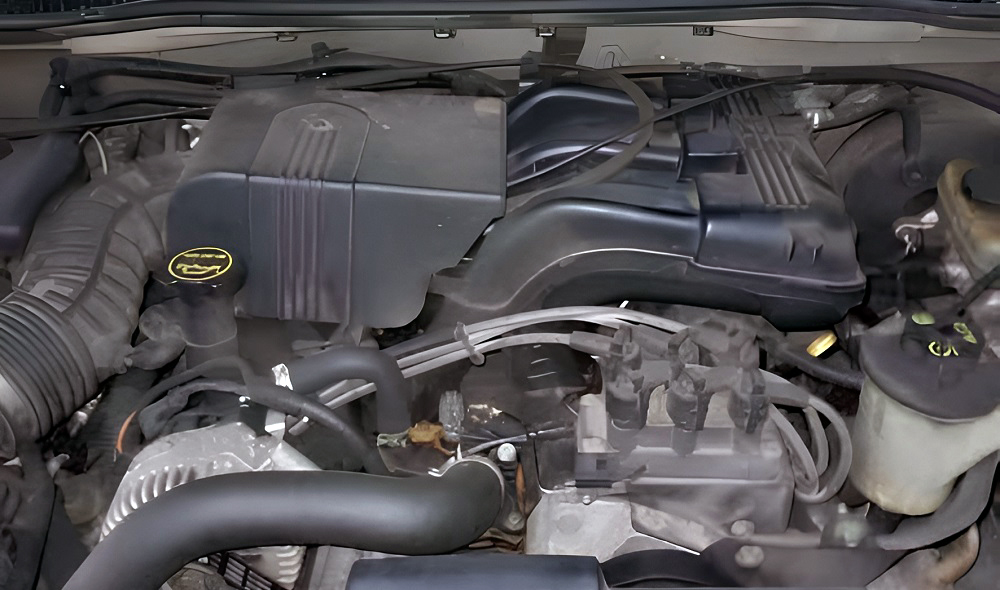
1. The two Ford 4.0 engines and why mixing them wrecks the diagnosis
The OHV 4.0 is the old iron workhorse
Roll back to 1990 and the 4.0 means pushrods and cast iron. The OHV version runs a cam in the block, 12 valves, and simple timing gears. Output averages 160 hp at 4,200 rpm and 225 lb-ft at 2,400 rpm.
Cylinder heads are cast iron. Compression sits around 9.0:1. The oil filter is Motorcraft FL1A, larger than the SOHC unit.
VIN code “X” in the eighth digit marks this engine in most North American trucks. Parts do not interchange with the later SOHC top end.
Overheat this motor once and head cracks often follow. Cylinder head replacement runs $1,500 to $2,500 depending on machine work.
The SOHC 4.0 brings power and complexity
Step into 1997 and the 4.0 gains aluminum heads and overhead cams. Output jumps to 205 to 210 hp and about 238 lb-ft. Torque peaks closer to 3,000 rpm.
A jackshaft sits where the old cam used to live. Chains run from the crank to the jackshaft, then out to each cam. Some 4WD versions add a balance shaft chain.
Compression ranges from 9.0:1 to 9.7:1. Oil filter switches to Motorcraft FL820S with a silicone anti-drainback valve.
VIN code “E” or “K” marks the SOHC. Timing parts, gaskets, and valve covers are unique to this layout.
Full timing service often requires engine removal. Labor alone can exceed $2,000 before parts.
Check the VIN before buying parts
Read the eighth VIN digit before ordering anything. “X” means OHV. “E” or “K” means SOHC.
Oil filters differ. Thermostat housings differ. Timing hardware is completely unrelated.
Install an OHV synchronizer in an SOHC truck and it simply will not fit. Order SOHC timing cassettes for an OHV and the box becomes expensive scrap.
Wrong diagnosis on these engines wastes hundreds fast. Engine-out timing work on an SOHC can push $3,000 to $4,500 in total repair cost.
2. The SOHC timing-chain failure that defines this engine
A jackshaft, four chains, and one bad packaging decision
Open up a 4.0 SOHC and the timing layout shocks most techs. A primary chain runs from the crank to a jackshaft. One chain drives the left cam at the front. Another drives the right cam at the rear near the firewall.
Some 4WD trucks add a balance shaft chain. That makes four chains inside one engine. The right rear cassette sits against the firewall, so full repair usually means engine removal.
Labor for engine-out timing service runs 15 to 20 hours. Total repair bills commonly land between $3,000 and $4,500.
Tensioners and plastic guides fail before the chain
Chains rarely snap first. The weak link is the hydraulic tensioner and the plastic guide cassette. Internal springs lose force after years of heat cycles.
Cold starts expose the weakness. Oil pressure has not built yet, so the chain slaps the guide. That slap shatters brittle nylon over time.
Ford addressed mid-range rattle under TSB 04-15-4. The bulletin targets noise around 2,400 to 2,500 rpm under load.
Cold-start rattle versus mid-range rattle
A brief 1 to 2 second rattle on startup marks early tensioner pressure loss. The sound fades once oil pressure stabilizes. Many engines run like this for months.
Rattle at 2,000 to 3,000 rpm under throttle signals deeper guide damage. Noise at steady cruise often matches the 2,400 rpm window noted in Ford’s bulletin.
Persistent metallic clatter means the cassette has broken apart. Plastic fragments often end up in the oil pan and pickup screen.
| Symptom | Likely failure stage | Mechanical reality |
|---|---|---|
| 1–2 second cold rattle | Early tensioner wear | Oil drains back, slack on startup |
| Rattle at 2,400 rpm | Guide cracking | Chain striking weakened cassette |
| Continuous metallic noise | Cassette failure | Metal-on-metal contact active |
| Plastic debris in pan | Advanced failure | Pickup screen contamination |
Metal chain contacting aluminum throws debris into the sump. Jumped timing can bend valves. Rebuild costs exceed $4,000 once piston-to-valve contact occurs.
3. The SOHC thermostat housing that leaks from the valley
Plastic in a heat pocket
Lift the hood on a 4.0 SOHC and look into the engine valley. The thermostat housing sits between the heads, built from molded plastic. It handles constant 190 to 210°F coolant cycles.
The lower housing cracks at the seams. The upper cover warps near the sensor ports. O-rings flatten and seep under pressure.
Coolant often evaporates on the hot block. No puddle forms under the truck.
Sweet smell, low reservoir, rising temps
Drivers smell coolant after shutdown. The overflow bottle drops an inch every few weeks. No visible leak shows on the driveway.
White crust forms near the housing flange. Steam trails lightly from the rear of the intake after a hard drive. Gauge spikes happen under load in summer heat.
A sudden split can dump coolant fast. Overheat in 2 to 3 minutes can warp aluminum heads.
Why aluminum replacements took over
Aftermarket aluminum housings replace the plastic base and cover. They resist seam cracking and long-term warp. Many include upgraded O-rings and metal sensor threads.
Labor runs 2 to 3 hours in most Rangers and Explorers. Total repair cost averages $250 to $600 depending on parts choice.
Ignore a slow leak long enough and head gasket repair climbs past $1,800.
4. The OHV 4.0 head cracking problem that follows overheating
Thin castings and heat stress
Run an OHV 4.0 hot once and damage can start. Early heads, especially pre-1994 castings, carried thinner material between valve seats. Heat cycles create stress cracks in that narrow bridge.
Cracks often form between intake and exhaust valves. Coolant seeps into the combustion chamber. White smoke rolls out the tailpipe on startup.
Oil can turn milky if coolant reaches the crankcase. Cylinder head replacement averages $1,500 to $2,500 with machine work.
Overheat once, pay later
The OHV block is cast iron. The heads are cast iron too. They expand and contract under load at 195 to 220°F operating range.
Lose coolant from a failed radiator or stuck thermostat and temps spike fast. Gauge climbs past 240°F and metal warps. One hard overheat can start a crack you won’t see for months.
Misfires under load often follow. Compression drops in the affected cylinder.
Why the OHV still earns respect
No rear timing cassette hides behind the firewall. The cam lives in the block and runs gears and a simple chain. Valve timing rarely triggers engine-out repairs.
Cooling system neglect destroys most OHV engines. Maintain coolant and watch temps and many pass 200,000 miles.
A cracked head ignored long enough contaminates bearings. Full rebuild costs can exceed $3,000 once bottom-end damage sets in.
5. The camshaft synchronizer that can starve the OHV of oil
The small part that drives the oil pump
Look at the rear of an OHV 4.0 and you’ll see a stub where a distributor once sat. That’s the camshaft synchronizer. It sends cam position data to the PCM and drives the oil pump gear.
Inside sits a small shaft and bushing. That bushing dries out over time. Wear starts around 80,000 to 120,000 miles on many trucks.
Once clearance grows, the shaft wobbles. Oil pump drive alignment suffers.
The chirp that fools people
Failure begins with a high-pitched chirp. It often sounds like a loose serpentine belt. The noise comes from the top rear of the engine near the firewall.
Cold starts amplify it. Revving to 1,500 rpm may quiet it briefly. That sound means the bushing is scoring the housing.
Ignore it and the gear can seize. Oil pressure can drop to zero within seconds.
What happens when it locks up
If the synchronizer binds, the drive gear can shear. The oil pump stops turning. Bearings run dry at 2,000 rpm in less than 10 seconds.
Rod knock follows fast. Main bearings score. The crank can blue from heat.
Replacement synchronizer runs $100 to $300 for quality parts. Engine replacement after oil starvation can exceed $4,000.
6. Lean codes, rough idle, and intake leaks that mimic bigger failures
When P0171 and P0174 light up together
Scan the PCM and see P0171 and P0174 at the same time. Both banks are running lean. On a 4.0, that often points to intake sealing.
Upper and lower intake O-rings harden with age. Heat cycles shrink the rubber. Unmetered air slips past the seals.
Fuel trims climb above +15 percent at idle. Long-term trims can peg near +25 percent before the light sets.
Cold stumble, warm smooth, then worse again
Cold starts show the problem first. Idle hunts between 600 and 1,200 rpm. The engine may surge when shifted into Drive.
As aluminum expands, the leak can shrink. Idle smooths once coolant hits 190°F. That temporary fix fools many owners.
Drive it like that for months and misfires follow. Lean mixtures raise combustion temps and stress exhaust valves.
Smoke test beats parts swapping
Spray-and-pray with carb cleaner wastes time. A proper smoke test shows vapor escaping at the intake seams. The leak often sits near the rear runners.
Repair requires removing both intake sections. Labor runs 3 to 5 hours on most Rangers and Explorers.
Gasket kits cost under $100. Ignore lean codes long enough and burnt valves push repair costs past $2,000.
7. Electronic throttle failures on Mustang and late SOHC trucks
When the throttle goes into fail-safe
Press the pedal and nothing happens. The wrench light flashes. Idle locks around 1,000 rpm.
That’s electronic throttle control stepping in. The 2005 to 2010 4.0 SOHC Mustang and some late trucks run drive-by-wire. No cable connects your foot to the blade.
The PCM watches throttle angle, motor current, and pedal sensors. Any mismatch triggers forced idle.
The codes that matter: P2104, P2111, P2112
Scan the car and see P2104 with P2111 or P2112. P2104 means the PCM disabled the actuator. P2111 flags stuck open. P2112 flags stuck closed.
Carbon builds up around the throttle plate. The motor strains to move it. Current draw spikes and the PCM shuts it down.
Some failures follow battery disconnect without a relearn. Others result from worn throttle motors around 100,000 miles.
Cleaning versus replacement
Remove the intake tube and inspect the bore. Heavy carbon near the blade edge restricts movement. Cleaning can restore smooth travel if the motor still tests good.
If the actuator fails internally, the whole throttle body gets replaced. Parts run $200 to $500 depending on brand. Add one hour of labor and a relearn procedure.
Ignore forced idle faults and the car can stall in traffic. Replacement throttle bodies often solve it, and repeated failures are rare once the unit is updated.
8. Best and worst years, and why timing history beats model year
Early SOHC trucks carry the highest timing risk
Look at 1997 to 2003 SOHC builds first. Early guide cassettes lacked later reinforcement updates. Many failed between 70,000 and 120,000 miles.
Cold-start rattle often began before 100,000 miles. Mid-range clatter around 2,400 rpm followed. Some engines jumped timing before 150,000 miles.
Ford revised timing components around 2002. Post-2004 engines show longer average guide life, but failures still occur.
Later SOHC builds improved but never escaped design limits
Engines after 2004 benefit from revised cassette backing and tensioner updates. Many run past 150,000 miles with clean oil service. They still carry rear cassette placement against the firewall.
No design change moved that rear chain. Engine removal remains required for full cassette replacement. Labor hours stay the same regardless of year.
A 2008 truck with original timing parts carries the same engine-out exposure as a 1999 model.
The OHV as a lower-risk buy
The OHV ended around 2000 in most trucks. It avoids rear timing cassettes entirely. Major failures center on overheating and synchronizer wear.
Find one with clean coolant history and stable oil pressure. Many cross 200,000 miles with routine maintenance.
A neglected SOHC with unknown timing service can turn into a $4,000 repair. A maintained OHV usually fails in cheaper, accessible ways.
9. Maintenance strategy that keeps a 4.0 alive past 200,000 miles
Oil control decides SOHC timing life
Run dirty oil in a SOHC and the tensioners suffer first. Sludge blocks the small oil feeds to the hydraulic pistons. Pressure builds slower on cold start.
Use 5W-30 and change it every 3,000 to 5,000 miles. Stick with a quality filter like Motorcraft FL820S. The silicone anti-drainback valve keeps oil in the upper galleries.
Long intervals stretch startup rattle time. Repeated dry slaps shorten cassette life by tens of thousands of miles.
Treat tensioners and coolant parts as wear items
Front and rear external tensioners can be replaced without engine removal. Many owners swap them every 60,000 miles. Parts cost runs $100 to $200 for both.
Thermostat housings on SOHC engines should not wait for a full split. Replace plastic units at the first seep. Aluminum upgrades cut repeat failures.
On OHV engines, replace the cam synchronizer at the first chirp. Waiting risks oil pressure loss at highway rpm.
Transmission pairing affects engine feel
Many SOHC trucks run the 5R55E, 5R55S, or 5R55W automatic. Shift flares raise engine rpm during gear changes. High flare events add heat and load to the engine.
Service the transmission every 60,000 miles. Fresh fluid protects solenoids and valve body circuits. Neglect can mimic engine slip or power loss.
A maintained 4.0 can exceed 200,000 miles. Ignore oil, coolant, and tensioners and major repairs often hit before 150,000 miles.
Sources & References
- Difference Between 4.0 OHV and SOHC – Restore An Old Car
- Ford Cologne V6 engine – Wikipedia
- LR3- To get a 2006 V8 or a 2009 V6? : r/LandRover – Reddit
- 1994 4.0 V6 reliability? : r/fordranger – Reddit
- 1997-2011 Ford 4.0 SOHC V6 Engine Timing Chain Guide Right Cassette For 4L2Z6M290AA | Direct Replacement | Metal | 1 Year Manufacturer Warranty – eBay
- cost down ford 4.0 timing chain replacement cost for 4.0 ford engine …
- Ford 4.0L SOHC V6: The official engine of? : r/regularcarreviews – Reddit
- Is this the timing chain death rattle? 4.0l 120,000 miles : r/fordranger – Reddit
- Ford Ranger 4.0L V6 SOHC Timing Chain parts list : r/fordranger – Reddit
- 4.0L Engine Reliability : r/fordranger – Reddit
- Is the 4.0L really that bad? : r/fordranger – Reddit
- When did the 4.0 V6 timing chain tensioner issue get resolved? : r/fordranger – Reddit
- Ford 4.0L SOHC Death Rattle – What does it sound like? – YouTube
- 1998-2011 Ford Ranger: common problems, engines – Samarins.com
- timing chain rattle while driving NEVER on startup?? : r/fordranger – Reddit
- 4.0L SOHC rattle. : r/fordranger – Reddit
- How to Replace Ford 4.0L SOHC Timing Chain Tensioners – YouTube
- Just got a 98 XLT 4.0, anything I should have a heads up on towards problems with them? : r/fordranger – Reddit
- Was the 2005 SOHC 4.0L V6 a good engine? : r/fordranger – Reddit
- Upgrade Thermostat Housing Full Aluminum For 2002-2010 Ford Explorer 4.0L V6 | eBay
- Which thermostat housing would you get? New one installed by shop is already leaking again. 2008 4.0 v6 : r/fordranger – Reddit
- Thermostat Housing Ford Explorer – Walmart
- 4.0 ohv vs sohc gas? : r/fordranger – Reddit
- Ford Explorer Cylinder Head Replacement Cost Estimate – RepairPal
- Cracked Cylinder Head Repair: Symptoms, Causes & Cost Breakdown – Woda Auto Parts
- Ford Ranger Camshaft Synchronizer DIY How To – YouTube
- Ford Taurus Cam Synchronizer Diagnosis and Replacement – YouTube
- 3.0L Camshaft Synchronizer PSA : r/fordranger – Reddit
- Ford Explorer `99 w 4.0 DOHC pt.1 upper and lower intake gaskets replace code P0174
- 2018 Ford Explorer Sport – P0171 & P0174 Lean condition : r/FordExplorer – Reddit
- P0171 and P0174 issue : r/Mustang – Reddit
- error codes p0171 and p0174 : r/FordExplorer – Reddit
- P2104 Code: Throttle Actuator Control System一Forced Idle – In The Garage with CarParts.com
- 2005 Mustang GT codes: P2104, P2111 – Reddit
- [FIXED] 06 Ford Explorer P2104, P2112 No Throttle Control after Batt Disconnect – ScannerDanner Forum
- How to Fix a Ford Code P2111 – Including Calibration Procedure – YouTube
- 4.0 Timing Chain Replacement : r/fordranger – Reddit
- 2001 4.0 SOHC Timing Chain Tensioner Inscribed Part Number : r/fordranger – Reddit
- Scheduled Maintenance
- What year was the best (most durable) 4.0 V6 Ranger?? : r/fordranger – Reddit