
Shudder off the line. Watch the RPM flare. Feel it lock into limp mode. That’s how many Hyundai Elantra transmission problems show up.
Since 2011, the Elantra has used the A6 6-speed automatic, a 7-speed dry DCT, the chain-belt IVT, plus specialty DCT units in hybrid and N trims. Same nameplate, totally different hardware. Each one fails in its own pattern.
A6 cars fight sensors and hydraulic wear. Dry DCT models overheat in traffic. IVT units depend on pressure control and software learning, with codes like P1603 signaling real trouble. Know your transmission first, or every guess costs money.
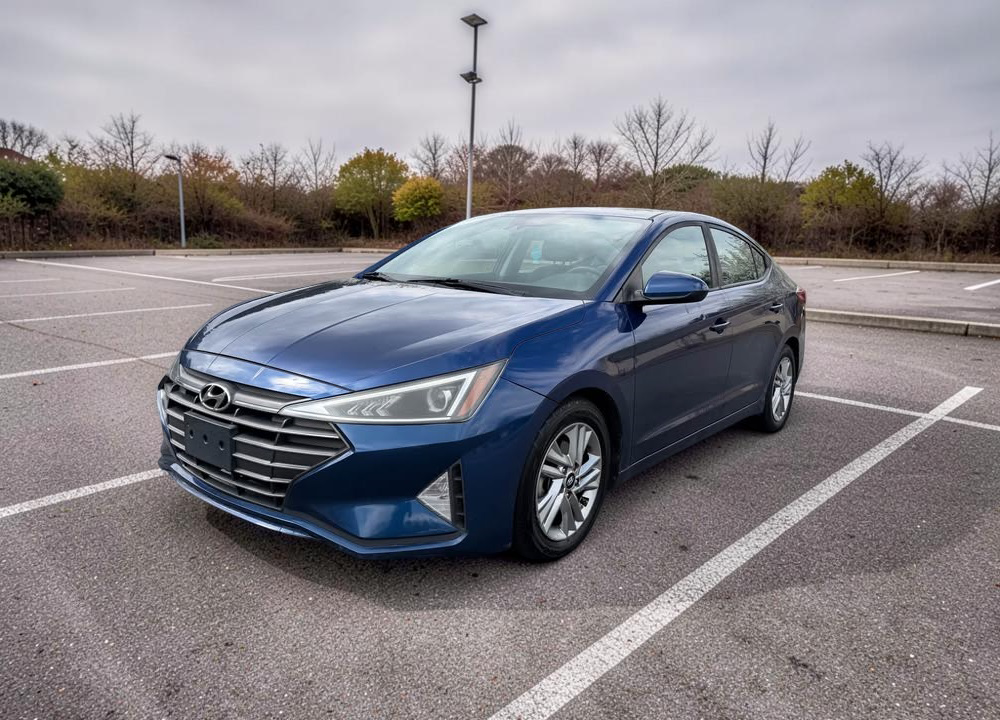
1. The Elantra transmission timeline and how each generation changed the failure pattern
2011–2016 models ran the A6 and kept things conventional
Fifth-generation cars used the A6GF1 and A6MF1 6-speed automatics. These units replaced older 4-speeds and cut weight by roughly 26 pounds. They paired with the 1.8L and 2.0L Nu engines in most trims.
Gear ratios stayed wide enough for highway economy. First gear ran as deep as 4.400. Sixth dropped to 0.772–0.774. Final drive ratios sat around 3.064–3.270, depending on engine.
The core weakness sits in hydraulics and internal electronics. Front pump seals can blow when pressure relief is restricted. Valve body reducing bores wear early, some units show flare by 40,000 miles.
2017–2020 cars split the lineup and doubled the risk profile
Sixth-generation Elantras kept the A6 in base trims. Eco and Sport trims adopted the D7GF1 7-speed dry DCT. By 2020, Hyundai phased in the IVT on standard 2.0L models.
Two identical 2019 Elantras can behave nothing alike. One uses a torque converter and planetary gears. The other runs dual dry clutches and an actuator pack.
The dry DCT chases MPG through direct clutch coupling. It runs no fluid bath for the clutch pack. Stop-and-go traffic drives clutch temps past 300°F during repeated creep events.
2021–2026 models centered on the IVT and added specialty gearboxes
Seventh-generation cars made the Smartstream IVT the default automatic. Hyundai replaced the A6 in most non-performance trims. The IVT uses a steel chain belt with a 6.58:1 ratio spread.
Hybrids run a 6-speed dual-clutch built for electric assist. The Elantra N runs an 8-speed wet DCT rated for higher torque loads. Recall 236 targeted certain 2022 N models for loss-of-motive-power risk.
Three automatic philosophies now sit under one nameplate. Planetary torque converter. Dry dual clutch. Chain-driven variable pulley system.
| Year Range | Primary Automatic | Specialty Transmission | Dominant Failure Theme |
|---|---|---|---|
| 2011–2016 | A6 6-speed AT | – | Pump seals, valve-body wear, speed sensors |
| 2017–2019 | A6 or 7-speed dry DCT | Dry DCT | Clutch heat, actuator logic faults |
| 2020 | A6 or IVT | Dry DCT | Early IVT calibration updates |
| 2021–2026 | IVT | 6-speed hybrid DCT / 8-speed wet DCT | Pressure learning, software campaigns |
Transmission replacement on an A6 averages $3,500–$4,500 installed. Dry DCT clutch and actuator repairs can reach $2,000–$3,500. Full IVT replacement often exceeds $4,000 outside warranty.
2. The A6 6-speed automatic and where it actually breaks
Hydraulic design keeps it smooth until pressure drops
The A6GF1 and A6MF1 use a compact pump and stacked clutch packs. Line pressure controls every shift feel and converter lockup event. Wear inside the valve body changes apply timing fast.
Reducing valve bores wear and lose pressure. Clutches apply late and slip on the 3–4 shift. Drivers feel a flare near 35 to 45 mph.
Underdrive support bolts can loosen over time. That interferes with piston return. Clutch drag follows, then heat, then burned frictions.
Front pump seal failures dump fluid fast
High-mile units show blown front pump seals. Restricted drain passages trap excess pressure. The seal pops and fluid leaks between engine and trans.
Fluid loss drops line pressure in seconds. Gear engagement turns harsh, then erratic. Drive it low on fluid and the torque converter clutch burns within 20 miles.
Front pump reseal runs $900 to $1,400. If clutches burn, rebuild costs jump past $3,500.
Internal harness and speed sensors trigger limp mode
The A6 depends on input and output speed sensors. The TCM uses them to calculate slip and ratio error. When one drops signal, the car throws P0722 or P0717.
Many 2013+ units integrate the TFT sensor into the internal harness. Harness failure near the case connector is common. Fluid heat and vibration crack insulation.
The transmission locks into 4th gear fail-safe. Throttle response dulls and shift commands freeze.
| Symptom | Likely Fault | Typical Code | Repair Range |
|---|---|---|---|
| No upshift | Output speed sensor | P0722 | $300–$600 |
| Harsh shifts | TFT / harness fault | P0711 | $400–$900 |
| 3–4 flare | Valve body wear | None or slip codes | $1,200–$2,000 |
| No movement after leak | Pump seal failure | Pressure codes | $900–$3,500+ |
Torque converter clutch faults show up as P0741. Lockup fails above 45 mph and RPM floats 200–400 higher than normal. Drive long enough like that and the converter overheats past 250°F fluid temp.
3. The 7-speed dry DCT and why traffic turns it ugly
Dry clutches run hot and city driving pushes them past their limit
The D7GF1 7-speed dry DCT uses two dry clutch packs. No fluid bath cools the friction discs. Heat builds fast during low-speed creep.
Stop-and-go traffic forces repeated half-clutch engagement. Clutch surface temps can exceed 300°F in dense traffic. Friction material glazes and loses bite.
Once glazed, engagement turns jerky. The TCM adjusts clamp force to compensate. That adds more heat and accelerates wear.
Clutch pack replacement runs $1,800 to $3,000 installed.
Actuator and logic faults cause hesitation and neutral events
The DCT relies on electric clutch actuators and shift motors. Software coordinates throttle input and clutch timing. Early calibration struggled with rapid pedal cycling at low speed.
Drivers report hesitation off the line. Throttle input rises, engine revs, car delays engagement. In severe cases, the unit drops into a neutral fail-safe.
Loss-of-motive-power complaints led to class-action litigation over Hyundai’s dry dual-clutch transmissions. The case, Wylie v. Hyundai Motor America, covered certain 2015–2017 models equipped with the 7-speed dry DCT, including Sonata Eco, Tucson, and Veloster.
The settlement provided extended warranty coverage and reimbursement for qualifying clutch and transmission repairs, in some cases up to 7 years or 100,000 miles from first service date.
Grinding and shudder signal hardware damage, not software
Shudder in first or second gear often points to clutch glazing. Grinding during upshift can mean worn clutch bearings. Metal debris then contaminates the geartrain.
TCM updates can smooth engagement timing. They cannot repair warped friction discs. If grinding continues, internal damage spreads to synchronizers and shafts.
Full DCT replacement can exceed $4,000 outside warranty.
| Driver Complaint | Mechanical Cause | Typical Outcome |
|---|---|---|
| Hesitation from stop | Clutch actuator lag | Software update or clutch wear |
| Low-speed shudder | Glazed dry clutches | Clutch replacement |
| Sudden neutral | Overheat protection logic | TCM update or actuator repair |
| Grinding noise | Worn clutch bearings/gears | Transmission teardown |
Repeated overheating shortens clutch life below 60,000 miles in heavy urban use.
4. The Smartstream IVT and how pressure control decides its fate
Chain-belt hardware raised the ceiling but didn’t remove risk
The Smartstream IVT replaced the 6-speed automatic in most 2020+ trims. It uses a steel chain belt instead of a push belt. Ratio spread reaches 6.58:1 for low-RPM cruising.
Chain design improves torque handling over older CVTs. Weight sits near 150 pounds. Eight simulated steps mask the constant ratio change.
Hardware strength doesn’t protect it from pressure loss. Pulley clamping force keeps the chain from slipping. Low pressure scours pulley faces within minutes.
Pulley scoring means full transmission replacement above $4,000.
Software campaigns show where the weak link lives
Service campaigns T5B, 963, and T8X targeted IVT control logic. TCU updates refined pressure learning routines. Dealers reprogrammed units that failed calibration checks.
Some vehicles stored P1603 during pressure learning. That code flags EOL P-range pressure failure. Hyundai directs replacement if recalibration fails.
Repeated learning failure signals internal hydraulic loss. No update fixes worn pump components. IVT assembly replacement remains the only approved remedy.
Hydraulic pressure faults trigger limp mode fast
The IVT monitors fluid temp, slip rate, and pulley pressure. Code P0867 signals low transmission fluid pressure. The system reduces torque to prevent belt slip.
Drivers feel weak launch and capped acceleration. RPM rises but road speed lags. Fail-safe limits ratio change to protect hardware.
Fluid temps above 230°F thin viscosity. Clamp force drops and slip increases. Sustained slip damages pulley faces in under 50 miles.
| Code | Trigger | Mechanical Risk | Repair Path |
|---|---|---|---|
| P1603 | Failed pressure learning | Internal hydraulic fault | Replace IVT |
| P0867 | Low fluid pressure | Belt slip, pulley wear | Diagnose pump or replace |
| Ratio slip codes | Excess slip detected | Chain scouring | IVT replacement |
Once pulley faces score, repair options end.
5. DTCs and limp mode signals that predict real failure
P0700 flags trouble but hides the real cause
The code P0700 means the TCM requested the MIL. It doesn’t name the failed part. It tells you to scan deeper.
A second code always rides with it. Ignore the companion code and you guess wrong. Shops that stop at P0700 waste hours.
Diagnosis requires reading TCM data live. Slip speed, temp, and gear command matter. Generic code readers miss manufacturer data.
A6 automatics throw speed and temperature codes first
A6 units often log P0711, P0717, or P0722. Those codes tie to TFT or speed sensor faults. Signal loss forces the unit into 4th gear.
Speedometer glitches often accompany output sensor failure. Harsh garage shifts follow when temp data drops out. Clutch fill timing goes blind without clean speed input.
Repeated limp mode burns clutch packs. Drive 200 miles in fail-safe and friction material darkens fast. Rebuild cost crosses $3,000 once clutch debris spreads.
IVT and DCT codes point to pressure or actuator stress
IVT units log P1603 or P0867 during pressure loss. DCT units show clutch or actuator codes tied to overheat. Neutral drop events often log thermal protection faults.
Limp mode limits torque and locks ratio. Throttle input feels capped at half output. Drivers mistake it for engine misfire.
Fluid temp above 250°F accelerates clutch degradation. Repeated thermal events cut clutch life below 50,000 miles in heavy traffic.
6. The hybrid DCT and the Elantra N wet DCT play by different rules
Hybrid 6-speed DCT runs cooler but adds electrical complexity
The Elantra Hybrid uses a 6-speed dual-clutch tied to an electric motor. Clutch load drops during low-speed electric assist. That reduces heat compared to the older dry DCT.
The motor sits between engine and transmission. Engagement timing blends electric torque with clutch apply. Software coordination matters more than raw clutch capacity.
Failures tend to involve actuator control or hybrid system faults. Clutch replacement still runs $2,000 to $3,000 if needed. Hybrid DCT units rarely show the 300°F creep pattern seen in dry DCT cars.
The 8-speed wet DCT in the Elantra N handles torque but faced a recall
The Elantra N uses an 8-speed wet DCT. Clutch packs run submerged in fluid for cooling. Torque capacity exceeds 280 lb-ft in stock form.
Wet clutch design improves heat tolerance. Fluid carries thermal load away from friction discs. High-performance use still stresses control logic.
Safety Recall 236 covered certain 2022 Elantra N models. Software fault could trigger loss of motive power. Hyundai updated TCU logic to prevent unintended disengagement.
Wet clutches reduce heat risk but add fluid dependency
Wet DCT units depend on clean, stable fluid. Contaminated fluid affects clutch modulation and shift timing. High temp driving can push fluid past 260°F.
Repeated track use degrades fluid quickly. Fluid exchange intervals shorten under severe use. Ignoring recall or fluid service risks a $5,000 transmission assembly replacement.
7. Warranty coverage changes the financial risk
The 10-year powertrain promise matters on complex gearboxes
Hyundai backs new Elantras with a 10-year, 100,000-mile powertrain warranty. Transmission case, internals, and TCM fall under that term. Original owners carry the longest protection window.
That coverage shields early IVT and DCT failures. A $4,000 IVT replacement inside warranty costs nothing. Outside coverage, the same job lands fully on the owner.
Used buyers lose leverage fast without certification
Second owners drop to 5 years, 60,000 miles on powertrain. That cutoff arrives quick on a 3-year-old commuter. High-mile urban cars age out before issues surface.
Certified Pre-Owned restores 10-year, 100,000-mile powertrain from first in-service date. CPO inspection includes transmission function checks. Skipping CPO on a DCT or IVT car can expose a $3,000 to $5,000 repair window.
Settlement and recall extensions extend specific protection
The DCT settlement extended clutch-related coverage on certain 2015–2017 models. Some vehicles gained up to 7 years or 100,000 miles for covered defects. Owners received reimbursement for prior clutch repairs.
Recall 236 covers specific 2022 Elantra N vehicles. Dealers update TCU logic at no charge. Ignoring an open recall leaves motive-power risk unaddressed and resale value reduced by thousands.
8. Maintenance and driving habits decide who hits 150,000 miles and who does not
“Lifetime fluid” breaks down under real heat
Hyundai labels many Elantra transmissions as inspection-only under normal service. Fluid still shears, oxidizes, and loses friction modifiers. Heat cycles degrade viscosity long before 100,000 miles.
Severe service calls for fluid exchange around 60,000 miles. Heavy traffic and high ambient temps count as severe. Urban commuters cook fluid daily.
Burned fluid smells acrid and turns dark brown fast. A6 and IVT units begin to flare shifts once viscosity and additive strength drop. Fluid service typically costs a few hundred dollars, while internal transmission repair or replacement commonly reaches $3,000 to $5,000 depending on unit and labor rates.
Dry DCT owners cannot drive it like a torque-converter automatic
Creeping in traffic keeps the clutch half engaged. That state builds friction heat every second. Repeated cycles glaze clutch surfaces.
Hard launches shock the actuator system. Repeated pedal modulation confuses early TCM calibrations. Clutch life drops below 60,000 miles in dense urban use.
Replacing the clutch pack early saves the geartrain. Ignore shudder and grinding spreads metal through the case. Full DCT assembly replacement crosses $4,000 once contamination sets in.
IVT survival depends on pressure stability and clean fluid
The IVT clamps a steel chain between variable pulleys. Clamp force depends on hydraulic pressure and fluid quality. Low viscosity weakens belt hold under load.
Rapid throttle stabs from a stop spike torque. That loads pulley faces before pressure peaks. Repeated slip scours pulley surfaces.
Once pulley faces score, the belt rides uneven. Pressure learning fails and P1603 may store. Replacement IVT units commonly exceed $4,000 installed.
9. Which Elantra transmissions are safest and which demand caution
The safest mainstream bet remains the A6 6-speed automatic
The A6 uses a conventional torque converter and planetary gears. Parts supply is strong and rebuild knowledge is common. Independent shops understand its pump and valve body failures.
Speed sensor faults run a few hundred dollars. Valve body repairs stay under $2,000 in most cases. Even full rebuilds often land between $3,000 and $4,000.
Failure modes are predictable. No clutch overheating logic or pressure-learning dependency exists. High-mile A6 cars still clear 150,000 miles with fluid service.
The highest-risk used buy is the 7-speed dry DCT
Urban-driven DCT cars show clutch wear early. Stop-and-go heat shortens friction life fast. Actuator lag and neutral drops scare drivers.
Clutch replacement averages $2,000 to $3,000. Ignored grinding spreads debris through the geartrain. Complete unit replacement exceeds $4,000 outside warranty.
Service history matters more than model year. Traffic-heavy ownership raises risk sharply. A shuddering test drive usually means hardware wear, not software.
The modern compromise for commuters is the IVT
The IVT handles daily traffic better than the dry DCT. Chain-belt hardware tolerates steady cruise well. Fuel economy improves over the old 6-speed.
Pressure control remains the weak link. Campaign updates must be completed. Fluid neglect shortens life below 120,000 miles.
Clean IVT units with update history age well. Slip codes and failed pressure learning point to replacement. Out-of-warranty IVT replacement typically runs $4,000 to $5,000.
The enthusiast outlier is the 8-speed wet DCT
Wet clutches manage heat far better than dry packs. Torque capacity supports 276 lb-ft stock output. Shift speed stays crisp under load.
Recall 236 must be verified complete. Fluid condition matters under track use. Replacement assemblies approach $5,000 when out of coverage.
Sources & References
- Hyundai ELANTRA – Model Years, Generations & News | Cars.com
- Hyundai Elantra Generations – Autolist
- Hyundai’s Smartstream IVT Is Not Your Typical CVT Gearbox – Automacha
- Hyundai Elantra Generations | CarsDirect
- List of Hyundai transmissions – Wikipedia
- 2011 Hyundai Elantra Trims Comparison [+ Chart] – Edmunds
- Hyundai Elantra Engine Comaparison Review | Napleton’s North Palm Hyundai
- Common Problems with the 7-Speed DCT (Hyundai/Kia) – ASR Gearbox Repairs
- 2025 Hyundai Elantra Transmission Options For Performance
- A6 Series Transmission Concerns and Solutions – Gears Magazine
- Transmission Won’t Shift/CEL Due to Failed Speed … – RepairPal
- My dct is overheating : r/CarsIndia – Reddit
- The Most Common Hyundai Dual-Clutch Transmission Problems
- Attention current and former owners and lessees of Hyundai 2015 …
- Push belt vs Chain belt. IVT Transmission vs CVT – YouTube
- Difference between a CVT and a IVT? : r/Hyundai – Reddit
- Belt-drive CVT – AutoZine Technical School
- The Rubber Band Effect: Unwrapping CVT Transmission Issues
- CVT Belt vs Chain: What’s the Difference and Why It Matters
- Continuously Variable Transmission Belts vs Chains: Which Design Lasts Longer
- tcu update and ivt replacement (service campaign t8x) – nhtsa
- tcu update and ivt replacement (service campaign 963) – nhtsa
- ecu & tcu update and ivt replacement (service campaign t5b) – nhtsa
- P0700: Transmission Control System (MIL Request) – In The Garage with CarParts.com
- P0700 causing limp mode or rough shifts?-Latest News&Resources …
- Replaced Transmission, Still Getting Speed Sensor Code – What Next? : r/Elantra – Reddit
- Guide to Hyundai’s America’s Best Warranty | Lebanon, TN
- Why Webb Hyundai’s Warranty Still Beats the Competition in 2026: Comprehensive Coverage and Customer Confidence
- 2026 Hyundai Warranty Changes
- Hyundai Warranty Information | Bob Bell Hyundai in MD
- Safety Recall 236 – Hyundai
- Recall 263Information and Implementation Plan – MyHyundai
- Hyundai CVT Transmission Problems: Expert Insights and Solutions …
- TOP REASONS WHY TRANSMISSION OVERHEATS ON HYUNDAI SONATA ELANTRA SANTA FE TUCSON VELOSTER ACCENT – YouTube
- IVT / CVT Durability : r/kia – Reddit
- 2025 se ivt transmission : r/Elantra – Reddit
- Dual Clutch Transmissions (DCT): Your experiences with them. : r/Hyundai – Reddit
- Can someone explain the issue with the DCT that I’ve been reading about? : r/ForteGT