
Cut power on a merge. Feel the idle stumble at a light. See the wrench icon glare back. That’s how many Ford Bronco engine problems start.
Since 2021, the Bronco has packed turbocharged EcoBoost engines, 2.3L, 2.7L, and 3.0L. Output ranges from 300 to 418 hp, all from high-boost, direct-injected setups that run hot and tight.
Early 2021 V6 builds faced brittle intake valves under recall 24S55, with some failures under 5,000 miles. Later complaints center on carbon buildup, turbo wear, harsh 10-speed shifts under 22-2428, and limp modes tied to electronics.
Some issues destroy engines. Others just feel that way. Let’s separate the real threats from the noise.
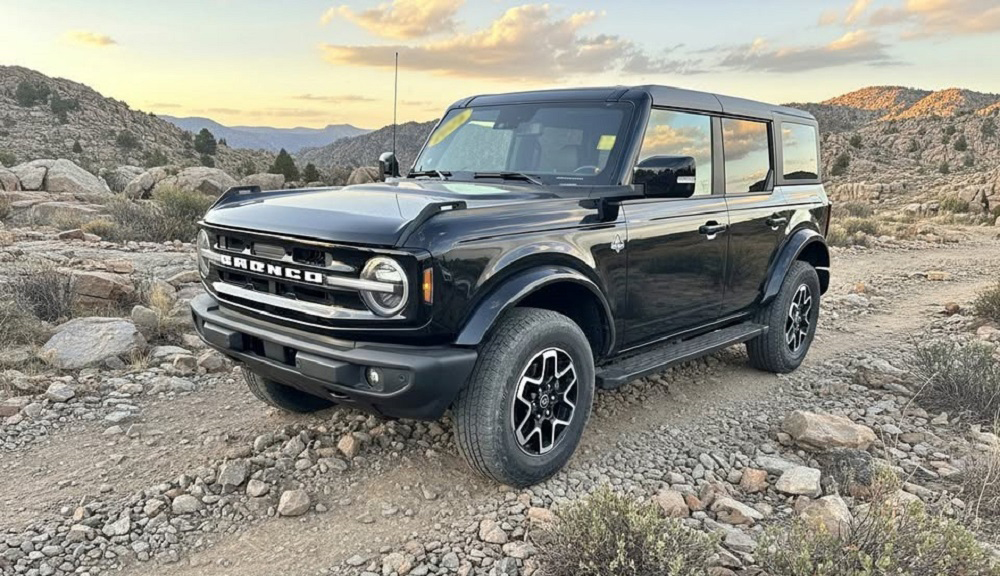
1. Bronco engine lineup and how each motor carries its own failure pattern
The 2.3L EcoBoost runs simpler hardware but still lives on boost and oil discipline
Ford rates the 2.3L at 300 hp and 325 lb-ft. It uses an aluminum block and head with a twin-scroll turbo. Fewer cylinders mean fewer valves and less rotating mass. Fewer parts reduce exposure points.
This engine avoids the 2021 brittle intake-valve crisis tied to the Nano V6. Its risk profile shifts toward carbon buildup, turbo wear, and heat management. Direct injection leaves intake valves dry. Oil vapor from the PCV system bakes onto them over time.
Low oil level hurts this engine fast. The turbo shaft can spin past 100,000 rpm. Dirty oil cooks in the bearing housing. Turbo replacement runs $1,500 to $2,500 parts and labor.
The 2.7L Nano V6 adds torque, pressure, and the highest-profile Bronco engine defect
The 2.7L makes 330 hp and 415 lb-ft. It uses a Compacted Graphite Iron block for strength under boost. That CGI block handles higher cylinder pressure than standard aluminum. It also traps heat.
Early 2021 builds carried intake valves made from Silchrome Lite alloy. Grinding heat during manufacturing altered the microstructure. Valves became brittle at the keeper groove. Crack growth led to head separation.
When a valve head drops, the piston slams it into the chamber. Pistons shatter. Rods bend. Blocks can crack. Long-block replacement often exceeds $12,000 at retail rates.
The 3.0L Raptor engine runs the hottest and leaves the least margin for error
The 3.0L pushes 418 hp and 440 lb-ft. Boost pressure and airflow climb sharply over the 2.7L. Cylinder pressure spikes under desert load. Cooling demand rises with it.
Early 3.0L builds shared the same brittle intake-valve exposure under recall 24S55. The production window centered on May 1 to October 31, 2021. Most failures occurred under 20,000 miles. Over half hit before 5,000 miles.
Raptor buyers often tow, run sand, or hold high load for long periods. Heat soak pulls timing. The PCM cuts boost to protect pistons. Intake air temps over 140°F trigger measurable power reduction.
2. The 2021 intake-valve failure that could wipe out a Bronco engine in seconds
Brittle intake valves and how the fracture starts
Ford recall 24S55 covers certain 2021–2022 Broncos with 2.7L and 3.0L engines. Intake valves from a specific supplier batch overheated during groove grinding. The alloy, Silchrome Lite, hardened beyond spec. Excess hardness reduced ductility at the keeper groove.
Micro-cracks formed under normal heat cycles. Each combustion event loaded the valve head. Crack growth continued until the head snapped off the stem.
From rough idle to total engine destruction
Drivers often reported rough running and a flashing MIL first. Misfires triggered codes like P0300 or cylinder-specific faults. Some engines kept running for minutes. Others failed without warning.
When the valve head dropped, the piston struck it on the next cycle. Aluminum pistons shattered. Connecting rods bent or punched through the block. Repair meant full long-block replacement, often $10,000 to $15,000 out of warranty.
The production window that matters
NHTSA data ties the failure spike to engines built between May 1 and October 31, 2021. Over 50% of failures occurred before 5,000 miles. Most happened before 20,000 miles. Warranty data showed a steep early-life failure curve.
Ford switched to a revised alloy, Silchrome 1, in late October 2021. Post-change engines showed near-zero confirmed fracture cases in the same mileage band.
How Ford screens engines under recall 24S55
Dealers do not automatically replace every engine. The procedure checks cumulative engine cycles in PCM memory. Some units undergo a controlled high-RPM accumulation test. The goal is to force early failure in defective valves under shop control.
If the engine survives the prescribed cycle count without noise or damage, it remains in service. If a valve fails during testing, the engine is replaced. Coverage extends to 10 years or 150,000 miles for affected vehicles under the program terms.
3. Direct injection carbon and LSPI risk that never shows up on the window sticker
Intake valves coke up over time, and airflow drops with them
All Bronco EcoBoost engines use gasoline direct injection. Fuel sprays straight into the cylinder. The intake valves never see that fuel wash. Oil vapor from the PCV system coats the valve stems.
Heat bakes that film into hard carbon. Deposits thicken between 40,000 and 80,000 miles in many turbo DI engines. Airflow drops. Idle turns rough. Misfires trigger codes like P0300 and P0301–P0306.
Walnut blasting restores flow but costs $400 to $800 at most shops.
High load at low rpm invites LSPI damage
Turbo torque peaks low in the rev range. The 2.7L hits 415 lb-ft at 3,100 rpm. Lugging below 2,000 rpm under heavy throttle raises cylinder pressure fast. Oil droplets and fuel mix can ignite before the spark.
That event is Low-Speed Pre-Ignition. LSPI spikes pressure beyond normal knock. Pistons crack ring lands. Rods bend. A single LSPI event can ruin a piston in one combustion cycle.
API SP oil reduces LSPI risk with revised additive chemistry. Oil that meets older SN specs lacks that LSPI suppression package.
Oil intervals matter more under boost and heat
Ford’s oil-life monitor can stretch changes near 10,000 miles in light use. Off-road driving, towing, and high ambient heat degrade oil faster. Turbo bearings rely on clean oil for cooling and lubrication. Oil breakdown forms coke in the turbo center housing.
Extended intervals raise the chance of bearing wear and shaft play. Turbo replacement averages $1,500 to $2,500. Severe-service oil changes every 5,000 miles cost a fraction of that.
4. The 2.3L EcoBoost and the problems buyers keep arguing about
Head gasket fear and the Focus RS shadow
Forum chatter drags the Focus RS head gasket mess into every 2.3L Bronco thread. The RS issue involved a wrong-spec gasket blocking coolant passages. That was a manufacturing error on a different platform. The Bronco 2.3L uses revised coolant routing and updated head design.
True 2.3L Bronco head gasket failures are rare and usually tied to overheating. Coolant loss, white smoke, and milky oil mark a breach. Cylinder pressure pushes combustion gases into the cooling system. Head gasket repair runs $2,000 to $3,500 if caught before warping the head.
Turbo wear shows up as underboost and smoke
The 2.3L twin-scroll turbo runs hard in a 4,500-pound SUV. Bearing wear creates shaft play. Oil seals fail and push oil into the exhaust. Blue smoke on throttle and codes like P0299 point to underboost.
Wastegate actuators can stick or lose calibration. Boost leaks at charge pipes mimic turbo failure. Full turbo replacement averages $1,500 to $2,500. Ignoring oil changes accelerates that wear curve fast.
Why the 2.3L often survives longer in stock form
Lower torque reduces peak cylinder pressure. The 2.3L sees 325 lb-ft versus 415 lb-ft in the 2.7L. Fewer cylinders mean fewer valves and cam followers. That lowers total valvetrain load.
Most 2.3L failures trace to maintenance neglect, not systemic design flaws. Keep oil fresh, watch coolant levels, and address boost leaks early. The core block and rotating assembly hold up past 150,000 miles when serviced on time.
5. Transmission behavior that feels like engine failure
The 10R60 harsh shifts that mimic misfires
Hard engagement into Drive. Sudden flare between gears. A pause, then a slam. Many owners blame coils or fuel.
TSB 22-2428 covers 2021–2023 Broncos with 10R60 and 10R80 units. The CDF clutch cylinder sleeve can move out of position. Hydraulic passages lose pressure. Clutch packs apply late or harsh.
Drivers feel a surge or bog during the shift event. The engine pulls timing during torque management. No engine parts fail. Transmission removal and CDF repair can exceed $3,000 out of warranty.
Neutral-out and delayed engagement that scare owners
Some Broncos hesitate off a stop. Others feel like they slip into neutral on a light throttle roll. The engine revs clean. The vehicle does not move.
Hydraulic pressure loss inside the 10-speed causes that event. Software updates target shift timing and clutch fill. Hardware faults require internal repair. A reman 10R60 unit can cost $5,000 to $7,000 installed.
The MT88 manual scraping noise that sounds like internal damage
Cold start. Clutch out in neutral. A rotational scraping sound appears. Many assume gear teeth damage.
TSBs address 5th and 6th gear synchronizer rings in 2021–2023 Broncos. Wear patterns cause noise at low temperature. Repair time runs about 10 hours. Parts and labor often exceed $1,500 at dealer rates.
6. Wrench light, limp mode, and electronic faults that feel like engine death
The wrench icon that cuts power without breaking metal
The yellow wrench shows up. Throttle response drops. Boost falls flat. The engine still runs.
The PCM limits torque when it sees a powertrain fault. Communication codes, often U-codes, trigger that response. The vehicle enters fail-safe mode to protect hardware. No pistons melt during this event.
Scan tools often reveal stored U0100 or related network faults. Ignoring repeated limp events risks stalling in traffic.
Gear Shifter Module faults that trap the truck in park
Some 2023–2024 Broncos log faults tied to the Gear Shifter Module. The module reports gear position to the PCM and TCM. When communication drops, the system defaults to a protective state. The truck may refuse to shift or reduce power.
Symptoms include stuck-in-park complaints and intermittent reduced power. Restarting may clear the message temporarily. Module replacement and programming can exceed $800 to $1,200.
Weak 12-volt batteries that trigger stall events
Modern Broncos depend on stable voltage. Low battery state can confuse control modules. Auto Start-Stop may fail to restart the engine. The stall feels mechanical but traces to voltage drop.
Ford recall 24S24 primarily affecting Bronco Sport and Maverick models highlights battery management logic flaws. A weak 12-volt battery can cause low-speed stall and no-restart events. A quality AGM replacement runs $250 to $400 installed.
7. Heat soak and intercooler limits that pull power before parts fail
Intake temps climb fast under load
Hammer a long hill. Run sand at wide throttle. Intake air temps rise quickly.
The factory intercooler uses a tube-and-fin core with plastic end tanks. Thermal mass is limited. After repeated pulls, the core saturates. Intake temps can exceed 140°F in hot climates.
The PCM reacts by pulling ignition timing and cutting boost. Power drops even though compression and fuel delivery remain healthy.
The 3.0L Raptor shows the thermal ceiling first
The 3.0L runs higher boost and airflow than the 2.7L. Cylinder pressure climbs with 418 hp on tap. Sustained load stresses the cooling stack. Oil and coolant temps follow intake heat upward.
Once intake temps spike, knock sensors detect higher combustion noise. Timing retard reduces torque output. Repeated high-heat cycles accelerate oil breakdown and turbo wear.
Charge pipes and intercoolers become durability parts
Plastic charge pipes expand under boost. Clamps loosen over time. Boost leaks trigger P0299 underboost codes. Owners often chase fuel or spark when the leak sits in the intake tract.
Aftermarket bar-and-plate intercoolers hold more heat capacity. Aluminum charge pipes resist expansion. Quality intercooler upgrades run $800 to $1,500 before labor. Stock cooling limits sustained full-power pulls in 100°F ambient conditions.
8. Which Broncos carry the most risk and which setups age better
Early 2021 2.7L and 3.0L builds sit at the top of the caution list
Engines built between May 1 and October 31, 2021 saw the intake-valve defect window. Failures clustered under 20,000 miles. Many hit before 5,000 miles. Recall 24S55 covers those units.
Verify recall completion through Ford’s VIN lookup. Confirm whether the engine passed the cycle-screening test or received a long block. An out-of-pocket long-block replacement runs $10,000 to $15,000.
The 2.3L with disciplined service shows the lowest catastrophic rate
The 2.3L avoided the brittle valve issue. Most complaints center on turbo wear and carbon buildup. These are maintenance-driven patterns. They rarely destroy the block.
Keep oil at 5,000-mile intervals under heavy use. Use API SP oil to limit LSPI risk. Replace spark plugs around 30,000 to 60,000 miles under boost duty.
The real failure curve shifts from metal to modules after 2022
Post-2022 builds show fewer hard-part catastrophes. Complaints lean toward transmission shift quality, module faults, and battery sensitivity. Limp mode events outnumber blown engines in later warranty data. Software updates often address performance issues.
Hardware repairs still carry real cost. A 10R60 rebuild can exceed $5,000. A turbo job can top $2,000. The 2.7L and 3.0L long block remains the most expensive single failure on the platform.
Sources & References
- 2021 Ford Bronco: Release,Specs,Trims
- Ford Bronco: Engine Options Across Every Generation
- Ford EcoBoost Engine Recall: Extended Warranty Details | Lemon …
- Powertrain malfunction / reduced power notification : r/FordRaptor – Reddit
- Ford Bronco Problems: Common Issues Explained – CarBrain
- The 2025 Ford Bronco: Engine Options and Performance
- 2021 Ford Bronco Engine Options | Jack Demmer Ford
- 2025 Ford Bronco Engine Options: Power For Every Drive
- Seriously, how concerned should we be? : r/FordBronco – Reddit
- Inside The 400 HP, Twin-Turbo 3.0L EcoBoost That Powers Ford’s Explorer ST | DrivingLine
- 2024 Ford Bronco Raptor Review: Off-Road Beast, Daily Driver? – TractionLife
- Ford Recalls 91K EcoBoost Models over Potential Engine Failure – Car and Driver
- 24S55: Bronco Edge Explorer F-150 (2021-2022) Engine Intake Valves Recall – Ford
- NHTSA Closes Probe Over Engine Defect Risks of 411,000 Fords – Autobody News
- Regulators expand investigation into 700K Ford trucks, SUVs over engine issues
- 5 Ford 2.3 Ecoboost Problems & How to Fix Them – The Lemon Law …
- Everything You Need to Know About Ford’s EcoBoost Engines
- Common 2.7 EcoBoost Problems Every Ford Owner Should Watch Out For
- EcoBoost Challenges pt. 3: Navigating Internal Issues: Carbon Buildup and Timing Chain Stretch – Stage 3 Motorsports
- What is an EcoBoost Engine? | Specialty Performance Parts
- Ford Bronco Sport Powertrain Control System Diagnosis & Testing Cost – RepairPal
- How prevalent is the “ecoboom” head gasket issue? : r/ecoboostmustang – Reddit
- What is the recommended engine oil for my vehicle? – Ford
- Panda Motorworks Ford Ranger/Bronco Raptor Oil Change Special (3.0)
- Ford OEM – Focus RS Head Gasket Upgrade for 2.3L EcoBoost for 2015-2023 Mustang EcoBoost
- How reliable are the 2.3L and 2.7L EcoBoost engines that will be in the 2021 Ford Bronco?
- List of EcoBoost Equipped Vehicles – JEM-Sport
- Ford 2.3L EcoBoost Problems & How to Fix Them [2025 Update] – Lemon Law Firm
- Day 1-power train malfunction/reduced power! – Bronco Nation
- What are the engine options for the 2021 Ford Bronco? | Heritage Ford of Indiana Inc.
- Transmission/Transaxle: MT88
- TECHNICAL SERVICE BULLETIN 10R60/10R80/10R80 … – nhtsa
- MC 10236680 0001 | PDF | Mechanical Engineering | Vehicle Technology – Scribd
- Worried about the Bronco Engines now…. | Page 5 | Bronco6G
- Powertrain Malfunction / Reduced Power – Bronco Nation
- Got this warning(powertrain failure) along with a subtle loss in power while on the highway. But when turned off and back on again warning had gone away and car felt normal. Happened twice in the past couple of weeks. Is it worth having it checked out? : r/BroncoSport – Reddit
- Issues with ford Bronco? : r/FordBronco – Reddit
- Does Powertrain Fault (Wrench Icon) by itself produce a code? : r/Ford – Reddit
- 24S24: Bronco Sport (2021-2024) and Maverick (2022-2023) Loss of Power Recall – Ford
- Full Race | What Is Heat Soak? Upgrade Your Ford EcoBoost Intercooler for More Power
- EcoBoost Challenges pt. 2: How Stage 3 Motorsports Solve The Top Three Most Common Ones
- Recall Information – Ford Recalls | Ford Owner Support
- Carfax recall alert:26S10 EXHAUST GAS RECIRCULATION EGR VALVE FAILURE – Reddit
- Ford recalls more than 200000 Bronco and Bronco Sports for instrument panel failure
- Ford Recalls 229,000-Plus Broncos, Bronco Sports for Instrument Panel Failure | Cars.com
- Ford recalls nearly 230,000 U.S. vehicles over instrument panel display failure – CBS News