
Hear a knock. Watch the oil light flicker. Smell heat where it shouldn’t be. That’s how many Kia Sportage engine problems begin.
From simple early MPI fours to GDI-era Theta II engines tied to recall 17V-224, the story isn’t uniform. Some years chew through rod bearings.
Others slowly burn oil until the dipstick runs dry. Software like KSDS and code P1326 stepped in to catch failures before they turn into engine-bay fire reports.
Certain Sportages run 200,000 miles with care. Others need an engine before 100,000. Let’s pin down the years that earn trust and the ones that demand caution.
1. The engine lineup kept changing, and so did the risk
Early Sportage engines were basic and rarely catastrophic
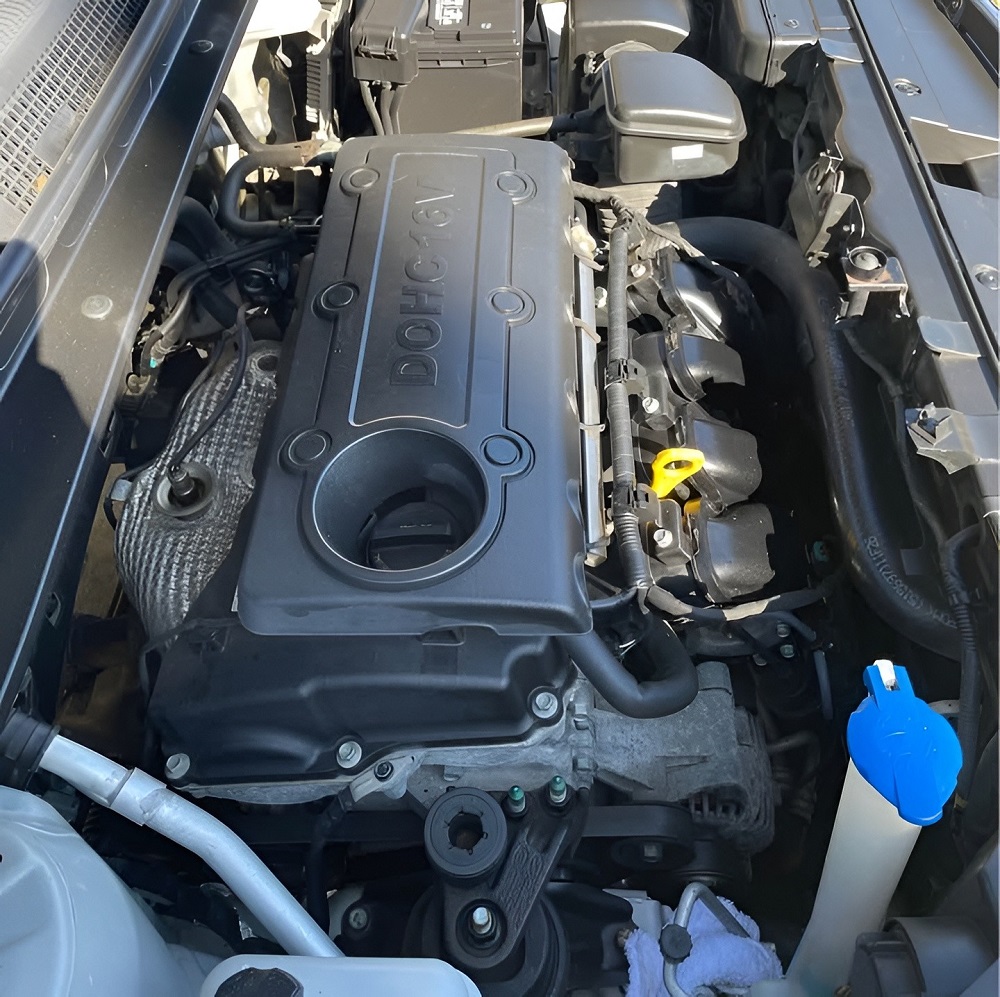
Run back to the 1993–2010 years. The first and second generations used port-injected four-cylinders like the FE 2.0L and later Beta II 2.0L. Power stayed modest, 94 to 141 horsepower, with SOHC or DOHC layouts and simple oil routing.
Fuel washed over the intake valves on every cycle. Carbon buildup stayed manageable. Bearing seizures tied to factory debris never became a headline in this era.
Failures showed up as coil packs, timing belt neglect, and aging gaskets. A snapped belt on the Beta II could bend valves, but that was maintenance-driven, not systemic machining debris. Most engines here crossed 150,000 miles with routine service and clean oil.
2011–2018 marked the danger window
Step into the third-generation SL and early fourth-generation QL. Engine codes shift to G4KJ and G4KH under the Theta II family. Gasoline Direct Injection pushes compression higher and tightens oil tolerances.
Manufacturing debris inside crankshaft oil passages changed the failure profile. Metal shavings circulated through the lubrication system. Rod bearings lost their oil film and started knocking under load.
Recall 17V-224 covered 2011–2013 Sportage 2.0T models after bearing failures led to stalls and engine fires. Once clearance grows, oil pressure drops. Keep driving, and the rod can punch through the block. Short-block replacement often runs $5,000 to $8,000 out of warranty.
Nu and Gamma engines brought slower damage
Not every bad Sportage threw a rod. The 2.0L Nu (G4NA) and 1.6L Gamma (G4FD) engines built a different reputation. Oil consumption crept up as piston oil-control rings stuck with carbon.
Owners reported 1 quart per 1,000 miles in severe cases. Blue smoke appeared on cold start. Catalytic converters clogged from burned oil and triggered efficiency codes.
Bulletins like ENG222 addressed excessive oil use across 2011–2024 applications. Dealers performed oil-consumption tests and, if thresholds were exceeded, replaced short blocks. Ignore low oil long enough, and spun bearings followed.
Smartstream reshaped the architecture in 2023 and up
Enter the fifth-generation NQ5 Sportage. The 2.5L G4KN Smartstream uses dual injection, both port and direct. Port injectors spray during low load to keep intake valves cleaner.
Compression remains high, but oil routing and ring design improved over early GDI setups. Early field data shows fewer sudden bearing failures than the Theta II years. Long-term durability past 150,000 miles remains under watch.
Hybrid models use the 1.6T Smartstream. Short cold trips can allow fuel to mix with oil before full warm-up. Rising oil level and fuel smell on the dipstick signal dilution. Excess dilution lowers viscosity and accelerates cam and turbo bearing wear.
Engine eras that matter most
| Era | Engines | Defining risk | Typical failure cost |
|---|---|---|---|
| 1993–2010 | FE, Beta II MPI | Timing belt neglect, coils | $1,500–$3,000 major repair |
| 2011–2013 | Theta II 2.0T | Rod bearing seizure, fire risk | $5,000–$8,000 engine |
| 2014–2021 | Nu, Gamma, carryover Theta | Oil burn, stuck rings, P1326 events | $4,000–$7,000 engine |
| 2023–present | Smartstream 2.5 / 1.6T | Under evaluation, dilution in hybrids | TBD long-term |
The 2011–2018 window carries the highest catastrophic engine replacement risk in used inventory today.
2. Theta II failures start in the oil passages and end with a dead block
Metallic debris wiped out the bearings
Drill crankshaft oil passages during machining. Fail to flush the shavings. Send the engine down the line anyway. That sequence defined the worst Theta II failures.
Microscopic metal fragments lodged in the rod bearings. The soft babbitt layer embedded debris and lost its smooth surface. Oil film thickness collapsed under load at 3,000 to 4,000 rpm.
Clearance grew fast. Oil pressure dropped. A deep knock developed under throttle, often before 80,000 miles.
Bearing knock escalates into seizure and block breach
Hear a rhythmic knock that rises with rpm. See the oil light flicker at idle. Keep driving, and friction heat spikes at the journal surface.
The rod bearing can spin. Once it spins, it blocks the oil feed hole. Heat climbs, the rod seizes on the crank, and inertia snaps the rod beam.
A broken rod can punch through the aluminum block. Pressurized oil sprays onto a 1,200°F catalytic converter or turbo housing. Engine-bay fire becomes a real risk.
Short-block replacement at retail often lands between $5,000 and $8,000, depending on labor rate and parts availability.
Recall 17V-224 and the safety trigger
File complaints for stalls at highway speed. Log non-collision engine fires. NHTSA assigns recall 17V-224 to certain 2011–2013 Sportage 2.0T models.
The campaign addressed bearing seizure linked to manufacturing debris. Dealers inspected and, when needed, replaced engines. Later actions expanded monitoring through software updates.
A seized engine at 70 mph can stall without warning. Loss of power steering and brake assist follows within seconds.
The mechanical sequence behind DTC P1326
Install updated ECU logic under the Knock Sensor Detection System. Monitor vibration signatures through the factory knock sensor. Flag abnormal bearing noise before full seizure.
When thresholds hit, the ECM stores P1326. The MIL flashes. Limp mode caps engine speed near 1,800 to 2,000 rpm and limits vehicle speed.
Some engines pass a dealer bearing clearance test and leave running. Others fail and receive a short block under extended coverage. Out of warranty, a failed Theta II still runs $5,000 or more to correct.
3. Nu and Gamma engines burn oil until the bearings follow
Oil control rings stick and stop scraping
Run the 2.0L Nu or 1.6L Gamma hard on short trips. Carbon builds in the ring grooves. The oil control ring loses tension and sticks in place.
Once stuck, it stops scraping oil off the cylinder wall. Oil rides up into the combustion chamber on every stroke. Blue smoke shows on cold start and long decel.
Some owners report 1 quart per 1,000 miles. Ignore that rate for 3,000 miles, and the sump runs dangerously low.
Oil consumption tests decide engine fate
Bring the car in for excessive oil use. Dealers start a documented oil-consumption test under bulletin ENG222. The engine is filled, sealed, and checked every 1,000 miles.
Exceed the factory threshold, and Kia may authorize a short block. Fall under the line, and the case closes. Many engines hover just below the cutoff while still burning oil fast.
Out-of-pocket short block replacement commonly lands between $4,000 and $7,000 once warranty coverage ends.
Carbon and oil burn damage the rest of the system
Burned oil coats the catalytic converter substrate. Efficiency drops and triggers catalyst codes like P0420. Backpressure rises and heat loads increase under sustained highway runs.
Carbon also builds on intake valves in GDI-only versions. Rough idle and misfire complaints follow. Induction cleaning every 30,000 miles helps, but severe buildup often requires walnut blasting.
Run low on oil long enough, and rod bearings suffer secondary damage. A neglected oil burner can still end in a seized engine before 120,000 miles.
4. KSDS and P1326 turned engine failure into software control
The ECU now listens for bearing death
Flash the ECM with the Knock Sensor Detection System update. Reprogram logic to filter out normal combustion noise. Tune it to catch low-frequency vibration tied to rod bearing wear.
The knock sensor feeds vibration data to the ECM in real time. The system looks for patterns outside normal spark knock. Once thresholds hit, it flags an abnormal event before the rod exits the block.
That detection window can occur well before full seizure, sometimes at 60,000 to 90,000 miles.
P1326 triggers limp mode and locks power down
Store P1326 when KSDS detects bearing vibration. Flash the MIL. Cap engine speed around 1,800 to 2,000 rpm.
Throttle response flattens. Highway merging becomes a struggle. Top speed often stays near 60 to 65 mph under load.
Some engines fail the bearing clearance test and qualify for short block replacement. Others pass the air-pressure clearance test and leave the dealer running, even with prior knock history.
Software status now controls warranty access
Install KSDS to qualify for extended engine coverage under the Engine II settlement. Skip the update, and coverage can be denied after failure.
The settlement extends protection to 15 years or 150,000 miles for qualifying bearing failures. Claims require proof of update and service history. Missing oil-change records can trigger a neglect review.
Without coverage, a P1326 event that leads to engine replacement still carries a $5,000 to $8,000 repair bill.
5. Smartstream engines fix old flaws but add new watch points
Dual injection tackles carbon at the source
Launch the 2.5L G4KN Smartstream in the 2023 Sportage. Add both port and direct injectors to the cylinder head. Spray fuel at the intake valves during low load.
That fuel wash cuts valve coking seen in GDI-only Nu engines. Intake airflow stays more stable past 60,000 miles. Idle quality improves compared to earlier 2.0L GDI setups.
Compression still runs high, near 13:1 in some trims. Oil quality and change interval now matter even more under that cylinder pressure.
Ring design and oil routing changed from Theta II days
Revise piston ring coating and tension. Update oil passages and crank machining processes. The goal centers on stable oil film under sustained load.
Early field data shows fewer sudden rod exits than the 2011–2013 era. Reported bearing seizure rates appear lower so far. Long-term data past 150,000 miles remains limited.
Out-of-warranty engine replacement still trends above $6,000 if a major internal failure occurs.
Hybrid 1.6T models face oil dilution risk
Cycle the 1.6T engine on and off during short trips. Let coolant temp hover below 180°F. Unburned fuel slips past the rings into the crankcase.
Oil level can rise on the dipstick. Fuel smell becomes noticeable during checks. Diluted oil thins and loses film strength at high turbo shaft speeds.
Extended dilution accelerates cam lobe and turbo bearing wear. Severe cases require early oil changes every 3,000 to 5,000 miles to maintain viscosity control.
6. Some Sportage fires start outside the engine block
ABS modules can ignite while the car sits parked
Leak brake fluid inside the HECU. Let it seep onto the circuit board. Short the electronics even with the ignition off.
Certain 2010–2016 Sportage models faced recall campaigns for this defect. NHTSA issued “park outside” advisories due to non-collision fire risk. Heat builds inside the module housing until plastic ignites.
The repair often involves a fuse replacement or module update. Ignore the recall, and the fire risk remains whether the engine runs or not.
High-pressure fuel hardware adds its own hazard
Run a cam-driven high-pressure fuel pump at over 2,000 psi. Damage the fuel pipe during engine replacement. Leave it misaligned or under-torqued.
Fuel sprays directly over the cylinder head under load. One spark or hot surface can trigger a flash fire. Recall campaigns addressed inspection and pipe replacement after settlement-related engine swaps.
A high-pressure leak can empty the rail quickly. Repairing a damaged pump and line often exceeds $1,000 once labor and parts stack up.
Accessory harness defects extend fire risk to newer models
Install a genuine tow hitch harness with a control module. Let moisture enter the module housing. Create an internal short that draws constant current.
Recent recalls on 2023–2025 Sportage models cite harness-related fire risk. Advisories again instructed owners to park outside until fixed.
A shorted module can overheat without warning. Replacement harness kits and labor can approach $600 if not covered under recall.
7. Warranty paperwork now matters as much as rod bearings
The Engine II settlement rewrote the coverage rules
File a bearing failure claim under the Engine II class settlement. Qualify for extended protection up to 15 years or 150,000 miles on specific engines. Coverage centers on connecting rod bearing damage in affected Theta II, Nu, and Gamma families.
Reimbursement includes prior out-of-pocket engine repairs and certain fire-related total losses. Claims require documentation and proof of KSDS installation. Miss that update, and coverage can collapse fast.
A denied claim on a seized engine leaves the owner facing a $5,000 to $8,000 repair bill.
Oil change records decide approval or denial
Submit a claim without service records. Watch the dealer flag possible neglect. Settlement terms allow review of maintenance gaps and low-oil operation.
Oil consumption history plays a role. Prior warnings about low oil or missed follow-up tests weaken a case. Dealers check for sludge, varnish, and oil starvation signs during teardown.
Lack of receipts can shift the cost back to the owner. A single disputed maintenance interval can mean a full retail engine replacement.
Coverage depends on software status and recall completion
Verify KSDS installation before failure. Confirm open recalls are closed, including fire-related campaigns. Settlement benefits tie directly to compliance with required updates.
Open recall status complicates resale and insurance claims after a fire. Buyers now check VIN recall history as closely as mileage.
An engine with full recall closure and documented service history carries far less financial risk than one missing paperwork, even at the same 90,000-mile mark.
8. The right Sportage depends on the engine under the hood
2011–2013 2.0T models carry the highest seizure risk
Scan the VIN for a 2.0T Theta II in the 2011–2013 range. These engines sit closest to recall 17V-224 and early debris-related failures. Rod knock under load or a stored P1326 demands immediate inspection.
Check for documented engine replacement or KSDS update. No proof means higher financial exposure. A used example without coverage can turn into a $7,000 liability fast.
2014–2021 Nu and Gamma engines demand oil discipline
Pull the dipstick every 1,000 miles on 2.0L Nu or 1.6L Gamma models. Watch for consumption rates near 1 quart per 1,000 miles. Catalyst codes like P0420 often follow chronic oil burn.
Request oil-consumption test records before buying. Look for short block replacement under warranty. Engines with documented repair history tend to age better than those still on original internals past 120,000 miles.
2023 and newer 2.5L models show the best early track record
Focus on the 2.5L Smartstream for mainstream gas reliability. Dual injection reduces intake valve carbon buildup seen in GDI-only designs. Early data shows fewer bearing seizure complaints compared to the 2011–2013 era.
Hybrid buyers should monitor oil level for dilution during winter use. Plan oil changes closer to 5,000 miles in short-trip cycles. Neglecting dilution can shorten turbo and cam life before 100,000 miles.
A documented 2.5L Smartstream with full recall compliance and 5,000-mile oil intervals currently represents the lowest catastrophic engine failure risk in the Sportage lineup.
Sources & References
- Kia Sportage – Wikipedia
- Kia Sportage Generations – Autolist
- Kia Sportage Engine Conifgurations – Napleton River Oaks Kia
- Hyundai Smartstream engine – Wikipedia
- Kia Engine Settlement – Home
- Hyundai Fined Millions over Santa Fe Sport, Sonata Engine Recalls – Car and Driver
- Hyundai / Kia Engine Fire Hazard Class-Action Settlement
- Kia Engine Recall & Repair Information – World Kia Joliet
- Why Are Kia and Hyundai Recalling Engines? – The Daily Dot
- safety recall campaign – engine vibration inspection and replacement (sc209) – nhtsa
- product improvement campaign – nhtsa
- Kia Sportage – IMPORTANT SAFETY RECALL
- 2011 Kia Sportage Recalls – Cars.com
- excessive oil consumption nu/gamma/theta engines – nhtsa
- excessive oil consumption nu/gamma/theta/kappa engines – nhtsa
- High oil consumption in Kia Sportage IV 1.6 GDI
- 15 Of The Most Reliable Hyundai Engines Ever Built – SlashGear
- Has Kia redesigned their engines to fix the oil consumption issue?
- Kia Piston Oil Ring Recall Investigated by NHTSA – Attorney for Lemon Law
- engine inspection/replacement and ecm logic improvement (sc336) – nhtsa
- technical service bulletin – high-pressure fuel pump replacement – nhtsa
- P1326 Code: What Is It And How To Fix It – Car Talk – Panda Hub
- Kia Engines UK – Rebuilt & Used Engines | 12m Warranty
- theta 2.4l mpi – knock sensor detection system (ksds) ecu logic improvement (pi2103) – nhtsa
- Kia Engine Recall & Repair Information – World Kia Joliet
- INFORMATION ABOUT THE ENGINE IN YOUR KIA VEHICLE
- IMPORTANT SAFETY RECALL – nhtsa
- updated ksds software installation (sc218a) – OEMDTC
- P1326 Code: What It Is And How To Fix It – CarBuzz
- P1326 Knock Sensor Detection System (KSDS) has detected BCT PASS OR NO PASS @WrenchingRyan – YouTube
- Kia E2 Settlement – Home
- Is the New 2.5L Engine Something To Be Worried About?
- Looks like Hyundai/Kia’s 1.6T hybrid engines might have oil dilution issues…
- 2025 Kia Sportage Hybrid Consumer Reviews & Ratings | Kelley Blue Book
- Kia Recall: Fuel Leaks At Fuel Pump Connection Causing Fire Hazard – RepairPal
- Consumer Alert: Kia and Hyundai Issue Recalls for 3.3M Vehicles, Advise Owners to Park Outside | NHTSA
- Consumer Alert: Kia and Hyundai Issue Park Outside Orders for Select Sportage, K900 and Santa Fe Vehicles | NHTSA
- Find Existing Kia Sportage Car Recalls – DealerRater
- Hyundai and Kia Issue Recall Due to Fire Risks
- Kia, Hyundai engine failure class action settlement