
Feel a hard shift hit like a hammer. Hear a clunk under load. Watch the wrench light pop mid-route. That’s how Ford Transit transmission problems start.
Since 2015, two gearboxes run this van. The 6R80 6-speed shows leadframe faults and converter shudder. The 10R80 10-speed brings CDF drum wear, harsh shifts, and early-build trouble under TSB 24-2254.
Fleet use cooks fluid fast. That 150,000-mile service target doesn’t survive delivery duty. Let’s break what fails, and what to fix before it snowballs.
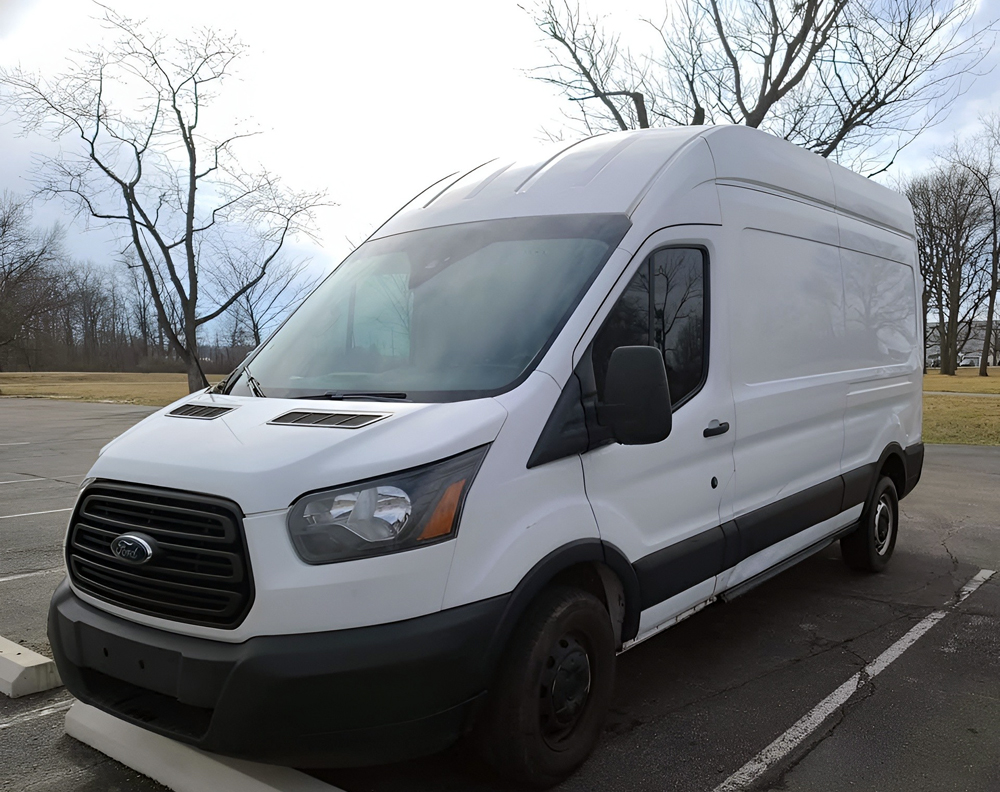
1. Check the transmission first, because the failure story splits hard after 2020
The 2015–2019 vans run the 6R80, and most trouble starts in the electronics
The 6R80 originates from the ZF 6HP design. It uses five clutch packs and one-way clutch control. No bands, fewer shift events, and wider gear spacing. That keeps heat lower under steady load.
Most failures center on the internal leadframe and speed sensors. The OSS and TSS signals feed the TCM real-time shaft data. When that signal drops, the TCM guesses wrong. That triggers limp mode, wrong gear commands, or harsh fallback shifts.
Common codes include P0720, P0722, and P0731. These show up when the output speed signal fails or conflicts. Some vans lock into 3rd or 5th gear to protect the clutches. Others slam into a lower gear with no warning.
Torque capacity sits near 590 lb-ft, which keeps the hard parts strong. Failures rarely start with gears or drums. They start with signal loss and bad data inside the transmission.
The 2020–present vans run the 10R80, and complexity multiplies failure paths
The 10R80 adds four planetary gearsets and six clutches. Total ratio spread hits 7.4:1. First gear sits at 4.696, which helps launch heavy loads. Three overdrive gears drop engine speed at cruise.
Gear steps shrink across the range. The 9th-to-10th shift sits near an 8% step. That keeps rpm steady on hills. It also increases shift frequency across daily driving cycles.
More shifts mean more heat and more solenoid activity. The valve body runs tighter fluid control using Mercon ULV. That fluid runs thinner and breaks down faster under load.
Ford flags early units in TSB 24-2254, covering 2020–2023 builds before August 15, 2022. These vans show delayed engagement, harsh shifts, and inconsistent pressure control tied to internal wear.
The model-year split decides what fails, how it fails, and how expensive it gets
| Transit years | Transmission | Failure pattern | What matters most |
|---|---|---|---|
| 2015–2019 | 6R80 | Leadframe faults, OSS signal loss, converter shudder | Electrical diagnosis and fluid condition |
| 2020–2022 | 10R80 | CDF drum wear, harsh engagement, pressure loss | Internal hardware and valve body behavior |
| 2023–2026 | 10R80 | Revised hardware, fewer hard failures reported | Maintenance and early code detection |
A 6R80 repair often lands under $1,200–$2,000 for leadframe work. A 10R80 with internal damage can jump past $5,000–$7,500 once hard parts fail.
2. The 6R80 leadframe failure can turn a steady van into a sudden downshift event
The molded leadframe carries the signals that control every shift decision
The molded leadframe sits inside the transmission case. It holds the OSS and TSS sensors. These sensors report shaft speed to the TCM in real time. Shift timing depends on clean signal data.
Heat cycles and vibration degrade the internal circuits. The OSS signal starts to drop or cut out. The TCM loses track of output speed. It reacts with wrong gear commands or failsafe logic.
Codes show up fast once signal loss begins. P0720 and P0722 flag output speed failure. P0731 points to incorrect gear ratio. The wrench light usually follows within the same drive cycle.
Signal loss can trigger an uncommanded downshift at speed
The failure turns serious when the TCM guesses wrong under load. A lost OSS signal can force a sudden downshift. Some vans drop to 1st gear at highway speed. Rear wheels can lock or skid under deceleration shock.
Other vans fall into limp mode. The transmission locks into a single gear to prevent damage. Throttle response drops, and acceleration disappears. Drivers report a harsh bang followed by reduced power.
Ford tracked this behavior across the 6R80 family. Safety investigations tied it to unexpected downshifts. The event loads the driveline hard and spikes internal pressure instantly.
Ford extended coverage because the failure pattern is consistent and repeatable
Ford issued Customer Satisfaction Program 19N01 for this defect. Coverage later extended to 10 years or 150,000 miles from warranty start. The repair replaces the leadframe assembly inside the transmission.
The job requires pan removal and valve body access. Labor runs 5 to 7 hours depending on setup. Parts cost stays low compared to a full rebuild. Total repair usually lands near $800 to $1,500.
Ignored faults can cascade into clutch damage. Incorrect shifts raise heat and wear friction material. Continued driving after repeated codes pushes the unit toward full rebuild territory near $3,500–$4,500.
3. Torque converter shudder starts as a vibration and ends as internal contamination
The first sign feels like driving over rumble strips at steady speed
The van cruises at 35 to 45 mph, then a vibration hits. It feels like rough pavement under the tires. The engine rpm stays steady while the body shakes. This happens when the torque converter clutch tries to lock.
The clutch slips instead of grabbing clean. Friction material starts to glaze under heat. The fluid carries fine debris through the system. That debris moves straight into the valve body and solenoids.
Shudder shows up most under light throttle. It fades under heavy acceleration. It returns once the converter tries to lock again.
The brake-tap test isolates the converter from the rest of the driveline
Light brake input commands the converter clutch to release. The vibration stops instantly if the converter caused it. The rest of the drivetrain stays loaded during the test. That isolates the fault without tearing anything apart.
If the vibration stays, look past the transmission. Driveshaft imbalance, tires, or mounts come into play. If it disappears, the converter is already slipping under load.
Many vans pass this test early in the failure cycle. They fail it later once debris spreads through the unit.
Heat and debris turn a small shudder into full transmission wear
Friction material breaks down and mixes into the fluid. The filter catches some, not all. Fine particles pass into the valve body passages. Solenoids start sticking as contamination builds.
Fluid temperature climbs past 200°F under load. Mercon LV loses viscosity and shear strength. Clutch packs see higher slip during shifts. That accelerates wear across the unit.
Repeated shudder events raise internal heat cycles. The transmission loses smooth lockup control. Fluid degradation speeds up with every drive.
Early fluid service can slow it, but worn converters rarely recover
A fluid drain and refill can reduce shudder for a short time. Fresh fluid restores friction characteristics and lowers temperature. The effect fades once the converter lining is damaged. The shudder returns under the same load range.
Most permanent fixes require converter replacement. Shops often pair it with a full fluid exchange. Labor runs 6 to 8 hours on a Transit. Total cost lands near $1,500 to $3,000 depending on parts quality.
Delayed repair spreads debris into clutch packs. That pushes the job toward a full rebuild. Rebuild costs climb past $4,000 once internal wear sets in.
4. Early 10R80 units suffer internal pressure loss from the CDF drum defect
The CDF drum sleeve moves, and hydraulic pressure leaks inside the unit
The CDF drum controls fluid flow to multiple clutch circuits. Early designs allow the internal sleeve to slide out of position. That movement blocks some passages and opens others. Line pressure no longer reaches the correct clutch packs.
Pressure loss shows up during midrange shifts. The 3–4, 5–6, and 7–8 transitions take the hit first. The transmission loses apply force for a split second. That gap creates flare, slip, and delayed engagement.
Ford flagged this in TSB 24-2254 for builds before August 15, 2022. The issue ties directly to harsh or delayed shifting complaints. Internal leakage drives the behavior, not external sensors.
Drivers feel the failure as clunks, flares, and delayed takeoff
The van drops into Drive with a hard bang. Reverse engagement can feel even sharper. Acceleration starts slow, then catches suddenly. That delay points to pressure building late in the circuit.
Mid-shift flare shows up as a quick rpm jump. The engine revs while the gear change stalls. Then the next gear grabs hard once pressure recovers. Repeated flares wear clutch material fast.
Some vans feel inconsistent between cold and hot operation. Cold fluid masks leakage for a short time. Once fluid thins, pressure loss becomes obvious.
The TCM tries to compensate, but it drives the system harder
The TCM reads slip and commands higher line pressure. Solenoids work harder to correct the loss. That raises internal temperature and stress on the valve body. The system fights itself to maintain shift quality.
Adaptation tables shift over time to hide the problem. The transmission may feel normal for a short window. Then the behavior returns once wear progresses. This cycle repeats until the hardware fails fully.
Codes like P0751 and P0756 can appear under load. These point to solenoid performance issues tied to pressure loss. They often originate from the CDF drum movement.
Revised drums after mid-2022 stop the sleeve movement at the source
Ford updated the drum design with a retaining lip. The sleeve can no longer slide out under load. This change stabilizes internal pressure routing. Later units hold consistent clutch apply force across shifts.
Repair requires full transmission teardown. The drum sits deep inside the unit. Labor exceeds 10 to 14 hours in most shops. Parts and labor push total cost past $4,500 to $7,500 depending on damage.
Severe cases include clutch burn and debris spread. Once that happens, rebuild replaces multiple hard parts. Full overhaul costs often exceed $6,500 on a Transit platform.
5. Valve body wear and solenoid sticking make the 10-speed feel confused instead of broken
Adaptive learning can mask faults, but only for a short window
The 10R80 uses adaptive shift logic stored in the TCM. It adjusts pressure and timing based on wear patterns. A reset wipes those learned values. The transmission then relearns over the next 50 to 100 miles.
Fresh resets often feel smoother at first. That smoothness fades once the system hits real load. Underlying pressure leaks or worn parts return. The shift quality drops again once adaptation reaches its limit.
Battery disconnects or scan-tool resets trigger this cycle. Many owners mistake the temporary improvement for a fix. The issue comes back once the clutches heat up.
Contaminated fluid turns solenoids into slow or sticky valves
The valve body contains multiple shift and pressure solenoids. These units meter fluid through narrow passages. Debris from clutch wear or drum damage enters those passages. That contamination slows solenoid response.
Shifts start to hang between gears. The van may hold a gear too long under throttle. Then it snaps into the next gear once pressure finally builds. That delay feels like hesitation followed by a hard hit.
Hot fluid makes the problem worse. Thin fluid carries debris deeper into the valve body. Solenoids stick more often once temperature rises past 200°F.
Cross-leakage inside the valve body breaks pressure control across circuits
Wear in the valve body creates internal leakage paths. Fluid escapes from one circuit into another. Pressure drops where it should stay high. Clutch packs receive uneven apply force.
This creates gear hunting under steady throttle. The transmission cycles between ratios without settling. Some vans surge slightly during light acceleration. Others show inconsistent shift timing between drives.
Codes like P0751 or P0756 point toward this condition. These codes flag solenoid performance and pressure control faults. Diagnosis often leads back to valve body wear or contamination.
Replacement or overhaul becomes the only stable repair once wear spreads
Valve body cleaning rarely fixes internal wear. Replacement units restore proper pressure routing. Many shops install updated valve bodies with revised calibration support. That improves shift consistency under load.
Labor runs 4 to 6 hours for valve body service. Parts cost ranges from $600 to $1,200 depending on source. Total repair often lands near $1,200 to $2,500.
If debris spread through the system, solenoid damage repeats. That pushes the repair toward full teardown. Complete rebuild costs exceed $5,000 once internal contamination reaches clutch packs.
6. Driveline recalls can fake a transmission failure and send diagnosis in the wrong direction
The flexible coupling failure on 2015–2017 vans starts with vibration and ends with separation
Early Transits use a rubber flex coupling between the transmission and driveshaft. This part cracks under repeated load cycles. Small cracks grow with heat and torque. The driveline starts to vibrate under acceleration.
Drivers report a low-frequency shake that builds with speed. The vibration feels like a bad transmission mount or converter issue. Noise increases before failure, often ignored in fleet use. The coupling can tear apart once cracks spread.
Ford recall 19S38 covers this defect. Failed couplings can separate the driveshaft from the transmission output. Power no longer reaches the wheels once separation occurs.
A broken coupling can mimic total transmission loss within seconds
The van suddenly stops moving under throttle. Engine revs climb with no forward motion. That symptom looks identical to a failed transmission. The gearbox still spins, but the driveline disconnects.
Some failures damage nearby components. The loose shaft can strike brake lines or fuel lines. Secondary damage raises repair cost fast. Safety risk increases if the shaft drops at speed.
Drivers often misdiagnose this as internal transmission failure. Shops may start teardown before checking the driveline. The actual fix sits outside the transmission case.
Rear driveshaft bolt failures on newer vans create the same loss-of-drive symptom
Later Transits show a different failure point. The rear driveshaft bolts can loosen over time. Once loose, the shaft separates from the transfer case or rear flange. Power flow stops instantly.
Ford issued recalls on 2020+ models for this issue. Loose bolts create clunking before separation. Some vans show vibration under load before failure. Others fail without warning.
This failure also mimics a dead transmission. The engine runs normally while the van won’t move. Diagnosis must include physical inspection of the driveline.
Misdiagnosis leads to unnecessary rebuilds and wasted labor hours
A transmission teardown can cost $1,000+ in labor alone. Rebuild quotes often exceed $5,000 before parts. A failed coupling or loose driveshaft bolts cost far less to repair.
Coupling replacement typically lands near $400 to $900. Driveshaft bolt repair stays under $300 in most cases. Skipping driveline inspection leads straight to wasted teardown costs.
7. The factory service schedule stretches fluid past its safe limit under real work use
The 150,000-mile interval fits light use and breaks down under real workload
Ford sets the first transmission service at 150,000 miles under normal operating conditions. That assumes steady speeds, low heat, and minimal load. Delivery vans run stop-start routes, idle for long periods, and carry weight. These conditions fall under severe duty.
Fluid temperature climbs past 200°F during repeated shifts. Heat cycles stack fast in urban and fleet use. Towing or idling pushes temperature even higher. Oxidation speeds up once fluid stays hot for long periods.
Under these conditions, fluid degrades far earlier. Many units show dark fluid and burnt odor by 60,000 to 80,000 miles. Severe-duty schedules bring service closer to 30,000–60,000 miles to control wear.
The 10-speed runs thinner fluid that breaks down faster under stress
The 10R80 uses Mercon ULV. This fluid flows quickly through tight valve body passages. It also holds less thermal margin than older fluids. High temperature reduces its film strength.
Once viscosity drops, clutch slip increases. Solenoids lose precise pressure control. Internal leakage becomes more severe under thin fluid. That speeds up wear across the system.
Contaminated ULV fluid carries debris deeper into the valve body. This drives solenoid sticking and erratic shifts. The cycle feeds itself once contamination begins.
Earlier service intervals cut heat damage and slow internal wear
Fleet operators often service fluid between 30,000 and 50,000 miles. This keeps viscosity stable under repeated load cycles. Fresh fluid restores clutch friction behavior. It also reduces debris circulation inside the system.
Filter replacement matters during service. The filter traps clutch material and metal particles. Skipping it leaves contamination inside the transmission. That shortens the benefit of new fluid.
Drain-and-fill service works for routine maintenance. Full fluid exchange helps once shudder or contamination appears. Both cost far less than internal repair.
Ignoring fluid condition pushes the transmission toward early failure
Old fluid loses cooling efficiency and lubrication quality. Internal temperatures rise with every shift cycle. Clutch packs slip longer during engagement. That creates more debris and heat.
Repeated high-temperature cycles damage seals and clutch material. Valve body wear increases once contamination builds. Internal pressure control breaks down over time.
A basic service costs $250 to $500 at most shops. A full transmission replacement climbs past $6,000 once damage spreads.
8. The right move depends on year, workload, and how fast the van gets diagnosed
Clean 6R80 vans hold value when the leadframe and converter check out
Service records matter more than mileage on these vans. A replaced leadframe removes the main electronic risk. Scan history should show no repeat P0720 or P0722 codes. Converter behavior should stay smooth under light throttle.
Cold and hot shift feel should match within one drive cycle. Any flare or delayed engagement points to wear. Fluid color should stay red or light brown, not burnt. Dark fluid with debris signals internal damage already in motion.
A stable 6R80 can run past 200,000 miles with maintenance. Neglected units drop into rebuild range much earlier. Converter and leadframe repairs together usually stay under $3,000.
Early 10R80 vans need build-date checks and code history before any purchase
Build date before August 15, 2022 places the van in the high-risk group. TSB 24-2254 ties these builds to harsh engagement and shift delay. Service records should show valve body work or updated components. No records raise the risk of hidden internal wear.
Scan data should show no active or stored P0751, P0756, or pressure-related codes. Test drives must include cold start and full warm operation. Any delay into Drive or flare under load points to pressure loss.
Repair costs rise fast once symptoms appear. Early detection can limit damage to valve body or drum repair. Ignored symptoms push the job into full rebuild range above $6,000.
Later 10R80 vans improve hardware, but still demand strict maintenance
Post-2022 units use revised CDF drum designs. Internal pressure routing stays stable under load. Early field data shows smoother shift behavior across cycles. Failures drop compared to early builds.
Fluid condition still controls long-term survival. The 10-speed runs tight tolerances and thin fluid. Contamination spreads quickly once wear begins. Maintenance intervals must stay aggressive to control heat and debris.
Even updated units fail under neglected service. Fluid and filter cycles remain the main defense. Skipping service pushes wear into clutch packs and valve body passages by 60,000–80,000 miles.
Sources & References
- 10R80 vs. 6R80: Which Ford Transmission Is Better?
- 10R80 Transmission vs 6R80 | Mayfair Gearbox Experts
- Ford 10R80 Transmission • Problems, Solutions & Upgrades – Next Gen Drivetrain, Inc.
- Ford–GM 10-speed automatic transmission – Wikipedia
- 5. Ford 6R80 & 10R80 Automatic Transmission – Advance Adapters
- 6 speed vs 10 speed : r/F250 – Reddit
- Transmission Failures and Problems with 10R80 and 10R140 (Ford & GM)
- Ford 10-Speed Automatic Transmission: What You Need to Know for Your Ford Truck
- 6r80 vs 10r80 : r/Mustang – Reddit
- Ford 10-Speed Transmission Problems: 10R80 vs 10R140 vs 10R60 Common Failures, Symptoms & Fixes
- Ford’s 6R80 6-Speed Automatic Transmission Problems
- Remanufactured 6R80 Transmissions: Specs & Updates
- Feds Investigating Nearly 1.3 Million Ford F-150 Pickups with Serious Transmission Problems – Autoblog
- NHTSA Investigating 1.3 Million Ford F-150s with Faulty Transmissions – Car and Driver
- Ford Motor Company Issues Three Safety Recalls and One Safety Compliance Recall in North America | Canada
- Feds Investigating 1.3 Million Ford Trucks For Possible Safety Defect – CarBuzz
- Ford F-150 Transmission Repair Guide (2015-2024) | Common Problems & Costs
- Customer Satisfaction Program 19N01
- November 12, 2020 TO: All U.S. Ford and Lincoln Dealers …
- Vibration/Rough Idle In DRIVE Or REVERSE, Lack Of …
- FYI for 6R80 transmission owners : r/f150 – Reddit
- 2018 Ford Transit-250 Transmission – Larry H. Miller Ford Lincoln Draper
- How To Identify Ford Transmission Failure Symptoms – Huntersville Ford
- Ford Transmission Problems: Common Issues And Fixes
- TECHNICAL SERVICE BULLETIN 10R80 Transmission – Harsh/Delayed Engagement And/Or Harsh/Delayed Shift – Built On Or Before 15-Aug-2022 24-2254
- The Most Common Problems With Ford’s 10-Speed Transmission – SlashGear
- Identify and Fix Ford Transmission Issues | Sayville Ford Blog
- Are the 2017 to 2020 10R80 transmissions really as unreliable as I keep hearing? What’s your experience with them? : r/f150 – Reddit
- Should 10 speed transmission Transit 2020s be avoided? I’ve heard bad things. – Reddit
- Another 10r80 Transmission failure brought to you by Downtown Ford Sacramento and the Ford Motor Corporation. : r/f150 – Reddit
- Ford Shifting Rough? How to Reset Your TCM (3 Easy Methods That Actually Work)
- 6R80 Troubleshooting, Diagnostic Help! – TRNW
- Normal Scheduled Maintenance
- Should I do the 1st time transmission oil flush for a ford transit at 150000 miles? – Reddit
- Ford – NHTSA
- 2015 Ford Transit-250 Recalls | Cars.com
- Recall Information – Ford Recalls | Ford Owner Support
- Recall Information – Ford Recalls | Ford Owner Support
- What’s New: 2026 Ford Transit
- 2026 Ford Transit Cutaway & Chassis Cab Overview – Ford Pro
- Comparing the 2025 & 2026 Ford Transit Commercial: What’s New | Jannell Ford of Hanover
- 10R80 transmission issues : r/fordtransit – Reddit
- 5 Ford 6r80 Transmission Problems & How to Fix Them – The Lemon Law Experts