
Park the car. Walk away. Check the phone for another Bolt fire headline. That’s how this story starts. Since 2017, the Chevy Bolt pushed cheap, long-range EV driving into the mainstream. Then reports stacked up.
Battery fires originated from a rare cell defect, and the fix kept changing. First came charge limits. Then full battery tear-downs. Then software watching the pack like a hawk.
Roughly 142,000 cars got pulled into one of the biggest EV recalls on record. Some left with new batteries and fresh warranties. Others kept the original pack under strict monitoring rules and mileage limits.
Now the market sits split. Clean repair history raises value. Missing records prevent deals. Sorting those two paths is what decides whether a Bolt saves money or burns it.
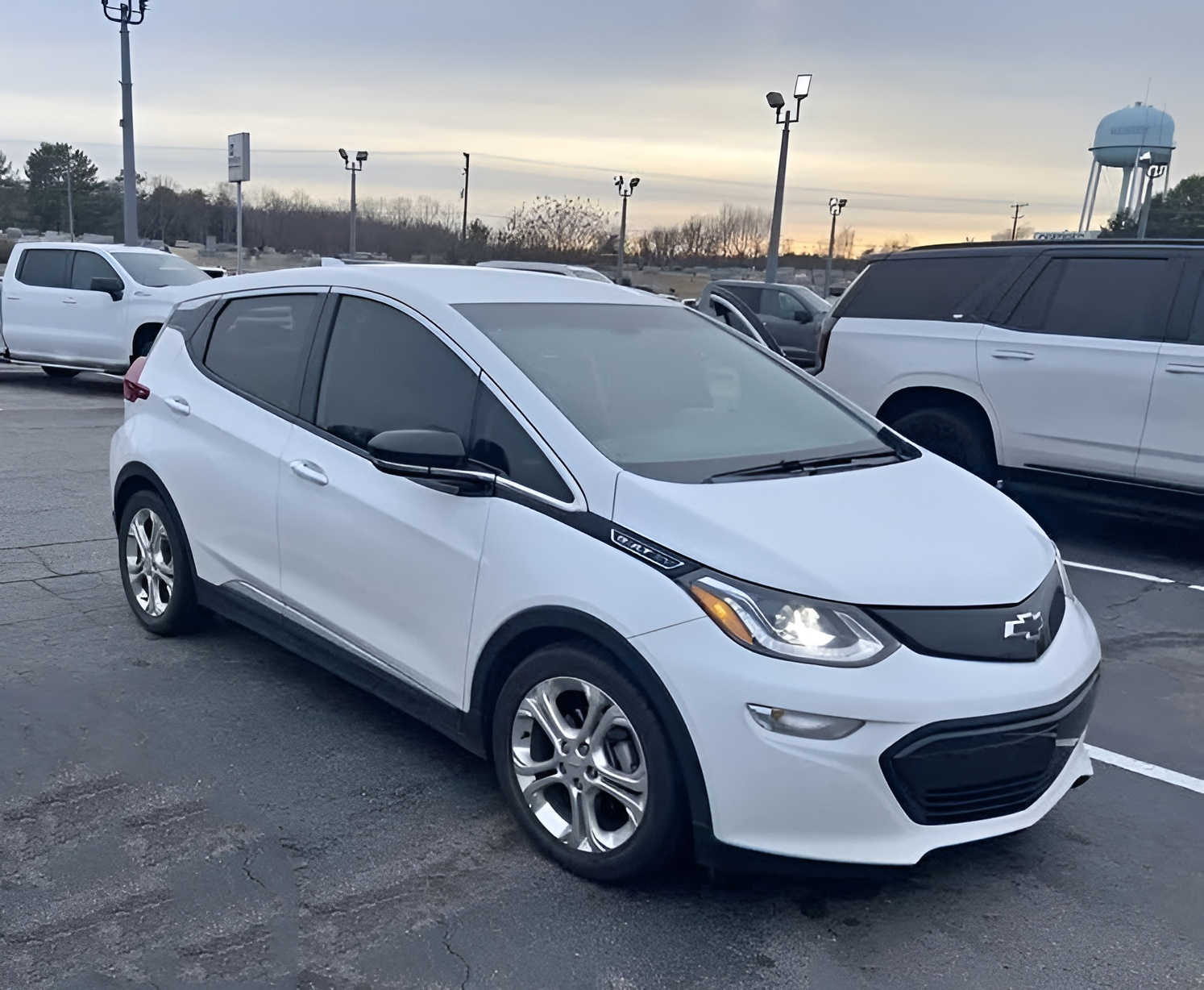
1. The defect sat inside one cell, two flaws stacking heat until the pack ran away
The torn tab and folded separator set the failure in motion
Start at the cell. A pouch battery carries current through thin metal tabs. One defect tore the anode tab, shrinking the path that carries current. Resistance climbed. Heat spiked in a tight spot during fast charging or heavy load.
Now add the second flaw. A folded separator weakened the barrier between anode and cathode layers. Normal expansion during charge cycles pressed those layers closer. The fold became a weak point. Contact risk jumped inside the cell stack.
Put both defects in one cell and the chain reaction starts. Heat builds at the torn tab. The folded separator fails under pressure. Internal short forms. Thermal runaway releases stored energy in seconds, leading to extreme temperatures that can trigger a chain reaction throughout the battery pack.
The manufacturing trail runs through two plants, not one bad batch
Trace the source and the pattern spreads. Cells came from Ochang, South Korea and Holland, Michigan. Two factories, same defect signature. That ended any “isolated batch” theory early.
Quality control missed both flaws at production speed. High-volume stacking and tab welding left no margin for tiny defects. A torn tab passed inspection. A folded separator stayed hidden inside the pouch. Detection systems could not flag both faults together at line speed.
That forced GM into a full-fleet recall. One plant could be quarantined. Two plants meant the defect lived across the supply chain.
The NMC battery chemistry raised the stakes under failure
The Bolt used NMC 622 chemistry. High nickel content pushed energy density higher. That gave the car its range. It also packed more energy into each cell.
Under normal operation, the chemistry stayed stable with proper cooling. Under a defect, stored energy turned into fuel. Electrolyte inside the pouch ignited once the short triggered runaway. Fire spread cell to cell through heat transfer.
The chemistry did not cause the defect. It amplified the outcome. Higher energy density meant a hotter, faster failure once the short formed.
| Cell part | Normal role | Failure effect |
|---|---|---|
| Anode tab | Carries current out of cell | Tear increases resistance and localized heat |
| Separator | Keeps electrodes apart | Fold raises internal short risk |
| Electrolyte | Moves ions between layers | Feeds fire during thermal runaway |
| NMC chemistry | Stores high energy density | Intensifies heat release during failure |
2. The recall unfolded in phases, each fix failing before the next one landed
The first fix capped charging and hoped heat would stay down
Start in late 2020. Fire reports tied back to 2017–2019 cars. GM pushed a software update that limited charge to about 90% state of charge. The goal was simple. Reduce heat and stress inside suspect cells.
Drivers still saw full range drop. Charging habits changed overnight. Parking guidance followed. Keep the battery above a buffer. Avoid deep discharge cycles.
Then more fires hit cars that already had the update. That proved the defect sat in hardware, not charge behavior. The software cap stayed in place while engineers moved to the next step.
The full recall hit in August 2021 and pulled every Bolt into the same problem
Scope widened fast through mid-2021. Investigations tied defects to both LG plants. GM stopped production. Dealers stopped selling new units. Every 2017–2022 Bolt EV and EUV got flagged.
Owner instructions turned strict. Park outside. Do not charge overnight. Leave a range buffer of about 70 miles. Those warnings came from real fire risk, not legal caution.
At this point, GM committed to hardware fixes. Battery modules moved to the center of the repair plan. Total recall volume sat near 142,000 vehicles.
Battery module replacement became the main repair path for high-risk cars
Focus shifted to physical parts. Early builds showed higher defect rates. 2017–2019 models got priority for full module replacement. Packs came apart at the dealer level. Faulty modules came out.
Supply limited the pace. Each Bolt pack holds dozens of modules. Replacement demand reached about 8.4 GWh of cells across the campaign. That stretched production and service timelines.
Some owners waited over a year for parts. During that time, cars stayed under charge limits and parking restrictions. Loaner vehicles and reimbursements filled gaps where available.
The strategy shifted again when newer cars moved to software-based screening
By 2023, data showed lower defect rates in later builds. GM changed course for many 2020–2022 cars. Instead of tearing packs apart, they installed Advanced Diagnostic Software.
The system capped charging at 80% and monitored cell behavior. Voltage drift, abnormal discharge, and heat patterns triggered alerts. If the pack stayed clean, the limit lifted after about 6,200 miles.
This created two repair paths in the same recall. Some cars left with new hardware. Others stayed on original packs under software surveillance, with no physical replacement unless the system flagged a fault.
3. Battery replacement split the fleet, and that split still drives value today
Early cars got torn down and rebuilt with new modules
Start with 2017–2019 models. Data pointed to higher defect rates in early production runs. GM prioritized these cars for full module replacement. Packs were opened, bad modules removed, and new ones installed at the dealer level.
This was not a quick swap. Each pack holds dozens of modules wired in series. High-voltage systems required trained EV techs and strict safety procedures. Labor times stretched across multiple days per vehicle.
Many of these cars left with updated cells. Usable capacity rose from about 60 kWh to 66 kWh in some cases. EPA range climbed from roughly 238 miles to 259 miles after replacement.
Later cars stayed on original packs under software control
Shift to 2020–2022 models. Many did not receive new hardware. GM routed them into the Advanced Diagnostic Software path instead. The original battery stayed in place unless the system flagged a defect.
Charging stayed capped at 80% during the monitoring phase. The system tracked voltage imbalance across cell groups and abnormal discharge rates. If no faults appeared after about 6,200 miles, full charging returned automatically.
Some cars still required module replacement. Eligibility depended on build data and detected anomalies. That left identical model years with completely different repair outcomes.
Mixed repair history created confusion across the same model year
Two 2021 Bolts can carry different hardware. One may have a full replacement pack. Another may run the original pack with software monitoring. Paperwork decides which one you’re looking at.
Service records show the path. Look for battery module replacement entries or ADS installation codes. Missing documentation leaves the repair status unknown. That uncertainty drops resale value fast.
Dealers cannot assume uniform repairs within a model year. VIN-level history controls what was done. That splits the used market into clear tiers based on proof, not age.
| Repair path | What changed in the car | Real-world impact |
|---|---|---|
| Full module replacement | New battery modules installed | Higher range, fresh warranty, stronger resale |
| ADS monitoring only | Original pack retained | Value depends on documentation and software status |
| Mixed or partial repair | Some modules replaced | Harder to verify condition, pricing varies |
| Open recall status | No confirmed repair | Major safety flag, hardest to sell |
4. The software started watching every cell, not fixing them
The 6,200-mile lockout forced the battery into a controlled test cycle
Start the car after the update and the change shows up fast. Charging stops at 80%. Range drops by about 20%, depending on driving style. The limit stays until the system clears the pack.
The clock runs on distance, not time. The car needs about 6,200 miles under normal use. That exposes the pack to heat cycles, load swings, and real driving conditions.
Finish that mileage with no faults and the cap lifts automatically. No dealer visit required. The system unlocks full charging once the pack passes internal checks.
The battery management system hunts voltage drift and hidden shorts
The software ties into the Battery Management System at the module level. It tracks voltage across cell groups in real time. Even small imbalances can signal internal damage.
A failing cell shows patterns first. Voltage drops faster than its neighbors. Self-discharge rates rise. Heat builds unevenly under load.
When those patterns cross thresholds, the system triggers warnings. The dash shows reduced propulsion or battery alerts. The car logs the event and flags the pack for service.
False flags and bad installs forced a second cleanup recall
Some cars never ran the software correctly. A small batch, about 72 vehicles, received updates that failed to activate monitoring logic. Those packs ran without protection until a follow-up recall fixed the install.
Other cases went the opposite way. Healthy packs triggered alerts and forced unnecessary service visits. Calibration updates followed to refine detection thresholds.
This system does not repair hardware. It only detects failure early and limits risk during operation. The original battery stays in service unless the software flags a defect.
5. The money trail shows how big this failure really got
The bill landed near $2 billion and shifted back to the supplier
Add up parts, labor, logistics, and the number climbs fast. The recall cost GM about $1.8–$2.0 billion. Battery modules alone drove most of that number.
GM pushed that cost back onto LG Energy Solution. A reimbursement deal covered nearly the full amount. That set a new line in the sand for EV supply chains.
Battery suppliers now carry direct financial risk for manufacturing defects. That changes contract terms, testing standards, and production oversight going forward.
The $150 million settlement paid for downtime, not new batteries
Owners filed class-action claims after months of limits and delays. The result was a $150 million relief fund. Payments covered inconvenience, lost use, and charging restrictions.
This money did not fund battery replacements. Hardware fixes came through the recall process, not the settlement. The payout addressed the ownership experience, not the defect itself.
The main claim deadline closed on July 31, 2025. Late claims only applied to specific notice groups after that date.
Buybacks and MSRP swaps gave owners two very different exits
Some owners pushed for buybacks. GM refunded the purchase price minus a mileage-based usage fee. The calculation depended on when the issue was first reported.
Others used the MSRP swap path. That allowed a trade into another GM vehicle based on the original sticker price. Rebates and discounts did not reduce that credit.
Processing times stretched long. Some cases ran close to 12–19 months before completion. During that window, mileage accumulation often did not increase the usage deduction once locked in.
6. The used market splits clean between fixed packs and flagged cars
Replaced batteries carry new warranties and reset degradation
Check the service record and the VIN tells the story. Full battery replacements install a new pack with fresh modules and updated chemistry. Most leave with an 8-year / 100,000-mile warranty starting at install.
Range returns to factory numbers. Charging speeds stabilize across DC fast sessions. Degradation resets close to 0–2% depending on initial cycles.
These cars trade higher. Listings often show a clear premium once the replacement is verified. Expect a spread of $2,000–$4,000 over similar mileage units without documented replacement.
Software-limited cars carry permanent value hits and range cuts
Cars still on the original pack stay under software watch. Some keep the 80% charge cap for thousands of miles. Others regain full charge but remain flagged in service history.
Buyers read that history fast. Listings with active monitoring or incomplete recall work sit longer. Dealers discount to move them.
Real-world range loss lands near 40–60 miles when capped. That pushes highway range under 200 miles in many cases.
Missing recall records prevent deals faster than mileage
A clean Carfax does not guarantee recall completion. Battery work often sits in dealer systems, not public reports. That gap creates risk at purchase.
Verify through GM’s recall database or dealer printouts. Look for pack replacement codes, not just “recall performed.” The difference changes resale value and long-term risk.
Private sellers often lack documentation. Dealers sometimes miss incomplete campaigns. That leaves the buyer exposed to a full pack failure outside recall coverage.
A new battery replacement outside recall runs about $14,000–$18,000 installed.
7. The hardware behind the fires points to two defects, not random failure
Torn anode tabs create internal shorts under load
Open a failed module and the damage shows at the cell level. Some cells left the factory with torn anode tabs. That damage sits hidden until charge cycles stress the material.
During charging, lithium plates unevenly around that defect. Heat builds in a small area. Resistance spikes and voltage drops out of line with the rest of the group.
Once the separator fails, the cell shorts internally. That starts thermal runaway inside the module. Pack temperature can climb past 300°F within minutes during failure events.
Folded separators let cathode and anode touch directly
A second defect shows up in the separator layer. Some cells left with a folded or misaligned separator. That reduces the physical barrier between cathode and anode.
Normal cycling compresses that weak point over time. The fold becomes a hot spot under high charge rates. DC fast charging pushes the stress higher due to current density.
Contact between layers creates a direct short. That bypasses normal current paths and spikes heat instantly. The event can trigger even at moderate state of charge.
The defect pairing raises failure risk beyond either issue alone
Either defect alone can survive for years. Combined in one cell, failure risk rises sharply. Internal resistance becomes unstable across charge cycles.
The Battery Management System can miss early stages. Voltage drift may stay within tolerance until late in the failure curve. By the time deviation appears, damage has already spread.
This is why full module replacement replaced earlier patch fixes. A single defective cell can compromise the entire module, not just one section.
8. Charging habits and heat exposure decide which packs fail early
High state of charge raises internal stress inside defective cells
Charge the pack to full and hold it there, stress builds fast. Voltage sits near the upper limit of the cell chemistry. That increases reactivity inside weak cells.
Defective cells show faster lithium plating at high state of charge. Internal pressure rises as side reactions build gas. That pushes the separator toward failure.
Many fire cases occurred after the car sat near 90–100% charge for hours. The condition stayed stable until one cell crossed its limit.
DC fast charging pushes heat into already weak spots
Plug into a fast charger and current spikes hard. The Bolt can pull near 55 kW under ideal conditions. That loads every cell in the pack at once.
Weak cells heat faster than healthy ones. Temperature spread inside a module grows uneven. The cooling system cannot isolate one failing cell.
Repeated fast charging accelerates damage progression. Owners who relied on DC charging saw higher failure reports in early recall data.
Ambient heat and parking conditions amplify risk windows
Park in high ambient heat and the pack starts warm before charging begins. Battery temperature can exceed 95–110°F in hot climates before any load.
Add charging on top of that baseline and internal temps rise quickly. Cooling loops struggle once heat saturation builds inside modules.
Overnight garage fires often followed this pattern. High charge level, warm ambient conditions, and no active cooling once the car shut down.
The system cannot actively cool a parked vehicle once charging stops, leaving residual heat trapped inside the pack.
Sources & References
- Chevy Bolt EV & EUV Recall – Experience GM
- Chevy Bolt EV Recalls List (2017–2022) Complete Guide | Recharged
- GM recalls every Chevy Bolt ever made, blames LG for faulty batteries | Klean Industries
- Chevy Bolt Battery Recall: How Could This Have Happened? – Car and Driver
- GM, EV battery suppliers establish $150M fund to reimburse Chevrolet Bolt owners
- Chevy Bolt Financing Starts at 0.9% APR in March 2026 Incentive Push | EV.com
- In re Chevrolet Bolt EV Battery Litigation
- Bolt EV and Bolt EUV Battery Recall Notice | Team Chevy Vallejo – Team Chevrolet
- Chevy Bolt Fires Has Battery Industry Scrambling To Ensure EV Safety
- In re Chevrolet Bolt EV Battery Litigation: U.S. Electric Vehicle Battery Defect and Fire Risk Class Action – ForensisGroup
- The manufacturing defects are (1) a torn anode tab and (2) a folded separator – if present in the same battery cell, your Bolt WILL eventually catch fire. : r/BoltEV – Reddit
- GM And LG Are Working Around The Clock On Bolt EV Battery Recall – InsideEVs
- Bolt EV Battery Replacement Cost in 2025: Complete Guide – Recharged
- Software prompts another Chevy Bolt EV battery fire recall – Green Car Reports
- UPDATE* GM will replace all battery modules. 2nd 2017-2019 Chevy Bolt EV Recall!
- Chevy Bolt Recall Affects All 2017, 2018, and Some 2019 Models – Wirtz Law APC
- SCHEDULE REPAIR FOR YOUR CHEVROLET BOLT [EV/EUV]. – nhtsa
- BOLT Owner? We Understand Your Frustration – Donohoo Chevrolet Blog
- GM stops replacing ’20-22 Bolt recall batteries, offers diagnostics software instead – Electrek
- Chevy Bolt EUV Software Update History & Recalls Guide – Recharged
- UPDATE: Some 2020-22 Chevy Bolt Owners May Not Get Replacement Batteries
- New software update? : r/BoltEV – Reddit
- Chevrolet Bolt EV Fire Risk Recall – The Barry Law Firm
- IMPORTANT SAFETY RECALL – Chevrolet
- Chevrolet Bolt EV Recalls | Cars.com
- My Recommendation to get the GM EV Concierge to reimburse all gas and other receipts
- MSRP Swap Complete: I got $17,000 and a new car! : r/BoltEV – Reddit
- news: GM recalls all Chevy Bolt EVs over fire risk – DieselNet
- Has anyone successfully repurchased their buyback? : r/BoltEV – Reddit
- Deciding on whether to pursue a straight repurchase or MSRP trade swap? This may help (especially for MD’ers) – Reddit
- Buybacks and deciding which road to go down (repurchase or MSRP swap) – Reddit
- What happens after 6,200 Miles with Diagnostic Software? : r/BoltEV – Reddit
- Chevy Bolt Battery Warranty After Recall Explained – Recharged
- #22-NA-119: Warranty Administration – 2017-2022 Chevrolet Bolt …
- Chevrolet Bolt EV State of Health: Battery Guide 2026 | Recharged
- Chevy Bolt EV Battery Warranty Details: Complete 2025 Owner’s Guide – Recharged
- Chevy Bolt EUV Battery Warranty Details (8yr/100k) | Recharged
- Electric Vehicle Ownership – Chevrolet
- what is the range after battery replacement due to the recall : r/BoltEV – Reddit
- Chevrolet Bolt Real Range & Battery Capacity / New vs Used / Winter vs Summer
- Chevy Bolt EUV Resale Value Forecast: 2025–2030 Outlook – Recharged
- Chevy Bolt EV Trade In Value: 2025 Pricing Guide – Recharged
- GM Announces New Chevy Bolt Recall | Auto Dealer Today
- All The 2026 Chevrolet Recalls By Model – CarBuzz
- It’s over, we took the Chevy buy back money on our 2021 Bolt today. : r/BoltEV – Reddit