
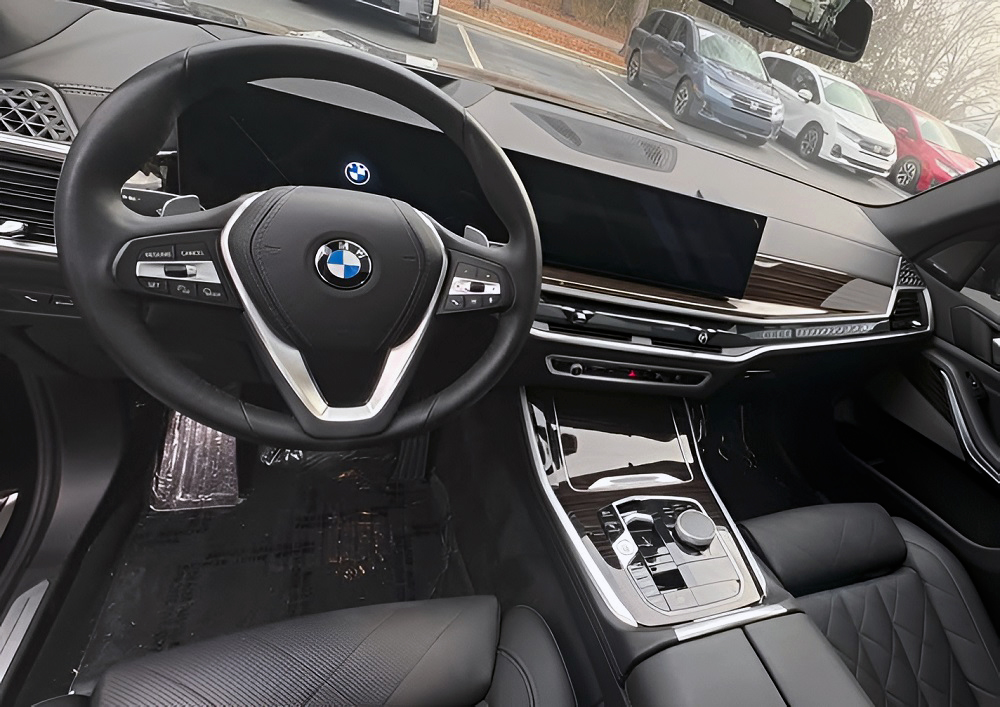
Tap the screen. Turn the knob. Hit a menu wall. That’s where BMW’s Technology Package starts to split. From 2024 to 2026, BMW runs 2 different cabin systems under similar glass. Bigger models often keep Operating System 8.5. Newer compact and redesigned models move to Operating System 9.
That split changes everything. Controls, menus, package value, and daily ease all move depending on model. This guide breaks down what helps, what slows you down, and which version earns the price.
1. BMW no longer sells one clean technology story
The badge stayed the same, but the package underneath changed
Shop BMW’s lineup long enough and the pattern breaks fast. Some models still frame the tech upsell as a clean package. Others bury the real hardware and software inside Premium, Executive, or model-specific option logic. The name looks familiar, but the buying decision no longer lands on one fixed formula.
That shifts the question from feature count to cabin behavior. A buyer may see navigation, a head-up display, connected services, and driver aids on 2 spec sheets, then step into 2 cabins that work nothing alike.
One favors old BMW habits, fast shortcut access, and lower hand travel. The other leans into app tiles, touch layers, and software-based add-ons.
Large BMWs and small BMWs now live in 2 digital families
BMW’s larger vehicles mostly stay in the Operating System 8.5 camp. BMW USA lists Operating System 8.5 on vehicles such as the 7 Series, iX, i4, 5 Series/i5, X5, X6, X7, and XM. These are the cars where the older BMW control rhythm still hangs on, even with the curved display taking over the dash.
Smaller and newer applications move the other way. The X1 comes standard with Operating System 9, the X2 uses Operating System 9, and BMW’s redesigned 2025 X3 also moves to Operating System 9.
That matters because BMW changed more than screen graphics. It changed the software base, the menu structure, and the way daily inputs reach the driver.
BMW’s own next-step roadmap makes the split even more important. Panoramic iDrive and Operating System X push the brand farther toward windshield-layered information, stronger software integration, and deeper voice control.
The current 8.5-versus-9 divide is the handoff point between old BMW logic and the next digital family.
Similar features can still leave 2 drivers with very different workloads
A brochure can hide a lot. Two BMWs may both list navigation, connected apps, voice control, and advanced driver assistance. One still gives the driver more input redundancy through the controller, touch, and voice. The other depends harder on the center screen and cleaner, flatter menus.
That difference shows up in boring moments, which is where cabin design either earns its keep or becomes dead weight. Change audio sources at speed. Adjust a setting in traffic.
Dig for a buried function after a software update. The harder BMW leans on touch-first logic, the more the cabin asks from your eyes instead of your muscle memory.
Package value also shifts with that workload. A bigger screen, one more connected service, or a prettier tile layout means little if the cabin takes longer to use cleanly at 70 mph. That’s why the real story starts with operating system split, not speaker count or ambient light themes.
2. The real split sits between iDrive 8.5 and iDrive 9
iDrive 8.5 still works like a BMW built for motion
Reach for a function in an Operating System 8.5 car and the cabin still gives you options. BMW kept the rotary controller, touch input, and voice control alive in this family.
On cars like the i4, 5 Series, X5, X6, X7, and iX, that matters because common tasks can still be handled with less screen pecking and less hand drift across the dash.
BMW also cleaned up the software layer in 8.5 with the QuickSelect home screen. The brand moved toward a flatter, zero-layer layout so navigation, media, contacts, and core shortcuts sit closer to the first touch.
That cuts down menu depth during routine use. It also keeps more of the old BMW habit loop intact for drivers who work by feel.
That old habit loop still matters on the highway. A controller lets the driver brace a wrist, click through menus, and make changes with less glance time. Touch can do the same job, but it needs cleaner aim and more visual confirmation. In a heavy touring BMW, that difference shows up every day.
iDrive 9 pushes the cabin toward app logic and screen-first control
Step into an Operating System 9 BMW and the cabin feels more like a large phone bolted into the dash. BMW’s X1, X2, and 2025 X3 use Operating System 9, and BMW describes the setup with app-style structure, updated graphics, and stronger ties to digital services. The screen looks clean. The control path asks more from touch and voice.
That software shift brings real gains for services and updates. BMW links Operating System 9 cars to Digital Premium content, app-based functions, remote upgrades, and streaming tools more aggressively than older BMW layouts did. The problem hits during simple in-motion tasks. A cleaner screen does not always mean a faster cabin.
Climate access and shortcut rhythm are where some drivers lose patience. Touch-first cabins work well when parked, paired, and freshly learned. They slow down when a driver wants one quick input by muscle memory, with eyes still on traffic. That’s the tax OS 9 charges for its cleaner digital look.
The control fight is convenience versus distraction
| System trait | iDrive 8.5 | iDrive 9 |
|---|---|---|
| Base software philosophy | Linux-based family | Android-based family |
| Main control method | Rotary controller, touch, voice | Touch-first, voice |
| Common vehicle examples | 5 Series, 7 Series, X5, X6, X7, iX, i4 | X1, X2, 2025 X3 |
| Best fit | Heavier touring use, lower-effort in-motion control | App-centric users comfortable with touch menus |
| Driver workload | Lower during moving adjustments | Higher if the driver dislikes touch layers |
| Ownership concern | Mature BMW control logic | Better service scaling, less tactile redundancy |
Some drivers will like the newer layout, and some will hate it by week 2
OS 9 suits drivers who already live through touchscreens. Phone-first users adapt fast. Tap targets, app pages, and digital service layers feel normal to them. Streaming, updates, and connected features also fit this layout better.
OS 8.5 suits drivers who want fewer misses while moving. The controller still gives a hard input point. The cabin still offers more redundancy when traffic gets messy, gloves are on, or the road is rough. That matters more in a 4,800-pound SUV than it does in a parking lot demo.
This split changes package value fast. Put the same head-up display, nav graphics, and driver aids in both systems, and the better daily tool can still be the older layout. On-road workload matters more than one extra app tile.
3. The screens are excellent, but BMW now asks more from your eyes
The Curved Display became the package’s main piece of hardware
Look across the dash and the core hardware is strong. BMW’s current curved setup pairs a 12.3-inch instrument display with a 14.9-inch center screen in one glass-heavy unit.
Resolution is sharp, brightness is strong, and the layout gives BMW room to pile in maps, media, ADAS status, and vehicle settings without cheap-looking graphics.
The weak point is not the panel itself. BMW routes more core tasks through that glass than it used to. Audio, navigation, climate-related functions, app tools, and vehicle settings now live closer together, so the display does more work and demands more attention. On a parked demo, that feels slick. In traffic, it can feel busy.
The instrument screen still carries real work
The driver display matters more than buyers think. BMW keeps loading it with route guidance, media data, vehicle status, and driver-assistance graphics so the center screen does not have to handle every glance.
On the better setups, that reduces eye travel and cuts some of the reach-and-hunt problem built into modern cabins.
BMW also keeps tailoring this area by trim and model. M cars add model-specific displays and performance-focused layouts. That matters less for lap bragging than for scan speed, because a cleaner instrument area can surface the right data faster than a cluttered center display.
The 2025 M2 and M5, for example, keep M-specific display logic inside that 12.3-inch cluster zone.
The head-up display turned into a real workload reducer
BMW’s head-up display used to feel like a luxury toy. Now it carries speed, navigation prompts, warnings, and more driver-assistance status where your eyes already live.
In BMW’s current setup, Augmented View can also place route guidance on the center display through live video, while the HUD handles core driving data in the windshield zone.
That makes the HUD one of the few options that changes daily effort in a real way. A stronger screen, nicer tiles, or fancier ambient light won’t cut glance time like windshield-projected information will.
On long highway runs, that can matter more than a better stereo or another connected app. The issue is simple, no HUD, more eye drop to the cluster and center screen.
Panoramic Vision shows where BMW is heading next
BMW’s next move is already public. BMW Panoramic Vision spreads key information across the lower width of the windshield, and BMW pairs it with an optional 3D Head-Up Display for navigation and automated-driving data.
This begins production with the Neue Klasse era and points the whole brand toward windshield-layered information instead of the old gauge-cluster model.
That direction matters for this package right now. BMW is building cabins that rely less on a classic instrument binnacle and more on layered projection, central glass, and software-managed views.
Buyers stepping into today’s Technology, Premium, or Executive bundles are already paying into that transition. BMW says Panoramic Vision will spread to every vehicle segment in the future.
4. Highway Assistant is where BMW’s tech starts paying you back
Driving Assistant Professional is the real separator
BMW’s base safety gear handles the usual guardrail work. Forward collision warning, lane departure warning, blind-spot coverage, and similar alerts are common now. They warn, nudge, and step in when things start going sideways. They do not change the whole trip.
The real jump comes with Driving Assistant Plus and then Driving Assistant Professional. BMW says Driving Assistant Plus can maintain speed, lane position, and following distance for partly automated driving.
Step up again and BMW adds Highway Assistant with hands-free operation on controlled-access highways, plus lane-change support. That is where fatigue starts to drop in a real way.
Highway Assistant works best when the road is simple
BMW rates Highway Assistant for controlled-access highways at speeds up to 85 mph. In the right BMW, this is the feature that cuts strain on long drives.
It handles the small steering corrections that wear you down over highway miles, while using lane markings, speed data, surrounding traffic, and map inputs to hold speed and lane position.
That 85 mph ceiling does not apply the same way across the lineup. It is mostly a larger-BMW perk on models like the 5 Series, X5, and iX.
On smaller models, BMW often drops hands-free driving to Traffic Jam Assistant speeds, with the ADAS guide listing use up to 40 mph when a vehicle is ahead in qualifying traffic.
The system feels strongest when the road is wide, clean, and clearly marked. The workload rises fast once the pavement gets ugly. Worn lane paint, bad weather, abrupt merges, and construction zones all push the driver back into the job.
BMW is clear about the limit. The driver must stay attentive and take over when needed. This is supervised assistance, not a hands-off excuse machine. In some BMWs, hands-free driving stops at 40 mph.
The glance-confirmed lane change is clever, but it raises the trust bar
BMW’s Active Lane Change is one of its better ideas. On equipped cars, the system can suggest a lane change and let the driver confirm it by looking toward the side mirror. Done right, that cuts one more hand movement out of the process.
It also asks the driver to trust more of the stack. Cameras, radar, map logic, speed judgment, and adjacent-lane detection all have to line up cleanly.
That feels smooth on open interstate pavement. It feels different when another driver dives into the gap late or lane markings start to wash out. The driver still owns the move.
BMW is moving toward shared control, not hard handoff
BMW’s newer symbiotic assistance direction matters because it changes how intervention feels. In late 2025, BMW described assistance logic under the new DCAS framework where hands-off motorway support and glance-based overtakes expand further in Europe with the Neue Klasse-based iX3.
The bigger point is the philosophy shift, BMW is moving toward systems that work with the driver’s inputs instead of treating every touch like an immediate shutdown trigger.
That changes how the whole package should be judged. A good ADAS system does not only hold lane on a sunny test route. It also handles human corrections cleanly, warns early, and gives control back without a messy jump.
BMW is clearly chasing that next layer, but today’s system still lives inside strict road, speed, and attention limits.
| Tier | Core function | What changes for the driver |
|---|---|---|
| Standard safety tech | Collision warning, lane departure, blind-spot support | Alerts more than it drives |
| Driving Assistant Plus | Adaptive cruise, lane centering, distance control | Cuts fatigue, hands still engaged |
| Driving Assistant Professional | Highway Assistant, Active Lane Change, traffic support | Drops highway workload on long runs |
| Parking Assistant Professional | Memory parking, remote parking, backup support | Helps in tight spaces, limited value in daily open-lot use |
5. Premium and Executive packages only make sense once you separate real tools from showroom glitter
Premium is where the BMW usually starts feeling finished
Skip the brochure language and look at the hardware. On the X5, BMW says the Premium Package bundles the Head-up Display, Remote Engine Start, and Harman Kardon sound system. Those are not fluff items. They change what you see, how quickly the cabin wakes up, and how complete the car feels on day 1.
The useful part goes beyond the HUD. BMW also ties Augmented View route guidance into this layer on many applications, putting live-camera arrows on the center display or cluster. In bad city splits, that cuts wrong-lane panic faster than another ambient-light theme ever will.
This is why Premium often lands as the smart stop. A base BMW can look expensive and still feel half-dressed once you start using it at night, in traffic, or on long commutes. Add HUD, remote start, and better audio, and the cabin finally starts working with you instead of just showing off.
Executive piles on theater, and the return gets personal fast
Step into the Executive Package and the priorities shift. BMW says X5 Executive adds everything in Premium, then piles on the Panoramic Sky Lounge LED Roof, Glass Controls, Soft-close automatic doors, and more. Those parts raise the sense of occasion every time the door opens. They do far less for route clarity or workload.
Some of it still has real value. Soft-close doors help in tight parking spots. Better lighting and premium touchpoints do make the cabin feel richer on daily use. The weak point is simple, most Executive features don’t save attention, save time, or save effort. They sell atmosphere.
BMW’s own recent package drift makes that clearer. The user’s source file notes that some features, including Gesture Control in certain applications, have been reduced or pushed around the option ladder as BMW leans harder into voice and eye-based inputs. That means Executive money buys a changing mix, not one stable formula.
Package value swings hard from X1 to X5 to 7 Series
The same package badge does not carry the same weight across the lineup. On bigger BMWs like the X5, the base vehicle already starts from a stronger cabin, richer standard equipment, and the older Operating System 8.5 control rhythm. Premium there feels like the completion point. Executive feels like an upscale indulgence.
On smaller BMWs, the jump can feel bigger because the starting point is thinner. BMW’s X1 leans on a cleaner, touch-first cabin with Operating System 9, so option bundles and upper trims do more to flesh out the experience.
The gain can look dramatic on paper, but some of that money is still patching over a cabin that already gave up physical shortcut ease.
That is why a Premium package on one BMW can be a must-have, while the same idea on another BMW is just an expensive tidy-up. The model family sets the baseline. The package only changes the slope.
| Package tier | Best value case | Weakest value case |
|---|---|---|
| Premium | Buyers who want HUD, better navigation behavior, remote start, and stronger daily usability | Buyers who only care about exterior looks |
| Executive | Drivers who want full luxury atmosphere and richer tactile hardware | Shoppers measuring value by workload reduction per dollar |
| Standalone Technology Package | Compact BMWs where it bundles display and assistance upgrades more cleanly | Models where Premium already covers the useful hardware |
The smartest buy usually lands one rung below the top
In the user’s source material, the 2026 X5 Premium package is listed at about $2,550 on 40i models, while Executive is listed around $4,450 and adds the theater-heavy hardware on top. That spread tells the whole story. The first jump buys tools. The second jump mostly buys mood.
For most buyers, Premium is where the return peaks. Executive can still be worth it for someone who wants the cabin to feel like a flagship every morning. From a cold utility angle, HUD and navigation help will matter longer than glass switchgear and a lit roof. The cost gap in the provided X5 data is about $1,900.
6. Digital Key, 5G, apps, and subscriptions turn the BMW into a rolling login
Digital Key can feel brilliant until one missing link gums it up
Walk up with the phone in your pocket and the trick feels slick. BMW’s Digital Key Plus lets a compatible phone act as the key, and BMW says some models can also share access with other users. On newer iX applications, BMW says the key can be shared with up to 18 people with different rights.
The setup chain matters more than the marketing. BMW’s own instructions require vehicle-side setup, active services, and the right phone support before the feature works cleanly.
When all of that lines up, Digital Key cuts one more object out of your pocket. When one part drops out, the fancy key turns back into an app dependency.
Personal eSIM and 5G help, but only if you’ll actually use the car as a device hub
BMW also pushes the car deeper into your data plan. With Personal eSIM, BMW says compatible Operating System 8 and Operating System 9 vehicles gain enhanced calling, a personal Wi-Fi hotspot, and stronger connectivity features.
On the 2025 X3 with Operating System 9, BMW says the car supports the 5G mobile standard when equipped with Personal eSIM.
That sounds better on a spec sheet than it does in every driveway. A hotspot matters if the cabin regularly carries passengers, work devices, or data-hungry apps.
For a solo commuter with a strong phone plan, this can turn into one more layer to activate, manage, and pay for. The hardware is useful. The audience is narrower than BMW’s copy suggests.
Digital Premium is where the package starts charging rent
BMW’s Digital Premium makes the subscription play obvious. BMW says it is sold as a monthly or annual subscription, mainly for Operating System 9 vehicles, and it opens extra apps and connected functions through the in-car store.
That includes things like video, audio integration, expanded app support, and other digital features that sit on top of the base cabin software.
This is where BMW’s tech package starts feeling like a phone contract on wheels. A nicer screen is one purchase. A feature stack that keeps asking for active accounts, app logins, payment methods, and subscription renewals is a different model. The more the cabin leans on that model, the less “fully equipped” the car feels at delivery.
The extras can be fun, but many only work while stopped
BMW does offer solid digital extras. Digital Premium can add video, news, games, and expanded app functions in Operating System 9 cars, and BMW’s entertainment package adds video streaming and AirConsole gaming on some Operating System 8.5 vehicles. Those features make waiting less dull. They do almost nothing for the actual act of driving.
That matters when judging value. A package that bundles HUD, better nav behavior, and highway assistance changes daily workload. A package that adds in-car streaming and game support mostly burns time in parking lots. BMW’s own entertainment guide spells it out, streaming and gaming are for use while the vehicle is stationary.
BMW’s voice assistant is getting smarter, but the best version still sits ahead
BMW’s voice layer is moving fast. BMW said in January 2026 that the next BMW Intelligent Personal Assistant with Amazon Alexa+ will debut in the new iX3 and then spread wider, starting in the U.S. and Germany in the second half of 2026.
BMW also said Operating System 9 cars gained expanded voice functions in 2025 for audio search, news, sports, and general knowledge.
That sounds promising. It also means some of BMW’s best voice tech is still downstream from today’s packages. Buy now, and the cabin’s smartest assistant may still be one product cycle away. BMW’s own rollout target starts in the second half of 2026.
7. The best cabin extras help every day, the rest mostly sell mood
Harman Kardon is the smart stop for most buyers
BMW’s base audio usually does the job and little more. The cabin is quiet enough to expose weak sound fast, which makes the upgrade path matter.
On the 5 Series and i5, BMW’s Harman Kardon system brings 12 speakers and 205 watts, and that is the point where the sound finally matches the badge on the hood.
That sweet spot is not about bragging rights. It is about cleaner vocals, stronger staging, and enough power to fill the cabin without flattening the mix. In a daily luxury car, that matters more than people admit. Weak audio cheapens the whole interior every time a podcast starts.
Bowers & Wilkins is the real upgrade, but it is a selective one
BMW’s Bowers & Wilkins step is not fake luxury fluff. On the X7, BMW lists up to 1,965 watts and 36 speakers. On the i7, BMW lists up to 1,965 watts and 35 speakers. That is serious hardware, not badge-engineering trim garnish.
The gain is real, but the audience is narrow. Better separation, more air in the highs, and stronger cabin fill do show up fast in quiet cars with good source material.
Some buyers will hear that in 10 seconds. Others will notice it once, nod, and move on. In many trims, this lands as luxury excess, not a must-buy tool.
BMW also uses different Bowers & Wilkins specs by model, which matters. A 2026 i5 M60 lists 18 speakers and 655 watts, far below the flagship X7 and i7 setups. The name stays the same, but the hardware scale does not.
The Interaction Bar looks clever because it mixes style with control
BMW’s Interaction Bar runs across the dash as both lighting strip and touch surface. BMW calls it functional and attractive, and that is fair. In the i5, BMW says the bar combines ambient light with touch controls for climate and other functions.
That also means one piece of trim is trying to do 2 jobs. It has to look expensive, and it has to accept real inputs. That can work well when the driver already knows where everything lives. It can also bury a practical control inside a decorative light strip.
The same issue shows up in use at night. A glowing bar draws the eye and cleans up the dash. A hidden touch zone still asks for more glance confirmation than a hard button would. BMW made it prettier, not simpler.
My Modes make the car feel rich, but they do not lower workload
BMW’s My Modes change lighting, visuals, and cabin mood in ways that do make the car feel more expensive. BMW says drivers can build a personal mode with selected light and color options, layout changes, and other vehicle settings.
On newer applications, the Interaction Bar also changes color and animation based on mode, with up to 15 colors on the 2025 X3 family.
That helps the luxury feel. It does not help much when traffic is dense and one clean input matters more than a mood shift. Soundscapes, light washes, and animated bars sell theater. They do not cut glance time, shorten menu paths, or make a lane split easier to read. The X3’s ambient menu tops out at 15 colors.
8. BMW’s AI push looks sharp, but the package still lives or dies by what helps at 70 mph
BMW is building toward a much smarter cabin
BMW’s direction is clear. The company is pushing harder into Panoramic iDrive, Operating System X, and an upgraded BMW Intelligent Personal Assistant with Amazon Alexa+. BMW says that next voice layer starts with the new iX3 in the second half of 2026, then spreads wider across the range.
That matters because BMW is no longer treating tech as one optional garnish on top of the car. The software layer now shapes the whole cabin, from voice behavior to windshield projections to subscription logic. Buyers are paying for a moving target, not a frozen hardware bundle.
The package earns its keep only when it cuts effort, not when it adds spectacle
Real value still comes from the simple stuff. Head-up Display, clean route guidance, a usable controller, lower menu depth, and strong highway assistance change the drive in ways that last.
These features reduce eye travel, cut hand movement, and lower fatigue on long miles. They keep paying back after the new-car glow burns off.
Some of BMW’s flashier extras do not. Ambient themes, video apps, gaming, and showpiece trim make the cabin feel rich, then fade into background furniture. Good tech should lower workload first. If it cannot do that, it is decor with a login screen.
The best version of this package depends more on model family than badge name
A large BMW with Operating System 8.5, a rotary controller, HUD, and Driving Assistant Professional still lands as the cleanest use case. That setup suits highway miles, bad weather, and fast adjustments without constant screen hunting. In those cars, the package works like a tool.
Smaller BMWs running Operating System 9 can still be good buys. They suit drivers who already live through touch menus, app logic, and cloud-linked features.
The difference is simple, they ask more from your eyes and more from BMW’s software ecosystem. The split starts with the operating system, not the package badge.
The right package shows its value once the road gets busy
Boil the choice down and one rule holds up: Buy the tech that cuts workload in motion. Leave the features that mainly dress up the cabin while parked.
That points to a clear setup. Pick Operating System 8.5 for the “QuickSelect” interface if you want faster control by feel without menu-diving. Pick Premium before Executive if daily value matters more than cabin theater. Most importantly, pick Driving Assistant Professional if highway miles are a regular part of the week.
The standout here is the Highway Assistant, which allows for hands-free driving at speeds up to 85 mph on compatible, divided highways. It is not a gimmick; by using an active driver-monitoring camera to ensure your attention remains on the road, it reduces the physical micro-fatigue of long-distance travel while keeping safety as the priority.
Sources & References
- BMW Models with iDrive 9: Features & Availability Guide
- BMW Previews iDrive 8.5 and 9.0 – BimmerFile
- BMW iDrive 7 vs. 8 vs. 8.5 vs. 9: How Can You Tell The Difference
- BMW Operating System 8.5 | BMW FAQ – BMW UK
- 2026 BMW X1 vs. X3: Compare Performance, Space & Features – Jackie Cooper BMW
- How rubbish is the IDrive 9? : r/BMW – Reddit
- BMW iDrive 8.5 – a dead end? – BMW i Forums – Bimmerpost
- iDrive 8 vs 8.5 vs 9 – G20 BMW 3-Series Forum – Bimmerpost
- BMW – Efficient Dynamics
- What Is the BMW Curved Display? – JD Power
- BMW’s all-new iDrive infotainment system features curved screens, will debut in upcoming EVs | TechSpot
- Which displays will be introduced with the new BMW iDrive with Operating System 8?
- Tech Features in the BMW 5 Series for Sale – BMW of Silver Spring
- How the 2026 BMW 4 Series Head-Up Display Helps Atascadero, CA Drivers Stay Focused
- How is the BMW Head-up display in the 2022 BMW iX and 2026 BMW iX designed?
- What information is shown in the BMW Head-up display of the 2025 BMW M5 Sedan and BMW M5 Touring? – BMW USA FAQ
- BMW M2 (2025 life cycle impulse)
- BMW’s Newest Infotainment System Adds a Panoramic Display – Car and Driver
- What Is the BMW 3D Head-up Display? – JD Power
- The new BMW i3. Second model of Neue Klasse – Automobile Magazine
- Advanced Driving Assistance Systems & Safety Features – BMW USA
- How Highway Assistant with Active Lane Change in the 2026 BMW X5 Helps Santa Maria, CA Drivers
- https://www.bmwusa.com/explore/driver-assistance-safety-features.html#:~:text=Highway%20Assistant,and%20take%20over%20if%20needed.
- Inside BMW’s New Symbiotic Drive Tech: Hands-Off Driving Comes …
- BMW Technology Package Info | Features, BMW Models, Price …
- BMW ConnectedDrive App Subscription Products, Store and …
- 2026 BMW X5 Packages Explained – BMW of Owings Mills
- 2025 BMW X1 Trims Comparison [+ Chart] – Edmunds
- 2025 BMW X5 Trim Levels | Naples
- High-Tech Features Abound in the 2025 BMW X5 | Orr BMW of Shreveport
- 2026 BMW X5 Trim Levels
- BMW X6: Overview – BMW USA
- 2025 vs 2026 BMW X5: Key Differences & Expert Comparison
- 2025 BMW X5 Trim Levels
- What benefits does the BMW Live Cockpit Plus offer in the 2025 BMW X3?
- What advantages does the BMW Digital Key Plus offer in my BMW with BMW Operating System 9?
- BMW Digital Key: Compatible Models & Setup Guide – BMW of Fremont
- BMW Digital Key Plus | Contactless Vehicle Access – YouTube
- BMW Digital Key and BMW Digital Key Plus – BMW USA
- What advantages does the Digital Key Plus offer in the 2024 BMW X5 and 2024 BMW X6?
- 2026 BMW X5 Trim Levels – Serra BMW Champaign
- Review: BMW X5 M with B&W Diamond Surround Sound System – LBTechreviews
- B&W Diamond vs Harman Kardon – 7Post – 7 Series Forum
- Is Bowen Wilkins diamond that much better then Harmon Kardon? – Page 4 – BMW X5 Forum (G05) – Bimmerpost
- BMW | Bowers & Wilkins
- B&W Regular vs Dimond – 7Post – 7 Series Forum
- BMW Intelligent Personal Assistant – BMW USA FAQ
- How do I use Intelligent Personal Assistant in my vehicle? What are some commands I can use? – BMW USA FAQ
- BMW Intelligent Personal Assistant | BMW of Bridgewater
- A Milestone for Human-Vehicle Interaction. BMW Intelligent Personal Assistant expanded to include Amazon Alexa + Technology.
- Everything You Need to Know Before Buying a New 2026 BMW X3 near Paso Robles, CA
- Interaction Bar Ambient Lighting – G60 BMW 5-Series Forum – Bimmerpost
- What functions of my 2023 BMW 7 Series can I operate on the BMW Interaction Bar?
- US 530i Ambient Lighting – G60 BMW 5-Series Forum – Bimmerpost
- What is the BMW Interaction Bar in the 2025 BMW X3?
- BMW Digital Premium | BMW FAQ
- BMW allows owners to pay for performance tech… they already own – CarExpert
- Figured out what’s Adaptive M Suspension subscription : r/BMW – Reddit