
Grind into gear cold. Feel the shifter buzz. Watch the screen die in Reverse. That’s where Bronco trouble starts. Since 2021, Bronco models have packed very different hardware under one name.
Full-size trucks can carry the MT88 manual or Ford’s 10-speed automatic, and Bronco Sport runs a different 8-speed, so the failure pattern changes fast.
Ford’s 23-2019 bulletin links one common full-size Bronco complaint to cold scraping from the manual’s 5th and 6th gear synchronizer rings. This guide sorts the weak years, the real failures, and the problems that cost the most.
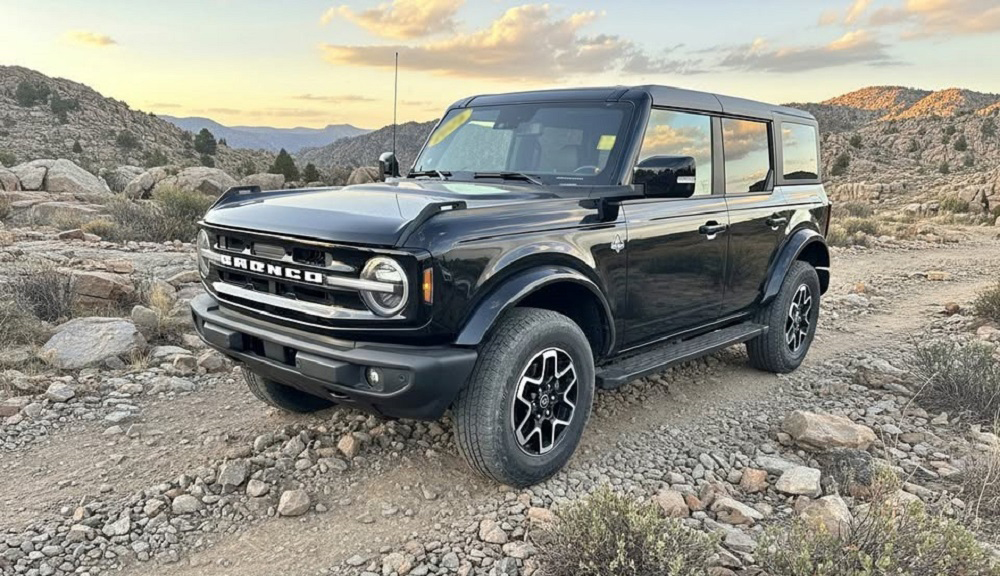
1. Know which Bronco you’re looking at
Split the full-size Bronco from the Bronco Sport before anything else
Mix these trucks together and the diagnosis goes sideways fast. The full-size Bronco is a body-on-frame 4×4 with a longitudinal layout, transfer case, and either a 7-speed manual or 10-speed automatic.
Bronco Sport is a crossover with a transverse powertrain and an 8-speed automatic, plus PTU and RDU hardware that can mimic transmission trouble when the real fault sits farther back.
That split matters on the road. A full-size Bronco with shift flare or delayed engagement points you toward the MT88 or Ford’s 10-speed family. A Bronco Sport with grinding, shudder, or a 4WD fault can drag the rear driveline into the suspect list right away.
The MT88 manual deserves its own lane
Ford gave the full-size Bronco a 7-speed Getrag manual with a 6+1 layout. That extra crawler gear is ultra-low, built for rocks and steep climbs, not normal street starts.
Ford’s 2022 Bronco tech specs list a 6.588:1 crawler ratio and a maximum crawl ratio as high as 94.75:1 with the optional Advanced 4×4 setup.
That hardware changes how owners react to noise. Many drivers forgive chatter, notchiness, and odd sounds longer than they should because the box feels rugged by design.
Ford’s own 23-2019 bulletin shows the known MT88 complaint was a cold rotational scraping noise tied to the 5th and 6th gear synchronizer rings on 2021 to 2023 Broncos.
The 10-speed family shares one bloodline
Ford’s Bronco automatic story sits inside the wider 10R family. The full-size Bronco uses a 10-speed automatic, and Ford’s 22-2428 bulletin groups 2021 to 2023 Bronco complaints with the same harsh or delayed engagement and harsh or delayed shift patterns seen across 10R60 and 10R80 applications.
That tells you the complaint pattern is family-wide, even when the exact unit and calibration differ by vehicle and build date.
Shared architecture means shared habits. Pressure leaks, clutch apply delays, bad solenoid behavior, and learned-shift excuses can show up under different badges and different torque loads.
Ford’s bulletin also lists DTCs like P0751, P0756, P0761, P2700, P0731, and P07F7, which tells you this problem family reaches far past a simple “rough shift” complaint.
| Bronco variant | Transmission(s) | Core risk profile |
|---|---|---|
| Full-size Bronco 2.3 manual | MT88 7-speed manual | Cold scraping noise, synchronizer-ring repair, big labor for a “noise” complaint |
| Full-size Bronco automatic | 10-speed automatic, 10R-family complaint pattern | Harsh shifts, delayed engagement, pressure-loss and valve-body suspicion |
| Bronco Sport | 8-speed automatic | Shift shudder, no-move complaints, PTU/RDU confusion, rear-driveline misdiagnosis |
2. The MT88 can sound broken before it fails
The noise pattern matters more than the panic
Start the Bronco cold. Leave the clutch pedal up. Let it sit in neutral, 1st, or 2nd. That is where the MT88’s signature complaint shows up.
Ford’s 23-2019 bulletin calls it a rotational scraping noise. The bulletin says it hits 2021 to 2023 Broncos with the MT88, grows more noticeable below 50°F after a cold soak, and may fade as the transmission warms.
That pattern matters because a bad throwout bearing, pilot issue, or normal gear rollover noise doesn’t always follow the same script.
The ugly sound points to internal drag, not a missed shift
Owners often expect synchronizer trouble to show up only during a bad shift. The MT88 case is uglier than that. Ford tied the complaint to the 5th and 6th gear synchronizer rings, which means the box can make noise even when the driver is not trying to grab 5th or 6th.
That makes the complaint easy to dismiss at first. The shifter may still move fine. The truck may still pull hard. The gearbox can sound awful in neutral and yet keep driving well enough to fool the owner into waiting too long.
Ford kept revising the fix
The paper trail shows Ford kept chasing this one. 23-2019 superseded 22-2371, expanded coverage to 2023 Broncos, and called for new 5th and 6th gear synchronizer rings with an improved design. Ford even told technicians to verify engineering part number MU7R-7101-GA or later stamped on the rings.
That detail matters in the used market. A Bronco can have a history of “manual transmission service” and still leave you guessing whether it got the updated parts or an earlier repair path. The bulletin gave techs a hard breakpoint for the revised hardware.
The repair is heavy for a problem some dealers call “just noise”
Fixing this issue means pulling the transmission and opening it up. Ford’s own labor guide in 23-2019 lists 10.1 hours to replace the 5th and 6th gear synchronizer rings. That is real gearbox work, not a fluid swap, not a clutch adjustment, and not a shrug from the service lane.
In the real world, that labor load can push the bill well past $1,500 at retail shop rates before parts, taxes, and any extra teardown findings. At $180 an hour, labor alone lands at $1,818.
3. The 10-speed fails on pressure before it quits on drama
The CDF cylinder is where the automatic story gets expensive
Harsh shifts are the symptom. Pressure loss is the bigger problem. In Ford’s 10-speed family, the CDF clutch cylinder can leak internally and throw off clutch apply timing, which is why the truck may flare, bang into gear, or pause before drive finally hits.
Ford’s own paper trail moved from broad harsh-shift bulletins to hardware-level CDF service. The 2023 22-2428 bulletin covers 2021 to 2023 Broncos with 10R60 and certain 10R80-family build dates, while later factory bulletins call for hydraulic leak checks and CDF clutch cylinder replacement when that leak path is confirmed.
The symptom map gets ugly fast
The first clue is often a pause. Shift from Park to Drive, wait a beat, then feel the truck slam in like it got rear-ended. Other Broncos flare rpm on upshifts, hit hard on the 2-3 or 7-8 change, or act like they found neutral before the next clutch finally grabs.
Ford’s bulletin language tracks that exact pattern. 22-2428 covers harsh or delayed engagement, harsh or delayed shift, and a long DTC list that includes P0751, P0756, P0761, P0766, P0771, P2700, P0731, P0732, P0733, P0734, P0735, P0736, P076F, P07D9, P07F6, and P07F7. Once those codes join the shift complaints, the conversation moves past “adaptive learning.”
Build dates matter more than most sellers admit
Ford did not cast a net over every 10-speed Bronco built through today. 22-2428 targets 10R60 Broncos built on or before December 23, 2022, and 10R80-family units built on or before August 15, 2022. That gives used buyers a real breakpoint when they’re sorting early trucks from later ones.
That doesn’t make every later Bronco safe. It does tell you the first-wave trucks sit closer to the known trouble zone. A 2021 or 2022 automatic Bronco with harsh engagement deserves a harder look than a later truck with clean shift history and no matching codes.
Valve body trouble can fake a deeper failure
Not every ugly 10-speed needs a full internal teardown. Ford has separate service paths for main control valve body faults, and those faults can create the same rough-shift mess owners blame on the whole gearbox. Sticky valves, worn bores, and bad solenoid control can delay clutch fill and scramble shift timing.
Ford’s valve-body bulletin lays out the sequence clearly. Reprogram the strategy, run the adaptive drive cycle, and if the condition stays, overhaul the main control valve body.
That bulletin also warns that metal flakes on the pan magnet can still be normal, which is exactly why rushed teardown calls can miss the real fault path.
| Symptom | Likely trouble area | Why it matters |
|---|---|---|
| Long pause, then violent thunk into Drive | Internal pressure loss, valve body, or CDF leak | Early warning before hard-part damage |
| RPM flare during upshift | Cross-leak or clutch apply delay | Frictions are not grabbing cleanly |
| Repeated harsh 2-3 or 7-8 shifts | CDF cylinder or valve body fault | The truck starts losing shift trust fast |
| Random neutral-out | Severe hydraulic or control fault | Safety problem, not a quirk |
A valve-body overhaul bulletin on related 10R applications books around 4.0 to 5.5 labor hours, while CDF-cylinder work pushes the job into internal transmission service.
That’s the line between a few hundred dollars in diagnosis and programming, and a repair that can climb into the several-thousand-dollar range once the case comes apart.
4. Bronco Sport can fool you fast
The 8F35 complaints start with how the truck moves
Bronco Sport uses an 8-speed automatic, not the full-size Bronco’s manual or 10-speed setup. Ford’s 2025 tech specs also show a PTU, disconnectable driveshaft, and RDU hardware in the AWD system. That means one shudder can start in the transmission, the transfer hardware, or the rear drive unit.
Owners usually feel the problem before they can name it. The truck may shudder on a light throttle shift, bang into gear after a pause, or flash a wrench light and act half-asleep leaving a stop. Those complaints matter, but the first mistake is calling every one of them an 8F35 failure.
Rear-drive-unit trouble can sound like a dying transmission
Ford put this one in writing. SSM 51823 says 2021 to 2023 Bronco Sport AWD models can show chatter or shudder during low-speed turns because of fluid contamination in the rear drive unit.
The factory fix starts with an RDU drain and refill, then a 5-mile stop-and-go drive with left and right turns before re-checking the complaint.
That is why so many Bronco Sport noises get misread. A rear driveline shudder under parking-lot load can feel like a slipping transmission when you’re in the seat. Metallic grind, bind on turns, or a rumble from the back half of the truck should pull the RDU into the suspect list early.
A no-restart event after stop-start may have nothing to do with the gearbox
Some Bronco Sport owners hit the brake, the engine shuts off, then the restart goes bad and the whole truck feels dead in traffic. Ford has already documented one version of that on 2022 to 2023 Bronco Sport models built from September 4, 2022 through December 30, 2022.
SSM 51613 says the engine may fail to restart after an auto start-stop event with P164C stored in the PCM, and Ford points techs toward battery checks and PCM replacement.
Ford also recalled 2021 to 2023 Bronco Sport models under 25V-019 / 25S02 for defective 12V batteries that could degrade during a drive, leave the vehicle unable to restart after auto stop-start, or stall at low speed.
That recall matters here because a driver stuck after a stop may blame the transmission first when the real fault sits in the battery and low-voltage system.
Misdiagnosis is part of the repair bill
A Bronco Sport with shudder, no-move complaints, or restart trouble can burn money fast if the shop guesses wrong. Drain the RDU when the 8F35 is failing and you waste time. Tear into the transmission when the battery or PCM is dropping out and you miss the real fault.
That is why symptom location matters more here than on the full-size truck. Noise from the rear on low-speed turns points one way. A wrench light with P164C after stop-start points another. Ford’s own RDU bulletin calls for a 5-mile re-evaluation drive before deeper diagnosis.
5. Heat and fluid decide how long it lives
Heat is the long-game issue
Automatic transmissions can survive a rough shift here and there. Sustained heat does the deeper damage. Crawling, towing, sand, steep grades, and big tires all keep the converter busy and the fluid working harder for longer.
Ford’s own maintenance logic hints at that pressure point. In the Bronco schedule, normal service pushes automatic transmission fluid to 150,000 miles, but severe service cuts that down to 30,000 miles.
Ford also flags low-speed heavy use, dusty or sandy conditions, and similar hard duty as reasons to shorten the interval.
Mercon ULV helps efficiency, but it has less room for abuse
Ford’s 10-speed family uses Mercon ULV. Motorcraft labels it exactly that, MERCON ULV Automatic Transmission Fluid. The “ULV” part matters because the fluid is built around ultra-low viscosity to cut drag and help fast flow.
That thin-fluid strategy works fine when the system stays in its comfort zone. Push the truck through repeated heat cycles and the margin shrinks. The same low-viscosity fluid that helps efficiency also gives you less room to shrug off burnt-fluid abuse, converter heat, and clutch material load.
Factory intervals and Bronco use rarely match
A pavement Bronco with easy commuting can stretch fluid farther than a trail truck. Start adding recovery gear, 35s, hot-weather crawling, or repeated towing, and the brochure rhythm stops matching the workload.
Ford’s own severe-service chart already admits this by dropping the transmission-fluid interval from 150,000 miles to 30,000 miles.
That gap is huge. It means Ford itself draws a hard line between light use and abuse. Anyone treating towing, mud, deep sand, mountain grades, or slow technical trails as “normal” is risking fluid that Ford tells severe-duty owners to change 120,000 miles sooner.
Bigger pans and extra cooling have a real job
Bronco owners add cast-aluminum pans, drain-plug pans, extra capacity, and auxiliary coolers for one reason. They want more control over temperature and easier service.
A drain plug cuts the mess. Extra fluid capacity slows down heat soak. Cooling hardware helps keep repeated load from stacking heat on top of heat.
The point is durability, not looks. A stock truck that sees light commuting may never need that hardware. A modified Bronco towing in summer or crawling all day has already crossed into the same severe-service lane Ford pegs at 30,000-mile fluid changes.
6. Software can smooth it, hide it, or make it feel worse
Adaptive learning helps, but it also muddies the picture
Ford’s 10-speed control logic does not stay fixed. The strategy adapts over time, and Ford’s own service bulletins keep sending techs back through a transmission strategy download and an adaptive learning drive cycle before deeper repairs. That tells you calibration changes can move shift feel more than many owners expect.
That also creates confusion. Reset the strategy and a Bronco may shift oddly for a while as the control logic relearns. A worn unit can feel better for a short stretch after programming, then fall right back into flare, delay, or harsh engagement once the hardware keeps leaking pressure underneath the software patch.
Skip-shift behavior can feel wrong before anything breaks
Ford’s 10-speed family was built to move through ratios quickly and efficiently. Ford has described the broader 10-speed strategy as having real-time adaptive shift scheduling with skip-shift and direct downshift capability.
That means the transmission will not always climb or drop one gear at a time, especially under light throttle or changing load. (media.ford.com)
That part can be normal. A light-throttle shift that jumps ratios to save fuel is not the same thing as a slipping clutch pack. The line gets crossed when the skip turns into rpm flare, repeated hunting, a long pause before engagement, or a slam when the next gear finally lands.
Software can hide weak hardware until the damage grows
Ford’s own bulletins lay out the ladder. Reprogram the strategy. Run the adaptive drive cycle. If the condition stays, go to valve-body work or deeper transmission repair.
That sequence matters because it shows Ford knows some complaints can be softened by software before the wrench reaches the hard parts.
That is where owners get trapped. The truck shifts annoying but still usable, so the problem gets brushed off as “just how the 10-speed works.”
Then the pressure leak grows, the clutch apply delay gets worse, and the same bulletin path that started with programming can end in valve-body overhaul or transmission removal with labor times pushing well into double digits.
7. Recalls muddy the story fast
The intake-valve recall can make a good transmission look guilty
A Bronco that loses power under load can send owners straight toward the gearbox. Ford’s 24S55 recall is one reason that guess goes wrong. Ford says certain 2021 to 2022 Broncos can have intake valves that crack and break, which can damage the engine and cause loss of motive power.
From the driver’s seat, that can feel like a driveline failure. The truck may stumble, lose pull, or act like it dropped a gear and never came back. The transmission gets blamed first because it is the part you feel, but 24S55 starts in the engine, not the transmission.
Reverse depends on electronics now
A modern Bronco does not back up on gear engagement alone. NHTSA recall 26V124, Ford recall 26S09, covers 2021 to 2026 Broncos where the APIM can overheat, shut down for up to 5 minutes, and stop the rear-view camera image while the vehicle is in Reverse.
NHTSA says the APIM can hit 105°C, blank the infotainment screen, and block the camera image, raising crash risk.
That belongs in a Bronco transmission article because Reverse is no longer just a gear. Backing safely now depends on electronics waking up and staying alive when the shifter goes into Reverse.
A dead camera will not damage the gearbox, but it changes how safe the truck is to maneuver the moment Reverse is selected.
Customer Satisfaction Programs are VIN traps if you assume too much
Ford draws a hard line between recalls and Customer Satisfaction Programs. Ford’s owner-support pages say recalls are VIN-specific, and CSPs are VIN-specific programs as well, not blanket promises for every truck with a similar complaint.
That matters because one Bronco owner may get help on an expensive repair while another owner with the same symptom gets nothing once the VIN falls outside the program rules.
That is why service history alone is not enough. “Dealer maintained” does not tell you whether a Bronco still carries open coverage, expired coverage, or no coverage at all. Ford tells owners to check by VIN, and that check needs to happen before the estimate lands on the counter.
8. The early trucks deserve the hardest look
The 2021 to 2022 Broncos carry the most baggage
These are the trucks closest to the first-wave trouble. Manual models sit in the heart of the MT88 scraping saga, and Ford’s 23-2019 bulletin reaches back across 2021 to 2023 models for synchronizer-ring repair.
Automatic trucks also sit closest to the early 10-speed build ranges Ford flagged in 22-2428 for harsh or delayed engagement and harsh or delayed shifting.
That is why mileage alone does not tell the story here. A low-mile 2021 Bronco with cold scraping, delayed Drive engagement, or no proof of repair work can be a worse bet than a higher-mile later truck with clean service records.
The first trucks also overlap with 24S55 on certain 2021 to 2022 Broncos, which adds engine-related motive-power loss to the risk stack.
The 2023 trucks sit in the middle
A 2023 Bronco is not automatically clean. Ford’s manual bulletin still includes 2023 MT88 trucks, which tells you the scraping issue was not sealed off before that model year reached buyers.
The 10-speed harsh-shift bulletin also still covers 2021 to 2023 Broncos, so 2023 sits close enough to the original hardware window that paperwork matters.
That makes 2023 a documentation year. A truck with proof of the right transmission work, clean shift behavior, and no matching DTC history is a different animal from one that “feels okay today.” Ford’s own bulletins still place 2023 inside the repair conversation.
The 2024 to 2026 Broncos look smarter, not safe from everything
Later Broncos sit farther away from the earliest 10-speed build ranges Ford called out in 22-2428. That is the strongest reason to treat them as the better automatic bet. They still carry complex driveline hardware, modern shift logic, and electronics-heavy operation, so “later” should mean lower risk, not no risk.
The later trucks also prove the Bronco story kept moving after the first transmission wave. Recall 26V124 / 26S09 reaches all the way into 2026 Broncos for APIM overheating that can blank the rear camera in Reverse.
So the newer trucks may dodge more of the early transmission baggage and still hit you with modern system faults tied to how the driveline is used.
| Bronco group | Risk level | Why |
|---|---|---|
| 2021 to 2022 manual | High | MT88 scraping issue, first-wave platform bugs, repair-history matters |
| 2021 to 2022 automatic | High | Early 10-speed exposure, harsh-shift bulletin overlap, recall overlap |
| 2023 manual or automatic | Moderate | Better factory awareness, still inside key bulletin windows |
| 2024 to 2026 automatic | Lower, not low | Farther from early 10-speed build windows, still complex and recall-exposed |
| Early Bronco Sport | Moderate to high | 8-speed complaints, RDU confusion, stop-start electrical traps |
Ford’s own 10-speed bulletin draws one hard cutoff at December 23, 2022 for 10R60 Broncos and August 15, 2022 for the listed 10R80-family units.
Here it is, formatted from your source list in the same order.
Sources & References
- Ford: The 10R60 Transmission Plenty Robust for Bronco
- 2.3 or 2.7 – Bronco Nation
- 2026 Ford Bronco: Transmission Options for Best Performance
- Should I Order | The Bronco 2.3L or 2.7L Engine
- Every US Model Year 2026 Manual-Transmission Car, Truck, and SUV | GearJunkie
- The Ford Bronco SUV 2.3 Vs 2.7 – A Supreme Comparative – Melody Ford
- The Most Common Problems With Ford’s 10-Speed Transmission
- Ford 10R80 Transmission Guide: Specs, Strengths, and Common Issues
- Ford 10R80: 10-Speed Automatic Transmission
- Ford 10R80 and GM 10L80 10 Speed Transmission Specs and Gear Ratios
- Ford Bronco Transmission Grinding Noise Problem | Scraping
- TECHNICAL SERVICE BULLETIN MT88 Manual Transmission – nhtsa
- Is your 7MT manual transmission making grinding / scraping noise too? Video and all resources for rotational scraping noise in the 7MT’s. : r/Bronco6g – Reddit
- TECHNICAL SERVICE BULLETIN MT88 Manual … – nhtsa
- Transmission/Transaxle: MT88
- Manual transmission scraping noise / grinding sound | Page 278 | Bronco6G
- 10R80 Transmission Problems: The Most Common Failures (and …
- The Biggest Complaints About Ford’s 10-Speed Transmission (And What’s Been Fixed So Far) – Jalopnik
- Top 5 Signs Your 10R80 Is Failing | Inglewood Transmission
- Are these symptoms of the CDF drum issue? : r/fordexpedition – Reddit
- Another 10r80 Transmission failure brought to you by Downtown Ford Sacramento and the Ford Motor Corporation. : r/f150 – Reddit
- BD Diesel Roadmaster 10R80 4WD Transmission & Converter 1064694SS | XDP
- Are the 10 speed transmissions reliable in the 2024’s? : r/Ford
- Ford 10R80 Transmission • Problems, Solutions & Upgrades – Next Gen Drivetrain, Inc.
- Are the 10 speed transmissions reliable in the 2024’s? : r/Ford
- Ford Recalls | Ford Owner Support
- Ford Recalls | Ford Owner Support
- Urgent: Ongoing Transmission and 4WD System Failures in 2021 …
- 3 Cylinder Engine with Turbo Reliability Long Term and Dimensions : r/BroncoSport
- Transmission issues : r/BroncoSport
- 2017-2026 Ford 10R60/10R80 Heavy-Duty Cast Aluminum Transmission Pan – Standard Capacity
- Mishimoto 10R60/10R80 Transmission Pan For 17-25 Ford F150/Bronco/Must
- Transmission issues : r/BroncoSport
- Transmission gave out Bronco 2021 Sport Big Bend at 43,000 miles. : r/BroncoSport
- 24S55: Bronco Edge Explorer F-150 (2021-2022) Engine Intake Valves Recall – Ford
- Ford EcoBoost V6 Engine Recall Lawsuit– Stay Informed & Drive Safe – Tagore Autoparts Blog
- NHTSA Recalls by Manufacturer | Department of Transportation – Data Portal
- NHTSA Recalls by Manufacturer | Department of Transportation – Data Portal
- National Highway Traffic Safety Administration Makes/Models/Model Years: Mfr’s Report Date: March 03, 2026 NHTSA Campaign Number
- Give me an honest review on the newer Ford Broncos. : r/FordBronco
- 2026 vs 2025 Ford Bronco: A Comprehensive Comparison Guide