
Slip off a stop. Watch the tach jump. Feel the gear slam late. Since 2011, the Cruze has used several transmissions. Early cars ran 6T30, 6T40, and 6T45 automatics.
Later models switched to 6T35, plus the M32 manual and a late CVT. Each one fails in a different way, from broken wave plates to bearing wear and heat-driven pressure loss.
Some fail fast. Others slip only when hot. And some “transmission problems” start in the engine.
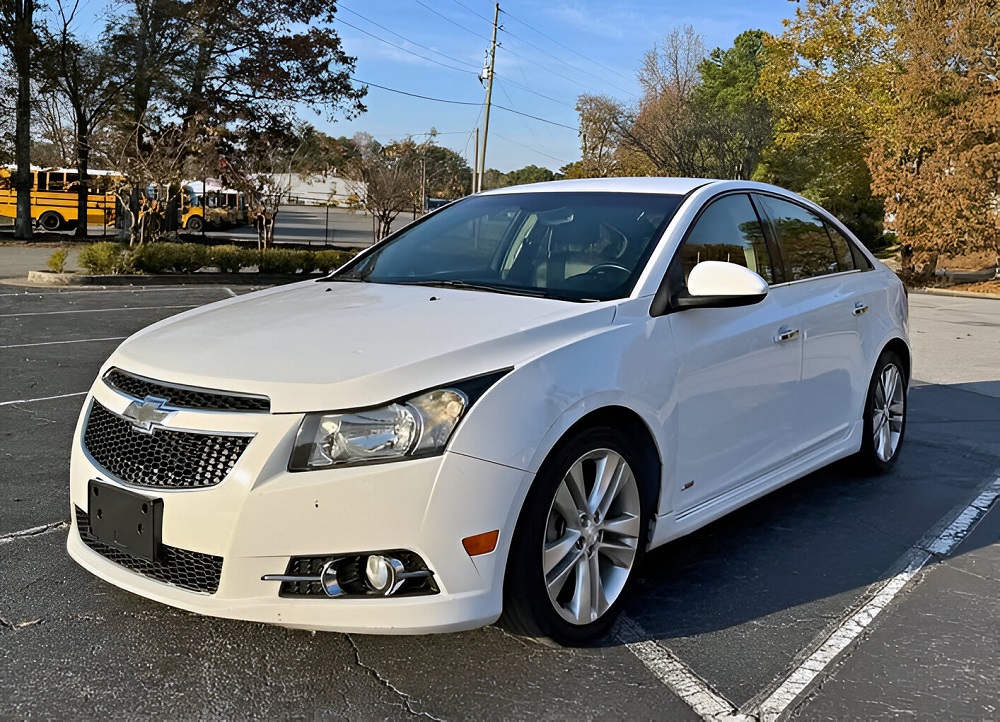
1. The Cruze transmission timeline and why failure risk shifts by year
Early automatics carry the most violent failures
2011 to 2015 Cruze models run the 6T30, 6T40, and 6T45 family. These units pack six speeds into a tight case using clutch-to-clutch shifting. No bands, no buffer. Every shift depends on clean pressure and strong hardware.
The 6T40 handles most 1.4T cars. The 6T45 sits behind higher torque diesel setups. Both share the same core weak points, clutch packs, wave plates, and retention hardware that take repeated shock loads.
Failures here tend to snap, not fade. A cracked 3-5-Reverse wave plate can wipe out multiple gears in one event. Metal spreads through the pump and valve body fast, turning a single part issue into a full teardown.
The 2016 redesign cut weight and raised pressure sensitivity
2016 brought the second-gen Cruze and the 6T35. GM trimmed weight by about 24 lb and switched to a more efficient pump layout. The unit runs tighter hydraulics and relies heavily on software control through clutch volume learning.
The design reduces drag and improves fuel economy. It also leaves less margin for dirty fluid or heat. Small pressure leaks now show up as delayed shifts, flare, or hot engagement issues instead of instant gear loss.
Drivers report problems after heat soak. Park the car hot, restart after 10 minutes, then feel a soft or late engagement into Drive. Line pressure bleed-off shows up in that moment.
Manual and CVT cars follow completely different failure paths
The M32 manual skips hydraulic clutch packs and uses gear-driven engagement. It trades wave plate issues for bearing wear. Output shaft bearings wear first, usually behind 5th and 6th gear.
Noise shows up as a rising whine with road speed. Many cars keep driving for months while the bearing sheds metal. That debris then scars gears and the case.
The late 2019 Cruze introduces the VT40 CVT. It replaces fixed gears with a belt and pulley system. Failures shift toward heat, fluid pressure, and software control rather than broken hard parts.
2. Early 6T automatics fail hard when internal parts let go
The 3-5-Reverse wave plate cracks and wipes out multiple gears
The 3-5-Reverse wave plate takes repeated load every shift. Over time, stress cracks form in the steel. The plate then fractures and loses its spring tension.
Clutch apply pressure collapses instantly. Third gear, fifth gear, and Reverse stop working at once. The car may rev freely with no movement or slam into limp mode.
Debris spreads through the unit fast. Metal fragments scar the pump, jam the one-way clutch, and damage valve body bores. P0776 often shows up when the clutch fails to apply under command.
Snap rings and clutch drums fail and release the whole clutch pack
Early builds used a weak snap ring groove design. Under load, the snap ring can pop out of place. The clutch pack loses its anchor point and stops applying force.
The issue feels sudden. One shift hits hard, then the next gear disappears. Drivers report a bang followed by neutral-like slipping under throttle.
GM released updated parts with a deeper groove and thicker ring. Mixing old and new hardware causes immediate clutch issue during rebuild.
Bonded pistons leak pressure and turn clean shifts into flare
Clutch apply pistons use bonded seals to hold pressure. Heat cycles shrink or crack those seals. Fluid leaks past instead of pushing the clutch pack tight.
Shifts go soft first. Then flare shows up between gears, often 2-3 or 3-4. Hot operation makes it worse as fluid thins and leakage increases.
Codes like P2723 can appear when pressure control fails. A worn piston keeps losing pressure even with a healthy pump.
Torque converter clutch shudder signals fluid breakdown and valve wear
The converter uses an electronically controlled clutch for partial lockup. Fluid quality controls how smooth that engagement feels. Degraded fluid changes friction behavior.
Drivers feel a rumble at steady speed, often 35–55 mph. It mimics driving over rough pavement. Light throttle makes it worse as the clutch slips and grabs.
Valve body wear and TCC regulator issues make the problem repeat. Ignoring it overheats the fluid and spreads debris through the system. A converter replacement with updated friction material runs $600–$1,200, full rebuilds hit $1,800–$3,400.
3. Some Cruze automatics bleed pressure before they fail
Internal seal leaks drain clutch force and delay every shift
Clutch pistons depend on tight seals to hold line pressure. Heat cycles harden the rubber and shrink the sealing lip. Fluid slips past instead of building force.
Cold shifts may feel normal. Once fluid hits 180–220°F, leaks show up. Engagement delays increase, and the car hesitates before moving into Drive.
The pump still produces pressure. The clutches never see full apply force. That gap creates flare under load and soft shifts during light throttle.
Valve body wear distorts pressure control and confuses shift timing
The valve body routes fluid through machined bores. Each bore wears over time from constant solenoid movement. Clearance increases and pressure leaks internally.
Solenoids still respond to commands. The actual pressure at the clutch falls short. The TCM keeps adjusting, trying to hit target shift timing.
This creates erratic behavior. One shift feels clean, the next hits hard or flares. No consistent pattern shows up until wear spreads across multiple circuits.
Clutch Pulse Learning masks wear until it runs out of adjustment
Gen 2 and Gen 3 units use Clutch Pulse Learning to track clutch fill volume. The TCM pulses each clutch and measures input speed drop. It adjusts apply timing based on that data.
The system compensates for wear early on. As seals leak and bores wear, the learned values increase. Once limits are reached, the transmission can no longer correct itself.
Drivers feel a bump during steady cruising. This relearn cycle can occur every 1,200–1,300 miles. Persistent flare or harsh shifts mean the system has exceeded its correction range.
Overheat codes and fluid breakdown mark the tipping point
Transmission fluid breaks down above 240°F. Viscosity drops and clutch friction changes. Pressure loss accelerates as fluid thins.
The system may log P0218 for over-temperature. Burnt fluid smells sharp and turns dark. At this stage, clutch material has already started to degrade.
Continued driving spreads debris through solenoids and passages. Full rebuild cost lands between $2,000 and $3,500 once internal wear reaches this level.
4. The M32 manual trades shift shock for bearing failure and hydraulic leaks
Output shaft bearings wear first and start the whine
The M32 runs a compact gearset with high load on the output shaft. Bearings behind 5th and 6th gear take the most stress. Oil flow to those bearings runs marginal under sustained highway load.
Wear starts as a faint hum. It grows into a clear whine that rises with speed, not engine rpm. Lift off the throttle and the pitch often changes as load shifts across the gear teeth.
Metal flakes enter the oil early. Continued driving spreads that debris through the case. Bearing issue can misalign gears and score the housing beyond repair.
The internal slave cylinder turns a small leak into a full teardown
The clutch release system uses a concentric slave cylinder inside the bell housing. It sits around the input shaft and shares space with the clutch assembly. Any seal issue sprays fluid directly onto the clutch disc.
Pedal feel turns soft or spongy. Some cars drop the pedal to the floor under load. Air enters the system and prevents full clutch disengagement.
Fluid contamination ruins the friction material fast. The clutch slips, overheats, and damages the dual-mass flywheel. Access requires full transmission removal, labor runs 6–8 hours plus parts.
Clutch and flywheel damage follow once heat builds
A slipping clutch builds heat quickly. Surface temperatures can exceed 500°F during repeated slip events. The dual-mass flywheel absorbs that heat and begins to break down internally.
Drivers feel vibration at idle and during engagement. The flywheel springs loosen and create a rattling noise. Engagement becomes uneven and harder to control in traffic.
A full clutch and flywheel job ranges from $1,200 to $2,200. If bearing noise exists at the same time, total repair cost can exceed $3,000 due to gearbox teardown.
5. The 6T35 and CVT shift smoother but expose heat and software limits
The 6T35 runs lighter hardware with tighter hydraulic margins
The 6T35 drops weight and reduces drag with a smaller pump. It uses an off-axis, chain-driven vane pump to cut parasitic loss. Line pressure builds faster but runs closer to minimum thresholds.
Clutch packs use lower fill volume. The TCM calculates apply timing through adaptive learning. Small leaks or worn seals push the system out of range quicker than older units.
Gear changes feel smooth when new. Once wear starts, the same system delays apply and creates flare under moderate throttle. Pressure margin stays narrow across the operating range.
Hot soak exposes pressure loss and delayed engagement
Park the car after a long drive. Fluid sits near 200°F and expands inside the case. Shut the engine off and pressure drops to zero.
Restart within 10–15 minutes. The pump must rebuild pressure while fluid remains thin. Internal leaks delay clutch fill, especially for forward engagement.
Drivers feel a pause when shifting into Drive or Reverse. Engagement may take 2–3 seconds. Repeated events point to internal leakage or valve body wear.
Converter slip and light throttle shudder show up under load
The torque converter clutch cycles during light throttle cruising. It applies partial lockup to improve fuel economy. This requires stable pressure and clean fluid.
Worn valves or degraded fluid disrupt that control. The clutch slips, grabs, then releases in quick cycles. Drivers feel a shudder between 35 and 55 mph.
Scan data often shows unstable slip speed during lockup. If ignored, heat builds and damages clutch material. Converter replacement plus fluid service runs $900–$1,500.
The VT40 CVT relies on pressure control and runs tight thermal limits
The VT40 CVT replaces gears with a steel belt and variable pulleys. Ratio changes depend on hydraulic pressure applied to the pulleys. Belt grip must stay consistent under load.
Low fluid pressure allows belt slip. That slip generates heat and accelerates wear on pulley faces. The system reacts by raising pressure, which adds more heat.
Drivers report delayed engagement and low-speed shudder. Software glitches can cause stalling when coming to a stop. Fluid temperature above 230°F increases slip risk and shortens belt life.
6. Heat and fluid neglect quietly shorten transmission life
Stop-and-go heat loads overwhelm a compact transmission case
City driving keeps the converter active and builds heat fast. The small case holds limited fluid volume. Heat has less room to dissipate compared to larger units.
Turbo torque adds load during low-speed acceleration. Each shift happens under higher pressure demand. Fluid temperature can climb past 220°F in traffic within minutes.
Repeated short trips trap heat inside the case. The transmission never cools fully between cycles. Internal seals harden faster under these conditions.
No dipstick design leads to underfill and delayed leak detection
The Cruze uses a sealed transmission with no dipstick. Fluid level checks require a scan tool and a set temperature window. The engine must run during the check procedure.
Many owners never verify fluid level. Small leaks go unnoticed until shift quality drops. By that point, clutch wear has already started.
Improper checks lead to overfill or underfill. Half a quart too high can cause foaming. Aerated fluid reduces pressure and increases heat.
Fluid breakdown changes friction behavior and clutch timing
Dexron VI fluid holds stable viscosity under heat when fresh. Over time, shear forces break down the fluid structure. Friction modifiers degrade and change clutch engagement.
Shifts become inconsistent. Some feel soft, others hit hard under the same load. Converter clutch control becomes unstable during light throttle.
Burnt fluid loses lubrication properties. Internal parts run hotter and wear faster. Fluid that smells burnt has already crossed its thermal limit.
Service intervals determine whether wear stays contained or spreads
Factory guidance splits normal and severe service. Most drivers fall into severe use due to traffic and climate. Recommended service interval sits near 45,000 miles for automatics.
Manual transmissions require fluid changes between 30,000 and 60,000 miles. Fresh fluid protects bearings and maintains film strength. Neglected fluid accelerates metal contact inside the gearbox.
Once debris circulates, it reaches solenoids and valve body passages. Cleaning that contamination requires full teardown. Remanufactured units range from $3,000 to $7,000 depending on supplier.
7. Engine faults can fake transmission slip and mislead diagnosis
Boost leaks and misfires distort shift timing under load
The 1.4T engine controls torque delivery during every shift. The TCM expects a smooth drop and recovery in torque. Misfires or boost loss break that pattern.
A weak coil or fouled plug cuts power mid-shift. The transmission sees rising rpm with reduced load. That feels like clutch slip even when the gearbox works as commanded.
Boost leaks cause the same effect. Air escapes before reaching the intake. Torque falls off, then returns late, which creates a flare-like surge during gear change.
Fuel and ignition faults trigger false transmission behavior
Random misfires set P0300 and disrupt load calculation. The TCM uses that load data to schedule clutch apply. Bad data leads to poor shift timing.
Fuel trims that swing too far lean or rich also affect torque. The engine may hesitate, then surge. That cycle mimics delayed engagement or slipping clutches.
Scan data often shows normal gear commands during these events. Input speed and output speed stay within expected ratios. The issue sits upstream in the engine.
Torque spikes and drops confuse adaptive learning systems
Adaptive systems track clutch fill time based on engine response. Irregular torque patterns corrupt that learning process. The TCM adjusts pressure using faulty inputs.
Over time, shift timing drifts away from ideal values. The transmission may start to flare or bang between gears. These changes follow engine faults, not internal wear.
Resetting adaptives without fixing the engine problem repeats the cycle. The system relearns the same bad data and returns to unstable shifts.
Scan both modules or risk replacing the wrong parts
Transmission codes alone don’t tell the full story. Engine data must match transmission behavior during the same event. Live data shows whether torque and shift timing align.
A proper scan compares commanded gear, input speed, and engine load. Mismatch points to engine-side faults. Matching data with poor shift quality points back to the transmission.
Skipping this step leads to wrong repairs. TEHCM replacement runs $950 to $1,200 and won’t fix an ignition failure.
8. Recalls and bulletins reveal where design and assembly failed
Shift linkage faults leave the car in gear while showing Park
Early 2011 models carried a linkage defect under recall 11V-273. The shift cable could sit out of position at the transmission arm. The shifter would show Park while the gearbox stayed in gear.
Drivers could remove the key and exit the car. The vehicle could roll away without warning. Some reports tied this to property damage and injury cases.
The issue sits outside the geartrain. No internal repair fixes it. The recall replaces or repositions linkage hardware to restore correct range indication.
Start-stop accumulator failures cause pressure loss and stall events
2018–2019 models faced recall N202313440 tied to the start-stop system. The transmission uses an accumulator to hold pressure during engine shutdown. Missing or loose bolts at the endcap allow fluid to leak out.
Loss of fluid drops hydraulic pressure instantly. The transmission can lose drive without warning. In some cases, fluid contacts hot surfaces and creates a fire risk.
This issue occurs without internal wear. Even low-mileage vehicles can lose propulsion. Repair involves securing the accumulator endcap and restoring fluid integrity.
Factory bulletins map the shift from hardware faults to software control
Service bulletin 16-NA-053 outlines the 6T35 and M32 design updates. It details the move to adaptive learning and revised hydraulic control. The system relies on calculated clutch fill times instead of direct pressure feedback.
Earlier units used mechanical pressure switches. Issues in those switches caused erratic readings and codes like P0776. Later systems remove those switches and depend on software logic.
This shift changes diagnostics. Technicians must read live data and adaptive values instead of testing physical switches. Misdiagnosis often leads to unnecessary part replacement and repeat repairs.
9. Repair paths and used-buy risk depend on failure stage and parts quality
Early-stage repairs stay contained if pressure loss hasn’t spread debris
Minor issues center around solenoids, valve body wear, or converter slip. Fluid stays relatively clean at this stage. Clutch material has not circulated through the system.
Repairs may involve TEHCM service, valve body work, or converter replacement. Labor stays limited since the case remains intact. Costs range from $900 to $1,500 depending on parts.
Once debris enters the system, this path closes. Metal contamination reaches pumps, clutches, and passages quickly.
Full rebuilds depend on updated hard parts and machining accuracy
Rebuilds tear down the unit and replace worn clutches, seals, and damaged components. Success depends on updated parts like revised wave plates and snap rings. Machining valve body bores restores hydraulic sealing.
Older designs require specific updates. Mixing early and late components causes immediate issue. Shops that skip bore repair leave internal leaks in place.
Typical rebuild costs range from $1,800 to $3,400. Quality varies by shop and tooling.
Reman units replace weak factory design points and restore hydraulic integrity
Remanufactured units arrive with corrected hard parts and recalibrated valve bodies. Many include upgraded torque converters with improved clutch material. Internal passages are cleaned and resealed during assembly.
These units address cumulative wear that rebuilds may miss. Valve body surfaces are machined and matched to new components. Hydraulic pressure returns to spec across all circuits.
Cost ranges from $3,000 to $7,000 depending on supplier. Units often include warranty coverage tied to installation and fluid requirements.
Used units carry hidden wear and repeat failure risk
Salvage transmissions cost less upfront. Prices range from $800 to $1,500. Most units come with unknown service history and internal condition.
Wear inside the valve body or clutch packs may not show during install. The same failure modes can appear within months. Warranty coverage remains limited and often excludes labor.
Installation labor runs 8–12 hours. A second failure doubles total cost and downtime.
Sources & References
- Chevrolet Cruze – Wikipedia
- GM 6T transmission – Wikipedia
- The 6T40 Transmission: A Comprehensive Guide
- Generation Gap: 6T40 Gen v3 – Gears Magazine
- 6T40-6T45 Updates and Product Concerns
- Sonnax GM Gen. 1, 2 & 3 6T30, 6T40, 6T45, 6T50 Series …
- Understanding GM 6T40 Solenoids – Gears Magazine
- 6T40/45 Diagnosis and Fixes – Gears Magazine
- GM 6T40 Gen 3 Transmission Overview | PDF – Scribd
- Automatic transmission GM 6T: A Rebuilder’s Joy – The AKPPro Magazine
- Understanding the Chevy Cruz’s Transmission Issues for 2011-2016 Models
- 6T40 Transmission for GM Vehicles | ACE Remanufactured
- Are the Cruze Manuals as Bad as the Auto? : r/Holden – Reddit
- 2012 Chevy Cruze. Bad clutch, flywheel, master and salve cylinder. Looks like it was a domino effect, but i know nothing about cars : r/MechanicAdvice – Reddit
- Clutch Slave Cylinder For 11-16 Chevy Cruze Limited Eco LTZ LT LS L TX44W9 | eBay
- Is the Gen 2 Cruze’s reliability slept on after the disaster that was the Gen 1? Consumer reports gives a 2012 a 20/100 while a 2018 is up there with Toyota and above Honda, Mazda and Subaru – Reddit
- 2017 Chevrolet Cruze – Clutch issues – Maintenance/Repairs – Car Talk Community
- 7 Signs Your Chevy’s Transmission Might Need Attention – First State Chevrolet Blog
- Preliminary Information – nhtsa
- 2019 Chevy Cruze Problems & Complaints – The Lemon Law Experts
- Are the CVT’s reliable compared to other makes? : r/chevymalibu – Reddit
- Service Bulletin TECHNICAL – nhtsa
- How Often to Change Transmission Fluid
- Transmission service : r/cruze – Reddit
- How Often Should You Change Your Transmission Fluid?
- Chevrolet Cruze Transmission Recall – Asbury Automotive
- Chevrolet Cruze Recalls | Cars.com
- 2019 Chevrolet Cruze Transmission Recall – Asbury Automotive
- Recall Bulletin – nhtsa
- Find Existing Chevrolet Cruze Car Recalls – DealerRater
- Chevrolet Cruze Recalls – RepairPal
- Transmission Control Module Replacement Cost Estimate – RepairPal
- Rebuild vs. Replacement | Signs of Transmission Problems
- Rebuild vs Replace Transmission: Real Costs, Risks, and What Actually Lasts
- Transmission Repair Costs: A Comprehensive Guide (2025) – Milex Complete Auto Care
- 6T40 6T45 6T30 6T35 TCM Transmission Control Module Programmed 2008-2016 Cruze
- Recall Bulletin – nhtsa