
Tow uphill. Hear the tick turn sharp. Feel the pull fade while the engine stays hot. That is how many 8.1 Vortec problems begin.
The L18 earned its name on torque, not finesse. In GM HD trucks, vans, and Workhorse motorhomes, this big block pulls hard and lasts when the core stays healthy.
The weak spots sit around it, crank sensor heat-soak, oil drawn through the intake and PCV path, manifold bolts that snap, and plug wires that burn near the exhaust.
Early engines take the most heat for sensor trouble. Later ones still fight oil use and exhaust heat.
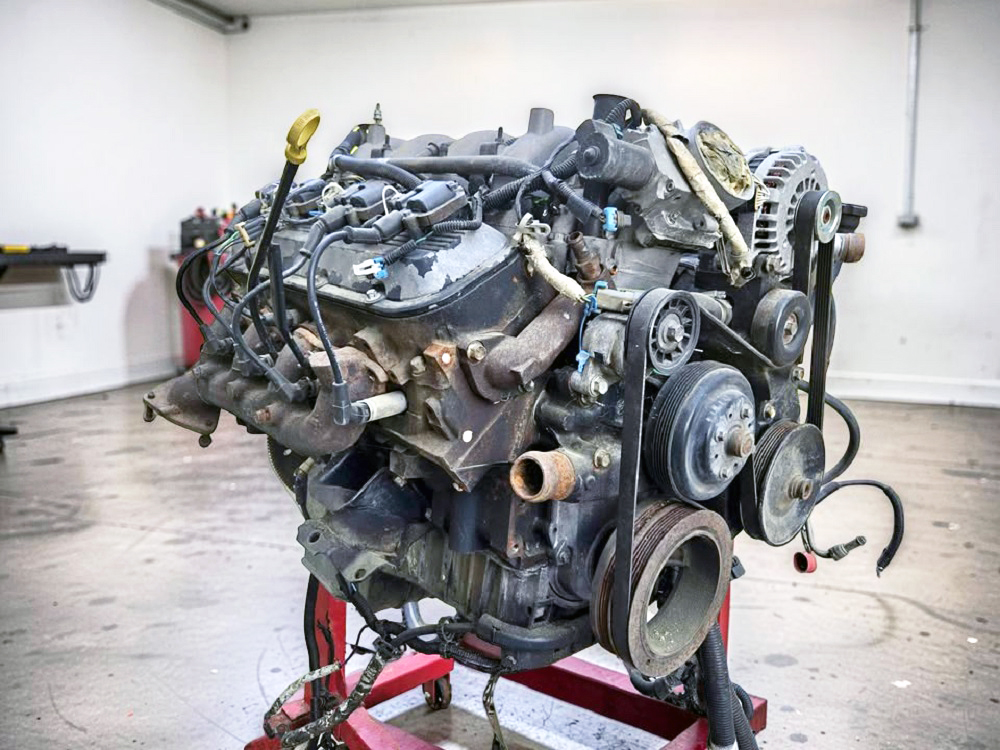
1. The L18’s strength hides the weak spots that owners actually fight
GM built the 8.1 to pull hard at low rpm
GM launched the L18 as the last big gas workhorse in this line. It used a cast-iron block and heads, a 4.250-inch bore, and a 4.370-inch stroke.
That long-stroke layout pushed torque low in the rev range, right where HD trucks and motorhomes live under load. Factory output landed around 330 to 340 hp and 440 to 455 lb-ft, depending on application.
That design choice shaped the whole engine’s trouble pattern. The short block usually holds up. The trouble grows around heat, oil control, and engine management parts bolted to it. Heavy towing, long grades, and tight engine bays pile more heat into those weak points.
Early and late engines do not fail the same way
The first split that matters is 2001–2003 versus 2004+. Early engines built the worst reputation for hot-soak crank sensor dropouts and more awkward cam-sensor compatibility. Later engines picked up a taller cam sensor and a different timing-cover setup, which cleaned up part of that story.
That year split matters during repairs too. The cam sensor, cam gear, and timing cover do not all swap across the run. Raylar notes 3 distinct cam-sensor families, 2001, 2002–2003, and 2004+. A rebuild with mismatched parts can create sync trouble before the engine even leaves the shop.
| Item | What matters |
|---|---|
| Engine code | L18 |
| Layout | 8.1L cast-iron OHV V8 |
| Bore x stroke | 4.250 in x 4.370 in |
| Main job | Heavy towing and load hauling |
| Strong zone | Block, bottom end, low-rpm torque |
| Weak zone | Sensors, intake oil control, exhaust heat hardware |
| Critical split | 2001–2003 vs. 2004+ |
The core engine lasts, the outside systems make the trouble
The L18’s rotating assembly has a strong reputation because GM did not push the engine anywhere near its mechanical limit. Stock engines were tuned for load, not high-rpm power. That leaves margin in the block and bottom end when oil level stays safe and cooling stays under control.
The failures owners remember usually start elsewhere. The crank sensor can quit hot. The intake and PCV layout can pull oil into the engine. Exhaust heat can snap manifold bolts and burn plug wires. Those are the problems that turn a strong tow engine into a roadside repair.
Chassis choice changes how fast the weak points show up
A pickup sees heat, but it still gets decent airflow. A van packs the engine tighter and makes access worse. A Workhorse motorhome traps more radiant heat around the engine and keeps it loaded for long stretches, which raises the chance of hot-start stalls, burned wires, and broken manifold bolts.
That is why mileage alone does not tell the full story on an 8.1 Vortec. A lightly used pickup can age gently. A motorhome can punish the same engine at lower miles with more heat soak, more wide-open-throttle time, and harder service access on nearly every repair.
The next failure section starts with the sensor that leaves more owners than any other part, the crankshaft position sensor.
2. The crank sensor is the failure that leaves the 8.1 dead on the shoulder
Heat cooks the signal before the engine gives any mercy
The crankshaft position sensor is the L18’s most common leave-you failure. It feeds rpm and crank position data to the PCM. Lose that signal, and spark plus injector timing stop right there. A big block that felt fine a minute earlier can shut off like someone turned the key.
Heat drives most of the failure pattern. The sensor lives in a hot zone and gets hammered by repeated heat soak. That gets worse in motorhomes, where airflow is poor and exhaust heat hangs around the engine bay longer. Early 2001–2003 engines built the worst reputation for this exact problem.
The symptom chain usually starts small, then turns ugly fast
Most failures do not begin with a clean no-start. The first clue is often a hot stumble, a brief cutout, or a tach needle that drops for a split second. Then the engine may stall hot, crank without firing, and restart only after it cools. That hot-then-cold pattern is one of the sharpest clues on an 8.1.
Some trucks also show rough idle or hesitation before the full shutdown phase. The PCM can still catch a bad signal for a while, but timing becomes erratic. Under load, that feels like a stumble or buck, not a clean miss from one cylinder. That is why owners often chase fuel pressure first and lose time.
Removal can turn one bad sensor into a longer repair
The part fails often enough. Pulling it out can be the second fight. Heat, age, and corrosion can swell the plastic body or seize it in place, which is why broken sensors during removal are common in owner reports and shop videos. A simple sensor swap can turn into extraction work before the new part ever goes in.
That matters more in vans and motorhomes. Access is worse, hand room is tighter, and roadside repairs get ugly fast. On those chassis, the labor pain can exceed the cost of the sensor itself. The failure may start as a $50 to $150 part problem and end as a tow bill plus several hours of labor.
Cam sensor mismatch can fake a fresh failure after a rebuild
Crank signal problems on the 8.1 do not always come from the crank sensor alone. The engine used 3 cam-sensor and cam-gear families across the run, and the 2004+ setup changed to a taller sensor with a different timing cover. Mix the wrong cover, gear, or sensor, and the engine can pick up sync trouble even after the original repair.
That is where rebuilds go sideways. A parts mismatch can leave the engine chasing bad timing correlation, poor running, or a no-start that looks like another failed sensor.
Shops that know the L18 check year group, gear pattern, and cover depth before they blame the new sensor. The 2004+ tall sensor will not fit the earlier shallow cover.
3. Oil consumption is the long-haul problem that slowly robs power
The 8.1 often burns oil through the intake, not the short block
Many 8.1 Vortec engines use oil long before the rings are truly worn out. The main trouble sits in the intake and crankcase ventilation layout. Under vacuum, the system can pull oil mist from the lifter valley into the intake plenum. That oil then goes through the chambers and out the tailpipe a little at a time.
GM service material treated 2 quarts in 2,000 miles as excessive oil use on this engine family. Real owner reports often land below that line, which is why many trucks kept running for years while still fouling plugs and draining the dipstick faster than expected. Highway cruising and long downhill vacuum can make the pull-over-oil path worse.
The damage shows up at the plug first, then in timing and power
Burned oil does more than lower the dipstick. It leaves carbon on the plugs and pushes misfire risk higher. It also lowers the octane margin inside the chamber, which raises the chance of spark knock under load.
Once knock starts, the PCM pulls timing, and the engine loses the clean hard pull that made the L18 popular in the first place.
That loss can feel gradual. The truck still starts. It still tows. It just feels softer on grades, rougher at idle, and thirstier at the pump. Many owners blame fuel or age first, even when the plugs are already telling the oil story.
Mid-2004 hardware changes matter more than most buyers know
GM changed the intake sealing hardware during the run. Early engines used silver intake bolts around 65 mm long with flatter gaskets.
Later engines moved to black bolts around 72 mm long and a stamped-steel gasket design with locating dowels, including P/N 89017539 in the bulletin trail tied to the oil-use fix path.
That split matters during repair and parts ordering. Early and late gasket setups do not behave the same, and mixing parts can leave the leak path alive.
Mid-2004 and newer engines generally got the better sealing package, but they can still pull oil when the system is neglected or the intake has already been apart before.
| Version | Quick identifier | Why it matters |
|---|---|---|
| Early 2001–mid-2004 | Silver intake bolts, about 65 mm | Flatter gasket design, weaker control of vacuum-driven oil pull |
| Late 2004–2007 | Black intake bolts, about 72 mm | Stamped-steel gasket with dowels, better sealing under high vacuum |
Oil use can turn a healthy tow engine into a cat-damaging misfire machine
Once plugs foul, the problem spreads. Misfires dump raw fuel into the exhaust. Exhaust heat rises, catalyst life drops, and manifold heat climbs even harder. On motorhome chassis, that extra heat stacks on top of an engine bay that already runs hot.
That is why many long-term owners check oil at nearly every fuel stop. On a bad 8.1, oil use can move from annoying to expensive fast. A truck using 1 quart every 500 to 1,000 miles can foul plugs well before the old 100,000-mile spark plug interval ever makes sense.
4. Exhaust heat breaks the hardware long before the short block gives up
Manifold bolts fail because the engine lives hot and stays hot
Broken exhaust manifold bolts are one of the 8.1’s signature repair bills. The manifold sees repeated heat expansion under load, then shrinks as the engine cools.
That constant cycle works the bolts until they fatigue and snap. Hard-towing trucks and motorhomes see the worst of it because they hold heat longer and spend more time under heavy throttle.
This is not a simple rust story. The engine makes serious exhaust heat, and the cast-iron manifold moves through every heat cycle. The steel fasteners take that stress over and over. Once one bolt breaks, the clamp load drops and the leak starts cutting the gasket area harder.
The end cylinders usually get hit first
The failure pattern tends to favor the outer ends of the manifold. Owner reports and repair discussions often point to the end bolts near cylinders 1, 2, 7, and 8. Those spots deal with more distortion and less forgiving airflow, especially in tight chassis. That is where the ticking leak often starts.
A small leak can sound like a lifter tick at first. Then the sound sharpens on cold start and under load. Leave it alone long enough, and the hot gas cuts the gasket face, heats nearby parts, and makes the next repair harder.
Extraction is where the repair cost climbs
Once a bolt snaps flush, the easy part is over. The cylinder head has limited room for error, and bad drilling can damage the head or go too deep. That is why shops lean on weld-nut removal or guided drilling fixtures instead of freehand guesswork.
Specialized kits exist for this exact job because it happens so often. ProMAXX’s Butch fixture for the GM 8.1L and related engines is built to center the drill and cut the risk of head damage. On a cramped chassis, the tool cost is cheap compared with a ruined head or extra teardown time.
Burned plug wires often arrive right behind the manifold leak
The 8.1 uses coil-near-plug ignition, but the wires still run close to brutal exhaust heat. On heavy pulls, especially in motorhomes, standard boots can harden, crack, and arc. That gives the engine a load misfire that feels like fuel loss or a weak coil.
A burned wire does more damage than one rough cylinder. The dead hole sends raw fuel into the exhaust, which raises manifold and catalyst heat even more.
That can damage a converter and pile more heat onto the manifold hardware that already failed. Ceramic-boot wires and heat shields are common fixes because stock-style boots often do not survive long in this environment.
Motorhome chassis make every heat problem worse
A pickup can shed heat better after a pull. A Workhorse motorhome traps heat under the doghouse and around the manifolds. That keeps the bolts, boots, and nearby wiring hotter for longer after shutdown. Hot soak in those chassis is one reason exhaust repairs repeat more often there.
Labor also climbs fast on RV applications. Access is tighter, broken hardware is harder to reach, and even a basic manifold repair can turn into a long shop job.
Once multiple bolts break, repair cost can move from a few hundred dollars into the $1,000 to $2,000+ range depending on access, extraction time, and whether the catalytic converter got cooked too.
5. Fuel pressure faults and ignition heat can fake a dying engine
A bad fuel pressure regulator can make the 8.1 feel much worse than it is
The 8.1 uses a vacuum-referenced fuel pressure regulator on the rail. When the diaphragm tears, fuel leaks through the vacuum side and gets pulled straight into the intake.
That overfuels the engine before the injectors even finish their job. Hard starts, raw-fuel smell, black smoke, and a flooded feel after sitting are the usual signs.
This failure can fool people fast. A rich-running big block can shake, foul plugs, and load up so badly that it feels like compression is gone. Pull the regulator vacuum hose and check for liquid fuel. Gas in that hose means the diaphragm has failed.
Lean and rich regulator failures do not drive the same
A torn diaphragm is only one version of the problem. A regulator stuck open can drop pressure and lean the engine out under load. A regulator stuck closed can drive pressure high and swamp the engine with fuel. Both states hurt performance, but the symptom pattern changes.
| Regulator problem | What the engine does |
|---|---|
| Diaphragm leak / rich condition | Hard start after sitting, raw-fuel smell, black smoke, flooding feel |
| Stuck open / low pressure | Lean hesitation, weak pull, hotter running, misfire under load |
| Stuck closed / high pressure | Overfueling, rough running, smoky exhaust, possible injector and cat stress |
A lean 8.1 often feels flat on a pull and may surge before it misfires. A rich one stinks, smokes, and can wash plugs down fast. Either way, the driver may blame the engine long before the regulator gets checked.
Heat-soaked plug wires can mimic fuel trouble under load
The ignition layout was better than the old distributor setup, but it still has a weak spot. Plug wires sit close to serious exhaust heat, especially on motorhome chassis. Once the boots harden or arc, the miss often shows up under load first. That makes it feel like a fuel problem when cylinder fire is the real issue.
Oil consumption makes that worse. Fouled plugs need more voltage to fire cleanly. A weak wire plus an oil-fouled plug can turn a mild miss into a steady buck on grades. One dead cylinder also pushes raw fuel into the exhaust and raises converter heat fast.
Spark plug intervals on these engines are shorter than the old brochure logic
GM once stretched spark plug service deep into six figures on many trucks. That target does not fit a lot of 8.1 engines in real use. Engines that burn oil or tow hard can foul plugs far earlier, which is why experienced owners inspect them around 20,000 to 25,000 miles instead of waiting for a fantasy interval.
Misfire on an 8.1 cannot be brushed off as “old truck stuff.” A rich regulator, a heat-burned wire, or an oil-fouled plug can all overheat the catalysts and pile extra heat into the manifolds. A melted converter or repeated misfire repair can cost more than a regulator, plug set, and wires combined.
6. Year, chassis, and workload decide how hard the 8.1 hits back
The highest-risk engines sit in the early 2001–2003 group
The roughest reputation belongs to the early 2001–2003 engines. Those years carry the most heat around crank sensor failure and the most parts confusion around cam-sensor setup.
Many also still run old weak-point hardware unless a careful owner already updated it. After 20-plus years, that matters more than the badge on the fender.
An early truck with thin records can hide several stacked problems at once. One may have the original intake sealing setup, tired manifold hardware, old plug wires, and a crank sensor living on borrowed time. A later engine can still fail, but the early trucks usually ask for more sorting before they settle down.
The 2004+ engines improved, but they did not become clean-sheet engines
The 2004+ update helped in the right places. The taller cam sensor and timing-cover changes cut some of the earlier sync headaches. Mid-2004 intake hardware changes also gave later engines a better shot at controlling oil pull through the intake path.
That does not wipe away the usual trouble spots. Later engines still burn oil, break manifold bolts, and roast wires under hard service. A newer 8.1 can still turn expensive if it lived in a hot chassis or pulled heavy loads for years. The update improved the odds. It did not remove the pattern.
Trucks, vans, and motorhomes do not age the same way
The chassis changes the whole life story of this engine. HD pickups usually get the best airflow and the easiest service access. Vans pack the engine tighter and make diagnosis and repairs slower. Workhorse motorhomes give the 8.1 the hottest, hardest life of the bunch.
| Application | What usually gets worse | Why |
|---|---|---|
| HD pickup | Manifold leaks, oil use, hot-load stumble | Heavy towing and repeated heat cycles |
| Van | Heat soak, repair access headaches | Tight engine bay and less room around service parts |
| Workhorse motorhome | Crank sensor failure, burned wires, broken manifold bolts | Poor airflow, long pulls, more trapped radiant heat |
The same mileage can mean very different wear. A pickup with 120,000 miles may have lived an easy life. A motorhome with 60,000 miles may have spent years dragging a heavy box through heat with poor airflow and long hot soaks after shutdown.
Workload decides whether the weak points stay minor or turn expensive
Light-use trucks often hide the weak points longer. Tow hard, climb grades, or spend hours at highway load, and the pattern shows up fast. Heat pushes the crank sensor, exhaust hardware, plug wires, and oil control system harder every time. The engine does not need abuse to show it. It needs sustained load.
That is why buyers need more than model year alone. Service history, chassis type, and the kind of work the engine did matter just as much. On these engines, workload is the multiplier.
A well-kept 2004+ pickup can stay solid for years, while an early motorhome under regular grade-pull duty can need manifold, ignition, and sensor work in the same period.
7. The 8.1 lasts when the weak systems get treated like scheduled repairs
Oil checks matter more here than on most gas truck engines
A healthy 8.1 can still use enough oil to hurt itself between changes. Long trips, towing, and steady highway vacuum can pull more oil through the intake path.
Many experienced owners check the dipstick at every fuel stop or at least every 1,000 miles. Running one quart low on a big-block tow engine is a fast way to stack heat and wear.
That habit matters more on early engines and motorhome chassis. Those combinations tend to show the hardest oil-use pattern and the worst heat soak.
A truck that looks clean on the outside can still be burning oil quietly through the plenum. Two spare quarts in the cab or storage bay is normal practice for long trips.
Ignition and exhaust parts need shorter inspection cycles than the brochure implied
Spark plugs on an 8.1 deserve earlier inspection than many owners expect. Oil-fouled plugs, burned boots, and weak wires can turn one mild miss into catalyst damage under load. On engines that tow, inspect plugs and wires around 20,000 to 25,000 miles, not at some stretched six-figure dream interval.
Manifold bolts also need attention before they snap. A cold-start tick, soot at the manifold edge, or a sharper exhaust note under load is enough reason to look closer.
Catching a leak early can mean gasket and hardware work. Waiting can turn it into extraction labor, converter heat damage, and a repair bill well past $1,000.
Early trucks deserve spare-sensor thinking
Owners of 2001–2003 engines often plan around crank sensor failure instead of pretending it cannot happen.
That means watching for hot-stall behavior, refusing cheap no-name sensors, and carrying a spare on long trips if the chassis is hard to access. A roadside failure in a pickup is bad enough. In a loaded motorhome, it can mean a tow plus lost travel days.
Shops that know this engine also watch the cam-sensor family during any front-cover or rebuild work. Wrong year-group parts can create sync trouble after the repair. The 2004+ tall sensor still requires the matching timing cover and matching gear pattern. A mismatched setup will not sort itself out.
The best and worst 8.1s live very different lives
| Engine bucket | Best outcome |
|---|---|
| 2001–2003 with weak records | Highest caution, especially for hot-stall and sync trouble |
| 2004+ with strong maintenance | Better bet, but still needs oil-use and heat checks |
| Workhorse motorhome under regular grade-pull duty | Strong engine, hardest life, highest heat-related risk |
| Clean-running truck with documented weak-point fixes | One of the better heavy-gas tow engines of its era |
The core of the L18 usually earns its reputation. The weak parts sit around it and need owner attention long before the block does. Ignore oil level, exhaust leaks, plug condition, and hot-start symptoms, and the repair stack builds fast.
The platform can reach 300,000 miles, but only when those weak systems stop being treated like surprises.
Sources & References
- Vortec 8100 8.1L Chevy GM Camshaft Position Sensor Guide …
- GM 8.1 496 gas engine “normal” oil loss/use? | Good Sam Community – 643633
- GM 8.1L, 8.8L PSI Exhaust Manifold Broken Bolt Repair Kit – Butch – ProMAXX Tool
- Chevy GM Vortec 8100 8.1L Performance Spark Plug Wires …
- W8830815 – Spark Plug Wire Heat Shield – Workhorse Parts
- 2001-Chevrolet-Silverado-HD.pdf