
A transmission whine cuts through the cabin as a used Highlander climbs a steep hill. The shifts turn harsh. On certain 2017–2018 V6 models, Toyota documented a possible internal transmission problem involving a loose nut. Its ZJC customer-support program covers qualifying damage, but a whine alone does not prove that fault.
That is why sorting Toyota Highlander years to avoid starts with the engine and gearbox. Four-cylinder, V6, and hybrid models need different checks. Toyota has issued service bulletins, recalls, warranty enhancements, and customer-support programs for defined conditions, but none of those records proves that every vehicle in an affected year will fail.
This guide focuses on U.S.-market Highlanders with gasoline and hybrid powertrains. It keeps Grand Highlander issues separate. Toyota’s all-electric 2028 Highlander, expected to begin U.S. sales in 2027, also sits outside this used gas-and-hybrid guide. Its battery-electric powertrain will need its own long-term use record.
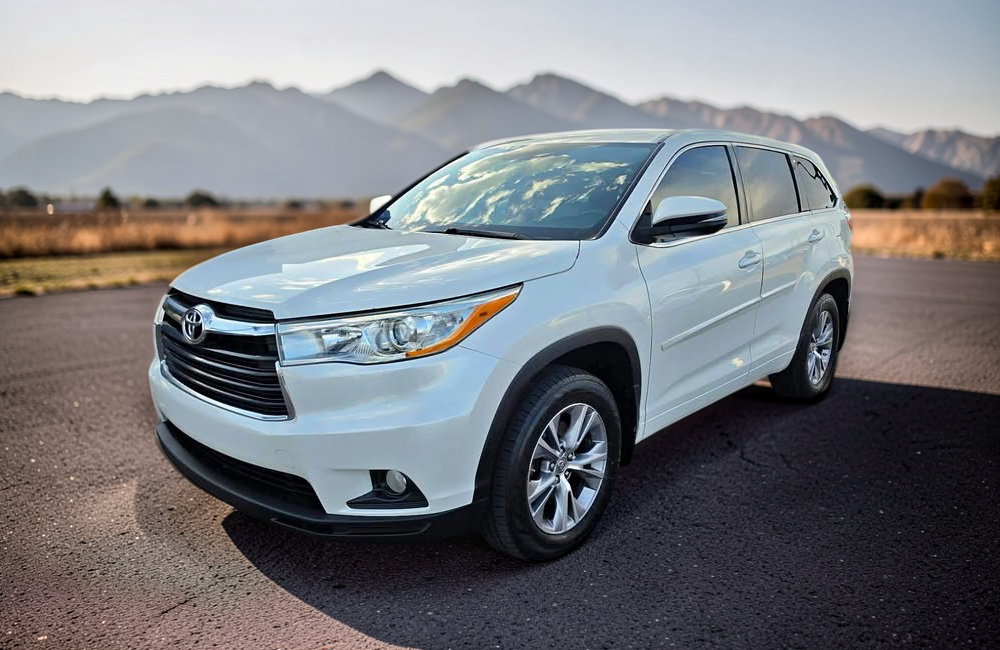
1. Which Highlander years need the closest look?
Start with 2003, 2008, and certain 2017–2018 V6 models
The 2003 four-cylinder, 2008 V6, and certain 2017–2018 V6 models deserve close inspection because Toyota documented potentially expensive repairs associated with those vehicles. These are inspection priorities, not proof that each vehicle will fail.
On certain four-cylinder Highlanders from 2001–2007, Toyota issued T-SB-0015-11 for damaged cylinder-head-bolt threads in the 2AZ 2.4-liter engine. The condition can compromise the head-gasket seal and lead to coolant loss or overheating. The bulletin includes 2003 and 2007 vehicles, but applicability depends on the engine and Toyota’s listed vehicle-identification codes. It does not apply to every Highlander powertrain.
A 2008 V6 needs two separate oil-line checks. Certain vehicles were included in Toyota’s 90K limited-service campaign for deterioration of the VVT-i oil-supply hose. Toyota also issued ZE2, a warranty enhancement for leaking engine-oil-cooler pipes on certain 2008–2011 Highlanders and certain 2011 Highlander Hybrids. One repair does not clear the other.
Certain 2017–2018 V6 Highlanders use the UA80 eight-speed automatic transmission and may qualify for Toyota’s ZJC customer-support program. Toyota described an insufficiently bent washer tab that could allow an internal nut to loosen and damage the transmission. Possible symptoms include whine, harsh shifts, reduced power, and warning lights. The program applies only to eligible vehicles and confirmed damage; it is not a recall for every 2017 or 2018 Highlander.
A 2010 recall or a sore back needs a different judgment
A 2010 Highlander needs its engine, condition, and accelerator-pedal recall history checked together. Recall 10V-023 involved floor-mat interference that could trap the accelerator. Recall 10V-017 involved friction inside certain accelerator-pedal assemblies that could slow pedal return. They were separate campaigns with separate remedies.
A completed repair should be tied to the VIN and the campaign number. A receipt for “pedal work” alone may not show which campaign the shop completed. A repaired vehicle is not automatically unsafe, but an open recall should be resolved through Toyota before purchase whenever possible.
For 2015, owner complaints commonly mention seat comfort, wind noise, or infotainment behavior. Those complaints do not establish a year-wide engine or transmission defect. Spend enough time behind the wheel to judge lumbar support, road noise, and the audio and phone functions. A short dealership-lot drive can miss discomfort that develops over a longer trip.
Complaint counts cannot price the repair ahead of time
Raw complaint totals do not show the odds of a breakdown. Sales volume, vehicle age, mileage, reporting habits, and maintenance history all affect complaint counts. An owner complaint records an experience, but it does not always confirm the failed part.
A technical service bulletin gives technicians a repair path for a defined condition. It does not show what percentage of vehicles developed that condition. Recall completion, VIN-specific campaign history, and detailed repair invoices tell you more about the Highlander in front of you.
Repair records should name the work performed. An invoice that says only “engine repaired” does not establish whether damaged head-bolt threads were repaired. A head-gasket replacement alone does not prove that the block was checked or that thread inserts were installed.
2. Early four-cylinder engines can lose head-bolt clamping force
Coolant loss can lead back to the block
Head bolts hold the cylinder head against its gasket. On certain 2AZ-FE engines, damaged threads in the aluminum block can reduce the bolts’ ability to maintain the required clamping force. The gasket may then lose its seal, allowing coolant to escape.
Toyota’s T-SB-0015-11 covers specified 2001–2007 four-cylinder Highlanders. It does not give a fixed mileage at which the condition occurs. Coolant loss or overheating deserves diagnosis, but neither symptom alone proves damaged head-bolt threads.
A fresh gasket does not restore damaged threads
A new head gasket still needs firm, even pressure from the head bolts. If the block threads cannot hold that load, replacing the gasket alone leaves the underlying problem unresolved.
Toyota’s documented repair uses Time-Sert M11 × 1.5 inserts in the specified repairable holes after the block is prepared. The procedure also identifies holes that require block replacement if damaged rather than insert repair.
Past overheating also calls for checking the cylinder head for warping or cracks. Ask for the machine shop’s findings along with the thread-repair invoice. A repaired bolt hole can hold a bolt while a damaged cylinder head still leaks.
A 2007 badge does not clear the engine
Toyota’s bulletin includes specified 2007 four-cylinder Highlanders. A seller’s claim that the final model year escaped the concern needs evidence. The diagnosis applies to the 2AZ engine, not to the V6.
Do not treat the bulletin as a recall or as evidence of a known failure percentage. The practical buying question is whether the vehicle has overheating history and whether any prior head-gasket repair addressed the block threads correctly.
3. Older V6 models need two separate oil-line checks
| Documented condition | Affected Highlanders | What the repair record should name |
|---|---|---|
| VVT-i oil-supply hose deterioration, limited-service campaign 90K | Certain 2008 Highlander vehicles and VINs | VVT-i oil-supply hose replacement |
| Engine-oil-cooler pipe leakage, warranty enhancement ZE2 | Certain 2008–2011 V6 Highlanders and certain 2011 Highlander Hybrids | Engine-oil-cooler pipe assembly replacement |
“Oil line replaced” leaves too much unanswered
The 90K campaign replaces the rubber hose supplying the VVT-i actuator. Toyota’s instructions specify a new hose and clamps. The campaign expired on December 31, 2021, so current coverage should not be assumed.
ZE2 concerns the engine-oil-cooler pipe assembly. Toyota requires the leak or seepage to be confirmed and limits eligibility by vehicle identification, equipment, and coverage terms. The program’s primary coverage ended January 31, 2016; secondary coverage depended on the vehicle’s first-use date and mileage. That date was not a universal expiry for every vehicle.
A trailer hitch alone does not prove that a vehicle has the equipment listed in Toyota’s eligibility criteria. Match the VIN and the installed plumbing to Toyota’s records.
Fresh oil underneath can mean pressure is falling
A leaking pressurized oil line can drain oil while the engine runs. As the oil level drops, the engine can lose lubrication. Toyota identified abnormal engine noise and an oil-pressure warning as possible signs of the VVT-i hose leak.
If the oil-pressure light comes on while driving, pull over safely and shut the engine off. Do not keep driving to find the drip. A short trip to a repair shop can turn a hose repair into major engine damage.
Oil spread beneath the engine does not prove that the timing cover needs resealing. The shop must trace the leak before quoting that repair. A replacement line stops a leak but cannot reverse damage caused by earlier oil supply loss.
A steering clunk is a separate repair
A clunk, pop, or knock while turning deserves its own diagnosis. Toyota T-SB-0034-13 covers certain 2008–2013 Highlander and Highlander Hybrid vehicles. It identifies an updated intermediate steering shaft, part number 45220-48171, as the repair for the specified condition.
The shaft connects the steering column to the steering gear. Worn suspension joints can also make noise, while binding steering requires immediate investigation. An alignment will not repair wear inside the shaft.
For the confirmed bulletin condition, Toyota specifies shaft replacement followed by a road test. The listed torque for each specified shaft bolt is 35 N•m, or 26 lb-ft.
4. Early hybrids can bring brake and inverter bills
Brake programs differ by year and component
| Highlander Hybrid vehicles | Toyota program | Documented repair concern |
|---|---|---|
| Certain 2006–2007 models | ZG1 | Brake-actuator assembly malfunction |
| Certain 2008–2010 models | ZKC | Brake-actuator and brake-booster-pump malfunctions |
| Certain 2011–2013 models | 21TE03 | Brake-booster and booster-pump faults |
A model-year badge alone does not establish eligibility. Have Toyota check the VIN and confirm whether the relevant campaign was completed.
Brake warning lights need more than an engine-code scan
Brake, ABS, or traction-control lights call for a scan of the brake-control module. A basic engine-code reader may miss those faults. Under ZKC, Toyota lists C1391, C1252, C1256, and C1253 as possible codes used in diagnosing the covered condition.
Those codes are diagnostic evidence, not automatic proof that a particular part has failed. The installed repair cost can include diagnosis, labor, brake fluid, and bleeding. For a confirmed ZKC condition, Toyota specifies replacing the brake actuator and booster-pump assemblies.
The programs had time and mileage limits. An old owner letter does not establish free repairs today. Confirm current eligibility with Toyota.
A healthy battery does not clear an inverter recall
Recall 13V-396 concerns certain 2006–2010 Highlander Hybrids. Excess heat could damage transistors in the inverter’s Intelligent Power Module. Warning lights and reduced driving power could occur, and in some cases the hybrid system could shut down while the vehicle was moving.
Recall 11V-342 affected a narrower group of certain 2006–2007 Highlander Hybrids. Vehicles repaired under the earlier campaign were excluded from the later recall population.
These inverter recalls are separate from an aging traction battery. A battery-health test cannot establish whether the inverter recall repair was completed. Request Toyota’s campaign history and the repair entry for the VIN.
5. Some transmission faults need more than a software update
A small washer tab can lead to major damage
Inside certain 2017–2018 V6 UA80 transmissions, a washer tab was intended to keep an internal nut from turning loose. Toyota said some tabs were not bent far enough during assembly. The nut could loosen over time and damage the transmission.
Toyota’s ZJC customer-support program lists transmission whine, harsh shifting, reduced power, and warning lights as possible symptoms. The program applies to certain Highlander and Sienna vehicles with eligible UA80 transmissions. It is not a recall and does not establish that every 2017 or 2018 Highlander will fail.
The coverage clock starts with first use
ZJC’s secondary coverage lasts 10 years from the vehicle’s date of first use, regardless of mileage, subject to the program’s conditions. Primary coverage ended October 31, 2020. Toyota must verify the VIN, original in-service date, transmission eligibility, and any previous transmission replacement.
T-SB-0160-18 uses transmission serial numbers, test results, fluid-temperature data, input-speed data, symptoms, and diagnostic codes to establish whether the documented repair applies. A whine alone is not enough.
For a qualifying transmission, Toyota specifies replacement. The shop must then match the engine-control software to the replacement gearbox. Mismatched hardware and software can cause harsh shifts or shift flare, in which engine speed rises during a shift.
A 2021 whine has a different repair trail
Certain 2021 Highlanders fall under T-SB-0008-21 for a whine or grind linked to front-carrier-assembly pinion shafts. The bulletin applies only to UA80E or UA80F transmissions in specified serial-number ranges.
That is a separate documented condition from the earlier washer-tab issue. It does not grant ZJC’s 10-year coverage to 2021 models. Confirm the noise, transmission build range, and applicable repair before relying on the bulletin.
The Hybrid avoids this gearbox, but still needs testing
Highlander Hybrids use an electronically controlled continuously variable transmission, or eCVT. They do not use the V6’s stepped UA80 eight-speed automatic, so the specific UA80 concerns described above do not apply to the Hybrid’s transmission.
The Hybrid still needs assessment of its traction battery, brake hardware, inverter history, and stored hybrid faults. A smooth test drive does not measure battery capacity or prove that the brake actuator is sound. An engine-only code reader cannot clear faults stored in separate brake and hybrid-control modules.
6. Open recalls can change the purchase decision
Match the recall to the part that can fail
| Campaign | Highlander scope | Fault and specified repair |
|---|---|---|
| 10V-023 | Certain 2008–2010 Highlander and Highlander Hybrid vehicles | Floor-mat interference could trap the accelerator; Toyota specified accelerator/pedal and mat-related corrective work |
| 10V-017 | Certain 2008–2010 vehicles | Friction in the accelerator-pedal assembly could slow return; Toyota later specified a reinforcement bar or pedal replacement where needed |
| 20V-682 / Toyota 20TA02 | NHTSA filing: certain 2017–2018 vehicles; Toyota consolidated campaign: certain 2017–2019 vehicles | Fuel-pump failure could cause loss of motive power or stalling; replace the affected fuel-pump assembly |
| 20V-633 / 20TA14 | Certain 2020 Highlander and Highlander Hybrid vehicles | Incorrect front-seat trim covers could affect side-airbag deployment; inspect and replace affected covers |
| 23V-865 / 23TA15 | Certain 2020–2021 Highlander and Highlander Hybrid vehicles | Passenger-seat occupant sensors could short and affect airbag deployment; inspect and replace affected sensors |
| 26V-128 / 26TA06 | Certain 2021–2024 Highlander and Highlander Hybrid vehicles | Second-row seatbacks might not lock after adjustment; replace the recliner return springs |
The campaign number and filing date do not always match the affected model years. For example, 23V-865 was filed in 2023 but concerns certain 2020–2021 vehicles. Recall 26V-128 was filed in 2026 and concerns certain 2021–2024 vehicles.
A clean dashboard does not close a recall
These selected campaigns do not replace a full VIN recall check. Build dates, installed parts, equipment, and prior repairs determine eligibility. Ask Toyota for the campaign history alongside a current open-recall check.
A completed repair should identify the campaign number, date, and work performed. A fuel-pump invoice does not establish that the passenger-seat sensors or recliner springs were repaired.
Safety recalls, limited-service campaigns, customer-support programs, and warranty enhancements have different terms. A limited-service campaign can expire, while a warranty enhancement covers a defined fault within stated limits. None of these categories should be treated as a vehicle-wide failure-rate study.
7. Newer Highlanders have different inspection priorities
A/C tubing can corrode beneath 2020–2024 vehicles
Weak A/C on a 2020–2024 Highlander can come from a leak or corrosion in the rear underbody A/C tube assembly. Toyota’s T-SB-0021-26, issued March 18, 2026, addresses the condition on 2020–2023 vehicles and certain 2024 vehicles built before specified production changes.
Adding refrigerant may restore cold air briefly, but it will not seal a damaged tube. Toyota’s procedure calls for replacing the applicable tube assembly, evacuating and recharging the refrigerant, and confirming operation. The bulletin lists 3.5 flat-rate hours for the specified repair. That is a labor allowance, not a retail price or promised turnaround time.
The bulletin is condition-based and is not a blanket recall. Confirm the leak location and VIN eligibility before assuming Toyota will cover the repair.
AWD Hybrids have another exposed connection
Certain 2020–2024 Highlander Hybrid AWD models fall under Toyota’s 25TD01 limited-service campaign. Water, mud, or road salt can enter the rear traction-motor cable connector and promote corrosion. This high-voltage connection is separate from the A/C tubing.
Toyota lists AM-radio static during certain driving conditions and a no-start condition as possible symptoms. Radio noise alone does not confirm cable damage. Diagnosis must establish the cause.
Leave inspection and repair to a qualified hybrid technician. The orange cable carries high voltage and requires Toyota’s shutdown, zero-voltage, and insulated-glove procedures. Do not unplug the connector or scrape corrosion from its terminals during a buyer inspection.
Cable coverage has a September 2028 deadline
For eligible vehicles, completing 25TD01 by September 30, 2028 is required to retain the expanded 22TE09 coverage of 10 years from first use with unlimited mileage. If the campaign is not completed by the deadline, Toyota states that coverage reverts to 8 years or 100,000 miles from first use, whichever comes first.
The expanded coverage is conditional and VIN-specific. An earlier cable replacement does not prove that 25TD01 was completed. Have Toyota confirm the campaign status even if the seller has a cable-repair invoice.
8. The 2023 turbo needs evidence behind its reputation
More pulling power does not prove longer life
Toyota replaced the gasoline Highlander’s 3.5-liter V6 with the T24A-FTS 2.4-liter turbo for 2023. Toyota’s 2023 brochure lists 265 horsepower and 310 lb-ft of torque from 1,700–3,600 rpm.
The turbocharger adds bearings, oil lines, and charge-cooling hardware that the earlier V6 did not need. Those parts create additional inspection points, but their presence does not establish poor engine life. Power figures do not prove durability.
Toyota’s earlier launch material lists 309 lb-ft, while the 2023 brochure lists 310 lb-ft. Use the brochure’s 310 lb-ft specification for the 2023 model rather than treating the difference as a separate reliability issue.
A 5,000-mile visit does not always mean an oil change
Toyota’s 2023 U.S. maintenance guide schedules routine maintenance at 5,000 miles or six months, whichever comes first. Under normal conditions, the engine oil and filter are generally scheduled at 10,000 miles or 12 months when the specified 0W-20 oil is used.
Toyota lists shorter oil-service intervals under special conditions, including driving mainly on dirt or dusty roads. Towing, using a car-top carrier, or carrying heavy loads can add other inspections and fluid services. The guide’s special-condition requirements apply when most driving occurs under the listed conditions, not because of one occasional trip.
A service stamp alone does not show which oil the shop used or whether it changed the filter. Passing 5,000 miles does not automatically damage the turbo; oil level, oil grade, time, and driving conditions matter.
A newer badge cannot explain a warning light
Judge a 2023–2026 example by its service records, current faults, applicable campaigns, and remaining coverage. A seller’s claim that a warning light “just needs software” should be supported by a repair order identifying the stored code and the bulletin or test that supports the fix.
Toyota T-SB-0081-23 documents a condition in some 2023 T24A-FTS Highlanders involving DTC P05CE00 and an ECM calibration update. The bulletin does not establish a fleet failure rate or prove that every warning light has the same cause.
9. Which Highlanders deserve a place on your shortlist?
The 2014–2016 V6 keeps the six-speed
A maintained 2014–2016 gasoline V6 can be worth considering if you want the 3.5-liter V6 paired with a six-speed automatic. The newer gasoline V6 and eight-speed combination arrived for 2017, although the 2017 four-cylinder LE and Hybrid have different powertrains.
That leaves 2015 in contention when the individual vehicle passes inspection and the seats suit your back. Test the transmission cold and fully warm, including shifts after slowing for a turn. Delayed engagement, slipping, or a hard bang into gear still needs diagnosis.
Toyota made Safety Sense P standard on the 2017 Highlander. Do not assume a 2014–2016 example has the same collision-warning and automatic-braking features.
A 2017–2019 Hybrid skips the UA80
The 2017–2019 Highlander Hybrid combines the updated styling and safety equipment with an electronically controlled CVT/eCVT rather than the V6’s UA80 eight-speed automatic. That makes it a candidate for shoppers who want those features without the specific UA80 transmission concern.
This is a hardware comparison, not proof that these are Toyota’s most reliable years. Battery condition still needs testing, especially when comparing vehicles with different mileage and storage histories. Have a hybrid shop assess battery data under load and scan the brake and hybrid modules.
A dashboard charge gauge shows the battery’s current charge, not its remaining capacity. Repair invoices should identify battery, inverter, or brake-actuator work. “Hybrid serviced” could mean little more than routine maintenance.
A 2021–2022 Hybrid needs proof beneath the floor
A 2021–2022 Hybrid can belong on the comparison list when its price and condition justify the newer model. Have the shop inspect the underbody A/C tubes and, on AWD models, the rear-motor cable connection. Toyota documents separate A/C leak and high-voltage connector concerns at those locations.
Match the VIN to current recall and campaign records. Confirm completion of 25TD01 where applicable. Its deadline and coverage terms are separate from the traction-battery warranty.
For new 2020-and-later Toyota hybrids, battery coverage is 10 years from first use or 150,000 miles, whichever comes first. Buying used does not restart that coverage clock. The battery warranty does not cover every high-voltage component.
Sources & References
- Toyota T-SB-0015-11: Cylinder Head Bolt Threads Damaged (2AZ-FE)
- Toyota Limited Service Campaign for VVT-i Oil Line
- NHTSA/Toyota 90K campaign instructions
- NHTSA/Toyota ZE2 oil-cooler bulletin
- NHTSA/Toyota T-SB-0034-13 steering-shaft bulletin
- NHTSA/Toyota ZG1 brake program
- NHTSA/Toyota ZKC brake program
- NHTSA recall 11V-342
- NHTSA recall 13V-396
- NHTSA/Toyota ZJC UA80 transmission program
- Toyota T-SB-0160-18
- Toyota T-SB-0008-21
- NHTSA recall 20V-682
- NHTSA recall 20V-633
- NHTSA recall 23V-865
- NHTSA recall 26V-128
- Toyota T-SB-0021-26 A/C underbody tube
- Toyota 22TE09 update
- Toyota 25TD01 limited-service campaign
- 2023 Toyota Highlander brochure
- 2023 Toyota Highlander Warranty & Maintenance Guide
- Toyota T-SB-0081-23
- Toyota announcement for the next-generation electric Highlander
- Toyota 2020-plus hybrid-battery warranty announcement