
The sliding door opens, but the eighth seat needed for tomorrow’s carpool is missing. That’s the problem with Toyota Sienna trim levels. Moving up the range can mean losing a seat, even as the price climbs.
The 2026 Sienna starts at $41,320 and reaches $58,710 before delivery fees. Every trim shares the same 245-hp hybrid, but seating, comfort, suspension tuning, and AWD availability change.
This guide breaks down what each trim buys, which versions seat 8, where the extra money goes, and how equipment differs across model years.
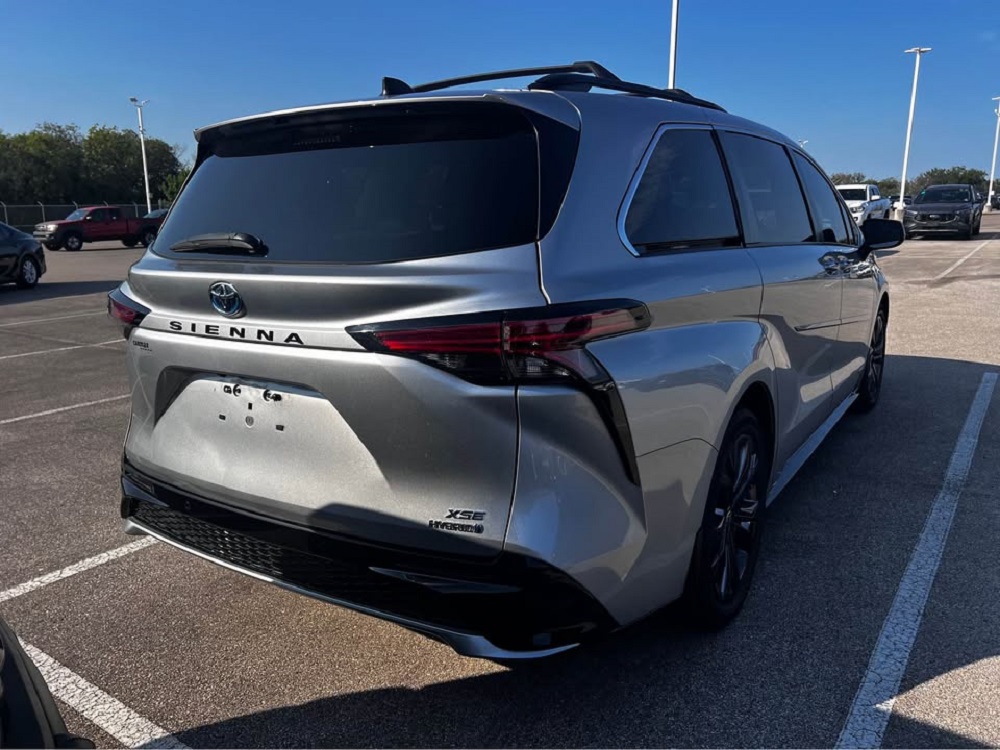
1. Check the Model Year Before Comparing Sienna Trims
The Old SE and New XSE Tell Different Stories
A 2020 Sienna SE and a 2026 XSE both wear sporty badges. But they come from different generations, with different engines, transmissions, and cabin layouts.
The 2020 Sienna offered 5 main trims: L, LE, SE, XLE, and Limited. Its 3.5-liter V6 produced 296 hp and used an 8-speed automatic transmission.
Toyota also offered SE Premium, XLE Premium, and Limited Premium packages. Depending on the grade, they added features such as upgraded audio, navigation, and rear-seat entertainment.
For 2020, the Nightshade package brought black wheels, badges, and exterior trim to SE and SE Premium models. It didn’t change the V6’s output.
The 2021 redesign replaced that lineup with LE, XLE, XSE, Limited, and Platinum. Every version switched to a 2.5-liter hybrid with 245 total system horsepower and an electronic continuously variable transmission (eCVT).
The XSE took over the sporty role once held by SE. Its firmer suspension and sport styling carried that theme forward, but the V6 was gone after 2020.
Woodland, Anniversary, and Premium Badges Have Their Own Dates
Toyota added the Woodland Edition for 2022. It came with standard AWD, extra ground clearance, a tow hitch, and a 1,500-watt inverter.
For 2023, Toyota introduced the 25th Anniversary Special Edition. Based on the XSE, it added leather-trimmed heated and ventilated front seats, memory settings, and second-row ottomans.
Neither edition increased engine output. Both retained the hybrid’s 245-hp system rating.
The 2024 model year brought another change. Toyota introduced an XSE Premium Package with leather seats, front-seat ventilation, driver memory, and a power-adjustable steering column.
That matters when shopping used. A 2024 XSE with ventilated leather seats has equipment that a standard XSE lacks. Check the factory options or window sticker before comparing prices.
The 2025 Refresh Changed the Cabin, Then 2026 Added More
The 2025 Sienna received Toyota’s updated multimedia system. The LE had an 8-inch touchscreen, while the XLE, XSE, Woodland, Limited, and Platinum had a standard 12.3-inch touchscreen. Those higher grades had used 9-inch screens in 2024. A 12.3-inch digital instrument cluster also became available on XSE and above.
Toyota added its radar-based Advanced Rear Seat Reminder that year. The 60-GHz radar scans the second and third rows, but its warning sequence has specific conditions: the vehicle must be shifted to Park and turned off, the driver’s door opened and closed, and the vehicle locked. If movement remains and no door has been opened, the system can sound the horn about 90 seconds after its initial warning. Leaving the vehicle unlocked disables that horn sequence.
The built-in vacuum and FridgeBox also arrived for 2025. Both became standard on Platinum and optional on Limited.
For 2026, Toyota concentrated on adding standard equipment to existing trims.
The LE gained a power liftgate and standard third-row window sunshades; second-row sunshades were already standard. The 2026 LE also has an 8-speaker audio system and a windshield wiper de-icer. XLE gained standard roof rails and the option to order JBL audio separately.
XSE received the biggest audio change. Its 12-speaker JBL premium system became standard for 2026, whereas earlier XSE models required an optional package to get JBL.
2. Compare 2026 Sienna Prices Without Mixing Drivetrains
What Each Trim Costs With FWD or AWD
| 2026 Sienna trim | FWD MSRP | AWD MSRP |
|---|---|---|
| LE | $41,320 | $43,320 |
| XLE | $46,020 | $48,020 |
| XSE | $49,245 | $50,135 |
| Woodland Edition | Not offered | $52,100 |
| Limited | $52,005 | $54,005 |
| Platinum | Not offered | $58,710 |
These are Toyota’s U.S. base prices as of November 11, 2026. A $1,595 delivery, processing, and handling charge applies separately.
Factory packages, accessories, taxes, and dealer charges aren’t included. A Platinum AWD starts at $60,305 once Toyota’s delivery charge is added, before other costs.
The AWD Price Jump Isn’t the Same on Every Trim
Adding AWD costs $2,000 on LE, XLE, and Limited. XSE is different, with an AWD premium of just $890.
The XSE also changes wheels with drivetrain choice. FWD models get 20-inch alloys, while AWD versions use 18-inch wheels. That makes the price difference harder to judge on drivetrain alone.
Woodland Edition comes with AWD as standard. At $52,100, it costs $1,905 less than Limited AWD, despite offering a standard tow hitch and 1,500-watt inverter.
The gap can shrink once factory options enter the picture. Compare actual window stickers, especially when an XSE or Limited has added packages.
AWD also brings a small fuel economy penalty. Toyota rates FWD Siennas at 36 mpg combined and AWD models at 35 mpg.
3. LE and XLE Handle Most Family Needs
LE Covers the Basics Without Feeling Bare
The 2026 Sienna LE starts at $41,320 with FWD. It seats 8 and comes with fabric upholstery, an 8-way power driver’s seat, and 17-inch alloy wheels. The front passenger seat still adjusts by hand.
Three-zone climate control handles cabin temperatures. An 8-inch touchscreen supports wireless Apple CarPlay and Android Auto, while a separate 7-inch display shows driving information. Wireless phone charging and an 8-speaker audio system are standard.
Toyota also gives the LE dual power sliding doors, rear sunshades, and a power liftgate for 2026. Push-button start comes standard, but the broader Smart Key door-access system belongs to higher trims.
The LE’s biggest advantage is its standard 8-seat layout. You don’t need to spend more to carry an extra passenger.
XLE Adds the Comfort Features Families Actually Use
Moving from LE FWD to XLE FWD costs another $4,700. Most of that money goes toward seating comfort, cabin controls, and easier entry.
The XLE replaces fabric with SofTex synthetic upholstery and adds heated front seats. The passenger gets 4-way power adjustment, while the driver keeps an 8-way power seat with lumbar support.
Four-zone climate control lets front and rear passengers adjust temperatures separately. A power tilt-and-slide moonroof also comes standard.
Hands-free sliding doors make loading easier when your arms are full. The Smart Key system expands access beyond the LE’s basic remote entry setup.
XLE also gains front and rear parking assistance with automatic braking. The system provides audible and visual warnings and, in certain conditions, may automatically apply the brakes when contact with a stationary object or vehicle is possible.
Front-seat ventilation remains absent from the standard XLE. That feature belongs higher in the lineup.
XLE Gets a Bigger Screen, but JBL Still Costs Extra
The XLE upgrades to a 12.3-inch center touchscreen. That’s a noticeable jump from the LE’s 8-inch display, especially when using maps.
The larger screen doesn’t bring a fully digital instrument cluster. XLE retains the 7-inch driver information display found in LE.
Both trims use an 8-speaker audio system as standard equipment. XLE buyers can add Toyota’s 12-speaker JBL system with a subwoofer and amplifier.
That option matters when comparing an equipped XLE with the sportier XSE, which includes JBL as standard for 2026.
The base-price gap between XLE and XSE is $3,225 with FWD or $2,115 with AWD, before factory options.
4. XSE Brings Sportier Handling and a Sharper Look
Firmer Suspension Changes How the Sienna Rides
The 2026 Sienna XSE has aggressive styling and a sport-tuned suspension. Toyota uses different spring rates and stabilizer bars, plus revised absorber damping, to prioritize handling.
The setup aims to reduce body lean during quick turns. But sharper bumps and broken pavement may feel more pronounced than in an XLE. Toyota doesn’t publish a measured ride-comfort difference.
Wheel size also depends on drivetrain choice. FWD models wear 20-inch dark alloy wheels, while AWD versions use 18-inch wheels. Both come with the XSE’s sport suspension.
A black mesh grille, sculpted bumpers, dark exterior accents, and sport side trim complete the look. These changes give XSE a distinct appearance without increasing engine output.
Road feel matters more than the styling photos suggest. Test an XSE and XLE over the same uneven pavement, especially if passengers regularly use the third row.
XSE Adds Digital Gauges, JBL Audio, and Sport Seats
Inside, XSE brings several upgrades over XLE. A 12.3-inch digital instrument cluster replaces the smaller 7-inch driver display, with configurable driving information behind the steering wheel.
The center touchscreen remains 12.3 inches, matching XLE. For 2026, Toyota makes the 12-speaker JBL premium audio system standard on XSE. It includes a subwoofer and amplifier.
Heated SofTex sport-trimmed front seats feature an embossed pattern and accent stitching. The cabin also gets darker trim and a gloss-black center console finish.
These seats look different from XLE’s standard SofTex upholstery. However, XSE doesn’t include the ventilated leather front seats found on Limited.
Seating capacity stays at 7, with second-row captain’s chairs. There’s no factory 8-seat XSE configuration.
Under the hood, the same 2.5-liter hybrid produces 245 total system horsepower. The sport package doesn’t change that rating, and XSE starts at $49,245 with FWD or $50,135 with AWD.
5. Woodland Adds AWD and Gear for Outdoor Trips
What the $4,080 Upgrade Over XLE AWD Buys
The 2026 Sienna Woodland Edition starts at $52,100 with AWD standard. That’s $4,080 above XLE AWD, with several upgrades aimed at camping and outdoor travel.
A factory tow hitch and 1,500-watt AC inverter come standard. The inverter provides household-style power for camping equipment and small appliances through 2 outlets.
Woodland also gets 18-inch dark alloy wheels and extra ground clearance. Toyota describes the increase as nearly half an inch. That helps on uneven campground entrances and gravel roads, but deep ruts can still catch the underbody.
Inside, Woodland adds black SofTex sport seats with caramel-colored stitching and special all-weather floor and cargo mats. A 12.3-inch digital instrument cluster and 12-speaker JBL audio system also come standard.
The cabin seats 7, with second-row captain’s chairs. Like every other 2026 Sienna, Woodland produces 245 total system horsepower.
The Tow Hitch and Roof Rails Have Limits
Woodland comes with roof rails, but crossbars are optional. You’ll need those crossbars and suitable mounts for many rooftop cargo boxes, bikes, or kayaks.
Toyota warns that its genuine Woodland hitch requires removing or disabling the rear liftgate’s kick sensor. The sensor setting should then be switched off.
AWD helps the rear wheels gain traction on loose or slippery ground. Yet Woodland still uses a road-focused suspension and tires. Its small clearance increase doesn’t make it suitable for deep mud or rocky trails.
With Toyota’s towing package, the Sienna’s maximum trailer-weight rating is 3,500 pounds. Toyota does not recommend towing without that package, so the rating does not automatically apply to every trim as sold.
6. Limited and Platinum Put Passenger Comfort First
Limited Brings Leather, Ventilated Seats, and More Adjustments
The 2026 Sienna Limited starts at $52,005 with FWD or $54,005 with AWD. It replaces XSE’s sport-focused cabin with leather-trimmed seats and more comfort features.
The front seats gain heating and ventilation. Driver’s-seat memory stores preferred settings, while a power-adjustable steering column makes it easier to find a comfortable position.
Power-folding outside mirrors help in narrow garages. They also include automatic dimming and reverse tilt-down to improve visibility when parking.
Limited comes standard with second-row captain’s chairs and ottomans. Selecting the spare tire on Limited AWD removes the ottomans.
Limited AWD costs $3,870 more than XSE AWD before options.
Platinum Adds Cameras, Heated Rear Seats, and a Head-Up Display
Platinum sits at the top of the 2026 Sienna range. It comes exclusively with AWD and starts at $58,710, a $4,705 increase over Limited AWD.
A 10-inch color head-up display projects driving information onto the windshield. This keeps speed and other selected data within the driver’s forward view.
The Panoramic View Monitor uses exterior cameras to provide an overhead view that can help when maneuvering at low speeds. It does not show the entire area around the van, so look around and confirm clearance, especially near low obstacles.
Platinum also adds upgraded LED headlights, a heated steering wheel, and heated second-row captain’s chairs. These seats come with extendable ottomans, unless the spare-tire configuration is selected.
Toyota fits a built-in vacuum and FridgeBox as standard equipment. The vacuum’s hose reaches all 3 seating rows, while the FridgeBox sits inside the center console.
An Optioned Limited Can Close the Price Gap
Limited buyers can add the vacuum and FridgeBox without moving to Platinum. That brings 2 of the flagship’s most visible cabin features into the lower-priced trim.
The price comparison changes once those options are included. A Limited AWD starts $4,705 below Platinum, but factory packages can narrow that gap.
Platinum still includes the head-up display, Panoramic View Monitor, and heated second-row seats. These features matter when comparing an optioned Limited against a base Platinum.
The FridgeBox requires vehicle power and offers cooler or freeze mode. Toyota does not specify a temperature rating or promise operation after vehicle power is off.
7. Seating Capacity Can Rule Out a Trim Before Price Does
Only LE and Certain XLE Models Seat 8
The 2026 Sienna doesn’t offer 8 seats across its full lineup. Moving above XLE means giving up the middle seat in the second row.
LE comes with 8 seats in both FWD and AWD. XLE offers an 8-seat layout with FWD, but AWD models seat 7.
| 2026 Sienna configuration | Seats | Second-row layout |
|---|---|---|
| LE FWD or AWD | 8 | Bench with stowable center seat |
| XLE FWD | 7 or 8 | Captain’s chairs or bench with center seat |
| XLE AWD | 7 | Captain’s chairs |
| XSE or Woodland | 7 | Sport-trimmed captain’s chairs |
| Limited or Platinum | 7 | Leather-trimmed captain’s chairs |
The 8-seat layout has a narrow center seat between 2 larger second-row seats. That middle seat can be removed and stored in a dedicated compartment.
Check the actual seating layout before buying. An XLE badge alone doesn’t confirm whether the van has 7 or 8 seats.
Long-Slide Seats Give Rear Passengers More Room
Seven-seat Siennas use second-row captain’s chairs with Toyota’s Super-Long-Slide feature. Toyota has described 25 inches of travel for some seven-seat Siennas, but its 2026 brochure does not specify that measurement.
Sliding the chairs backward creates generous second-row legroom. But it takes space away from passengers sitting in the third row.
Moving them forward restores third-row knee room and helps free space behind the seats. Adjust the seats only while the vehicle is stopped; Toyota warns that they may move unexpectedly and cause loss of control if adjusted while driving. Child seats can also affect how far the chairs slide and how easily passengers reach the back row.
Limited and Platinum offer second-row ottomans. Toyota says to use them only while the vehicle is stationary, stow them for entry and exit or when not in use, and never sit on them.
The Third Row Folds Away, but the Second Row Stays
The Sienna uses Toyota’s 60/40 Split & Stow third-row seats. Both sections fold into a recessed storage well behind the rear axle.
That creates a larger cargo area without removing the third-row seats. Each section can also fold separately when you need room for passengers and luggage.
The second-row chairs work differently. They’re mounted on floor tracks and aren’t designed for routine owner removal or floor stowage.
Sliding them forward opens more cargo length, but their frames and bases still occupy cabin space. This limits how much flat floor area you can create for bulky items.
Adding a Spare Tire Can Cost You the Ottomans
Limited and Platinum buyers face a less obvious seating compromise. Toyota’s 2026 specifications show that a spare tire changes ottoman availability on AWD models.
On Limited AWD and Platinum AWD, choosing the spare-tire configuration removes the second-row ottomans.
This matters when comparing used vehicles. Two Platinum models can have different second-row seats despite wearing identical trim badges.
Check beneath the rear cargo area to confirm whether the van has a spare tire or a tire repair kit. Then inspect the captain’s chairs for the folding leg rests.
A Platinum AWD equipped with the factory spare-tire configuration won’t have second-row ottomans.
8. Every 2026 Sienna Uses the Same Hybrid Powertrain
Paying More Won’t Get You a Stronger Engine
Every 2026 Toyota Sienna uses a 2.5-liter four-cylinder engine paired with electric motors. The hybrid system produces 245 total horsepower, whether you choose LE or Platinum.
An electronic continuously variable transmission (eCVT) sends power to the wheels. It doesn’t shift through fixed gears like a conventional automatic.
Under hard acceleration, the gasoline engine may hold higher RPM while the van gains speed. That’s normal hybrid behavior, though the engine can sound loud when climbing hills or passing.
The hybrid battery charges through the gasoline engine and regenerative braking. You don’t need to plug it in.
An EV mode allows brief, low-speed electric driving under suitable conditions. Battery charge, speed, and accelerator demand limit how long it stays active. The Sienna doesn’t offer plug-in electric range.
AWD Adds Rear Traction With a Small Fuel Economy Penalty
The Sienna’s Electronic On-Demand AWD uses a separate electric motor to power the rear wheels. There’s no mechanical driveshaft connecting the front and rear axles.
During normal cruising, the van can run primarily through its front wheels. The rear motor adds traction when accelerating or when conditions demand it.
That extra grip helps on wet pavement, snow, and loose surfaces. Still, AWD can’t overcome worn tires or shorten braking distances on ice.
Toyota’s EPA-estimated combined fuel economy figures show a small difference between drivetrains.
FWD models return 36 mpg combined, while AWD versions achieve 35 mpg. At 12,000 miles annually, AWD uses about 10 extra gallons based on those ratings.
Actual consumption depends on temperature, speed, load, and driving habits. Both drivetrains retain the same 245-hp total system rating.
The 3,500-Pound Tow Rating Has Conditions
With Toyota’s towing package, the 2026 Sienna is rated to tow up to 3,500 pounds. Toyota does not recommend towing without that package.
Woodland includes a factory-installed tow hitch with a 4-pin wiring connector. On other trims, confirm that the van has Toyota’s towing package before towing; adding a receiver alone does not establish that the vehicle qualifies for the 3,500-pound rating.
The rating also assumes the van stays within its weight limits. Passengers, luggage, cargo, and trailer tongue weight all count against the vehicle’s available payload.
A trailer’s tongue weight presses down on the hitch. That load reduces how much weight you can carry inside the van.
Before towing, check the specific Sienna’s door-jamb payload label and the trailer’s loaded weight. Don’t assume every trim has the same remaining payload once passengers and cargo are aboard.
The maximum trailer weight remains 3,500 pounds when the vehicle has the required towing package, even with AWD or Woodland’s standard hitch.
9. Know Which Features Come Standard and Which Cost Extra
Every Sienna Gets Toyota’s Core Safety Features
Every 2026 Sienna comes with Toyota Safety Sense 2.0 (TSS 2.0), including the base LE.
The package includes the Pre-Collision System with Pedestrian Detection, which can alert the driver and may automatically brake, along with adaptive cruise control and Lane Departure Alert with Steering Assist. Lane Tracing Assist helps center the van in its lane while adaptive cruise control is active.
Automatic high beams and Road Sign Assist are also standard. Every trim adds blind-spot monitoring and rear cross-traffic alert.
Parking equipment varies. XLE and higher trims add front and rear parking assistance with automatic braking. Platinum goes further with a Panoramic View Monitor that uses 4 cameras to show the van’s surroundings.
Toyota also includes Advanced Rear Seat Reminder on every 2026 Sienna. It uses a headliner radar sensor together with rear-door opening and closing to help identify some situations in which an object or occupant may have been left in the second or third row. It will not detect all occupants or operate in all circumstances, so drivers must not rely on it instead of checking the vehicle.
If the locked vehicle’s system detects rear-seat movement, it can flash the hazards and sound the door-lock chime. If detection persists, the horn may sound 90 seconds after the initial warning ends. App, text, or phone alerts require Toyota-app registration with notifications enabled and an active Safety Connect trial or subscription, and depend on connectivity.
Phone Features Are Standard, but Connected Services Have Fees
Wireless Apple CarPlay and Android Auto come standard on every 2026 Sienna. Both let compatible phones display maps, calls, and supported apps on the center touchscreen.
Toyota’s connected services work differently. Drive Connect adds cloud-based navigation, voice assistance, and destination support. Remote Connect allows compatible phones to control features such as door locks and remote starting.
Toyota’s 2026 connected-services materials differ on the Drive Connect trial for LE. The applicability chart lists a one-year trial on XLE, XSE, Woodland Edition, Limited, and Platinum, while listing Drive Connect on LE as available by subscription. Remote Connect trial availability also varies by trim. Wi-Fi Connect offers a trial lasting up to 30 days or 3 GB. Check trial eligibility for the specific vehicle before purchase.
Once trials expire, continued access can require paid subscriptions. Wireless CarPlay and Android Auto don’t require those Toyota subscriptions.
Rear passengers can get an optional 1080p HD Entertainment Center on XLE, XSE, Woodland Edition, Limited, and Platinum. It includes an 11.6-inch display, HDMI inputs, a remote, and 2 wireless headphones, which Toyota specifies are for passenger use only.
You’ll still need a compatible media source for HDMI playback. The screen doesn’t include every streaming service or eliminate the need for a suitable device.
The 1,500-Watt Inverter Has One Shared Power Limit
Woodland Edition includes Toyota’s 1,500-watt AC inverter as standard equipment. XLE, XSE, Limited, and Platinum can add it as a factory option.
The setup provides 2 household-style 120-volt outlets. They’re useful for camping appliances, laptops, and other equipment that needs AC power.
Unlike USB ports or the standard 12-volt accessory outlet, the inverter draws power through the hybrid’s high-voltage electrical system.
Use the outlets only while the READY indicator is illuminated; the engine may start automatically to recharge the traction battery. When parked, shift to P and set the parking brake, do not leave the vehicle unattended with an appliance connected, keep the hood closed, and do not use the outlets in a poorly ventilated or enclosed area or where the vehicle may be surrounded by snow.
Toyota rates the two outlets for 1,500 watts shared, but total power consumption must remain below 1,500 W. A 1,000-watt appliance therefore leaves less than 500 W for other loads. An appliance’s initial peak (startup) demand can exceed 1,500 W and trip the protection circuit even when its normal running draw is lower.
Sources & References
- 2020 Toyota Sienna trim and Nightshade details
- 2021 Toyota Sienna redesign and hybrid powertrain
- 2022 Toyota Sienna Woodland Edition
- 2023 Toyota Sienna 25th Anniversary Special Edition
- 2024 Toyota Sienna features and package changes
- 2025 Toyota Sienna interior updates and rear-seat reminder
- Toyota explanation of the Advanced Rear Seat Reminder system
- 2026 Toyota Sienna standard features and specifications
- 2026 Toyota Sienna brochure
- 2026 Toyota Sienna Owner’s Manual
- Toyota 2026 Connected Services and Audio Multimedia applicability chart
- U.S. Department of Energy and EPA fuel economy data for 2026 Toyota Sienna
- Toyota Sienna lineup and pricing
- Toyota delivery, processing, and handling charge disclosure