
The engine revs, your loaded ProMaster barely moves, and traffic starts piling up behind you. On older gasoline vans, the 62TE six-speed can lose hydraulic pressure, slip its clutches, or suffer torque converter failure. A bad diagnosis can turn a repairable fault into a full transmission replacement bill.
Ram switched to the 948TE nine-speed in 2022, while earlier diesel models used a very different automated manual. Each gearbox brings its own weak points, repair costs, and service demands.
This guide covers the failures, recalls, warning signs, and repair costs across ProMaster generations, including the electric model. It also explains what a shop should check before you pay for a replacement transmission.
1. Your ProMaster’s Model Year Changes the Transmission Risk
Four Gearboxes, Four Very Different Failure Patterns
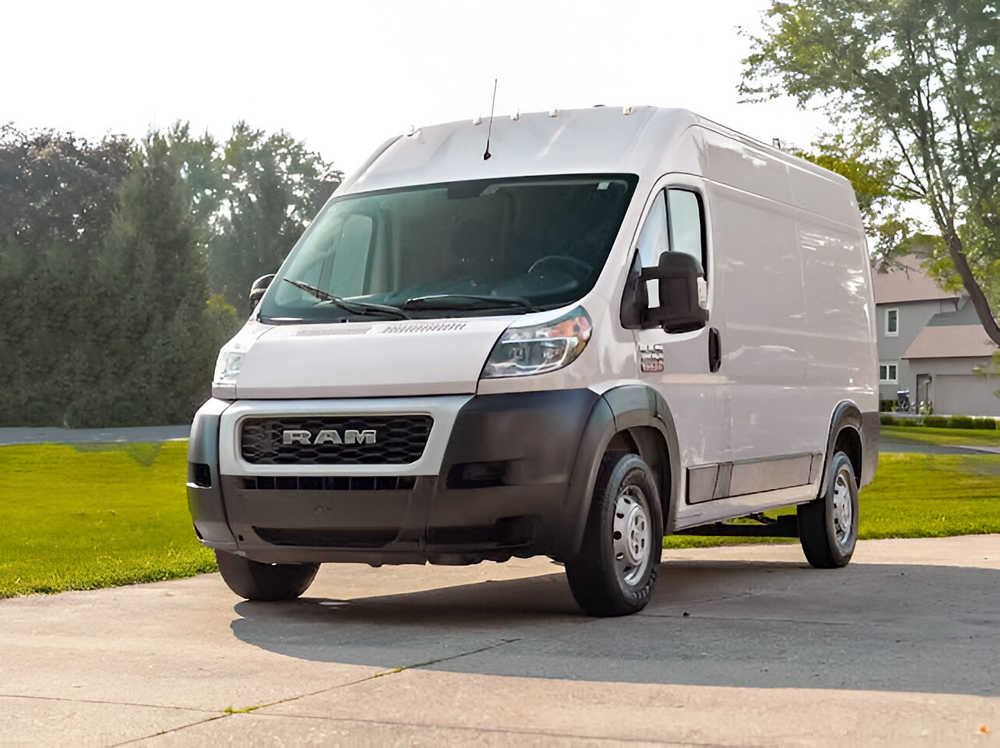
Ram ProMaster transmission problems depend heavily on which gearbox sits behind the engine. The biggest change came in 2022, when Ram replaced the gasoline van’s 62TE six-speed with the 948TE nine-speed.
Earlier diesel models used a six-speed automated manual called the M40MTA. The electric ProMaster uses a single-speed drive unit, bringing different failure risks.
| Model years | Transmission | Main trouble spots |
|---|---|---|
| 2014-2021 gasoline, 3.6L V6 | 62TE six-speed automatic | Valve body wear, low hydraulic pressure, torque converter failure, compounder damage, water contamination |
| 2014-2017 diesel, 3.0L | M40MTA six-speed automated manual | Hydraulic actuator leaks, clutch wear, damaged shift forks, gear engagement failures |
| 2022-2026 gasoline, 3.6L V6 | 948TE nine-speed automatic | Software-related Neutral engagement, reaction-shaft bushing wear, torque converter clutch faults |
| 2024-2026 ProMaster EV | Single-speed electric gearbox | Differential damage, electric drive module faults, torque-control software defects |
The 62TE has the longest full-size ProMaster failure record. Worn hydraulic controls can cause delayed shifts, while internal damage can lead to complete loss of drive.
The newer 948TE has different hardware and fault patterns. ProMaster City complaints can also mislead buyers. That smaller van used the nine-speed years before the full-size ProMaster adopted it.
Why Some Transmissions Fail Before 60,000 Miles While Others Reach 200,000
A 62TE can fail early, even with regular service. Owner reports include breakdowns near 40,000 miles and replacements between 60,000 and 125,000 miles. Other drivers report original units passing 200,000 miles.
Those figures come from individual cases, not a measured failure rate. They cannot predict how long another ProMaster transmission will last.
Delivery routes make a difference. Repeated stops force the torque converter and clutch packs to work harder. Heavy cargo, long climbs, and frequent acceleration add heat and load to the transmission.
Highway travel usually demands fewer shifts. Still, a van with 80,000 highway miles may have seen less clutch activity than one covering 40,000 miles on crowded delivery routes.
Service history matters too. A replacement transmission with 20,000 miles has a different wear history from an original unit showing 100,000 miles. Neither odometer reading reveals worn valve bores, clutch damage, or contaminated fluid.
The 2022 nine-speed also has fewer years of fleet exposure than the early six-speed vans. That limits any direct lifespan comparison.
During a used-van inspection, test Drive and Reverse engagement when cold. Then repeat the checks after the transmission reaches operating temperature. Watch for delayed engagement, rising RPM between shifts, vibration, or a sudden loss of drive.
A warm shift flare or delayed Reverse engagement needs diagnosis before purchase, regardless of mileage.
2. Check These ProMaster Recalls Before Paying for Repairs
Four Recalls That Can Cause Lost Drive or Unexpected Movement
Some ProMaster transmission failures involve defects Ram has already recalled. A failed oil pump can leave the van without drive. A damaged shift cable or park mechanism can let it roll unexpectedly.
These recalls cover different parts and model years. A van’s 17-digit VIN determines whether it qualifies for free repairs.
| Recall | Affected ProMasters | Defect and factory repair |
|---|---|---|
| S44 / 16V-461 | Certain 2016 vans | Transmission pump can seize, cutting hydraulic pressure and drive power. Dealers replace the pump. |
| W00 / 20V-036 | Certain 2014-2019 gasoline vans | Shift cable can disconnect, leaving the transmission in a different gear than the lever indicates. Dealers replace the cable. |
| 44A / 61A / 23V-301 | Certain 2019-2021 vans with the 62TE | Internal debris can block full park-pawl engagement, allowing rollaway. Repairs include software updates and transmission hardware work. |
| 98C / 25V-665 | Certain 2024-2025 ProMaster EVs | Uncontrolled motor torque spikes can damage the differential housing and cut propulsion. Dealers update software and inspect or replace the electric drive module. |
The park-pawl recall deserves special attention. Ram linked the defect to metal debris inside the transmission interfering with the pawl that locks the transmission in Park.
The electric van has a separate risk. Recall 98C covers about 760 vehicles in the U.S. Ram’s remedy includes updates to several control modules and inspection or replacement of the electric drive module when needed.
A Previous Recall Visit Doesn’t Always Mean the Repair Is Finished
The 61A park-engagement campaign creates a trap for used ProMaster buyers. Ram initially offered a powertrain control module update as an interim repair in May 2023. That update reduced the risk but didn’t complete the recall.
The final repair requires updated software and replacement of the transmission compounder or the transmission itself, as applicable. Ram’s final remedy instructions confirm this requirement. Qualifying previously installed remanufactured transmissions are an exception.
A dealer invoice showing only a software update may therefore leave the required hardware work unconfirmed. Ask for the campaign completion record and the parts replaced. The repair order should identify the work performed under 61A or 44A.
NHTSA’s VIN lookup shows unrepaired recalls, but it doesn’t list campaigns already completed. A clean result cannot prove that a previous owner received the final hardware repair. Request the dealer’s service history before relying on that claim.
Keep the parking brake applied whenever the van is parked. If Park fails to hold, stop using the vehicle and arrange recovery. The same applies if the transmission unexpectedly loses drive.
A completed software update alone doesn’t satisfy 61A unless the van meets Ram’s remanufactured-transmission exception.
3. Where the 62TE Six-Speed Starts to Fail
Delayed Shifts Can Point to Worn Valve Body Passages
Shift into Drive or Reverse, and the van hesitates before moving. Sometimes the engine revs first, followed by a hard bump as the gear engages.
The 62TE uses electronically controlled solenoids to direct transmission fluid toward its clutch packs. These clutches need enough hydraulic pressure to grip. A weak solenoid or leaking valve passage can delay engagement and let the clutches slip.
Sonnax documented a specific wear pattern in July 2025. The low/reverse and low-clutch switch valves can wear their bores inside the valve body. Oil then escapes past the valves, reducing pressure to the affected clutches.
This can cause delayed Reverse, missing Reverse, or loss of 1st and 2nd gears. Continued slipping generates heat and can burn the clutch friction material.
A worn bore needs more than a new solenoid pack. Sonnax offers repair sleeves that restore hydraulic sealing. Technicians must check bore leakage and clutch condition before deciding whether valve body repair is enough.
Torque Converter Trouble Can Shake the Van or Make It Shudder at a Stop
A ProMaster starts vibrating under light throttle, often around 35-50 mph. The shake may fade when you accelerate or release the pedal.
The torque converter clutch can cause this behavior when it slips or struggles to hold steady. Heat and worn friction material can make the clutch grab and release unevenly. The result feels like a rapid shudder through the cab.
Another failure appears as the van slows to a stop. The engine RPM drops and the van stumbles or shudders.
GEARS Magazine documented this pattern in 2022. A mechanically faulty torque converter clutch (TCC) solenoid can leave the clutch applied when the controller commands it off. The locked converter then drags the engine down as the van stops.
A technician can compare engine RPM, input shaft speed, and converter clutch commands during the fault. Replacing the converter without checking this data can miss a repairable solenoid fault.
FCA also documented a cracked converter piston in S2121000005, dated April 1, 2021. The crack can scrape friction material from the converter cover, causing slipping and erratic shifts.
The document identifies P0740 for converter clutch operation, P0868 for low line pressure, and P0944 for lost pump prime. These codes guide diagnosis but don’t prove the piston has cracked.
That fault applies to specific converter and transmission part numbers. FCA says newer-level remanufactured units and converters built after August 2017 should not have the documented defect.
Compounder Damage Can Turn Slipping Into a Full Rebuild
The 62TE has an extra gear assembly called the compounder. It sits inside the transmission and helps produce the six forward ratios.
This assembly contains a low-clutch drum, bearings, sealing rings, and retaining hardware. Wear in these parts can cause slipping, incorrect gear ratios, or loss of drive.
One known weak point sits in the low-clutch drum. GEARS Magazine documented how early rotating sealing rings wore grooves into the aluminum drum. Those grooves let hydraulic pressure leak past the rings.
Later designs used non-rotating rings to reduce groove wear. Aftermarket rebuilders also developed steel-sleeved drum repairs with stronger sealing surfaces.
Other compounder failures involve damaged bearings, worn splines, and retaining hardware. GEARS identifies P0732 and P0735 as codes that can point toward compounder trouble. These indicate incorrect gear ratios, though other faults can produce them.
The repair depends on which hard parts have failed. A grooved low-clutch drum may need replacement or machining. A damaged housing or transfer shaft adds more work.
The shop must inspect the drum grooves, bearings, snap-ring seats, and surrounding metal before quoting a rebuild. A worn drum doesn’t automatically mean the main transmission case is ruined.
A Missing Cowl Drain Can Fill the Transmission With Water
A 2019 ProMaster 2500 suddenly lost forward drive in traffic. Reverse also stopped working. The next morning, the transmission worked again.
GEARS Magazine documented this case in January 2025. The van stored no transmission fault codes, and technicians found no major metal debris in the pan.
The transmission fluid had an unusual, slimy feel. Testing ruled out coolant contamination but confirmed water in the fluid.
The cause was hiding above the transmission. A windshield-cowl drain tube had gone missing after earlier engine repairs. Rainwater could run directly onto the transmission vent.
Water changed the fluid’s behavior as it heated. The contaminated oil became thick enough to restrict flow through the filter. Eventually, the pump couldn’t maintain the pressure needed to engage the clutches.
Cloudy, beige, or milky transmission fluid should raise concern about water contamination. Dark fluid alone doesn’t prove water entry. The shop needs to test the fluid and inspect the vent, cowl drain, and cooler.
In the documented case, the shop rebuilt the transmission and fitted a replacement drain tube, part 68445329AA. It then checked that water drained away from the transmission vent.
Replacing contaminated fluid without correcting the drain leaves the same water entry path open.
4. What the Shop Must Check Before Replacing the Transmission
A Broken Mount or Damaged Axle Can Look Like Gearbox Failure
A loud clunk between Drive and Reverse can point to a failing transmission mount. Excess movement can also pull against the shift cable and change axle angles.
Certified Transmission documented a severe case involving a 2015 ProMaster in May 2019. The van lost drive at about 40 mph after its transmission mount bracket failed. The damage included a broken transmission case, damaged axles, and a snapped shift cable.
Ram’s parts guidance addresses vans built before October 23, 2015. These require updated mounting hardware, including a revised bracket and isolator, when performing the applicable repair. The specified service kit is 68461214AA.
Mounting bolts also need special attention. FCA bulletin 23-022-19 warns that the transmission bracket fasteners are single-use. Reinstalling old bolts can lead to another bracket failure.
A ProMaster that revs but won’t move also needs its front axles checked. A disconnected axle or damaged splines can interrupt power transfer even when the transmission produces torque.
GEARS Magazine identifies stripped axle splines, broken pump gears, and damaged converter splines among possible causes of lost drive. A shop should inspect axle engagement and verify hydraulic flow before removing the transmission.
Fault Codes, Fluid Pressure, and Metal Debris Tell Different Stories
A transmission warning light rarely identifies the failed part by itself. The shop needs stored fault codes, live pressure data, and fluid condition to narrow the cause.
Codes should be recorded before anyone clears them. That includes transmission temperature, gear selection, and the driving conditions that triggered the fault. Intermittent failures can disappear after restarting the engine.
Two codes deserve attention on the 62TE. P0868 means line pressure is too low, while P0944 indicates loss of hydraulic pump prime. Neither code proves that the solenoid pack or compounder has failed.
Fluid level must be checked using the correct temperature-based procedure. Low fluid can reduce pump supply and cause delayed engagement. Burnt fluid, friction debris, or metal in the pan points toward internal wear.
Software also belongs in the diagnosis. FCA’s TSB 08-076-20, dated August 29, 2020, covers certain 2018-2020 ProMasters with the 3.6L engine and 62TE.
It addresses transmission-related codes, including P0731, P0732, P083B, P0841, and P0868. After the required checks, FCA specifies an anti-lock brake system (ABS) module software update.
That bulletin matters because a transmission-related code can require attention outside the gearbox. It doesn’t excuse skipping hydraulic checks when slipping or low pressure persists.
Before approving a rebuild, ask the shop to identify the failed part and show the supporting test results. A stored P0868 code alone doesn’t justify replacing the entire transmission.
5. The Nine-Speed Has Different Problems to Watch For
The 948TE Brings Better Gearing, but Reliability Still Needs Proof
Ram replaced the 62TE with the 948TE nine-speed automatic for 2022. The new gearbox uses a different clutch arrangement, hydraulic controls, and internal gear design.
Its deeper 4.71:1 first gear helps the 3.6L V6 pull away with cargo. At highway speeds, the 0.48:1 ninth gear reduces engine RPM. The wider gear range helps balance acceleration and cruising efficiency.
The 948TE also uses mechanical dog clutches to fit nine forward gears into a compact housing. These parts differ from the 62TE’s compounder and clutch arrangement.
Early owner reports suggest fewer major mechanical failures than the older six-speed. Still, no verified fleet data proves a lower failure rate or longer service life. Problems involving software and internal bushings have already reached Ram’s service bulletins.
Software Faults Can Make 2022-2023 Vans Drop Into Neutral
A ProMaster suddenly loses drive while moving. The engine keeps running, but pressing the accelerator no longer moves the van.
Ram documented this behavior in TSB 21-050-24, dated September 26, 2024. It covers 2022 ProMasters equipped with the 3.6L V6 and 948TE transmission.
The bulletin identifies P1DCD-00, a transmission control module fault linked to monitoring multiple locked clutches. Affected vans can unexpectedly shift into Neutral.
Turning the ignition off and restarting may restore normal shifting. Ram’s specified repair is a transmission control module (TCM) software update.
A separate bulletin, 21-044-24, dated July 17, 2024, addresses the same code in certain 2023 ProMasters.
That repair also calls for updated TCM software. The shop must confirm the stored code and current software version before proceeding.
A restart that restores drive doesn’t complete the repair. An applicable van with P1DCD-00 still needs the specified calibration update.
Reaction-Shaft Bushing Wear Can Trigger Torque Converter Faults
The nine-speed also has a documented mechanical weak point. Reaction-shaft misalignment can wear an internal bushing before its expected service life.
Ram addressed this in TSB 21-040-25, dated October 2, 2025. It covers certain 2022-2025 ProMasters built on or before December 1, 2024.
The bulletin links premature bushing wear to P1DB7-00, a torque converter clutch performance code. The transmission controller can detect excessive clutch slip compared with its target.
Ram released an updated reaction-shaft service kit, part 68732959AB. However, the bulletin requires a specific measurement before that kit applies.
Technicians must check input-shaft side-to-side movement. The kit applies when the measurement exceeds 0.0010 inch (0.027 mm).
A stored P1DB7-00 code alone doesn’t confirm worn bushings. Other torque converter faults still require diagnosis, and the bulletin doesn’t authorize free repairs.
Without a shaft measurement above 0.0010 inch, the bulletin doesn’t support installing the reaction-shaft repair kit.
6. The Diesel Automated Manual Has Its Own Expensive Weak Points
The M40MTA Uses a Dry Clutch and High-Pressure Hydraulic Actuator
The 2014-2017 diesel ProMaster uses the M40MTA six-speed automated manual. It works like a manual transmission, but an electronic controller operates the clutch and selects gears.
A single dry clutch connects the engine to a dual-mass flywheel. A bolt-on hydraulic actuator handles clutch movement and gear selection. This setup eliminates the torque converter found in gasoline models.
The actuator uses an electric pump, pressure accumulator, and four solenoids. Normal operating pressure ranges from 522 to 667 psi. The controller monitors pressure and commands each shift.
A brief pause in power delivery is normal during gear changes. Long delays, repeated missed shifts, or sudden Neutral engagement point toward a fault.
Worn O-Rings and Shift Forks Can Leave the Van Stuck in Neutral
One common complaint is sudden loss of drive. The dashboard may show Neutral even though the driver selected a forward gear. Some vans refuse to engage any gear.
GEARS Magazine documented these failures in April 2022. Inside the hydraulic actuator, small O-rings separate the oil passages that control shifting. Over time, these seals can flatten and leak pressure.
When pressure escapes, the actuator may fail to complete a gear change. The controller can then command Neutral rather than engage the wrong gear.
Internal gearbox wear creates another problem. Damaged shift forks, worn engagement dogs, and damaged synchronizer sleeves can prevent gears from staying engaged.
Repeated missed shifts can point toward worn selection hardware.
A worn engagement dog can also let the transmission physically pop out of gear under load. That fault requires internal inspection rather than actuator adjustment.
The shop must check clutch operation, actuator pressure, and gear-position feedback separately. A Neutral warning alone cannot identify which part failed.
Special Tools and Scarce Parts Can Push Repair Costs Higher
The M40MTA requires special equipment for hydraulic service. Its actuator can reach pressures above 1,000 psi, making depressurization essential before opening hydraulic lines.
Technicians need a compatible scan tool to run the hydraulic depressurization and bleeding routines. Certain repairs also require clutch and gear-selection relearning.
The gearbox and actuator use separate fluid circuits. The manual gearbox takes approximately 2.9 quarts of synthetic 75W-85 gear oil. Its lubricant must not be confused with the hydraulic actuator fluid.
Parts availability adds another risk. GEARS Magazine reported limited aftermarket transmission cores in April 2022. At that time, the hydraulic actuator assembly cost about $1,000, while a complete Mopar transmission replacement ran approximately $9,200 installed.
That historical replacement quote included a 3-year/36,000-mile warranty. Current prices, parts availability, and coverage require fresh confirmation.
Before authorizing disassembly, confirm that the shop has the required scan tool and can obtain the damaged parts. For a replacement gearbox, get a verified delivery date in writing.
7. Wrong Fluid or Missed Service Can Make Transmission Damage Worse
The 62TE Needs Fresh ATF+4 at Factory Service Intervals
Ram’s 2021 ProMaster maintenance schedule calls for transmission fluid and filter changes at 60,000 miles or 6 years. The next scheduled service comes at 120,000 miles or 12 years, whichever limit comes first.
The 62TE requires ATF+4 automatic transmission fluid. Using the wrong fluid can change clutch friction behavior, cause shudder, and affect shift quality.
Checking the level also takes special equipment. The transmission has a capped fill tube instead of a conventional dipstick. A technician must measure fluid level at the specified transmission temperature.
Some independent shops recommend 30,000-mile fluid and filter changes for heavily loaded delivery vans. Frequent stops, towing, and long climbs place greater demands on the fluid. This shorter interval is preventive advice, not Ram’s factory requirement.
Fresh fluid can help maintain hydraulic pressure and clutch operation. It cannot restore worn valve bores, repair a cracked converter piston, or remove grooves from the compounder drum.
The Nine-Speed Has No Routine Fluid Change Requirement
The 948TE follows a different maintenance policy. Ram’s 2023 ProMaster manual states that routine transmission fluid and filter changes aren’t required under normal operating conditions.
However, the manual requires fluid and filter replacement when contamination occurs or the transmission is disassembled. Water entry and internal damage therefore change the service requirements.
The nine-speed uses Mopar ZF 8 & 9 Speed ATF or a documented equivalent. It must never be filled with the ATF+4 specified for the older six-speed.
Fluid level is also preset at the factory. The transmission has no ordinary owner-service dipstick, so accurate filling requires the proper tools and temperature-based procedure.
Some transmission specialists recommend earlier fluid service for vans exposed to heavy loads, heat, or repeated stop-and-go driving. Ram doesn’t specify a universal 45,000-60,000-mile replacement interval for the nine-speed. A specialist should assess the van’s duty cycle before recommending extra service.
Ram also warns against chemical transmission flushes and supplemental additives. Shudder treatments cannot repair worn converter friction material or damaged clutch packs.
Cooling Problems Need Attention, but They Don’t Prove Transmission Failure
Heat can shorten transmission fluid life, especially under heavy loads. Leaking cooler lines, restricted airflow, or a damaged transmission cooler deserve inspection when fluid temperatures climb.
The cooling layout varies by ProMaster model year and transmission. A technician should identify the actual cooler arrangement before linking a radiator or fan fault to transmission overheating.
A separate safety concern involves the radiator cooling fan. Recall 67C / B3C / C9C, also listed as 25V-720, covers certain 2018-2026 ProMasters built for fleet sale.
Ram’s October 2025 recall filing identifies premature fan-bearing wear and excessive electrical current. Inadequate fuse protection on the 400-watt fan circuit can let it overheat, creating a fire risk. The recall covers about 291,700 vehicles built from July 2017 through October 2025.
The recall calls for replacement of the cooling fan module and fuse, along with updated vehicle information. It doesn’t establish that the affected transmissions suffer higher failure rates.
Check the VIN for recall coverage. An open 25V-720 campaign requires the specified fan and fuse repair, even if the transmission shifts normally.
8. How Much ProMaster Transmission Repairs Cost
Transmission Repair Prices Vary Sharply by Gearbox and Damage
A transmission fluid service might cost a few hundred dollars. Internal clutch damage can turn that visit into a bill worth several thousand.
The 62TE has a broad remanufactured parts market, making replacement units easier to price. The newer 948TE and diesel M40MTA need separate quotes because parts, labor, and repair methods differ.
| Service or replacement | Published U.S. price | Pricing details |
|---|---|---|
| 2014-2021 ProMaster 2500 fluid service | $223-$274 | RepairPal estimate, September 2026. Excludes taxes and related repairs. |
| Remanufactured 62TE six-speed | $3,199 | Powertrain Products advertised sale price, November 2026; list price is $3,699. Labor and installation costs extra. |
| Remanufactured transmission kit for 2025 ProMaster 2500 | $3,024.50 | Mopar advertised parts price, November 2026, against an MSRP of $3,510; dealer pricing varies. Includes torque converter; core charge and installation are extra. |
| Complete M40MTA diesel transmission replacement | About $9,200 installed | GEARS Magazine benchmark from April 2022. Current pricing requires confirmation. |
The 62TE replacement price is for the transmission itself. Removing the old unit, installing the replacement, and servicing the cooling circuit add labor and parts costs.
Mopar’s remanufactured nine-speed kit also requires VIN verification. The advertised price excludes the refundable manufacturer’s core charge, which depends on returning an acceptable old unit.
The diesel’s $9,200 figure is a historical repair benchmark. GEARS published it in April 2022, when replacement cores were already difficult to source.
When a Targeted Repair Makes More Sense Than a Rebuild
A failed solenoid, damaged wiring, or outdated transmission software can sometimes be repaired without replacing the gearbox. The key is proving that the fault hasn’t damaged the clutch packs or other internal parts.
On the 62TE, a worn valve body passage may need machining or a repair sleeve. A defective torque converter clutch solenoid can also cause a stop-stumble without requiring an immediate full rebuild. Both repairs depend on hydraulic tests and fluid inspection.
Metal debris changes the estimate. Damaged compounder bearings, burned clutch packs, or a cracked converter piston can spread friction material through the transmission. The shop may need to replace damaged hard parts and clean or replace the cooling circuit.
A used transmission costs less upfront, but its history can be difficult to verify. The donor’s mileage, heat exposure, and previous repairs may be unknown. Compatibility also depends on the exact engine, model year, and transmission application.
A rebuilt unit should come with records showing which worn parts were replaced. For the 62TE, that includes inspection of the valve body, low-clutch drum, compounder bearings, and torque converter. Reusing a badly grooved drum can leave the original pressure leak in place.
Ask for separate prices covering transmission removal, internal repair or replacement, converter work, cooler service, fluid, programming, and taxes. A parts-only price leaves much of the installed bill unaccounted for.
Commercial-Use Warranty Limits Can Leave You Paying Twice
Transmission warranties often sound generous until you check the coverage terms for commercial vans. A supplier may advertise several years of coverage while offering a much shorter term for heavy-duty ProMaster applications.
Powertrain Products provides a clear example. Its remanufactured 62TE listing advertises warranty options reaching 7 years and 1 million miles. However, the ProMaster 3500 qualifies only for an 18-month/50,000-mile commercial warranty.
The same listing requires replacement of all internal and external transmission oil coolers during installation. Skipping that step voids coverage. It also instructs installers to clear windshield-cowl drains to prevent water from reaching the transmission.
Labor coverage needs close attention. A warranty may replace a failed transmission but limit the amount paid for removing and installing it. Towing, rental vehicles, and lost business time may also fall outside coverage.
Before accepting a replacement, confirm the covered labor rate, claim approval rules, commercial-use restrictions, and warranty transfer terms. If the van already has a replacement transmission, request the original invoice and warranty paperwork.
For the ProMaster 3500 unit sold by Powertrain Products, the published limit remains 18 months or 50,000 miles, whichever comes first.
Sources & References
- NHTSA Safety Recall 16V-461 – Ram ProMaster transmission pump
- NHTSA Safety Recall 20V-036 – Ram ProMaster shift cable
- NHTSA Safety Recall 23V-301 – Ram ProMaster park pawl
- FCA US Safety Recall 61A – Park Engagement Interim Repair
- FCA US Safety Recall 44A – Park Engagement Remedy Instructions, Revision 7
- NHTSA Safety Recall 25V-665 – Ram ProMaster EV torque management software
- Ram Recalls ProMaster Electric Vans Over Torque Management Software Issue – autoevolution
- Part 573 Safety Recall Report 25V-720 – Ram ProMaster cooling fan
- New 2022 Ram ProMaster Evolves Ram Commercial Offerings – Ram
- 2021 Ram ProMaster Owner’s Manual – Mopar
- 2023 Ram ProMaster Owner’s Manual – Mopar
- Ram ProMaster EV Capability and Electric Motor Stats – Ram Trucks
- On the Move With the ProMaster M40MTA… Or Not! – GEARS Magazine
- FCA’s M40MTA Transmission: A Manual Transmission With a Helper – GEARS Magazine
- Promaster 62TE Water Intrusion – GEARS Magazine
- Six-Speed Success! 62TE – GEARS Magazine
- A Compound Solution: 62TE Compounder Repair – GEARS Magazine
- Diagnosing 62TE Low/Reverse Switch Valve Issues – Sonnax
- 62TE Low/Reverse Switch Checkball Sleeve Kit – Sonnax
- FCA STAR Case S2121000005 – 62TE Cracked Torque Converter Piston Repair Index
- Mopar Fix for RAM ProMaster Transmission Bracket Breakage – Certified Transmission
- TSB 23-022-19 – Ram ProMaster Transmission Mount Bracket Fasteners
- TSB 08-076-20 – Flash: Anti-Lock Brake System Module Updates
- 2022 Ram ProMaster Powertrain Technical Service Bulletins, including TSB 21-050-24
- TSB 21-044-24 – Flash: Transmission Control Module Updates, 2023 ProMaster
- TSB 21-040-25 – 948TE Transmission Reaction Shaft Service Bushing Kit
- 948TE Nine-Speed Transmission Introduction – ATRA
- 42RLE and 62TE Transmission Fluid Level Check – CAT Products TSB 0061
- Ram ProMaster 2500 Transmission Fluid Change Cost – RepairPal
- 62TE 2014-2021 Ram ProMaster 3.6L Remanufactured Transmission – Powertrain Products
- 2025 Ram ProMaster 2500 Remanufactured Transmission Kit – Mopar Store