
Mash the throttle, boost surges, then the dash lights up. That’s how 2.0 TFSI trouble starts. Between 2005 and today, Audi ran EA113 and four EA888 generations across A3, A4, A5, TT, Q3, S3, and TTS models.
EA113 engines snap belts and chew through cam followers if ignored. EA888 Gen 2 burns oil at a quart per 1,000 miles when rings clog. Gen 3 tightens up timing but leaks coolant from plastic pump housings. Gen 4 adds hybrid hardware and GPF headaches to the mix.
This guide calls out what fails, which years carry the risk, and what fixes actually hold.
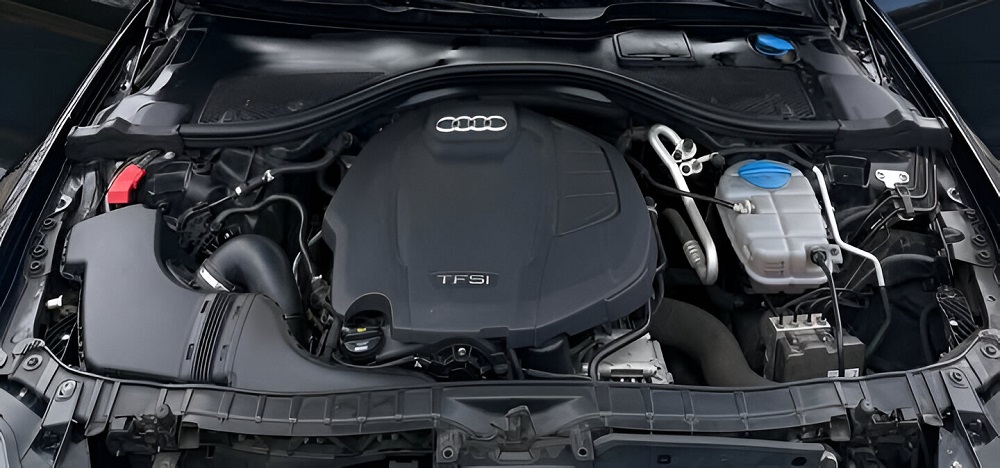
1. Generations and engine codes that decide your risk
EA113 iron block and belt drive versus EA888 chain and aluminum
Cast iron block. Timing belt. Cam-driven high-pressure fuel pump. That’s EA113 from roughly 2005 to 2009 in A4 B7 and A3 8P. The pump rides on a small coated cam follower. When the coating wears through, the cam lobe grinds into bare metal and throws P2293 fuel pressure faults.
EA888 flips the layout. Aluminum block cuts weight. A chain replaces the belt. Balance shafts sit low in the block and smooth vibration. Early chain tensioners collapse without oil pressure and let timing jump on cold start.
EA113 fails from wear you can measure. EA888 Gen 2 fails from design limits in rings and tensioners. Both share direct injection and carbon buildup that starts around 60,000 miles.
Where each version shows up in the real world
EA113 runs in 2005 to 2009 Audi A4 B7, A3 8P, TT Mk2, and early S3 8P. High-output codes like CDL and BWJ use forged pistons and K04 turbos. Stock boost sits near 10 to 12 psi on K03 cars and about 17 psi on K04 trims.
EA888 Gen 1 lands around 2008 to 2010 in early B8 A4 and some A3 models. Gen 2 follows from 2009 to 2012 with engine codes like CAEB and CDNC. Those carry the oil consumption issue that triggered piston and ring replacements under warranty in many markets.
Gen 3 appears around 2013 in A4 B8.5, A3 8V, and later TT models. Many markets get dual injection with port plus direct spray. Gen 4 Evo shows up around 2020 in A3 8Y and newer A4 and A5, adding 12V or 48V mild-hybrid systems and a gasoline particulate filter.
2.0 TFSI generations
| Engine family | Typical Audi years | Timing setup | Block material | Key strengths | Headline problems |
|---|---|---|---|---|---|
| EA113 | 2005–2009 | Belt | Cast iron | Strong bottom end, high tuning headroom | Cam follower wear, belt failure, carbon, DV diaphragm tears |
| EA888 Gen 1 | 2008–2010 | Early chain | Aluminum | Smoother, lighter, better economy | Early tensioner weakness, carbon buildup |
| EA888 Gen 2 | 2009–2012 | Chain | Aluminum | Good power, broad torque | Oil use up to 1 qt per 1,000 miles, tensioner collapse |
| EA888 Gen 3 | 2013–2020 | Updated chain | Aluminum | Stronger timing, dual injection on many | Plastic pump housing leaks, PCV failures |
| EA888 Gen 4 Evo | 2020–present | Revised chain | Aluminum | Hybrid assist, higher injection pressure | GPF clogging, complex cooling, DI-only carbon risk |
Chain stretch shows up in scan data as cam adaptation beyond -4 degrees. Oil consumption on Gen 2 can foul plugs in 5,000 miles and load the catalytic converter with ash. Belt failure on EA113 bends valves in a single crank event and drives repair bills past $3,000 for head work alone.
2. EA113 2.0 TFSI and the cam follower that eats camshafts
High-pressure fuel pump follower wear that wipes out the top end
Fuel demand rises, boost climbs, then it hesitates hard under load. Scan it and P2293 shows up. Rail pressure actual drops below specified as the pump can’t keep up.
The EA113 drives the high-pressure fuel pump off a dedicated intake cam lobe. A small coated cam follower sits between the lobe and pump piston. The coating wears through around 30,000 to 60,000 miles on many cars.
Once the coating fails, the hardened cam lobe cuts into the follower. Keep driving and the follower punches through. The pump piston then hammers the cam directly, fills the oil with metal, and destroys the lobe. A new cam, pump, and follower job runs $1,200 to $2,500 depending on damage.
Timing belt service you skip once and pay for twice
Cold start one morning, then a free-spinning crank and no compression. That’s a snapped belt. The EA113 is an interference engine with tight piston-to-valve clearance.
Audi set belt intervals around 60,000 to 80,000 miles or 5 to 7 years. Miss that window and the belt can shed teeth or snap. Pistons hit open valves in a single revolution.
Bent valves and cracked guides follow. Most shops quote $3,000 to $4,500 for head rebuild, belt kit, tensioners, and water pump. Add pistons and you’re past $5,000.
Diverter valve tears and carbon choke the airflow
Floor it and boost falls flat at midrange. The early diaphragm-style diverter valve splits under higher boost. The ECU sees underboost and logs P0299.
Audi released piston-style revisions that hold pressure better. Swap the valve and boost returns to target. Parts cost sits near $150 and labor under 1 hour.
Carbon builds on intake valves from direct injection and PCV vapor. Rough cold idle and P0300–P0304 misfires start around 60,000 to 80,000 miles. Walnut blasting runs $500 to $1,000 and restores airflow.
EA113 weak points and how they escalate
| Failure area | Mileage window | Early behavior | Failure outcome |
|---|---|---|---|
| HPFP cam follower | 30,000–80,000 miles | Hesitation, P2293, fuel pressure drop | Destroyed cam lobe and pump, metal in oil |
| Timing belt and rollers | 60,000–90,000 miles | Squeal, age cracks, unknown service history | Bent valves after belt snap |
| Diverter valve diaphragm | 40,000–100,000 miles | Underboost, soft pull, P0299 | Limp mode, lost power under load |
| Intake valve carbon | 60,000–100,000 miles | Rough cold idle, misfires | Airflow loss, compression leak at high buildup |
Neglect on this engine compounds fast. A worn follower spreads metal through the oil system. A skipped belt event bends valves in under 1 second. Repair bills cross $3,000 before machine work even starts.
3. EA888 Gen 1 and Gen 2 where oil disappears and timing jumps
Gen 2 piston rings that burn a quart every 1,000 miles
Check the dipstick every 800 miles and it’s down a quart. Many 2009 to 2012 EA888 Gen 2 engines do exactly that. Codes like CAEB and CDNC show the worst pattern.
Audi went to low-tension oil control rings to cut friction. The rings use small drain-back holes behind the scraper. Carbon plugs those holes and traps oil on the cylinder wall.
Oil then burns on every power stroke. Consumption of 1 quart per 1,000 miles was common enough to trigger warranty campaigns. Ignore it and oil level drops below the pickup during hard cornering.
Low oil pressure hammers rod bearings and starves the chain tensioner. Catalytic converters load up with ash and fail. A short block with revised pistons and rings runs $5,000 to $8,000 installed.
Audi’s two-stage repair that didn’t always fix it
Stage 1 targeted crankcase pressure. Dealers replaced the PCV valve and front crank seal. The goal was to reduce vacuum draw and oil pull-through.
Stage 2 meant pistons and rings. Revised pistons had larger oil drain slots and updated ring packs. The engine came out or the subframe dropped.
Cars that only got Stage 1 often kept using oil. Proper Stage 2 repairs cut consumption to under 1 quart per 5,000 miles. Skip Stage 2 and ring clogging returns as carbon builds again.
Early chain tensioners that collapse overnight
Park it hot, start it cold, hear a sharp rattle for two seconds. That’s the chain slack taking up. Early tensioners with part numbers ending in N, AB, or T rely on a weak ratchet and hydraulic piston.
The locking teeth shear or the internal seal leaks down. Oil drains out while the car sits. On startup, the chain runs loose until pressure builds.
Sometimes it jumps teeth during that window. Then it cranks fast and won’t fire, logging P0016 crank-cam correlation. Bent valves follow and head repair runs $3,000 to $5,000.
EA888 tensioner revisions and real risk
| Tensioner part number | Years seen | Risk level | Failure behavior |
|---|---|---|---|
| 06H 109 467 N | 2008–2010 | High | Ratchet teeth shear, full piston retraction |
| 06H 109 467 AB | 2010–2011 | High | Internal seal leak, hydraulic collapse after sitting |
| 06H 109 467 T | 2011–2012 | Medium | Intermittent lock, cold start chain slack |
| 06K 109 467 K | 2013–present | Low | Revised metal clip, stable lock under no pressure |
Scan data helps catch stretch before it jumps. Camshaft adaptation beyond -4 degrees shows chain wear. Past -5 degrees, replacement becomes urgent.
Chain, guides, and updated tensioner jobs run $1,500 to $2,500. Skip it and a single tooth jump can destroy the head in one crank cycle.
4. Direct injection carbon that chokes airflow across generations
Intake valves that cake up by 60,000 miles
Cold start shakes the car for 20 seconds. Misfire counters climb on cylinders 2 and 3. Compression tests fine, plugs look clean, yet it runs rough.
All early 2.0 TFSI engines spray fuel directly into the chamber. The intake valves never see gasoline wash. PCV vapors and blow-by oil mist hit hot valve backs and bake into hard deposits.
Carbon builds layer by layer. Airflow drops and tumble inside the cylinder weakens. By 60,000 to 80,000 miles, many DI-only engines show thick buildup that disrupts sealing and triggers P0300–P0304.
What the driver feels versus what the scope shows
Throttle response dulls at low rpm. Fuel economy drops 2 to 4 mpg. Cold idle hunts and smooths out once warm.
Pull the intake and run a borescope down the port. Valves look like they’re dipped in black crust. Deposits can reach several millimeters thick on high-mile Gen 2 engines.
Injector cleaning won’t touch it. The carbon sits upstream of the chamber. Only physical removal clears it.
Carbon risk by generation and fuel setup
| Generation / fuel system | Carbon risk | Typical onset | Typical fix window |
|---|---|---|---|
| EA113 DI only | High | 50,000–80,000 mi | Walnut blast every ~60,000 mi |
| EA888 Gen 1–2 DI only | High | 50,000–90,000 mi | Blast and shorten oil intervals |
| EA888 Gen 3 dual injection | Medium | 80,000+ mi | Less frequent blasting |
| EA888 Gen 4 DI only | Rising | 60,000+ mi | Likely periodic blasting |
Dual injection on many Gen 3 engines sprays fuel into the intake port under light load. That reduces buildup but doesn’t erase it under heavy DI operation. DI-only Gen 4 engines run up to 350 bar injection pressure but still lack valve wash.
Walnut blasting and crankcase control that slow it down
Shut it down, pull the intake manifold, seal each port. Blast crushed walnut shells at 90 to 120 psi. Vacuum out debris and rotate cylinders one by one.
A proper blast takes 3 to 5 hours. Shops charge $500 to $1,000 depending on access. Idle smooths out and misfire counters drop to zero.
Pair that with 5,000-mile oil changes and updated PCV parts. Skip cleaning past 100,000 miles and airflow loss can exceed 15 percent on flow bench testing.
5. EA888 Gen 3 where timing steadies and cooling cracks
Plastic water pump module that leaks before it overheats
Sweet coolant smell after shutdown. Pink crust under the intake side of the block. Expansion tank drops an inch every few weeks.
Gen 3 uses a one-piece plastic water pump and thermostat module. It bolts to the front of the block and handles electronic temperature control. The housing cycles from ambient to over 220°F on every drive.
Hairline cracks form around seams and bolt bosses. Internal seals leak into the actuator cavity. The ECU flags P2181 cooling performance faults as temperature control drifts.
Let it run low and the aluminum head warps fast. Replace the module and bleed the system. Dealer pricing runs $700 to $1,200; alloy kits with labor land near $900 to $1,500.
Slow coolant loss that cooks turbos and heads
Gauge stays normal while coolant seeps out. The system holds pressure at idle but leaks under heat soak. Drivers top off and keep going.
Turbo bearings rely on steady coolant flow after shutdown. Low coolant raises localized temps past 250°F in the center housing. Oil cokes in the bearing feed and restricts flow.
Head gasket stress rises as hot spots form near exhaust valves. By the time the warning light appears, damage may be done. A warped head repair with machining crosses $2,500 before parts.
What Gen 3 still fails under hard use
Timing chains hold up far better than Gen 2. Updated guides and tensioners cut cold start rattle. Cam adaptation rarely drifts past -3 degrees on maintained cars.
PCV assemblies still tear diaphragms. A failed unit whistles and throws P0171 lean codes. Rear main seals can push out under vacuum imbalance, adding a $1,500 transmission-out job.
Injectors coke and drift in flow balance. Misfires show under load with P0302 or P0303. Injector replacement with coding runs $1,200 to $2,000 for a full set.
EA888 Gen 3 failure map
| System area | Common issue | Driver symptom | Typical repair cost |
|---|---|---|---|
| Cooling module | Cracked housing, internal seal leak | Coolant smell, low level, P2181 | $700–$1,500 |
| PCV assembly | Diaphragm tear, pressure imbalance | Whistle, lean code P0171, oil leaks | $150–$400 |
| Injectors | Flow imbalance, tip coking | Misfire under load, rough idle | $1,200–$2,000 set |
| Timing chain | High-mile stretch | Brief rattle, P0016 if severe | $1,500–$2,500 |
Thermal stress remains the weak link. Plastic housings and seals degrade with heat cycles. Replace the cooling module once and many cars run clean past 150,000 miles without head damage.
6. EA888 Gen 4 Evo with hybrid load and GPF backpressure
Mild-hybrid hardware that adds heat cycles and belt stress
Engine shuts off at every light, then restarts in half a second. Gen 4 uses a belt-driven starter-generator on 12V or 48V systems. The belt sees frequent torque spikes during stop-start events.
Each restart loads the crank nose and front main seal. The tensioner and accessory drive work harder than earlier engines. Short-trip driving multiplies heat cycles and oil dilution.
Starter-generator units and control modules raise parts cost. A replacement belt and tensioner service runs $300 to $600. A failed starter-generator can exceed $1,500 in parts alone.
Gasoline particulate filter that clogs on short trips
Throttle feels muted and a warning pops up after weeks of city driving. Gen 4 engines run a gasoline particulate filter to meet Euro 6d standards. The filter traps soot from direct injection.
The ECU triggers regeneration when exhaust temps rise above 1,100°F. Short trips never reach that threshold. Soot load climbs and backpressure increases.
Backpressure stresses the turbo and raises exhaust valve temps. Forced regeneration requires sustained highway driving at steady load. A clogged GPF replacement can run $2,000 to $3,500.
Direct injection returns and carbon risk comes back
Many Gen 4 engines drop dual injection and run DI only. Injection pressure rises to around 350 bar. Port wash is gone in most markets.
Carbon forms again on intake valves over time. Early data shows buildup starting past 60,000 miles under heavy city use. Walnut blasting returns as a service item.
Cooling systems remain complex with electronic modules and plastic housings. Pump failures still show up before 70,000 miles on some cars. Module replacement pricing stays in the $800 to $1,500 range.
7. PCV failures, boost leaks, and sensor lies that mimic a blown engine
PCV diaphragm tears that blow out rear main seals
Hear a sharp whistle at idle and feel the dipstick tug inward. Scan shows P0171 lean on Bank 1. The PCV oil separator diaphragm has torn.
Manifold vacuum pulls hard on the crankcase. Rear main seal lips distort under pressure imbalance. Oil starts dripping from the bellhousing seam.
Keep driving and the seal can push out. Transmission has to drop to replace it. Rear main seal jobs run $1,200 to $1,800 on most Audi layouts.
Diverter valves and wastegates that fake turbo failure
Roll into boost and it falls flat above 3,000 rpm. P0299 logs underboost. Many owners blame the turbo first.
Early diaphragm diverter valves split under load. Boost leaks off before it reaches the intake. Updated piston-style valves hold pressure far better.
Wastegate actuators also wear and rattle. Rod ends loosen and flap under exhaust pressure. A new turbo can cost $1,500 to $2,500, while a diverter valve swap sits near $150.
Injectors, coils, and sensors that trigger misfire panic
Idle stumbles and P0302 or P0303 lights up. Carbon may be part of it, but coils fail often on these engines. A weak coil arcs under load and drops a cylinder.
Injectors drift in flow rate over time. Fuel trims skew positive and misfires pop at high boost. Coolant temp sensors that read low can enrich mixture and foul plugs.
MAF or MAP sensor faults skew load calculations. Fuel pressure sensors misreport rail values and confuse the ECU. Throwing pistons at a sensor issue wastes $5,000 fast.
Common 2.0 TFSI fault codes and usual causes
| Fault code(s) | What you feel in the seat | Most likely cause |
|---|---|---|
| P0016 | Rough start, chain rattle, low power | Chain stretch, failed tensioner |
| P2293 | Hesitation under boost | EA113 cam follower wear, weak HPFP |
| P0300–P0304 | Shaking idle, flashing MIL under load | Carbon, coils, injectors |
| P0171 | Whistle, lean idle, high fuel trims | Torn PCV diaphragm, intake leak |
| P0299 | Flat acceleration, no full boost | Diverter valve tear, boost leak, wastegate wear |
| P2181 | Temp swings, fans running hard | Water pump or thermostat module failure |
Misread one of these and the bill multiplies fast. Diagnose with live data, smoke testing, and fuel pressure logging before opening the short block. A bad sensor swap costs under $300; a misdiagnosed engine teardown crosses $7,000.
8. Oil service habits that decide whether it lives past 150,000 miles
Long factory intervals that load the rings and tensioner
Run 10,000-mile oil intervals and watch varnish build fast. Many 2.0 TFSI engines spec 10,000 miles under normal service. Turbo heat and direct injection push oil hard.
Oil temps can exceed 240°F during boost. Shear and fuel dilution thin the film. Low-tension rings on Gen 2 engines coke up sooner under extended intervals.
Chain tensioners rely on clean oil pressure at startup. Sludge slows fill and weakens lock engagement. Stretch and cold rattle show up sooner past 7,500-mile intervals.
Oil spec, viscosity, and real-world practice
Audi requires VW 502.00 or 504.00 approved oil on most 2.0 TFSI engines. Many run 5W-40 in warmer climates for stronger film under heat. Thin 0W-20 specs appear on newer Gen 4 engines.
Use cheap oil and high volatility increases consumption. High NOACK loss worsens intake valve deposits through the PCV system. Fuel dilution from short trips lowers viscosity further.
Cut intervals to 5,000 miles on tuned or city-driven cars. Lab analysis often shows rising fuel percentage past 6,000 miles. Bearing wear metals climb when oil thins below spec.
Maintenance window versus failure window
| Service item | Conservative interval | What happens if ignored |
|---|---|---|
| Engine oil and filter | 5,000–7,500 miles | Ring coking, chain wear, turbo bearing stress |
| Timing chain service | Monitor after 70,000 mi | Jumped timing, bent valves |
| Water pump module | Inspect by 60,000 mi | Coolant loss, warped head |
| Walnut blast | 60,000–80,000 miles | Misfires, airflow loss, cat overheating |
| PCV assembly | 50,000–80,000 miles | Rear main seal failure, lean codes |
Hard use compresses every interval. Stage 2 tuned cars run higher boost and cylinder pressure. Oil temps rise faster and ring lands see more stress.
Neglect stacks failures. Sludged oil feeds a weak tensioner. A leaking pump runs low coolant. Repairs cross $6,000 when multiple systems fail at once.
Sources & References
- What’s the difference between EA113 and EA888 engines? – CarInterior
- EA888 Engine Guide: Specs, Problems, Reliability & Upgrades
- Common problems and issues on the 2.0 TFSi EA888 engines – Car Tuning & Modified Cars
- Everything You Need to Know About the EA888 Engine – UroTuning
- EA113 & EA888: Differences between TFSI & TSI engines – BAR-TEK
- What You Need to Know About the EA888 Engine: Problems, Generations, and Reliability
- Audi VW 2.0T TSI Timing Chain Tensioner Failure – Brooklyn Auto Repair
- Most Reliable Audi Engine You Can Buy In 2025 – CarBuzz
- EA888 Engine Series — Oil Consumption Issue – eEuroparts.com
- TFSI oil consumption fault – affected models? – Page 1 – Audi, Seat, Skoda & VW
- Exactly how big of a problem is the 2.0 TFSI oil consumption? : r/Audi – Reddit
- I wrote a step by step guide to replace the Upper/Lower Timing Chains + Tensioners for EA888 Gen2 MK6 platform : r/GolfGTI – Reddit
- 2.0T VW and Audi TSI Timing Chain Tensioner Problems – Articles
- 2.0 TSI/TFSi Timing Chain – Why Early Models Are at Risk! – GTAutomotive Parts
- Timing Chain Tensioner and Chain Issues for 2.0T TSI VW and Audi Models – Alex’s Autohaus – European Auto Repair in Salt Lake City, Utah
- 3 Signs of Audi 2.0 TFSI Timing Chain Tensioner Problems You Can’t Ignore
- What is the symptoms of carbon build up in the VW 2.0 TSI? – Intake Cleaning
- Audi TFSI Carbon Build-Up: What You Need to Know – Birdhall Service
- What You Need to Know About Direct Injection Engines and Carbon Build-Up
- Direct Injection Carbon Build Up: Symptoms and Preventative Measures – Car From Japan
- Carbon Build up and Cold Start Misfires on 2.0T FSI – ShopDAP.com
- Opinions on Scirocco 2.0 TSI engines — EA113 vs EA888 – Reddit
- What Are the Differences Between EA888 Gen 3 and Gen 4 Engines? – CarInterior
- Audi 2.0T EA888 Water Pump & Thermostat Housing Leak — Early Signs & Fix – Motronix
- The Common Problem of Thermostat Housing and Water Pump Failure in VW 2.0T Gen 3 Engines
- Common Faults: VAG EA888 Gen. 3 Engine Thermostat and Water Pump Housing Leak
- EA888 alloy water pumps : r/Volkswagen – Reddit
- This is why my 2.0TFSI thermostat and water pump failed : r/Audi – Reddit
- Audi/VW 2.0T EA888 Gen 3 TSI Ultimate Maintenance Guide – New German Performance
- Volkswagen EA888 Engine: Reliability and Performance – Mod Central
- 52k miles on my EA888 Gen 4 and the water pump decided to take early retirement. – Reddit
- A4 ea888 gen 3 or 4? : r/Audi – Reddit
- Audi 2.0t TSI Engine Common Problems – Articles – ShopDAP.com
- defective PCV valve on Audi EA888 2.0 TFSI? : r/MechanicAdvice – Reddit
- Fuel Injector Failures on Volkswagen 2.0T TSI – Deutsche Auto Parts
Was This Article Helpful?