Hear the straight-six growl, then spot the low coolant light. Sweet smell creeps in. Trouble’s brewing. The BMW B58 fails in quiet, expensive ways. Cracked vent hoses, collapsed oil filters, stuck-open injectors; each one a fuse that burns slow before a bigger failure.
We’ll cut through the noise, cooling, oiling, fueling, valvetrain, carbon, tuning. This is how the BMW B58 fails, system by system, generation by generation, mile by mile.
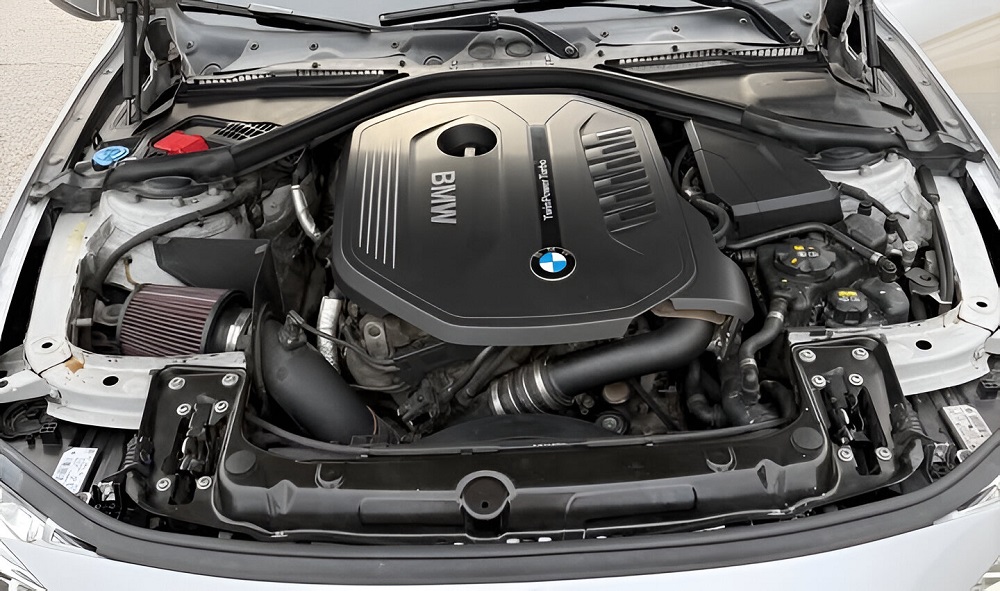
1. Why the B58 breaks differently than the N55 ever did
Rear timing chain, hot-top intercooler, and heat-loaded deck
BMW pushed packaging and response, then made you pay in labor. The B58’s rear-mounted timing chain cleans up NVH and space up front, but turns chain jobs into engine-out repairs. No pulleys to pop off. No covers to slide. Just drop the subframe or pull the motor.
Up top, the intercooler sits inside the intake plenum. It shortens charge length, trims lag, and boosts thermal mass, but packs extra coolant lines right against the hottest real estate on the engine.
Any plastic in that zone bakes faster. Add the closed-deck block, and you’ve got less water around the upper cylinders. Heat builds, then climbs.
Underneath, forged rods and a steel crank hold big torque, even on mild tunes. But this bottom-end rigidity comes with a price: stress loads travel fast. If something upstream fails, filter collapse, injector hydrolock, it doesn’t just break gently. It breaks hard.
Generation splits and where the weak links live
Gen 1 B58 (B30M0/O0) showed its age early. Plastic vent lines and coolant junctions cracked under heat cycles. The oil filter housing warped or failed internally.
PCV diaphragms tore. Injectors stuck open. All the early-life complaints originate from heat, pressure, and cheap plastic stacked into a high-performance bay.
B58TU1 (B30O1) upped fuel pressure to 350 bar, cleaned up the crank for better balance, and added split-cooling circuits. Some variants got integrated manifolds that helped emissions warm-up and efficiency. But it didn’t touch the plastic hardware. OFH failures, vent hose leaks, and PCV problems all carried over.
B58TU2 (B30M2) brought new problems. Cylinder deactivation, switchable rocker arms, and 48V mild-hybrid gear opened new failure paths. Early 2024 models already face rocker recalls.
Electronics complexity climbed. And while the base block held strong, the added systems raised the stakes for oil quality, part failures, and electrical gremlins.
B58 generations, key hardware, and problem hotspots
| Gen / code | Years | Key hardware changes | Problem patterns |
|---|---|---|---|
| Gen 1 B58 (B30M0/O0) | ~2015–2018 | Closed-deck, 200-bar DI, plastic OFH, rear chain | Coolant weeps, PCV issues, OFH cracks, stuck injectors |
| B58TU1 (B30O1) | ~2018–2021 | 350-bar DI, split cooling, crank update, some integrated manifolds | Same plastics, better fueling, carbon buildup by 60k–80k miles |
| B58TU2 (B30M2) | ~2021–present | 48V hybrid, switchable rockers, Miller cycle on some variants | Rocker failures, complex electronics, same core cooling/oil problems |
2. Cooling system failures that trigger the first warning signs
Plastic vent hose cracks and slow coolant loss
Heat cycles hammer the small plastic vent hose linking the oil filter housing to the expansion tank. The line lives inches from sustained turbo heat and regularly swings from ambient to over 220°F. Polymer fatigue sets in. Hairline fractures open.
Coolant escapes as vapor, not puddles. Drivers catch a sweet smell, dried white or pink residue, and a level warning that keeps coming back. Pressure drops inside the system. Boiling margin shrinks.
Oil filter housing leaks and oil: coolant cross-contamination
The B58’s oil filter housing combines filtration, heat exchange, and coolant routing into one plastic module. Oil and coolant passages run side by side, separated by thin internal seals. Age and heat warp the housing body. Microcracks follow.
External leaks show damp seams and undertray drips. Internal failures blend oil and coolant into an emulsion that removes bearing protection fast. Labs regularly flag glycol presence before owners notice performance changes.
Electric water pump failures and rapid overheating
The electric pump carries a plastic impeller and sealed motor assembly. Bearing wear or motor failure hits without warning. Coolant flow stalls. Head temperatures spike in seconds under load.
Dash alerts escalate quickly: temperature warning, reduced power, then limp mode. Continued driving risks head distortion and gasket failure. Many specialists preemptively replace pump and thermostat around 80,000–90,000 miles.
Thermostat and heat management module faults
The electronically controlled thermostat regulates split cooling circuits for block and head temperatures. Sticking valves or actuator faults scramble temperature balance. Warm-up stretches. Hot spots appear under boost.
Symptoms range from unstable coolant temps to repeated fan overactivity. Fault memory often logs plausibility or regulation errors rather than a clean “thermostat failure” code.
Common B58 cooling components and failure behavior
| Component | Construction | Typical failure mode | Driver-facing symptoms |
|---|---|---|---|
| Vent / bleeder hose | Plastic composite line | Brittleness, cracking | Sweet smell, residue, gradual coolant loss |
| Oil filter housing | Plastic composite module | Warping, internal crack | Oil leak, coolant leak, oil–coolant mixing |
| Electric water pump | Plastic impeller, electric motor | Sudden motor/bearing failure | Rapid overheating, limp mode |
| Thermostat assembly | Plastic housing, electronic actuator | Sticking, regulation fault | Temp fluctuation, fan overactivity |
| Radiator end tanks | Plastic crimped to aluminum core | Seam seepage | Undertray coolant traces |
| Expansion tank cap | Plastic cap, rubber seal | Seal hardening, weak spring | Low pressure, recurring warnings |
3. Oil pressure failures and crankcase pressure problems
Oil filter collapse and starvation damage
Paper filter cartridges in the B58 collapse when left in too long or swapped with cheap aftermarket parts. Heat softens the glue. Flow rate climbs. The element buckles.
Once torn, fibers plug internal passages or get sucked into the pickup screen. Oil pressure drops. Bearings lose feed. The turbo goes first, then the cam journals. BMW issued SIB 11 03 21 to address removal risks and recommends visual inspection for debris in every oil service.
Plastic oil filter housing leaks and aluminum upgrades
The same oil filter housing that mixes coolant also leaks oil. Cracks start around the oil cooler ports or at the block-side gasket. Others open up between the oil gallery and the surrounding coolant channels.
Aluminum replacements solve the material creep, but they can transmit more vibration through the block. Most independent shops still recommend the swap by 100,000 miles, sooner if you catch weepage near the mount bolts.
PCV diaphragm rupture and high crankcase pressure
The PCV diaphragm lives inside the valve cover. It flexes under vacuum dozens of times per minute. Heat and oil vapors eventually tear the membrane. Crankcase pressure rises.
Idle gets rough. You’ll hear a high-pitched whistle under the hood. Oil pushes past the valve cover gasket and crank seal. BMW extended coverage on early B58 PCV units because the failure rate climbed fast around 40,000 to 60,000 miles.
Early oil pump weakness and low-pressure hot idle
Some Gen 1 B58 builds shipped with a plastic-bodied oil pump. Housing fatigue and internal wear show up first in hot idle pressure loss. Light ticking follows.
Tuned cars suffer faster, load increases, oil thins, and pressure sags under boost. These pumps weren’t built for long-term stress. Upgrades in later engines fix the issue, but early owners still risk it if the original pump’s never been touched.
B58 oil system trouble spots and service windows
| Component / system | Problem window | Failure mode | Action to prevent escalation |
|---|---|---|---|
| Paper filter cartridge | 10k+ intervals | Collapse, fiber shedding | OE filter only, 5k–7.5k changes, careful removal |
| Plastic oil filter housing | 60k–100k miles | Leaks, oil–coolant crossover | Replace with updated or aluminum unit |
| PCV diaphragm / valve cover | 40k–90k miles | Vacuum loss, oil leaks | Monitor idle, replace cover at first symptoms |
| Early oil pump | 80k+ miles, Gen 1 | Pressure loss, hot tick | Pressure test, replace with updated pump |
4. Fuel system failures that destroy power or the engine
High-pressure fuel pump wear and power drop
The HPFP on the B58 is cam-driven. It’s built to handle 200 bar on Gen 1 and 350 bar on TU engines. That pressure depends on the intake cam follower staying smooth and the pump internals staying tight.
Once the follower wears or the pump body heats up past spec, rail pressure sags. Cold starts take longer. Heavy throttle triggers limp mode. Codes show up as 118001 or 11A002, but the issue usually starts with oil quality and cam follower wear, not electrical failure.
Stuck-open injectors and hydrolock risk
Some early B58 injectors fail open. When the internal pintle sticks, raw fuel floods the cylinder, even when the engine’s off. If it happens after shutdown, the next crank can bend a rod before you hear a thing.
You’ll see heavy white smoke, strong fuel smell, and a rough idle, then a misfire on one cylinder that won’t clear. Plugs come out soaked. This requires immediate attention. Hydrolock destroys the bottom end fast.
Ethanol blends, TU pump swaps, and long-sit damage
Tuned B58s running E30–E50 blends need higher flow. Ethanol needs more volume to hit target AFRs. The stock Gen 1 HPFP runs at its limit even at moderate boost. That’s why many owners swap in the TU1 pump as a retrofit.
Poor tuning or long sit times cause problems. Ethanol pulls water. Injectors gum up. Low-pressure pumps struggle. Startups get rough, trims drift, and filters clog faster. Anyone running ethanol needs regular drive cycles, or fuel stabilizer if the car sits.
B58 fueling failure modes and driver symptoms
| Failure mode | Root cause | Driver symptoms | Severity |
|---|---|---|---|
| HPFP wear | Cam follower, oil breakdown | Long crank, power loss, limp mode | Medium; progressive |
| Stuck-open injector | Mechanical pintle failure | Smoke, misfire, raw fuel smell, hydrolock risk | High; catastrophic |
| Gummed injector | Ethanol, long sits, bad fuel | Hesitation, misfire, light knock | Medium; cleanable |
| LPFP restriction | Age, debris, ethanol corrosion | Cuts out under load, slow rail pressure buildup | Medium; performance |
5. Valvetrain failures from oil neglect to rocker arm recall
VANOS solenoids and timing drift under load
Double-VANOS adjusts cam timing using solenoids fed by engine oil. Small O-rings and mesh filters sit inside each one. Once they gum up with varnish or sludge, oil control falters. Timing overshoots or lags.
The engine loses low-end torque. Idle hunts. Throttle response flattens. Scan tools may show correlation faults or adaptation limit codes. These issues show up around 50,000–70,000 miles when oil changes were skipped or the wrong spec was used.
Valvetronic lift control and rare motor faults
The Valvetronic motor adjusts intake valve lift. It’s one of the more reliable systems on the B58, but when it fails, the symptoms mimic a throttle body fault. RPM won’t rise past 3,500. The car goes into a soft limp mode.
Faults usually originate from eccentric shaft wear or internal motor issues. Most failures happen over 100,000 miles and hit high-mile daily drivers, not tuned builds. Diagnosis requires a scan and a lift to check valve travel.
TU2 rocker arms and broken cam followers
Starting in 2024, B58TU2 engines added switchable rocker arms to enable Miller cycle and cylinder deactivation. On some early builds, exhaust-side followers broke under load. Cam lobes lost contact. Misfires triggered. In worst cases, loose valvetrain parts damaged the head.
Recall 23E-A05 now mandates replacement of all 12 exhaust-side rockers on affected VINs. It’s a major job: full valve cover off, timing tools in, and inspection for collateral wear.
Timing chain wear and the rear-service penalty
The B58’s rear-mounted timing chain rarely fails early. Most real failures show up past 150,000 miles. High-mile cars with poor oil pressure, sludged VANOS, or tuning abuse start to rattle or throw sync codes.
Any repair means engine-out or drop-the-subframe service. There’s no shortcut. That’s why most shops hammer the 5,000–7,500-mile oil interval, because catching chain wear too late turns into a $4,000+ job.
B58 valvetrain systems and known failure patterns
| System | Function | Common failure mode | Typical mileage window |
|---|---|---|---|
| VANOS (double solenoid) | Camshaft phasing | O-ring hardening, screen blockage | 50k–70k mi |
| Valvetronic (lift motor) | Intake valve lift control | Motor/eccentric shaft wear | 100k+ mi |
| TU2 rocker arms | Switchable exhaust rockers | Broken follower, recall campaign | Early life – 2024 batch |
| Timing chain and guides | Crank–cam sync | Chain stretch, guide wear | 150k+ mi |
6. Carbon buildup and how short trips choke the intake
Direct injection, PCV vapors, and baked-on sludge
The B58 runs direct injection only. No fuel ever hits the back of the intake valves. Add heat and PCV vapors, and you’ve got the perfect recipe for carbon buildup. Thin oil mist cooks onto valve stems, hardens, and narrows airflow.
Cold starts and city runs lock in the damage. Short trips keep valve temps low, so deposits stick faster. Over time, flow drops off. Even with tighter seals than the N54 or N55, the buildup still happens, just slower.
Idle stumble, misfires, and lazy throttle response
Early signs show up at start-up. A quick stumble or hiccup clears as the engine warms. Idle smooths out, but response off the line stays soft. Acceleration feels laggy under 3,000 rpm.
Scan data might show random misfires. Fuel trims creep lean. Power fades so gradually most owners don’t notice until they compare to a newer or cleaner-running car.
Walnut blasting, catch cans, and weekly redline pulls
Walnut blasting between 60,000–80,000 miles restores lost flow. Shops use crushed shells to clean the valves without head removal. Response improves immediately.
Catch cans help by trapping PCV mist before it hits the intake. They don’t prevent buildup entirely, but they double or triple the time between cleanings.
Highway pulls once a week also help. Sustained heat burns lighter deposits before they stick. But idle-heavy, cold-run cars still lose ground fast.
B58 carbon control methods and results
| Method | Target area | Service timing | Effectiveness |
|---|---|---|---|
| Walnut blasting | Intake valve cleaning | 60k–80k mi or on symptoms | High; clears heavy buildup |
| Oil catch can | PCV vapor reduction | Permanent + drain every 1–2k | Medium–high; slows accumulation |
| Hot highway drive | Preventive heat cycle | 15–20 min weekly | Medium; burns off light film |
| Fuel system cleaner | Injector tip cleaning | Every 5k mi | Low; no impact on intake valves |
7. Tuning weak points that show up under extra boost
Stock hardware and how tuning strains the weak spots
The B58 block can handle it. Closed deck, forged crank and rods. But every time boost goes up, plastic cooling fittings and oil feed paths take the hit.
Stage 1 tunes that add 60–80 hp push vent hoses to the edge. OFH cracks show up faster. Turbo bearings see higher temps. VANOS solenoids get dirty quicker. And the oil filter? Collapse risk doubles if you still run 10k intervals.
Charge pipe blowouts and pressure leaks under load
The factory charge pipe is plastic. So is the turbo inlet. At stock PSI, they hold fine. Once tuned cars hit 22–25 PSI, pressure blows out couplers or hairline cracks open along the bends.
Rich codes follow. Power dips hard. Some blow out entirely mid-run. Aftermarket aluminum pipes solve the issue and hold boost reliably, but they bring added vibration and occasionally fitment quirks.
Spark plug gaps, weak coils, and hot misfires
Extra boost pushes combustion temps higher. Stock spark plugs struggle to hold spark. Misfires under load become common, usually around 3,500 to 5,000 rpm in mid-throttle climbs.
Most tuned builds need one-step-colder plugs and tighter gaps. Coils get heat-soaked faster and start breaking down around 30,000–40,000 miles on ethanol or aggressive tunes.
Fuel upgrades and the risk no one talks about
TU HPFP swaps help Gen 1 cars keep up with ethanol blends and higher loads. Port injection kits and aux pumps support 600+ hp builds. But rushed installs and sloppy lines near the exhaust side create fire hazards.
Some owners skip proper brackets. Others ignore ethanol-safe fittings. If a rail fitting backs out near the turbo, raw fuel sprays at 3,000+ PSI. That’s a disaster waiting for a backfire.
B58 tuning mods and failure trends
| Mod / upgrade | Typical gain | Added stress points | Risk profile |
|---|---|---|---|
| Stage 1 ECU tune | +60–80 hp | Cooling plastics, oil system, plugs | Low–medium, needs good upkeep |
| TU HPFP retrofit | More fuel flow | Cam lobe and follower wear | Medium, must verify lobe health |
| Aluminum charge pipes | Boost hold | Slight NVH, install fitment | Low, critical for tuned cars |
| Port injection add-on | High power builds | Fire risk, wiring complexity | High if poorly installed |
8. Recalls, service bulletins, and what fails across model years
Rockers, starters, and the rare crank bearing bulletin
2024 TU2 builds came under recall 23E-A05 for switchable rocker arms. Exhaust-side cam followers cracked, dropped contact, and triggered misfires. Left unchecked, the failure spread debris through the valvetrain. BMW’s fix: replace all 12 followers and torque each to spec.
In 2024, a separate recall (24V-576) hit older B58s across 3, 5, 7, and X-series models. Repeated long-crank attempts overheated the starter. If the engine was already damaged, further attempts could trigger a fire. BMW pushed a DME software update to limit start cycles.
Back in 2016, BMW issued SIB 11 26 15 on manual 340i models for crankshaft guide bearing wear. Rare but serious. Bad bearings locked up the clutch pedal and rattled the bellhousing under load.
Service bulletins that confirm filter and OFH failure patterns
BMW didn’t call out the paper oil filter collapse in early manuals, but SIB 11 03 21 did. It gave techs special extraction tools for broken filters and set cleanup procedures to prevent debris circulation.
SIB 11 10 25, issued in late 2025, targeted coolant leaks from the oil filter housing. It broke down visual inspection zones and confirmed housing replacement as the standard response once coolant creep or seam weep appeared.
SIB 01 14 23 extended warranty coverage on the PCV diaphragm and valve cover for many Gen 1 B58 models. Coverage now runs to 15 years / 150,000 miles, a quiet nod that crankcase pressure issues were common.
How B58 problems compare to N55 and what owners should expect
The B58 holds oil pressure and internal strength better than the N55. The closed deck, forged internals, and water-to-air intercooler all raise the reliability ceiling.
Failures concentrate in plastic cooling parts, PCV assemblies, and filter systems, not the block, crank, or rods. Timing chains wear late. VANOS fails when oil gets dirty. Injectors quit when ethanol sits too long. But the engine forgives smart maintenance.
Most shops now treat 5,000–7,500 oil intervals, 60k coolant overhauls, and 75k carbon service as the new baseline. Stick to that, and tuned or stock, the B58 lasts. Ignore it, and the plastics, pressure, and heat will catch you.
Sources & References
- BMW’s B58: The Straight-Six That Powers 41 Models (and Counting)
- The BMW B58 Engine: A Deep Dive into BMW’s Turbocharged Marvel
- Demystifying the B58 and B58TU Variations – ARM Motorsports
- BMW N55 vs. B58 Engine: A Comprehensive Comparison – Brox Tuning
- BMW N55 vs. B58: Reliability, Performance, and Which Engine Wins?
- N55 vs B58 – 2Addicts | BMW 2-Series forum – Bimmerpost
- What Benefits Does the BMW B58 Engine Have Over the N55?
- Project’A | Comparing The Gen 1 BMW B58 and the updated BMW …
- B58 capability across different models and generations : r/BMW
- 2024 X5 Switchable Rocker Arm Recall : r/BMWX5
- BMW B58 Engine Oil Filter Housing Replacement Kit – 11428583895KT2 – FCP Euro
- 11 07 23_VOLUNTARY EMISSION RECALL 23E-A05: REPLACE SWITCHABLE ROCKER ARM – NHTSA
- Fixing BMW B46 & B58 Coolant Leaks (OFHG & Hose) | Expert Guide
- BMW B58 Engine Review – Reliability, performance & servicing
- Fixing a Common BMW B58 Coolant Leak | ITB Episode 152 – CRP Automotive
- Metal Oil Filter Housing Upgrade for 2016-2023 B58 BMW – Burger Motorsports
- B58 mysterious main tank coolant loss : r/BmwTech
- What Are the Common B58 Engine Problems and How to Fix Them? – CarInterior
- The Definitive Guide to the BMW B58 Engine – Brox Tuning
- BMW B58 Common Problems – Alex’s Autohaus – European Auto Repair in Salt Lake City, Utah
- BMW B58 Engine Common Failures – Green’s Garage
- What’s with some people saying the “newer” B58’s aren’t as good as the original? : r/BMW
- SIB 11 03 21 – B58 Engine: Engine Oil Filter Removal Procedure and Tools
- Help needed! Oil filter destroyed. – 2Addicts | BMW 2-Series forum – Bimmerpost
- B58 Service Intervals – BMW 3-Series and 4-Series Forum (F30 / F32) | F30POST
- How to Maintain and Service Your B58 Engine Properly? – Palenon Performance
- B58 PCV issues – Excella Automotive
- BMW B58 Engine Problems: Complete Turbo Inline-6 Troubleshooting Guide
- Unexpected White Smoke – Should I Be Concerned? – XBimmers | BMW X3 Forum
- Warning Signs of HPFP Failure in Your BMW from the Authorized Mechanics of Corpus Christi
- HPFP failure FAQ! – BMW 3-Series (E90 E92) Forum – Bimmerpost
- Injectors failure. – BMW 3-Series and 4-Series Forum (F30 / F32) | F30POST – Bimmerpost
- B58 fuel injector failure – serious concern? : r/CarTalkUK
- Max Daily drivable power and mods? – Page 2 – BMW 3-Series and 4-Series Forum (F30 / F32)
- Any risks of running TU fuel pump on gen 1 B58 – BMW 5-Series Forum (G30)
- B58TU MHD Stage 1 fueling issues (Solved!) – SpoolStreet Forums
- The Gen 3 B58 Is Already Having Reliability Issues [Follow-Up Video Posted] – BMW X5 Forum (G05)
- Switchable Rocker Arm Recall – XBimmers | X7 – Bimmerpost
- BMW X5 G05 B58 Carbon Buildup: Walnut Blasting Costs vs Prevention – Engine Finders
- Why Walnut Blasting BMW N54 & N55 is a MUST Before Tuning – ModBargains
- N55 with 82k, Walnut blast or not? – BMW 3-Series (E90 E92) Forum – Bimmerpost
- Is the b58 really that much better than the n55? : r/BMW
- Walnut blast intake valves on n55: when? | SpoolStreet Forums
- BMW Service Bulletin Lists (check for your model) – BMW 3-Series and 4-Series Forum (F30 / F32)
- B58 engine replacement recall – BMW 3-Series and 4-Series Forum
- SIB 12 05 24 – Recall 24V-576: B58C/D Engine Starter – Repeated Long Duration Crank Attempts
- This Service Information Bulletin supersedes SI B11 26 15 dated February 2016 – NHTSA
- SIB 11 10 25 – Coolant Leaking from Oil Filter Housing
Was This Article Helpful?